Air Quality in Chiang Mai: When to Rent and Which Areas Are Safest
Guides
Air Quality in Chiang Mai: When to Rent and Which Areas Are Safest
Navigate Chiang Mai's seasonal air quality challenges to find the perfect rental timing and healthiest neighborhoods.
Summary
Learn about Chiang Mai air quality and discover which condo areas offer the cleanest air. Find safe neighborhoods for your rental with seasonal guides.
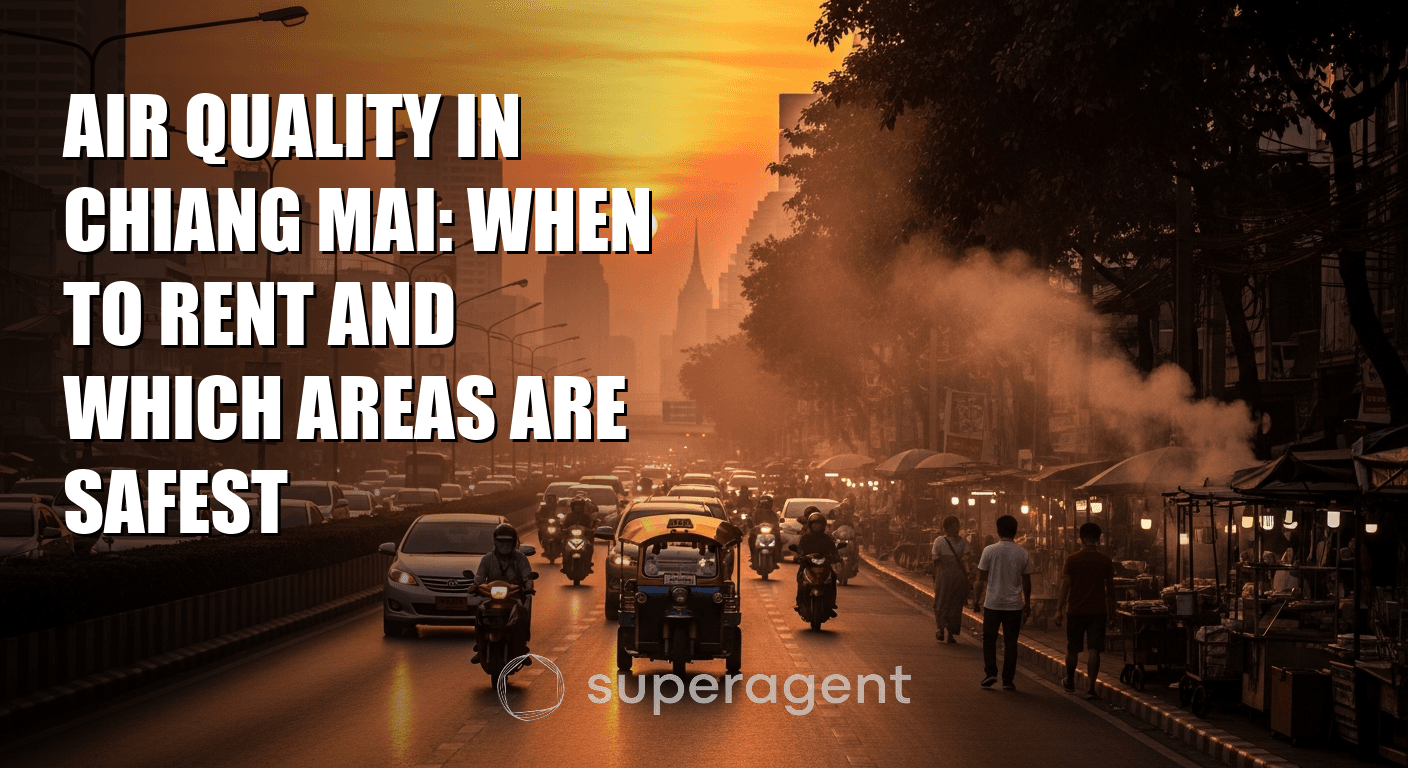
Every year between February and April, Chiang Mai becomes one of the most polluted cities on the planet. If you have ever scrolled through photos of misty mountains and charming old town streets, only to arrive and find yourself coughing through a thick orange haze, you know exactly what I am talking about. The burning season is real, it is brutal, and it should absolutely factor into your rental decisions. Whether you are planning a long stay or considering a permanent move north from Bangkok, understanding Chiang Mai's air quality patterns can save you from signing a lease you will regret. Let me walk you through when to rent, where to live, and how to protect yourself while still enjoying everything this city has to offer.
Understanding Chiang Mai's Burning Season and AQI Patterns
Chiang Mai sits in a valley surrounded by mountains. That geography is gorgeous most of the year, but from roughly late January through mid-April, it becomes a trap. Agricultural burning in northern Thailand, Myanmar, and Laos sends smoke into the valley, and the mountains prevent it from dispersing. The result is AQI readings that regularly exceed 200, sometimes spiking above 400. For context, anything above 150 is considered unhealthy for everyone, not just sensitive groups.
According to IQAir's real-time monitoring data, Chiang Mai has ranked among the world's top five most polluted cities on multiple days during peak burning season in recent years. In March 2023, the city recorded PM2.5 levels exceeding 300 micrograms per cubic meter on several days, more than 20 times the WHO recommended limit.
I have a friend who moved up from a condo near BTS Ari in Bangkok, expecting clean mountain air year-round. She signed a 12-month lease starting in January and spent the first three months essentially trapped indoors. If she had timed her lease to start in May or June, her entire experience would have been different.
The Best and Worst Months to Start a Chiang Mai Rental
Timing your lease is probably the single most important decision you can make regarding air quality. The sweet spot for arriving in Chiang Mai is between May and November. The rainy season, roughly June through October, actually delivers the cleanest air. Rains wash particulates from the atmosphere, and agricultural burning has not yet started.
If you are on a six-month lease, starting in June gives you clean air straight through November. You dodge the worst of burning season entirely and get to experience Chiang Mai at its absolute best. Green mountains, cool evenings, and AQI readings that stay comfortably below 50.
Starting a lease in November or December is also reasonable. You get a few beautiful cool-season months before air quality begins deteriorating in late January or February. But if you sign a 12-month lease starting in December, you need to be prepared for roughly three months of poor air. Budget for air purifiers, sealed windows, and possibly a trip south to Bangkok or the islands during the worst weeks.
The worst time to begin renting is January through March. You are walking straight into the problem with no adjustment period and potentially locking yourself into a unit that may not have adequate air filtration.
Which Areas in Chiang Mai Have the Best Air Quality
Not all neighborhoods suffer equally. Elevation, proximity to green space, and distance from agricultural zones all play a role. While no area in the Chiang Mai valley is truly immune during peak burning season, some locations consistently report lower PM2.5 readings than others.
The Old City and Nimmanhaemin areas sit right in the valley floor and tend to experience some of the highest concentrations. These are the most popular areas for expats and digital nomads, with one-bedroom condos ranging from 8,000 to 18,000 THB per month. Nimman in particular has buildings like D Condo Nim, Hillside 4, and The Astra, all popular with renters but all fully exposed to valley-level pollution.
Areas with slightly higher elevation, such as Doi Suthep foothills or the Hang Dong direction to the south, sometimes report marginally better readings. Hang Dong has newer developments and you can find one-bedroom units from 6,000 to 12,000 THB per month. The trade-off is less walkability and fewer cafes nearby.
San Kamphaeng to the east sits on the edge of the valley and occasionally benefits from different wind patterns. A friend of mine rents a two-bedroom house there for 10,000 THB per month, and he reports noticeably clearer skies compared to friends living near Maya Mall during March. But the difference is relative, not absolute. On the worst days, the entire province is blanketed.
Condo Features That Actually Matter for Air Quality
When hunting for a Chiang Mai air quality condo, the building itself matters as much as the neighborhood. Here is what to prioritize during your search.
First, look for units with proper sealing. Older buildings with single-pane windows and gaps around frames let outdoor air pour in. Newer developments tend to have better insulation. Buildings like Escent Condo near Central Festival or Supalai Monte at Chiang Mai have more modern construction that keeps outdoor air where it belongs.
Second, check whether the condo has a central air filtration system in common areas. Some newer buildings filter air in lobbies and hallways. This is not common yet, but it is becoming a selling point for buildings marketing to health-conscious tenants.
Third, and this is the big one, make sure the unit can accommodate a standalone air purifier. A quality HEPA purifier like a Xiaomi Mi Air Purifier 4 or a Blueair Blue 3210 can keep a studio or one-bedroom at safe PM2.5 levels even when outdoor readings are above 200. Budget 3,000 to 8,000 THB for a purifier, and check that the unit has enough electrical outlets in the bedroom and living area.
According to Bumrungrad International Hospital's health resources, prolonged exposure to PM2.5 above 35 micrograms per cubic meter increases risks of respiratory and cardiovascular problems. Indoor air purification is not optional during burning season. It is a health necessity.
Comparing Chiang Mai Neighborhoods for Air Quality Renters
Here is a practical comparison of major rental areas, factoring in air quality, rent costs, and livability during burning season.
- Nimmanhaemin: 10,000 to 18,000 | Poor (valley floor) | Excellent | Digital nomads wanting cafe culture
- Old City: 7,000 to 15,000 | Poor (valley floor) | Good | Culture lovers, short-term stays
- Santitham: 6,000 to 12,000 | Poor to moderate | Good | Budget-conscious long-term renters
- Hang Dong: 6,000 to 12,000 | Moderate | Limited | Families wanting space and newer builds
- San Kamphaeng: 5,000 to 10,000 | Moderate | Limited | Remote workers with own transport
- Doi Suthep Foothills: 12,000 to 25,000 | Slightly better (elevation) | Limited | Those prioritizing air quality above all
Average rent for a well-equipped one-bedroom condo in Chiang Mai suitable for burning season living, meaning modern construction, good sealing, and space for air purifiers, runs between 10,000 and 20,000 THB per month. That is still significantly cheaper than comparable units in Bangkok near BTS Phrom Phong or MRT Phra Ram 9, where you would pay 18,000 to 35,000 THB for similar quality.
The Escape Plan: Using Bangkok as Your Burning Season Base
Here is something many experienced Chiang Mai renters do. They keep their northern lease but spend February through April in Bangkok or on the coast. Bangkok's air quality is far from perfect, but it rarely reaches the extremes that Chiang Mai experiences during peak burning.
One strategy is to negotiate a flexible lease in Chiang Mai. Some landlords, especially those with condos listed on DDproperty and other platforms, will agree to 9-month leases covering May through January. You avoid the worst months entirely and can sublet a short-term place in Bangkok for the gap.
A colleague of mine does exactly this. He rents a one-bedroom at Escent Condo for 11,000 THB per month on a flexible lease, then grabs a month-to-month studio near MRT Lat Phrao in Bangkok for 9,000 THB during March and April. His total housing cost stays under 20,000 THB, and he never has to suffer through a single week of hazardous air.
If a full relocation feels like too much, even a two-week trip to Phuket or Koh Samui during the peak AQI weeks in March can make a huge difference for your lungs and mental health.
Finding the right Chiang Mai air quality condo means thinking beyond just price and location. It means thinking about timing, building quality, and having a realistic plan for the months when the sky turns gray. The good news is that for roughly eight months of the year, Chiang Mai offers an incredible quality of life at a fraction of Bangkok prices. The key is being strategic about the other four months. If you are exploring rental options in Chiang Mai or looking for a Bangkok base during burning season, Superagent at superagent.co can help you search smarter with AI-powered listings that match your priorities, whether that is modern construction, air filtration, or flexible lease terms.
Every year between February and April, Chiang Mai becomes one of the most polluted cities on the planet. If you have ever scrolled through photos of misty mountains and charming old town streets, only to arrive and find yourself coughing through a thick orange haze, you know exactly what I am talking about. The burning season is real, it is brutal, and it should absolutely factor into your rental decisions. Whether you are planning a long stay or considering a permanent move north from Bangkok, understanding Chiang Mai's air quality patterns can save you from signing a lease you will regret. Let me walk you through when to rent, where to live, and how to protect yourself while still enjoying everything this city has to offer.
Understanding Chiang Mai's Burning Season and AQI Patterns
Chiang Mai sits in a valley surrounded by mountains. That geography is gorgeous most of the year, but from roughly late January through mid-April, it becomes a trap. Agricultural burning in northern Thailand, Myanmar, and Laos sends smoke into the valley, and the mountains prevent it from dispersing. The result is AQI readings that regularly exceed 200, sometimes spiking above 400. For context, anything above 150 is considered unhealthy for everyone, not just sensitive groups.
According to IQAir's real-time monitoring data, Chiang Mai has ranked among the world's top five most polluted cities on multiple days during peak burning season in recent years. In March 2023, the city recorded PM2.5 levels exceeding 300 micrograms per cubic meter on several days, more than 20 times the WHO recommended limit.
I have a friend who moved up from a condo near BTS Ari in Bangkok, expecting clean mountain air year-round. She signed a 12-month lease starting in January and spent the first three months essentially trapped indoors. If she had timed her lease to start in May or June, her entire experience would have been different.
Continue reading after that.
Looking for a condo
to rent?
Leave your name and phone. We'll follow up while you keep reading.
100% Secure
Fast Response
Free Consultation
The Best and Worst Months to Start a Chiang Mai Rental
Timing your lease is probably the single most important decision you can make regarding air quality. The sweet spot for arriving in Chiang Mai is between May and November. The rainy season, roughly June through October, actually delivers the cleanest air. Rains wash particulates from the atmosphere, and agricultural burning has not yet started.
If you are on a six-month lease, starting in June gives you clean air straight through November. You dodge the worst of burning season entirely and get to experience Chiang Mai at its absolute best. Green mountains, cool evenings, and AQI readings that stay comfortably below 50.
Starting a lease in November or December is also reasonable. You get a few beautiful cool-season months before air quality begins deteriorating in late January or February. But if you sign a 12-month lease starting in December, you need to be prepared for roughly three months of poor air. Budget for air purifiers, sealed windows, and possibly a trip south to Bangkok or the islands during the worst weeks.
The worst time to begin renting is January through March. You are walking straight into the problem with no adjustment period and potentially locking yourself into a unit that may not have adequate air filtration.
Which Areas in Chiang Mai Have the Best Air Quality
Not all neighborhoods suffer equally. Elevation, proximity to green space, and distance from agricultural zones all play a role. While no area in the Chiang Mai valley is truly immune during peak burning season, some locations consistently report lower PM2.5 readings than others.
The Old City and Nimmanhaemin areas sit right in the valley floor and tend to experience some of the highest concentrations. These are the most popular areas for expats and digital nomads, with one-bedroom condos ranging from 8,000 to 18,000 THB per month. Nimman in particular has buildings like D Condo Nim, Hillside 4, and The Astra, all popular with renters but all fully exposed to valley-level pollution.
Areas with slightly higher elevation, such as Doi Suthep foothills or the Hang Dong direction to the south, sometimes report marginally better readings. Hang Dong has newer developments and you can find one-bedroom units from 6,000 to 12,000 THB per month. The trade-off is less walkability and fewer cafes nearby.
San Kamphaeng to the east sits on the edge of the valley and occasionally benefits from different wind patterns. A friend of mine rents a two-bedroom house there for 10,000 THB per month, and he reports noticeably clearer skies compared to friends living near Maya Mall during March. But the difference is relative, not absolute. On the worst days, the entire province is blanketed.
Condo Features That Actually Matter for Air Quality
When hunting for a Chiang Mai air quality condo, the building itself matters as much as the neighborhood. Here is what to prioritize during your search.
First, look for units with proper sealing. Older buildings with single-pane windows and gaps around frames let outdoor air pour in. Newer developments tend to have better insulation. Buildings like Escent Condo near Central Festival or Supalai Monte at Chiang Mai have more modern construction that keeps outdoor air where it belongs.
Second, check whether the condo has a central air filtration system in common areas. Some newer buildings filter air in lobbies and hallways. This is not common yet, but it is becoming a selling point for buildings marketing to health-conscious tenants.
Third, and this is the big one, make sure the unit can accommodate a standalone air purifier. A quality HEPA purifier like a Xiaomi Mi Air Purifier 4 or a Blueair Blue 3210 can keep a studio or one-bedroom at safe PM2.5 levels even when outdoor readings are above 200. Budget 3,000 to 8,000 THB for a purifier, and check that the unit has enough electrical outlets in the bedroom and living area.
According to Bumrungrad International Hospital's health resources, prolonged exposure to PM2.5 above 35 micrograms per cubic meter increases risks of respiratory and cardiovascular problems. Indoor air purification is not optional during burning season. It is a health necessity.
Comparing Chiang Mai Neighborhoods for Air Quality Renters
Here is a practical comparison of major rental areas, factoring in air quality, rent costs, and livability during burning season.
- Nimmanhaemin: 10,000 to 18,000 | Poor (valley floor) | Excellent | Digital nomads wanting cafe culture
- Old City: 7,000 to 15,000 | Poor (valley floor) | Good | Culture lovers, short-term stays
- Santitham: 6,000 to 12,000 | Poor to moderate | Good | Budget-conscious long-term renters
- Hang Dong: 6,000 to 12,000 | Moderate | Limited | Families wanting space and newer builds
- San Kamphaeng: 5,000 to 10,000 | Moderate | Limited | Remote workers with own transport
- Doi Suthep Foothills: 12,000 to 25,000 | Slightly better (elevation) | Limited | Those prioritizing air quality above all
Average rent for a well-equipped one-bedroom condo in Chiang Mai suitable for burning season living, meaning modern construction, good sealing, and space for air purifiers, runs between 10,000 and 20,000 THB per month. That is still significantly cheaper than comparable units in Bangkok near BTS Phrom Phong or MRT Phra Ram 9, where you would pay 18,000 to 35,000 THB for similar quality.
Continue reading after that.
Looking for a condo
to rent?
Leave your name and phone. We'll follow up while you keep reading.
100% Secure
Fast Response
Free Consultation
The Escape Plan: Using Bangkok as Your Burning Season Base
Here is something many experienced Chiang Mai renters do. They keep their northern lease but spend February through April in Bangkok or on the coast. Bangkok's air quality is far from perfect, but it rarely reaches the extremes that Chiang Mai experiences during peak burning.
One strategy is to negotiate a flexible lease in Chiang Mai. Some landlords, especially those with condos listed on DDproperty and other platforms, will agree to 9-month leases covering May through January. You avoid the worst months entirely and can sublet a short-term place in Bangkok for the gap.
A colleague of mine does exactly this. He rents a one-bedroom at Escent Condo for 11,000 THB per month on a flexible lease, then grabs a month-to-month studio near MRT Lat Phrao in Bangkok for 9,000 THB during March and April. His total housing cost stays under 20,000 THB, and he never has to suffer through a single week of hazardous air.
If a full relocation feels like too much, even a two-week trip to Phuket or Koh Samui during the peak AQI weeks in March can make a huge difference for your lungs and mental health.
Finding the right Chiang Mai air quality condo means thinking beyond just price and location. It means thinking about timing, building quality, and having a realistic plan for the months when the sky turns gray. The good news is that for roughly eight months of the year, Chiang Mai offers an incredible quality of life at a fraction of Bangkok prices. The key is being strategic about the other four months. If you are exploring rental options in Chiang Mai or looking for a Bangkok base during burning season, Superagent at superagent.co can help you search smarter with AI-powered listings that match your priorities, whether that is modern construction, air filtration, or flexible lease terms.
Share this article
Properties you may like
More like this
 In Guides · Superagent EditorialHidden Costs of Renting a Condo in Bangkok Nobody Warns You AboutBangkok condo rent looks affordable until month one hits. Here are the real costs beyond the headline figure that catch most renters off guard.25 May 20261 min read
 In Guides · Superagent EditorialWhat a Long-Vacant Bangkok Condo Unit Is Actually Telling YouA Bangkok condo vacant for months signals overpricing, landlord issues, or real problems. Here is how to read the signs.25 May 20261 min read
 In Guides · Superagent EditorialRed Flags in a Bangkok Rental Contract to Watch Out ForBangkok rental contracts often hide risky clauses. Here are the red flags every tenant must catch before signing any lease.25 May 20261 min read
 In Guides · Superagent EditorialWorking Online from a Condo: How to Choose the Perfect Room for ProductivityLearn how to choose the best condo room for working online with tips on lighting, noise, and furniture setup to maximize productivity.9 May 20261 min read