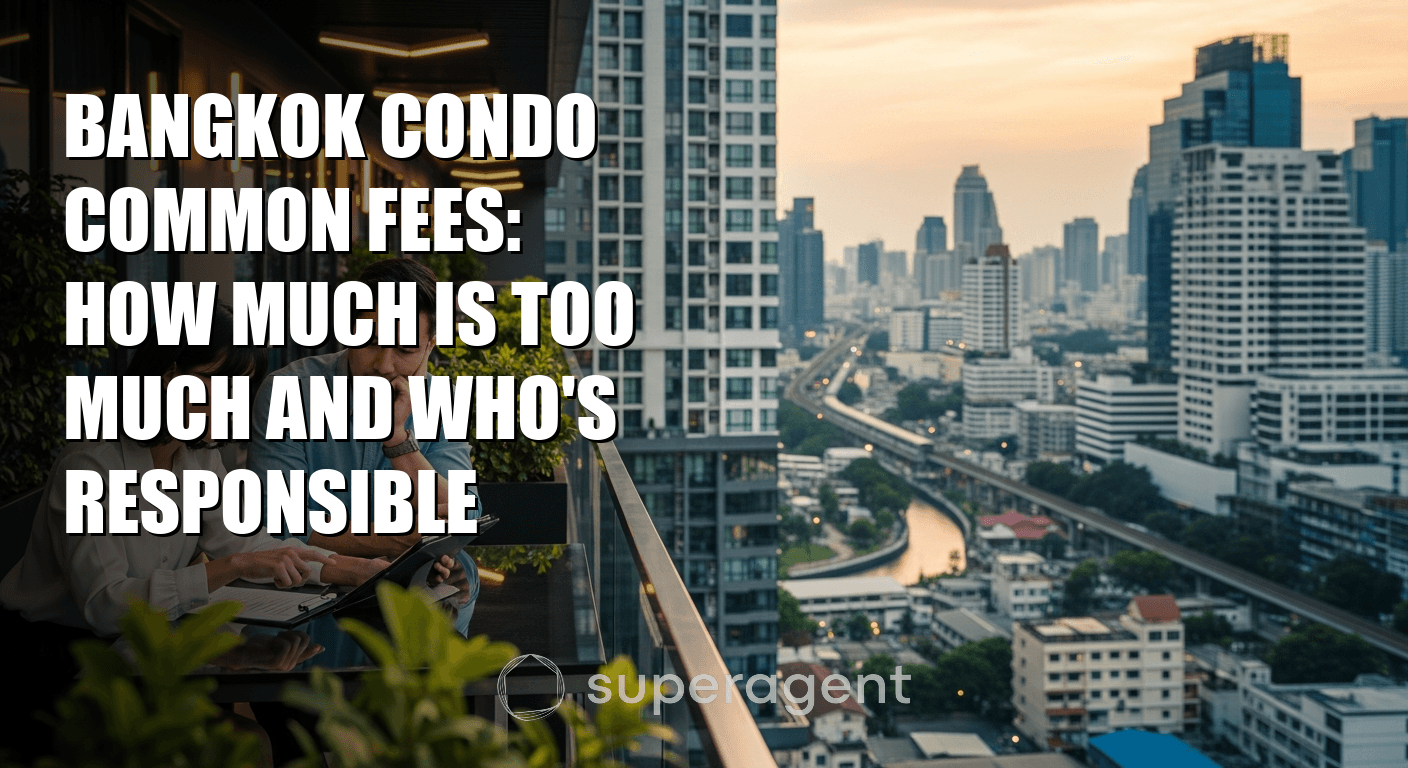
Bangkok Condo Common Fees: How Much Is Too Much and Who's Responsible
Guides
Bangkok Condo Common Fees: How Much Is Too Much and Who's Responsible
Understand Bangkok condo common fees, what's reasonable, and how to challenge unfair charges.
Summary
Learn about ค่าส่วนกลาง คอนโด กรุงเทพ rates, what's considered excessive, and tenant rights when fees seem too high.
You're scrolling through condo listings in Bangkok, found a place you love near Thonglor, and suddenly you see "common area fee: 4,500 baht per month." Your first thought? Is that normal or am I getting robbed?
Welcome to the confusing world of Bangkok condo maintenance fees. Whether you're renting a studio in Onnut or a two bedroom in Ari, you need to understand what these charges actually cover, why they vary so wildly, and who's responsible for paying them. Let's break this down the way someone actually living here would explain it to a friend.
What Exactly Are Common Area Fees in Bangkok Condos?
Common area fees, or maintenance charges, cover the upkeep of shared spaces in your building. We're talking about the lobby, hallways, parking areas, gym, swimming pool, security 24/7, water treatment systems, and general building maintenance. Every resident chips in so the building doesn't fall apart.
Think of it this way. You live in a condo on Sukhumvit Soi 39. The building has a security guard at the front desk, someone cleaning the hallways daily, elevator maintenance scheduled quarterly, and a full-time facility manager. Those people and services have to come from somewhere. That's what your common area fee pays for.
The amount varies massively depending on what the building actually provides. A basic five story building in Ratchadamri with minimal amenities runs way cheaper than a 40 story high rise in Phrom Phong with a gym, pool, coworking space, and concierge service.
Real Bangkok Numbers: What Are People Actually Paying?
Let's get specific because this is what you actually care about. In central Bangkok locations like Chidlom, Rajdhevee, and Lumpini, expect to pay 4,000 to 7,000 baht monthly for a standard one bedroom. Luxury buildings in these areas push 8,000 to 12,000 baht. You're paying for central location, newer construction, and premium amenities.
Move slightly further out to neighborhoods like Ekkamai, Thonglor, and Ari, and maintenance fees drop to 2,500 to 5,000 baht depending on the building age and quality. Older buildings from the 1990s tend to be cheaper. Newer developments with rooftop gardens and modern security systems cost more.
In more residential areas like Bang Pakok, Saphan Sung, or around BTS Udom Suk, you'll find condos charging 1,500 to 3,000 baht monthly. These tend to be smaller, older developments or buildings further from the main action. Nothing wrong with them if you don't need to be in the thick of things.
Here's a real example. A 30 square meter studio in Phetchburi near MRT Phetchburi charges around 1,800 baht common area fee. That same sized unit in a newer building near BTS Nana costs 4,200 baht. The difference comes down to age, location, and what amenities actually exist.
Why Do Fees Vary So Much Between Buildings?
The biggest factor is building age and condition. New condos built in the last five years use more efficient systems and require less emergency repairs. They also have nicer amenities to justify higher fees. Older buildings from 2005 to 2010 might have aging water pipes, outdated electrical systems, and less impressive common areas. Fees stay lower but you might still deal with occasional service disruptions.
Location matters too. A building on the Sukhumvit corridor needs more security staff, faster response times from maintenance, and premium utility costs. A quieter location in Nong Kham doesn't have these same pressures. That translates directly to what residents pay monthly.
The building management company also makes a difference. Larger professional companies charge more but deliver better service consistency. Smaller local management teams might charge less but you could face slower response times when your air conditioning breaks down on a Saturday.
Take two buildings on the same soi in Chit Lom. Building A was completed in 2018, has a swimming pool, fitness center, and concierge. Building B was finished in 1998, has basic facilities, and no gym. Building A charges 6,500 baht. Building B charges 2,200 baht. That's not a ripoff, that's just different service levels.
Who Actually Pays This Fee and When Do You Negotiate?
As a renter, you almost always pay the common area fee directly to the building. The landlord doesn't absorb it. Your monthly rent quoted on Superagent or any listing site typically does not include this charge. You pay base rent plus utilities plus common area fees. Three separate line items.
Can you negotiate it? Not really. The building sets this fee for all residents. Your landlord can't lower it just for you. What you can do is factor it into your total housing cost when comparing apartments. A 12,000 baht rent plus 5,000 baht maintenance costs more than 12,000 baht rent with 2,000 baht maintenance.
Some newer luxury buildings in Pathum Wan or Lumphini do try bundling fees into the rent quote. Always ask your landlord or agent if the advertised rent includes common area charges. If someone quotes you 15,000 baht per month and claims that's all in, verify it in writing.
One scenario from real Bangkok experience. You find a two bedroom near BTS Ari listed at 25,000 baht. Sounds good until the agent mentions common area is 4,500 baht extra. Your actual monthly cost is 29,500 baht. That changes whether you take the place or keep searching.
How to Avoid Surprise Fees and Hidden Costs
Always ask three specific questions before signing anything. First, what exactly is included in the common area fee? You want to know if water, internet, or building insurance is covered separately. Second, has the fee increased in the past two years and why? Some buildings raise fees annually. Third, are there any additional charges for parking, utilities, or amenity usage?
Request a breakdown in writing. Real professional buildings provide itemized lists showing what the maintenance charge covers. If a landlord can't or won't provide this, that's a red flag. You deserve to know exactly where your money goes.
Check reviews from current residents if possible. Ask about maintenance response times, whether promised services actually exist, and if fees have changed unexpectedly. A well managed building maintains consistent fees. Poorly managed buildings surprise you with increases.
Read your tenancy agreement carefully. Some buildings charge extra for gym membership, parking passes, or visiting family parking. These aren't always obvious until you've already moved in and get your first statement.
Your total monthly cost matters more than any single line item. A cheaper rent with higher maintenance fees might actually cost you more than a higher rent with lower fees. Do the math before you commit to a place.
Finding the right Bangkok condo means understanding not just rent, but everything that comes with it. When you're browsing on Superagent, check those maintenance fee details carefully. Ask your agent questions. Compare total monthly costs, not just base rent. You'll make a much smarter decision about where you actually want to live in this city.
You're scrolling through condo listings in Bangkok, found a place you love near Thonglor, and suddenly you see "common area fee: 4,500 baht per month." Your first thought? Is that normal or am I getting robbed?
Welcome to the confusing world of Bangkok condo maintenance fees. Whether you're renting a studio in Onnut or a two bedroom in Ari, you need to understand what these charges actually cover, why they vary so wildly, and who's responsible for paying them. Let's break this down the way someone actually living here would explain it to a friend.
What Exactly Are Common Area Fees in Bangkok Condos?
Common area fees, or maintenance charges, cover the upkeep of shared spaces in your building. We're talking about the lobby, hallways, parking areas, gym, swimming pool, security 24/7, water treatment systems, and general building maintenance. Every resident chips in so the building doesn't fall apart.
Think of it this way. You live in a condo on Sukhumvit Soi 39. The building has a security guard at the front desk, someone cleaning the hallways daily, elevator maintenance scheduled quarterly, and a full-time facility manager. Those people and services have to come from somewhere. That's what your common area fee pays for.
The amount varies massively depending on what the building actually provides. A basic five story building in Ratchadamri with minimal amenities runs way cheaper than a 40 story high rise in Phrom Phong with a gym, pool, coworking space, and concierge service.
Continue reading after that.
Looking for a condo
to rent?
Leave your name and phone. We'll follow up while you keep reading.
100% Secure
Fast Response
Free Consultation
Real Bangkok Numbers: What Are People Actually Paying?
Let's get specific because this is what you actually care about. In central Bangkok locations like Chidlom, Rajdhevee, and Lumpini, expect to pay 4,000 to 7,000 baht monthly for a standard one bedroom. Luxury buildings in these areas push 8,000 to 12,000 baht. You're paying for central location, newer construction, and premium amenities.
Move slightly further out to neighborhoods like Ekkamai, Thonglor, and Ari, and maintenance fees drop to 2,500 to 5,000 baht depending on the building age and quality. Older buildings from the 1990s tend to be cheaper. Newer developments with rooftop gardens and modern security systems cost more.
In more residential areas like Bang Pakok, Saphan Sung, or around BTS Udom Suk, you'll find condos charging 1,500 to 3,000 baht monthly. These tend to be smaller, older developments or buildings further from the main action. Nothing wrong with them if you don't need to be in the thick of things.
Here's a real example. A 30 square meter studio in Phetchburi near MRT Phetchburi charges around 1,800 baht common area fee. That same sized unit in a newer building near BTS Nana costs 4,200 baht. The difference comes down to age, location, and what amenities actually exist.
Why Do Fees Vary So Much Between Buildings?
The biggest factor is building age and condition. New condos built in the last five years use more efficient systems and require less emergency repairs. They also have nicer amenities to justify higher fees. Older buildings from 2005 to 2010 might have aging water pipes, outdated electrical systems, and less impressive common areas. Fees stay lower but you might still deal with occasional service disruptions.
Location matters too. A building on the Sukhumvit corridor needs more security staff, faster response times from maintenance, and premium utility costs. A quieter location in Nong Kham doesn't have these same pressures. That translates directly to what residents pay monthly.
The building management company also makes a difference. Larger professional companies charge more but deliver better service consistency. Smaller local management teams might charge less but you could face slower response times when your air conditioning breaks down on a Saturday.
Take two buildings on the same soi in Chit Lom. Building A was completed in 2018, has a swimming pool, fitness center, and concierge. Building B was finished in 1998, has basic facilities, and no gym. Building A charges 6,500 baht. Building B charges 2,200 baht. That's not a ripoff, that's just different service levels.
Who Actually Pays This Fee and When Do You Negotiate?
As a renter, you almost always pay the common area fee directly to the building. The landlord doesn't absorb it. Your monthly rent quoted on Superagent or any listing site typically does not include this charge. You pay base rent plus utilities plus common area fees. Three separate line items.
Can you negotiate it? Not really. The building sets this fee for all residents. Your landlord can't lower it just for you. What you can do is factor it into your total housing cost when comparing apartments. A 12,000 baht rent plus 5,000 baht maintenance costs more than 12,000 baht rent with 2,000 baht maintenance.
Some newer luxury buildings in Pathum Wan or Lumphini do try bundling fees into the rent quote. Always ask your landlord or agent if the advertised rent includes common area charges. If someone quotes you 15,000 baht per month and claims that's all in, verify it in writing.
Continue reading after that.
Looking for a condo
to rent?
Leave your name and phone. We'll follow up while you keep reading.
100% Secure
Fast Response
Free Consultation
One scenario from real Bangkok experience. You find a two bedroom near BTS Ari listed at 25,000 baht. Sounds good until the agent mentions common area is 4,500 baht extra. Your actual monthly cost is 29,500 baht. That changes whether you take the place or keep searching.
How to Avoid Surprise Fees and Hidden Costs
Always ask three specific questions before signing anything. First, what exactly is included in the common area fee? You want to know if water, internet, or building insurance is covered separately. Second, has the fee increased in the past two years and why? Some buildings raise fees annually. Third, are there any additional charges for parking, utilities, or amenity usage?
Request a breakdown in writing. Real professional buildings provide itemized lists showing what the maintenance charge covers. If a landlord can't or won't provide this, that's a red flag. You deserve to know exactly where your money goes.
Check reviews from current residents if possible. Ask about maintenance response times, whether promised services actually exist, and if fees have changed unexpectedly. A well managed building maintains consistent fees. Poorly managed buildings surprise you with increases.
Read your tenancy agreement carefully. Some buildings charge extra for gym membership, parking passes, or visiting family parking. These aren't always obvious until you've already moved in and get your first statement.
Your total monthly cost matters more than any single line item. A cheaper rent with higher maintenance fees might actually cost you more than a higher rent with lower fees. Do the math before you commit to a place.
Finding the right Bangkok condo means understanding not just rent, but everything that comes with it. When you're browsing on Superagent, check those maintenance fee details carefully. Ask your agent questions. Compare total monthly costs, not just base rent. You'll make a much smarter decision about where you actually want to live in this city.
Share this article
Properties you may like
More like this
 In Guides · Superagent EditorialHidden Costs of Renting a Condo in Bangkok Nobody Warns You AboutBangkok condo rent looks affordable until month one hits. Here are the real costs beyond the headline figure that catch most renters off guard.25 May 20261 min read
 In Guides · Superagent EditorialWhat a Long-Vacant Bangkok Condo Unit Is Actually Telling YouA Bangkok condo vacant for months signals overpricing, landlord issues, or real problems. Here is how to read the signs.25 May 20261 min read
 In Guides · Superagent EditorialRed Flags in a Bangkok Rental Contract to Watch Out ForBangkok rental contracts often hide risky clauses. Here are the red flags every tenant must catch before signing any lease.25 May 20261 min read
 In Guides · Superagent EditorialWorking Online from a Condo: How to Choose the Perfect Room for ProductivityLearn how to choose the best condo room for working online with tips on lighting, noise, and furniture setup to maximize productivity.9 May 20261 min read