Guides
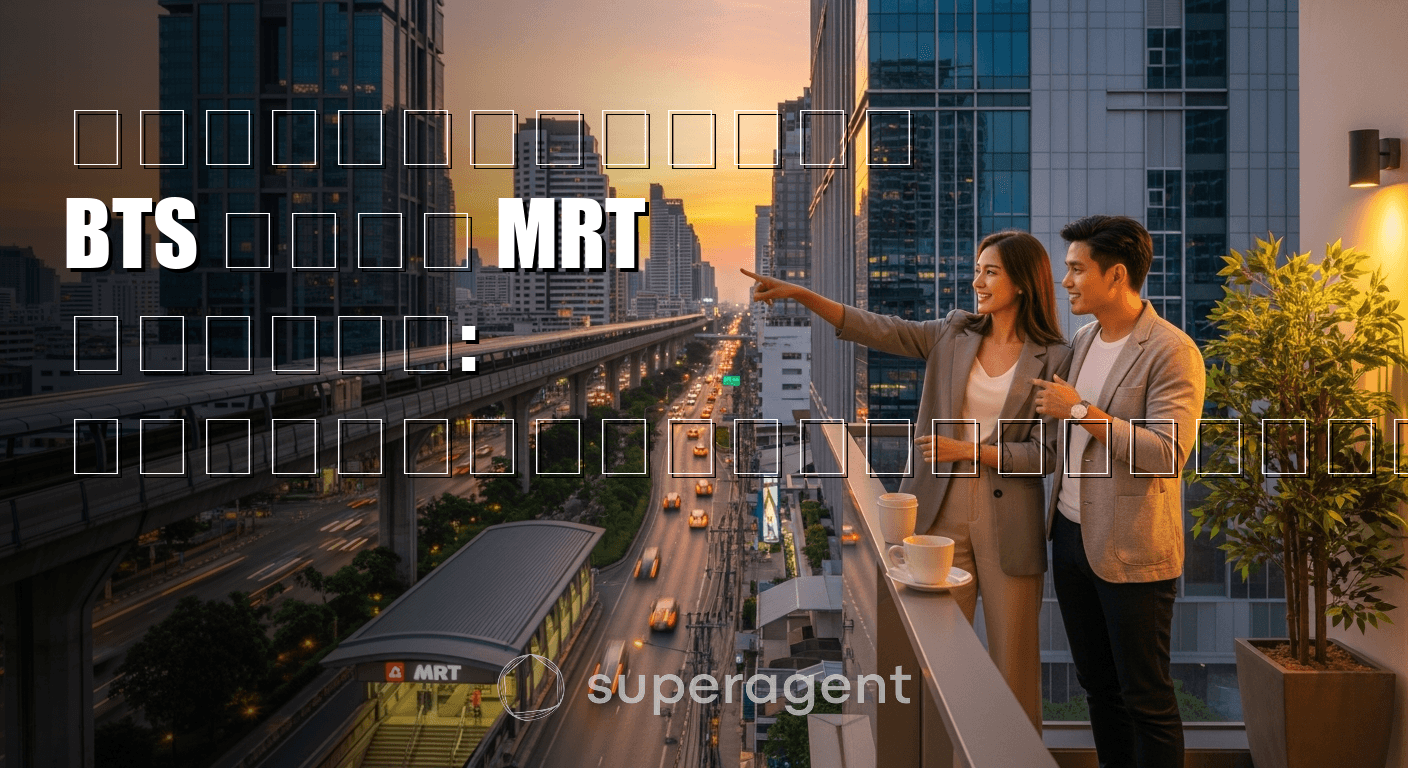
เช่าคอนโดใกล้ BTS หรือ MRT ดีกว่า: เปรียบเทียบราคาและความสะดวก
Discover which transit line offers the best rental deals and lifestyle benefits for your Bangkok condo search.
Summary
Compare rental prices and convenience for BTS vs MRT condos in Bangkok. Find the perfect location that matches your budget and commute needs today.
You have probably been staring at condo listings for hours, bouncing between places near BTS stations and places near MRT stations, wondering which one actually gives you a better deal. It is a question that almost every renter in Bangkok wrestles with at some point. The Skytrain and the subway feel like two different worlds sometimes, even though they crisscross the same city. Rent prices shift, neighborhood vibes change, and your daily commute can look completely different depending on which rail line you choose. So let us break it all down, station by station, baht by baht, and figure out which option makes the most sense for your lifestyle and wallet.
How BTS and MRT Lines Shape Bangkok's Rental Map
Bangkok's BTS Skytrain runs on two main lines. The Sukhumvit Line stretches from Khu Khot in the north all the way down to Kheha in Samut Prakan. The Silom Line connects National Stadium to Bang Wa. These lines cut through some of the most expensive real estate in the city, especially the central Sukhumvit corridor between Nana and Ekkamai.
The MRT Blue Line, on the other hand, forms a loop that covers areas like Lat Phrao, Ratchadaphisek, Phra Ram 9, and extends out to Tha Phra and Lak Song. The MRT Purple Line runs from Tao Poon up to Khlong Bang Phai in Nonthaburi. According to MRT Bangkok's official site, the Blue Line alone serves over 40 stations, connecting neighborhoods that many renters overlook.
Here is a concrete example. A friend of mine moved from Thong Lo on the BTS to Huai Khwang on the MRT last year. His rent for a similar sized one bedroom condo dropped from 22,000 THB per month to 13,000 THB per month. Same quality build, same floor area, roughly 35 square meters. The difference was purely about which rail line sat outside his front door.
Rent Price Breakdown: BTS Stations vs MRT Stations
Let us talk numbers. Based on 2024 market data from DDproperty, the average rent for a one bedroom condo within 500 meters of a BTS station in the core Sukhumvit zone (Asok to Ekkamai) ranges from 18,000 to 35,000 THB per month. Move further out to stations like Bearing or Samrong, and that drops to 8,000 to 14,000 THB.
For MRT stations along the Ratchadaphisek corridor (Sutthisan, Huai Khwang, Thailand Cultural Centre, Phra Ram 9), you are looking at 10,000 to 20,000 THB per month for a comparable one bedroom unit. That is a significant gap. According to CBRE Thailand's 2024 Bangkok residential market report, condos near MRT stations on the Blue Line are priced approximately 20 to 30 percent lower per square meter than those near central BTS Sukhumvit stations.
Take two real buildings as an example. The Lumpini Suite Phetchaburi, right next to MRT Phetchaburi, offers one bedroom units starting around 14,000 THB. Compare that with Noble Refine on Sukhumvit 26, a short walk from BTS Phrom Phong, where similar units start at 25,000 THB or higher. Both are modern buildings with pools and gyms. The location premium on the BTS side is dramatic.
Commute Times and Connectivity: Which Line Gets You There Faster
Speed matters when you are commuting five or six days a week. The BTS runs from roughly 5:15 AM to midnight, and the MRT operates on a similar schedule, typically from 6:00 AM to midnight. Both systems run trains every three to five minutes during rush hour, so frequency is not a major differentiator.
Where things get interesting is interchange access. If you work in the Silom or Sathorn financial district, living near BTS makes obvious sense since the Silom Line drops you right at Sala Daeng or Chong Nonsi. But if your office is near Rama 9 or Ratchadaphisek, the MRT Blue Line is the no brainer. The MRTA website outlines the full Blue Line loop, which now connects areas like Tha Phra and Bang Khae that used to feel completely cut off from the rail network.
Consider this scenario. You work at the AIA Capital Center near MRT Thailand Cultural Centre. If you live at Ratchada City Condo near MRT Sutthisan, your commute is literally two stops, under five minutes door to platform. If you lived near BTS Ari instead, you would need to take the BTS to Mo Chit, switch to the MRT at Chatuchak Park, and ride several more stops. That is 25 to 30 minutes on a good day, plus the interchange walk.
Neighborhood Lifestyle: What Each Line Actually Feels Like
BTS neighborhoods in the central zone are undeniably more polished. Thong Lo (between BTS Thong Lo and Ekkamai) is packed with rooftop bars, Japanese restaurants, and boutique coffee shops along Sukhumvit Soi 55. Ari has become the trendy brunch spot capital of Bangkok. Chit Lom and Phloen Chit sit right in the luxury shopping belt with Central World, Gaysorn Village, and the Erawan Shrine steps away.
MRT neighborhoods tend to be more "real Bangkok." Huai Khwang is famous for its late night street food scene, especially the Huai Khwang Night Market area. Lat Phrao has massive malls like Central Eastville and Union Mall. Ratchadaphisek between MRT Sutthisan and Rama 9 has become a hotspot for younger Thai professionals who want city life without Sukhumvit prices. The Jodd Fairs night market near MRT Phra Ram 9 has also turned that whole zone into a magnet for both locals and visitors.
A practical example. If you are a young professional who loves eating out and nightlife but does not want to pay Thong Lo prices, the Ratchadaphisek MRT strip gives you 80 percent of the lifestyle at 60 percent of the cost. You get walkable food options, coworking spaces, and a condo with a rooftop pool, all for 12,000 to 16,000 THB a month.
Side by Side Comparison: BTS vs MRT Rentals
Here is a direct comparison table to help you see the differences at a glance. All figures are based on typical one bedroom units of 30 to 40 square meters.
| Factor | BTS (Central Sukhumvit Zone) | MRT (Ratchadaphisek Corridor) | BTS (Outer Stations) |
|---|---|---|---|
| Avg. Monthly Rent (1 Bed) | 18,000 to 35,000 THB | 10,000 to 20,000 THB | 8,000 to 14,000 THB |
| Distance to CBD | Inside CBD | 10 to 20 min by train | 20 to 40 min by train |
| Expat Community | Very large | Growing, mostly Thai | Small to moderate |
| Dining and Nightlife | Extensive, premium pricing | Abundant, affordable | Limited, local options |
| Typical Buildings | Noble Refine, Park 24, Ashton Asoke | Life Ratchadaphisek, Lumpini Suite, Rhythm Asoke | Lumpini Ville, Aspire Erawan |
| Condo Age | Mix of new and 5 to 10 year old | Mostly newer builds | Newer builds, some older stock |
| Grocery Access | Tops, Villa Market, Gourmet Market | Tops, Big C, Tesco Lotus | Big C, local markets |
The Hidden Costs Nobody Talks About
Rent is not the only number that matters. Common area fees (CAM fees) tend to be higher in premium BTS corridor buildings. At a place like Ashton Asoke, you might see CAM fees baked into rents that push costs higher. Electricity is another factor. Older condo buildings near some BTS stations charge per unit electricity rates set by the juristic office, sometimes 7 to 8 THB per unit instead of the MEA rate of around 4 THB per unit. Newer MRT area buildings more often pass through the actual government electricity rate, saving you 1,000 to 2,000 THB per month on bills alone.
Parking is also worth considering. If you own or rent a car, many MRT corridor condos like those along Ratchadaphisek offer more generous parking ratios compared to cramped Sukhumvit soi buildings where parking is a premium commodity. Motorcycle taxi costs from your condo to the station add up too. If your building is 800 meters from BTS Phrom Phong, that is 20 to 30 THB per trip, twice a day, five days a week. That totals roughly 1,200 THB per month on motorcycle taxis alone.
When BTS Wins and When MRT Wins
There is no universal answer here because it depends entirely on your personal situation. BTS wins if your office is on Silom, Sathorn, or the Sukhumvit corridor between Asok and Siam. It wins if you want maximum walkability to international restaurants, expat social life, and English friendly services. It wins if you value the prestige factor for entertaining guests or clients.
MRT wins if you want more space for less money. It wins if you work on the east side of the city around Rama 9 or Lat Phrao. It wins if you prefer a more authentically Thai neighborhood with street food and local markets on your doorstep. And it wins if you are saving for something else and want to keep your monthly rent under 15,000 THB without living 45 minutes from civilization.
Here is one last example that brings it home. A couple I know, both working remotely, moved from a tiny studio near BTS Nana at 16,000 THB per month to a spacious one bedroom near MRT Lat Phrao at 11,000 THB. They gained a full kitchen, a bigger balcony, and a quieter street, all while saving 5,000 THB per month. Since they were not commuting to a specific office, the station line did not matter. What mattered was value per square meter.
The right choice between BTS and MRT comes down to where you work, how you spend your free time, and what you are willing to pay for convenience versus space. Bangkok keeps expanding its rail network every year, and areas that felt remote three years ago now have stations at their doorstep. The smartest move is to keep an open mind about neighborhoods you might not have considered yet. If you want to compare condo listings near specific BTS and MRT stations side by side, Superagent at superagent.co can help you search, filter, and find the right fit based on your commute, budget, and lifestyle preferences.
You have probably been staring at condo listings for hours, bouncing between places near BTS stations and places near MRT stations, wondering which one actually gives you a better deal. It is a question that almost every renter in Bangkok wrestles with at some point. The Skytrain and the subway feel like two different worlds sometimes, even though they crisscross the same city. Rent prices shift, neighborhood vibes change, and your daily commute can look completely different depending on which rail line you choose. So let us break it all down, station by station, baht by baht, and figure out which option makes the most sense for your lifestyle and wallet.
How BTS and MRT Lines Shape Bangkok's Rental Map
Bangkok's BTS Skytrain runs on two main lines. The Sukhumvit Line stretches from Khu Khot in the north all the way down to Kheha in Samut Prakan. The Silom Line connects National Stadium to Bang Wa. These lines cut through some of the most expensive real estate in the city, especially the central Sukhumvit corridor between Nana and Ekkamai.
The MRT Blue Line, on the other hand, forms a loop that covers areas like Lat Phrao, Ratchadaphisek, Phra Ram 9, and extends out to Tha Phra and Lak Song. The MRT Purple Line runs from Tao Poon up to Khlong Bang Phai in Nonthaburi. According to MRT Bangkok's official site, the Blue Line alone serves over 40 stations, connecting neighborhoods that many renters overlook.
Here is a concrete example. A friend of mine moved from Thong Lo on the BTS to Huai Khwang on the MRT last year. His rent for a similar sized one bedroom condo dropped from 22,000 THB per month to 13,000 THB per month. Same quality build, same floor area, roughly 35 square meters. The difference was purely about which rail line sat outside his front door.
Rent Price Breakdown: BTS Stations vs MRT Stations
Let us talk numbers. Based on 2024 market data from DDproperty, the average rent for a one bedroom condo within 500 meters of a BTS station in the core Sukhumvit zone (Asok to Ekkamai) ranges from 18,000 to 35,000 THB per month. Move further out to stations like Bearing or Samrong, and that drops to 8,000 to 14,000 THB.
For MRT stations along the Ratchadaphisek corridor (Sutthisan, Huai Khwang, Thailand Cultural Centre, Phra Ram 9), you are looking at 10,000 to 20,000 THB per month for a comparable one bedroom unit. That is a significant gap. According to CBRE Thailand's 2024 Bangkok residential market report, condos near MRT stations on the Blue Line are priced approximately 20 to 30 percent lower per square meter than those near central BTS Sukhumvit stations.
Take two real buildings as an example. The Lumpini Suite Phetchaburi, right next to MRT Phetchaburi, offers one bedroom units starting around 14,000 THB. Compare that with Noble Refine on Sukhumvit 26, a short walk from BTS Phrom Phong, where similar units start at 25,000 THB or higher. Both are modern buildings with pools and gyms. The location premium on the BTS side is dramatic.
Commute Times and Connectivity: Which Line Gets You There Faster
Speed matters when you are commuting five or six days a week. The BTS runs from roughly 5:15 AM to midnight, and the MRT operates on a similar schedule, typically from 6:00 AM to midnight. Both systems run trains every three to five minutes during rush hour, so frequency is not a major differentiator.
Where things get interesting is interchange access. If you work in the Silom or Sathorn financial district, living near BTS makes obvious sense since the Silom Line drops you right at Sala Daeng or Chong Nonsi. But if your office is near Rama 9 or Ratchadaphisek, the MRT Blue Line is the no brainer. The MRTA website outlines the full Blue Line loop, which now connects areas like Tha Phra and Bang Khae that used to feel completely cut off from the rail network.
Consider this scenario. You work at the AIA Capital Center near MRT Thailand Cultural Centre. If you live at Ratchada City Condo near MRT Sutthisan, your commute is literally two stops, under five minutes door to platform. If you lived near BTS Ari instead, you would need to take the BTS to Mo Chit, switch to the MRT at Chatuchak Park, and ride several more stops. That is 25 to 30 minutes on a good day, plus the interchange walk.
Neighborhood Lifestyle: What Each Line Actually Feels Like
BTS neighborhoods in the central zone are undeniably more polished. Thong Lo (between BTS Thong Lo and Ekkamai) is packed with rooftop bars, Japanese restaurants, and boutique coffee shops along Sukhumvit Soi 55. Ari has become the trendy brunch spot capital of Bangkok. Chit Lom and Phloen Chit sit right in the luxury shopping belt with Central World, Gaysorn Village, and the Erawan Shrine steps away.
MRT neighborhoods tend to be more "real Bangkok." Huai Khwang is famous for its late night street food scene, especially the Huai Khwang Night Market area. Lat Phrao has massive malls like Central Eastville and Union Mall. Ratchadaphisek between MRT Sutthisan and Rama 9 has become a hotspot for younger Thai professionals who want city life without Sukhumvit prices. The Jodd Fairs night market near MRT Phra Ram 9 has also turned that whole zone into a magnet for both locals and visitors.
A practical example. If you are a young professional who loves eating out and nightlife but does not want to pay Thong Lo prices, the Ratchadaphisek MRT strip gives you 80 percent of the lifestyle at 60 percent of the cost. You get walkable food options, coworking spaces, and a condo with a rooftop pool, all for 12,000 to 16,000 THB a month.
Side by Side Comparison: BTS vs MRT Rentals
Here is a direct comparison table to help you see the differences at a glance. All figures are based on typical one bedroom units of 30 to 40 square meters.
Talk to us about renting
Share your details and keep reading — we’ll get back to you.
| Factor | BTS (Central Sukhumvit Zone) | MRT (Ratchadaphisek Corridor) | BTS (Outer Stations) |
|---|---|---|---|
| Avg. Monthly Rent (1 Bed) | 18,000 to 35,000 THB | 10,000 to 20,000 THB | 8,000 to 14,000 THB |
| Distance to CBD | Inside CBD | 10 to 20 min by train | 20 to 40 min by train |
| Expat Community | Very large | Growing, mostly Thai | Small to moderate |
| Dining and Nightlife | Extensive, premium pricing | Abundant, affordable | Limited, local options |
| Typical Buildings | Noble Refine, Park 24, Ashton Asoke | Life Ratchadaphisek, Lumpini Suite, Rhythm Asoke | Lumpini Ville, Aspire Erawan |
| Condo Age | Mix of new and 5 to 10 year old | Mostly newer builds | Newer builds, some older stock |
| Grocery Access | Tops, Villa Market, Gourmet Market | Tops, Big C, Tesco Lotus | Big C, local markets |
The Hidden Costs Nobody Talks About
Rent is not the only number that matters. Common area fees (CAM fees) tend to be higher in premium BTS corridor buildings. At a place like Ashton Asoke, you might see CAM fees baked into rents that push costs higher. Electricity is another factor. Older condo buildings near some BTS stations charge per unit electricity rates set by the juristic office, sometimes 7 to 8 THB per unit instead of the MEA rate of around 4 THB per unit. Newer MRT area buildings more often pass through the actual government electricity rate, saving you 1,000 to 2,000 THB per month on bills alone.
Parking is also worth considering. If you own or rent a car, many MRT corridor condos like those along Ratchadaphisek offer more generous parking ratios compared to cramped Sukhumvit soi buildings where parking is a premium commodity. Motorcycle taxi costs from your condo to the station add up too. If your building is 800 meters from BTS Phrom Phong, that is 20 to 30 THB per trip, twice a day, five days a week. That totals roughly 1,200 THB per month on motorcycle taxis alone.
When BTS Wins and When MRT Wins
There is no universal answer here because it depends entirely on your personal situation. BTS wins if your office is on Silom, Sathorn, or the Sukhumvit corridor between Asok and Siam. It wins if you want maximum walkability to international restaurants, expat social life, and English friendly services. It wins if you value the prestige factor for entertaining guests or clients.
MRT wins if you want more space for less money. It wins if you work on the east side of the city around Rama 9 or Lat Phrao. It wins if you prefer a more authentically Thai neighborhood with street food and local markets on your doorstep. And it wins if you are saving for something else and want to keep your monthly rent under 15,000 THB without living 45 minutes from civilization.
Here is one last example that brings it home. A couple I know, both working remotely, moved from a tiny studio near BTS Nana at 16,000 THB per month to a spacious one bedroom near MRT Lat Phrao at 11,000 THB. They gained a full kitchen, a bigger balcony, and a quieter street, all while saving 5,000 THB per month. Since they were not commuting to a specific office, the station line did not matter. What mattered was value per square meter.
The right choice between BTS and MRT comes down to where you work, how you spend your free time, and what you are willing to pay for convenience versus space. Bangkok keeps expanding its rail network every year, and areas that felt remote three years ago now have stations at their doorstep. The smartest move is to keep an open mind about neighborhoods you might not have considered yet. If you want to compare condo listings near specific BTS and MRT stations side by side, Superagent at superagent.co can help you search, filter, and find the right fit based on your commute, budget, and lifestyle preferences.
Share this article
Properties you may like
![[For Rent&Sale] HOUSE I Perfect Place Ramindra - Wongwaen I 4 Beds I 3 Baths I Rent 33,000THB/mo - Sale 7.49mb THB](/_next/image?url=https%3A%2F%2Fstorage.googleapis.com%2Fsuperagent-web%2Fattachments%2Flistings%2F1957%2F4c02eda2-14c3-4a1c-8ad1-fea436f93326-p8.5.jpg&w=3840&q=75)
฿33,000
[For Rent&Sale] HOUSE I Perfect Place Ramindra - Wongwaen I 4 Beds I 3 Baths I Rent 33,000THB/mo - Sale 7.49mb THB
House![[For Rent] CONDO I Notting Hill The Exclusive Charoen Krung 93 I 2 Beds I 1 Bath I 25,000THB/mo](/_next/image?url=https%3A%2F%2Fstorage.googleapis.com%2Fsuperagent-web%2Fattachments%2Flistings%2F1928%2F0ab7c14e-8339-4c28-b54a-d8a64920e9af-4.-img_1315.jpg&w=3840&q=75)
฿25,000
[For Rent] CONDO I Notting Hill The Exclusive Charoen Krung 93 I 2 Beds I 1 Bath I 25,000THB/mo
Condo![[For Rent] BUILDING I Quach House Phrom Phong I 1st-6th Floor I 100,000-135,000THB/mo](/_next/image?url=https%3A%2F%2Fstorage.googleapis.com%2Fsuperagent-web%2Fattachments%2Flistings%2F1976%2F333d3ec9-941e-431d-8a0c-68b9d7bdbc41-1000002210.jpg&w=3840&q=75)
฿135,000
[For Rent] BUILDING I Quach House Phrom Phong I 1st-6th Floor I 100,000-135,000THB/mo
Townhouse![[For Rent] CONDO I Waterford Diamond Sukhumvit 30/1 I 3 Beds I 3 Baths I 65,000THB/mo](/_next/image?url=https%3A%2F%2Fstorage.googleapis.com%2Fsuperagent-web%2Fattachments%2Flistings%2F2049%2Fa78ddba5-043d-459a-97eb-4f80a7bf7d1a-8f2dc5c8-f220-47ae-b027-7deab6c6666b-media.jpg&w=3840&q=75)
฿65,000
[For Rent] CONDO I Waterford Diamond Sukhumvit 30/1 I 3 Beds I 3 Baths I 65,000THB/mo
Phrom Phong
Condo![[For Rent] HOUSE I Centro Vibhavadi I 4 Beds I 3 Baths I 80,000THB/mo](/_next/image?url=https%3A%2F%2Fstorage.googleapis.com%2Fsuperagent-web%2Fattachments%2Flistings%2F2048%2F7bcb9b3f-6bca-4615-8451-eb71e0910ecc-26-07-09-15-10-22-747_deco.jpg&w=3840&q=75)
฿80,000
[For Rent] HOUSE I Centro Vibhavadi I 4 Beds I 3 Baths I 80,000THB/mo
House![[For Rent] CONDO I RHYTHM Sathorn I 1 Bed I 1 Bath I 20,000THB/mo](/_next/image?url=https%3A%2F%2Fstorage.googleapis.com%2Fsuperagent-web%2Fattachments%2Flistings%2F2045%2Fcd83dbf6-1fcd-43e1-9788-a9f9ef92106c-img_2861.jpg&w=3840&q=75)
฿20,000
[For Rent] CONDO I RHYTHM Sathorn I 1 Bed I 1 Bath I 20,000THB/mo
Condo![[For Rent] TOWNHOME I Gravitia Rama 2-Thakam I 3 Beds I 3 Baths I 35,000THB/mo](/_next/image?url=https%3A%2F%2Fstorage.googleapis.com%2Fsuperagent-web%2Fattachments%2Flistings%2F2046%2F3a6c0105-9e14-456f-8fde-b8a52d7cec89-line_album_-531_260714_16.jpg&w=3840&q=75)
฿35,000
[For Rent] TOWNHOME I Gravitia Rama 2-Thakam I 3 Beds I 3 Baths I 35,000THB/mo
Townhouse![[For Rent & Sale] CONDO I KHUN by YOO I 2 Beds I 2 Baths I Rent 130,000THB/mo - Sale 37,000,000mb THB](/_next/image?url=https%3A%2F%2Fstorage.googleapis.com%2Fsuperagent-web%2Fattachments%2Flistings%2F2015%2Fac778d88-63d8-418e-8291-ce27e76eb87b-17227fa8597d930453882fcb8eceab768aa7d514.jpg&w=3840&q=75)
฿130,000
[For Rent & Sale] CONDO I KHUN by YOO I 2 Beds I 2 Baths I Rent 130,000THB/mo - Sale 37,000,000mb THB
Thonglor
Condo![[For Rent] CONDO I IDEO Ratchada-Huai Khwang I 2 Beds I 2 Baths I 25,000THB/mo](/_next/image?url=https%3A%2F%2Fstorage.googleapis.com%2Fsuperagent-web%2Fattachments%2Flistings%2F1935%2Fac9ba95a-0ad4-4121-9287-226c06205f6f-1782609678044-61071c89.jpg&w=3840&q=75)
฿25,000
[For Rent] CONDO I IDEO Ratchada-Huai Khwang I 2 Beds I 2 Baths I 25,000THB/mo
Huai Khwang
Condo![[For Rent] HOUSE I Laddarom Rattanathibet I 4 Beds I 3 Baths I Rent 80,000THB/mo](/_next/image?url=https%3A%2F%2Fstorage.googleapis.com%2Fsuperagent-web%2Fattachments%2Flistings%2F2035%2Ff8ee11b5-97d3-475e-b58b-49ebc833161e-ef77c7dc-87f5-4b5e-8a7d-0c4e41b65b6b-a34.jpg&w=3840&q=75)
฿80,000
[For Rent] HOUSE I Laddarom Rattanathibet I 4 Beds I 3 Baths I Rent 80,000THB/mo
HouseMore like this
 In Guides · Superagent EditorialHidden Costs of Renting a Condo in Bangkok Nobody Warns You AboutBangkok condo rent looks affordable until month one hits. Here are the real costs beyond the headline figure that catch most renters off guard.25 May 20261 min read
 In Guides · Superagent EditorialWhat a Long-Vacant Bangkok Condo Unit Is Actually Telling YouA Bangkok condo vacant for months signals overpricing, landlord issues, or real problems. Here is how to read the signs.25 May 20261 min read
 In Guides · Superagent EditorialRed Flags in a Bangkok Rental Contract to Watch Out ForBangkok rental contracts often hide risky clauses. Here are the red flags every tenant must catch before signing any lease.25 May 20261 min read
 In Guides · Superagent EditorialWorking Online from a Condo: How to Choose the Perfect Room for ProductivityLearn how to choose the best condo room for working online with tips on lighting, noise, and furniture setup to maximize productivity.9 May 20261 min read