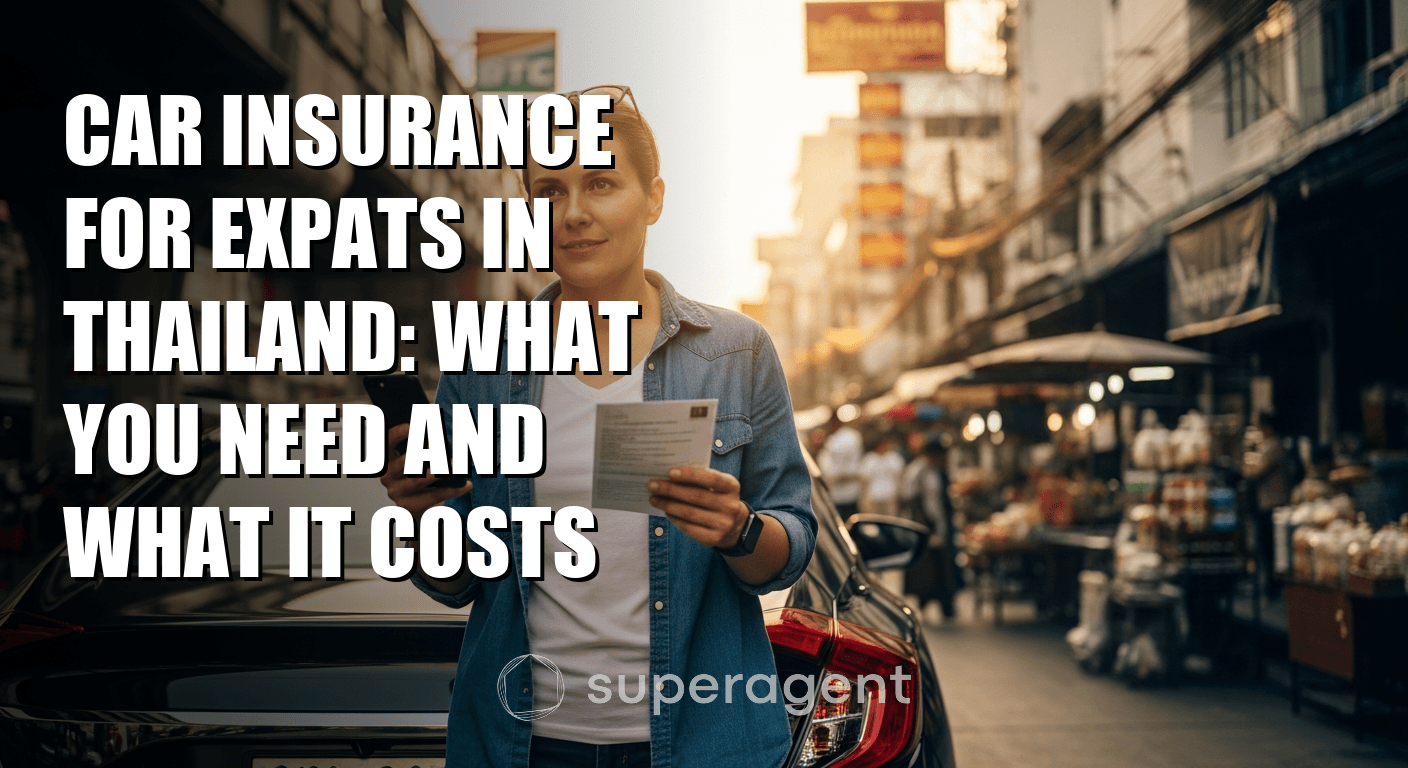
Car Insurance for Expats in Thailand: What You Need and What It Costs
Guides
Car Insurance for Expats in Thailand: What You Need and What It Costs
Essential coverage options and pricing for foreign drivers in Thailand
Summary
Learn what car insurance Thailand expat drivers need, from mandatory third-party liability to comprehensive plans. Discover costs and coverage requirements
If you've just moved to Bangkok and signed a lease on a condo near BTS Thong Lo or somewhere out by MRT Lat Phrao, you might be thinking about getting a car. Maybe you're tired of waiting for Grab in the rain, or you want to explore Khao Yai on weekends. Either way, the moment you buy or lease a vehicle in Thailand, you need insurance. And the system here works differently from what you're probably used to back home.
Let me break down exactly what you need, what it costs, and how to avoid the mistakes I've seen too many expats make.
Compulsory Insurance vs. Voluntary Insurance: Yes, You Need Both
Thailand has a mandatory insurance policy called Por Ror Bor (พ.ร.บ.). Every single vehicle on the road must have it. It covers medical expenses for injuries caused by your vehicle, but the coverage is minimal. We're talking 80,000 THB maximum for medical treatment and 500,000 THB in the event of death or permanent disability. That's it. No property damage, no coverage for your own car, nothing.
Por Ror Bor costs roughly 600 to 1,000 THB per year depending on your vehicle type. It's cheap because it barely covers anything. Think of it like the absolute legal minimum to keep your car registered.
That's why virtually everyone adds voluntary insurance on top. Imagine you're driving home to your condo at Noble Revolve Ratchada near MRT Thailand Cultural Centre and you rear end a brand new Mercedes on Ratchadaphisek Road. Without voluntary coverage, you're paying for that Mercedes repair out of your own pocket. That bill could easily hit 200,000 to 500,000 THB. So yes, voluntary insurance is not optional in practice.
The Five Classes of Voluntary Insurance
Thailand's voluntary car insurance comes in five tiers, and the naming system confuses almost everyone at first. Here's how it actually works.
Class 1 is the most comprehensive. It covers damage to your car, damage to other people's cars, theft, fire, flood, and personal injury. This is what most expats with newer vehicles should get. For a sedan worth around 800,000 to 1,200,000 THB, expect to pay between 15,000 and 30,000 THB per year. If you drive a pickup truck or something more expensive, it goes up from there.
Class 2 covers everything except damage to your own vehicle. Class 3 only covers third party liability. Class 2+ and 3+ are relatively newer hybrid options that add limited coverage for your own car at a lower premium. A Class 2+ policy might run you 8,000 to 12,000 THB annually.
A friend of mine rents a condo at Life Ladprao near BTS Ha Yaek Lat Phrao and drives an older Honda Jazz. He went with Class 2+ because the car itself isn't worth much, but he still wanted protection if he damaged someone else's vehicle. Smart move for a car valued under 400,000 THB.
Can Expats Actually Get Car Insurance in Thailand?
Yes, and it's surprisingly straightforward. You don't need Thai citizenship. You do need a valid driving license, either a Thai license or an International Driving Permit. Most insurance companies will also ask for your passport and your vehicle registration book (the blue book).
The major insurers here include Viriyah Insurance, Bangkok Insurance, Dhipaya Insurance, and Muang Thai Insurance. You can buy policies through brokers, direct from the insurer, or through online platforms like Roojai or Frank. Brokers are popular because they compare rates across multiple companies for you.
One thing to know: your nationality and driving record in Thailand do affect your premiums, but not as dramatically as you might expect. Age and the type of car matter more. A 35 year old expat living near BTS Ari driving a Toyota Yaris will pay roughly the same as a Thai driver with a similar profile. Where it gets expensive is if you're under 25 or driving a sports car.
What About Flooding and Natural Disasters?
Bangkok floods. If you've lived here through a rainy season, you know that Sukhumvit Soi 39 can become a river in about twenty minutes. Standard Class 1 policies usually include flood coverage, but always double check. Some insurers cap flood payouts or require a separate rider.
After the big floods in 2011, several insurance companies added exclusions or higher deductibles for water damage. If you park in an underground garage at a condo like Ashton Asoke near MRT Sukhumvit, your flood risk is arguably higher than someone parking on the fifth floor of a building. Read the fine print or ask your broker directly about flood sub limits.
Tips to Keep Your Premiums Low
Install a dashcam. Some insurers offer discounts, and even if they don't, footage protects you in disputes. Thai accident claims can turn into a "he said, she said" situation fast, especially at busy intersections like the Asoke Montri junction.
Build a no claims record. Most Thai insurers reward claim free years with discounts of 10 to 20 percent. After three clean years, your Class 1 premium drops noticeably. Also consider raising your deductible. Going from a 0 THB deductible to a 5,000 THB deductible can shave 2,000 to 3,000 THB off your annual premium.
Pay annually instead of monthly. Installment plans through brokers often add 5 to 10 percent in fees. If you can handle one lump payment, do it.
Getting your car insurance sorted is one of those practical tasks that makes life in Bangkok feel more settled, right up there with finding the right condo. If you're still searching for a rental that fits your budget and lifestyle, check out superagent.co to find verified listings across Bangkok with AI powered search that actually understands what you're looking for.
If you've just moved to Bangkok and signed a lease on a condo near BTS Thong Lo or somewhere out by MRT Lat Phrao, you might be thinking about getting a car. Maybe you're tired of waiting for Grab in the rain, or you want to explore Khao Yai on weekends. Either way, the moment you buy or lease a vehicle in Thailand, you need insurance. And the system here works differently from what you're probably used to back home.
Let me break down exactly what you need, what it costs, and how to avoid the mistakes I've seen too many expats make.
Compulsory Insurance vs. Voluntary Insurance: Yes, You Need Both
Thailand has a mandatory insurance policy called Por Ror Bor (พ.ร.บ.). Every single vehicle on the road must have it. It covers medical expenses for injuries caused by your vehicle, but the coverage is minimal. We're talking 80,000 THB maximum for medical treatment and 500,000 THB in the event of death or permanent disability. That's it. No property damage, no coverage for your own car, nothing.
Por Ror Bor costs roughly 600 to 1,000 THB per year depending on your vehicle type. It's cheap because it barely covers anything. Think of it like the absolute legal minimum to keep your car registered.
Continue reading after that.
Looking for a condo
to rent?
Leave your name and phone. We'll follow up while you keep reading.
100% Secure
Fast Response
Free Consultation
That's why virtually everyone adds voluntary insurance on top. Imagine you're driving home to your condo at Noble Revolve Ratchada near MRT Thailand Cultural Centre and you rear end a brand new Mercedes on Ratchadaphisek Road. Without voluntary coverage, you're paying for that Mercedes repair out of your own pocket. That bill could easily hit 200,000 to 500,000 THB. So yes, voluntary insurance is not optional in practice.
The Five Classes of Voluntary Insurance
Thailand's voluntary car insurance comes in five tiers, and the naming system confuses almost everyone at first. Here's how it actually works.
Class 1 is the most comprehensive. It covers damage to your car, damage to other people's cars, theft, fire, flood, and personal injury. This is what most expats with newer vehicles should get. For a sedan worth around 800,000 to 1,200,000 THB, expect to pay between 15,000 and 30,000 THB per year. If you drive a pickup truck or something more expensive, it goes up from there.
Class 2 covers everything except damage to your own vehicle. Class 3 only covers third party liability. Class 2+ and 3+ are relatively newer hybrid options that add limited coverage for your own car at a lower premium. A Class 2+ policy might run you 8,000 to 12,000 THB annually.
A friend of mine rents a condo at Life Ladprao near BTS Ha Yaek Lat Phrao and drives an older Honda Jazz. He went with Class 2+ because the car itself isn't worth much, but he still wanted protection if he damaged someone else's vehicle. Smart move for a car valued under 400,000 THB.
Can Expats Actually Get Car Insurance in Thailand?
Yes, and it's surprisingly straightforward. You don't need Thai citizenship. You do need a valid driving license, either a Thai license or an International Driving Permit. Most insurance companies will also ask for your passport and your vehicle registration book (the blue book).
The major insurers here include Viriyah Insurance, Bangkok Insurance, Dhipaya Insurance, and Muang Thai Insurance. You can buy policies through brokers, direct from the insurer, or through online platforms like Roojai or Frank. Brokers are popular because they compare rates across multiple companies for you.
One thing to know: your nationality and driving record in Thailand do affect your premiums, but not as dramatically as you might expect. Age and the type of car matter more. A 35 year old expat living near BTS Ari driving a Toyota Yaris will pay roughly the same as a Thai driver with a similar profile. Where it gets expensive is if you're under 25 or driving a sports car.
What About Flooding and Natural Disasters?
Bangkok floods. If you've lived here through a rainy season, you know that Sukhumvit Soi 39 can become a river in about twenty minutes. Standard Class 1 policies usually include flood coverage, but always double check. Some insurers cap flood payouts or require a separate rider.
Continue reading after that.
Looking for a condo
to rent?
Leave your name and phone. We'll follow up while you keep reading.
100% Secure
Fast Response
Free Consultation
After the big floods in 2011, several insurance companies added exclusions or higher deductibles for water damage. If you park in an underground garage at a condo like Ashton Asoke near MRT Sukhumvit, your flood risk is arguably higher than someone parking on the fifth floor of a building. Read the fine print or ask your broker directly about flood sub limits.
Tips to Keep Your Premiums Low
Install a dashcam. Some insurers offer discounts, and even if they don't, footage protects you in disputes. Thai accident claims can turn into a "he said, she said" situation fast, especially at busy intersections like the Asoke Montri junction.
Build a no claims record. Most Thai insurers reward claim free years with discounts of 10 to 20 percent. After three clean years, your Class 1 premium drops noticeably. Also consider raising your deductible. Going from a 0 THB deductible to a 5,000 THB deductible can shave 2,000 to 3,000 THB off your annual premium.
Pay annually instead of monthly. Installment plans through brokers often add 5 to 10 percent in fees. If you can handle one lump payment, do it.
Getting your car insurance sorted is one of those practical tasks that makes life in Bangkok feel more settled, right up there with finding the right condo. If you're still searching for a rental that fits your budget and lifestyle, check out superagent.co to find verified listings across Bangkok with AI powered search that actually understands what you're looking for.
Share this article
Properties you may like
More like this
 In Guides · Superagent EditorialHidden Costs of Renting a Condo in Bangkok Nobody Warns You AboutBangkok condo rent looks affordable until month one hits. Here are the real costs beyond the headline figure that catch most renters off guard.25 May 20261 min read
 In Guides · Superagent EditorialWhat a Long-Vacant Bangkok Condo Unit Is Actually Telling YouA Bangkok condo vacant for months signals overpricing, landlord issues, or real problems. Here is how to read the signs.25 May 20261 min read
 In Guides · Superagent EditorialRed Flags in a Bangkok Rental Contract to Watch Out ForBangkok rental contracts often hide risky clauses. Here are the red flags every tenant must catch before signing any lease.25 May 20261 min read
 In Guides · Superagent EditorialWorking Online from a Condo: How to Choose the Perfect Room for ProductivityLearn how to choose the best condo room for working online with tips on lighting, noise, and furniture setup to maximize productivity.9 May 20261 min read