Guides
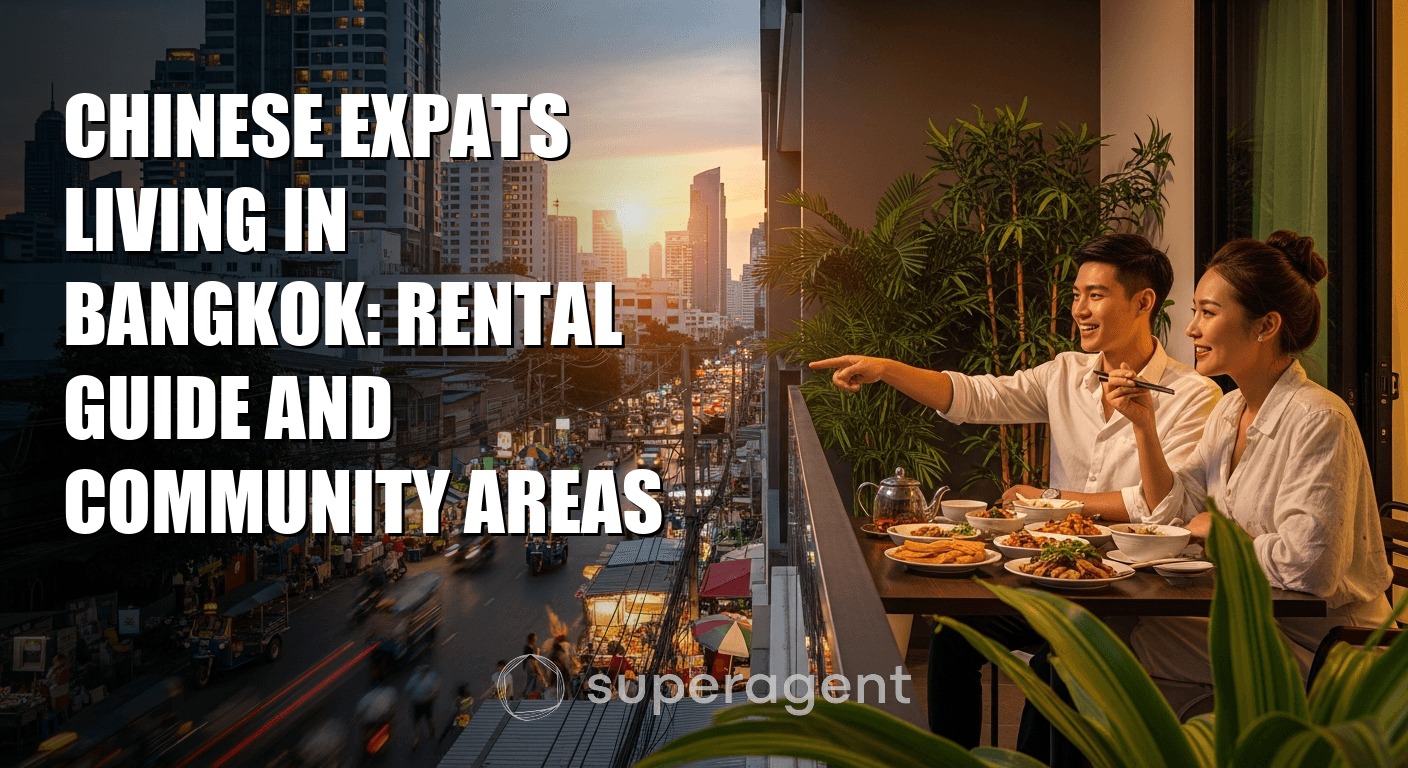
Chinese Expats Living in Bangkok: Rental Guide and Community Areas
Your complete guide to finding the perfect rental home in Bangkok's best neighborhoods for Chinese expats.
Summary
Discover where Chinese expats in Bangkok rent and live. Find the best neighborhoods, housing options, and community resources for expat families.
If you are Chinese and thinking about renting a condo in Bangkok, you are in very good company. The Chinese expat community here has grown massively over the past few years, and entire neighborhoods have reshaped themselves around it. Restaurants, supermarkets, co-working spaces, signage, even entire condo buildings now cater specifically to Chinese residents. Whether you are relocating for business, working remotely, or starting fresh in Southeast Asia, Bangkok offers a comfortable landing pad. But knowing which neighborhoods actually work for Chinese expats, what the real rent prices look like, and how to avoid common headaches can save you months of frustration. This guide covers all of it.
Why Bangkok Has Become a Top Destination for Chinese Expats
Bangkok has quietly become one of the most popular cities in Southeast Asia for Chinese nationals living abroad. A combination of affordable living costs, easy visa options, direct flights to dozens of Chinese cities, and a welcoming local culture has made the move appealing. According to CBRE Thailand, Chinese nationals have been among the top foreign buyers of Bangkok condos for several consecutive years, and the rental market has followed closely behind.
The city also offers practical advantages that matter day to day. Chinese food is everywhere. WeChat Pay and Alipay are accepted at a growing number of shops and restaurants. Mobile plans from providers like AIS are easy to set up with just a passport, and international hospitals like Bumrungrad have Mandarin-speaking staff on hand.
Take someone like Wei, a 32-year-old software developer from Shenzhen who moved to Bangkok in 2023. He chose the city over Kuala Lumpur and Ho Chi Minh City specifically because of the existing Chinese community and the ease of getting a long-term visa. Within a week, he found a one-bedroom condo near Huai Khwang MRT for 15,000 THB per month, signed a lease, and felt settled almost immediately.
Best Neighborhoods for Chinese Expats in Bangkok
Not every part of Bangkok will feel right for Chinese expats. The neighborhoods that work best tend to have a few things in common: Chinese restaurants and grocery stores nearby, good public transit connections, and condo buildings where landlords are used to renting to foreign tenants. Here are the areas that consistently come up.
Huai Khwang is the unofficial heart of the Chinese expat community in Bangkok. The streets around Huai Khwang MRT station are lined with Chinese hotpot restaurants, bubble tea shops, and convenience stores stocked with Chinese products. Condo options in this area range from budget studios to mid-range one-bedrooms. Buildings like The Room Ratchada-Ladprao, Rhythm Ratchada-Huai Khwang, and Chapter One Eco are popular among Chinese renters.
Ratchada, particularly the stretch between Thailand Cultural Centre MRT and Rama 9 MRT, is another strong choice. This corridor offers a mix of new condos at reasonable prices and is close to the Jodd Fairs night market area, which draws a heavily Chinese and Chinese-speaking crowd. Life Asoke-Rama 9 and Ashton Asoke-Rama 9 are well-known buildings here.
Pratunam and the area near Ratchathewi BTS also attract Chinese expats who work in the import-export or wholesale trade sectors. The proximity to Platinum Fashion Mall and the wholesale market district makes it a practical choice for business-focused renters. Studios here can start as low as 10,000 THB per month.
For those with higher budgets or families, the Sukhumvit corridor between Asoke BTS and Phrom Phong BTS remains a solid option. This area has international schools, premium malls like EmQuartier, and a wider variety of dining. Expect to pay more here, but the quality of life is hard to beat.
Realistic Rent Prices for Chinese Expats in Bangkok
One of the biggest advantages of renting in Bangkok is the price. Compared to Shenzhen, Shanghai, or Beijing, you get significantly more space for your money. Based on current market data from DDproperty, the average rent for a one-bedroom condo in the Huai Khwang and Ratchada area is approximately 12,000 to 20,000 THB per month, while the same unit in the Sukhumvit core between Asoke and Thong Lo typically runs 20,000 to 40,000 THB per month.
Here is a comparison of the most popular areas for Chinese expats and what you can expect to pay:
- Huai Khwang: Huai Khwang MRT | 8,000 - 12,000 | 12,000 - 18,000 | 18,000 - 28,000 | Very High
- Ratchada (Rama 9): Rama 9 MRT / Thailand Cultural Centre MRT | 9,000 - 14,000 | 14,000 - 22,000 | 22,000 - 35,000 | High
- Pratunam / Ratchathewi: Ratchathewi BTS | 8,000 - 13,000 | 13,000 - 20,000 | 20,000 - 30,000 | Moderate to High
- Asoke / Phrom Phong: Asoke BTS / Phrom Phong BTS | 12,000 - 18,000 | 20,000 - 40,000 | 35,000 - 65,000 | Moderate
- Silom / Sathorn: Sala Daeng BTS / Lumphini MRT | 11,000 - 16,000 | 18,000 - 35,000 | 30,000 - 55,000 | Low to Moderate
Keep in mind that most landlords ask for a two-month security deposit plus one month's rent upfront. Some buildings popular with Chinese tenants may accept payment through alternative methods, but bank transfer is still the standard.
Visa and Lease Practicalities for Chinese Renters
Before you sign a lease, it helps to understand the visa and documentation side. Most Chinese expats in Bangkok enter on tourist visas and later switch to long-term options like the Thailand Elite Visa, the LTR (Long-Term Resident) visa, or a business visa if they are working with a local company. The Thai Immigration Bureau website has details on the latest requirements and application processes.
For renting, you typically need a valid passport, a copy of your visa, and the ability to pay the deposit and first month upfront. Some landlords ask for proof of employment or income, but this is less common in the mid-range condo market. Leases are usually 12 months, though six-month contracts exist at a slightly higher monthly rate.
A common scenario: Li, a freelance graphic designer from Hangzhou, arrived on a 60-day tourist visa and extended it for another 30 days while searching for a condo. She found a one-bedroom in The Base Garden Rama 9 at 16,000 THB per month, signed a 12-month lease using her passport and extension stamp, then later applied for a Thailand Elite Visa to stay long term. The whole process was smooth because the landlord was experienced with Chinese tenants.
Daily Life and Community Resources for Chinese Expats
One of the reasons the Huai Khwang and Ratchada area works so well for Chinese expats is the ecosystem that has developed around it. You can eat authentic Sichuan food at places along the Ratchadaphisek corridor, buy Chinese groceries at shops near Huai Khwang intersection, and find WeChat groups dedicated to everything from apartment hunting to basketball leagues.
Chinese-language services are easy to find. Real estate agents who speak Mandarin operate throughout these neighborhoods. Dental clinics, law offices, and accounting firms with Chinese-speaking staff have also popped up along Ratchada. If you need to send money home, services like Wise and traditional bank transfers through Bangkok Bank work reliably.
For families, international schools with Chinese curriculum options include several in the Rama 9 and Bangna corridors. Medical care is straightforward too. Hospitals like Bumrungrad in the Sukhumvit area offer Mandarin-language patient coordinators, making doctor visits stress-free.
Consider Mei and Jian, a couple from Chengdu who moved to Bangkok with their six-year-old son. They rented a two-bedroom at Life Asoke-Rama 9 for 28,000 THB per month and enrolled their son in a nearby international school. Within a month, they had connected with other Chinese families in the building, joined a weekend hiking group, and found their go-to hotpot restaurant three minutes from their front door.
Common Mistakes Chinese Expats Make When Renting in Bangkok
The most frequent mistake is not visiting the condo in person before signing. Photos can be misleading, and the view from the 8th floor of a Ratchada building might face directly into a construction site you did not see online. Always schedule a viewing, even if the listing looks perfect.
Another common issue is paying deposits through informal channels. Some landlords or agents in WeChat groups may ask for deposits via personal transfers before you have seen the unit or signed a lease. This is risky. Always insist on a proper lease agreement in English, a receipt for your deposit, and a clear move-in date before transferring money.
Overpaying is also a real concern. Some agents list inflated prices in Chinese-language rental groups, knowing that newcomers may not know the local market rate. A one-bedroom in Huai Khwang should not cost 25,000 THB unless it is a premium unit in a newer building with full furnishing. Do your research on local listing sites to understand the going rate before you commit.
Finally, check your lease for utility billing. Some landlords charge 8 to 10 THB per unit of electricity, well above the government rate. Ask about this before signing and negotiate if needed.
Bangkok is one of the easiest cities in Asia for Chinese expats to settle into. The community is established, the cost of living is genuinely affordable, and the infrastructure for daily life is already built out. Whether you are here for six months or planning to stay for years, getting the right condo in the right neighborhood makes everything else fall into place. If you want to search available condos across Bangkok with real prices and verified listings, check out superagent.co to find your next rental faster.
If you are Chinese and thinking about renting a condo in Bangkok, you are in very good company. The Chinese expat community here has grown massively over the past few years, and entire neighborhoods have reshaped themselves around it. Restaurants, supermarkets, co-working spaces, signage, even entire condo buildings now cater specifically to Chinese residents. Whether you are relocating for business, working remotely, or starting fresh in Southeast Asia, Bangkok offers a comfortable landing pad. But knowing which neighborhoods actually work for Chinese expats, what the real rent prices look like, and how to avoid common headaches can save you months of frustration. This guide covers all of it.
Why Bangkok Has Become a Top Destination for Chinese Expats
Bangkok has quietly become one of the most popular cities in Southeast Asia for Chinese nationals living abroad. A combination of affordable living costs, easy visa options, direct flights to dozens of Chinese cities, and a welcoming local culture has made the move appealing. According to CBRE Thailand, Chinese nationals have been among the top foreign buyers of Bangkok condos for several consecutive years, and the rental market has followed closely behind.
The city also offers practical advantages that matter day to day. Chinese food is everywhere. WeChat Pay and Alipay are accepted at a growing number of shops and restaurants. Mobile plans from providers like AIS are easy to set up with just a passport, and international hospitals like Bumrungrad have Mandarin-speaking staff on hand.
Take someone like Wei, a 32-year-old software developer from Shenzhen who moved to Bangkok in 2023. He chose the city over Kuala Lumpur and Ho Chi Minh City specifically because of the existing Chinese community and the ease of getting a long-term visa. Within a week, he found a one-bedroom condo near Huai Khwang MRT for 15,000 THB per month, signed a lease, and felt settled almost immediately.
Best Neighborhoods for Chinese Expats in Bangkok
Not every part of Bangkok will feel right for Chinese expats. The neighborhoods that work best tend to have a few things in common: Chinese restaurants and grocery stores nearby, good public transit connections, and condo buildings where landlords are used to renting to foreign tenants. Here are the areas that consistently come up.
Huai Khwang is the unofficial heart of the Chinese expat community in Bangkok. The streets around Huai Khwang MRT station are lined with Chinese hotpot restaurants, bubble tea shops, and convenience stores stocked with Chinese products. Condo options in this area range from budget studios to mid-range one-bedrooms. Buildings like The Room Ratchada-Ladprao, Rhythm Ratchada-Huai Khwang, and Chapter One Eco are popular among Chinese renters.
Ratchada, particularly the stretch between Thailand Cultural Centre MRT and Rama 9 MRT, is another strong choice. This corridor offers a mix of new condos at reasonable prices and is close to the Jodd Fairs night market area, which draws a heavily Chinese and Chinese-speaking crowd. Life Asoke-Rama 9 and Ashton Asoke-Rama 9 are well-known buildings here.
Pratunam and the area near Ratchathewi BTS also attract Chinese expats who work in the import-export or wholesale trade sectors. The proximity to Platinum Fashion Mall and the wholesale market district makes it a practical choice for business-focused renters. Studios here can start as low as 10,000 THB per month.
For those with higher budgets or families, the Sukhumvit corridor between Asoke BTS and Phrom Phong BTS remains a solid option. This area has international schools, premium malls like EmQuartier, and a wider variety of dining. Expect to pay more here, but the quality of life is hard to beat.
Realistic Rent Prices for Chinese Expats in Bangkok
One of the biggest advantages of renting in Bangkok is the price. Compared to Shenzhen, Shanghai, or Beijing, you get significantly more space for your money. Based on current market data from DDproperty, the average rent for a one-bedroom condo in the Huai Khwang and Ratchada area is approximately 12,000 to 20,000 THB per month, while the same unit in the Sukhumvit core between Asoke and Thong Lo typically runs 20,000 to 40,000 THB per month.
Here is a comparison of the most popular areas for Chinese expats and what you can expect to pay:
- Huai Khwang: Huai Khwang MRT | 8,000 - 12,000 | 12,000 - 18,000 | 18,000 - 28,000 | Very High
- Ratchada (Rama 9): Rama 9 MRT / Thailand Cultural Centre MRT | 9,000 - 14,000 | 14,000 - 22,000 | 22,000 - 35,000 | High
- Pratunam / Ratchathewi: Ratchathewi BTS | 8,000 - 13,000 | 13,000 - 20,000 | 20,000 - 30,000 | Moderate to High
- Asoke / Phrom Phong: Asoke BTS / Phrom Phong BTS | 12,000 - 18,000 | 20,000 - 40,000 | 35,000 - 65,000 | Moderate
- Silom / Sathorn: Sala Daeng BTS / Lumphini MRT | 11,000 - 16,000 | 18,000 - 35,000 | 30,000 - 55,000 | Low to Moderate
Keep in mind that most landlords ask for a two-month security deposit plus one month's rent upfront. Some buildings popular with Chinese tenants may accept payment through alternative methods, but bank transfer is still the standard.
Visa and Lease Practicalities for Chinese Renters
Before you sign a lease, it helps to understand the visa and documentation side. Most Chinese expats in Bangkok enter on tourist visas and later switch to long-term options like the Thailand Elite Visa, the LTR (Long-Term Resident) visa, or a business visa if they are working with a local company. The Thai Immigration Bureau website has details on the latest requirements and application processes.
For renting, you typically need a valid passport, a copy of your visa, and the ability to pay the deposit and first month upfront. Some landlords ask for proof of employment or income, but this is less common in the mid-range condo market. Leases are usually 12 months, though six-month contracts exist at a slightly higher monthly rate.
Talk to us about renting
Share your details and keep reading — we’ll get back to you.
A common scenario: Li, a freelance graphic designer from Hangzhou, arrived on a 60-day tourist visa and extended it for another 30 days while searching for a condo. She found a one-bedroom in The Base Garden Rama 9 at 16,000 THB per month, signed a 12-month lease using her passport and extension stamp, then later applied for a Thailand Elite Visa to stay long term. The whole process was smooth because the landlord was experienced with Chinese tenants.
Daily Life and Community Resources for Chinese Expats
One of the reasons the Huai Khwang and Ratchada area works so well for Chinese expats is the ecosystem that has developed around it. You can eat authentic Sichuan food at places along the Ratchadaphisek corridor, buy Chinese groceries at shops near Huai Khwang intersection, and find WeChat groups dedicated to everything from apartment hunting to basketball leagues.
Chinese-language services are easy to find. Real estate agents who speak Mandarin operate throughout these neighborhoods. Dental clinics, law offices, and accounting firms with Chinese-speaking staff have also popped up along Ratchada. If you need to send money home, services like Wise and traditional bank transfers through Bangkok Bank work reliably.
For families, international schools with Chinese curriculum options include several in the Rama 9 and Bangna corridors. Medical care is straightforward too. Hospitals like Bumrungrad in the Sukhumvit area offer Mandarin-language patient coordinators, making doctor visits stress-free.
Consider Mei and Jian, a couple from Chengdu who moved to Bangkok with their six-year-old son. They rented a two-bedroom at Life Asoke-Rama 9 for 28,000 THB per month and enrolled their son in a nearby international school. Within a month, they had connected with other Chinese families in the building, joined a weekend hiking group, and found their go-to hotpot restaurant three minutes from their front door.
Common Mistakes Chinese Expats Make When Renting in Bangkok
The most frequent mistake is not visiting the condo in person before signing. Photos can be misleading, and the view from the 8th floor of a Ratchada building might face directly into a construction site you did not see online. Always schedule a viewing, even if the listing looks perfect.
Another common issue is paying deposits through informal channels. Some landlords or agents in WeChat groups may ask for deposits via personal transfers before you have seen the unit or signed a lease. This is risky. Always insist on a proper lease agreement in English, a receipt for your deposit, and a clear move-in date before transferring money.
Overpaying is also a real concern. Some agents list inflated prices in Chinese-language rental groups, knowing that newcomers may not know the local market rate. A one-bedroom in Huai Khwang should not cost 25,000 THB unless it is a premium unit in a newer building with full furnishing. Do your research on local listing sites to understand the going rate before you commit.
Finally, check your lease for utility billing. Some landlords charge 8 to 10 THB per unit of electricity, well above the government rate. Ask about this before signing and negotiate if needed.
Bangkok is one of the easiest cities in Asia for Chinese expats to settle into. The community is established, the cost of living is genuinely affordable, and the infrastructure for daily life is already built out. Whether you are here for six months or planning to stay for years, getting the right condo in the right neighborhood makes everything else fall into place. If you want to search available condos across Bangkok with real prices and verified listings, check out superagent.co to find your next rental faster.
Share this article
Properties you may like
![[For Rent&Sale] HOUSE I Perfect Place Ramindra - Wongwaen I 4 Beds I 3 Baths I Rent 33,000THB/mo - Sale 7.49mb THB](/_next/image?url=https%3A%2F%2Fstorage.googleapis.com%2Fsuperagent-web%2Fattachments%2Flistings%2F1957%2F4c02eda2-14c3-4a1c-8ad1-fea436f93326-p8.5.jpg&w=3840&q=75)
฿33,000
[For Rent&Sale] HOUSE I Perfect Place Ramindra - Wongwaen I 4 Beds I 3 Baths I Rent 33,000THB/mo - Sale 7.49mb THB
House![[For Rent] CONDO I Notting Hill The Exclusive Charoen Krung 93 I 2 Beds I 1 Bath I 25,000THB/mo](/_next/image?url=https%3A%2F%2Fstorage.googleapis.com%2Fsuperagent-web%2Fattachments%2Flistings%2F1928%2F0ab7c14e-8339-4c28-b54a-d8a64920e9af-4.-img_1315.jpg&w=3840&q=75)
฿25,000
[For Rent] CONDO I Notting Hill The Exclusive Charoen Krung 93 I 2 Beds I 1 Bath I 25,000THB/mo
Condo![[For Rent] BUILDING I Quach House Phrom Phong I 1st-6th Floor I 100,000-135,000THB/mo](/_next/image?url=https%3A%2F%2Fstorage.googleapis.com%2Fsuperagent-web%2Fattachments%2Flistings%2F1976%2F333d3ec9-941e-431d-8a0c-68b9d7bdbc41-1000002210.jpg&w=3840&q=75)
฿135,000
[For Rent] BUILDING I Quach House Phrom Phong I 1st-6th Floor I 100,000-135,000THB/mo
Townhouse![[For Rent] CONDO I Waterford Diamond Sukhumvit 30/1 I 3 Beds I 3 Baths I 65,000THB/mo](/_next/image?url=https%3A%2F%2Fstorage.googleapis.com%2Fsuperagent-web%2Fattachments%2Flistings%2F2049%2Fa78ddba5-043d-459a-97eb-4f80a7bf7d1a-8f2dc5c8-f220-47ae-b027-7deab6c6666b-media.jpg&w=3840&q=75)
฿65,000
[For Rent] CONDO I Waterford Diamond Sukhumvit 30/1 I 3 Beds I 3 Baths I 65,000THB/mo
Phrom Phong
Condo![[For Rent] HOUSE I Centro Vibhavadi I 4 Beds I 3 Baths I 80,000THB/mo](/_next/image?url=https%3A%2F%2Fstorage.googleapis.com%2Fsuperagent-web%2Fattachments%2Flistings%2F2048%2F7bcb9b3f-6bca-4615-8451-eb71e0910ecc-26-07-09-15-10-22-747_deco.jpg&w=3840&q=75)
฿80,000
[For Rent] HOUSE I Centro Vibhavadi I 4 Beds I 3 Baths I 80,000THB/mo
House![[For Rent] CONDO I RHYTHM Sathorn I 1 Bed I 1 Bath I 20,000THB/mo](/_next/image?url=https%3A%2F%2Fstorage.googleapis.com%2Fsuperagent-web%2Fattachments%2Flistings%2F2045%2Fcd83dbf6-1fcd-43e1-9788-a9f9ef92106c-img_2861.jpg&w=3840&q=75)
฿20,000
[For Rent] CONDO I RHYTHM Sathorn I 1 Bed I 1 Bath I 20,000THB/mo
Condo![[For Rent] TOWNHOME I Gravitia Rama 2-Thakam I 3 Beds I 3 Baths I 35,000THB/mo](/_next/image?url=https%3A%2F%2Fstorage.googleapis.com%2Fsuperagent-web%2Fattachments%2Flistings%2F2046%2F3a6c0105-9e14-456f-8fde-b8a52d7cec89-line_album_-531_260714_16.jpg&w=3840&q=75)
฿35,000
[For Rent] TOWNHOME I Gravitia Rama 2-Thakam I 3 Beds I 3 Baths I 35,000THB/mo
Townhouse![[For Rent & Sale] CONDO I KHUN by YOO I 2 Beds I 2 Baths I Rent 130,000THB/mo - Sale 37,000,000mb THB](/_next/image?url=https%3A%2F%2Fstorage.googleapis.com%2Fsuperagent-web%2Fattachments%2Flistings%2F2015%2Fac778d88-63d8-418e-8291-ce27e76eb87b-17227fa8597d930453882fcb8eceab768aa7d514.jpg&w=3840&q=75)
฿130,000
[For Rent & Sale] CONDO I KHUN by YOO I 2 Beds I 2 Baths I Rent 130,000THB/mo - Sale 37,000,000mb THB
Thonglor
Condo![[For Rent] CONDO I IDEO Ratchada-Huai Khwang I 2 Beds I 2 Baths I 25,000THB/mo](/_next/image?url=https%3A%2F%2Fstorage.googleapis.com%2Fsuperagent-web%2Fattachments%2Flistings%2F1935%2Fac9ba95a-0ad4-4121-9287-226c06205f6f-1782609678044-61071c89.jpg&w=3840&q=75)
฿25,000
[For Rent] CONDO I IDEO Ratchada-Huai Khwang I 2 Beds I 2 Baths I 25,000THB/mo
Huai Khwang
Condo![[For Rent] HOUSE I Laddarom Rattanathibet I 4 Beds I 3 Baths I Rent 80,000THB/mo](/_next/image?url=https%3A%2F%2Fstorage.googleapis.com%2Fsuperagent-web%2Fattachments%2Flistings%2F2035%2Ff8ee11b5-97d3-475e-b58b-49ebc833161e-ef77c7dc-87f5-4b5e-8a7d-0c4e41b65b6b-a34.jpg&w=3840&q=75)
฿80,000
[For Rent] HOUSE I Laddarom Rattanathibet I 4 Beds I 3 Baths I Rent 80,000THB/mo
HouseMore like this
 In Guides · Superagent EditorialHidden Costs of Renting a Condo in Bangkok Nobody Warns You AboutBangkok condo rent looks affordable until month one hits. Here are the real costs beyond the headline figure that catch most renters off guard.25 May 20261 min read
 In Guides · Superagent EditorialWhat a Long-Vacant Bangkok Condo Unit Is Actually Telling YouA Bangkok condo vacant for months signals overpricing, landlord issues, or real problems. Here is how to read the signs.25 May 20261 min read
 In Guides · Superagent EditorialRed Flags in a Bangkok Rental Contract to Watch Out ForBangkok rental contracts often hide risky clauses. Here are the red flags every tenant must catch before signing any lease.25 May 20261 min read
 In Guides · Superagent EditorialWorking Online from a Condo: How to Choose the Perfect Room for ProductivityLearn how to choose the best condo room for working online with tips on lighting, noise, and furniture setup to maximize productivity.9 May 20261 min read