Condo Maintenance for Rental: What's the Owner's Responsibility vs. Tenant's
Guides
Condo Maintenance for Rental: What's the Owner's Responsibility vs. Tenant's
Clear guidelines on who pays for repairs in Bangkok rental condos
Summary
Understanding condo maintenance responsibilities between owners and tenants is crucial. Learn what repairs fall under the owner's duty and what tenants mus
If you're renting a condo in Bangkok, you've probably wondered who actually pays when something breaks. Is it your job to fix that leaky toilet? Should the landlord replace the air con when it stops working in July? The answer is almost never straightforward, and it's one of the biggest sources of tension between renters and owners here.
Most rental agreements in Bangkok are vague about maintenance responsibilities, which means disputes happen constantly. Last month, a tenant in a Phetchburi building spent 4,500 baht fixing a broken water heater because the owner said it was "normal wear and tear." Another renter near BTS Thonglor lost their deposit over minor wall scuffs the landlord claimed needed full repainting. These situations are preventable if you understand the rules.
Here's what actually matters in Bangkok condo rentals when it comes to repairs and maintenance.
เจ้าของคอนโดต้องซ่อมอะไรบ้าง
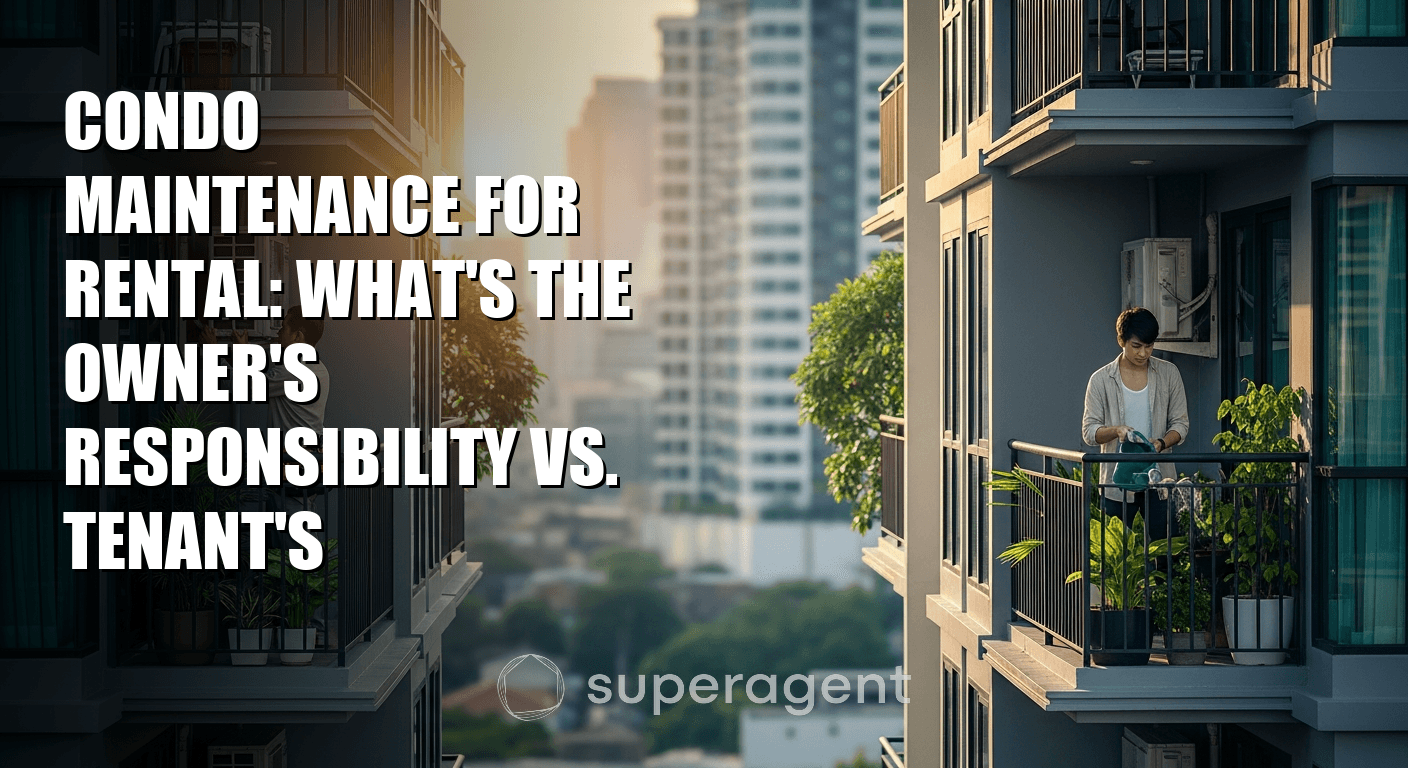
In Thailand's Civil and Commercial Code, owners are responsible for keeping rental property in a condition suitable for living. That means the structural stuff. Think roof leaks, broken pipes in walls, electrical system failures, and major appliances that came with the unit when you moved in.
If your condo came with an air conditioner unit mounted in the wall, that's the owner's problem. If the refrigerator was already there, same story. Take a photo when you first get the keys. It protects you later. We've seen landlords in Rama 9 towers claim tenants broke things that were already broken six months earlier.
The balcony is the owner's responsibility too. If the railing is rusty or tiles are cracked, that's a structural issue. Ditto for window seals, door frames, and paint on common areas like hallways. Building maintenance like elevator repairs, water tank cleaning, and security system issues are handled by the condo committee, and your maintenance fees cover that.
ผู้เช่าต้องซ่อมแซมอะไร
You're responsible for anything you break or damage through negligence. That's the rule everywhere, including Bangkok. Accidentally punched a hole in the drywall? Your bill. Let your cooking oil splatter all over the stove and cooktop? Clean it or pay for deep cleaning. Dropped a heavy plant pot and cracked a tile? You've got this.
General cleaning and maintenance fall on you too. A tenant near BTS Asok realized too late that "stains on tiles" doesn't mean the owner replaces them, it means you should have cleaned them regularly. Light bulbs, furniture you brought in, anything you installed yourself (extra shelves, curtain rods, outlets) stays your problem.
Most Thai landlords expect you to handle small repairs on your own dime. We're talking about fixing door handles, replacing washers on faucets, unclogging drains, and oiling squeaky hinges. These cost 200 to 500 baht. Paying this yourself usually costs less than negotiating it with an owner and way less stressful than losing deposit money over it.
กรณีที่ถกเถียงกันบ่อย
Air conditioning is the number one dispute. If it came with the unit, the owner maintains it. Annual servicing, freon refills, parts replacement. But if you damaged it by not cleaning the filter or by making the system work overtime, that's on you. Many owners in Sukhumvit condos now write specific AC clauses into contracts. Pay attention when signing.
Water heater breakdowns create constant headaches. A 30 year old building near Soi Pridi had a tenant pay 6,800 baht to fix the main heater because the contract said "tenant maintenance of appliances." That's why you need specific language about what counts as an appliance versus a building system.
Hot water issues in the unit itself? Usually the landlord's responsibility if the unit came with a heater. If it's a central building system, the condo committee handles it through maintenance fees. Grout and tile damage gets messy too. Normal degradation over years is the owner's problem. Damage from standing water or impact is yours.
ต้องจัดการอย่างไรให้ปลอดภัย
Get everything in writing before you sign. Your rental agreement needs specific language about major systems: AC, water heater, appliances, plumbing, electrical. Don't assume anything. A clear contract prevents 95 percent of these problems.
Take photos and video when you move in. Walk through every room, every closet, every balcony. Document existing damage, stains, and wear. Send these to your landlord with a "move in condition" email. When you move out, take the same photos. This protects you from losing your deposit over pre existing damage.
For repairs, get quotes in writing. A Bangkok plumber will give you a price before they fix anything. Show the quote to your landlord if you think it's their responsibility. Keep all receipts. If there's a dispute, you have proof of what things actually cost.
Know the maintenance fee situation. Your monthly fee should cover building maintenance, water, common area cleaning, and security. If something major breaks that's a building system, bug the condo committee, not the landlord. That's literally what the committee exists for.
ถ้าเจ้าของปฏิเสธการซ่อม
If the landlord refuses to make repairs that are legally their responsibility, you have options. First, send a formal letter requesting the repair with a reasonable timeline, maybe 14 days. Keep a copy. If they still refuse, you can actually withhold rent in Thailand until repairs are made. This is extreme and should be your last resort because it creates legal complications.
Most disputes get solved through the landlord's property manager. If there isn't one, contact the building office. Sometimes they can pressure an absent or difficult owner. Get everything documented. Emails beat phone calls. A paper trail protects you.
Understanding these rules saves you money and stress. The rental market in Bangkok moves fast, and owners know plenty of expats don't understand tenant rights. Protecting yourself with a solid contract, good documentation, and clear communication is worth more than anything else you can do.
When you're searching for your next place, look for owners who are transparent about maintenance responsibilities. Use Superagent to find listings where landlords have clearly explained what's included and what's your responsibility. The right rental fit saves you from these headaches entirely, and that peace of mind is priceless in a city like Bangkok.
If you're renting a condo in Bangkok, you've probably wondered who actually pays when something breaks. Is it your job to fix that leaky toilet? Should the landlord replace the air con when it stops working in July? The answer is almost never straightforward, and it's one of the biggest sources of tension between renters and owners here.
Most rental agreements in Bangkok are vague about maintenance responsibilities, which means disputes happen constantly. Last month, a tenant in a Phetchburi building spent 4,500 baht fixing a broken water heater because the owner said it was "normal wear and tear." Another renter near BTS Thonglor lost their deposit over minor wall scuffs the landlord claimed needed full repainting. These situations are preventable if you understand the rules.
Here's what actually matters in Bangkok condo rentals when it comes to repairs and maintenance.
เจ้าของคอนโดต้องซ่อมอะไรบ้าง
In Thailand's Civil and Commercial Code, owners are responsible for keeping rental property in a condition suitable for living. That means the structural stuff. Think roof leaks, broken pipes in walls, electrical system failures, and major appliances that came with the unit when you moved in.
If your condo came with an air conditioner unit mounted in the wall, that's the owner's problem. If the refrigerator was already there, same story. Take a photo when you first get the keys. It protects you later. We've seen landlords in Rama 9 towers claim tenants broke things that were already broken six months earlier.
Continue reading after that.
Looking for a condo
to rent?
Leave your name and phone. We'll follow up while you keep reading.
100% Secure
Fast Response
Free Consultation
The balcony is the owner's responsibility too. If the railing is rusty or tiles are cracked, that's a structural issue. Ditto for window seals, door frames, and paint on common areas like hallways. Building maintenance like elevator repairs, water tank cleaning, and security system issues are handled by the condo committee, and your maintenance fees cover that.
ผู้เช่าต้องซ่อมแซมอะไร
You're responsible for anything you break or damage through negligence. That's the rule everywhere, including Bangkok. Accidentally punched a hole in the drywall? Your bill. Let your cooking oil splatter all over the stove and cooktop? Clean it or pay for deep cleaning. Dropped a heavy plant pot and cracked a tile? You've got this.
General cleaning and maintenance fall on you too. A tenant near BTS Asok realized too late that "stains on tiles" doesn't mean the owner replaces them, it means you should have cleaned them regularly. Light bulbs, furniture you brought in, anything you installed yourself (extra shelves, curtain rods, outlets) stays your problem.
Most Thai landlords expect you to handle small repairs on your own dime. We're talking about fixing door handles, replacing washers on faucets, unclogging drains, and oiling squeaky hinges. These cost 200 to 500 baht. Paying this yourself usually costs less than negotiating it with an owner and way less stressful than losing deposit money over it.
กรณีที่ถกเถียงกันบ่อย
Air conditioning is the number one dispute. If it came with the unit, the owner maintains it. Annual servicing, freon refills, parts replacement. But if you damaged it by not cleaning the filter or by making the system work overtime, that's on you. Many owners in Sukhumvit condos now write specific AC clauses into contracts. Pay attention when signing.
Water heater breakdowns create constant headaches. A 30 year old building near Soi Pridi had a tenant pay 6,800 baht to fix the main heater because the contract said "tenant maintenance of appliances." That's why you need specific language about what counts as an appliance versus a building system.
Hot water issues in the unit itself? Usually the landlord's responsibility if the unit came with a heater. If it's a central building system, the condo committee handles it through maintenance fees. Grout and tile damage gets messy too. Normal degradation over years is the owner's problem. Damage from standing water or impact is yours.
ต้องจัดการอย่างไรให้ปลอดภัย
Get everything in writing before you sign. Your rental agreement needs specific language about major systems: AC, water heater, appliances, plumbing, electrical. Don't assume anything. A clear contract prevents 95 percent of these problems.
Take photos and video when you move in. Walk through every room, every closet, every balcony. Document existing damage, stains, and wear. Send these to your landlord with a "move in condition" email. When you move out, take the same photos. This protects you from losing your deposit over pre existing damage.
Continue reading after that.
Looking for a condo
to rent?
Leave your name and phone. We'll follow up while you keep reading.
100% Secure
Fast Response
Free Consultation
For repairs, get quotes in writing. A Bangkok plumber will give you a price before they fix anything. Show the quote to your landlord if you think it's their responsibility. Keep all receipts. If there's a dispute, you have proof of what things actually cost.
Know the maintenance fee situation. Your monthly fee should cover building maintenance, water, common area cleaning, and security. If something major breaks that's a building system, bug the condo committee, not the landlord. That's literally what the committee exists for.
ถ้าเจ้าของปฏิเสธการซ่อม
If the landlord refuses to make repairs that are legally their responsibility, you have options. First, send a formal letter requesting the repair with a reasonable timeline, maybe 14 days. Keep a copy. If they still refuse, you can actually withhold rent in Thailand until repairs are made. This is extreme and should be your last resort because it creates legal complications.
Most disputes get solved through the landlord's property manager. If there isn't one, contact the building office. Sometimes they can pressure an absent or difficult owner. Get everything documented. Emails beat phone calls. A paper trail protects you.
Understanding these rules saves you money and stress. The rental market in Bangkok moves fast, and owners know plenty of expats don't understand tenant rights. Protecting yourself with a solid contract, good documentation, and clear communication is worth more than anything else you can do.
When you're searching for your next place, look for owners who are transparent about maintenance responsibilities. Use Superagent to find listings where landlords have clearly explained what's included and what's your responsibility. The right rental fit saves you from these headaches entirely, and that peace of mind is priceless in a city like Bangkok.
Share this article
Properties you may like
![[For Rent] CONDO I Las Colinas Condominium I 2 Beds I 3 Baths I 85,000THB/mo](/_next/image?url=https%3A%2F%2Fstorage.googleapis.com%2Fsuperagent-web%2Fattachments%2Flistings%2F6828%2F80f345c4-488e-43b2-b017-c9fbb17b520d-99486dd8-4237-4ba2-9207-01ce4f66b21f-media.jpg&w=3840&q=75)
฿85,000
2 Bed3170 sqm
[For Rent] CONDO I Las Colinas Condominium I 2 Beds I 3 Baths I 85,000THB/mo
Asoke
Condo![[For Rent] CONDO I Ashton Asoke I 1 Bed I 1 Bath I 30,000THB/mo](/_next/image?url=https%3A%2F%2Fstorage.googleapis.com%2Fsuperagent-web%2Fattachments%2Flistings%2F6876%2Fb7ce9bbe-f877-4ff5-bb54-8ad0026db940-1272-4.jpg&w=3840&q=75)
฿30,000
1 Bed135 sqm
[For Rent] CONDO I Ashton Asoke I 1 Bed I 1 Bath I 30,000THB/mo
Asoke
Condo![[For Rent] CONDO I Skyrise Avenue Sukhumvit 64 I 2 Beds I 2 Baths I 27,000THB/mo](/_next/image?url=https%3A%2F%2Fstorage.googleapis.com%2Fsuperagent-web%2Fattachments%2Flistings%2F2001%2F670f91de-c251-4e81-971c-8e30ed2158cd-screenshot-2026-07-05-at-11.38.53-pm.png&w=3840&q=75)
฿27,000
2 Bed252 sqm
[For Rent] CONDO I Skyrise Avenue Sukhumvit 64 I 2 Beds I 2 Baths I 27,000THB/mo
Punnawithi
Condo![[For Rent] CONDO I Park Origin Ratchathewi I Duplex I 2 Beds I 1 Bath I 32,000THB/mo](/_next/image?url=https%3A%2F%2Fstorage.googleapis.com%2Fsuperagent-web%2Fattachments%2Flistings%2F6896%2Fb79a7d21-7533-4b0d-bb19-762ebfafab62-1318-6.jpg&w=3840&q=75)
฿32,000
2 Bed135.9 sqm
[For Rent] CONDO I Park Origin Ratchathewi I Duplex I 2 Beds I 1 Bath I 32,000THB/mo
Ratchathewi
Condo![[For Rent] CONDO I Park Origin Phayathai I Studio I 1 Bath I 28,000THB/mo](/_next/image?url=https%3A%2F%2Fstorage.googleapis.com%2Fsuperagent-web%2Fattachments%2Flistings%2F6757%2Fb226df93-94c6-46fa-aeba-ebfadc7f81b8-1000006042.jpg&w=3840&q=75)
฿28,000
Studio129 sqm
[For Rent] CONDO I Park Origin Phayathai I Studio I 1 Bath I 28,000THB/mo
Phaya Thai
Condo![[For Rent] CONDO I Ideo Mobi Sukhumvit 81 I Duplex I 1 Bed I 1 Bath I 28,000THB/mo](/_next/image?url=https%3A%2F%2Fstorage.googleapis.com%2Fsuperagent-web%2Fattachments%2Flistings%2F1849%2Fc8b2c033-3b5f-4615-b2b0-4972f40141f0-705-13.jpg&w=3840&q=75)
฿28,000
1 Bed143 sqm
[For Rent] CONDO I Ideo Mobi Sukhumvit 81 I Duplex I 1 Bed I 1 Bath I 28,000THB/mo
On Nut
Condo![[For Rent] CONDO I Siamese Sukhumvit 48 I 1 Bed I 1 Bath I 28,000THB/mo](/_next/image?url=https%3A%2F%2Fstorage.googleapis.com%2Fsuperagent-web%2Fattachments%2Flistings%2F6841%2Febc2dce2-2e9b-4e6d-a01c-0cfa619dfa13-1231-6.jpg&w=3840&q=75)
฿28,000
1 Bed144 sqm
[For Rent] CONDO I Siamese Sukhumvit 48 I 1 Bed I 1 Bath I 28,000THB/mo
Condo![[For Rent] CONDO I Ashton Asoke I 1 Bed I 1 Bath I 22,000THB/mo](/_next/image?url=https%3A%2F%2Fstorage.googleapis.com%2Fsuperagent-web%2Fattachments%2Flistings%2F6802%2Fe06b9b73-1207-414a-ab04-1685de0c7eaa-20220808_153124_0.jpg&w=3840&q=75)
฿22,000
1 Bed134 sqm
[For Rent] CONDO I Ashton Asoke I 1 Bed I 1 Bath I 22,000THB/mo
Asoke
Condo![[For Rent] CONDO I HQ Thonglor Soi 4 I 1 Bed I 1 Bath I 35,000 THB/mo](/_next/image?url=https%3A%2F%2Fstorage.googleapis.com%2Fsuperagent-web%2Fattachments%2Flistings%2F1445%2F72352585-1bc2-41a8-bd62-ddcbf8189fe9-376-5.jpg&w=3840&q=75)
฿35,000
1 Bed143.6 sqm
[For Rent] CONDO I HQ Thonglor Soi 4 I 1 Bed I 1 Bath I 35,000 THB/mo
Thonglor
Condo![[For Rent] CONDO I The Master Centrium Asoke - Sukhumvit I Duplex I 2 Beds I 3 Baths I 75,000 THB/mo](/_next/image?url=https%3A%2F%2Fstorage.googleapis.com%2Fsuperagent-web%2Fattachments%2Flistings%2F1545%2F97932b6a-c358-45e4-b5f9-995dbf5a3cf0-441-2.jpg&w=3840&q=75)
฿75,000
2 Bed3150 sqm
[For Rent] CONDO I The Master Centrium Asoke - Sukhumvit I Duplex I 2 Beds I 3 Baths I 75,000 THB/mo
Asoke
CondoMore like this
 In Guides · Superagent EditorialHidden Costs of Renting a Condo in Bangkok Nobody Warns You AboutBangkok condo rent looks affordable until month one hits. Here are the real costs beyond the headline figure that catch most renters off guard.25 May 20261 min read
 In Guides · Superagent EditorialWhat a Long-Vacant Bangkok Condo Unit Is Actually Telling YouA Bangkok condo vacant for months signals overpricing, landlord issues, or real problems. Here is how to read the signs.25 May 20261 min read
 In Guides · Superagent EditorialRed Flags in a Bangkok Rental Contract to Watch Out ForBangkok rental contracts often hide risky clauses. Here are the red flags every tenant must catch before signing any lease.25 May 20261 min read
 In Guides · Superagent EditorialWorking Online from a Condo: How to Choose the Perfect Room for ProductivityLearn how to choose the best condo room for working online with tips on lighting, noise, and furniture setup to maximize productivity.9 May 20261 min read