Condo Rental Insurance in Thailand: Which Policy Should Owners Buy?
Guides
Condo Rental Insurance in Thailand: Which Policy Should Owners Buy?
Protect your rental investment with the right insurance coverage for Thai condominiums.
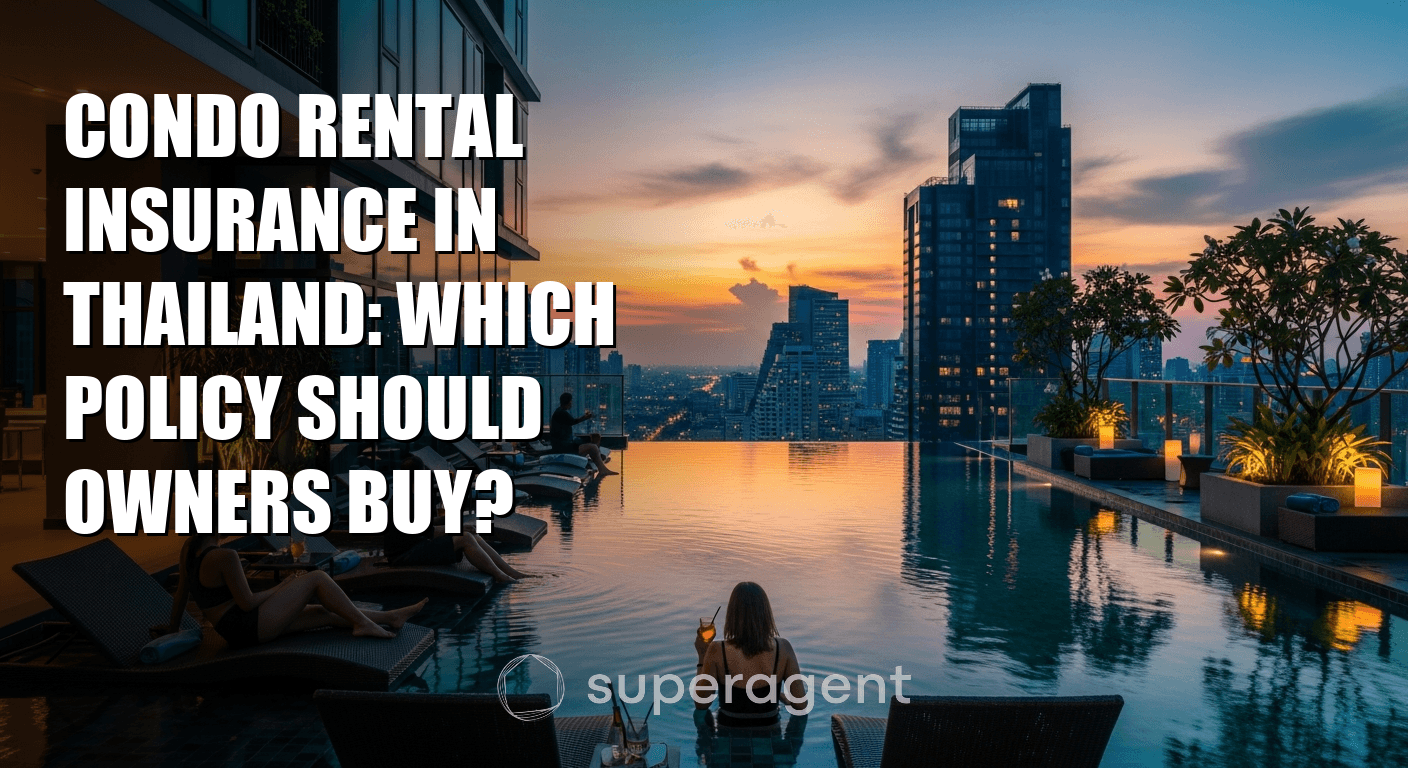
Summary
ประกันภัยคอนโดให้เช่า ไทย requires careful selection. Learn which policies protect rental income, cover tenant damage, and safeguard your asset.
So you've bought a condo in Thonglor or Ekkamai, and now you're thinking about renting it out. Smart move. Bangkok's rental market is booming, and owners can make solid monthly returns. But here's the thing everyone forgets until something goes wrong: what happens if your tenant trashes the place, or there's a break-in, or the building floods during monsoon season? That's where condo insurance for rental properties comes in, and it's not the same as regular condo insurance.
I've watched condo owners in Bangkok make expensive mistakes with their insurance policies. They either skip it entirely (risky), or they buy the wrong kind and then get denied a claim when disaster hits. Let's talk about what actually protects your investment as a landlord.
Why Standard Condo Insurance Doesn't Cut It for Rentals
Most standard condo insurance policies are designed for owner-occupied units. You buy them, live there, and the insurer calculates risk based on that. Once you convert that unit to a rental, everything changes. Your liability exposure is different. The wear and tear patterns are different. The risk profile is literally not what the insurance company priced for.
I know someone in Ari who just rented out their one-bedroom condo without telling their insurer. When a guest's friend was injured at the unit and the liability case went to court, the claim got rejected instantly. The policy had an occupancy clause right there in the fine print. He ended up paying 200,000 baht out of pocket. Could have been prevented with five minutes and a policy update.
When you rent out a Bangkok condo, you need coverage that actually acknowledges the property is generating income for you. Insurance companies want to know this because it changes how they assess your risk. Rental properties have higher claim frequencies than owner-occupied units, full stop.
Three Insurance Types You Should Know About
Let's break down your actual options. These are the types that make sense for Bangkok condo owners renting to tenants.
Landlord Insurance (Property Plus Liability). This is the most common choice and what most Thai insurers offer under different names. It covers the building structure, fixtures, your furniture, and liability if a tenant or guest gets injured on the property. Most policies cover damage from fire, theft, and weather. Monthly costs run between 1,500 and 3,500 baht depending on the unit value and your deductible.
If you own a 3-million-baht condo in Phromphong and rent it for 40,000 baht monthly, landlord insurance is probably what you need. It protects the building itself and covers your legal responsibility if something happens to someone on the property.
Loss of Rent Coverage. This one's sneaky important and people forget about it constantly. If your unit becomes uninhabitable due to fire, flood, or vandalism, this covers your lost rental income while repairs happen. In Bangkok, where monsoon floods can sideline units for weeks, this is genuinely valuable.
A owner renting a condo near Lad Phrao got hit with serious water damage during a heavy rain two years back. The unit was empty for three months while repairs happened. Without loss of rent coverage, she lost 120,000 baht in missing income. With it, the insurer covered almost everything except the deductible.
Tenant Default Insurance. This covers unpaid rent and damage caused by the tenant. It's less common in Thailand than it should be. Coverage usually kicks in after you've tried formal eviction processes, so it's a safety net, not a quick fix. Costs about 500 to 1,000 baht monthly but can save you thousands.
What Actually Gets Covered (And What Doesn't)
Read the policy details carefully, because insurers exclude specific things, and you need to know what you're not protected against before you buy.
Most policies cover fire, theft, vandalism, weather damage, and broken pipes. They usually do not cover wear and tear, normal depreciation, or damage from tenant negligence that falls below the damage threshold. If a tenant cracks tiles or damages paint, that's typically on you, not the insurer.
Flood coverage is important to ask about specifically. Some policies cap flood claims or exclude them entirely. If you're renting anywhere near Thonglor, Sathorn, or Rama IV, where flooding happens regularly, you absolutely need to confirm flood coverage is included or add it as a rider.
Liability has limits. Most basic policies offer 1 million baht liability coverage. If someone gets seriously injured and sues, that might not be enough. You can increase it to 2 or 3 million baht for a few hundred baht more monthly. Worth doing if you're renting to families or hosting short-term guests.
How to Choose the Right Policy for Your Bangkok Condo
Step one: tell your insurer it's a rental property. Non negotiable. Many owners don't, and that's where claims get denied. You have to disclose the actual use of the property or the policy becomes invalid.
Step two: think about your specific risks. Are you renting long-term to professionals or short-term to tourists? Long-term rentals to one tenant are lower risk, so premiums are cheaper. Short-term vacation rentals or constantly changing tenants mean higher premiums because turnover increases damage risk.
Step three: compare coverage limits with your actual property value and monthly rent. Your coverage should be at least equal to what it would cost to rebuild the condo and cover several months of lost income.
Step four: get quotes from multiple insurers. Thai insurers price differently, and a 30-second call to three companies can save you 500 to 1,000 baht yearly. Major insurers handling condo rentals include Allianz, AIG, and Thai insurance companies like Viraat and Khunnathai.
Red Flags and Things to Ask
Ask specifically about vacant property clauses. If your unit sits empty for more than 30 days, some policies reduce coverage or exclude claims entirely. That matters if you have gaps between tenants.
Ask whether the policy covers your personal items if you keep furniture in the unit. Some rental insurance covers landlord belongings, some doesn't.
Ask about the claims process and required documentation. In Bangkok, things can drag if you don't understand what the insurer actually needs from you upfront.
Never buy the cheapest option without understanding what you're not getting. An extra 500 baht monthly for better coverage is better than fighting claim denials later.
Getting rental insurance for your Bangkok condo is one of those decisions that feels boring until it saves you from a major financial hit. You've already invested millions in the property. Spending 1,500 to 3,000 baht monthly to protect it makes absolute sense.
When you're ready to list your condo, Superagent can help you find quality tenants quickly. Good tenants plus the right insurance equals peace of mind for your investment.
So you've bought a condo in Thonglor or Ekkamai, and now you're thinking about renting it out. Smart move. Bangkok's rental market is booming, and owners can make solid monthly returns. But here's the thing everyone forgets until something goes wrong: what happens if your tenant trashes the place, or there's a break-in, or the building floods during monsoon season? That's where condo insurance for rental properties comes in, and it's not the same as regular condo insurance.
I've watched condo owners in Bangkok make expensive mistakes with their insurance policies. They either skip it entirely (risky), or they buy the wrong kind and then get denied a claim when disaster hits. Let's talk about what actually protects your investment as a landlord.
Why Standard Condo Insurance Doesn't Cut It for Rentals
Most standard condo insurance policies are designed for owner-occupied units. You buy them, live there, and the insurer calculates risk based on that. Once you convert that unit to a rental, everything changes. Your liability exposure is different. The wear and tear patterns are different. The risk profile is literally not what the insurance company priced for.
I know someone in Ari who just rented out their one-bedroom condo without telling their insurer. When a guest's friend was injured at the unit and the liability case went to court, the claim got rejected instantly. The policy had an occupancy clause right there in the fine print. He ended up paying 200,000 baht out of pocket. Could have been prevented with five minutes and a policy update.
When you rent out a Bangkok condo, you need coverage that actually acknowledges the property is generating income for you. Insurance companies want to know this because it changes how they assess your risk. Rental properties have higher claim frequencies than owner-occupied units, full stop.
Three Insurance Types You Should Know About
Let's break down your actual options. These are the types that make sense for Bangkok condo owners renting to tenants.
Landlord Insurance (Property Plus Liability). This is the most common choice and what most Thai insurers offer under different names. It covers the building structure, fixtures, your furniture, and liability if a tenant or guest gets injured on the property. Most policies cover damage from fire, theft, and weather. Monthly costs run between 1,500 and 3,500 baht depending on the unit value and your deductible.
If you own a 3-million-baht condo in Phromphong and rent it for 40,000 baht monthly, landlord insurance is probably what you need. It protects the building itself and covers your legal responsibility if something happens to someone on the property.
Loss of Rent Coverage. This one's sneaky important and people forget about it constantly. If your unit becomes uninhabitable due to fire, flood, or vandalism, this covers your lost rental income while repairs happen. In Bangkok, where monsoon floods can sideline units for weeks, this is genuinely valuable.
A owner renting a condo near Lad Phrao got hit with serious water damage during a heavy rain two years back. The unit was empty for three months while repairs happened. Without loss of rent coverage, she lost 120,000 baht in missing income. With it, the insurer covered almost everything except the deductible.
Tenant Default Insurance. This covers unpaid rent and damage caused by the tenant. It's less common in Thailand than it should be. Coverage usually kicks in after you've tried formal eviction processes, so it's a safety net, not a quick fix. Costs about 500 to 1,000 baht monthly but can save you thousands.
What Actually Gets Covered (And What Doesn't)
Read the policy details carefully, because insurers exclude specific things, and you need to know what you're not protected against before you buy.
Most policies cover fire, theft, vandalism, weather damage, and broken pipes. They usually do not cover wear and tear, normal depreciation, or damage from tenant negligence that falls below the damage threshold. If a tenant cracks tiles or damages paint, that's typically on you, not the insurer.
Flood coverage is important to ask about specifically. Some policies cap flood claims or exclude them entirely. If you're renting anywhere near Thonglor, Sathorn, or Rama IV, where flooding happens regularly, you absolutely need to confirm flood coverage is included or add it as a rider.
Talk to us about renting
Share your details and keep reading — we’ll get back to you.
Liability has limits. Most basic policies offer 1 million baht liability coverage. If someone gets seriously injured and sues, that might not be enough. You can increase it to 2 or 3 million baht for a few hundred baht more monthly. Worth doing if you're renting to families or hosting short-term guests.
How to Choose the Right Policy for Your Bangkok Condo
Step one: tell your insurer it's a rental property. Non negotiable. Many owners don't, and that's where claims get denied. You have to disclose the actual use of the property or the policy becomes invalid.
Step two: think about your specific risks. Are you renting long-term to professionals or short-term to tourists? Long-term rentals to one tenant are lower risk, so premiums are cheaper. Short-term vacation rentals or constantly changing tenants mean higher premiums because turnover increases damage risk.
Step three: compare coverage limits with your actual property value and monthly rent. Your coverage should be at least equal to what it would cost to rebuild the condo and cover several months of lost income.
Step four: get quotes from multiple insurers. Thai insurers price differently, and a 30-second call to three companies can save you 500 to 1,000 baht yearly. Major insurers handling condo rentals include Allianz, AIG, and Thai insurance companies like Viraat and Khunnathai.
Red Flags and Things to Ask
Ask specifically about vacant property clauses. If your unit sits empty for more than 30 days, some policies reduce coverage or exclude claims entirely. That matters if you have gaps between tenants.
Ask whether the policy covers your personal items if you keep furniture in the unit. Some rental insurance covers landlord belongings, some doesn't.
Ask about the claims process and required documentation. In Bangkok, things can drag if you don't understand what the insurer actually needs from you upfront.
Never buy the cheapest option without understanding what you're not getting. An extra 500 baht monthly for better coverage is better than fighting claim denials later.
Getting rental insurance for your Bangkok condo is one of those decisions that feels boring until it saves you from a major financial hit. You've already invested millions in the property. Spending 1,500 to 3,000 baht monthly to protect it makes absolute sense.
When you're ready to list your condo, Superagent can help you find quality tenants quickly. Good tenants plus the right insurance equals peace of mind for your investment.
Share this article
Properties you may like
![[For Rent] CONDO I Aguston Sukhumvit 22 I Pet Friendly I 2 Beds I 2 Baths I Rent 55,000THB/mo](/_next/image?url=https%3A%2F%2Fstorage.googleapis.com%2Fsuperagent-web%2Fattachments%2Flistings%2F2266%2Fd3afcd25-6b79-46cb-9f1f-396acdc3dd10-955-3.jpg&w=3840&q=75)
฿55,000
2 Bed295 sqm
[For Rent] CONDO I Aguston Sukhumvit 22 I Pet Friendly I 2 Beds I 2 Baths I Rent 55,000THB/mo
Phrom Phong
Condo![[For Rent] CONDO I SUPALAI PLACE Sukhumvit 39 I 2 Beds I 2 Baths (1 Jacuzzi) I 55,555THB/mo](/_next/image?url=https%3A%2F%2Fstorage.googleapis.com%2Fsuperagent-web%2Fattachments%2Flistings%2F6743%2Fba530743-48b9-4ac6-92d3-c2247e743cf6-01-supalai-place-skv39-2b-link-heaven.jpg&w=3840&q=75)
฿55,555
2 Bed2142 sqm
[For Rent] CONDO I SUPALAI PLACE Sukhumvit 39 I 2 Beds I 2 Baths (1 Jacuzzi) I 55,555THB/mo
Phrom Phong
Condo![[For Rent] CONDO I Maru Ekkamai 2 I Pet friendly I 2 Beds I 2 Baths I 68,000 THB/mo](/_next/image?url=https%3A%2F%2Fstorage.googleapis.com%2Fsuperagent-web%2Fattachments%2Flistings%2F6602%2F9f1d8f71-ee43-435f-9a44-da16c4092c92-968-1.jpg&w=3840&q=75)
฿68,000
2 Bed360 sqm
[For Rent] CONDO I Maru Ekkamai 2 I Pet friendly I 2 Beds I 2 Baths I 68,000 THB/mo
Ekkamai
Condo![[For Rent] CONDO I Noble State 39 I 2 Beds I 2 Baths I 63,000THB/mo](/_next/image?url=https%3A%2F%2Fstorage.googleapis.com%2Fsuperagent-web%2Fattachments%2Flistings%2F2237%2F60eb58f3-eae5-41ed-a80b-406e004f05d8-940-1.jpg&w=3840&q=75)
฿63,000
2 Bed260 sqm
[For Rent] CONDO I Noble State 39 I 2 Beds I 2 Baths I 63,000THB/mo
Phrom Phong
Condo![[For Rent] CONDO I Rhythm Sukhumvit 36-38 I 2 Beds I 2 Baths I 38,999THB/mo](/_next/image?url=https%3A%2F%2Fstorage.googleapis.com%2Fsuperagent-web%2Fattachments%2Flistings%2F1788%2F942a0215-4128-4c2c-a064-f607e84e7aa4-656-2.jpg&w=3840&q=75)
฿38,999
2 Bed256 sqm
[For Rent] CONDO I Rhythm Sukhumvit 36-38 I 2 Beds I 2 Baths I 38,999THB/mo
Thonglor
Condo![[For Rent] CONDO I CLOUD Thonglor-Phetchaburi I 1 Bed I 1 Bath I 22,500THB/mo](/_next/image?url=https%3A%2F%2Fstorage.googleapis.com%2Fsuperagent-web%2Fattachments%2Flistings%2F6742%2F6cef5361-0dac-4dba-98f1-b0d187559c84-1118-1.jpg&w=3840&q=75)
฿22,500
1 Bed132 sqm
[For Rent] CONDO I CLOUD Thonglor-Phetchaburi I 1 Bed I 1 Bath I 22,500THB/mo
Thonglor
Condo![[For Rent] CONDO I City Smart Sukhumvit 18 I 3 Beds I 3 Baths I 65,000mo/THB](/_next/image?url=https%3A%2F%2Fstorage.googleapis.com%2Fsuperagent-web%2Fattachments%2Flistings%2F6741%2Fd371c89d-a913-42c4-a673-e540afae4f46-1116-1.jpg&w=3840&q=75)
฿65,000
3 Bed3125 sqm
[For Rent] CONDO I City Smart Sukhumvit 18 I 3 Beds I 3 Baths I 65,000mo/THB
Condo![[For Rent] CONDO I The Coast Bangkok I 1 Bed I 1 Bath I 20,000mo/THB](/_next/image?url=https%3A%2F%2Fstorage.googleapis.com%2Fsuperagent-web%2Fattachments%2Flistings%2F6740%2F498477ce-4ffa-4e4c-ab08-0e565d9c4bbe-1115-3.jpg&w=3840&q=75)
฿20,000
1 Bed146 sqm
[For Rent] CONDO I The Coast Bangkok I 1 Bed I 1 Bath I 20,000mo/THB
Bang Na
Condo![[For Rent] CONDO I IDEO Sukhumvit-RAMA 4 I 2 Beds I 2 Baths I 55,000mo/THB](/_next/image?url=https%3A%2F%2Fstorage.googleapis.com%2Fsuperagent-web%2Fattachments%2Flistings%2F6739%2F15df221d-5b8e-497c-b7ce-a6b9b6412cab-1113-1.jpg&w=3840&q=75)
฿55,000
2 Bed265 sqm
[For Rent] CONDO I IDEO Sukhumvit-RAMA 4 I 2 Beds I 2 Baths I 55,000mo/THB
Phra Khanong
Condo![[For Rent] CONDO I Downtown 49 I Pet Friendly I 1 Bed I 1 Bath I 23,000mo/THB](/_next/image?url=https%3A%2F%2Fstorage.googleapis.com%2Fsuperagent-web%2Fattachments%2Flistings%2F6738%2F11cf2ffe-1f01-4ccc-991c-2ad608f1ba73-1112-1.jpg&w=3840&q=75)
฿23,000
1 Bed135 sqm
[For Rent] CONDO I Downtown 49 I Pet Friendly I 1 Bed I 1 Bath I 23,000mo/THB
Thonglor
CondoMore like this
 In Guides · Superagent EditorialHidden Costs of Renting a Condo in Bangkok Nobody Warns You AboutBangkok condo rent looks affordable until month one hits. Here are the real costs beyond the headline figure that catch most renters off guard.25 May 20261 min read
 In Guides · Superagent EditorialWhat a Long-Vacant Bangkok Condo Unit Is Actually Telling YouA Bangkok condo vacant for months signals overpricing, landlord issues, or real problems. Here is how to read the signs.25 May 20261 min read
 In Guides · Superagent EditorialRed Flags in a Bangkok Rental Contract to Watch Out ForBangkok rental contracts often hide risky clauses. Here are the red flags every tenant must catch before signing any lease.25 May 20261 min read
 In Guides · Superagent EditorialWorking Online from a Condo: How to Choose the Perfect Room for ProductivityLearn how to choose the best condo room for working online with tips on lighting, noise, and furniture setup to maximize productivity.9 May 20261 min read