Cryptocurrency and Thailand: What Bangkok Expat Renters Should Know
Lifestyle
Cryptocurrency and Thailand: What Bangkok Expat Renters Should Know
Navigate crypto regulations and payment options as an expat renting in Bangkok.
Summary
Learn how cryptocurrency in Thailand affects expat renters in Bangkok. Discover regulations, tax implications, and whether crypto is viable for rental paym
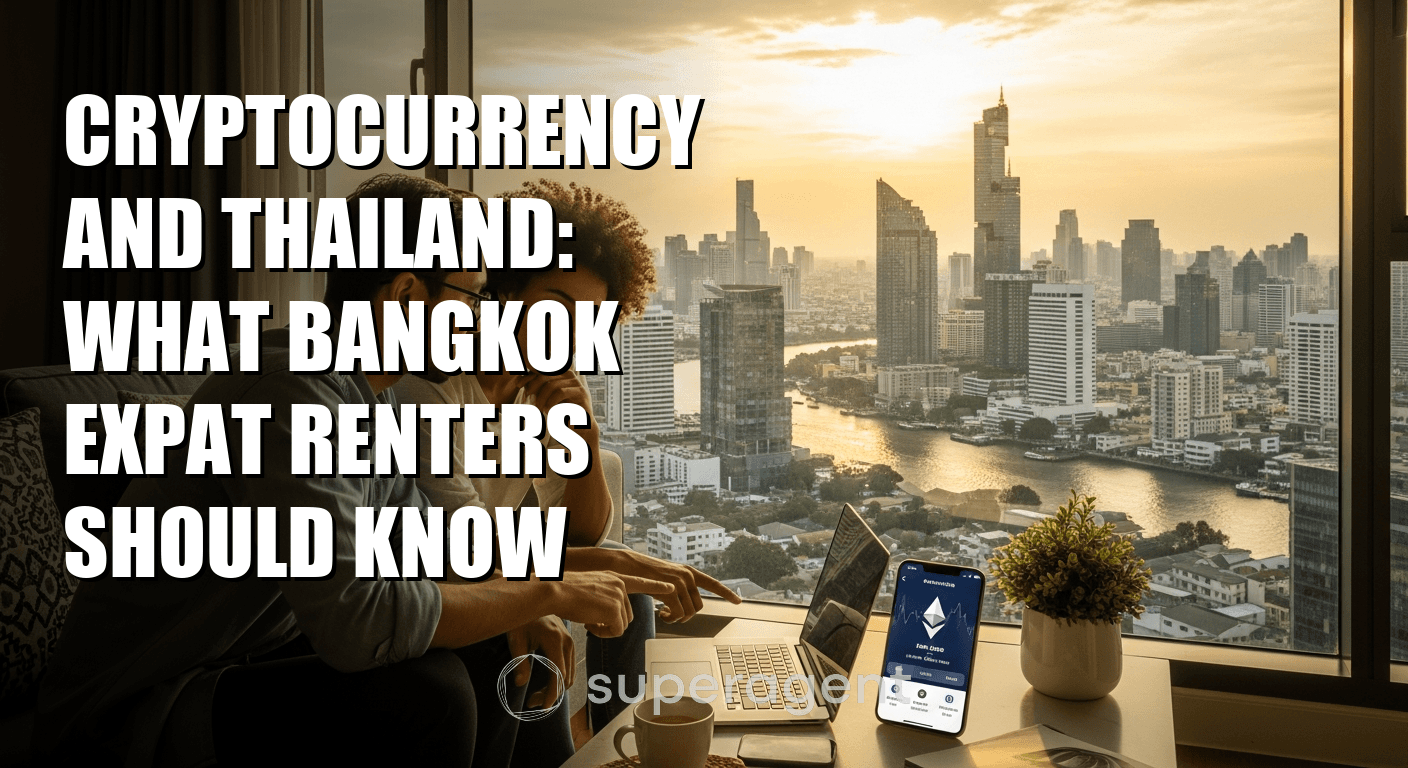
Bangkok has always attracted people who think a little differently about money. Whether you moved here to stretch your remote work salary or you built a portfolio trading altcoins from a co-working space near Ari BTS, chances are you have thought about how cryptocurrency fits into your life as a renter in Thailand. The rules are shifting fast, and what was a gray area two years ago is becoming more defined. Here is what actually matters if you are an expat renting a condo in Bangkok and holding crypto.
Thailand's Evolving Stance on Crypto
Thailand was one of the first Southeast Asian countries to regulate digital assets. The Securities and Exchange Commission oversees crypto exchanges operating in the country, and platforms like Bitkub are fully licensed. You can legally buy, sell, and hold cryptocurrency here. That part is clear.
What gets murkier is how crypto intersects with everyday transactions. In 2022, the government pulled back on allowing crypto as a payment method for goods and services, citing concerns about volatility and financial stability. So while you can trade on exchanges, paying your landlord in Bitcoin is not exactly straightforward or encouraged.
For a practical example, imagine you are renting a one bedroom at Life Ladprao near Ladprao MRT for around 18,000 THB per month. Your landlord wants a bank transfer. Even if you have plenty of USDT sitting in a wallet, you will almost certainly need to convert it to Thai baht first, send it to a Thai bank account, and then make the transfer. That is the reality right now.
Converting Crypto to Pay Rent
Most expat renters holding crypto end up using a licensed Thai exchange to convert their assets to baht. Bitkub is the most popular option, and you can link it to a Thai bank account if you have one. The process is fairly smooth once you get past the KYC verification, which requires a valid passport and proof of address.
If you do not have a Thai bank account, things get trickier. Some renters use international platforms like Binance to sell crypto and withdraw via supported channels, but fees and processing times vary. A few people in expat circles around Sukhumvit Soi 11 and Thonglor have mentioned using peer to peer platforms, though that comes with its own risks.
Say you are renting a studio at Ideo Q Ratchathewi near Ratchathewi BTS for about 15,000 THB. You sell some Ethereum on Bitkub, the baht lands in your Kasikorn account within a day, and you transfer rent to your landlord. Simple enough, but you need to plan for exchange rate fluctuations and withdrawal fees eating into your funds.
Tax Implications You Cannot Ignore
This is where a lot of expats tune out, and honestly, that is risky. Thailand taxes capital gains from cryptocurrency. If you sell crypto at a profit, that profit is considered taxable income. The rate depends on your overall income bracket and can go up to 35 percent for high earners.
Here is a scenario that catches people off guard. You bought Bitcoin at a low price last year, and now you are selling portions every month to cover your rent at a place like The Line Jatujak near Mo Chit BTS, where a nice one bedroom runs about 20,000 to 25,000 THB. Every time you sell, you might be triggering a taxable event. If your gains are significant, you could owe more than you expect come tax filing season.
The Thai Revenue Department has been paying closer attention to crypto transactions. If you are earning income remotely and also trading crypto while living in Thailand, it is worth talking to a tax advisor who understands both expat tax obligations and digital asset rules. Do not assume nobody is watching.
Can Landlords Accept Crypto Directly
Technically, there is no law that explicitly bans a private landlord from accepting crypto as rent payment through a personal arrangement. But practically, almost none do. Thai landlords, whether individuals or property management companies, want baht in their bank accounts. Rental contracts are denominated in baht, and deposits are held in baht.
One expat renting a two bedroom at Ashton Asoke near Asoke BTS for around 45,000 THB told me he once asked his landlord about paying in USDT. The landlord had no idea what that was. That is pretty typical. Even in a city as cosmopolitan as Bangkok, the rental market runs on traditional banking.
A handful of newer, crypto friendly co living spaces have popped up, mostly marketed toward digital nomads. But for standard condo rentals in popular areas like Phrom Phong, On Nut, or Sathorn, expect to pay in baht through a bank transfer.
Protecting Your Finances While Renting
If crypto makes up a big chunk of your wealth, keep a separate baht buffer for rent and living expenses. Volatility can wreck your monthly budget overnight. Having two or three months of rent sitting in a Thai savings account means you are never scrambling to sell at a bad time.
Consider your rental commitment carefully too. Signing a one year lease on a condo at Rhythm Ekkamai near Ekkamai BTS at 22,000 THB per month means you need a reliable way to produce about 264,000 THB over the year, plus deposit. If your entire financial plan depends on crypto prices staying stable, that is a gamble you are layering on top of an already volatile asset class.
Bangkok is a fantastic city for expats who think creatively about money, and crypto is part of that picture. But the rental market here still operates on very traditional rails. Convert early, keep a cash buffer, understand your tax exposure, and you will be fine. When you are ready to find your next condo, Superagent at superagent.co makes searching easy with AI powered listings across Bangkok, so you can spend less time apartment hunting and more time managing your portfolio.
Bangkok has always attracted people who think a little differently about money. Whether you moved here to stretch your remote work salary or you built a portfolio trading altcoins from a co-working space near Ari BTS, chances are you have thought about how cryptocurrency fits into your life as a renter in Thailand. The rules are shifting fast, and what was a gray area two years ago is becoming more defined. Here is what actually matters if you are an expat renting a condo in Bangkok and holding crypto.
Thailand's Evolving Stance on Crypto
Thailand was one of the first Southeast Asian countries to regulate digital assets. The Securities and Exchange Commission oversees crypto exchanges operating in the country, and platforms like Bitkub are fully licensed. You can legally buy, sell, and hold cryptocurrency here. That part is clear.
What gets murkier is how crypto intersects with everyday transactions. In 2022, the government pulled back on allowing crypto as a payment method for goods and services, citing concerns about volatility and financial stability. So while you can trade on exchanges, paying your landlord in Bitcoin is not exactly straightforward or encouraged.
For a practical example, imagine you are renting a one bedroom at Life Ladprao near Ladprao MRT for around 18,000 THB per month. Your landlord wants a bank transfer. Even if you have plenty of USDT sitting in a wallet, you will almost certainly need to convert it to Thai baht first, send it to a Thai bank account, and then make the transfer. That is the reality right now.
Converting Crypto to Pay Rent
Most expat renters holding crypto end up using a licensed Thai exchange to convert their assets to baht. Bitkub is the most popular option, and you can link it to a Thai bank account if you have one. The process is fairly smooth once you get past the KYC verification, which requires a valid passport and proof of address.
If you do not have a Thai bank account, things get trickier. Some renters use international platforms like Binance to sell crypto and withdraw via supported channels, but fees and processing times vary. A few people in expat circles around Sukhumvit Soi 11 and Thonglor have mentioned using peer to peer platforms, though that comes with its own risks.
Say you are renting a studio at Ideo Q Ratchathewi near Ratchathewi BTS for about 15,000 THB. You sell some Ethereum on Bitkub, the baht lands in your Kasikorn account within a day, and you transfer rent to your landlord. Simple enough, but you need to plan for exchange rate fluctuations and withdrawal fees eating into your funds.
Tax Implications You Cannot Ignore
This is where a lot of expats tune out, and honestly, that is risky. Thailand taxes capital gains from cryptocurrency. If you sell crypto at a profit, that profit is considered taxable income. The rate depends on your overall income bracket and can go up to 35 percent for high earners.
Here is a scenario that catches people off guard. You bought Bitcoin at a low price last year, and now you are selling portions every month to cover your rent at a place like The Line Jatujak near Mo Chit BTS, where a nice one bedroom runs about 20,000 to 25,000 THB. Every time you sell, you might be triggering a taxable event. If your gains are significant, you could owe more than you expect come tax filing season.
The Thai Revenue Department has been paying closer attention to crypto transactions. If you are earning income remotely and also trading crypto while living in Thailand, it is worth talking to a tax advisor who understands both expat tax obligations and digital asset rules. Do not assume nobody is watching.
Talk to us about renting
Share your details and keep reading — we’ll get back to you.
Can Landlords Accept Crypto Directly
Technically, there is no law that explicitly bans a private landlord from accepting crypto as rent payment through a personal arrangement. But practically, almost none do. Thai landlords, whether individuals or property management companies, want baht in their bank accounts. Rental contracts are denominated in baht, and deposits are held in baht.
One expat renting a two bedroom at Ashton Asoke near Asoke BTS for around 45,000 THB told me he once asked his landlord about paying in USDT. The landlord had no idea what that was. That is pretty typical. Even in a city as cosmopolitan as Bangkok, the rental market runs on traditional banking.
A handful of newer, crypto friendly co living spaces have popped up, mostly marketed toward digital nomads. But for standard condo rentals in popular areas like Phrom Phong, On Nut, or Sathorn, expect to pay in baht through a bank transfer.
Protecting Your Finances While Renting
If crypto makes up a big chunk of your wealth, keep a separate baht buffer for rent and living expenses. Volatility can wreck your monthly budget overnight. Having two or three months of rent sitting in a Thai savings account means you are never scrambling to sell at a bad time.
Consider your rental commitment carefully too. Signing a one year lease on a condo at Rhythm Ekkamai near Ekkamai BTS at 22,000 THB per month means you need a reliable way to produce about 264,000 THB over the year, plus deposit. If your entire financial plan depends on crypto prices staying stable, that is a gamble you are layering on top of an already volatile asset class.
Bangkok is a fantastic city for expats who think creatively about money, and crypto is part of that picture. But the rental market here still operates on very traditional rails. Convert early, keep a cash buffer, understand your tax exposure, and you will be fine. When you are ready to find your next condo, Superagent at superagent.co makes searching easy with AI powered listings across Bangkok, so you can spend less time apartment hunting and more time managing your portfolio.
Share this article
Properties you may like
![[For Rent] CONDO I Aguston Sukhumvit 22 I Pet Friendly I 2 Beds I 2 Baths I Rent 55,000THB/mo](/_next/image?url=https%3A%2F%2Fstorage.googleapis.com%2Fsuperagent-web%2Fattachments%2Flistings%2F2266%2Fd3afcd25-6b79-46cb-9f1f-396acdc3dd10-955-3.jpg&w=3840&q=75)
฿55,000
2 Bed295 sqm
[For Rent] CONDO I Aguston Sukhumvit 22 I Pet Friendly I 2 Beds I 2 Baths I Rent 55,000THB/mo
Phrom Phong
Condo![[For Rent] CONDO I SUPALAI PLACE Sukhumvit 39 I 2 Beds I 2 Baths (1 Jacuzzi) I 55,555THB/mo](/_next/image?url=https%3A%2F%2Fstorage.googleapis.com%2Fsuperagent-web%2Fattachments%2Flistings%2F6743%2Fba530743-48b9-4ac6-92d3-c2247e743cf6-01-supalai-place-skv39-2b-link-heaven.jpg&w=3840&q=75)
฿55,555
2 Bed2142 sqm
[For Rent] CONDO I SUPALAI PLACE Sukhumvit 39 I 2 Beds I 2 Baths (1 Jacuzzi) I 55,555THB/mo
Phrom Phong
Condo![[For Rent] CONDO I Maru Ekkamai 2 I Pet friendly I 2 Beds I 2 Baths I 68,000 THB/mo](/_next/image?url=https%3A%2F%2Fstorage.googleapis.com%2Fsuperagent-web%2Fattachments%2Flistings%2F6602%2F9f1d8f71-ee43-435f-9a44-da16c4092c92-968-1.jpg&w=3840&q=75)
฿68,000
2 Bed360 sqm
[For Rent] CONDO I Maru Ekkamai 2 I Pet friendly I 2 Beds I 2 Baths I 68,000 THB/mo
Ekkamai
Condo![[For Rent] CONDO I Noble State 39 I 2 Beds I 2 Baths I 63,000THB/mo](/_next/image?url=https%3A%2F%2Fstorage.googleapis.com%2Fsuperagent-web%2Fattachments%2Flistings%2F2237%2F60eb58f3-eae5-41ed-a80b-406e004f05d8-940-1.jpg&w=3840&q=75)
฿63,000
2 Bed260 sqm
[For Rent] CONDO I Noble State 39 I 2 Beds I 2 Baths I 63,000THB/mo
Phrom Phong
Condo![[For Rent] CONDO I Rhythm Sukhumvit 36-38 I 2 Beds I 2 Baths I 38,999THB/mo](/_next/image?url=https%3A%2F%2Fstorage.googleapis.com%2Fsuperagent-web%2Fattachments%2Flistings%2F1788%2F942a0215-4128-4c2c-a064-f607e84e7aa4-656-2.jpg&w=3840&q=75)
฿38,999
2 Bed256 sqm
[For Rent] CONDO I Rhythm Sukhumvit 36-38 I 2 Beds I 2 Baths I 38,999THB/mo
Thonglor
Condo![[For Rent] CONDO I City Smart Sukhumvit 18 I 3 Beds I 3 Baths I 65,000mo/THB](/_next/image?url=https%3A%2F%2Fstorage.googleapis.com%2Fsuperagent-web%2Fattachments%2Flistings%2F6741%2Fd371c89d-a913-42c4-a673-e540afae4f46-1116-1.jpg&w=3840&q=75)
฿65,000
3 Bed3125 sqm
[For Rent] CONDO I City Smart Sukhumvit 18 I 3 Beds I 3 Baths I 65,000mo/THB
Condo![[For Rent] CONDO I The Coast Bangkok I 1 Bed I 1 Bath I 20,000mo/THB](/_next/image?url=https%3A%2F%2Fstorage.googleapis.com%2Fsuperagent-web%2Fattachments%2Flistings%2F6740%2F498477ce-4ffa-4e4c-ab08-0e565d9c4bbe-1115-3.jpg&w=3840&q=75)
฿20,000
1 Bed146 sqm
[For Rent] CONDO I The Coast Bangkok I 1 Bed I 1 Bath I 20,000mo/THB
Bang Na
Condo![[For Rent] CONDO I IDEO Sukhumvit-RAMA 4 I 2 Beds I 2 Baths I 55,000mo/THB](/_next/image?url=https%3A%2F%2Fstorage.googleapis.com%2Fsuperagent-web%2Fattachments%2Flistings%2F6739%2F15df221d-5b8e-497c-b7ce-a6b9b6412cab-1113-1.jpg&w=3840&q=75)
฿55,000
2 Bed265 sqm
[For Rent] CONDO I IDEO Sukhumvit-RAMA 4 I 2 Beds I 2 Baths I 55,000mo/THB
Phra Khanong
Condo![[For Rent] CONDO I Downtown 49 I Pet Friendly I 1 Bed I 1 Bath I 23,000mo/THB](/_next/image?url=https%3A%2F%2Fstorage.googleapis.com%2Fsuperagent-web%2Fattachments%2Flistings%2F6738%2F11cf2ffe-1f01-4ccc-991c-2ad608f1ba73-1112-1.jpg&w=3840&q=75)
฿23,000
1 Bed135 sqm
[For Rent] CONDO I Downtown 49 I Pet Friendly I 1 Bed I 1 Bath I 23,000mo/THB
Thonglor
Condo![[For Rent] CONDO I Nusasiri Grand Condominium Ekkamai I 2 Beds I 2 Baths I 55,500mo/THB](/_next/image?url=https%3A%2F%2Fstorage.googleapis.com%2Fsuperagent-web%2Fattachments%2Flistings%2F6737%2Feb4785b4-6fd9-4e48-836c-640cc7999e07-1110-5.jpg&w=3840&q=75)
฿55,500
2 Bed280 sqm
[For Rent] CONDO I Nusasiri Grand Condominium Ekkamai I 2 Beds I 2 Baths I 55,500mo/THB
CondoMore like this
 In Lifestyle · Superagent EditorialWhere Bangkok's Expat Communities Are Concentrated: Rental Guide by NationalityDiscover where Bangkok's expat community areas are located. Our rental guide maps out neighborhoods by nationality to help you find your ideal home.12 Apr 20241 min read
 In Lifestyle · Superagent EditorialThe AI Rental Revolution in Bangkok: How Technology Is Changing How Expats Find HomesBangkok rental revolution ai is reshaping how expats find homes. Explore smart technology, virtual tours, and AI-powered matching tools transforming the ma16 Apr 20211 min read
 In Lifestyle · Superagent EditorialMonthly Condo Rentals in Bangkok: Why They Beat Daily Rates Once Your Stay Passes Two WeeksCompare Bangkok daily and monthly condo rates near BTS Thong Lo, Asoke, Ari and On Nut, and see why monthly leases save tens of thousands of baht.19 Jul 20191 min read
 In Lifestyle · Superagent EditorialHow to Negotiate Rent With Thai Condo Landlords: Techniques That Actually Work in BangkokProven tactics for negotiating condo rent with Bangkok landlords, from market research and counter offers to lease length, timing and low season.18 Jul 20191 min read