How Long Should You Commit to a Bangkok Rental? A Practical Guide
Guides
How Long Should You Commit to a Bangkok Rental? A Practical Guide
Match your lease length to your lifestyle, without overpaying or locking yourself in.
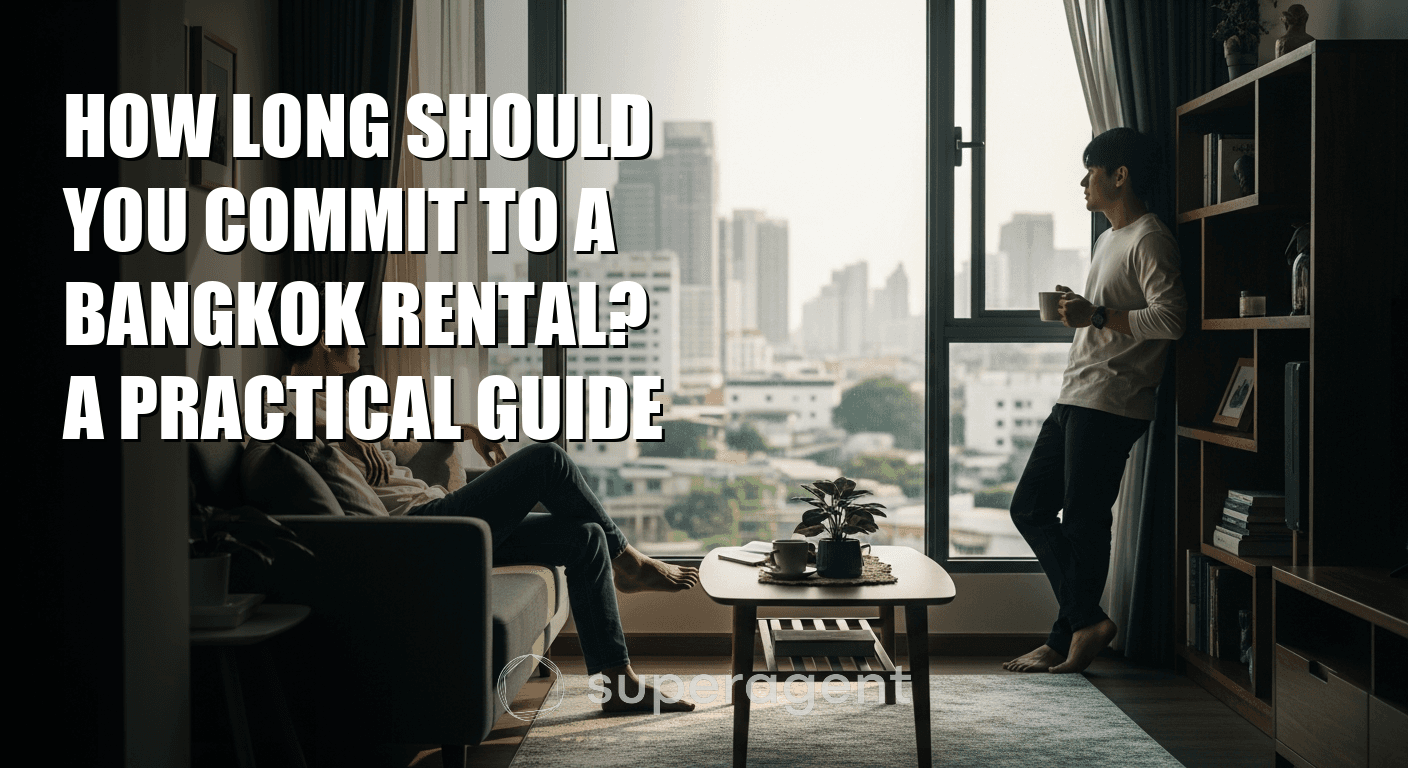
Summary
Deciding between a monthly, 3-month, or 1-year Bangkok rental lease? This guide breaks down costs, flexibility, and what each commitment really means.
Renting in Bangkok is genuinely different from renting back home. Leases here are less standardized, landlords have varying expectations, and the same neighborhood can feel completely different depending on whether you're staying two months or two years. Before you sign anything, here's what you actually need to think through.
What "Short-Term" Actually Costs You in Bangkok
In most Bangkok condos, short-term means anything under six months, and you pay a real premium for that flexibility. Expect to add 15 to 30 percent to the monthly rate, or sometimes a flat daily rate that stacks up fast.
A furnished one-bedroom near BTS Ekkamai, for example, might rent for 18,000 THB per month on a one-year contract but jump to 24,000 THB per month on a three-month lease. That 6,000 THB monthly gap doesn't sound dramatic until you do the math. Over three months you've paid 18,000 THB extra, roughly one free month's rent you've just handed back.
Short-term leases work well if you're in Bangkok for a specific project, testing out a neighborhood before committing, or waiting for a longer-term unit to open up. Just go in knowing exactly what the flexibility is costing you, so you can decide if it's actually worth it.
Why One Year Is Still the Bangkok Standard
A one-year lease is the norm for a good reason. Landlords prefer them, which means better monthly rates, more room to negotiate, and sometimes extras like a free month built into the deal or upgraded furniture if you ask nicely.
In areas like the Phrom Phong corridor or along Sukhumvit Soi 39, quality furnished units in buildings like The Clover or Le Nice Ekamai move quickly. Tenants ready to commit for a year often get first pick of the better-maintained condos. Those who hesitate often end up settling.
A year also gives you time to actually understand where you've landed. You figure out which sois flood in rainy season, where the local food carts are on Sukhumvit Soi 38, and how packed the BTS platform at Asok gets during peak hour. That kind of local knowledge takes time to build, and it genuinely improves your day-to-day life.
The Real Cost of Choosing the Wrong Length
Signing a six-month lease when you actually needed a year means doing the entire apartment search process twice in the same year. Two rounds of viewings, two deposits, two rounds of moving costs, and two utility setups.
Take a 25,000 THB per month unit near MRT Lumpini. The deposit alone is typically 50,000 THB upfront. Add moving costs of 4,000 to 8,000 THB per move depending on distance and volume, do that twice, and the friction adds up fast. That's not counting your time, your stress, and the productivity you lose while deep in apartment search mode again.
Going the other direction creates different problems. Committing to a full year when you only needed six months leaves you either hunting for a subletter, negotiating an early exit with the landlord, or forfeiting part of your deposit. Thai lease contracts rarely include a standard break clause, so leaving early is genuinely messy and often expensive.
Matching Your Lease to Your Actual Life
The right lease length comes down to three things: how stable your income is, how clear your Bangkok timeline is, and how well you already know where you want to live.
If you're a freelancer or on a fixed-term contract, build your lease around that end date, not around what gives you the best monthly rate. A designer on a seven-month client project should not sign a 12-month lease in Ari just because the landlord offers a better deal. The math only works if you're actually there for the full term.
If you're new to the city and unsure which area fits your lifestyle, a short-term stay in a serviced apartment near BTS Nana or Asok gives you room to explore. Spend weekends in different neighborhoods. Try lunch near On Nut. Work from a cafe in Silom. Then sign your year lease somewhere you've actually experienced, not somewhere that just looked good on a map.
A Simple Framework Before You Sign
Here's a practical way to think about it. If you're confident you'll be in Bangkok for more than nine months, go for a year and negotiate the rate down from the listed price. Most landlords have room to move, especially if the unit has been sitting empty for a few weeks.
If you're planning six to nine months, ask specifically about a six-month lease with a written option to extend by one or two months. Not all landlords will agree, but many will, especially outside of peak demand periods like January and August.
If you're staying under six months, treat it like the short-term arrangement it is and budget the higher monthly rate from the start. Also ask about what's included in the utility setup, because in buildings like Ideo Mobi Asoke or Rhythm Sukhumvit, utility structures vary a lot between units and floors.
In every case, read the termination clause carefully. Ask what happens if you need to leave two months early. A landlord on Sukhumvit Soi 11 might be completely open to negotiating, while another in the same building holds every clause to the letter. It varies more than people expect.
The Bangkok rental market rewards people who are clear about what they need and honest about how long they're actually staying. There's no universally right answer between short and long, just the one that fits your specific situation.
If you want help finding the right condo for the right lease length, Superagent at superagent.co uses AI to match you with Bangkok properties that fit your timeline, budget, and neighborhood, without the back-and-forth that eats weeks of your search.
Written by the Superagent editorial team. Superagent is Bangkok's AI-powered condo rental platform, helping expats and locals find the right rental faster. superagent.co
Related articles
Renting in Bangkok is genuinely different from renting back home. Leases here are less standardized, landlords have varying expectations, and the same neighborhood can feel completely different depending on whether you're staying two months or two years. Before you sign anything, here's what you actually need to think through.
What "Short-Term" Actually Costs You in Bangkok
In most Bangkok condos, short-term means anything under six months, and you pay a real premium for that flexibility. Expect to add 15 to 30 percent to the monthly rate, or sometimes a flat daily rate that stacks up fast.
A furnished one-bedroom near BTS Ekkamai, for example, might rent for 18,000 THB per month on a one-year contract but jump to 24,000 THB per month on a three-month lease. That 6,000 THB monthly gap doesn't sound dramatic until you do the math. Over three months you've paid 18,000 THB extra, roughly one free month's rent you've just handed back.
Short-term leases work well if you're in Bangkok for a specific project, testing out a neighborhood before committing, or waiting for a longer-term unit to open up. Just go in knowing exactly what the flexibility is costing you, so you can decide if it's actually worth it.
Why One Year Is Still the Bangkok Standard
A one-year lease is the norm for a good reason. Landlords prefer them, which means better monthly rates, more room to negotiate, and sometimes extras like a free month built into the deal or upgraded furniture if you ask nicely.
Continue reading after that.
Looking for a condo
to rent?
Leave your name and phone. We'll follow up while you keep reading.
100% Secure
Fast Response
Free Consultation
In areas like the Phrom Phong corridor or along Sukhumvit Soi 39, quality furnished units in buildings like The Clover or Le Nice Ekamai move quickly. Tenants ready to commit for a year often get first pick of the better-maintained condos. Those who hesitate often end up settling.
A year also gives you time to actually understand where you've landed. You figure out which sois flood in rainy season, where the local food carts are on Sukhumvit Soi 38, and how packed the BTS platform at Asok gets during peak hour. That kind of local knowledge takes time to build, and it genuinely improves your day-to-day life.
The Real Cost of Choosing the Wrong Length
Signing a six-month lease when you actually needed a year means doing the entire apartment search process twice in the same year. Two rounds of viewings, two deposits, two rounds of moving costs, and two utility setups.
Take a 25,000 THB per month unit near MRT Lumpini. The deposit alone is typically 50,000 THB upfront. Add moving costs of 4,000 to 8,000 THB per move depending on distance and volume, do that twice, and the friction adds up fast. That's not counting your time, your stress, and the productivity you lose while deep in apartment search mode again.
Going the other direction creates different problems. Committing to a full year when you only needed six months leaves you either hunting for a subletter, negotiating an early exit with the landlord, or forfeiting part of your deposit. Thai lease contracts rarely include a standard break clause, so leaving early is genuinely messy and often expensive.
Matching Your Lease to Your Actual Life
The right lease length comes down to three things: how stable your income is, how clear your Bangkok timeline is, and how well you already know where you want to live.
If you're a freelancer or on a fixed-term contract, build your lease around that end date, not around what gives you the best monthly rate. A designer on a seven-month client project should not sign a 12-month lease in Ari just because the landlord offers a better deal. The math only works if you're actually there for the full term.
If you're new to the city and unsure which area fits your lifestyle, a short-term stay in a serviced apartment near BTS Nana or Asok gives you room to explore. Spend weekends in different neighborhoods. Try lunch near On Nut. Work from a cafe in Silom. Then sign your year lease somewhere you've actually experienced, not somewhere that just looked good on a map.
A Simple Framework Before You Sign
Here's a practical way to think about it. If you're confident you'll be in Bangkok for more than nine months, go for a year and negotiate the rate down from the listed price. Most landlords have room to move, especially if the unit has been sitting empty for a few weeks.
If you're planning six to nine months, ask specifically about a six-month lease with a written option to extend by one or two months. Not all landlords will agree, but many will, especially outside of peak demand periods like January and August.
Continue reading after that.
Looking for a condo
to rent?
Leave your name and phone. We'll follow up while you keep reading.
100% Secure
Fast Response
Free Consultation
If you're staying under six months, treat it like the short-term arrangement it is and budget the higher monthly rate from the start. Also ask about what's included in the utility setup, because in buildings like Ideo Mobi Asoke or Rhythm Sukhumvit, utility structures vary a lot between units and floors.
In every case, read the termination clause carefully. Ask what happens if you need to leave two months early. A landlord on Sukhumvit Soi 11 might be completely open to negotiating, while another in the same building holds every clause to the letter. It varies more than people expect.
The Bangkok rental market rewards people who are clear about what they need and honest about how long they're actually staying. There's no universally right answer between short and long, just the one that fits your specific situation.
If you want help finding the right condo for the right lease length, Superagent at superagent.co uses AI to match you with Bangkok properties that fit your timeline, budget, and neighborhood, without the back-and-forth that eats weeks of your search.
Written by the Superagent editorial team. Superagent is Bangkok's AI-powered condo rental platform, helping expats and locals find the right rental faster. superagent.co
Related articles
Share this article
Properties you may like
More like this
 In Guides · Superagent EditorialHidden Costs of Renting a Condo in Bangkok Nobody Warns You AboutBangkok condo rent looks affordable until month one hits. Here are the real costs beyond the headline figure that catch most renters off guard.25 May 20261 min read
 In Guides · Superagent EditorialWhat a Long-Vacant Bangkok Condo Unit Is Actually Telling YouA Bangkok condo vacant for months signals overpricing, landlord issues, or real problems. Here is how to read the signs.25 May 20261 min read
 In Guides · Superagent EditorialRed Flags in a Bangkok Rental Contract to Watch Out ForBangkok rental contracts often hide risky clauses. Here are the red flags every tenant must catch before signing any lease.25 May 20261 min read
 In Guides · Superagent EditorialWorking Online from a Condo: How to Choose the Perfect Room for ProductivityLearn how to choose the best condo room for working online with tips on lighting, noise, and furniture setup to maximize productivity.9 May 20261 min read