How Many Months of Security Deposit for Condo Rentals in Bangkok: Laws and Reality
Guides
How Many Months of Security Deposit for Condo Rentals in Bangkok: Laws and Reality
Understand Thai condo rental security deposit requirements and protect your money.
Summary
Learn how many months of security deposit you need for Bangkok condo rentals. Discover Thai rental laws, deposit protection, and negotiation tips for rente
You are looking at a condo near Thonglor BTS, the landlord wants a deposit, and they mention "two months" but you are not entirely sure if that is the standard, the minimum, or just their preference. This is one of the most common questions renters in Bangkok face, and the answer matters because a deposit can be anywhere from 20,000 to 100,000 baht depending on where you live and what you rent.
The truth is that there is no single law in Thailand that says "all security deposits must be exactly X months." Instead, the deposit is whatever the landlord and tenant agree to in writing. This flexibility confuses many people, especially expats new to Bangkok, because they expect a fixed rule like in their home countries.
What the Thai Law Actually Says
Thai rental law does not mandate a specific number of months for a security deposit. The Rent of Building for Dwelling Act leaves this entirely up to both parties to negotiate and agree upon in the rental agreement. What the law does require is that you put it in writing and that the deposit must be returned at the end of the lease minus any legitimate deductions for damage or unpaid utilities.
This means a landlord cannot legally take your deposit without a signed contract showing the deposit amount and the conditions for returning it. If something goes wrong later, you have a paper trail. This is critical in Bangkok, where disputes happen and having documentation can save you thousands of baht.
The key legal point is this: the deposit must serve a specific purpose, which is to cover potential damage or unpaid bills. Landlords cannot just keep your deposit as extra rent or charge you a "deposit fee." It has to be tied to legitimate damages or breaches.
The Bangkok Market Standard
Even though the law does not set a fixed amount, the Bangkok rental market has landed on a fairly consistent standard: one to two months' rent as a security deposit. Most landlords in popular areas like Ploenchit, Ekkamai, and Nana expect at least one month. Some, especially in newer or more upscale buildings, ask for two months.
Here is a real example. A one bedroom condo in a mid-range building near Phromphong BTS rents for about 25,000 to 30,000 baht per month. Most landlords there will ask for one month as a deposit, so 25,000 to 30,000 baht. Some might negotiate down to half a month, but that is rare. Two months is more common in luxury buildings or when the monthly rent is higher.
Budget buildings and older condos in Pratunam or around Huay Kwang MRT sometimes accept smaller deposits, sometimes just 10,000 to 15,000 baht, because the monthly rent is lower to begin with. Newer buildings and high end places near Sukhumvit, especially around Nana or Asoke, almost always ask for two months.
Why Landlords Ask for Different Amounts
The deposit amount usually reflects how much risk the landlord feels. A newer building with many foreign tenants and turnover might ask for two months because they want a bigger cushion for potential damage or cleaning costs. A smaller, owner managed building where the owner lives on premises might ask for just one month because they know their tenants better and can inspect more easily.
Monthly rent also matters. If you are renting a luxury two bedroom in Thonglor for 80,000 baht per month, landlords almost always want two months, so 160,000 baht. If you are renting a small studio in a soi off Sukhumvit for 12,000 baht per month, one month or even a smaller amount might be acceptable.
Some landlords also factor in the length of your lease. If you sign a two year contract, they might accept one month. If you are only renting for three months on a short term basis, they might ask for two or even three months because the turnover risk is higher.
Deposits Beyond Two Months: When and Why
You will occasionally see landlords in Bangkok asking for three months or more, but this is less common and often not standard. If a landlord asks for more than two months, that is a negotiation point. You can push back, especially if you have a stable job, a lease of a year or more, and you are willing to sign a formal contract.
Three month deposits sometimes appear in short term rentals, serviced apartments, or when landlords are extremely cautious about foreign tenants. One condo building near Soi 33 on Sukhumvit had a policy of three months for anyone without a Thai work permit, but that is an outlier and violates the spirit of Thai rental law, which says deposits must be reasonable.
If you are quoted three months or more, ask why. Is it because of short term rental? Is there a high damage history in the building? Is the landlord just testing your negotiation? Often, you can get it down to one or two months by offering a longer lease or providing references from previous landlords.
How to Protect Your Deposit in Bangkok
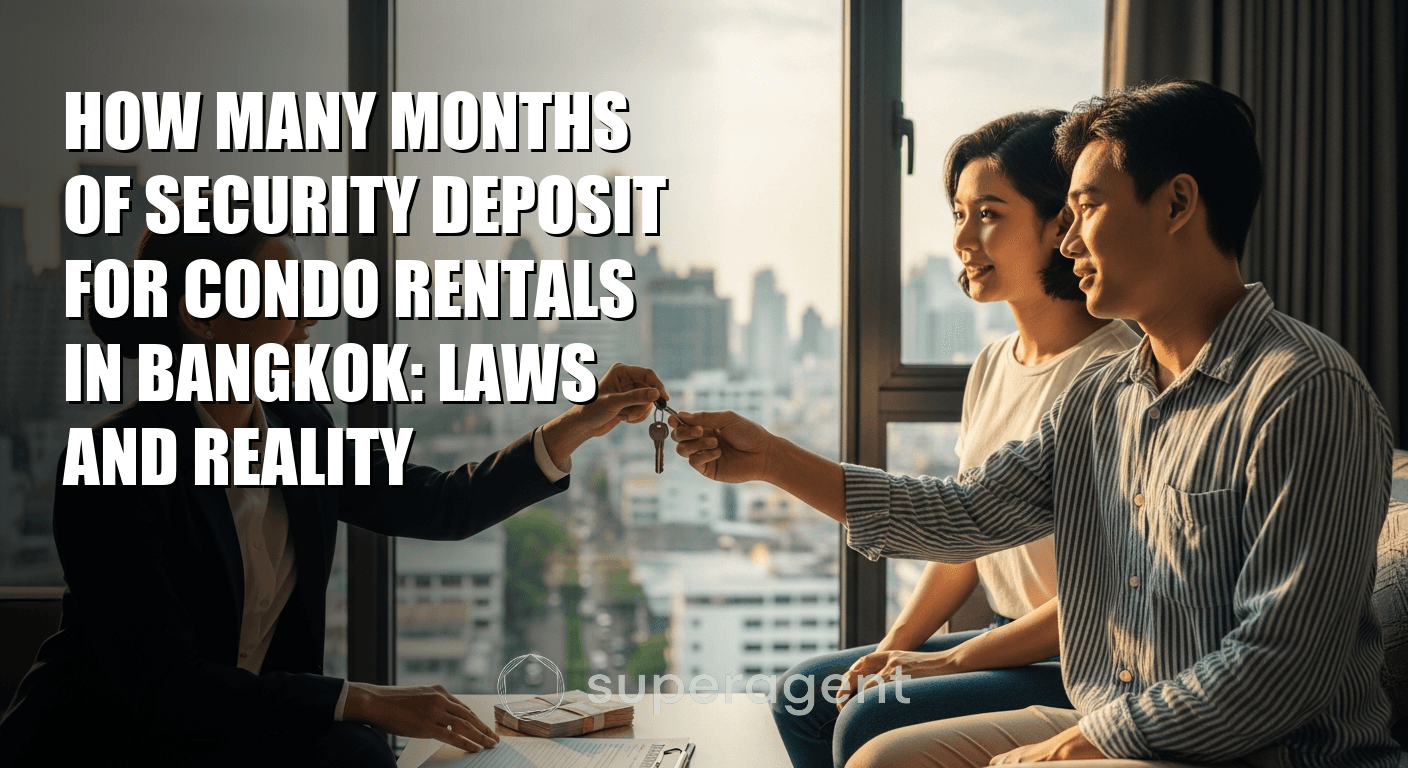
Whatever amount you agree to, make sure it is in a signed contract. This contract should specify exactly how much the deposit is, when and how it will be returned, and what deductions are allowed. Many deposits go missing or get partially kept unfairly simply because renters did not have clear paperwork.
Take photos and video of the condo before you move in. Many landlords in Bangkok will claim damage that was already there. With documentation, you have proof. Keep all utility bills in your name and pay them on time. One of the most common deposit deductions is for unpaid electricity or water bills.
Get a receipt when you hand over your deposit. Keep that receipt for the entire lease. When you leave, do a joint inspection with the landlord if possible and document the condition. If they try to keep money unfairly, you can take the dispute to the Renter Protection Office or local court, but only if you have the original contract and receipt.
What You Should Do Before Signing
Before you agree to any deposit amount, research what similar condos in that area are asking. If you are looking at a studio near Ari BTS and the landlord asks for three months when everyone else asks for one, that is a red flag. Visit Superagent.co and browse similar listings in the same soi or area to see what the market rate actually is.
Negotiate if you feel the deposit is too high. Many landlords will negotiate, especially if you offer a longer lease term or show proof of income. Do not accept a deposit amount that feels unfair just because you are tired of searching. A good deposit arrangement should feel reasonable to both sides.
Always get the rental agreement in writing, with both of you signing. Verbal agreements are not enforceable in Thai law and will protect neither you nor the landlord if something goes wrong.
The short answer to your question is this: one to two months is the Bangkok standard, and the law lets you negotiate. Whatever you agree to must be in writing and must be returned minus only legitimate deductions. Most importantly, protect yourself with documentation, photos, and a clear contract. When you are ready to find your next place with confidence, check out Superagent.co to browse verified listings with transparent rental terms.
You are looking at a condo near Thonglor BTS, the landlord wants a deposit, and they mention "two months" but you are not entirely sure if that is the standard, the minimum, or just their preference. This is one of the most common questions renters in Bangkok face, and the answer matters because a deposit can be anywhere from 20,000 to 100,000 baht depending on where you live and what you rent.
The truth is that there is no single law in Thailand that says "all security deposits must be exactly X months." Instead, the deposit is whatever the landlord and tenant agree to in writing. This flexibility confuses many people, especially expats new to Bangkok, because they expect a fixed rule like in their home countries.
What the Thai Law Actually Says
Thai rental law does not mandate a specific number of months for a security deposit. The Rent of Building for Dwelling Act leaves this entirely up to both parties to negotiate and agree upon in the rental agreement. What the law does require is that you put it in writing and that the deposit must be returned at the end of the lease minus any legitimate deductions for damage or unpaid utilities.
This means a landlord cannot legally take your deposit without a signed contract showing the deposit amount and the conditions for returning it. If something goes wrong later, you have a paper trail. This is critical in Bangkok, where disputes happen and having documentation can save you thousands of baht.
Continue reading after that.
Looking for a condo
to rent?
Leave your name and phone. We'll follow up while you keep reading.
100% Secure
Fast Response
Free Consultation
The key legal point is this: the deposit must serve a specific purpose, which is to cover potential damage or unpaid bills. Landlords cannot just keep your deposit as extra rent or charge you a "deposit fee." It has to be tied to legitimate damages or breaches.
The Bangkok Market Standard
Even though the law does not set a fixed amount, the Bangkok rental market has landed on a fairly consistent standard: one to two months' rent as a security deposit. Most landlords in popular areas like Ploenchit, Ekkamai, and Nana expect at least one month. Some, especially in newer or more upscale buildings, ask for two months.
Here is a real example. A one bedroom condo in a mid-range building near Phromphong BTS rents for about 25,000 to 30,000 baht per month. Most landlords there will ask for one month as a deposit, so 25,000 to 30,000 baht. Some might negotiate down to half a month, but that is rare. Two months is more common in luxury buildings or when the monthly rent is higher.
Budget buildings and older condos in Pratunam or around Huay Kwang MRT sometimes accept smaller deposits, sometimes just 10,000 to 15,000 baht, because the monthly rent is lower to begin with. Newer buildings and high end places near Sukhumvit, especially around Nana or Asoke, almost always ask for two months.
Why Landlords Ask for Different Amounts
The deposit amount usually reflects how much risk the landlord feels. A newer building with many foreign tenants and turnover might ask for two months because they want a bigger cushion for potential damage or cleaning costs. A smaller, owner managed building where the owner lives on premises might ask for just one month because they know their tenants better and can inspect more easily.
Monthly rent also matters. If you are renting a luxury two bedroom in Thonglor for 80,000 baht per month, landlords almost always want two months, so 160,000 baht. If you are renting a small studio in a soi off Sukhumvit for 12,000 baht per month, one month or even a smaller amount might be acceptable.
Some landlords also factor in the length of your lease. If you sign a two year contract, they might accept one month. If you are only renting for three months on a short term basis, they might ask for two or even three months because the turnover risk is higher.
Deposits Beyond Two Months: When and Why
You will occasionally see landlords in Bangkok asking for three months or more, but this is less common and often not standard. If a landlord asks for more than two months, that is a negotiation point. You can push back, especially if you have a stable job, a lease of a year or more, and you are willing to sign a formal contract.
Three month deposits sometimes appear in short term rentals, serviced apartments, or when landlords are extremely cautious about foreign tenants. One condo building near Soi 33 on Sukhumvit had a policy of three months for anyone without a Thai work permit, but that is an outlier and violates the spirit of Thai rental law, which says deposits must be reasonable.
If you are quoted three months or more, ask why. Is it because of short term rental? Is there a high damage history in the building? Is the landlord just testing your negotiation? Often, you can get it down to one or two months by offering a longer lease or providing references from previous landlords.
How to Protect Your Deposit in Bangkok
Whatever amount you agree to, make sure it is in a signed contract. This contract should specify exactly how much the deposit is, when and how it will be returned, and what deductions are allowed. Many deposits go missing or get partially kept unfairly simply because renters did not have clear paperwork.
Continue reading after that.
Looking for a condo
to rent?
Leave your name and phone. We'll follow up while you keep reading.
100% Secure
Fast Response
Free Consultation
Take photos and video of the condo before you move in. Many landlords in Bangkok will claim damage that was already there. With documentation, you have proof. Keep all utility bills in your name and pay them on time. One of the most common deposit deductions is for unpaid electricity or water bills.
Get a receipt when you hand over your deposit. Keep that receipt for the entire lease. When you leave, do a joint inspection with the landlord if possible and document the condition. If they try to keep money unfairly, you can take the dispute to the Renter Protection Office or local court, but only if you have the original contract and receipt.
What You Should Do Before Signing
Before you agree to any deposit amount, research what similar condos in that area are asking. If you are looking at a studio near Ari BTS and the landlord asks for three months when everyone else asks for one, that is a red flag. Visit Superagent.co and browse similar listings in the same soi or area to see what the market rate actually is.
Negotiate if you feel the deposit is too high. Many landlords will negotiate, especially if you offer a longer lease term or show proof of income. Do not accept a deposit amount that feels unfair just because you are tired of searching. A good deposit arrangement should feel reasonable to both sides.
Always get the rental agreement in writing, with both of you signing. Verbal agreements are not enforceable in Thai law and will protect neither you nor the landlord if something goes wrong.
The short answer to your question is this: one to two months is the Bangkok standard, and the law lets you negotiate. Whatever you agree to must be in writing and must be returned minus only legitimate deductions. Most importantly, protect yourself with documentation, photos, and a clear contract. When you are ready to find your next place with confidence, check out Superagent.co to browse verified listings with transparent rental terms.
Share this article
Properties you may like
![[For Rent] CONDO I Las Colinas Condominium I 2 Beds I 3 Baths I 85,000THB/mo](/_next/image?url=https%3A%2F%2Fstorage.googleapis.com%2Fsuperagent-web%2Fattachments%2Flistings%2F6828%2F80f345c4-488e-43b2-b017-c9fbb17b520d-99486dd8-4237-4ba2-9207-01ce4f66b21f-media.jpg&w=3840&q=75)
฿85,000
2 Bed3170 sqm
[For Rent] CONDO I Las Colinas Condominium I 2 Beds I 3 Baths I 85,000THB/mo
Asoke
Condo![[For Rent] CONDO I Ashton Asoke I 1 Bed I 1 Bath I 30,000THB/mo](/_next/image?url=https%3A%2F%2Fstorage.googleapis.com%2Fsuperagent-web%2Fattachments%2Flistings%2F6876%2Fb7ce9bbe-f877-4ff5-bb54-8ad0026db940-1272-4.jpg&w=3840&q=75)
฿30,000
1 Bed135 sqm
[For Rent] CONDO I Ashton Asoke I 1 Bed I 1 Bath I 30,000THB/mo
Asoke
Condo![[For Rent] CONDO I Skyrise Avenue Sukhumvit 64 I 2 Beds I 2 Baths I 27,000THB/mo](/_next/image?url=https%3A%2F%2Fstorage.googleapis.com%2Fsuperagent-web%2Fattachments%2Flistings%2F2001%2F670f91de-c251-4e81-971c-8e30ed2158cd-screenshot-2026-07-05-at-11.38.53-pm.png&w=3840&q=75)
฿27,000
2 Bed252 sqm
[For Rent] CONDO I Skyrise Avenue Sukhumvit 64 I 2 Beds I 2 Baths I 27,000THB/mo
Punnawithi
Condo![[For Rent] CONDO I Park Origin Ratchathewi I Duplex I 2 Beds I 1 Bath I 32,000THB/mo](/_next/image?url=https%3A%2F%2Fstorage.googleapis.com%2Fsuperagent-web%2Fattachments%2Flistings%2F6896%2Fb79a7d21-7533-4b0d-bb19-762ebfafab62-1318-6.jpg&w=3840&q=75)
฿32,000
2 Bed135.9 sqm
[For Rent] CONDO I Park Origin Ratchathewi I Duplex I 2 Beds I 1 Bath I 32,000THB/mo
Ratchathewi
Condo![[For Rent] CONDO I Park Origin Phayathai I Studio I 1 Bath I 28,000THB/mo](/_next/image?url=https%3A%2F%2Fstorage.googleapis.com%2Fsuperagent-web%2Fattachments%2Flistings%2F6757%2Fb226df93-94c6-46fa-aeba-ebfadc7f81b8-1000006042.jpg&w=3840&q=75)
฿28,000
Studio129 sqm
[For Rent] CONDO I Park Origin Phayathai I Studio I 1 Bath I 28,000THB/mo
Phaya Thai
Condo![[For Rent] CONDO I Ideo Mobi Sukhumvit 81 I Duplex I 1 Bed I 1 Bath I 28,000THB/mo](/_next/image?url=https%3A%2F%2Fstorage.googleapis.com%2Fsuperagent-web%2Fattachments%2Flistings%2F1849%2Fc8b2c033-3b5f-4615-b2b0-4972f40141f0-705-13.jpg&w=3840&q=75)
฿28,000
1 Bed143 sqm
[For Rent] CONDO I Ideo Mobi Sukhumvit 81 I Duplex I 1 Bed I 1 Bath I 28,000THB/mo
On Nut
Condo![[For Rent] CONDO I Siamese Sukhumvit 48 I 1 Bed I 1 Bath I 28,000THB/mo](/_next/image?url=https%3A%2F%2Fstorage.googleapis.com%2Fsuperagent-web%2Fattachments%2Flistings%2F6841%2Febc2dce2-2e9b-4e6d-a01c-0cfa619dfa13-1231-6.jpg&w=3840&q=75)
฿28,000
1 Bed144 sqm
[For Rent] CONDO I Siamese Sukhumvit 48 I 1 Bed I 1 Bath I 28,000THB/mo
Condo![[For Rent] CONDO I Ashton Asoke I 1 Bed I 1 Bath I 22,000THB/mo](/_next/image?url=https%3A%2F%2Fstorage.googleapis.com%2Fsuperagent-web%2Fattachments%2Flistings%2F6802%2Fe06b9b73-1207-414a-ab04-1685de0c7eaa-20220808_153124_0.jpg&w=3840&q=75)
฿22,000
1 Bed134 sqm
[For Rent] CONDO I Ashton Asoke I 1 Bed I 1 Bath I 22,000THB/mo
Asoke
Condo![[For Rent] CONDO I HQ Thonglor Soi 4 I 1 Bed I 1 Bath I 35,000 THB/mo](/_next/image?url=https%3A%2F%2Fstorage.googleapis.com%2Fsuperagent-web%2Fattachments%2Flistings%2F1445%2F72352585-1bc2-41a8-bd62-ddcbf8189fe9-376-5.jpg&w=3840&q=75)
฿35,000
1 Bed143.6 sqm
[For Rent] CONDO I HQ Thonglor Soi 4 I 1 Bed I 1 Bath I 35,000 THB/mo
Thonglor
Condo![[For Rent] CONDO I The Master Centrium Asoke - Sukhumvit I Duplex I 2 Beds I 3 Baths I 75,000 THB/mo](/_next/image?url=https%3A%2F%2Fstorage.googleapis.com%2Fsuperagent-web%2Fattachments%2Flistings%2F1545%2F97932b6a-c358-45e4-b5f9-995dbf5a3cf0-441-2.jpg&w=3840&q=75)
฿75,000
2 Bed3150 sqm
[For Rent] CONDO I The Master Centrium Asoke - Sukhumvit I Duplex I 2 Beds I 3 Baths I 75,000 THB/mo
Asoke
CondoMore like this
 In Guides · Superagent EditorialHidden Costs of Renting a Condo in Bangkok Nobody Warns You AboutBangkok condo rent looks affordable until month one hits. Here are the real costs beyond the headline figure that catch most renters off guard.25 May 20261 min read
 In Guides · Superagent EditorialWhat a Long-Vacant Bangkok Condo Unit Is Actually Telling YouA Bangkok condo vacant for months signals overpricing, landlord issues, or real problems. Here is how to read the signs.25 May 20261 min read
 In Guides · Superagent EditorialRed Flags in a Bangkok Rental Contract to Watch Out ForBangkok rental contracts often hide risky clauses. Here are the red flags every tenant must catch before signing any lease.25 May 20261 min read
 In Guides · Superagent EditorialWorking Online from a Condo: How to Choose the Perfect Room for ProductivityLearn how to choose the best condo room for working online with tips on lighting, noise, and furniture setup to maximize productivity.9 May 20261 min read