How the Exchange Rate Affects Bangkok Rent for Expats
Market
How the Exchange Rate Affects Bangkok Rent for Expats
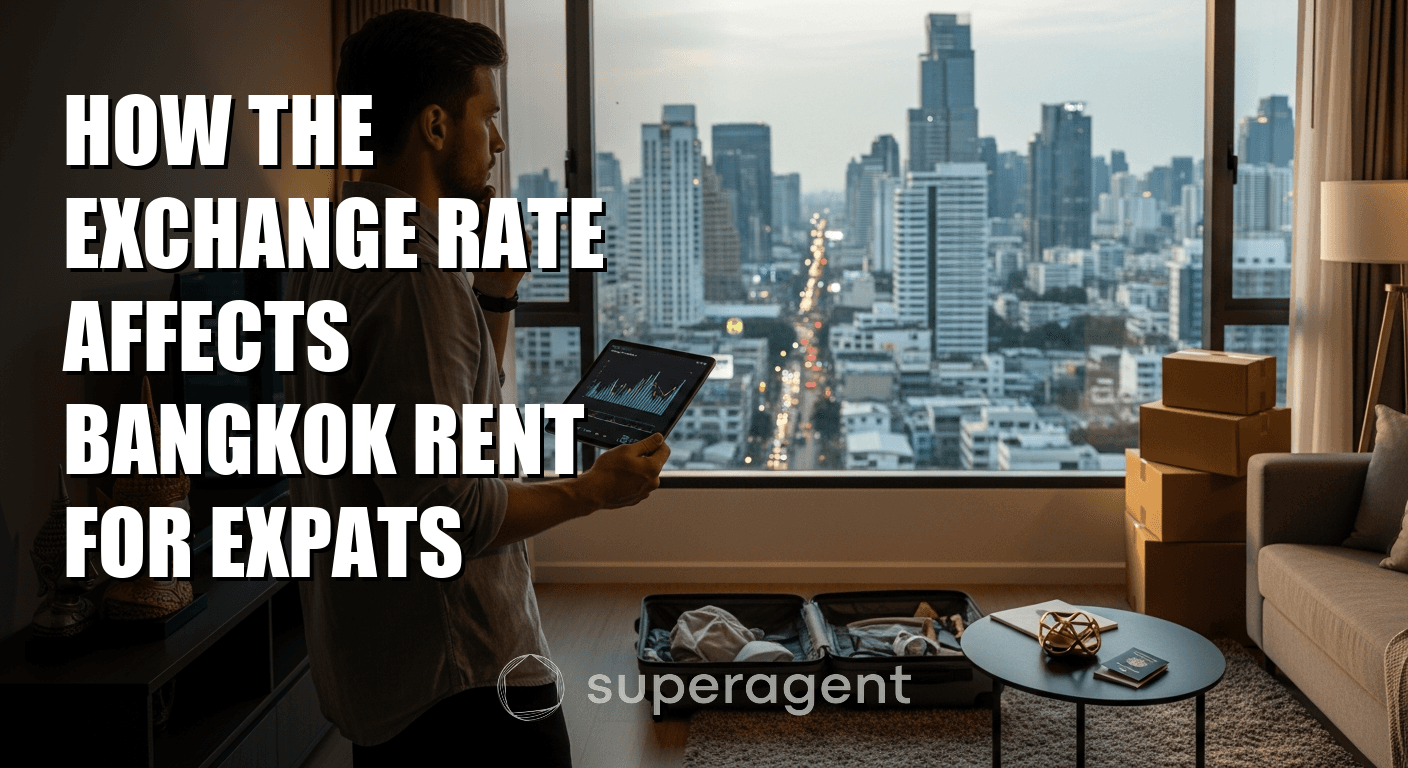
How currency fluctuations can make or break your Bangkok housing budget as a foreign resident
Summary
Learn how the USD, EUR, and GBP exchange rates impact Bangkok rent costs and how expats can protect their housing budget from currency swings.
For expats in Bangkok, the rate between your home currency and the Thai baht is not just a vacation detail. It is a live, ongoing factor in how much your apartment actually costs every single month, and most people do not think seriously about it until the damage is already done.
Why the Exchange Rate Changes What You Can Afford
Bangkok landlords price everything in baht. A studio near Phrom Phong BTS might list at 22,000 THB. A two-bedroom on Sukhumvit Soi 49 might sit at 55,000 THB. Those numbers stay fixed in the lease. Your home currency moves against the baht constantly, though, and there is nothing in the rental contract that protects you from that.
When the US dollar is strong, an American renting at Ashton Asoke pays around $620 a month for a 22,000 THB unit. When the dollar softens, that same unit creeps toward $680 or more, with zero change on the Thai side of the deal. That gap compounds fast across a full year, quietly adding hundreds of dollars in costs that were never part of the original plan.
How Much the Baht Has Actually Moved
The baht has been surprisingly volatile over the past few years. The USD/THB rate has swung between roughly 32 and 37 over recent cycles. For a European renter paying 40,000 THB near Silom MRT, that kind of swing can mean a difference of 80 to 120 euros a month, depending on the EUR/THB rate at that moment.
Australians and British expats feel it the same way. A two-bedroom on Rama 9 at 35,000 THB might convert to AU$1,350 one quarter and AU$1,520 the next. Same apartment, same lease, very different effective cost. The baht is not pegged to any single major currency, so it responds to global factors that have nothing to do with your Bangkok life.
Which Neighborhoods Feel It Most
High-rent areas like Thonglor, Ekkamai, and Phrom Phong are where exchange rate sensitivity hits hardest. Paying 70,000 THB a month for a premium unit in The Monument Thonglor means a 5% currency swing turns into a very noticeable monthly loss. The absolute baht figure is large enough that even modest rate movements sting.
Budget-friendly areas absorb the swings better. A 15,000 THB studio near Huai Khwang MRT or a place on Lat Phrao Soi 71 for 18,000 THB will feel a 5% shift much less in real terms. Expats keeping fixed costs low are somewhat insulated simply by the smaller absolute numbers. If you are flexible on lifestyle and not locked into the premium Sukhumvit corridor, that flexibility becomes a real financial buffer.
Practical Ways to Reduce Exchange Rate Risk
Paying rent in larger, less frequent chunks when the rate is favorable is one of the most effective moves. Landlords at expat-popular buildings like Lumpini 24 near Phrom Phong or Aspire Rama 9 often accept two or three months upfront without friction. Paying ahead when rates are good locks in value that would otherwise quietly disappear.
Using a fintech service like Wise instead of a standard bank transfer also helps considerably. Banks typically add a spread on top of the mid-market rate, and that difference is real money lost on every transaction. On a 45,000 THB rent payment, even a 1% worse exchange rate means losing more than 1,500 baht a month for no reason.
Some longer-stay expats open a Thai bank account and fund it in larger amounts when their home currency is strong. Kasikorn Bank and Bangkok Bank both allow foreigners with valid visas to open accounts without much difficulty. This creates a baht reserve to draw from when your currency weakens, smoothing out volatility month by month.
A few expats also ask landlords whether rent can be quoted in USD, which some buildings that actively market to international tenants will consider. Fraser Suites Sukhumvit on Soi 11 is an example of a serviced residence that caters to this kind of arrangement. It removes baht exposure entirely, though the base price is usually set to account for that convenience.
Timing Your Search Around Currency Conditions
If you have any flexibility on when to sign a lease, currency conditions are worth watching for a few weeks beforehand. A month when your home currency is near its stronger range against the baht is a good time to commit. You lock in a THB figure that costs you less for the entire contract period.
Say you are considering a unit at Chateau In Town Ratchada near Thailand Cultural Centre MRT, priced at 28,000 THB. Signing when your dollar buys 36 baht instead of 33 baht saves around $70 a month. Over a 12-month lease, that is over $800 back in your pocket without changing anything about the apartment or the area.
Build a currency buffer into your monthly budget from the start. Calculate rent affordability at a rate about 5% worse than today's conditions. If the number still works, you can absorb normal fluctuations without stress. If it does not, areas like Phahon Yothin near BTS Ari, where solid buildings along Soi Phahon Yothin 15 often list at 22,000 to 25,000 THB, give you comparable quality with less exposure.
Currency shifts are a permanent part of expat life in Bangkok. With a bit of planning, they become something you have already factored in rather than a monthly surprise. Superagent.co uses AI to search Bangkok condo listings by price, location, and building type, so you can find a place that makes sense at any exchange rate.
Written by the Superagent editorial team. Superagent is Bangkok's AI-powered condo rental platform, helping expats and locals find the right rental faster. superagent.co
Related articles
For expats in Bangkok, the rate between your home currency and the Thai baht is not just a vacation detail. It is a live, ongoing factor in how much your apartment actually costs every single month, and most people do not think seriously about it until the damage is already done.
Why the Exchange Rate Changes What You Can Afford
Bangkok landlords price everything in baht. A studio near Phrom Phong BTS might list at 22,000 THB. A two-bedroom on Sukhumvit Soi 49 might sit at 55,000 THB. Those numbers stay fixed in the lease. Your home currency moves against the baht constantly, though, and there is nothing in the rental contract that protects you from that.
When the US dollar is strong, an American renting at Ashton Asoke pays around $620 a month for a 22,000 THB unit. When the dollar softens, that same unit creeps toward $680 or more, with zero change on the Thai side of the deal. That gap compounds fast across a full year, quietly adding hundreds of dollars in costs that were never part of the original plan.
How Much the Baht Has Actually Moved
The baht has been surprisingly volatile over the past few years. The USD/THB rate has swung between roughly 32 and 37 over recent cycles. For a European renter paying 40,000 THB near Silom MRT, that kind of swing can mean a difference of 80 to 120 euros a month, depending on the EUR/THB rate at that moment.
Continue reading after that.
Looking for a condo
to rent?
Leave your name and phone. We'll follow up while you keep reading.
100% Secure
Fast Response
Free Consultation
Australians and British expats feel it the same way. A two-bedroom on Rama 9 at 35,000 THB might convert to AU$1,350 one quarter and AU$1,520 the next. Same apartment, same lease, very different effective cost. The baht is not pegged to any single major currency, so it responds to global factors that have nothing to do with your Bangkok life.
Which Neighborhoods Feel It Most
High-rent areas like Thonglor, Ekkamai, and Phrom Phong are where exchange rate sensitivity hits hardest. Paying 70,000 THB a month for a premium unit in The Monument Thonglor means a 5% currency swing turns into a very noticeable monthly loss. The absolute baht figure is large enough that even modest rate movements sting.
Budget-friendly areas absorb the swings better. A 15,000 THB studio near Huai Khwang MRT or a place on Lat Phrao Soi 71 for 18,000 THB will feel a 5% shift much less in real terms. Expats keeping fixed costs low are somewhat insulated simply by the smaller absolute numbers. If you are flexible on lifestyle and not locked into the premium Sukhumvit corridor, that flexibility becomes a real financial buffer.
Practical Ways to Reduce Exchange Rate Risk
Paying rent in larger, less frequent chunks when the rate is favorable is one of the most effective moves. Landlords at expat-popular buildings like Lumpini 24 near Phrom Phong or Aspire Rama 9 often accept two or three months upfront without friction. Paying ahead when rates are good locks in value that would otherwise quietly disappear.
Using a fintech service like Wise instead of a standard bank transfer also helps considerably. Banks typically add a spread on top of the mid-market rate, and that difference is real money lost on every transaction. On a 45,000 THB rent payment, even a 1% worse exchange rate means losing more than 1,500 baht a month for no reason.
Some longer-stay expats open a Thai bank account and fund it in larger amounts when their home currency is strong. Kasikorn Bank and Bangkok Bank both allow foreigners with valid visas to open accounts without much difficulty. This creates a baht reserve to draw from when your currency weakens, smoothing out volatility month by month.
A few expats also ask landlords whether rent can be quoted in USD, which some buildings that actively market to international tenants will consider. Fraser Suites Sukhumvit on Soi 11 is an example of a serviced residence that caters to this kind of arrangement. It removes baht exposure entirely, though the base price is usually set to account for that convenience.
Timing Your Search Around Currency Conditions
If you have any flexibility on when to sign a lease, currency conditions are worth watching for a few weeks beforehand. A month when your home currency is near its stronger range against the baht is a good time to commit. You lock in a THB figure that costs you less for the entire contract period.
Continue reading after that.
Looking for a condo
to rent?
Leave your name and phone. We'll follow up while you keep reading.
100% Secure
Fast Response
Free Consultation
Say you are considering a unit at Chateau In Town Ratchada near Thailand Cultural Centre MRT, priced at 28,000 THB. Signing when your dollar buys 36 baht instead of 33 baht saves around $70 a month. Over a 12-month lease, that is over $800 back in your pocket without changing anything about the apartment or the area.
Build a currency buffer into your monthly budget from the start. Calculate rent affordability at a rate about 5% worse than today's conditions. If the number still works, you can absorb normal fluctuations without stress. If it does not, areas like Phahon Yothin near BTS Ari, where solid buildings along Soi Phahon Yothin 15 often list at 22,000 to 25,000 THB, give you comparable quality with less exposure.
Currency shifts are a permanent part of expat life in Bangkok. With a bit of planning, they become something you have already factored in rather than a monthly surprise. Superagent.co uses AI to search Bangkok condo listings by price, location, and building type, so you can find a place that makes sense at any exchange rate.
Written by the Superagent editorial team. Superagent is Bangkok's AI-powered condo rental platform, helping expats and locals find the right rental faster. superagent.co
Related articles
Share this article
Properties you may like
More like this
 In Market · Superagent EditorialApartment vs Condo in Bangkok: What Is the Real Difference and Which One Should You Rent?Bangkok apartments and condos differ in ownership, rent, utilities, maintenance and lease terms. Here is how to compare them before you sign.26 Jan 20191 min read
 In Market · Superagent EditorialRent or Buy a Condo in Bangkok: An Honest Financial BreakdownCompare the true cost of buying versus renting a Bangkok condo, from mortgage rates and common fees to rental yields and opportunity cost.25 Jan 20191 min read
 In Market · Superagent EditorialWhere Expats Rent Condos in Bangkok: The Top Neighborhoods and What They Really CostFrom Sukhumvit and Sathorn to Ari, On Nut and the riverside, see which Bangkok neighborhoods expats rent in and what monthly rent costs.19 Jan 20191 min read
 In Market · Superagent EditorialBangkok Condo Rents vs the World: How Cheap Is Bangkok Really?Compare Bangkok condo rents with Singapore, Tokyo, London, Paris, New York and Toronto, plus where Bangkok itself turns expensive.17 Jan 20191 min read