How to Evict a Tenant in Thailand: Bangkok Landlord's Legal Guide
Guides
How to Evict a Tenant in Thailand: Bangkok Landlord's Legal Guide
Master the legal process for removing non-paying or problem tenants from your Bangkok property.
Summary
Learn how to evict tenant Thailand legally and protect your rental investment. This guide covers court procedures, documentation, and tenant rights for Ban
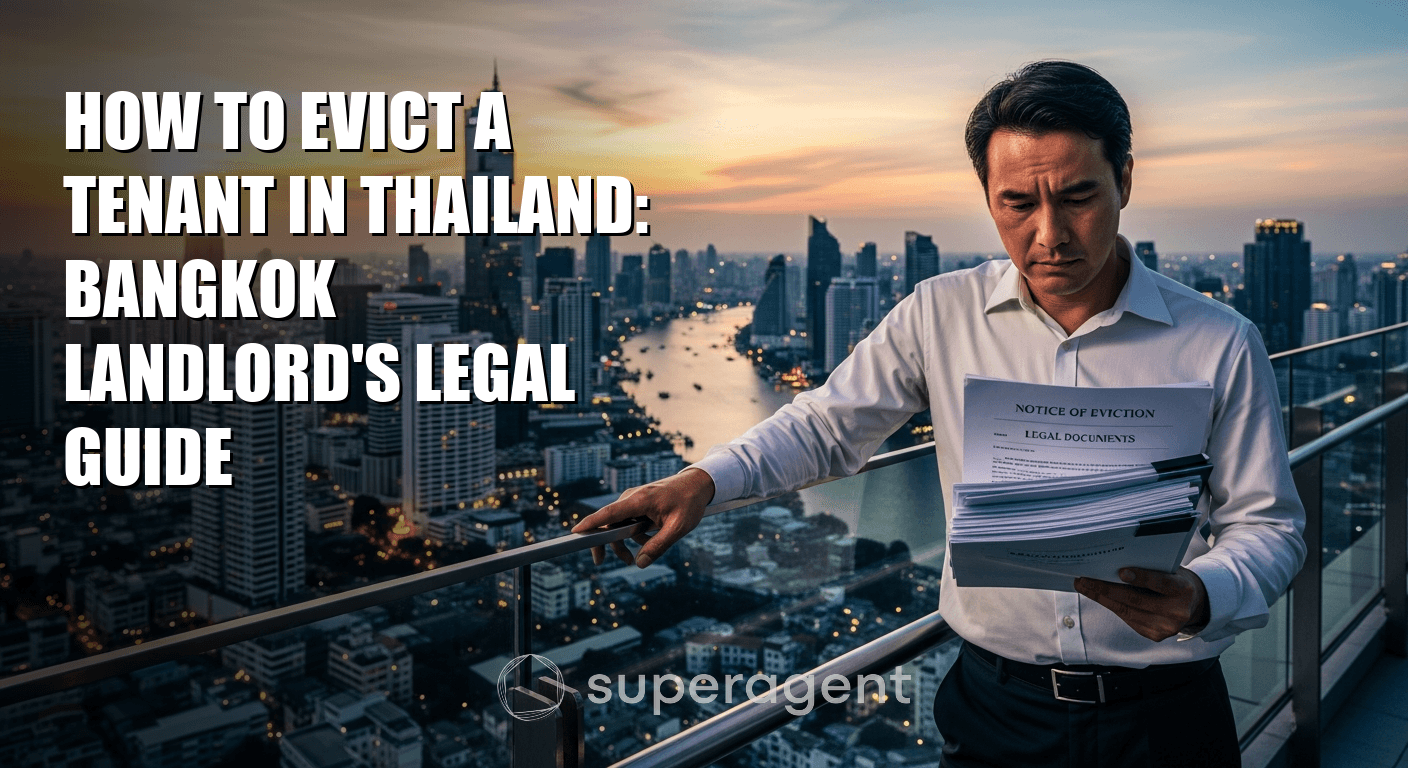
You've got a tenant in your Sukhumvit condo who hasn't paid rent in three months. The unit smells like smoke even though the lease clearly says no smoking. You've tried LINE messages, phone calls, even knocking on the door. Nothing. Now you're wondering: can I just change the locks? The short answer is no. Thailand has specific legal processes for eviction, and skipping them can land you in more trouble than your tenant. Let me walk you through how this actually works in Bangkok.
Understand What Thai Law Actually Says About Eviction
Thailand doesn't have a single "Landlord and Tenant Act" the way some Western countries do. Eviction rules come from the Civil and Commercial Code, primarily Sections 538 through 571, along with various consumer protection regulations. The key thing to understand is that Thai law generally favors the tenant more than most Bangkok landlords expect.
You cannot forcibly remove a tenant, change the locks, cut off utilities, or throw their belongings out. Even if they owe you six months of rent on a 25,000 THB per month studio near BTS Thong Lo. Doing any of that could expose you to criminal charges for trespass or property damage. The legal route takes longer, but it's the only one that protects you.
If your lease is for a fixed term, say 12 months, you generally cannot evict mid lease unless the tenant has breached a specific term of the contract. If the lease is month to month, you need to give proper written notice. The standard notice period is one full rental period in advance, delivered before the start of the next period.
Valid Grounds for Eviction in Bangkok
Not every frustration with a tenant qualifies as grounds for eviction. Thai courts look for clear, documented breaches. The most common valid reasons include nonpayment of rent, using the property for illegal activities, causing serious damage to the unit, and subletting without permission.
Here's a real scenario. Say you own a two bedroom condo at Life Asoke Hype near MRT Phetchaburi. Your tenant signed a one year lease at 30,000 THB per month but has been renting out the second bedroom on short term rental platforms without your consent. That's a lease violation, and it's also potentially illegal under Thailand's Hotel Act. You have solid grounds to begin eviction proceedings.
What doesn't usually work? Wanting to sell the unit, wanting to raise rent mid contract, or simply disliking the tenant. These are not valid grounds for early termination in most fixed term leases. You'll need to wait until the lease expires and then decline to renew.
The Step by Step Eviction Process
First, send a formal written notice to your tenant specifying the breach and giving them a reasonable period to fix it. For nonpayment, this is typically 15 to 30 days. Make sure the notice is in writing. A LINE message alone probably won't hold up in court. Send it via registered mail to the condo address and keep a copy.
If the tenant doesn't respond or fix the problem within the stated period, your next step is to file a civil lawsuit at the court that has jurisdiction over the property's location. For most Bangkok condos, this means the Civil Court on Ratchadaphisek Road or the relevant district court. You'll need the original lease agreement, evidence of the breach, copies of your written notices, and your ID documents.
Court proceedings in Thailand can take anywhere from a few months to over a year depending on complexity. If the court rules in your favor, you'll receive a judgment ordering the tenant to vacate. If they still refuse, you can request the Legal Execution Department to enforce the order. Only at this point can the tenant be physically removed, and it's done by officials, not by you.
Consider a landlord with a condo at Ideo Mobi Rama 9 near MRT Rama 9 renting at 18,000 THB per month. The tenant stopped paying after month four. The landlord sent proper notice, filed a lawsuit, and received a judgment after about five months. Including legal fees of roughly 30,000 to 80,000 THB, the total process took around seven months from first missed payment to getting the unit back.
Protecting Yourself Before Problems Start
The best eviction strategy is never needing one. A well drafted lease agreement is your single most important tool. Make sure it includes clear terms on payment deadlines, penalties for late rent, rules about subletting, and explicit breach and termination clauses.
Always collect a security deposit of two months' rent. For a 35,000 THB per month one bedroom at Noble Revolve Ratchada near MRT Thailand Cultural Centre, that's 70,000 THB upfront. This gives you a financial cushion if things go sideways.
Screen tenants carefully. Ask for proof of employment or income, request references from previous landlords, and trust your instincts during viewings. Many landlords in Bangkok skip this step and regret it later.
When to Hire a Lawyer
If your tenant is cooperative and willing to leave voluntarily after receiving notice, you might not need legal help at all. Many disputes in Bangkok get resolved through direct negotiation, sometimes with a small financial incentive for the tenant to leave quickly and peacefully.
But if you're dealing with a tenant who refuses to communicate, disputes the breach, or has been in the unit long enough to feel entitled to stay, get a Thai lawyer involved early. Expect to pay between 20,000 and 100,000 THB in legal fees depending on case complexity. Firms near Soi Asoke and around Silom handle landlord tenant disputes regularly and know the local courts well.
Evicting a tenant in Thailand requires patience, paperwork, and a willingness to follow the process even when it feels painfully slow. But doing it right means you get your property back cleanly, without legal blowback. If you're a landlord looking for better tenants from the start, or a renter searching for a fair and transparent leasing experience, Superagent at superagent.co uses AI to match the right people with the right condos, helping both sides avoid the headaches that lead to situations like these.
You've got a tenant in your Sukhumvit condo who hasn't paid rent in three months. The unit smells like smoke even though the lease clearly says no smoking. You've tried LINE messages, phone calls, even knocking on the door. Nothing. Now you're wondering: can I just change the locks? The short answer is no. Thailand has specific legal processes for eviction, and skipping them can land you in more trouble than your tenant. Let me walk you through how this actually works in Bangkok.
Understand What Thai Law Actually Says About Eviction
Thailand doesn't have a single "Landlord and Tenant Act" the way some Western countries do. Eviction rules come from the Civil and Commercial Code, primarily Sections 538 through 571, along with various consumer protection regulations. The key thing to understand is that Thai law generally favors the tenant more than most Bangkok landlords expect.
You cannot forcibly remove a tenant, change the locks, cut off utilities, or throw their belongings out. Even if they owe you six months of rent on a 25,000 THB per month studio near BTS Thong Lo. Doing any of that could expose you to criminal charges for trespass or property damage. The legal route takes longer, but it's the only one that protects you.
If your lease is for a fixed term, say 12 months, you generally cannot evict mid lease unless the tenant has breached a specific term of the contract. If the lease is month to month, you need to give proper written notice. The standard notice period is one full rental period in advance, delivered before the start of the next period.
Valid Grounds for Eviction in Bangkok
Not every frustration with a tenant qualifies as grounds for eviction. Thai courts look for clear, documented breaches. The most common valid reasons include nonpayment of rent, using the property for illegal activities, causing serious damage to the unit, and subletting without permission.
Here's a real scenario. Say you own a two bedroom condo at Life Asoke Hype near MRT Phetchaburi. Your tenant signed a one year lease at 30,000 THB per month but has been renting out the second bedroom on short term rental platforms without your consent. That's a lease violation, and it's also potentially illegal under Thailand's Hotel Act. You have solid grounds to begin eviction proceedings.
What doesn't usually work? Wanting to sell the unit, wanting to raise rent mid contract, or simply disliking the tenant. These are not valid grounds for early termination in most fixed term leases. You'll need to wait until the lease expires and then decline to renew.
The Step by Step Eviction Process
First, send a formal written notice to your tenant specifying the breach and giving them a reasonable period to fix it. For nonpayment, this is typically 15 to 30 days. Make sure the notice is in writing. A LINE message alone probably won't hold up in court. Send it via registered mail to the condo address and keep a copy.
If the tenant doesn't respond or fix the problem within the stated period, your next step is to file a civil lawsuit at the court that has jurisdiction over the property's location. For most Bangkok condos, this means the Civil Court on Ratchadaphisek Road or the relevant district court. You'll need the original lease agreement, evidence of the breach, copies of your written notices, and your ID documents.
Court proceedings in Thailand can take anywhere from a few months to over a year depending on complexity. If the court rules in your favor, you'll receive a judgment ordering the tenant to vacate. If they still refuse, you can request the Legal Execution Department to enforce the order. Only at this point can the tenant be physically removed, and it's done by officials, not by you.
Consider a landlord with a condo at Ideo Mobi Rama 9 near MRT Rama 9 renting at 18,000 THB per month. The tenant stopped paying after month four. The landlord sent proper notice, filed a lawsuit, and received a judgment after about five months. Including legal fees of roughly 30,000 to 80,000 THB, the total process took around seven months from first missed payment to getting the unit back.
Talk to us about renting
Share your details and keep reading — we’ll get back to you.
Protecting Yourself Before Problems Start
The best eviction strategy is never needing one. A well drafted lease agreement is your single most important tool. Make sure it includes clear terms on payment deadlines, penalties for late rent, rules about subletting, and explicit breach and termination clauses.
Always collect a security deposit of two months' rent. For a 35,000 THB per month one bedroom at Noble Revolve Ratchada near MRT Thailand Cultural Centre, that's 70,000 THB upfront. This gives you a financial cushion if things go sideways.
Screen tenants carefully. Ask for proof of employment or income, request references from previous landlords, and trust your instincts during viewings. Many landlords in Bangkok skip this step and regret it later.
When to Hire a Lawyer
If your tenant is cooperative and willing to leave voluntarily after receiving notice, you might not need legal help at all. Many disputes in Bangkok get resolved through direct negotiation, sometimes with a small financial incentive for the tenant to leave quickly and peacefully.
But if you're dealing with a tenant who refuses to communicate, disputes the breach, or has been in the unit long enough to feel entitled to stay, get a Thai lawyer involved early. Expect to pay between 20,000 and 100,000 THB in legal fees depending on case complexity. Firms near Soi Asoke and around Silom handle landlord tenant disputes regularly and know the local courts well.
Evicting a tenant in Thailand requires patience, paperwork, and a willingness to follow the process even when it feels painfully slow. But doing it right means you get your property back cleanly, without legal blowback. If you're a landlord looking for better tenants from the start, or a renter searching for a fair and transparent leasing experience, Superagent at superagent.co uses AI to match the right people with the right condos, helping both sides avoid the headaches that lead to situations like these.
Share this article
Properties you may like
฿35,000
2 Bed295 sqm
[For Rent] CONDO I Witthayu Complex I Pet Friendly I 2 Beds I 2 Baths I 35,000THB/mo
Condo![[For Rent] CONDO I UP Ekkamai I Pet Friendly I 2 Beds I 2 Baths I 40,000THB/mo](/_next/image?url=https%3A%2F%2Fstorage.googleapis.com%2Fsuperagent-web%2Fattachments%2Flistings%2F6762%2F28ea39dc-4e7d-4dc5-b8bc-fa254e6512c6-1142-1.jpg&w=3840&q=75)
฿40,003
2 Bed260 sqm
[For Rent] CONDO I UP Ekkamai I Pet Friendly I 2 Beds I 2 Baths I 40,000THB/mo
Condo![[For Rent] CONDO I Ideo Q Phayathai I 2 Beds I 2 Baths I 50,000THB/mo](/_next/image?url=https%3A%2F%2Fstorage.googleapis.com%2Fsuperagent-web%2Fattachments%2Flistings%2F6761%2Fd56dc353-7436-451a-b407-76100af6b15f-1141-1.jpg&w=3840&q=75)
฿50,000
2 Bed275 sqm
[For Rent] CONDO I Ideo Q Phayathai I 2 Beds I 2 Baths I 50,000THB/mo
Phaya Thai
Condo![[For Rent] CONDO I Culture Chula I Duplex I 1 Bed I 1 Bath I 35,000THB/mo](/_next/image?url=https%3A%2F%2Fstorage.googleapis.com%2Fsuperagent-web%2Fattachments%2Flistings%2F6760%2F8deaff98-ecb1-4c62-b9be-aecac2f65797-1140-1.jpg&w=3840&q=75)
฿35,000
1 Bed138 sqm
[For Rent] CONDO I Culture Chula I Duplex I 1 Bed I 1 Bath I 35,000THB/mo
Siam
Condo![[For Rent] CONDO I The River Condominium I 2 Beds I 3 Baths I 55,000THB/mo](/_next/image?url=https%3A%2F%2Fstorage.googleapis.com%2Fsuperagent-web%2Fattachments%2Flistings%2F6745%2Fa48d8ae3-8857-408d-81ff-45eb890fbdb9-1000011745.jpg&w=3840&q=75)
฿55,000
2 Bed398 sqm
[For Rent] CONDO I The River Condominium I 2 Beds I 3 Baths I 55,000THB/mo
Wongwian Yai
Condo![[For Rent] CONDO I Park Origin Phayathai I Studio I 1 Bath I 28,000THB/mo](/_next/image?url=https%3A%2F%2Fstorage.googleapis.com%2Fsuperagent-web%2Fattachments%2Flistings%2F6757%2Fb226df93-94c6-46fa-aeba-ebfadc7f81b8-1000006042.jpg&w=3840&q=75)
฿28,000
Studio129 sqm
[For Rent] CONDO I Park Origin Phayathai I Studio I 1 Bath I 28,000THB/mo
Phaya Thai
Condo![[For Rent] CONDO I The Excel Hideaway Sukhumvit 71 I 1 Bed I 1 Bath I 15,000THB/mo](/_next/image?url=https%3A%2F%2Fstorage.googleapis.com%2Fsuperagent-web%2Fattachments%2Flistings%2F6759%2F3f14f6ae-c757-46d4-a937-7a5cdedd3bc2-1137-1.jpg&w=3840&q=75)
฿15,000
1 Bed130 sqm
[For Rent] CONDO I The Excel Hideaway Sukhumvit 71 I 1 Bed I 1 Bath I 15,000THB/mo
Condo![[For Rent] CONDO I Supalai River Resort - Charoen Nakhon I Studio I 1 Bath I 15,000THB/mo](/_next/image?url=https%3A%2F%2Fstorage.googleapis.com%2Fsuperagent-web%2Fattachments%2Flistings%2F6758%2F47f6fb03-f622-4e87-85d1-119768440486-1136-2.jpg&w=3840&q=75)
฿15,000
Studio138 sqm
[For Rent] CONDO I Supalai River Resort - Charoen Nakhon I Studio I 1 Bath I 15,000THB/mo
Condo![[For Rent] CONDO I The Room 69 I 1 Bed I 1 Bath I 35,000THB/mo](/_next/image?url=https%3A%2F%2Fstorage.googleapis.com%2Fsuperagent-web%2Fattachments%2Flistings%2F6756%2F445213f0-c378-46a2-b3fe-7a5ba62b623f-1135-1.jpg&w=3840&q=75)
฿35,000
1 Bed144.7 sqm
[For Rent] CONDO I The Room 69 I 1 Bed I 1 Bath I 35,000THB/mo
Condo![[For Rent] HOUSE I Mantana Bangna Km.7 I 3 BedsI 3 Baths I 68,000THB/mo](/_next/image?url=https%3A%2F%2Fstorage.googleapis.com%2Fsuperagent-web%2Fattachments%2Flistings%2F6755%2F673e8400-a19a-43b4-b994-7c0d717c8d40-1128-4.jpg&w=3840&q=75)
฿68,000
3 Bed3172 sqm
[For Rent] HOUSE I Mantana Bangna Km.7 I 3 BedsI 3 Baths I 68,000THB/mo
Bang Na
HouseMore like this
 In Guides · Superagent EditorialHidden Costs of Renting a Condo in Bangkok Nobody Warns You AboutBangkok condo rent looks affordable until month one hits. Here are the real costs beyond the headline figure that catch most renters off guard.25 May 20261 min read
 In Guides · Superagent EditorialWhat a Long-Vacant Bangkok Condo Unit Is Actually Telling YouA Bangkok condo vacant for months signals overpricing, landlord issues, or real problems. Here is how to read the signs.25 May 20261 min read
 In Guides · Superagent EditorialRed Flags in a Bangkok Rental Contract to Watch Out ForBangkok rental contracts often hide risky clauses. Here are the red flags every tenant must catch before signing any lease.25 May 20261 min read
 In Guides · Superagent EditorialWorking Online from a Condo: How to Choose the Perfect Room for ProductivityLearn how to choose the best condo room for working online with tips on lighting, noise, and furniture setup to maximize productivity.9 May 20261 min read