Korean Expats in Bangkok: Where They Concentrate and Why
Lifestyle
Korean Expats in Bangkok: Where They Concentrate and Why
Discover the vibrant neighborhoods where Korean expats thrive in Bangkok's diverse communities.
Summary
Explore where Korean expat Bangkok communities cluster and understand the cultural, economic, and lifestyle factors driving their neighborhood choices.
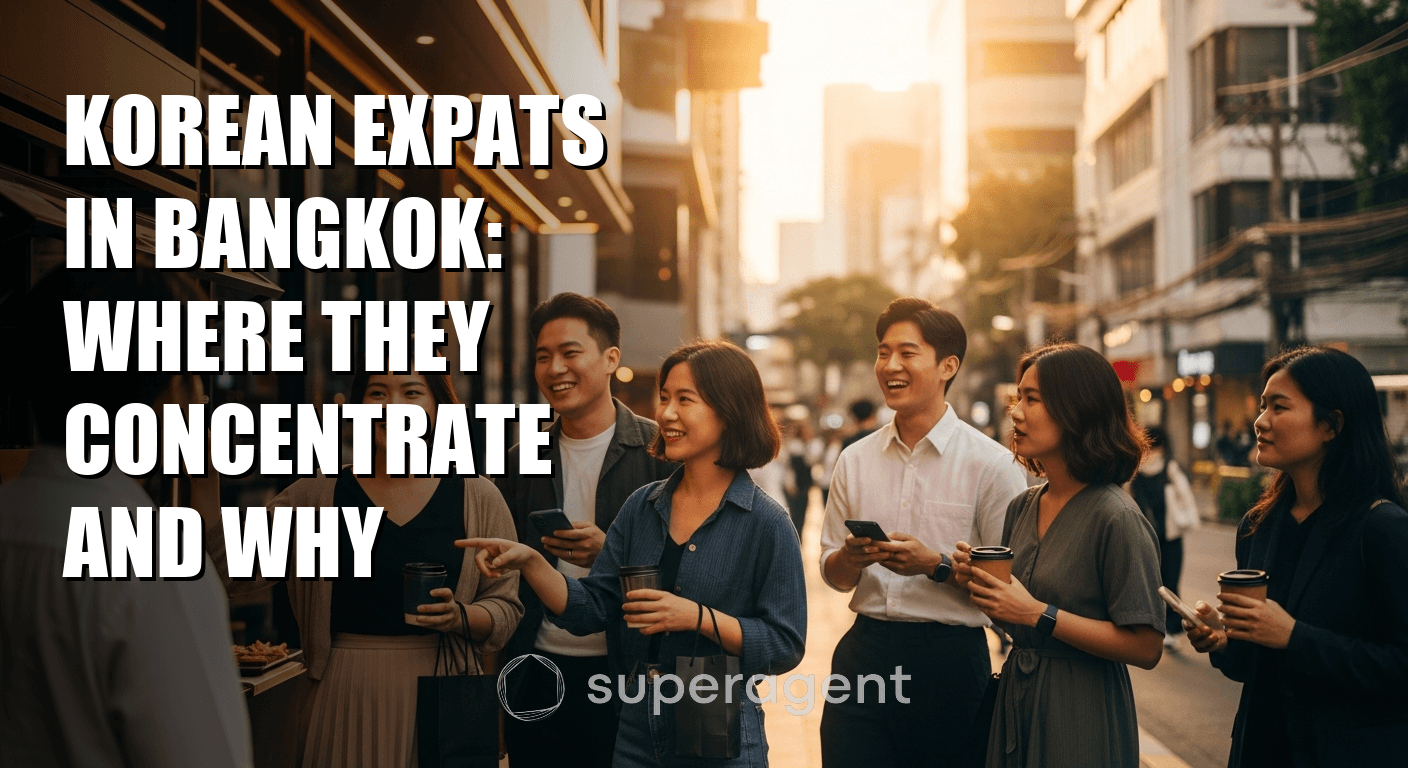
If you've spent any real time in Bangkok, you've probably noticed it. A Korean BBQ joint tucked between a massage shop and a 7-Eleven. A Korean grocery store with shelves of gochujang and instant ramyeon. A hagwon-style tutoring center with signage entirely in Hangul. Bangkok has become one of Southeast Asia's most popular landing spots for Korean expats, and they haven't spread out randomly. They've clustered in very specific neighborhoods, for very specific reasons.
Understanding where Korean expats live in Bangkok isn't just cultural trivia. If you're Korean and moving here, it helps you find a neighborhood that feels like home from day one. And if you're a renter of any nationality, knowing these pockets can help you understand pricing trends, building culture, and what amenities to expect in certain parts of the city.
Sukhumvit Soi 12 and the Nana Korean Belt
The area around Sukhumvit Soi 12, stretching loosely from BTS Nana to BTS Asok, is probably the most established Korean neighborhood in Bangkok. Walk down Soi 12 on any given evening and you'll hear Korean conversations at nearly every restaurant. This strip is packed with Korean BBQ restaurants, noraebang karaoke bars, beauty clinics, and even a Korean-language real estate office or two.
Condos in this area tend to attract Korean professionals working for companies like Samsung, LG, and Hyundai, many of which have regional offices nearby. Buildings like Ashton Asoke and The Esse Asoke sit within a short walk. Rent for a one-bedroom condo here typically runs 25,000 to 45,000 THB per month, while two-bedroom units in newer buildings can push past 60,000 THB.
A Korean engineer named Joon recently relocated from Seoul to work at a tech firm near Asok. He chose a condo on Soi 12 specifically because he could grab doenjang-jjigae for lunch, pick up Korean groceries after work, and feel connected to a community without needing to speak much Thai or English. That kind of convenience is hard to replicate elsewhere in the city.
Sukhumvit Soi 20 to Soi 24: The Family Zone
Slightly further down Sukhumvit, the stretch between Soi 20 and Soi 24 near BTS Phrom Phong has become a magnet for Korean families. The reason is simple: schools. The Thai-Korean International School and several Korean tutoring academies are located in this general area, making it the natural choice for Korean parents who want their kids in familiar educational environments.
Buildings like Regent on the Park on Soi 22, Park 24 by Origin, and Emporium Suites on Soi 24 are popular among Korean families. These buildings tend to offer larger units, kid-friendly facilities like playgrounds and swimming pools, and proximity to Emporium and EmQuartier malls for weekend outings. Two-bedroom family units here range from 40,000 to 80,000 THB depending on the building and floor.
The Korean supermarket K-Market on Sukhumvit has been a staple for families stocking up on everything from kimchi to Korean snack packs for school lunches. Having that kind of retail infrastructure nearby makes a huge difference when you're raising kids abroad.
Ratchada and Huai Khwang: The Budget-Friendly Alternative
Not every Korean expat in Bangkok works for a big corporation with a housing allowance. Younger Koreans, digital nomads, small business owners, and language students often gravitate toward the Ratchada and Huai Khwang area near MRT Huai Khwang and MRT Thailand Cultural Centre. This neighborhood offers significantly lower rents while still maintaining a visible Korean community.
Korean restaurants and shops dot Ratchadaphisek Road, and you'll find affordable condos in buildings like Rhythm Ratchada, Life Ratchadaphisek, and Chapter One Midtown Ladprao. A studio here might go for 10,000 to 15,000 THB per month, and a one-bedroom for 14,000 to 22,000 THB. That's roughly half the price of equivalent units near Asok or Phrom Phong.
Take Minji, a 27-year-old Korean freelance designer who moved to Bangkok for the lifestyle and low cost of living. She chose a studio at Life Ratchadaphisek because she could keep her monthly expenses under 35,000 THB total, including rent, food, and coworking space. She still meets Korean friends for samgyeopsal on Ratchada without the Sukhumvit price tag.
Thonglor and Ekkamai: The Upscale Crossover
Korean expats with higher budgets or a taste for Bangkok's trendiest dining and nightlife scene increasingly settle in Thonglor and Ekkamai. These neighborhoods, centered around BTS Thong Lo and BTS Ekkamai, are more internationally mixed, but the Korean presence is growing steadily. Korean-owned cafes, dessert shops, and fusion restaurants have popped up along Thonglor's side streets over the past few years.
Premium condos like Tela Thonglor, Esse Sukhumvit 36, and Noble Reveal attract Korean professionals and entrepreneurs who want a more cosmopolitan vibe. One-bedroom units in these buildings range from 30,000 to 55,000 THB, with penthouses and larger layouts going much higher. Korean residents here tend to blend into the broader international community while still maintaining close ties to the Korean hubs a few BTS stops away.
Why Korean Expats Cluster Together
The clustering pattern isn't unique to Koreans, but it's especially pronounced. Several factors drive it. Language comfort is a big one. Many Korean expats, particularly trailing spouses and older family members, may not speak fluent English or Thai. Having Korean-speaking neighbors, shopkeepers, and service providers makes daily life dramatically easier.
Food culture matters too. Korean cuisine relies on specific ingredients that aren't always available at standard Thai supermarkets. Proximity to Korean grocery stores, butchers with the right cuts for BBQ, and restaurants serving authentic Korean food becomes a genuine quality of life issue, not just a preference.
There's also the social network effect. Once a critical mass of Korean families and professionals settles in a neighborhood, it attracts more. Kakao Talk group chats share tips about which buildings have Korean-friendly management, which landlords are flexible, and where to find a good Korean-speaking doctor.
Whether you're a Korean expat looking for a neighborhood that feels like a home away from Seoul, or any renter trying to understand Bangkok's neighborhood dynamics, these Korean hubs offer real insight into how communities shape the city's rental landscape. The right condo in the right area can make your entire Bangkok experience smoother from the start. If you want to search condos in any of these neighborhoods with filters that actually make sense, check out Superagent at superagent.co and let the platform do the heavy lifting for you.
If you've spent any real time in Bangkok, you've probably noticed it. A Korean BBQ joint tucked between a massage shop and a 7-Eleven. A Korean grocery store with shelves of gochujang and instant ramyeon. A hagwon-style tutoring center with signage entirely in Hangul. Bangkok has become one of Southeast Asia's most popular landing spots for Korean expats, and they haven't spread out randomly. They've clustered in very specific neighborhoods, for very specific reasons.
Understanding where Korean expats live in Bangkok isn't just cultural trivia. If you're Korean and moving here, it helps you find a neighborhood that feels like home from day one. And if you're a renter of any nationality, knowing these pockets can help you understand pricing trends, building culture, and what amenities to expect in certain parts of the city.
Sukhumvit Soi 12 and the Nana Korean Belt
The area around Sukhumvit Soi 12, stretching loosely from BTS Nana to BTS Asok, is probably the most established Korean neighborhood in Bangkok. Walk down Soi 12 on any given evening and you'll hear Korean conversations at nearly every restaurant. This strip is packed with Korean BBQ restaurants, noraebang karaoke bars, beauty clinics, and even a Korean-language real estate office or two.
Condos in this area tend to attract Korean professionals working for companies like Samsung, LG, and Hyundai, many of which have regional offices nearby. Buildings like Ashton Asoke and The Esse Asoke sit within a short walk. Rent for a one-bedroom condo here typically runs 25,000 to 45,000 THB per month, while two-bedroom units in newer buildings can push past 60,000 THB.
Continue reading after that.
Looking for a condo
to rent?
Leave your name and phone. We'll follow up while you keep reading.
100% Secure
Fast Response
Free Consultation
A Korean engineer named Joon recently relocated from Seoul to work at a tech firm near Asok. He chose a condo on Soi 12 specifically because he could grab doenjang-jjigae for lunch, pick up Korean groceries after work, and feel connected to a community without needing to speak much Thai or English. That kind of convenience is hard to replicate elsewhere in the city.
Sukhumvit Soi 20 to Soi 24: The Family Zone
Slightly further down Sukhumvit, the stretch between Soi 20 and Soi 24 near BTS Phrom Phong has become a magnet for Korean families. The reason is simple: schools. The Thai-Korean International School and several Korean tutoring academies are located in this general area, making it the natural choice for Korean parents who want their kids in familiar educational environments.
Buildings like Regent on the Park on Soi 22, Park 24 by Origin, and Emporium Suites on Soi 24 are popular among Korean families. These buildings tend to offer larger units, kid-friendly facilities like playgrounds and swimming pools, and proximity to Emporium and EmQuartier malls for weekend outings. Two-bedroom family units here range from 40,000 to 80,000 THB depending on the building and floor.
The Korean supermarket K-Market on Sukhumvit has been a staple for families stocking up on everything from kimchi to Korean snack packs for school lunches. Having that kind of retail infrastructure nearby makes a huge difference when you're raising kids abroad.
Ratchada and Huai Khwang: The Budget-Friendly Alternative
Not every Korean expat in Bangkok works for a big corporation with a housing allowance. Younger Koreans, digital nomads, small business owners, and language students often gravitate toward the Ratchada and Huai Khwang area near MRT Huai Khwang and MRT Thailand Cultural Centre. This neighborhood offers significantly lower rents while still maintaining a visible Korean community.
Korean restaurants and shops dot Ratchadaphisek Road, and you'll find affordable condos in buildings like Rhythm Ratchada, Life Ratchadaphisek, and Chapter One Midtown Ladprao. A studio here might go for 10,000 to 15,000 THB per month, and a one-bedroom for 14,000 to 22,000 THB. That's roughly half the price of equivalent units near Asok or Phrom Phong.
Take Minji, a 27-year-old Korean freelance designer who moved to Bangkok for the lifestyle and low cost of living. She chose a studio at Life Ratchadaphisek because she could keep her monthly expenses under 35,000 THB total, including rent, food, and coworking space. She still meets Korean friends for samgyeopsal on Ratchada without the Sukhumvit price tag.
Thonglor and Ekkamai: The Upscale Crossover
Korean expats with higher budgets or a taste for Bangkok's trendiest dining and nightlife scene increasingly settle in Thonglor and Ekkamai. These neighborhoods, centered around BTS Thong Lo and BTS Ekkamai, are more internationally mixed, but the Korean presence is growing steadily. Korean-owned cafes, dessert shops, and fusion restaurants have popped up along Thonglor's side streets over the past few years.
Premium condos like Tela Thonglor, Esse Sukhumvit 36, and Noble Reveal attract Korean professionals and entrepreneurs who want a more cosmopolitan vibe. One-bedroom units in these buildings range from 30,000 to 55,000 THB, with penthouses and larger layouts going much higher. Korean residents here tend to blend into the broader international community while still maintaining close ties to the Korean hubs a few BTS stops away.
Continue reading after that.
Looking for a condo
to rent?
Leave your name and phone. We'll follow up while you keep reading.
100% Secure
Fast Response
Free Consultation
Why Korean Expats Cluster Together
The clustering pattern isn't unique to Koreans, but it's especially pronounced. Several factors drive it. Language comfort is a big one. Many Korean expats, particularly trailing spouses and older family members, may not speak fluent English or Thai. Having Korean-speaking neighbors, shopkeepers, and service providers makes daily life dramatically easier.
Food culture matters too. Korean cuisine relies on specific ingredients that aren't always available at standard Thai supermarkets. Proximity to Korean grocery stores, butchers with the right cuts for BBQ, and restaurants serving authentic Korean food becomes a genuine quality of life issue, not just a preference.
There's also the social network effect. Once a critical mass of Korean families and professionals settles in a neighborhood, it attracts more. Kakao Talk group chats share tips about which buildings have Korean-friendly management, which landlords are flexible, and where to find a good Korean-speaking doctor.
Whether you're a Korean expat looking for a neighborhood that feels like a home away from Seoul, or any renter trying to understand Bangkok's neighborhood dynamics, these Korean hubs offer real insight into how communities shape the city's rental landscape. The right condo in the right area can make your entire Bangkok experience smoother from the start. If you want to search condos in any of these neighborhoods with filters that actually make sense, check out Superagent at superagent.co and let the platform do the heavy lifting for you.
Share this article
Properties you may like
![[For Rent] CONDO I Maestro 14 Siam-Ratchathewi Pet Friendly I 1 Bed I 1 Bath I 22,000THB/mo](/_next/image?url=https%3A%2F%2Fstorage.googleapis.com%2Fsuperagent-web%2Fattachments%2Flistings%2F6686%2F5ae8a77f-b6fb-4578-a765-e56f493cd25f-1058.png&w=3840&q=75)
฿25,000
1 Bed130 sqm
[For Rent] CONDO I Maestro 14 Siam-Ratchathewi Pet Friendly I 1 Bed I 1 Bath I 22,000THB/mo
Siam
Condo![[For Rent] CONDO I Las Colinas Condominium I 2 Beds I 3 Baths I 85,000THB/mo](/_next/image?url=https%3A%2F%2Fstorage.googleapis.com%2Fsuperagent-web%2Fattachments%2Flistings%2F6828%2F80f345c4-488e-43b2-b017-c9fbb17b520d-99486dd8-4237-4ba2-9207-01ce4f66b21f-media.jpg&w=3840&q=75)
฿85,000
2 Bed3170 sqm
[For Rent] CONDO I Las Colinas Condominium I 2 Beds I 3 Baths I 85,000THB/mo
Asoke
Condo![[For Rent] CONDO I The Diplomat 39 I 2 Beds I 2 Baths I 89,000THB/mo](/_next/image?url=https%3A%2F%2Fstorage.googleapis.com%2Fsuperagent-web%2Fattachments%2Flistings%2F6784%2Ff92c62cc-d3be-42df-adca-b8f96fb02cfb-1163-1.jpg&w=3840&q=75)
฿89,000
2 Bed286 sqm
[For Rent] CONDO I The Diplomat 39 I 2 Beds I 2 Baths I 89,000THB/mo
Phrom Phong
Condo![[For Rent] CONDO I KEN Attitude Rattanathibet I Duplex I 2 Beds I 2 Baths I 40,000THB/mo](/_next/image?url=https%3A%2F%2Fstorage.googleapis.com%2Fsuperagent-web%2Fattachments%2Flistings%2F6852%2F17c1715e-4458-4008-bb0b-072a4c081166-img_0557.jpeg&w=3840&q=75)
฿40,000
2 Bed277 sqm
[For Rent] CONDO I KEN Attitude Rattanathibet I Duplex I 2 Beds I 2 Baths I 40,000THB/mo
Condo![[For Rent] CONDO I H Sukhumvit 43 I 1 Bed I 1 Bath I 28,000THB/mo](/_next/image?url=https%3A%2F%2Fstorage.googleapis.com%2Fsuperagent-web%2Fattachments%2Flistings%2F6851%2Ff355c21a-a282-4338-86c6-dc5bb3368321-1244-1.jpg&w=3840&q=75)
฿28,000
1 Bed143 sqm
[For Rent] CONDO I H Sukhumvit 43 I 1 Bed I 1 Bath I 28,000THB/mo
Phrom Phong
Condo![[For Rent] CONDO I The Base Park West T77 I 2 Beds I 2 Baths I 24,000THB/mo](/_next/image?url=https%3A%2F%2Fstorage.googleapis.com%2Fsuperagent-web%2Fattachments%2Flistings%2F6723%2Fabc06b19-f7fa-4950-98f6-8bdd841b26a6-1098-3.jpg&w=3840&q=75)
฿24,000
2 Bed253 sqm
[For Rent] CONDO I The Base Park West T77 I 2 Beds I 2 Baths I 24,000THB/mo
On Nut
Condo![[For Rent] CONDO I The Room Phaya Thai I 1 Bed I 1 Bath I 20,000THB/mo](/_next/image?url=https%3A%2F%2Fstorage.googleapis.com%2Fsuperagent-web%2Fattachments%2Flistings%2F2042%2F47afcf0d-8998-4283-abfe-8451d5c47178-1000029204.jpg&w=3840&q=75)
฿20,000
1 Bed128 sqm
[For Rent] CONDO I The Room Phaya Thai I 1 Bed I 1 Bath I 20,000THB/mo
Condo![[For Rent] CONDO I IDEO Rama 9-Asoke I Duplex I 1 Bed I 1 Bath I 36,000THB/mo](/_next/image?url=https%3A%2F%2Fstorage.googleapis.com%2Fsuperagent-web%2Fattachments%2Flistings%2F6795%2Fa7e5e587-f4be-4b3e-a635-839870c16713-1174-4.jpg&w=3840&q=75)
฿36,000
1 Bed138 sqm
[For Rent] CONDO I IDEO Rama 9-Asoke I Duplex I 1 Bed I 1 Bath I 36,000THB/mo
Condo![[For Rent/Sale] CONDO I Park Origin Thonglor I 3 Beds I 2 Baths I Rent 95,000 THB/mo - Sale 26mb THB](/_next/image?url=https%3A%2F%2Fstorage.googleapis.com%2Fsuperagent-web%2Fattachments%2Flistings%2F1508%2F725e6df5-039f-428c-a0c8-2f5d596e7833-420-1.jpg&w=3840&q=75)
฿95,000
3 Bed272 sqm
[For Rent/Sale] CONDO I Park Origin Thonglor I 3 Beds I 2 Baths I Rent 95,000 THB/mo - Sale 26mb THB
Thonglor
Condo![[For Rent] CONDO I Maru Ekkamai 2 I Pet friendly I 2 Beds I 2 Baths I 68,000 THB/mo](/_next/image?url=https%3A%2F%2Fstorage.googleapis.com%2Fsuperagent-web%2Fattachments%2Flistings%2F6602%2F9f1d8f71-ee43-435f-9a44-da16c4092c92-968-1.jpg&w=3840&q=75)
฿68,000
2 Bed360 sqm
[For Rent] CONDO I Maru Ekkamai 2 I Pet friendly I 2 Beds I 2 Baths I 68,000 THB/mo
Ekkamai
CondoMore like this
 In Lifestyle · Superagent EditorialWhere Bangkok's Expat Communities Are Concentrated: Rental Guide by NationalityDiscover where Bangkok's expat community areas are located. Our rental guide maps out neighborhoods by nationality to help you find your ideal home.12 Apr 20241 min read
 In Lifestyle · Superagent EditorialThe AI Rental Revolution in Bangkok: How Technology Is Changing How Expats Find HomesBangkok rental revolution ai is reshaping how expats find homes. Explore smart technology, virtual tours, and AI-powered matching tools transforming the ma16 Apr 20211 min read
 In Lifestyle · Superagent EditorialMonthly Condo Rentals in Bangkok: Why They Beat Daily Rates Once Your Stay Passes Two WeeksCompare Bangkok daily and monthly condo rates near BTS Thong Lo, Asoke, Ari and On Nut, and see why monthly leases save tens of thousands of baht.19 Jul 20191 min read
 In Lifestyle · Superagent EditorialHow to Negotiate Rent With Thai Condo Landlords: Techniques That Actually Work in BangkokProven tactics for negotiating condo rent with Bangkok landlords, from market research and counter offers to lease length, timing and low season.18 Jul 20191 min read