Moving to Bangkok Rental Guide 2026: Step-by-Step for First-Timers
Guides
Moving to Bangkok Rental Guide 2026: Step-by-Step for First-Timers
Everything you need to know about finding and renting an apartment in Bangkok
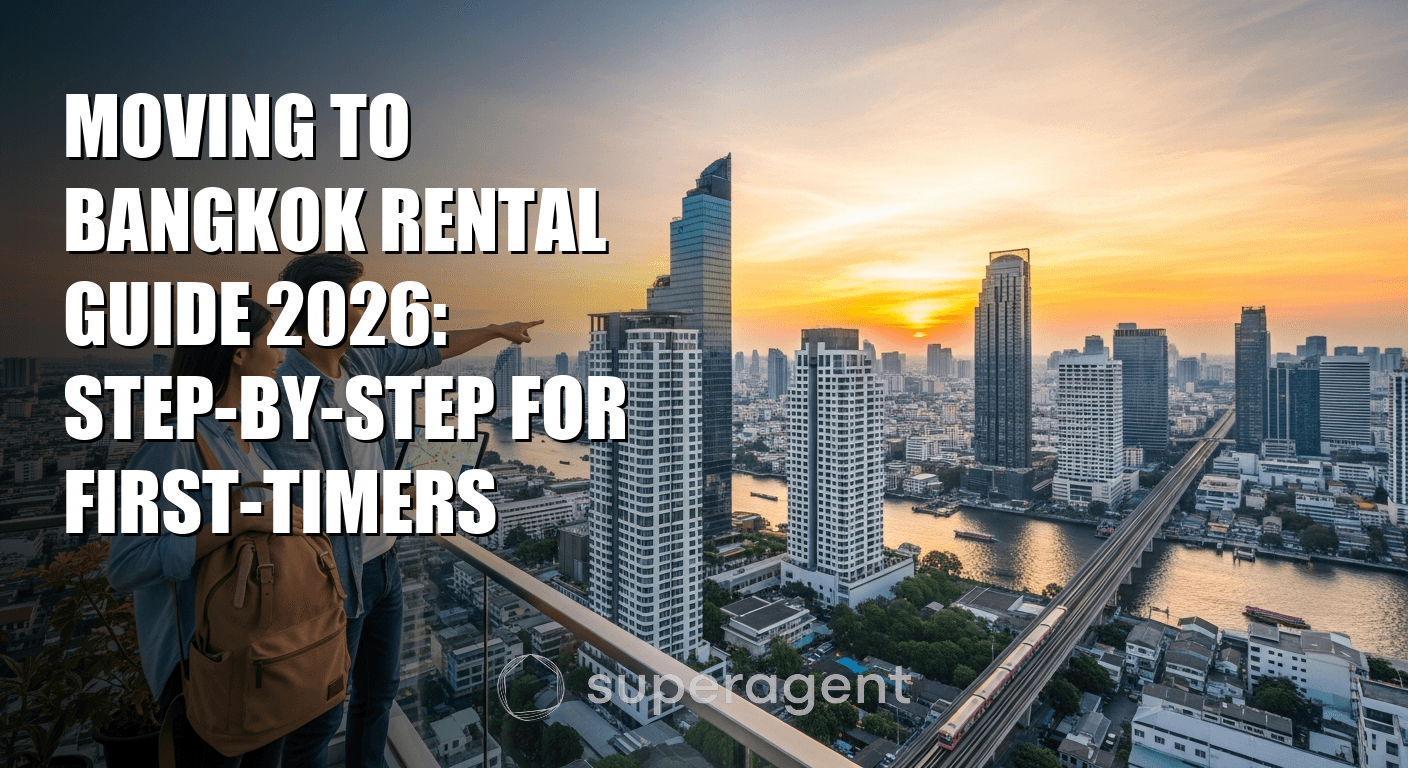
Summary
Complete moving to Bangkok rental guide for beginners. Learn how to find apartments, navigate contracts, avoid scams and settle in successfully.
You just accepted the job offer, booked a one-way flight, and now you're staring at a browser full of Bangkok condo listings wondering where to even start. Trust me, I've been there. I moved to Bangkok six years ago with two suitcases and zero clue how renting actually works here. The good news? Bangkok is one of the easiest cities in the world to find a great rental, but only if you know the steps. This moving to Bangkok rental guide will walk you through every phase, from picking a neighborhood to signing the lease, so you avoid the mistakes that cost first-timers real money and real headaches.
Step 1: Figure Out Your Neighborhood Before You Look at a Single Condo
This is the step most newcomers skip, and it's the one that matters most. Bangkok is enormous. Commuting from the wrong neighborhood can add 90 minutes to your day. So before you browse any listing, answer two questions: where will you work, and what kind of lifestyle do you want?
If your office is in the Silom or Sathorn business district, living near BTS Chong Nonsi or BTS Surasak puts you within walking distance. A one-bedroom condo in a building like The Address Sathorn or Knightsbridge Prime Sathorn runs about 18,000 to 28,000 THB per month. If you want more nightlife and social energy, Thonglor and Ekkamai along BTS Sukhumvit Line are the expat favorites, but expect to pay a premium.
Here's a real scenario. A friend of mine took a teaching job near Asok and signed a lease in Bang Na because the rent was 8,000 THB. Sounds great, right? He spent three hours a day commuting and broke his lease after two months. The lesson: pay a bit more to live close to your daily life. Check the BTS Skytrain route map and the MRT network before you commit to any area.
Step 2: Set a Realistic Budget (And Know What It Actually Gets You)
According to CBRE Thailand's 2025 market outlook, the average rent for a one-bedroom condo in central Bangkok ranges from 15,000 to 35,000 THB per month, depending on the neighborhood and building age. That number has crept up about 5 to 8 percent year over year since 2023, and 2026 projections suggest a similar trend as new supply slows down.
Your move-in cost is almost always three months of rent upfront: one month's rent as the first payment, plus a two-month security deposit. So if your rent is 20,000 THB, have 60,000 THB ready on signing day. Some buildings ask for only one month deposit, but two months is standard.
Let me give you a concrete example. Say you're a remote worker earning about 80,000 THB per month. A comfortable split is 20,000 to 25,000 THB on rent, which gets you a modern one-bedroom with a pool and gym near BTS On Nut or MRT Phra Ram 9. You'll have plenty left over for food, transport, and actually enjoying the city. Don't forget to budget 1,500 to 3,000 THB per month for electricity and 100 to 300 THB for water, which are usually billed separately by the building.
Step 3: Understand What Types of Rentals Exist in Bangkok
Bangkok's rental market has more variety than most newcomers expect. Here's a quick breakdown of the main options you'll encounter.
| Rental Type | Typical Monthly Rent (THB) | Lease Length | Best For | Example Area |
|---|---|---|---|---|
| Studio condo (older building) | 8,000 to 14,000 | 6 to 12 months | Budget-conscious singles | On Nut, Bang Na |
| 1-bed condo (newer building) | 15,000 to 35,000 | 12 months | Professionals, couples | Ari, Phra Ram 9, Thonglor |
| 2-bed condo | 25,000 to 60,000 | 12 months | Families, sharers | Phrom Phong, Ekkamai |
| Serviced apartment | 30,000 to 80,000 | Monthly | Short-term stays, corporate | Silom, Asok, Langsuan |
| House or townhouse | 20,000 to 100,000+ | 12 months | Families wanting space | Bangna, Ramkhamhaeng |
A colleague of mine moved here with her family and initially rented a two-bedroom condo near BTS Phrom Phong at 45,000 THB per month. After six months, they realized their kids needed a yard and switched to a townhouse near Mega Bangna for 35,000 THB. Knowing what's out there from the start saves you from an expensive lease break later.
Step 4: The Viewing and Negotiation Process
Once you've narrowed your neighborhoods and budget, it's time to view units. Here's what most guides won't tell you: the listed price is almost never the final price. Landlords in Bangkok expect some negotiation, especially if the unit has been vacant for a while.
When I rented my current place near BTS Ari, the listing said 22,000 THB. I offered 19,000 on a 12-month lease and we settled at 20,000. That 2,000 THB monthly savings adds up to 24,000 THB over the year. A few tips that actually work: offer to pay multiple months upfront, agree to a longer lease, or ask for furnishing upgrades instead of a lower price.
During viewings, test the water pressure, check for mold in the bathroom, open every cabinet, and turn on the air conditioning. Ask what floor you're on and whether the unit faces a construction site. Bangkok has construction everywhere, and waking up to pile driving at 7 AM is not the tropical morning you imagined.
Also, visit the building at night if you can. That quiet soi during your afternoon viewing might be a street food market with loudspeakers after 5 PM. Soi 38 off Thonglor is a classic example of this.
Step 5: Signing the Lease and Protecting Yourself
Thai rental contracts are usually in both Thai and English. Read every line of the English version. Pay attention to three things: the early termination clause, the deposit return conditions, and who pays for repairs.
Most standard leases require 30 days notice and forfeit your deposit if you leave before the contract ends. Some landlords will add a clause saying the deposit covers "damages and cleaning" without defining what that means. Push back on vague language. Get a specific list of what counts as normal wear and tear.
Take photos of every scratch, stain, and dent before you move in. Send them to your landlord by email or chat so there's a time-stamped record. I once lost 8,000 THB of my deposit because a landlord claimed I damaged a kitchen countertop that was already chipped when I moved in. I had no photos. Don't be me.
You do not need a work permit to sign a lease in Bangkok. A valid passport is enough. However, within 24 hours of moving in, your landlord is technically required to report your stay to the Immigration Bureau using the TM30 form. Many landlords are lazy about this, but it can cause you problems at your next visa renewal if it's not filed. Ask them to do it and confirm it's done.
Step 6: Getting Set Up in Your First Week
You signed, you moved in, and now you're standing in your new condo wondering what's next. Here's your first-week checklist.
Internet: Most condos have a building-wide provider, but you can also get your own fiber line from AIS, True, or 3BB. A 500 Mbps AIS Fibre plan runs about 599 THB per month, which is incredibly cheap by global standards. Installation usually takes two to five days.
Furniture: If your unit is unfurnished or partially furnished, check out IKEA Bang Na or SB Furniture before overspending at boutique shops. Facebook Marketplace in Bangkok is also surprisingly active for second-hand furniture from departing expats. I furnished half my apartment for under 5,000 THB from people leaving the country.
Transportation: Get a Rabbit card for the BTS and a separate MRT card (or use the new contactless payment options being rolled out). If you're in a condo near BTS or MRT, you probably won't need a car. Motorbike taxis at the mouth of your soi will become your best friends for short trips. Grab is the go-to ride hailing app for everything else.
Healthcare: Register with a nearby hospital. For expats, Bumrungrad International Hospital near BTS Nana is the gold standard, though it's pricier. Government hospitals and clinics are very affordable if you have basic Thai health insurance or social security.
Bangkok rewards people who do a little homework before they arrive. The rental market here is renter-friendly, prices are reasonable by any international standard, and the variety of neighborhoods means there truly is something for every lifestyle and budget. The biggest mistake is rushing into the first shiny condo you see on Instagram without understanding the process.
If you want to skip the guesswork, Superagent at superagent.co uses AI to match you with condos based on your actual needs, like commute time, budget, and lifestyle. It's free to use, and it beats scrolling through hundreds of listings that were rented out three months ago. Start your search before you land, and you'll hit the ground running.
You just accepted the job offer, booked a one-way flight, and now you're staring at a browser full of Bangkok condo listings wondering where to even start. Trust me, I've been there. I moved to Bangkok six years ago with two suitcases and zero clue how renting actually works here. The good news? Bangkok is one of the easiest cities in the world to find a great rental, but only if you know the steps. This moving to Bangkok rental guide will walk you through every phase, from picking a neighborhood to signing the lease, so you avoid the mistakes that cost first-timers real money and real headaches.
Step 1: Figure Out Your Neighborhood Before You Look at a Single Condo
This is the step most newcomers skip, and it's the one that matters most. Bangkok is enormous. Commuting from the wrong neighborhood can add 90 minutes to your day. So before you browse any listing, answer two questions: where will you work, and what kind of lifestyle do you want?
If your office is in the Silom or Sathorn business district, living near BTS Chong Nonsi or BTS Surasak puts you within walking distance. A one-bedroom condo in a building like The Address Sathorn or Knightsbridge Prime Sathorn runs about 18,000 to 28,000 THB per month. If you want more nightlife and social energy, Thonglor and Ekkamai along BTS Sukhumvit Line are the expat favorites, but expect to pay a premium.
Here's a real scenario. A friend of mine took a teaching job near Asok and signed a lease in Bang Na because the rent was 8,000 THB. Sounds great, right? He spent three hours a day commuting and broke his lease after two months. The lesson: pay a bit more to live close to your daily life. Check the BTS Skytrain route map and the MRT network before you commit to any area.
Step 2: Set a Realistic Budget (And Know What It Actually Gets You)
According to CBRE Thailand's 2025 market outlook, the average rent for a one-bedroom condo in central Bangkok ranges from 15,000 to 35,000 THB per month, depending on the neighborhood and building age. That number has crept up about 5 to 8 percent year over year since 2023, and 2026 projections suggest a similar trend as new supply slows down.
Your move-in cost is almost always three months of rent upfront: one month's rent as the first payment, plus a two-month security deposit. So if your rent is 20,000 THB, have 60,000 THB ready on signing day. Some buildings ask for only one month deposit, but two months is standard.
Let me give you a concrete example. Say you're a remote worker earning about 80,000 THB per month. A comfortable split is 20,000 to 25,000 THB on rent, which gets you a modern one-bedroom with a pool and gym near BTS On Nut or MRT Phra Ram 9. You'll have plenty left over for food, transport, and actually enjoying the city. Don't forget to budget 1,500 to 3,000 THB per month for electricity and 100 to 300 THB for water, which are usually billed separately by the building.
Step 3: Understand What Types of Rentals Exist in Bangkok
Bangkok's rental market has more variety than most newcomers expect. Here's a quick breakdown of the main options you'll encounter.
| Rental Type | Typical Monthly Rent (THB) | Lease Length | Best For | Example Area |
|---|---|---|---|---|
| Studio condo (older building) | 8,000 to 14,000 | 6 to 12 months | Budget-conscious singles | On Nut, Bang Na |
| 1-bed condo (newer building) | 15,000 to 35,000 | 12 months | Professionals, couples | Ari, Phra Ram 9, Thonglor |
| 2-bed condo | 25,000 to 60,000 | 12 months | Families, sharers | Phrom Phong, Ekkamai |
| Serviced apartment | 30,000 to 80,000 | Monthly | Short-term stays, corporate | Silom, Asok, Langsuan |
| House or townhouse | 20,000 to 100,000+ | 12 months | Families wanting space | Bangna, Ramkhamhaeng |
A colleague of mine moved here with her family and initially rented a two-bedroom condo near BTS Phrom Phong at 45,000 THB per month. After six months, they realized their kids needed a yard and switched to a townhouse near Mega Bangna for 35,000 THB. Knowing what's out there from the start saves you from an expensive lease break later.
Step 4: The Viewing and Negotiation Process
Once you've narrowed your neighborhoods and budget, it's time to view units. Here's what most guides won't tell you: the listed price is almost never the final price. Landlords in Bangkok expect some negotiation, especially if the unit has been vacant for a while.
When I rented my current place near BTS Ari, the listing said 22,000 THB. I offered 19,000 on a 12-month lease and we settled at 20,000. That 2,000 THB monthly savings adds up to 24,000 THB over the year. A few tips that actually work: offer to pay multiple months upfront, agree to a longer lease, or ask for furnishing upgrades instead of a lower price.
During viewings, test the water pressure, check for mold in the bathroom, open every cabinet, and turn on the air conditioning. Ask what floor you're on and whether the unit faces a construction site. Bangkok has construction everywhere, and waking up to pile driving at 7 AM is not the tropical morning you imagined.
Also, visit the building at night if you can. That quiet soi during your afternoon viewing might be a street food market with loudspeakers after 5 PM. Soi 38 off Thonglor is a classic example of this.
Talk to us about renting
Share your details and keep reading — we’ll get back to you.
Step 5: Signing the Lease and Protecting Yourself
Thai rental contracts are usually in both Thai and English. Read every line of the English version. Pay attention to three things: the early termination clause, the deposit return conditions, and who pays for repairs.
Most standard leases require 30 days notice and forfeit your deposit if you leave before the contract ends. Some landlords will add a clause saying the deposit covers "damages and cleaning" without defining what that means. Push back on vague language. Get a specific list of what counts as normal wear and tear.
Take photos of every scratch, stain, and dent before you move in. Send them to your landlord by email or chat so there's a time-stamped record. I once lost 8,000 THB of my deposit because a landlord claimed I damaged a kitchen countertop that was already chipped when I moved in. I had no photos. Don't be me.
You do not need a work permit to sign a lease in Bangkok. A valid passport is enough. However, within 24 hours of moving in, your landlord is technically required to report your stay to the Immigration Bureau using the TM30 form. Many landlords are lazy about this, but it can cause you problems at your next visa renewal if it's not filed. Ask them to do it and confirm it's done.
Step 6: Getting Set Up in Your First Week
You signed, you moved in, and now you're standing in your new condo wondering what's next. Here's your first-week checklist.
Internet: Most condos have a building-wide provider, but you can also get your own fiber line from AIS, True, or 3BB. A 500 Mbps AIS Fibre plan runs about 599 THB per month, which is incredibly cheap by global standards. Installation usually takes two to five days.
Furniture: If your unit is unfurnished or partially furnished, check out IKEA Bang Na or SB Furniture before overspending at boutique shops. Facebook Marketplace in Bangkok is also surprisingly active for second-hand furniture from departing expats. I furnished half my apartment for under 5,000 THB from people leaving the country.
Transportation: Get a Rabbit card for the BTS and a separate MRT card (or use the new contactless payment options being rolled out). If you're in a condo near BTS or MRT, you probably won't need a car. Motorbike taxis at the mouth of your soi will become your best friends for short trips. Grab is the go-to ride hailing app for everything else.
Healthcare: Register with a nearby hospital. For expats, Bumrungrad International Hospital near BTS Nana is the gold standard, though it's pricier. Government hospitals and clinics are very affordable if you have basic Thai health insurance or social security.
Bangkok rewards people who do a little homework before they arrive. The rental market here is renter-friendly, prices are reasonable by any international standard, and the variety of neighborhoods means there truly is something for every lifestyle and budget. The biggest mistake is rushing into the first shiny condo you see on Instagram without understanding the process.
If you want to skip the guesswork, Superagent at superagent.co uses AI to match you with condos based on your actual needs, like commute time, budget, and lifestyle. It's free to use, and it beats scrolling through hundreds of listings that were rented out three months ago. Start your search before you land, and you'll hit the ground running.
Share this article
Properties you may like
![[For Rent] CONDO I Aguston Sukhumvit 22 I Pet Friendly I 2 Beds I 2 Baths I Rent 55,000THB/mo](/_next/image?url=https%3A%2F%2Fstorage.googleapis.com%2Fsuperagent-web%2Fattachments%2Flistings%2F2266%2Fd3afcd25-6b79-46cb-9f1f-396acdc3dd10-955-3.jpg&w=3840&q=75)
฿55,000
2 Bed295 sqm
[For Rent] CONDO I Aguston Sukhumvit 22 I Pet Friendly I 2 Beds I 2 Baths I Rent 55,000THB/mo
Phrom Phong
Condo![[For Rent] CONDO I SUPALAI PLACE Sukhumvit 39 I 2 Beds I 2 Baths (1 Jacuzzi) I 55,555THB/mo](/_next/image?url=https%3A%2F%2Fstorage.googleapis.com%2Fsuperagent-web%2Fattachments%2Flistings%2F6743%2Fba530743-48b9-4ac6-92d3-c2247e743cf6-01-supalai-place-skv39-2b-link-heaven.jpg&w=3840&q=75)
฿55,555
2 Bed2142 sqm
[For Rent] CONDO I SUPALAI PLACE Sukhumvit 39 I 2 Beds I 2 Baths (1 Jacuzzi) I 55,555THB/mo
Phrom Phong
Condo![[For Rent] CONDO I Maru Ekkamai 2 I Pet friendly I 2 Beds I 2 Baths I 68,000 THB/mo](/_next/image?url=https%3A%2F%2Fstorage.googleapis.com%2Fsuperagent-web%2Fattachments%2Flistings%2F6602%2F9f1d8f71-ee43-435f-9a44-da16c4092c92-968-1.jpg&w=3840&q=75)
฿68,000
2 Bed360 sqm
[For Rent] CONDO I Maru Ekkamai 2 I Pet friendly I 2 Beds I 2 Baths I 68,000 THB/mo
Ekkamai
Condo![[For Rent] CONDO I Noble State 39 I 2 Beds I 2 Baths I 63,000THB/mo](/_next/image?url=https%3A%2F%2Fstorage.googleapis.com%2Fsuperagent-web%2Fattachments%2Flistings%2F2237%2F60eb58f3-eae5-41ed-a80b-406e004f05d8-940-1.jpg&w=3840&q=75)
฿63,000
2 Bed260 sqm
[For Rent] CONDO I Noble State 39 I 2 Beds I 2 Baths I 63,000THB/mo
Phrom Phong
Condo![[For Rent] CONDO I Rhythm Sukhumvit 36-38 I 2 Beds I 2 Baths I 38,999THB/mo](/_next/image?url=https%3A%2F%2Fstorage.googleapis.com%2Fsuperagent-web%2Fattachments%2Flistings%2F1788%2F942a0215-4128-4c2c-a064-f607e84e7aa4-656-2.jpg&w=3840&q=75)
฿38,999
2 Bed256 sqm
[For Rent] CONDO I Rhythm Sukhumvit 36-38 I 2 Beds I 2 Baths I 38,999THB/mo
Thonglor
Condo![[For Rent] CONDO I CLOUD Thonglor-Phetchaburi I 1 Bed I 1 Bath I 22,500THB/mo](/_next/image?url=https%3A%2F%2Fstorage.googleapis.com%2Fsuperagent-web%2Fattachments%2Flistings%2F6742%2F6cef5361-0dac-4dba-98f1-b0d187559c84-1118-1.jpg&w=3840&q=75)
฿22,500
1 Bed132 sqm
[For Rent] CONDO I CLOUD Thonglor-Phetchaburi I 1 Bed I 1 Bath I 22,500THB/mo
Thonglor
Condo![[For Rent] CONDO I City Smart Sukhumvit 18 I 3 Beds I 3 Baths I 65,000mo/THB](/_next/image?url=https%3A%2F%2Fstorage.googleapis.com%2Fsuperagent-web%2Fattachments%2Flistings%2F6741%2Fd371c89d-a913-42c4-a673-e540afae4f46-1116-1.jpg&w=3840&q=75)
฿65,000
3 Bed3125 sqm
[For Rent] CONDO I City Smart Sukhumvit 18 I 3 Beds I 3 Baths I 65,000mo/THB
Condo![[For Rent] CONDO I The Coast Bangkok I 1 Bed I 1 Bath I 20,000mo/THB](/_next/image?url=https%3A%2F%2Fstorage.googleapis.com%2Fsuperagent-web%2Fattachments%2Flistings%2F6740%2F498477ce-4ffa-4e4c-ab08-0e565d9c4bbe-1115-3.jpg&w=3840&q=75)
฿20,000
1 Bed146 sqm
[For Rent] CONDO I The Coast Bangkok I 1 Bed I 1 Bath I 20,000mo/THB
Bang Na
Condo![[For Rent] CONDO I IDEO Sukhumvit-RAMA 4 I 2 Beds I 2 Baths I 55,000mo/THB](/_next/image?url=https%3A%2F%2Fstorage.googleapis.com%2Fsuperagent-web%2Fattachments%2Flistings%2F6739%2F15df221d-5b8e-497c-b7ce-a6b9b6412cab-1113-1.jpg&w=3840&q=75)
฿55,000
2 Bed265 sqm
[For Rent] CONDO I IDEO Sukhumvit-RAMA 4 I 2 Beds I 2 Baths I 55,000mo/THB
Phra Khanong
Condo![[For Rent] CONDO I Downtown 49 I Pet Friendly I 1 Bed I 1 Bath I 23,000mo/THB](/_next/image?url=https%3A%2F%2Fstorage.googleapis.com%2Fsuperagent-web%2Fattachments%2Flistings%2F6738%2F11cf2ffe-1f01-4ccc-991c-2ad608f1ba73-1112-1.jpg&w=3840&q=75)
฿23,000
1 Bed135 sqm
[For Rent] CONDO I Downtown 49 I Pet Friendly I 1 Bed I 1 Bath I 23,000mo/THB
Thonglor
CondoMore like this
 In Guides · Superagent EditorialHidden Costs of Renting a Condo in Bangkok Nobody Warns You AboutBangkok condo rent looks affordable until month one hits. Here are the real costs beyond the headline figure that catch most renters off guard.25 May 20261 min read
 In Guides · Superagent EditorialWhat a Long-Vacant Bangkok Condo Unit Is Actually Telling YouA Bangkok condo vacant for months signals overpricing, landlord issues, or real problems. Here is how to read the signs.25 May 20261 min read
 In Guides · Superagent EditorialRed Flags in a Bangkok Rental Contract to Watch Out ForBangkok rental contracts often hide risky clauses. Here are the red flags every tenant must catch before signing any lease.25 May 20261 min read
 In Guides · Superagent EditorialWorking Online from a Condo: How to Choose the Perfect Room for ProductivityLearn how to choose the best condo room for working online with tips on lighting, noise, and furniture setup to maximize productivity.9 May 20261 min read