Russian Expats in Bangkok: Rental Guide and Community Overview
Guides
Russian Expats in Bangkok: Rental Guide and Community Overview
Complete rental guide for Russian expats relocating to Bangkok with neighborhood tips.
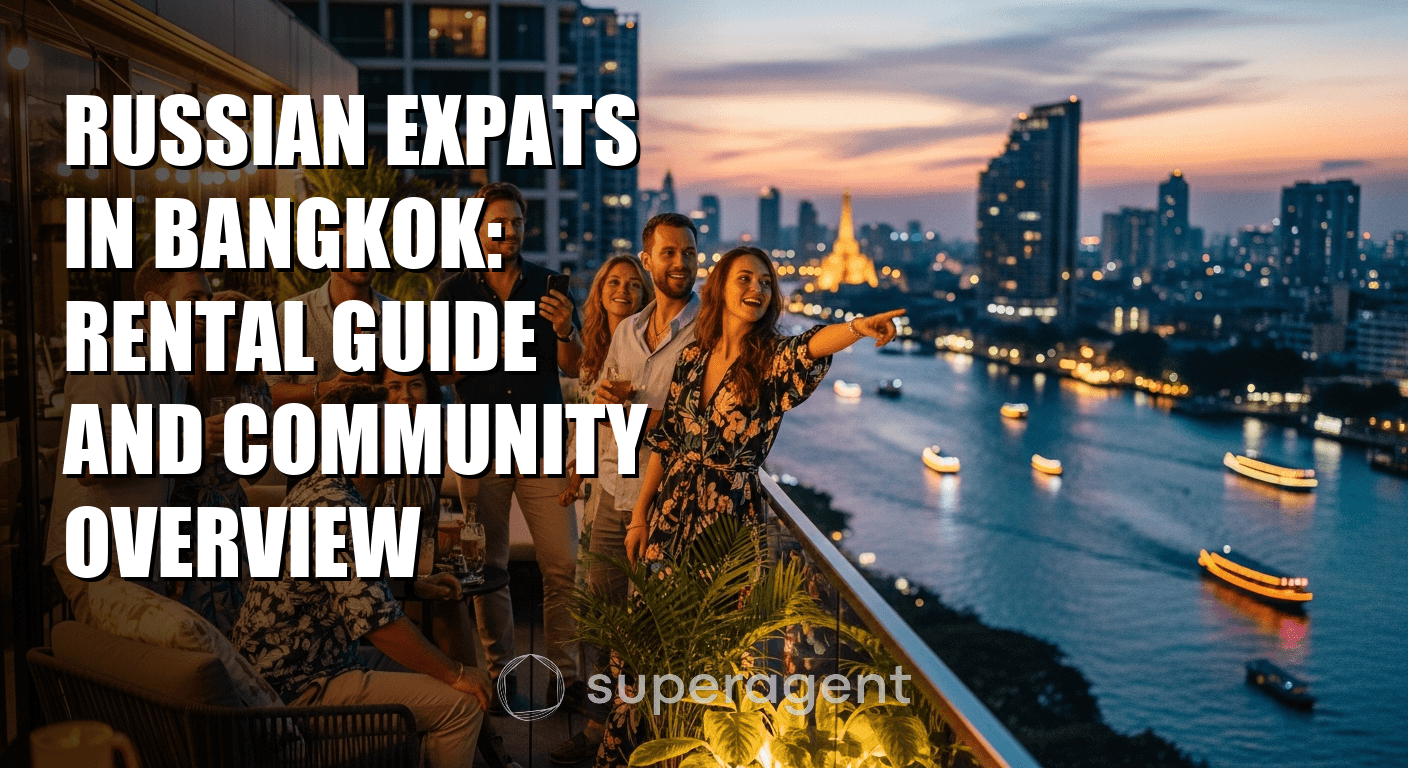
Summary
Russian expats Bangkok rent guide covering neighborhoods, costs, visa requirements and community resources for relocating to Thailand's capital city.
If you have spent any time around Sukhumvit Soi 3 to Soi 33, or walked through the lobbies of condos in Phra Khanong or On Nut, you have probably noticed something. The Russian expat community in Bangkok has grown fast over the past few years. What started as a steady trickle of digital nomads and entrepreneurs has turned into a full community with its own Telegram groups, restaurants, coworking spaces, and even Russian-speaking real estate agents. Whether you are newly arrived from Moscow, Saint Petersburg, or anywhere in between, finding the right condo to rent in Bangkok can feel overwhelming. This guide breaks down everything Russian expats need to know about renting in Bangkok, from neighborhoods and pricing to lease tips and community hotspots.
Why Russian Expats Are Choosing Bangkok
Bangkok was already popular with Russian tourists long before the wave of 2022 and 2023. But geopolitical shifts and remote work trends pushed tens of thousands of Russian nationals to relocate to Thailand, either temporarily or semi-permanently. According to Thailand's Immigration Bureau, Russian arrivals have consistently ranked among the top nationalities entering Thailand since early 2022.
The appeal is straightforward. Cost of living is dramatically lower than Moscow or Dubai. The weather is warm year round. Visa options, while not perfect, allow for extended stays with tourist visas, education visas, or the newer Long Term Resident visa for qualifying professionals. And the city itself delivers a quality of life that is hard to beat at the price point.
Take someone like Andrei, a 32 year old software developer who relocated from Kazan in late 2022. He first stayed in a hotel near Nana BTS, then quickly realized he could rent a fully furnished one bedroom condo in On Nut for 15,000 THB per month. Less than what he was paying for utilities alone back home. That kind of math is what keeps Russian expats coming back and signing leases.
Best Neighborhoods for Russian Expats in Bangkok
Russian expats in Bangkok tend to cluster in a few key areas, mostly along the BTS Sukhumvit line. The stretch between Asok and Ekkamai is the most popular zone, with easy access to international restaurants, coworking spaces, and the kind of modern condo buildings that appeal to remote workers.
Phra Khanong and On Nut have become the budget friendly favorites. You can find a solid one bedroom condo near BTS On Nut for 12,000 to 18,000 THB per month. Buildings like The Base Sukhumvit 77, Ideo Sukhumvit 93, and Life Sukhumvit 48 are packed with Russian tenants who appreciate the mix of affordability and convenience.
For those with a bigger budget or families, Thonglor and Phrom Phong offer a more upscale experience. Think two bedroom condos in buildings like Noble Remix or HQ by Sansiri, with rents starting around 35,000 to 55,000 THB per month. These areas have international schools nearby, high end supermarkets like Villa Market, and plenty of dining options.
Rama 9 and Huai Khwang, along the MRT Blue Line, are gaining traction too. Russian expats who prefer a more local, less touristy vibe gravitate here. A one bedroom at The Base Garden Rama 9 or Supalai Veranda might run you 10,000 to 14,000 THB per month, which is seriously affordable by any standard.
Rental Prices and What to Expect
Here is the stat that matters most. The average rent for a furnished one bedroom condo in central Bangkok ranges from 15,000 to 30,000 THB per month, depending on the neighborhood, building age, and proximity to BTS or MRT stations. According to market data from DDproperty, rental prices along the Sukhumvit corridor have stabilized in 2024 after a slight uptick driven by increased foreign demand.
Most condos available to rent come fully furnished. That means a bed, sofa, TV, fridge, washing machine, air conditioning, and often a microwave. You typically pay rent plus electricity (around 5 to 8 THB per unit from the building, or 4 THB per unit if you get a direct meter from the government), water (100 to 300 THB per month), and internet (600 to 900 THB per month for fiber).
Security deposits are standard at two months rent, paid upfront along with one month advance rent. So moving into a 20,000 THB per month condo means you need 60,000 THB ready on signing day. Some landlords are flexible, especially if you commit to a 12 month lease, but do not count on it.
- On Nut: BTS On Nut | 12,000 - 18,000 | 20,000 - 30,000 | High
- Phra Khanong: BTS Phra Khanong | 14,000 - 22,000 | 25,000 - 35,000 | High
- Ekkamai: BTS Ekkamai | 18,000 - 28,000 | 30,000 - 45,000 | Medium
- Thonglor: BTS Thong Lo | 22,000 - 35,000 | 35,000 - 60,000 | Medium
- Phrom Phong: BTS Phrom Phong | 25,000 - 40,000 | 40,000 - 70,000 | Medium
- Rama 9 / Huai Khwang: MRT Rama 9 / Huai Khwang | 10,000 - 16,000 | 18,000 - 28,000 | Growing
Lease Tips and Common Pitfalls for Russian Renters
The biggest mistake Russian expats make when renting in Bangkok is skipping the contract details. Leases here are typically in English and Thai, and they matter. Always read the early termination clause. Many leases require you to forfeit your entire deposit if you break the lease before the end date. If your visa situation is uncertain, try negotiating a six month lease or a diplomatic clause that lets you exit with 30 to 60 days notice.
Another common issue is the electricity markup. Some buildings charge 7 to 8 THB per unit instead of the government rate of about 4 THB. Over a full year in a one bedroom condo running air conditioning daily, that difference can add up to 10,000 THB or more. Ask about this before signing.
Consider the example of Marina, a freelance designer from Novosibirsk who signed a 12 month lease in a condo near BTS Udom Suk. She did not realize her building charged 8 THB per unit of electricity. Her monthly electric bill averaged 3,500 THB instead of the 1,800 THB she would have paid at government rates. Over a year, she overpaid by nearly 20,000 THB. A simple question before signing would have saved her real money.
Also, keep copies of your passport, visa page, and TM30 receipt. Landlords or building management often need to register your stay with immigration within 24 hours of move in, and having documents ready makes this painless.
Russian Community Hubs and Practical Resources
Bangkok now has a well established Russian speaking community infrastructure. Telegram is the primary communication platform, with active groups dedicated to apartment rentals, buy and sell, job listings, and social events. Search for groups related to Russians in Bangkok and you will find channels with thousands of members sharing real time rental listings, landlord reviews, and neighborhood advice.
For groceries and familiar food, check out the Russian and Eastern European shops that have popped up around lower Sukhumvit, particularly near Soi 3 and Soi 11. Several restaurants along Sukhumvit serve Russian cuisine, from borscht to pelmeni, and they double as social gathering spots.
Healthcare is easy to access in English and sometimes Russian. Bumrungrad International Hospital near BTS Nana has multilingual staff and is popular with expats from all backgrounds. Several private clinics along Sukhumvit also have Russian speaking doctors or translators.
If you have children, international schools like Bangkok Patana School, NIST International School, and several smaller academies in the Ekkamai to Bang Na corridor serve diverse expat communities. Enrollment demand is high, so start the application process early if schooling is part of your plan.
Visa Considerations That Affect Your Rental Plans
Your visa type directly impacts how you approach renting. Most Russian expats in Bangkok are on tourist visas, which require border runs or extensions every 60 to 90 days. This creates uncertainty for landlords, who understandably prefer tenants with longer term visas. If you are on a tourist visa and want a 12 month lease, be prepared to explain your plan and possibly pay a larger deposit.
Education visas, commonly obtained through Thai language schools, provide more stability and are popular in the Russian community. They typically allow you to stay for one year with 90 day reporting. Work permits tied to a company or the BOI Smart Visa program offer the most security for long term leases.
The newer Long Term Resident visa, designed for wealthy global citizens, retirees, remote workers, and highly skilled professionals, is another option. It grants a five year stay and makes landlords very comfortable signing extended leases. Check the Thai Board of Investment website for current eligibility requirements.
Whatever your visa situation, transparency with your landlord goes a long way. Bangkok landlords have gotten used to international tenants with various visa arrangements. Honesty about your timeline helps build trust and often results in better lease terms.
Finding the right condo in Bangkok as a Russian expat does not have to be a stressful experience. The city has more options than ever, the community is strong and supportive, and rental prices remain incredibly competitive compared to most global cities. Take your time, ask the right questions about electricity rates and lease terms, and pick a neighborhood that matches your lifestyle and budget. If you want to speed up the search and compare listings across Bangkok with smart filtering and real time availability, try Superagent to find your next condo rental without the hassle.
If you have spent any time around Sukhumvit Soi 3 to Soi 33, or walked through the lobbies of condos in Phra Khanong or On Nut, you have probably noticed something. The Russian expat community in Bangkok has grown fast over the past few years. What started as a steady trickle of digital nomads and entrepreneurs has turned into a full community with its own Telegram groups, restaurants, coworking spaces, and even Russian-speaking real estate agents. Whether you are newly arrived from Moscow, Saint Petersburg, or anywhere in between, finding the right condo to rent in Bangkok can feel overwhelming. This guide breaks down everything Russian expats need to know about renting in Bangkok, from neighborhoods and pricing to lease tips and community hotspots.
Why Russian Expats Are Choosing Bangkok
Bangkok was already popular with Russian tourists long before the wave of 2022 and 2023. But geopolitical shifts and remote work trends pushed tens of thousands of Russian nationals to relocate to Thailand, either temporarily or semi-permanently. According to Thailand's Immigration Bureau, Russian arrivals have consistently ranked among the top nationalities entering Thailand since early 2022.
The appeal is straightforward. Cost of living is dramatically lower than Moscow or Dubai. The weather is warm year round. Visa options, while not perfect, allow for extended stays with tourist visas, education visas, or the newer Long Term Resident visa for qualifying professionals. And the city itself delivers a quality of life that is hard to beat at the price point.
Take someone like Andrei, a 32 year old software developer who relocated from Kazan in late 2022. He first stayed in a hotel near Nana BTS, then quickly realized he could rent a fully furnished one bedroom condo in On Nut for 15,000 THB per month. Less than what he was paying for utilities alone back home. That kind of math is what keeps Russian expats coming back and signing leases.
Best Neighborhoods for Russian Expats in Bangkok
Russian expats in Bangkok tend to cluster in a few key areas, mostly along the BTS Sukhumvit line. The stretch between Asok and Ekkamai is the most popular zone, with easy access to international restaurants, coworking spaces, and the kind of modern condo buildings that appeal to remote workers.
Phra Khanong and On Nut have become the budget friendly favorites. You can find a solid one bedroom condo near BTS On Nut for 12,000 to 18,000 THB per month. Buildings like The Base Sukhumvit 77, Ideo Sukhumvit 93, and Life Sukhumvit 48 are packed with Russian tenants who appreciate the mix of affordability and convenience.
For those with a bigger budget or families, Thonglor and Phrom Phong offer a more upscale experience. Think two bedroom condos in buildings like Noble Remix or HQ by Sansiri, with rents starting around 35,000 to 55,000 THB per month. These areas have international schools nearby, high end supermarkets like Villa Market, and plenty of dining options.
Rama 9 and Huai Khwang, along the MRT Blue Line, are gaining traction too. Russian expats who prefer a more local, less touristy vibe gravitate here. A one bedroom at The Base Garden Rama 9 or Supalai Veranda might run you 10,000 to 14,000 THB per month, which is seriously affordable by any standard.
Rental Prices and What to Expect
Here is the stat that matters most. The average rent for a furnished one bedroom condo in central Bangkok ranges from 15,000 to 30,000 THB per month, depending on the neighborhood, building age, and proximity to BTS or MRT stations. According to market data from DDproperty, rental prices along the Sukhumvit corridor have stabilized in 2024 after a slight uptick driven by increased foreign demand.
Most condos available to rent come fully furnished. That means a bed, sofa, TV, fridge, washing machine, air conditioning, and often a microwave. You typically pay rent plus electricity (around 5 to 8 THB per unit from the building, or 4 THB per unit if you get a direct meter from the government), water (100 to 300 THB per month), and internet (600 to 900 THB per month for fiber).
Security deposits are standard at two months rent, paid upfront along with one month advance rent. So moving into a 20,000 THB per month condo means you need 60,000 THB ready on signing day. Some landlords are flexible, especially if you commit to a 12 month lease, but do not count on it.
- On Nut: BTS On Nut | 12,000 - 18,000 | 20,000 - 30,000 | High
- Phra Khanong: BTS Phra Khanong | 14,000 - 22,000 | 25,000 - 35,000 | High
- Ekkamai: BTS Ekkamai | 18,000 - 28,000 | 30,000 - 45,000 | Medium
- Thonglor: BTS Thong Lo | 22,000 - 35,000 | 35,000 - 60,000 | Medium
- Phrom Phong: BTS Phrom Phong | 25,000 - 40,000 | 40,000 - 70,000 | Medium
- Rama 9 / Huai Khwang: MRT Rama 9 / Huai Khwang | 10,000 - 16,000 | 18,000 - 28,000 | Growing
Lease Tips and Common Pitfalls for Russian Renters
The biggest mistake Russian expats make when renting in Bangkok is skipping the contract details. Leases here are typically in English and Thai, and they matter. Always read the early termination clause. Many leases require you to forfeit your entire deposit if you break the lease before the end date. If your visa situation is uncertain, try negotiating a six month lease or a diplomatic clause that lets you exit with 30 to 60 days notice.
Another common issue is the electricity markup. Some buildings charge 7 to 8 THB per unit instead of the government rate of about 4 THB. Over a full year in a one bedroom condo running air conditioning daily, that difference can add up to 10,000 THB or more. Ask about this before signing.
Consider the example of Marina, a freelance designer from Novosibirsk who signed a 12 month lease in a condo near BTS Udom Suk. She did not realize her building charged 8 THB per unit of electricity. Her monthly electric bill averaged 3,500 THB instead of the 1,800 THB she would have paid at government rates. Over a year, she overpaid by nearly 20,000 THB. A simple question before signing would have saved her real money.
Talk to us about renting
Share your details and keep reading — we’ll get back to you.
Also, keep copies of your passport, visa page, and TM30 receipt. Landlords or building management often need to register your stay with immigration within 24 hours of move in, and having documents ready makes this painless.
Russian Community Hubs and Practical Resources
Bangkok now has a well established Russian speaking community infrastructure. Telegram is the primary communication platform, with active groups dedicated to apartment rentals, buy and sell, job listings, and social events. Search for groups related to Russians in Bangkok and you will find channels with thousands of members sharing real time rental listings, landlord reviews, and neighborhood advice.
For groceries and familiar food, check out the Russian and Eastern European shops that have popped up around lower Sukhumvit, particularly near Soi 3 and Soi 11. Several restaurants along Sukhumvit serve Russian cuisine, from borscht to pelmeni, and they double as social gathering spots.
Healthcare is easy to access in English and sometimes Russian. Bumrungrad International Hospital near BTS Nana has multilingual staff and is popular with expats from all backgrounds. Several private clinics along Sukhumvit also have Russian speaking doctors or translators.
If you have children, international schools like Bangkok Patana School, NIST International School, and several smaller academies in the Ekkamai to Bang Na corridor serve diverse expat communities. Enrollment demand is high, so start the application process early if schooling is part of your plan.
Visa Considerations That Affect Your Rental Plans
Your visa type directly impacts how you approach renting. Most Russian expats in Bangkok are on tourist visas, which require border runs or extensions every 60 to 90 days. This creates uncertainty for landlords, who understandably prefer tenants with longer term visas. If you are on a tourist visa and want a 12 month lease, be prepared to explain your plan and possibly pay a larger deposit.
Education visas, commonly obtained through Thai language schools, provide more stability and are popular in the Russian community. They typically allow you to stay for one year with 90 day reporting. Work permits tied to a company or the BOI Smart Visa program offer the most security for long term leases.
The newer Long Term Resident visa, designed for wealthy global citizens, retirees, remote workers, and highly skilled professionals, is another option. It grants a five year stay and makes landlords very comfortable signing extended leases. Check the Thai Board of Investment website for current eligibility requirements.
Whatever your visa situation, transparency with your landlord goes a long way. Bangkok landlords have gotten used to international tenants with various visa arrangements. Honesty about your timeline helps build trust and often results in better lease terms.
Finding the right condo in Bangkok as a Russian expat does not have to be a stressful experience. The city has more options than ever, the community is strong and supportive, and rental prices remain incredibly competitive compared to most global cities. Take your time, ask the right questions about electricity rates and lease terms, and pick a neighborhood that matches your lifestyle and budget. If you want to speed up the search and compare listings across Bangkok with smart filtering and real time availability, try Superagent to find your next condo rental without the hassle.
Share this article
Properties you may like
![[For Rent] CONDO I Aguston Sukhumvit 22 I Pet Friendly I 2 Beds I 2 Baths I Rent 55,000THB/mo](/_next/image?url=https%3A%2F%2Fstorage.googleapis.com%2Fsuperagent-web%2Fattachments%2Flistings%2F2266%2Fd3afcd25-6b79-46cb-9f1f-396acdc3dd10-955-3.jpg&w=3840&q=75)
฿55,000
2 Bed295 sqm
[For Rent] CONDO I Aguston Sukhumvit 22 I Pet Friendly I 2 Beds I 2 Baths I Rent 55,000THB/mo
Phrom Phong
Condo![[For Rent] CONDO I SUPALAI PLACE Sukhumvit 39 I 2 Beds I 2 Baths (1 Jacuzzi) I 55,555THB/mo](/_next/image?url=https%3A%2F%2Fstorage.googleapis.com%2Fsuperagent-web%2Fattachments%2Flistings%2F6743%2Fba530743-48b9-4ac6-92d3-c2247e743cf6-01-supalai-place-skv39-2b-link-heaven.jpg&w=3840&q=75)
฿55,555
2 Bed2142 sqm
[For Rent] CONDO I SUPALAI PLACE Sukhumvit 39 I 2 Beds I 2 Baths (1 Jacuzzi) I 55,555THB/mo
Phrom Phong
Condo![[For Rent] CONDO I Maru Ekkamai 2 I Pet friendly I 2 Beds I 2 Baths I 68,000 THB/mo](/_next/image?url=https%3A%2F%2Fstorage.googleapis.com%2Fsuperagent-web%2Fattachments%2Flistings%2F6602%2F9f1d8f71-ee43-435f-9a44-da16c4092c92-968-1.jpg&w=3840&q=75)
฿68,000
2 Bed360 sqm
[For Rent] CONDO I Maru Ekkamai 2 I Pet friendly I 2 Beds I 2 Baths I 68,000 THB/mo
Ekkamai
Condo![[For Rent] CONDO I Noble State 39 I 2 Beds I 2 Baths I 63,000THB/mo](/_next/image?url=https%3A%2F%2Fstorage.googleapis.com%2Fsuperagent-web%2Fattachments%2Flistings%2F2237%2F60eb58f3-eae5-41ed-a80b-406e004f05d8-940-1.jpg&w=3840&q=75)
฿63,000
2 Bed260 sqm
[For Rent] CONDO I Noble State 39 I 2 Beds I 2 Baths I 63,000THB/mo
Phrom Phong
Condo![[For Rent] CONDO I Rhythm Sukhumvit 36-38 I 2 Beds I 2 Baths I 38,999THB/mo](/_next/image?url=https%3A%2F%2Fstorage.googleapis.com%2Fsuperagent-web%2Fattachments%2Flistings%2F1788%2F942a0215-4128-4c2c-a064-f607e84e7aa4-656-2.jpg&w=3840&q=75)
฿38,999
2 Bed256 sqm
[For Rent] CONDO I Rhythm Sukhumvit 36-38 I 2 Beds I 2 Baths I 38,999THB/mo
Thonglor
Condo![[For Rent] CONDO I CLOUD Thonglor-Phetchaburi I 1 Bed I 1 Bath I 22,500THB/mo](/_next/image?url=https%3A%2F%2Fstorage.googleapis.com%2Fsuperagent-web%2Fattachments%2Flistings%2F6742%2F6cef5361-0dac-4dba-98f1-b0d187559c84-1118-1.jpg&w=3840&q=75)
฿22,500
1 Bed132 sqm
[For Rent] CONDO I CLOUD Thonglor-Phetchaburi I 1 Bed I 1 Bath I 22,500THB/mo
Thonglor
Condo![[For Rent] CONDO I City Smart Sukhumvit 18 I 3 Beds I 3 Baths I 65,000mo/THB](/_next/image?url=https%3A%2F%2Fstorage.googleapis.com%2Fsuperagent-web%2Fattachments%2Flistings%2F6741%2Fd371c89d-a913-42c4-a673-e540afae4f46-1116-1.jpg&w=3840&q=75)
฿65,000
3 Bed3125 sqm
[For Rent] CONDO I City Smart Sukhumvit 18 I 3 Beds I 3 Baths I 65,000mo/THB
Condo![[For Rent] CONDO I The Coast Bangkok I 1 Bed I 1 Bath I 20,000mo/THB](/_next/image?url=https%3A%2F%2Fstorage.googleapis.com%2Fsuperagent-web%2Fattachments%2Flistings%2F6740%2F498477ce-4ffa-4e4c-ab08-0e565d9c4bbe-1115-3.jpg&w=3840&q=75)
฿20,000
1 Bed146 sqm
[For Rent] CONDO I The Coast Bangkok I 1 Bed I 1 Bath I 20,000mo/THB
Bang Na
Condo![[For Rent] CONDO I IDEO Sukhumvit-RAMA 4 I 2 Beds I 2 Baths I 55,000mo/THB](/_next/image?url=https%3A%2F%2Fstorage.googleapis.com%2Fsuperagent-web%2Fattachments%2Flistings%2F6739%2F15df221d-5b8e-497c-b7ce-a6b9b6412cab-1113-1.jpg&w=3840&q=75)
฿55,000
2 Bed265 sqm
[For Rent] CONDO I IDEO Sukhumvit-RAMA 4 I 2 Beds I 2 Baths I 55,000mo/THB
Phra Khanong
Condo![[For Rent] CONDO I Downtown 49 I Pet Friendly I 1 Bed I 1 Bath I 23,000mo/THB](/_next/image?url=https%3A%2F%2Fstorage.googleapis.com%2Fsuperagent-web%2Fattachments%2Flistings%2F6738%2F11cf2ffe-1f01-4ccc-991c-2ad608f1ba73-1112-1.jpg&w=3840&q=75)
฿23,000
1 Bed135 sqm
[For Rent] CONDO I Downtown 49 I Pet Friendly I 1 Bed I 1 Bath I 23,000mo/THB
Thonglor
CondoMore like this
 In Guides · Superagent EditorialHidden Costs of Renting a Condo in Bangkok Nobody Warns You AboutBangkok condo rent looks affordable until month one hits. Here are the real costs beyond the headline figure that catch most renters off guard.25 May 20261 min read
 In Guides · Superagent EditorialWhat a Long-Vacant Bangkok Condo Unit Is Actually Telling YouA Bangkok condo vacant for months signals overpricing, landlord issues, or real problems. Here is how to read the signs.25 May 20261 min read
 In Guides · Superagent EditorialRed Flags in a Bangkok Rental Contract to Watch Out ForBangkok rental contracts often hide risky clauses. Here are the red flags every tenant must catch before signing any lease.25 May 20261 min read
 In Guides · Superagent EditorialWorking Online from a Condo: How to Choose the Perfect Room for ProductivityLearn how to choose the best condo room for working online with tips on lighting, noise, and furniture setup to maximize productivity.9 May 20261 min read