Security Deposit Disputes in Thailand: A Bangkok Landlord's Guide
Guides
Security Deposit Disputes in Thailand: A Bangkok Landlord's Guide
Protect your rental investment by understanding Thailand's deposit laws and dispute resolution.
Summary
Learn how Bangkok landlords can navigate security deposit disputes under Thai rental laws, protect deposits, and resolve conflicts fairly and legally.
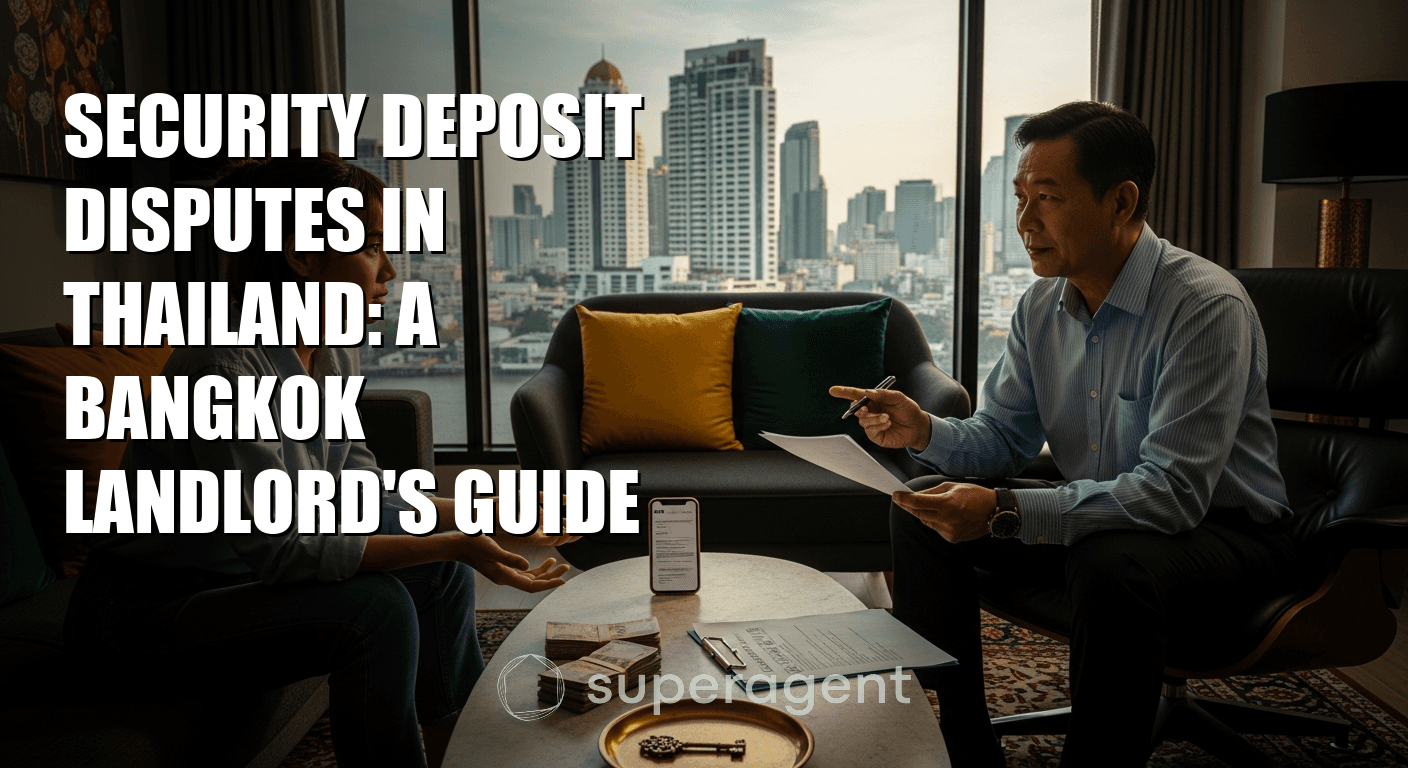
You finally found a great tenant for your two bedroom condo near BTS Phrom Phong. They paid the deposit, signed the lease, and everything ran smoothly for 12 months. Now they're moving out, and suddenly you're staring at scuffed walls, a broken bathroom door handle, and a mysterious stain on the living room carpet. Do you deduct from the deposit? How much? And what happens when they push back?
Security deposit disputes are one of the most common headaches for Bangkok landlords. They can eat up your time, damage your reputation on rental platforms, and even land you in legal trouble if you handle them poorly. Here's how to deal with them the right way.
What Thai Law Actually Says About Security Deposits
Let's start with the basics. Under Thai civil and commercial law, a security deposit is meant to cover unpaid rent or damages beyond normal wear and tear. There's no specific statute that caps how much you can charge, but the standard in Bangkok's condo market is two months' rent. For a 35,000 THB unit at a place like The Lumpini 24 near BTS Phrom Phong, that means you're holding 70,000 THB.
Here's where many landlords get tripped up. The law requires you to return the deposit within a reasonable time after the lease ends. Most legal professionals in Thailand suggest 30 days as a safe window, though your lease contract can specify a different timeline.
If you make deductions, you need to be able to justify every single baht. Imagine a tenant in a one bedroom at Ideo Mobi Sukhumvit paying 25,000 THB per month. They leave behind a cracked mirror and a broken air conditioning remote. You can deduct replacement costs, but you'd better have photos, receipts, and ideally a signed move in checklist to back it up.
The Move In Checklist Is Your Best Friend
This is the single most important thing you can do to protect yourself, and most Bangkok landlords skip it entirely. Before your tenant moves in, walk through the unit together. Take timestamped photos of every room, every appliance, every wall. Note existing scratches, dents, and stains. Both of you sign the document.
Say you own a studio at Aspire Sukhumvit 48, renting it out for 15,000 THB per month to a young professional working near BTS Phra Khanong. Without a checklist, when they move out and you find a chip in the kitchen counter, they'll say it was already there. And honestly, maybe it was. You have no proof either way, so you're stuck.
A proper checklist with photos makes disputes almost impossible. It's a 20 minute investment that can save you tens of thousands of baht and a lot of angry LINE messages.
Normal Wear and Tear vs. Actual Damage
This is the gray area where most disputes explode. Thai law distinguishes between normal wear and tear, which is the landlord's responsibility, and damage caused by the tenant's negligence or misuse. The tricky part is that nobody publishes an official list of what counts as what.
Here's a practical way to think about it. Faded curtains after two years of Bangkok sun? That's wear and tear. A cigarette burn on the sofa? That's damage. Minor scuff marks along the hallway baseboard? Wear and tear. A hole punched in the bedroom wall to mount a TV bracket without permission? Damage.
Consider a real scenario. You rent out a fully furnished two bedroom at Life Sukhumvit 62 near BTS Bang Chak for 28,000 THB per month. After 18 months, the tenant moves out. The mattress has some slight discoloration, and the washing machine makes a weird noise. The mattress issue is almost certainly normal use. The washing machine depends on whether it was working perfectly at move in, which brings us right back to that checklist.
When in doubt, get a repair quote from a local technician and share it openly with the tenant. Transparency kills disputes before they start.
How to Handle a Dispute Without Going to Court
Most deposit disputes in Bangkok never reach a courtroom, and you want to keep it that way. Thai courts are slow, and the legal fees for a 30,000 THB dispute can easily exceed what you're arguing about.
Start with clear communication. Send your tenant an itemized list of deductions with photos and receipts. Do this within a week of move out, not a month later. If they disagree, listen to their side. Sometimes splitting the difference on a borderline item is smarter than fighting over principle.
One landlord I know rents out a unit at Rhythm Sukhumvit 36/38 near BTS Thong Lo for 40,000 THB per month. His tenant disputed a 5,000 THB deduction for deep cleaning. Rather than escalate, he showed the tenant the professional cleaning invoice and photos of the kitchen grease buildup. The tenant accepted it within a day.
If direct negotiation fails, you can try mediation through the Office of the Consumer Protection Board. It's free and often resolves things quickly.
Protect Yourself Before the Lease Even Starts
The best way to win a deposit dispute is to prevent one entirely. Use a solid lease agreement that clearly defines the deposit amount, conditions for deductions, the return timeline, and the move in inspection process. Have it in both Thai and English if your tenant is an expat.
Screen your tenants properly too. A tenant who pays 22,000 THB per month for a condo at The Line Sukhumvit 101 near BTS Punnawithi and has stable employment is statistically less likely to trash your unit or ghost you at move out.
Keep every receipt for repairs and replacements during the tenancy. Maintain a photo log at least once a year during routine inspections. These small habits build a paper trail that makes you nearly bulletproof if a dispute ever arises.
Managing deposits well is really about managing expectations from day one. Be upfront, be fair, and document everything. Your tenants will respect you for it, and your rental income stays protected. If you want to streamline how you find and manage quality tenants for your Bangkok condo, check out superagent.co for AI powered tools built specifically for this market.
You finally found a great tenant for your two bedroom condo near BTS Phrom Phong. They paid the deposit, signed the lease, and everything ran smoothly for 12 months. Now they're moving out, and suddenly you're staring at scuffed walls, a broken bathroom door handle, and a mysterious stain on the living room carpet. Do you deduct from the deposit? How much? And what happens when they push back?
Security deposit disputes are one of the most common headaches for Bangkok landlords. They can eat up your time, damage your reputation on rental platforms, and even land you in legal trouble if you handle them poorly. Here's how to deal with them the right way.
What Thai Law Actually Says About Security Deposits
Let's start with the basics. Under Thai civil and commercial law, a security deposit is meant to cover unpaid rent or damages beyond normal wear and tear. There's no specific statute that caps how much you can charge, but the standard in Bangkok's condo market is two months' rent. For a 35,000 THB unit at a place like The Lumpini 24 near BTS Phrom Phong, that means you're holding 70,000 THB.
Here's where many landlords get tripped up. The law requires you to return the deposit within a reasonable time after the lease ends. Most legal professionals in Thailand suggest 30 days as a safe window, though your lease contract can specify a different timeline.
Continue reading after that.
Looking for a condo
to rent?
Leave your name and phone. We'll follow up while you keep reading.
100% Secure
Fast Response
Free Consultation
If you make deductions, you need to be able to justify every single baht. Imagine a tenant in a one bedroom at Ideo Mobi Sukhumvit paying 25,000 THB per month. They leave behind a cracked mirror and a broken air conditioning remote. You can deduct replacement costs, but you'd better have photos, receipts, and ideally a signed move in checklist to back it up.
The Move In Checklist Is Your Best Friend
This is the single most important thing you can do to protect yourself, and most Bangkok landlords skip it entirely. Before your tenant moves in, walk through the unit together. Take timestamped photos of every room, every appliance, every wall. Note existing scratches, dents, and stains. Both of you sign the document.
Say you own a studio at Aspire Sukhumvit 48, renting it out for 15,000 THB per month to a young professional working near BTS Phra Khanong. Without a checklist, when they move out and you find a chip in the kitchen counter, they'll say it was already there. And honestly, maybe it was. You have no proof either way, so you're stuck.
A proper checklist with photos makes disputes almost impossible. It's a 20 minute investment that can save you tens of thousands of baht and a lot of angry LINE messages.
Normal Wear and Tear vs. Actual Damage
This is the gray area where most disputes explode. Thai law distinguishes between normal wear and tear, which is the landlord's responsibility, and damage caused by the tenant's negligence or misuse. The tricky part is that nobody publishes an official list of what counts as what.
Here's a practical way to think about it. Faded curtains after two years of Bangkok sun? That's wear and tear. A cigarette burn on the sofa? That's damage. Minor scuff marks along the hallway baseboard? Wear and tear. A hole punched in the bedroom wall to mount a TV bracket without permission? Damage.
Consider a real scenario. You rent out a fully furnished two bedroom at Life Sukhumvit 62 near BTS Bang Chak for 28,000 THB per month. After 18 months, the tenant moves out. The mattress has some slight discoloration, and the washing machine makes a weird noise. The mattress issue is almost certainly normal use. The washing machine depends on whether it was working perfectly at move in, which brings us right back to that checklist.
When in doubt, get a repair quote from a local technician and share it openly with the tenant. Transparency kills disputes before they start.
How to Handle a Dispute Without Going to Court
Most deposit disputes in Bangkok never reach a courtroom, and you want to keep it that way. Thai courts are slow, and the legal fees for a 30,000 THB dispute can easily exceed what you're arguing about.
Start with clear communication. Send your tenant an itemized list of deductions with photos and receipts. Do this within a week of move out, not a month later. If they disagree, listen to their side. Sometimes splitting the difference on a borderline item is smarter than fighting over principle.
Continue reading after that.
Looking for a condo
to rent?
Leave your name and phone. We'll follow up while you keep reading.
100% Secure
Fast Response
Free Consultation
One landlord I know rents out a unit at Rhythm Sukhumvit 36/38 near BTS Thong Lo for 40,000 THB per month. His tenant disputed a 5,000 THB deduction for deep cleaning. Rather than escalate, he showed the tenant the professional cleaning invoice and photos of the kitchen grease buildup. The tenant accepted it within a day.
If direct negotiation fails, you can try mediation through the Office of the Consumer Protection Board. It's free and often resolves things quickly.
Protect Yourself Before the Lease Even Starts
The best way to win a deposit dispute is to prevent one entirely. Use a solid lease agreement that clearly defines the deposit amount, conditions for deductions, the return timeline, and the move in inspection process. Have it in both Thai and English if your tenant is an expat.
Screen your tenants properly too. A tenant who pays 22,000 THB per month for a condo at The Line Sukhumvit 101 near BTS Punnawithi and has stable employment is statistically less likely to trash your unit or ghost you at move out.
Keep every receipt for repairs and replacements during the tenancy. Maintain a photo log at least once a year during routine inspections. These small habits build a paper trail that makes you nearly bulletproof if a dispute ever arises.
Managing deposits well is really about managing expectations from day one. Be upfront, be fair, and document everything. Your tenants will respect you for it, and your rental income stays protected. If you want to streamline how you find and manage quality tenants for your Bangkok condo, check out superagent.co for AI powered tools built specifically for this market.
Share this article
Properties you may like
![[For Rent] CONDO I KEN Attitude Rattanathibet I Duplex I 2 Beds I 2 Baths I 40,000THB/mo](/_next/image?url=https%3A%2F%2Fstorage.googleapis.com%2Fsuperagent-web%2Fattachments%2Flistings%2F6852%2F17c1715e-4458-4008-bb0b-072a4c081166-img_0557.jpeg&w=3840&q=75)
฿40,000
2 Bed277 sqm
[For Rent] CONDO I KEN Attitude Rattanathibet I Duplex I 2 Beds I 2 Baths I 40,000THB/mo
Condo![[For Rent] CONDO I H Sukhumvit 43 I 1 Bed I 1 Bath I 28,000THB/mo](/_next/image?url=https%3A%2F%2Fstorage.googleapis.com%2Fsuperagent-web%2Fattachments%2Flistings%2F6851%2Ff355c21a-a282-4338-86c6-dc5bb3368321-1244-1.jpg&w=3840&q=75)
฿28,000
1 Bed143 sqm
[For Rent] CONDO I H Sukhumvit 43 I 1 Bed I 1 Bath I 28,000THB/mo
Phrom Phong
Condo![[For Rent] CONDO I The Base Park West T77 I 2 Beds I 2 Baths I 24,000THB/mo](/_next/image?url=https%3A%2F%2Fstorage.googleapis.com%2Fsuperagent-web%2Fattachments%2Flistings%2F6723%2Fabc06b19-f7fa-4950-98f6-8bdd841b26a6-1098-3.jpg&w=3840&q=75)
฿24,000
2 Bed253 sqm
[For Rent] CONDO I The Base Park West T77 I 2 Beds I 2 Baths I 24,000THB/mo
On Nut
Condo![[For Rent] CONDO I The Room Phaya Thai I 1 Bed I 1 Bath I 20,000THB/mo](/_next/image?url=https%3A%2F%2Fstorage.googleapis.com%2Fsuperagent-web%2Fattachments%2Flistings%2F2042%2F47afcf0d-8998-4283-abfe-8451d5c47178-1000029204.jpg&w=3840&q=75)
฿20,000
1 Bed128 sqm
[For Rent] CONDO I The Room Phaya Thai I 1 Bed I 1 Bath I 20,000THB/mo
Condo![[For Rent] CONDO I IDEO Rama 9-Asoke I Duplex I 1 Bed I 1 Bath I 36,000THB/mo](/_next/image?url=https%3A%2F%2Fstorage.googleapis.com%2Fsuperagent-web%2Fattachments%2Flistings%2F6795%2Fa7e5e587-f4be-4b3e-a635-839870c16713-1174-4.jpg&w=3840&q=75)
฿36,000
1 Bed138 sqm
[For Rent] CONDO I IDEO Rama 9-Asoke I Duplex I 1 Bed I 1 Bath I 36,000THB/mo
Condo![[For Rent/Sale] CONDO I Park Origin Thonglor I 3 Beds I 2 Baths I Rent 95,000 THB/mo - Sale 26mb THB](/_next/image?url=https%3A%2F%2Fstorage.googleapis.com%2Fsuperagent-web%2Fattachments%2Flistings%2F1508%2F725e6df5-039f-428c-a0c8-2f5d596e7833-420-1.jpg&w=3840&q=75)
฿95,000
3 Bed272 sqm
[For Rent/Sale] CONDO I Park Origin Thonglor I 3 Beds I 2 Baths I Rent 95,000 THB/mo - Sale 26mb THB
Thonglor
Condo![[For Rent] CONDO I Maru Ekkamai 2 I Pet friendly I 2 Beds I 2 Baths I 68,000 THB/mo](/_next/image?url=https%3A%2F%2Fstorage.googleapis.com%2Fsuperagent-web%2Fattachments%2Flistings%2F6602%2F9f1d8f71-ee43-435f-9a44-da16c4092c92-968-1.jpg&w=3840&q=75)
฿68,000
2 Bed360 sqm
[For Rent] CONDO I Maru Ekkamai 2 I Pet friendly I 2 Beds I 2 Baths I 68,000 THB/mo
Ekkamai
Condo![[For Rent] CONDO I Chapter Charoennakorn - Riverside I 2 Beds I 2 Baths I 69,000THB/mo](/_next/image?url=https%3A%2F%2Fstorage.googleapis.com%2Fsuperagent-web%2Fattachments%2Flistings%2F6683%2F068f62b6-2e71-48a4-a6bf-dd23f0c2762f-1056-1.jpg&w=3840&q=75)
฿69,000
2 Bed278.8 sqm
[For Rent] CONDO I Chapter Charoennakorn - Riverside I 2 Beds I 2 Baths I 69,000THB/mo
Sathorn
Condo![[For Rent] CONDO I Las Colinas Condominium I 2 Beds I 3 Baths I 85,000THB/mo](/_next/image?url=https%3A%2F%2Fstorage.googleapis.com%2Fsuperagent-web%2Fattachments%2Flistings%2F6828%2F80f345c4-488e-43b2-b017-c9fbb17b520d-99486dd8-4237-4ba2-9207-01ce4f66b21f-media.jpg&w=3840&q=75)
฿85,000
2 Bed3170 sqm
[For Rent] CONDO I Las Colinas Condominium I 2 Beds I 3 Baths I 85,000THB/mo
Asoke
Condo![[For Rent] CONDO I The River Condominium I 2 Beds I 3 Baths I 55,000THB/mo](/_next/image?url=https%3A%2F%2Fstorage.googleapis.com%2Fsuperagent-web%2Fattachments%2Flistings%2F6745%2Fa48d8ae3-8857-408d-81ff-45eb890fbdb9-1000011745.jpg&w=3840&q=75)
฿55,000
2 Bed398 sqm
[For Rent] CONDO I The River Condominium I 2 Beds I 3 Baths I 55,000THB/mo
Wongwian Yai
CondoMore like this
 In Guides · Superagent EditorialHidden Costs of Renting a Condo in Bangkok Nobody Warns You AboutBangkok condo rent looks affordable until month one hits. Here are the real costs beyond the headline figure that catch most renters off guard.25 May 20261 min read
 In Guides · Superagent EditorialWhat a Long-Vacant Bangkok Condo Unit Is Actually Telling YouA Bangkok condo vacant for months signals overpricing, landlord issues, or real problems. Here is how to read the signs.25 May 20261 min read
 In Guides · Superagent EditorialRed Flags in a Bangkok Rental Contract to Watch Out ForBangkok rental contracts often hide risky clauses. Here are the red flags every tenant must catch before signing any lease.25 May 20261 min read
 In Guides · Superagent EditorialWorking Online from a Condo: How to Choose the Perfect Room for ProductivityLearn how to choose the best condo room for working online with tips on lighting, noise, and furniture setup to maximize productivity.9 May 20261 min read