Security Deposit Rules in Thailand: What Landlords Can and Cannot Keep
Guides
Security Deposit Rules in Thailand: What Landlords Can and Cannot Keep
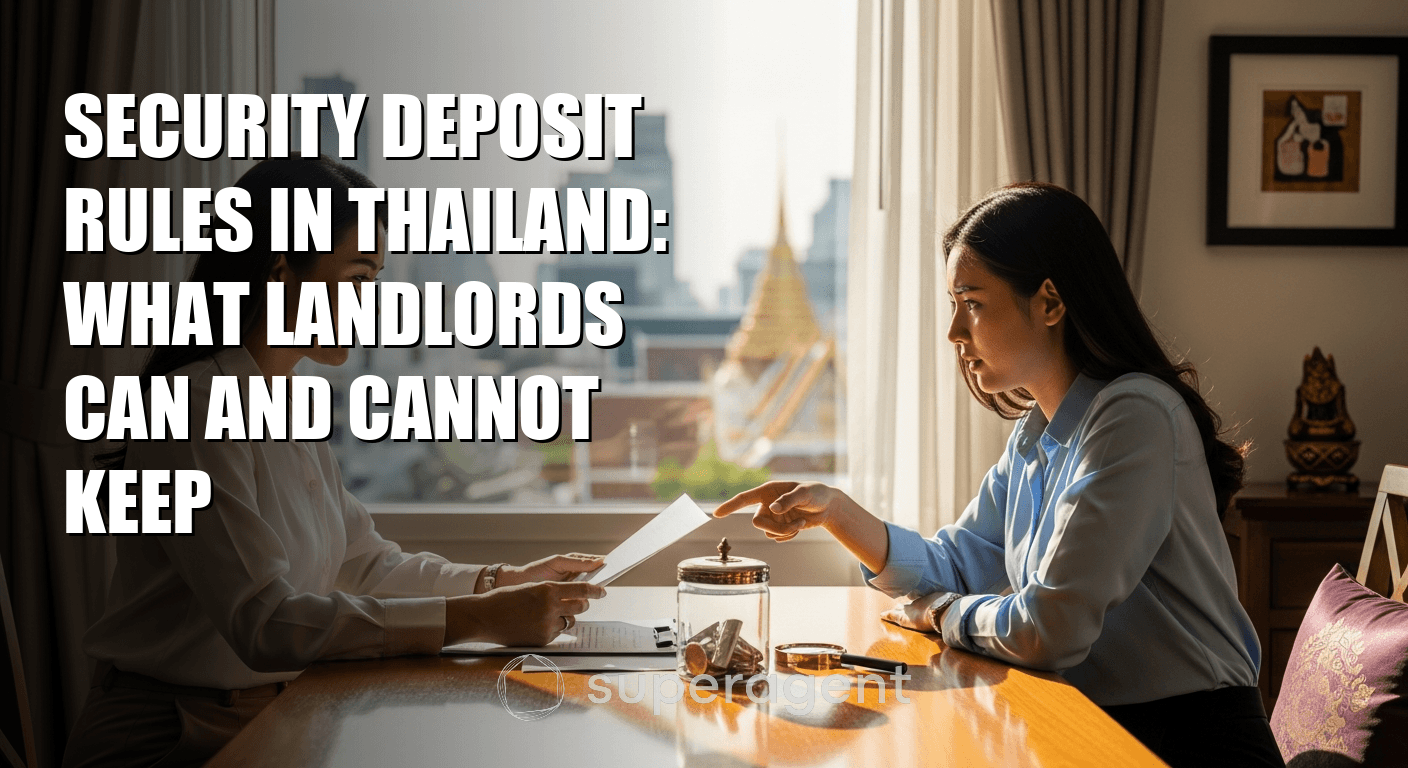
Know your rights before signing a lease, Thai law limits deposits to two months and restricts what landlords can legally
Summary
Learn what Thai law says about security deposits, how much landlords can charge, what deductions are legal, and how to get your money back.
Security deposit disputes are one of the most common headaches for renters in Bangkok, and most of them happen because tenants don't know their rights going in. Thailand's Civil and Commercial Code covers this, and while Thai landlord-tenant law is less prescriptive than places like the UK or Germany, there are clear rules about what landlords can and cannot keep.
Here's what you need to know before you sign anything.
How Much Can a Landlord Charge for a Security Deposit?
There's no hard legal cap in Thailand, but the market standard in Bangkok is two months' rent. For a 15,000 THB per month unit near Phrom Phong BTS, that means 30,000 THB up front on top of your first month's rent.
Some landlords, especially in newer condos like The ESSE Sukhumvit 36 or Hyde Sukhumvit 13, ask for three months when they're renting furnished units with high-end appliances. That's not illegal, but it is negotiable. If a landlord is pushing for three months on a basic unit, push back.
Always get the deposit amount confirmed in writing in the rental agreement. A verbal agreement is legally enforceable in Thailand, but it's nearly impossible to prove in a dispute.
What Can a Landlord Legally Deduct?
A landlord is allowed to deduct from your deposit for damages that go beyond what the law calls "normal wear and tear." That phrase does a lot of heavy lifting, so let's be specific.
Legitimate deductions include a broken air conditioner where you failed to clean the filters as required, deep stains on carpets or upholstered furniture, missing or broken items listed in the handover inventory, and unpaid utility bills or rent.
A concrete example: if you rent at Rhythm Ekkamai near Ekkamai BTS and leave with a cracked bathroom tile you never reported, a deduction for that repair is fair. But if the tile cracked because of building movement or age, that's the landlord's problem.
The key is the inventory checklist. If there was no signed checklist at move-in, the landlord has a weak argument for almost any deduction.
What a Landlord Cannot Keep
This is where many Bangkok tenants get taken advantage of, simply because they don't push back.
Landlords cannot charge you for repainting the entire apartment because you lived there for a year or two. Paint fades. Walls get scuffed from furniture. That is normal wear and tear under Thai law.
A landlord at a building on Ratchadaphisek Road near MRT Thailand Cultural Centre tried to charge a tenant 12,000 THB for a full repaint after a one-year lease. The tenant pushed back with a written objection and received the full deposit back.
Landlords also cannot keep your deposit as "last month's rent" unless that was explicitly written into the contract. This is a common trick. If the contract says the deposit is a security deposit, it stays a security deposit.
Deductions for pre-existing damage are also not allowed. If the scratches on the wooden floor were there when you moved in but weren't documented, a landlord who tries to charge you for them is acting in bad faith.
The Move-In Checklist: Your Most Important Document
Before you hand over a single baht, do a thorough walk-through and document everything. Take timestamped photos and video of every room, every appliance, every wall. Note anything already damaged, and make sure both you and the landlord sign a condition report.
This matters enormously in Bangkok's condo market. A signed checklist at a place like Noble Recole on Sukhumvit Soi 19 is the difference between getting your full 40,000 THB deposit back and arguing over curtain hooks.
If a landlord refuses to do a move-in inspection or sign any kind of condition report, treat that as a red flag. It means they're leaving themselves room to dispute things later.
Getting Your Deposit Back: Timing and What to Do
Under Thai law, there's no fixed statutory deadline for returning your deposit, which is a gap tenants often don't realize. The general expectation based on Civil and Commercial Code principles is that deposits should come back within a "reasonable time" after the lease ends, typically around 30 days.
In practice, many Bangkok landlords return deposits within 7 to 14 days when there are no disputes. If you're moving out of a condo on Charoen Nakhon near ICONSIAM, give written notice of your move-out date and follow up in writing requesting the deposit return. Put everything in LINE chat or email so you have a record.
If your landlord goes silent or refuses to return the deposit without a valid reason, you can file a claim at the Bangkok Civil Court. The process is straightforward for amounts under 300,000 THB, and small claims cases resolve faster than most people expect. The threat of filing is often enough to move things along.
The deposit conversation starts before you move in, not after you move out. Read the contract carefully, negotiate the amount if it feels high, and always document the property's condition on day one.
Bangkok's rental market is competitive, especially around Asok BTS, Ari, and Silom, and landlords know it. But tenants aren't powerless. Knowing what's legally yours makes a real difference when it counts.
If you're searching for a condo in Bangkok and want to understand exactly what you're agreeing to before you sign, visit superagent.co. It's built for Bangkok renters who want clear information alongside a smarter way to search.
Written by the Superagent editorial team. Superagent is Bangkok's AI-powered condo rental platform, helping expats and locals find the right rental faster. superagent.co
Related articles
Security deposit disputes are one of the most common headaches for renters in Bangkok, and most of them happen because tenants don't know their rights going in. Thailand's Civil and Commercial Code covers this, and while Thai landlord-tenant law is less prescriptive than places like the UK or Germany, there are clear rules about what landlords can and cannot keep.
Here's what you need to know before you sign anything.
How Much Can a Landlord Charge for a Security Deposit?
There's no hard legal cap in Thailand, but the market standard in Bangkok is two months' rent. For a 15,000 THB per month unit near Phrom Phong BTS, that means 30,000 THB up front on top of your first month's rent.
Some landlords, especially in newer condos like The ESSE Sukhumvit 36 or Hyde Sukhumvit 13, ask for three months when they're renting furnished units with high-end appliances. That's not illegal, but it is negotiable. If a landlord is pushing for three months on a basic unit, push back.
Always get the deposit amount confirmed in writing in the rental agreement. A verbal agreement is legally enforceable in Thailand, but it's nearly impossible to prove in a dispute.
What Can a Landlord Legally Deduct?
A landlord is allowed to deduct from your deposit for damages that go beyond what the law calls "normal wear and tear." That phrase does a lot of heavy lifting, so let's be specific.
Continue reading after that.
Looking for a condo
to rent?
Leave your name and phone. We'll follow up while you keep reading.
100% Secure
Fast Response
Free Consultation
Legitimate deductions include a broken air conditioner where you failed to clean the filters as required, deep stains on carpets or upholstered furniture, missing or broken items listed in the handover inventory, and unpaid utility bills or rent.
A concrete example: if you rent at Rhythm Ekkamai near Ekkamai BTS and leave with a cracked bathroom tile you never reported, a deduction for that repair is fair. But if the tile cracked because of building movement or age, that's the landlord's problem.
The key is the inventory checklist. If there was no signed checklist at move-in, the landlord has a weak argument for almost any deduction.
What a Landlord Cannot Keep
This is where many Bangkok tenants get taken advantage of, simply because they don't push back.
Landlords cannot charge you for repainting the entire apartment because you lived there for a year or two. Paint fades. Walls get scuffed from furniture. That is normal wear and tear under Thai law.
A landlord at a building on Ratchadaphisek Road near MRT Thailand Cultural Centre tried to charge a tenant 12,000 THB for a full repaint after a one-year lease. The tenant pushed back with a written objection and received the full deposit back.
Landlords also cannot keep your deposit as "last month's rent" unless that was explicitly written into the contract. This is a common trick. If the contract says the deposit is a security deposit, it stays a security deposit.
Deductions for pre-existing damage are also not allowed. If the scratches on the wooden floor were there when you moved in but weren't documented, a landlord who tries to charge you for them is acting in bad faith.
The Move-In Checklist: Your Most Important Document
Before you hand over a single baht, do a thorough walk-through and document everything. Take timestamped photos and video of every room, every appliance, every wall. Note anything already damaged, and make sure both you and the landlord sign a condition report.
This matters enormously in Bangkok's condo market. A signed checklist at a place like Noble Recole on Sukhumvit Soi 19 is the difference between getting your full 40,000 THB deposit back and arguing over curtain hooks.
If a landlord refuses to do a move-in inspection or sign any kind of condition report, treat that as a red flag. It means they're leaving themselves room to dispute things later.
Getting Your Deposit Back: Timing and What to Do
Under Thai law, there's no fixed statutory deadline for returning your deposit, which is a gap tenants often don't realize. The general expectation based on Civil and Commercial Code principles is that deposits should come back within a "reasonable time" after the lease ends, typically around 30 days.
In practice, many Bangkok landlords return deposits within 7 to 14 days when there are no disputes. If you're moving out of a condo on Charoen Nakhon near ICONSIAM, give written notice of your move-out date and follow up in writing requesting the deposit return. Put everything in LINE chat or email so you have a record.
Continue reading after that.
Looking for a condo
to rent?
Leave your name and phone. We'll follow up while you keep reading.
100% Secure
Fast Response
Free Consultation
If your landlord goes silent or refuses to return the deposit without a valid reason, you can file a claim at the Bangkok Civil Court. The process is straightforward for amounts under 300,000 THB, and small claims cases resolve faster than most people expect. The threat of filing is often enough to move things along.
The deposit conversation starts before you move in, not after you move out. Read the contract carefully, negotiate the amount if it feels high, and always document the property's condition on day one.
Bangkok's rental market is competitive, especially around Asok BTS, Ari, and Silom, and landlords know it. But tenants aren't powerless. Knowing what's legally yours makes a real difference when it counts.
If you're searching for a condo in Bangkok and want to understand exactly what you're agreeing to before you sign, visit superagent.co. It's built for Bangkok renters who want clear information alongside a smarter way to search.
Written by the Superagent editorial team. Superagent is Bangkok's AI-powered condo rental platform, helping expats and locals find the right rental faster. superagent.co
Related articles
Share this article
Properties you may like
More like this
 In Guides · Superagent EditorialHidden Costs of Renting a Condo in Bangkok Nobody Warns You AboutBangkok condo rent looks affordable until month one hits. Here are the real costs beyond the headline figure that catch most renters off guard.25 May 20261 min read
 In Guides · Superagent EditorialWhat a Long-Vacant Bangkok Condo Unit Is Actually Telling YouA Bangkok condo vacant for months signals overpricing, landlord issues, or real problems. Here is how to read the signs.25 May 20261 min read
 In Guides · Superagent EditorialRed Flags in a Bangkok Rental Contract to Watch Out ForBangkok rental contracts often hide risky clauses. Here are the red flags every tenant must catch before signing any lease.25 May 20261 min read
 In Guides · Superagent EditorialWorking Online from a Condo: How to Choose the Perfect Room for ProductivityLearn how to choose the best condo room for working online with tips on lighting, noise, and furniture setup to maximize productivity.9 May 20261 min read