Bangkok Condo Rental Market 2026: An Investor's Guide to Yields, Locations and Tenants
Guides
Bangkok Condo Rental Market 2026: An Investor's Guide to Yields, Locations and Tenants
Discover investment opportunities in Bangkok's condo rental market as 2026 approaches

Summary
A ground level look at Bangkok's 2026 condo rental market: yields of 4 to 7 percent, emerging transit zones, and the tenants paying the rent.
If you own a condo in Bangkok and you are not paying attention to what is happening in the rental market right now, you are leaving money on the table. The city is changing fast. New transit lines are opening, digital nomads are flooding in, and entire neighborhoods are being reborn. For investors who bought units five or ten years ago, the question is no longer whether to rent out your condo. The question is how to position it for maximum yield in 2026. And for those thinking about buying specifically to rent, the window of opportunity in certain areas is genuinely exciting. Let me break it down the way I see it from the ground here in Bangkok.
The Bangkok Rental Market in 2026: What the Numbers Say
Bangkok's condo rental market has fully recovered from the pandemic-era slump, and then some. According to CBRE Thailand's latest residential market reports, occupancy rates in prime CBD condos have climbed back above 90 percent. Average rents for a one-bedroom unit in the Sukhumvit corridor between Asok and Thong Lo now sit at 25,000 to 40,000 THB per month, depending on the building and floor level.
What is driving this? A combination of factors. The return of expat corporate packages, a growing wave of remote workers choosing Bangkok as a base, and a genuine shortage of quality rental stock in certain micro-locations. Buildings like The Lumpini 24 near Phrom Phong BTS or Ideo Q Sukhumvit 36 continue to command premium rents because they tick every box tenants care about: walkable to transit, modern facilities, and well-managed common areas.
Here is a stat worth remembering: gross rental yields in Bangkok's central areas currently average between 4 and 6 percent annually, which outperforms most comparable cities in Southeast Asia. For a city with this level of infrastructure and livability, that is a compelling number.
Location Strategy: Where the Smart Money Is Going
Not all Bangkok neighborhoods are created equal when it comes to rental returns. The classic Sukhumvit stretch from Nana to Ekkamai remains the safest bet for consistent demand. But the real alpha for investors in 2026 is in transitional zones, areas where new infrastructure is transforming accessibility and tenant interest.
Take the area around Phra Ram 9 and Huai Khwang MRT stations. Five years ago, this was considered secondary. Today, buildings like Life Asoke Hype and Ideo Rama 9 Asoke are pulling in tenants who want modern one-bedrooms at 15,000 to 22,000 THB per month. That is significantly cheaper than Sukhumvit proper, which makes it attractive to a younger professional demographic. And the purchase prices are lower too, meaning yields can actually be higher here than in Thong Lo.
Another area to watch is the Yellow Line corridor. The monorail connecting Lat Phrao to Samrong has created rental demand in neighborhoods that were previously invisible to most expats. MRTA's expansion plans suggest this trend will only accelerate as feeder routes come online.
Charoen Nakhon along the Gold Line is another emerging play. The presence of ICONSIAM and the growing cluster of newer condos like Magnolias Waterfront Residences and The Residences at Mandarin Oriental have brought a different type of luxury tenant to the west bank of the Chao Phraya.
Know Your Tenant: Who Is Actually Renting in Bangkok?
Understanding who your tenant is changes everything about how you furnish, price, and market your unit. In 2026, the Bangkok renter pool breaks down into a few distinct groups.
First, there are the traditional corporate expats. These are your Japanese, European, and American professionals on company packages. They tend to want two-bedroom units in well-known buildings along the Sukhumvit line, particularly near Phrom Phong or Asok BTS. Budgets range from 40,000 to 80,000 THB per month, and they value building reputation, management quality, and proximity to international schools or hospitals like Bumrungrad International Hospital.
Second, there is the fast-growing digital nomad and remote worker segment. These tenants are typically looking for furnished one-bedrooms or studios in the 12,000 to 25,000 THB range. They care about internet speed, coworking spaces nearby, and easy access to cafes and nightlife. Ari BTS, On Nut BTS, and the Ratchathewi area are popular with this crowd.
Third, young Thai professionals. This is a massive and often underestimated segment. They want value, modern finishes, and a reasonable commute. Areas like Bang Sue, Talat Phlu, and Bearing are popular choices. Rents here can be as low as 8,000 to 14,000 THB for a studio, but volume and low vacancy make these viable investment plays.
A practical example: I know an investor who bought two studios at Aspire Sukhumvit On Nut for about 2.2 million THB each back in 2019. Both are rented consistently at 12,000 THB per month, yielding roughly 6.5 percent gross annually. Not glamorous, but incredibly steady.
Comparing Investment Zones: A Side-by-Side Look
To make this more concrete, here is a comparison of five popular investment zones across Bangkok. These numbers reflect typical one-bedroom units in mid-range to upper-mid-range buildings as of early 2026.
| Zone | Typical Monthly Rent (1-Bed) | Average Purchase Price (1-Bed) | Estimated Gross Yield | Key BTS/MRT Station | Primary Tenant Profile |
|---|---|---|---|---|---|
| Sukhumvit (Asok to Thong Lo) | 28,000 to 42,000 THB | 5.5 to 8.5 million THB | 4.0 to 5.5% | Asok, Phrom Phong, Thong Lo BTS | Corporate expats, couples |
| Phra Ram 9, Huai Khwang | 15,000 to 22,000 THB | 3.0 to 4.5 million THB | 5.0 to 6.5% | Phra Ram 9, Huai Khwang MRT | Young professionals, remote workers |
| On Nut, Bang Chak | 10,000 to 18,000 THB | 2.0 to 3.5 million THB | 5.5 to 7.0% | On Nut, Bang Chak BTS | Digital nomads, Thai professionals |
| Ari, Saphan Khwai | 18,000 to 30,000 THB | 4.0 to 6.0 million THB | 4.5 to 5.5% | Ari, Saphan Khwai BTS | Creative professionals, expat couples |
| Charoen Nakhon | 20,000 to 45,000 THB | 4.5 to 9.0 million THB | 4.0 to 5.0% | Charoen Nakhon (Gold Line) | Luxury renters, families |
As you can see, higher purchase prices in premium zones do not always translate to higher yields. The On Nut and Phra Ram 9 corridors punch above their weight for investors who prioritize cash flow over prestige.
Tax, Legal, and Practical Considerations for Condo Investors
Before you start counting your rental income, you need to understand the cost side of the equation. In Thailand, rental income is subject to personal income tax, and the rates are progressive. If you are a Thai national or a tax resident, rental income gets added to your total annual income. The Thai Revenue Department allows a standard deduction of 30 percent on rental income for expenses, or you can deduct actual expenses if they are higher.
For foreign investors, things get a bit more layered. Foreigners can own condo units freehold, provided the foreign ownership quota in any given building does not exceed 49 percent of total floor area. This is not usually an issue in newer buildings, but in older, popular buildings along Sukhumvit, the foreign quota can be fully taken. Always check before committing.
Common fees and sinking funds also eat into your returns. A typical common area fee in a mid-range Bangkok condo runs 40 to 60 THB per square meter per month. For a 35 sqm one-bedroom, that is roughly 1,400 to 2,100 THB monthly. Not huge, but it adds up over the year, especially if your unit sits vacant for a month or two.
Practically speaking, a vacant condo is the single biggest threat to your returns. A unit sitting empty for two months per year drops your effective yield by roughly 15 to 17 percent. This is why tenant retention and proper pricing matter far more than squeezing every last baht out of the monthly rent.
Getting Your Unit Rent-Ready: What Actually Matters to Tenants
I have seen investors spend 300,000 THB on a renovation that adds zero rental value, and I have seen others spend 50,000 THB on smart upgrades that add 3,000 to 5,000 THB to their monthly rent. The difference is knowing what tenants actually care about.
Here is what moves the needle. A good mattress and quality bedding. Seriously. Tenants will pay more for a unit that feels like a serviced apartment than one that has expensive floor tiles but a rock-hard bed. A reliable washer-dryer combo, blackout curtains, fast Wi-Fi included in the rent, and a kitchen that has more than a single electric burner. These practical touches matter.
What does not matter as much? Ultra-expensive designer furniture, elaborate wall art, or premium bathroom fittings. Tenants notice comfort and functionality. They do not notice that your faucet cost 15,000 THB instead of 3,000 THB.
A friend of mine owns a one-bedroom at Ceil by Sansiri near Ekkamai BTS. She spent about 60,000 THB adding a proper work desk setup, upgrading the mattress, installing blackout curtains, and subscribing to a fiber internet plan that she bundles into the rent. Her unit rents at 22,000 THB per month in a building where comparable unfurnished or poorly furnished units go for 16,000 to 17,000. That extra 5,000 per month pays back the upgrade cost in one year, and then it is pure margin.
Looking Ahead: Why 2026 Is a Pivotal Year
Several macro trends are converging that make 2026 particularly interesting for condo investors in Bangkok. The continued expansion of the transit network means new stations are creating new rental hotspots. The Thai government's push to attract remote workers and long-term residents through updated visa programs is expanding the tenant pool. And construction costs have risen enough that new supply is slowing down in some areas, which tightens the market in favor of existing unit owners.
At the same time, interest rates set by the Bank of Thailand have remained relatively stable, keeping mortgage costs manageable for those financing their investment units. If you already own and are sitting on an unrented unit, the opportunity cost of leaving it empty is higher than it has been in years.
Whether you are a seasoned investor with a portfolio of units or someone considering buying your first investment condo, the Bangkok rental market rewards those who do their homework on location, tenant profiles, and unit preparation. The data is clear, the demand is real, and the infrastructure keeps getting better.
If you want to see what is actually available and compare rental listings across Bangkok's best neighborhoods, check out superagent.co. The platform uses AI to match you with condos based on your specific criteria, whether you are looking to rent for yourself or researching the market as an investor. It is a solid starting point for anyone serious about Bangkok real estate.
If you own a condo in Bangkok and you are not paying attention to what is happening in the rental market right now, you are leaving money on the table. The city is changing fast. New transit lines are opening, digital nomads are flooding in, and entire neighborhoods are being reborn. For investors who bought units five or ten years ago, the question is no longer whether to rent out your condo. The question is how to position it for maximum yield in 2026. And for those thinking about buying specifically to rent, the window of opportunity in certain areas is genuinely exciting. Let me break it down the way I see it from the ground here in Bangkok.
The Bangkok Rental Market in 2026: What the Numbers Say
Bangkok's condo rental market has fully recovered from the pandemic-era slump, and then some. According to CBRE Thailand's latest residential market reports, occupancy rates in prime CBD condos have climbed back above 90 percent. Average rents for a one-bedroom unit in the Sukhumvit corridor between Asok and Thong Lo now sit at 25,000 to 40,000 THB per month, depending on the building and floor level.
What is driving this? A combination of factors. The return of expat corporate packages, a growing wave of remote workers choosing Bangkok as a base, and a genuine shortage of quality rental stock in certain micro-locations. Buildings like The Lumpini 24 near Phrom Phong BTS or Ideo Q Sukhumvit 36 continue to command premium rents because they tick every box tenants care about: walkable to transit, modern facilities, and well-managed common areas.
Here is a stat worth remembering: gross rental yields in Bangkok's central areas currently average between 4 and 6 percent annually, which outperforms most comparable cities in Southeast Asia. For a city with this level of infrastructure and livability, that is a compelling number.
Location Strategy: Where the Smart Money Is Going
Not all Bangkok neighborhoods are created equal when it comes to rental returns. The classic Sukhumvit stretch from Nana to Ekkamai remains the safest bet for consistent demand. But the real alpha for investors in 2026 is in transitional zones, areas where new infrastructure is transforming accessibility and tenant interest.
Take the area around Phra Ram 9 and Huai Khwang MRT stations. Five years ago, this was considered secondary. Today, buildings like Life Asoke Hype and Ideo Rama 9 Asoke are pulling in tenants who want modern one-bedrooms at 15,000 to 22,000 THB per month. That is significantly cheaper than Sukhumvit proper, which makes it attractive to a younger professional demographic. And the purchase prices are lower too, meaning yields can actually be higher here than in Thong Lo.
Another area to watch is the Yellow Line corridor. The monorail connecting Lat Phrao to Samrong has created rental demand in neighborhoods that were previously invisible to most expats. MRTA's expansion plans suggest this trend will only accelerate as feeder routes come online.
Charoen Nakhon along the Gold Line is another emerging play. The presence of ICONSIAM and the growing cluster of newer condos like Magnolias Waterfront Residences and The Residences at Mandarin Oriental have brought a different type of luxury tenant to the west bank of the Chao Phraya.
Know Your Tenant: Who Is Actually Renting in Bangkok?
Understanding who your tenant is changes everything about how you furnish, price, and market your unit. In 2026, the Bangkok renter pool breaks down into a few distinct groups.
First, there are the traditional corporate expats. These are your Japanese, European, and American professionals on company packages. They tend to want two-bedroom units in well-known buildings along the Sukhumvit line, particularly near Phrom Phong or Asok BTS. Budgets range from 40,000 to 80,000 THB per month, and they value building reputation, management quality, and proximity to international schools or hospitals like Bumrungrad International Hospital.
Second, there is the fast-growing digital nomad and remote worker segment. These tenants are typically looking for furnished one-bedrooms or studios in the 12,000 to 25,000 THB range. They care about internet speed, coworking spaces nearby, and easy access to cafes and nightlife. Ari BTS, On Nut BTS, and the Ratchathewi area are popular with this crowd.
Third, young Thai professionals. This is a massive and often underestimated segment. They want value, modern finishes, and a reasonable commute. Areas like Bang Sue, Talat Phlu, and Bearing are popular choices. Rents here can be as low as 8,000 to 14,000 THB for a studio, but volume and low vacancy make these viable investment plays.
A practical example: I know an investor who bought two studios at Aspire Sukhumvit On Nut for about 2.2 million THB each back in 2019. Both are rented consistently at 12,000 THB per month, yielding roughly 6.5 percent gross annually. Not glamorous, but incredibly steady.
Comparing Investment Zones: A Side-by-Side Look
To make this more concrete, here is a comparison of five popular investment zones across Bangkok. These numbers reflect typical one-bedroom units in mid-range to upper-mid-range buildings as of early 2026.
| Zone | Typical Monthly Rent (1-Bed) | Average Purchase Price (1-Bed) | Estimated Gross Yield | Key BTS/MRT Station | Primary Tenant Profile |
|---|---|---|---|---|---|
| Sukhumvit (Asok to Thong Lo) | 28,000 to 42,000 THB | 5.5 to 8.5 million THB | 4.0 to 5.5% | Asok, Phrom Phong, Thong Lo BTS | Corporate expats, couples |
| Phra Ram 9, Huai Khwang | 15,000 to 22,000 THB | 3.0 to 4.5 million THB | 5.0 to 6.5% | Phra Ram 9, Huai Khwang MRT | Young professionals, remote workers |
| On Nut, Bang Chak | 10,000 to 18,000 THB | 2.0 to 3.5 million THB | 5.5 to 7.0% | On Nut, Bang Chak BTS | Digital nomads, Thai professionals |
| Ari, Saphan Khwai | 18,000 to 30,000 THB | 4.0 to 6.0 million THB | 4.5 to 5.5% | Ari, Saphan Khwai BTS | Creative professionals, expat couples |
| Charoen Nakhon | 20,000 to 45,000 THB | 4.5 to 9.0 million THB | 4.0 to 5.0% | Charoen Nakhon (Gold Line) | Luxury renters, families |
As you can see, higher purchase prices in premium zones do not always translate to higher yields. The On Nut and Phra Ram 9 corridors punch above their weight for investors who prioritize cash flow over prestige.
Tax, Legal, and Practical Considerations for Condo Investors
Before you start counting your rental income, you need to understand the cost side of the equation. In Thailand, rental income is subject to personal income tax, and the rates are progressive. If you are a Thai national or a tax resident, rental income gets added to your total annual income. The Thai Revenue Department allows a standard deduction of 30 percent on rental income for expenses, or you can deduct actual expenses if they are higher.
Talk to us about renting
Share your details and keep reading — we’ll get back to you.
For foreign investors, things get a bit more layered. Foreigners can own condo units freehold, provided the foreign ownership quota in any given building does not exceed 49 percent of total floor area. This is not usually an issue in newer buildings, but in older, popular buildings along Sukhumvit, the foreign quota can be fully taken. Always check before committing.
Common fees and sinking funds also eat into your returns. A typical common area fee in a mid-range Bangkok condo runs 40 to 60 THB per square meter per month. For a 35 sqm one-bedroom, that is roughly 1,400 to 2,100 THB monthly. Not huge, but it adds up over the year, especially if your unit sits vacant for a month or two.
Practically speaking, a vacant condo is the single biggest threat to your returns. A unit sitting empty for two months per year drops your effective yield by roughly 15 to 17 percent. This is why tenant retention and proper pricing matter far more than squeezing every last baht out of the monthly rent.
Getting Your Unit Rent-Ready: What Actually Matters to Tenants
I have seen investors spend 300,000 THB on a renovation that adds zero rental value, and I have seen others spend 50,000 THB on smart upgrades that add 3,000 to 5,000 THB to their monthly rent. The difference is knowing what tenants actually care about.
Here is what moves the needle. A good mattress and quality bedding. Seriously. Tenants will pay more for a unit that feels like a serviced apartment than one that has expensive floor tiles but a rock-hard bed. A reliable washer-dryer combo, blackout curtains, fast Wi-Fi included in the rent, and a kitchen that has more than a single electric burner. These practical touches matter.
What does not matter as much? Ultra-expensive designer furniture, elaborate wall art, or premium bathroom fittings. Tenants notice comfort and functionality. They do not notice that your faucet cost 15,000 THB instead of 3,000 THB.
A friend of mine owns a one-bedroom at Ceil by Sansiri near Ekkamai BTS. She spent about 60,000 THB adding a proper work desk setup, upgrading the mattress, installing blackout curtains, and subscribing to a fiber internet plan that she bundles into the rent. Her unit rents at 22,000 THB per month in a building where comparable unfurnished or poorly furnished units go for 16,000 to 17,000. That extra 5,000 per month pays back the upgrade cost in one year, and then it is pure margin.
Looking Ahead: Why 2026 Is a Pivotal Year
Several macro trends are converging that make 2026 particularly interesting for condo investors in Bangkok. The continued expansion of the transit network means new stations are creating new rental hotspots. The Thai government's push to attract remote workers and long-term residents through updated visa programs is expanding the tenant pool. And construction costs have risen enough that new supply is slowing down in some areas, which tightens the market in favor of existing unit owners.
At the same time, interest rates set by the Bank of Thailand have remained relatively stable, keeping mortgage costs manageable for those financing their investment units. If you already own and are sitting on an unrented unit, the opportunity cost of leaving it empty is higher than it has been in years.
Whether you are a seasoned investor with a portfolio of units or someone considering buying your first investment condo, the Bangkok rental market rewards those who do their homework on location, tenant profiles, and unit preparation. The data is clear, the demand is real, and the infrastructure keeps getting better.
If you want to see what is actually available and compare rental listings across Bangkok's best neighborhoods, check out superagent.co. The platform uses AI to match you with condos based on your specific criteria, whether you are looking to rent for yourself or researching the market as an investor. It is a solid starting point for anyone serious about Bangkok real estate.
Share this article
Properties you may like
![[For Rent] CONDO I Aguston Sukhumvit 22 I Pet Friendly I 2 Beds I 2 Baths I Rent 55,000THB/mo](/_next/image?url=https%3A%2F%2Fstorage.googleapis.com%2Fsuperagent-web%2Fattachments%2Flistings%2F2266%2Fd3afcd25-6b79-46cb-9f1f-396acdc3dd10-955-3.jpg&w=3840&q=75)
฿55,000
2 Bed295 sqm
[For Rent] CONDO I Aguston Sukhumvit 22 I Pet Friendly I 2 Beds I 2 Baths I Rent 55,000THB/mo
Phrom Phong
Condo![[For Rent] CONDO I SUPALAI PLACE Sukhumvit 39 I 2 Beds I 2 Baths (1 Jacuzzi) I 55,555THB/mo](/_next/image?url=https%3A%2F%2Fstorage.googleapis.com%2Fsuperagent-web%2Fattachments%2Flistings%2F6743%2Fba530743-48b9-4ac6-92d3-c2247e743cf6-01-supalai-place-skv39-2b-link-heaven.jpg&w=3840&q=75)
฿55,555
2 Bed2142 sqm
[For Rent] CONDO I SUPALAI PLACE Sukhumvit 39 I 2 Beds I 2 Baths (1 Jacuzzi) I 55,555THB/mo
Phrom Phong
Condo![[For Rent] CONDO I Maru Ekkamai 2 I Pet friendly I 2 Beds I 2 Baths I 68,000 THB/mo](/_next/image?url=https%3A%2F%2Fstorage.googleapis.com%2Fsuperagent-web%2Fattachments%2Flistings%2F6602%2F9f1d8f71-ee43-435f-9a44-da16c4092c92-968-1.jpg&w=3840&q=75)
฿68,000
2 Bed360 sqm
[For Rent] CONDO I Maru Ekkamai 2 I Pet friendly I 2 Beds I 2 Baths I 68,000 THB/mo
Ekkamai
Condo![[For Rent] CONDO I Noble State 39 I 2 Beds I 2 Baths I 63,000THB/mo](/_next/image?url=https%3A%2F%2Fstorage.googleapis.com%2Fsuperagent-web%2Fattachments%2Flistings%2F2237%2F60eb58f3-eae5-41ed-a80b-406e004f05d8-940-1.jpg&w=3840&q=75)
฿63,000
2 Bed260 sqm
[For Rent] CONDO I Noble State 39 I 2 Beds I 2 Baths I 63,000THB/mo
Phrom Phong
Condo![[For Rent] CONDO I Rhythm Sukhumvit 36-38 I 2 Beds I 2 Baths I 38,999THB/mo](/_next/image?url=https%3A%2F%2Fstorage.googleapis.com%2Fsuperagent-web%2Fattachments%2Flistings%2F1788%2F942a0215-4128-4c2c-a064-f607e84e7aa4-656-2.jpg&w=3840&q=75)
฿38,999
2 Bed256 sqm
[For Rent] CONDO I Rhythm Sukhumvit 36-38 I 2 Beds I 2 Baths I 38,999THB/mo
Thonglor
Condo![[For Rent] CONDO I CLOUD Thonglor-Phetchaburi I 1 Bed I 1 Bath I 22,500THB/mo](/_next/image?url=https%3A%2F%2Fstorage.googleapis.com%2Fsuperagent-web%2Fattachments%2Flistings%2F6742%2F6cef5361-0dac-4dba-98f1-b0d187559c84-1118-1.jpg&w=3840&q=75)
฿22,500
1 Bed132 sqm
[For Rent] CONDO I CLOUD Thonglor-Phetchaburi I 1 Bed I 1 Bath I 22,500THB/mo
Thonglor
Condo![[For Rent] CONDO I City Smart Sukhumvit 18 I 3 Beds I 3 Baths I 65,000mo/THB](/_next/image?url=https%3A%2F%2Fstorage.googleapis.com%2Fsuperagent-web%2Fattachments%2Flistings%2F6741%2Fd371c89d-a913-42c4-a673-e540afae4f46-1116-1.jpg&w=3840&q=75)
฿65,000
3 Bed3125 sqm
[For Rent] CONDO I City Smart Sukhumvit 18 I 3 Beds I 3 Baths I 65,000mo/THB
Condo![[For Rent] CONDO I The Coast Bangkok I 1 Bed I 1 Bath I 20,000mo/THB](/_next/image?url=https%3A%2F%2Fstorage.googleapis.com%2Fsuperagent-web%2Fattachments%2Flistings%2F6740%2F498477ce-4ffa-4e4c-ab08-0e565d9c4bbe-1115-3.jpg&w=3840&q=75)
฿20,000
1 Bed146 sqm
[For Rent] CONDO I The Coast Bangkok I 1 Bed I 1 Bath I 20,000mo/THB
Bang Na
Condo![[For Rent] CONDO I IDEO Sukhumvit-RAMA 4 I 2 Beds I 2 Baths I 55,000mo/THB](/_next/image?url=https%3A%2F%2Fstorage.googleapis.com%2Fsuperagent-web%2Fattachments%2Flistings%2F6739%2F15df221d-5b8e-497c-b7ce-a6b9b6412cab-1113-1.jpg&w=3840&q=75)
฿55,000
2 Bed265 sqm
[For Rent] CONDO I IDEO Sukhumvit-RAMA 4 I 2 Beds I 2 Baths I 55,000mo/THB
Phra Khanong
Condo![[For Rent] CONDO I Downtown 49 I Pet Friendly I 1 Bed I 1 Bath I 23,000mo/THB](/_next/image?url=https%3A%2F%2Fstorage.googleapis.com%2Fsuperagent-web%2Fattachments%2Flistings%2F6738%2F11cf2ffe-1f01-4ccc-991c-2ad608f1ba73-1112-1.jpg&w=3840&q=75)
฿23,000
1 Bed135 sqm
[For Rent] CONDO I Downtown 49 I Pet Friendly I 1 Bed I 1 Bath I 23,000mo/THB
Thonglor
CondoMore like this
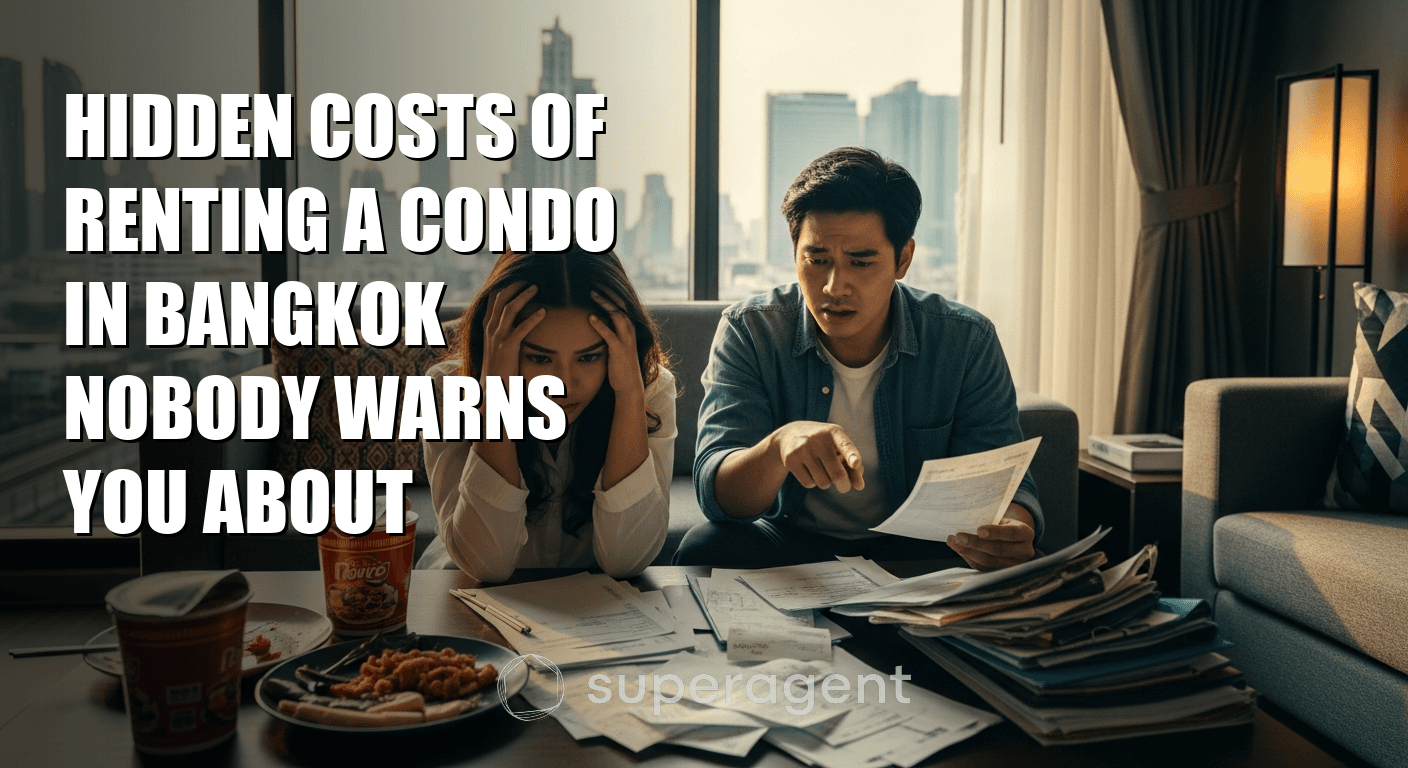 In Guides · Superagent EditorialHidden Costs of Renting a Condo in Bangkok Nobody Warns You AboutBangkok condo rent looks affordable until month one hits. Here are the real costs beyond the headline figure that catch most renters off guard.25 May 20261 min read
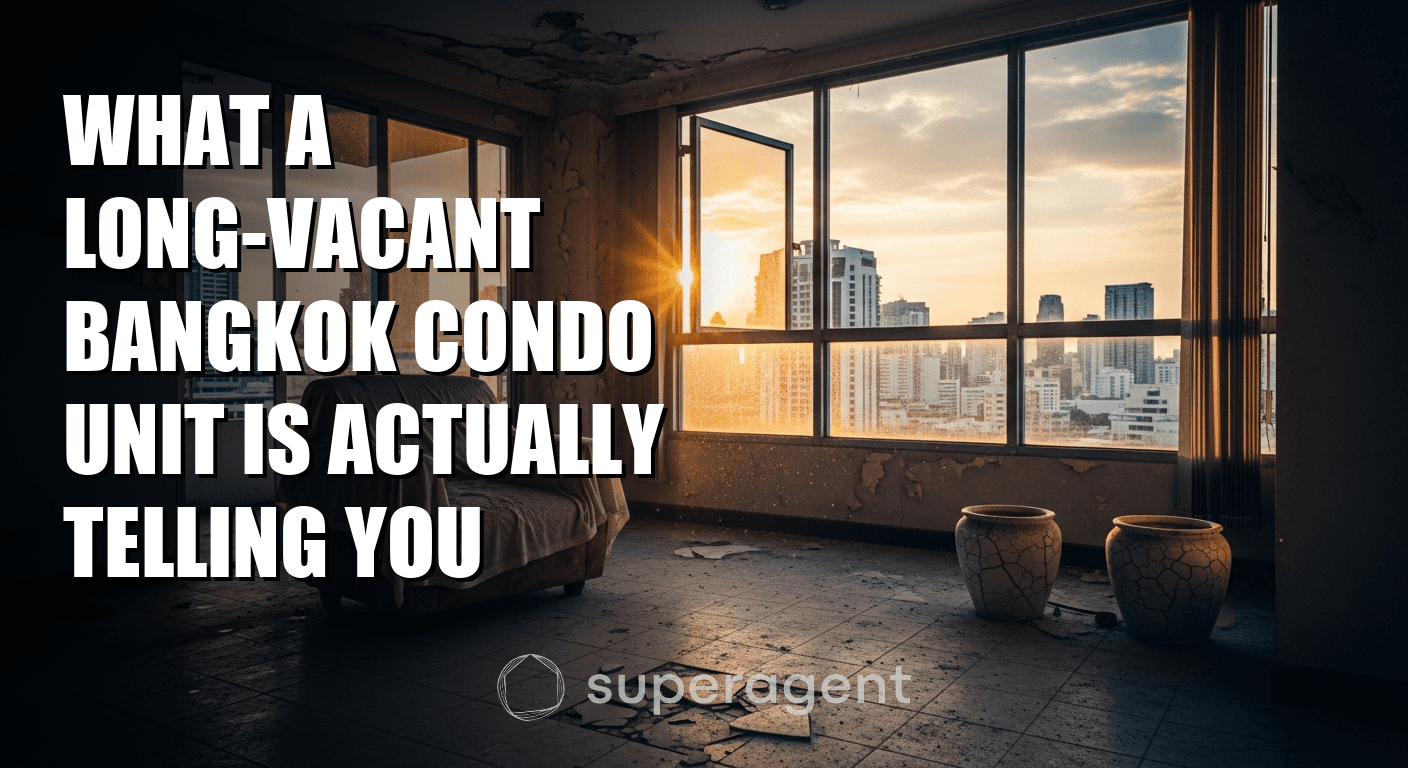 In Guides · Superagent EditorialWhat a Long-Vacant Bangkok Condo Unit Is Actually Telling YouA Bangkok condo vacant for months signals overpricing, landlord issues, or real problems. Here is how to read the signs.25 May 20261 min read
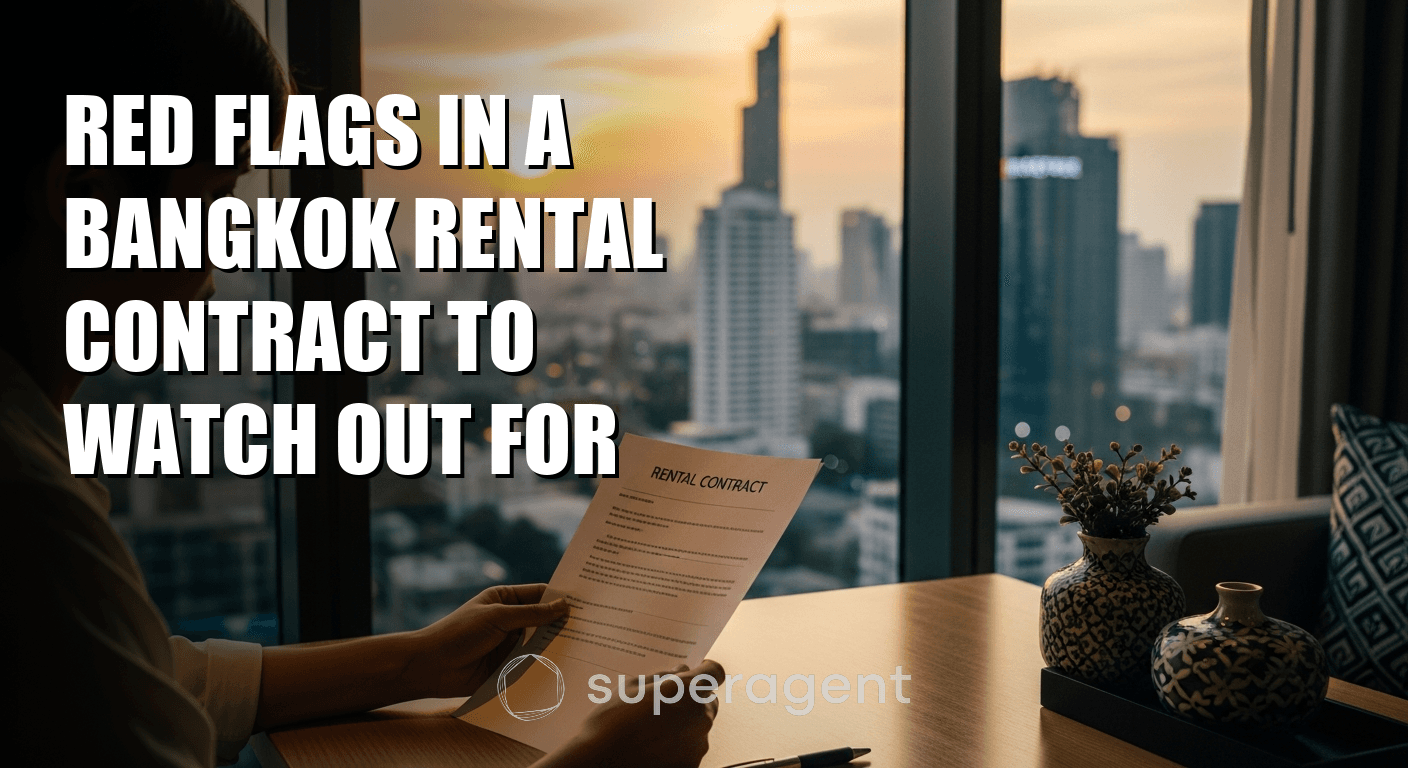 In Guides · Superagent EditorialRed Flags in a Bangkok Rental Contract to Watch Out ForBangkok rental contracts often hide risky clauses. Here are the red flags every tenant must catch before signing any lease.25 May 20261 min read
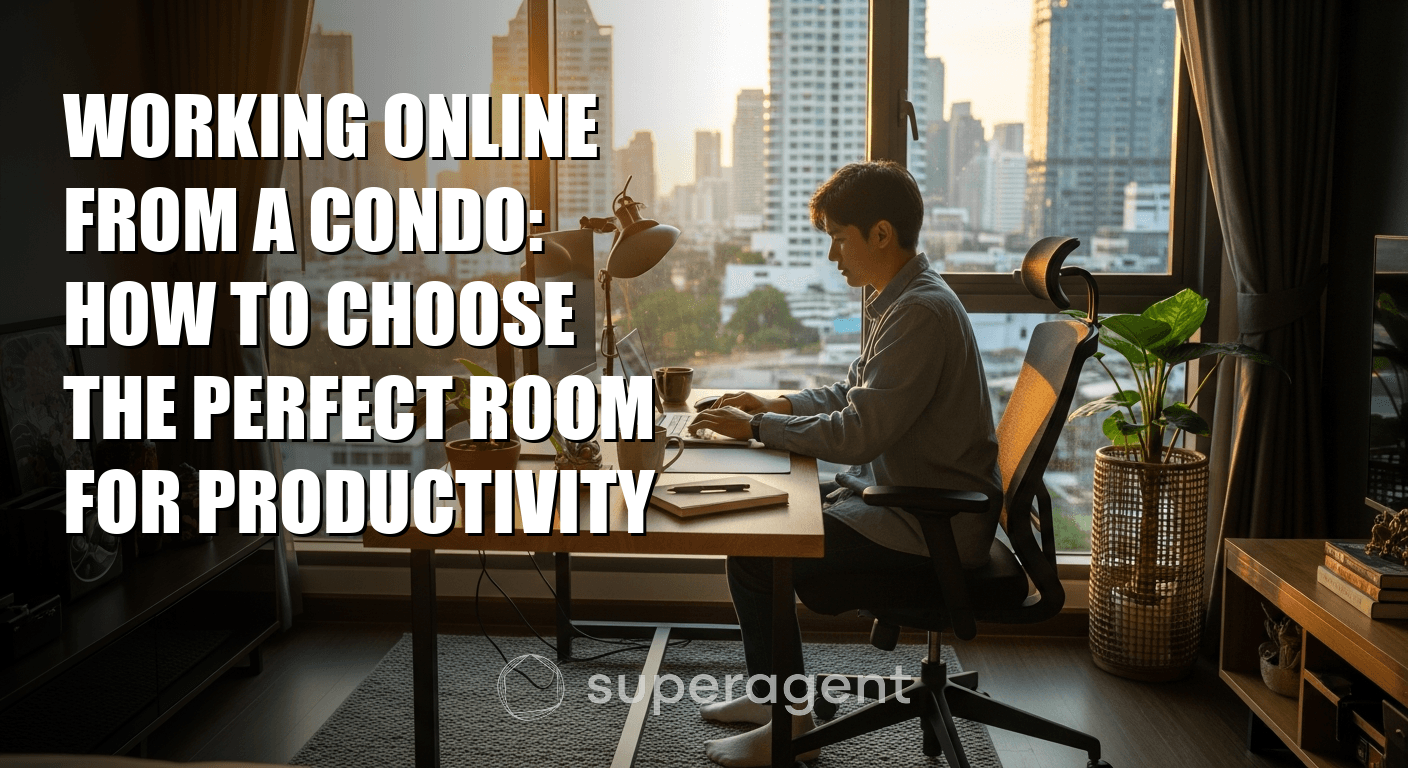 In Guides · Superagent EditorialWorking Online from a Condo: How to Choose the Perfect Room for ProductivityLearn how to choose the best condo room for working online with tips on lighting, noise, and furniture setup to maximize productivity.9 May 20261 min read