Living in Ratchada and Huai Khwang: Bangkok's Fast Growing Rental Hub Worth Watching
Guides
Living in Ratchada and Huai Khwang: Bangkok's Fast Growing Rental Hub Worth Watching
Discover why Ratchada-Huay Kwang is becoming Bangkok's hottest emerging neighborhood
Summary
Ratchada and Huai Khwang offer one bedroom condos from 10,000 THB, direct MRT Blue Line access, and late night food, minutes from Asoke.
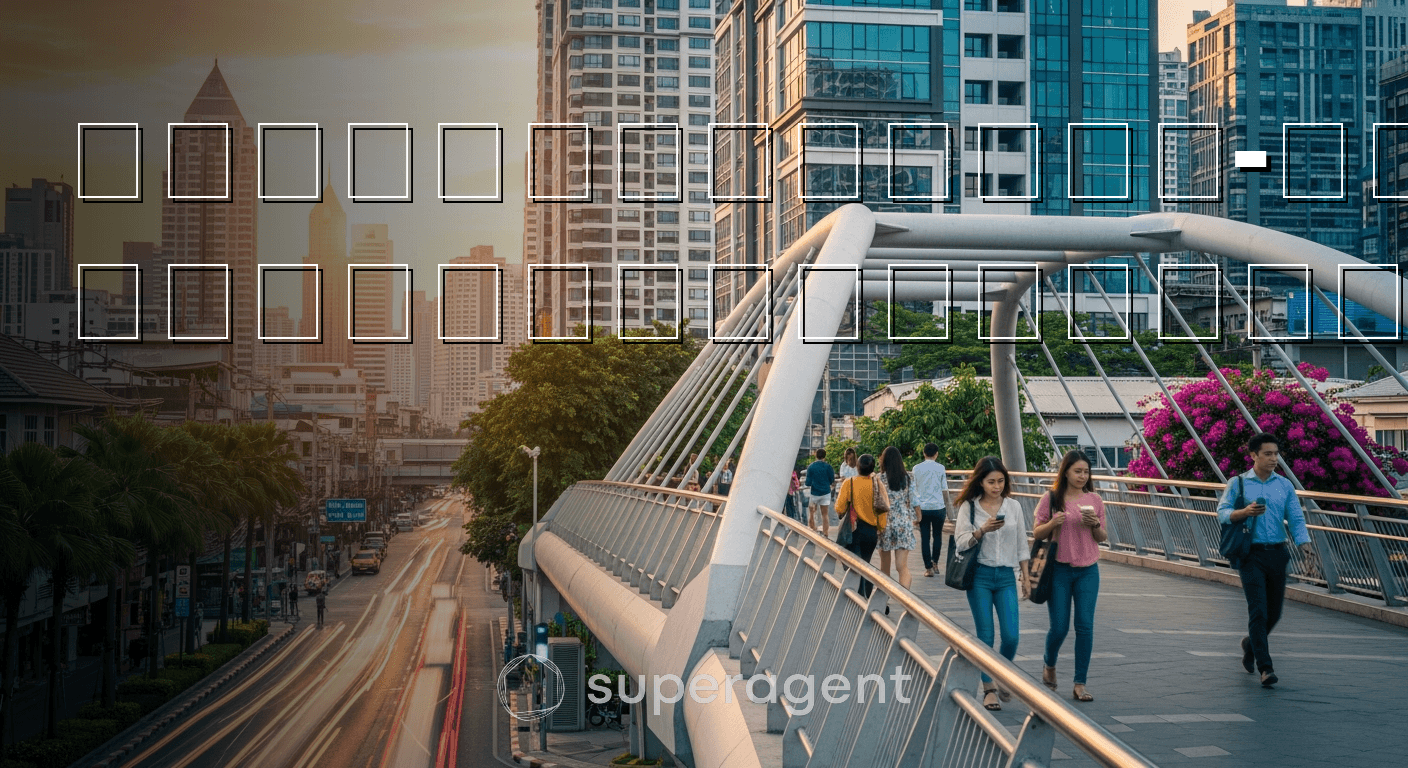
If you've been paying attention to Bangkok's rental market over the past few years, you already know that Ratchada and Huai Khwang have quietly become two of the most interesting neighborhoods in the city. What used to be known mainly for its night market and karaoke bars has transformed into a legitimate residential hub. Young professionals, expat couples, and even families are moving in, drawn by affordable rents, solid MRT access, and a neighborhood that actually feels like a neighborhood. Not a tourist zone, not a sterile CBD corridor, but a real part of Bangkok where people live, eat, and commute without breaking the bank.
Why Ratchada and Huai Khwang Are Growing So Fast
The simplest explanation is the MRT Blue Line. When MRT Bangkok extended the Blue Line into a full loop connecting stations like Huai Khwang, Sutthisan, Ratchadaphisek, and Lat Phrao, the entire corridor suddenly became far more accessible. You can now reach Silom, Sukhumvit, or Bang Sue Grand Station without transferring lines. That kind of convenience used to be reserved for people paying 30,000 THB or more along the BTS Sukhumvit line.
But it is more than just the train. According to DDproperty, the Ratchada area saw a significant increase in new condo supply between 2019 and 2023, which has kept rental prices competitive even as demand grows. More supply means more options, and more options mean renters have real bargaining power here.
Take a concrete example. A friend of mine relocated from Thong Lor to a two bedroom condo near MRT Huai Khwang last year. His rent dropped from 38,000 THB to 18,000 THB per month. The unit was newer, the gym was better, and his commute to his office near MRT Phra Ram 9 took exactly four minutes by train. He still has not figured out what he is doing with all the extra cash.
What You Can Actually Rent Here and What It Costs
Rents in the Ratchada and Huai Khwang area remain significantly lower than comparable neighborhoods along the BTS Sukhumvit line. The average rent for a one bedroom condo in this area ranges from 10,000 to 20,000 THB per month, while a two bedroom unit typically falls between 15,000 and 30,000 THB per month. For comparison, a similar one bedroom in Phrom Phong or Thong Lor would easily start at 25,000 THB and climb from there.
Popular buildings in the area include The Room Ratchada Ladprao, Chapter One Eco Ratchada Huai Khwang, Rhythm Ratchada, Ideo Ratchada Huai Khwang, and Supalai Wellington. Each of these sits within walking distance of an MRT station, and most were built within the last decade, so the facilities tend to be modern. Pools, co-working spaces, rooftop areas, decent gyms. The kind of amenities that used to cost a premium but come standard in this zone.
If you are an expat working at a company near Asoke or Phra Ram 9, and you want a modern condo with a gym and pool without spending more than 15,000 THB a month, Ratchada is probably where you should start looking.
The Neighborhood Feel: Food, Markets, and Daily Life
One thing people do not expect about Ratchada and Huai Khwang is how livable the area actually is on a day to day basis. This is not a sleepy residential district. It is packed with street food vendors, night markets, local restaurants, and small cafes that cater to the people who actually live here rather than tourists.
Huai Khwang intersection is famous for its late night food scene. You can get boat noodles, grilled seafood, or pad kra pao at 2 AM on a Tuesday. Soi Ratchadaphisek 3 and the streets around Ratchada Soi 7 have clusters of small Thai restaurants and coffee shops that have become local favorites. The Jodd Fairs night market near MRT Phra Ram 9 has also brought more foot traffic and energy to the corridor, though some longtime residents joke that it has also brought more traffic on the roads.
For groceries, you have Tops Market in Esplanade Ratchadaphisek and Big C branches scattered along the main road. The Central Rama 9 and Fortune Town malls offer everything from electronics to international dining. The area is also home to Bumrungrad International Hospital, which sits just a few MRT stops away at the Sukhumvit end, and Paolo Hospital Phaholyothin is accessible via the northern stretch of the Blue Line.
Consider this scenario. You live near MRT Sutthisan. You walk five minutes to grab coffee at a local cafe on Inthamara Soi 47, pick up groceries at the nearby Makro, and still have time to catch the train to your office at Asoke before 9 AM. That is the rhythm of life here. Convenient but not hectic.
Commute and Connectivity: How Easy Is It to Get Around?
This is where Ratchada really shines. The MRT Blue Line runs directly through the heart of the area, with stations at Huai Khwang, Sutthisan, Ratchadaphisek, and Lat Phrao all serving different pockets of the neighborhood. From Huai Khwang station, you can reach Sukhumvit MRT in about six minutes, Silom in about fifteen, and the new Bang Sue Grand Station in roughly ten.
If you work anywhere along the Blue Line, your commute is practically effortless. And with the interchange at Phra Ram 9 connecting to the future Orange Line, which MRTA plans to open in phases over the coming years, the area is set to become even more connected.
For people who drive, Ratchadaphisek Road connects to Rama 9 Road, Din Daeng Road, and the expressway system, so getting to the airport or outer suburbs is straightforward. Grab rides to Suvarnabhumi typically cost around 250 to 350 THB from this zone, depending on traffic and time of day.
A colleague of mine lives near MRT Ratchadaphisek and works at a company on Wireless Road. She takes the MRT to Lumphini station and walks the rest. Total commute is about 25 minutes door to door. She tried living on Sukhumvit Soi 24 before and says her commute was actually longer because of the walk to the BTS and the crowds at Phrom Phong station during rush hour.
Ratchada vs. Other Popular Rental Areas: A Quick Comparison
To put things in perspective, here is how Ratchada and Huai Khwang stack up against other popular rental areas in Bangkok for a standard one bedroom condo.
| Area | Avg. 1 Bed Rent (THB/month) | Nearest Train | Commute to Asoke | Neighborhood Vibe |
|---|---|---|---|---|
| Ratchada, Huai Khwang | 10,000 to 20,000 | MRT Huai Khwang, Sutthisan | 6 to 10 min by MRT | Local, lively, great street food |
| Thong Lor, Ekkamai | 25,000 to 45,000 | BTS Thong Lo, Ekkamai | 5 to 8 min by BTS | Trendy, expat heavy, upscale dining |
| On Nut, Bang Chak | 10,000 to 18,000 | BTS On Nut, Bang Chak | 12 to 18 min by BTS | Budget friendly, growing fast |
| Silom, Sathorn | 18,000 to 35,000 | BTS Chong Nonsi, MRT Silom | 10 to 15 min by MRT | Business district, mixed crowd |
| Ari, Saphan Khwai | 15,000 to 28,000 | BTS Ari, Saphan Khwai | 15 to 20 min by BTS | Hipster cafes, quiet residential streets |
As you can see, Ratchada offers some of the lowest rents in the inner city while still maintaining a short commute to the central business areas. On Nut is in a similar price range but sits further out on the BTS line, meaning longer commutes to Asoke and Silom.
Who Should Consider Living in Ratchada and Huai Khwang?
This area works best for a specific type of renter. If you are a young professional or a couple looking for a modern condo with good amenities, easy MRT access, and a rent that leaves room in your budget for actually enjoying Bangkok, Ratchada is hard to beat.
It also suits remote workers and freelancers who do not need to be in a specific office every day but want a well connected base. The co-working spaces at buildings like Chapter One and The Room are genuinely usable, and the cafe scene along Ratchadaphisek and the side sois has grown enough that you can work from a different spot every day of the week.
Families with young children might find the area a bit busy, especially along the main Ratchadaphisek Road, but the side streets around Sutthisan and Lat Phrao are quieter and more residential. There are bilingual schools within reach, and the nearby Chatuchak area offers parks and green space for weekends.
Here is one more real example. A digital nomad I know moved from Chiang Mai to Bangkok last year and set up in a studio near MRT Sutthisan for 9,500 THB per month. The building has a pool, a gym, and decent Wi-Fi. She walks to a different cafe each morning, takes the MRT to co-working spaces in Phra Ram 9 or Asoke when she needs meeting rooms, and says her total monthly cost of living, including rent, food, and transport, stays under 30,000 THB. That kind of value is tough to find anywhere else this close to central Bangkok.
The bottom line is simple. Ratchada and Huai Khwang have crossed the tipping point from "up and coming" to "arrived." Rents are still affordable, but the infrastructure, food scene, and connectivity are already here. If you are looking for a place to live in Bangkok that gives you the best balance of cost, convenience, and quality of life, this corridor deserves a serious look. Start browsing listings in the Ratchada and Huai Khwang area on superagent.co to see what is available right now, with AI powered search that matches you to condos based on your actual priorities, not just keywords.
If you've been paying attention to Bangkok's rental market over the past few years, you already know that Ratchada and Huai Khwang have quietly become two of the most interesting neighborhoods in the city. What used to be known mainly for its night market and karaoke bars has transformed into a legitimate residential hub. Young professionals, expat couples, and even families are moving in, drawn by affordable rents, solid MRT access, and a neighborhood that actually feels like a neighborhood. Not a tourist zone, not a sterile CBD corridor, but a real part of Bangkok where people live, eat, and commute without breaking the bank.
Why Ratchada and Huai Khwang Are Growing So Fast
The simplest explanation is the MRT Blue Line. When MRT Bangkok extended the Blue Line into a full loop connecting stations like Huai Khwang, Sutthisan, Ratchadaphisek, and Lat Phrao, the entire corridor suddenly became far more accessible. You can now reach Silom, Sukhumvit, or Bang Sue Grand Station without transferring lines. That kind of convenience used to be reserved for people paying 30,000 THB or more along the BTS Sukhumvit line.
But it is more than just the train. According to DDproperty, the Ratchada area saw a significant increase in new condo supply between 2019 and 2023, which has kept rental prices competitive even as demand grows. More supply means more options, and more options mean renters have real bargaining power here.
Take a concrete example. A friend of mine relocated from Thong Lor to a two bedroom condo near MRT Huai Khwang last year. His rent dropped from 38,000 THB to 18,000 THB per month. The unit was newer, the gym was better, and his commute to his office near MRT Phra Ram 9 took exactly four minutes by train. He still has not figured out what he is doing with all the extra cash.
What You Can Actually Rent Here and What It Costs
Rents in the Ratchada and Huai Khwang area remain significantly lower than comparable neighborhoods along the BTS Sukhumvit line. The average rent for a one bedroom condo in this area ranges from 10,000 to 20,000 THB per month, while a two bedroom unit typically falls between 15,000 and 30,000 THB per month. For comparison, a similar one bedroom in Phrom Phong or Thong Lor would easily start at 25,000 THB and climb from there.
Popular buildings in the area include The Room Ratchada Ladprao, Chapter One Eco Ratchada Huai Khwang, Rhythm Ratchada, Ideo Ratchada Huai Khwang, and Supalai Wellington. Each of these sits within walking distance of an MRT station, and most were built within the last decade, so the facilities tend to be modern. Pools, co-working spaces, rooftop areas, decent gyms. The kind of amenities that used to cost a premium but come standard in this zone.
If you are an expat working at a company near Asoke or Phra Ram 9, and you want a modern condo with a gym and pool without spending more than 15,000 THB a month, Ratchada is probably where you should start looking.
The Neighborhood Feel: Food, Markets, and Daily Life
One thing people do not expect about Ratchada and Huai Khwang is how livable the area actually is on a day to day basis. This is not a sleepy residential district. It is packed with street food vendors, night markets, local restaurants, and small cafes that cater to the people who actually live here rather than tourists.
Huai Khwang intersection is famous for its late night food scene. You can get boat noodles, grilled seafood, or pad kra pao at 2 AM on a Tuesday. Soi Ratchadaphisek 3 and the streets around Ratchada Soi 7 have clusters of small Thai restaurants and coffee shops that have become local favorites. The Jodd Fairs night market near MRT Phra Ram 9 has also brought more foot traffic and energy to the corridor, though some longtime residents joke that it has also brought more traffic on the roads.
For groceries, you have Tops Market in Esplanade Ratchadaphisek and Big C branches scattered along the main road. The Central Rama 9 and Fortune Town malls offer everything from electronics to international dining. The area is also home to Bumrungrad International Hospital, which sits just a few MRT stops away at the Sukhumvit end, and Paolo Hospital Phaholyothin is accessible via the northern stretch of the Blue Line.
Consider this scenario. You live near MRT Sutthisan. You walk five minutes to grab coffee at a local cafe on Inthamara Soi 47, pick up groceries at the nearby Makro, and still have time to catch the train to your office at Asoke before 9 AM. That is the rhythm of life here. Convenient but not hectic.
Commute and Connectivity: How Easy Is It to Get Around?
This is where Ratchada really shines. The MRT Blue Line runs directly through the heart of the area, with stations at Huai Khwang, Sutthisan, Ratchadaphisek, and Lat Phrao all serving different pockets of the neighborhood. From Huai Khwang station, you can reach Sukhumvit MRT in about six minutes, Silom in about fifteen, and the new Bang Sue Grand Station in roughly ten.
If you work anywhere along the Blue Line, your commute is practically effortless. And with the interchange at Phra Ram 9 connecting to the future Orange Line, which MRTA plans to open in phases over the coming years, the area is set to become even more connected.
For people who drive, Ratchadaphisek Road connects to Rama 9 Road, Din Daeng Road, and the expressway system, so getting to the airport or outer suburbs is straightforward. Grab rides to Suvarnabhumi typically cost around 250 to 350 THB from this zone, depending on traffic and time of day.
Talk to us about renting
Share your details and keep reading — we’ll get back to you.
A colleague of mine lives near MRT Ratchadaphisek and works at a company on Wireless Road. She takes the MRT to Lumphini station and walks the rest. Total commute is about 25 minutes door to door. She tried living on Sukhumvit Soi 24 before and says her commute was actually longer because of the walk to the BTS and the crowds at Phrom Phong station during rush hour.
Ratchada vs. Other Popular Rental Areas: A Quick Comparison
To put things in perspective, here is how Ratchada and Huai Khwang stack up against other popular rental areas in Bangkok for a standard one bedroom condo.
| Area | Avg. 1 Bed Rent (THB/month) | Nearest Train | Commute to Asoke | Neighborhood Vibe |
|---|---|---|---|---|
| Ratchada, Huai Khwang | 10,000 to 20,000 | MRT Huai Khwang, Sutthisan | 6 to 10 min by MRT | Local, lively, great street food |
| Thong Lor, Ekkamai | 25,000 to 45,000 | BTS Thong Lo, Ekkamai | 5 to 8 min by BTS | Trendy, expat heavy, upscale dining |
| On Nut, Bang Chak | 10,000 to 18,000 | BTS On Nut, Bang Chak | 12 to 18 min by BTS | Budget friendly, growing fast |
| Silom, Sathorn | 18,000 to 35,000 | BTS Chong Nonsi, MRT Silom | 10 to 15 min by MRT | Business district, mixed crowd |
| Ari, Saphan Khwai | 15,000 to 28,000 | BTS Ari, Saphan Khwai | 15 to 20 min by BTS | Hipster cafes, quiet residential streets |
As you can see, Ratchada offers some of the lowest rents in the inner city while still maintaining a short commute to the central business areas. On Nut is in a similar price range but sits further out on the BTS line, meaning longer commutes to Asoke and Silom.
Who Should Consider Living in Ratchada and Huai Khwang?
This area works best for a specific type of renter. If you are a young professional or a couple looking for a modern condo with good amenities, easy MRT access, and a rent that leaves room in your budget for actually enjoying Bangkok, Ratchada is hard to beat.
It also suits remote workers and freelancers who do not need to be in a specific office every day but want a well connected base. The co-working spaces at buildings like Chapter One and The Room are genuinely usable, and the cafe scene along Ratchadaphisek and the side sois has grown enough that you can work from a different spot every day of the week.
Families with young children might find the area a bit busy, especially along the main Ratchadaphisek Road, but the side streets around Sutthisan and Lat Phrao are quieter and more residential. There are bilingual schools within reach, and the nearby Chatuchak area offers parks and green space for weekends.
Here is one more real example. A digital nomad I know moved from Chiang Mai to Bangkok last year and set up in a studio near MRT Sutthisan for 9,500 THB per month. The building has a pool, a gym, and decent Wi-Fi. She walks to a different cafe each morning, takes the MRT to co-working spaces in Phra Ram 9 or Asoke when she needs meeting rooms, and says her total monthly cost of living, including rent, food, and transport, stays under 30,000 THB. That kind of value is tough to find anywhere else this close to central Bangkok.
The bottom line is simple. Ratchada and Huai Khwang have crossed the tipping point from "up and coming" to "arrived." Rents are still affordable, but the infrastructure, food scene, and connectivity are already here. If you are looking for a place to live in Bangkok that gives you the best balance of cost, convenience, and quality of life, this corridor deserves a serious look. Start browsing listings in the Ratchada and Huai Khwang area on superagent.co to see what is available right now, with AI powered search that matches you to condos based on your actual priorities, not just keywords.
Share this article
Properties you may like
![[For Rent] CONDO I Aguston Sukhumvit 22 I Pet Friendly I 2 Beds I 2 Baths I Rent 55,000THB/mo](/_next/image?url=https%3A%2F%2Fstorage.googleapis.com%2Fsuperagent-web%2Fattachments%2Flistings%2F2266%2Fd3afcd25-6b79-46cb-9f1f-396acdc3dd10-955-3.jpg&w=3840&q=75)
฿55,000
2 Bed295 sqm
[For Rent] CONDO I Aguston Sukhumvit 22 I Pet Friendly I 2 Beds I 2 Baths I Rent 55,000THB/mo
Phrom Phong
Condo![[For Rent] CONDO I SUPALAI PLACE Sukhumvit 39 I 2 Beds I 2 Baths (1 Jacuzzi) I 55,555THB/mo](/_next/image?url=https%3A%2F%2Fstorage.googleapis.com%2Fsuperagent-web%2Fattachments%2Flistings%2F6743%2Fba530743-48b9-4ac6-92d3-c2247e743cf6-01-supalai-place-skv39-2b-link-heaven.jpg&w=3840&q=75)
฿55,555
2 Bed2142 sqm
[For Rent] CONDO I SUPALAI PLACE Sukhumvit 39 I 2 Beds I 2 Baths (1 Jacuzzi) I 55,555THB/mo
Phrom Phong
Condo![[For Rent] CONDO I Maru Ekkamai 2 I Pet friendly I 2 Beds I 2 Baths I 68,000 THB/mo](/_next/image?url=https%3A%2F%2Fstorage.googleapis.com%2Fsuperagent-web%2Fattachments%2Flistings%2F6602%2F9f1d8f71-ee43-435f-9a44-da16c4092c92-968-1.jpg&w=3840&q=75)
฿68,000
2 Bed360 sqm
[For Rent] CONDO I Maru Ekkamai 2 I Pet friendly I 2 Beds I 2 Baths I 68,000 THB/mo
Ekkamai
Condo![[For Rent] CONDO I Noble State 39 I 2 Beds I 2 Baths I 63,000THB/mo](/_next/image?url=https%3A%2F%2Fstorage.googleapis.com%2Fsuperagent-web%2Fattachments%2Flistings%2F2237%2F60eb58f3-eae5-41ed-a80b-406e004f05d8-940-1.jpg&w=3840&q=75)
฿63,000
2 Bed260 sqm
[For Rent] CONDO I Noble State 39 I 2 Beds I 2 Baths I 63,000THB/mo
Phrom Phong
Condo![[For Rent] CONDO I Rhythm Sukhumvit 36-38 I 2 Beds I 2 Baths I 38,999THB/mo](/_next/image?url=https%3A%2F%2Fstorage.googleapis.com%2Fsuperagent-web%2Fattachments%2Flistings%2F1788%2F942a0215-4128-4c2c-a064-f607e84e7aa4-656-2.jpg&w=3840&q=75)
฿38,999
2 Bed256 sqm
[For Rent] CONDO I Rhythm Sukhumvit 36-38 I 2 Beds I 2 Baths I 38,999THB/mo
Thonglor
Condo![[For Rent] CONDO I CLOUD Thonglor-Phetchaburi I 1 Bed I 1 Bath I 22,500THB/mo](/_next/image?url=https%3A%2F%2Fstorage.googleapis.com%2Fsuperagent-web%2Fattachments%2Flistings%2F6742%2F6cef5361-0dac-4dba-98f1-b0d187559c84-1118-1.jpg&w=3840&q=75)
฿22,500
1 Bed132 sqm
[For Rent] CONDO I CLOUD Thonglor-Phetchaburi I 1 Bed I 1 Bath I 22,500THB/mo
Thonglor
Condo![[For Rent] CONDO I City Smart Sukhumvit 18 I 3 Beds I 3 Baths I 65,000mo/THB](/_next/image?url=https%3A%2F%2Fstorage.googleapis.com%2Fsuperagent-web%2Fattachments%2Flistings%2F6741%2Fd371c89d-a913-42c4-a673-e540afae4f46-1116-1.jpg&w=3840&q=75)
฿65,000
3 Bed3125 sqm
[For Rent] CONDO I City Smart Sukhumvit 18 I 3 Beds I 3 Baths I 65,000mo/THB
Condo![[For Rent] CONDO I The Coast Bangkok I 1 Bed I 1 Bath I 20,000mo/THB](/_next/image?url=https%3A%2F%2Fstorage.googleapis.com%2Fsuperagent-web%2Fattachments%2Flistings%2F6740%2F498477ce-4ffa-4e4c-ab08-0e565d9c4bbe-1115-3.jpg&w=3840&q=75)
฿20,000
1 Bed146 sqm
[For Rent] CONDO I The Coast Bangkok I 1 Bed I 1 Bath I 20,000mo/THB
Bang Na
Condo![[For Rent] CONDO I IDEO Sukhumvit-RAMA 4 I 2 Beds I 2 Baths I 55,000mo/THB](/_next/image?url=https%3A%2F%2Fstorage.googleapis.com%2Fsuperagent-web%2Fattachments%2Flistings%2F6739%2F15df221d-5b8e-497c-b7ce-a6b9b6412cab-1113-1.jpg&w=3840&q=75)
฿55,000
2 Bed265 sqm
[For Rent] CONDO I IDEO Sukhumvit-RAMA 4 I 2 Beds I 2 Baths I 55,000mo/THB
Phra Khanong
Condo![[For Rent] CONDO I Downtown 49 I Pet Friendly I 1 Bed I 1 Bath I 23,000mo/THB](/_next/image?url=https%3A%2F%2Fstorage.googleapis.com%2Fsuperagent-web%2Fattachments%2Flistings%2F6738%2F11cf2ffe-1f01-4ccc-991c-2ad608f1ba73-1112-1.jpg&w=3840&q=75)
฿23,000
1 Bed135 sqm
[For Rent] CONDO I Downtown 49 I Pet Friendly I 1 Bed I 1 Bath I 23,000mo/THB
Thonglor
CondoMore like this
 In Guides · Superagent EditorialHidden Costs of Renting a Condo in Bangkok Nobody Warns You AboutBangkok condo rent looks affordable until month one hits. Here are the real costs beyond the headline figure that catch most renters off guard.25 May 20261 min read
 In Guides · Superagent EditorialWhat a Long-Vacant Bangkok Condo Unit Is Actually Telling YouA Bangkok condo vacant for months signals overpricing, landlord issues, or real problems. Here is how to read the signs.25 May 20261 min read
 In Guides · Superagent EditorialRed Flags in a Bangkok Rental Contract to Watch Out ForBangkok rental contracts often hide risky clauses. Here are the red flags every tenant must catch before signing any lease.25 May 20261 min read
 In Guides · Superagent EditorialWorking Online from a Condo: How to Choose the Perfect Room for ProductivityLearn how to choose the best condo room for working online with tips on lighting, noise, and furniture setup to maximize productivity.9 May 20261 min read