Condo Tenant Rights in Thailand: The Rental Laws Every Bangkok Renter Should Know
Guides
Condo Tenant Rights in Thailand: The Rental Laws Every Bangkok Renter Should Know
Protect yourself with essential knowledge of Thai tenant rights and rental regulations.

Summary
A practical guide to Thai condo tenant rights in Bangkok, covering deposit caps, the 30 day refund rule, landlord entry limits and eviction law.
You signed a lease for a nice condo near BTS Thong Lo, paid two months deposit plus one month advance rent, and everything seemed fine. Then three months in, the landlord shows up unannounced with a potential buyer, walks through your unit without permission, and tells you that you need to move out in two weeks because the place is sold. Can they do that? Absolutely not. But if you do not know your rights as a tenant in Thailand, you might pack your bags thinking you have no choice. Let us fix that.
Thailand's rental laws are not as wild-west as many expats assume. There are real protections in place, and knowing them can save you tens of thousands of baht and a lot of stress. Whether you are renting a 15,000 THB studio near MRT Phra Ram 9 or a 65,000 THB two-bedroom in Sathorn, this guide breaks down what the law actually says and how it applies to your everyday life as a condo tenant in Bangkok.
The Legal Framework That Protects You
Tenant rights in Thailand are governed primarily by the Civil and Commercial Code (Sections 537 to 571) and the more recent Ministerial Regulation on Residential Lease, which took effect in 2018 under the Consumer Protection Act. This regulation specifically targets residential rentals and introduced several protections that many landlords still ignore or do not know about.
Here is what matters most. The 2018 regulation caps security deposits at one month of rent and advance rent at one month of rent. That means any landlord asking for a "three months deposit plus first month" is technically overcharging you. In practice, many Bangkok condos still ask for two months deposit, especially in high-demand areas like Sukhumvit Soi 24 or Silom. Whether you push back on this depends on your negotiating position, but the law is on your side.
The regulation also requires landlords to return your deposit within 30 days of lease termination, minus any legitimate deductions for damages. If they do not, you have legal grounds to pursue it. Consider this real scenario: a tenant at Life Asoke Hype near MRT Phetchaburi paid a 50,000 THB deposit. When she moved out, the landlord deducted 35,000 THB for "cleaning and wear." Normal wear and tear is not a valid deduction under Thai law. She filed a complaint with the Office of the Consumer Protection Board and received most of it back.
Your Right to Peaceful Enjoyment of the Property
This is the one that trips up the most landlords. Under Thai law, once you sign a lease and take possession, the landlord cannot enter your unit without your consent. Period. They cannot show up with a repairman unannounced. They cannot bring prospective tenants or buyers through while you are living there unless you agree to it.
A friend of mine renting a one-bedroom at Ideo Q Chula Samyan, paying about 22,000 THB per month, had a landlord who kept letting herself in to "check on things." After a direct conversation citing the Civil and Commercial Code, the landlord stopped. If your lease includes a clause allowing the landlord unrestricted access, that clause may actually be unenforceable under the consumer protection regulations.
According to CBRE Thailand's 2024 Bangkok residential market report, average monthly rent for a one-bedroom condo in central Bangkok ranges from 18,000 to 35,000 THB, with premium locations like Thong Lo and Langsuan pushing above 45,000 THB. At those prices, you deserve to live without unexpected intrusions.
Early Termination, Eviction, and What Landlords Cannot Do
Let us talk about the scary stuff. Can your landlord kick you out? Not easily, and not without following the law. If you have a fixed-term lease, say 12 months, the landlord cannot terminate it early just because they want to sell the unit or move a family member in. The lease survives a change of ownership, meaning even if the condo is sold, the new owner must honor your existing contract.
On your side, breaking a lease early usually means forfeiting your deposit unless the lease states otherwise. Some landlords in Bangkok will negotiate a two-month penalty or allow you to find a replacement tenant. This is common in buildings like The Base Park West near BTS On Nut or Lumpini Suite Phetchaburi Makkasan, where unit turnover is high and landlords want to avoid vacancy.
If you stop paying rent, the landlord must give you written notice and a reasonable period to pay before seeking eviction through the courts. Self-help evictions, like changing locks or cutting utilities, are illegal. If a landlord does this, you can file a police report and pursue damages. Thai courts generally side with tenants in cases of illegal lockouts.
For month-to-month leases (common after a fixed term expires), either party can terminate with proper notice. The standard notice period is one rental period in advance, typically 30 days.
Deposits, Deductions, and Getting Your Money Back
This is where most disputes happen. Let us be really specific about what landlords can and cannot deduct from your deposit.
Legitimate deductions include actual damage beyond normal wear and tear, unpaid utility bills, and unpaid rent. Illegitimate deductions include repainting walls that have minor scuff marks (normal wear), replacing appliances that were already old, or vague "cleaning fees" of 5,000 to 10,000 THB without itemized receipts.
The Thai Revenue Department also has implications here. Rental income is taxable for landlords, and withholding tax of 5% should be deducted at source for leases with companies. If you are renting personally, your landlord is still obligated to declare the income. This matters because some landlords avoid formal contracts to dodge taxes, which actually weakens your legal protection. Always insist on a written lease.
| Deposit Scenario | Typical Deposit Amount | Legal Maximum (2018 Regulation) | Common Outcome |
|---|---|---|---|
| Budget condo (MRT Lat Phrao area, 10,000 to 15,000 THB/month) | 2 months (20,000 to 30,000 THB) | 1 month (10,000 to 15,000 THB) | Most landlords insist on 2 months, negotiable |
| Mid-range condo (BTS Ekkamai, 20,000 to 35,000 THB/month) | 2 months (40,000 to 70,000 THB) | 1 month (20,000 to 35,000 THB) | Standard 2 months via agent, rarely challenged |
| Premium condo (Sathorn/Silom, 50,000 to 80,000 THB/month) | 2 to 3 months (100,000 to 240,000 THB) | 1 month (50,000 to 80,000 THB) | Landlords often require 2 months minimum |
| Luxury condo (Langsuan/Wireless, 100,000+ THB/month) | 2 to 3 months (200,000 to 300,000+ THB) | 1 month (100,000+ THB) | Negotiation depends on lease length and tenant profile |
Utilities, Common Fees, and Who Pays What
Another common source of confusion. In most Bangkok condo leases, the tenant pays electricity and water directly to the utility providers or to the building's juristic office. Electricity through MEA (Metropolitan Electricity Authority) runs about 4 to 5 THB per unit for direct accounts. Some buildings mark this up to 7 or 8 THB per unit, which is legal if disclosed in your lease but painful if you run the AC all day in April.
Common area fees (also called CAM fees or maintenance fees) are the owner's responsibility. If your landlord tries to pass these on to you, push back. At a building like Ashton Asoke near BTS Asok and MRT Sukhumvit, CAM fees can run 60 to 80 THB per square meter per month. For a 35 square meter unit, that is over 2,000 THB monthly. This should never appear on your bill.
Internet is typically the tenant's responsibility. Most renters set up their own AIS Fibre, True, or 3BB account. Some landlords include it in the rent, especially for furnished units targeting expats in areas like Sukhumvit Soi 11 or Soi 39.
What to Do When Things Go Wrong
Knowing your rights means nothing if you do not know how to enforce them. Here is your practical escalation path if you have a dispute with your landlord in Bangkok.
First, communicate in writing. LINE messages count, emails are better. Document everything. Take photos of your unit at move-in and move-out. Keep copies of all receipts and your lease agreement.
Second, if direct negotiation fails, file a complaint with the Office of the Consumer Protection Board (OCPB). They handle residential lease disputes and can mediate. The process is free and available to foreigners. Their office is located near the Government Complex on Chaeng Watthana Road, accessible via the Pink Line monorail to Government Complex station.
Third, for disputes involving significant money, consult a Thai lawyer. Legal consultations in Bangkok typically cost 1,500 to 3,000 THB for an initial session. For deposit disputes above 50,000 THB, this investment is worthwhile. Small claims court in Thailand handles cases up to 300,000 THB and is designed to be accessible without a lawyer, though having one helps.
A real example: an expat couple at Noble Reveal on Sukhumvit Soi 63 near BTS Ekkamai lost a 90,000 THB deposit over fabricated damage claims. They filed with OCPB, presented their move-in photos, and recovered 72,000 THB within three months. Documentation was everything.
The bottom line is this. Thai rental law actually provides solid protections for tenants. The challenge is that enforcement requires you to know the rules and assert them. Most landlords in Bangkok are reasonable people, but some count on tenants being uninformed. Do not be that tenant. Read your lease carefully, document your unit, know the deposit rules, and never agree to anything verbally that is not in your contract.
If you are looking for your next condo rental in Bangkok and want to start the process with full transparency, check out superagent.co. Superagent helps you search, compare, and connect with verified listings across Bangkok, so you can focus on finding the right place instead of worrying about getting the wrong deal.
You signed a lease for a nice condo near BTS Thong Lo, paid two months deposit plus one month advance rent, and everything seemed fine. Then three months in, the landlord shows up unannounced with a potential buyer, walks through your unit without permission, and tells you that you need to move out in two weeks because the place is sold. Can they do that? Absolutely not. But if you do not know your rights as a tenant in Thailand, you might pack your bags thinking you have no choice. Let us fix that.
Thailand's rental laws are not as wild-west as many expats assume. There are real protections in place, and knowing them can save you tens of thousands of baht and a lot of stress. Whether you are renting a 15,000 THB studio near MRT Phra Ram 9 or a 65,000 THB two-bedroom in Sathorn, this guide breaks down what the law actually says and how it applies to your everyday life as a condo tenant in Bangkok.
The Legal Framework That Protects You
Tenant rights in Thailand are governed primarily by the Civil and Commercial Code (Sections 537 to 571) and the more recent Ministerial Regulation on Residential Lease, which took effect in 2018 under the Consumer Protection Act. This regulation specifically targets residential rentals and introduced several protections that many landlords still ignore or do not know about.
Here is what matters most. The 2018 regulation caps security deposits at one month of rent and advance rent at one month of rent. That means any landlord asking for a "three months deposit plus first month" is technically overcharging you. In practice, many Bangkok condos still ask for two months deposit, especially in high-demand areas like Sukhumvit Soi 24 or Silom. Whether you push back on this depends on your negotiating position, but the law is on your side.
The regulation also requires landlords to return your deposit within 30 days of lease termination, minus any legitimate deductions for damages. If they do not, you have legal grounds to pursue it. Consider this real scenario: a tenant at Life Asoke Hype near MRT Phetchaburi paid a 50,000 THB deposit. When she moved out, the landlord deducted 35,000 THB for "cleaning and wear." Normal wear and tear is not a valid deduction under Thai law. She filed a complaint with the Office of the Consumer Protection Board and received most of it back.
Your Right to Peaceful Enjoyment of the Property
This is the one that trips up the most landlords. Under Thai law, once you sign a lease and take possession, the landlord cannot enter your unit without your consent. Period. They cannot show up with a repairman unannounced. They cannot bring prospective tenants or buyers through while you are living there unless you agree to it.
A friend of mine renting a one-bedroom at Ideo Q Chula Samyan, paying about 22,000 THB per month, had a landlord who kept letting herself in to "check on things." After a direct conversation citing the Civil and Commercial Code, the landlord stopped. If your lease includes a clause allowing the landlord unrestricted access, that clause may actually be unenforceable under the consumer protection regulations.
According to CBRE Thailand's 2024 Bangkok residential market report, average monthly rent for a one-bedroom condo in central Bangkok ranges from 18,000 to 35,000 THB, with premium locations like Thong Lo and Langsuan pushing above 45,000 THB. At those prices, you deserve to live without unexpected intrusions.
Early Termination, Eviction, and What Landlords Cannot Do
Let us talk about the scary stuff. Can your landlord kick you out? Not easily, and not without following the law. If you have a fixed-term lease, say 12 months, the landlord cannot terminate it early just because they want to sell the unit or move a family member in. The lease survives a change of ownership, meaning even if the condo is sold, the new owner must honor your existing contract.
On your side, breaking a lease early usually means forfeiting your deposit unless the lease states otherwise. Some landlords in Bangkok will negotiate a two-month penalty or allow you to find a replacement tenant. This is common in buildings like The Base Park West near BTS On Nut or Lumpini Suite Phetchaburi Makkasan, where unit turnover is high and landlords want to avoid vacancy.
If you stop paying rent, the landlord must give you written notice and a reasonable period to pay before seeking eviction through the courts. Self-help evictions, like changing locks or cutting utilities, are illegal. If a landlord does this, you can file a police report and pursue damages. Thai courts generally side with tenants in cases of illegal lockouts.
For month-to-month leases (common after a fixed term expires), either party can terminate with proper notice. The standard notice period is one rental period in advance, typically 30 days.
Deposits, Deductions, and Getting Your Money Back
This is where most disputes happen. Let us be really specific about what landlords can and cannot deduct from your deposit.
Legitimate deductions include actual damage beyond normal wear and tear, unpaid utility bills, and unpaid rent. Illegitimate deductions include repainting walls that have minor scuff marks (normal wear), replacing appliances that were already old, or vague "cleaning fees" of 5,000 to 10,000 THB without itemized receipts.
The Thai Revenue Department also has implications here. Rental income is taxable for landlords, and withholding tax of 5% should be deducted at source for leases with companies. If you are renting personally, your landlord is still obligated to declare the income. This matters because some landlords avoid formal contracts to dodge taxes, which actually weakens your legal protection. Always insist on a written lease.
| Deposit Scenario | Typical Deposit Amount | Legal Maximum (2018 Regulation) | Common Outcome |
|---|---|---|---|
| Budget condo (MRT Lat Phrao area, 10,000 to 15,000 THB/month) | 2 months (20,000 to 30,000 THB) | 1 month (10,000 to 15,000 THB) | Most landlords insist on 2 months, negotiable |
| Mid-range condo (BTS Ekkamai, 20,000 to 35,000 THB/month) | 2 months (40,000 to 70,000 THB) | 1 month (20,000 to 35,000 THB) | Standard 2 months via agent, rarely challenged |
| Premium condo (Sathorn/Silom, 50,000 to 80,000 THB/month) | 2 to 3 months (100,000 to 240,000 THB) | 1 month (50,000 to 80,000 THB) | Landlords often require 2 months minimum |
| Luxury condo (Langsuan/Wireless, 100,000+ THB/month) | 2 to 3 months (200,000 to 300,000+ THB) | 1 month (100,000+ THB) | Negotiation depends on lease length and tenant profile |
Utilities, Common Fees, and Who Pays What
Another common source of confusion. In most Bangkok condo leases, the tenant pays electricity and water directly to the utility providers or to the building's juristic office. Electricity through MEA (Metropolitan Electricity Authority) runs about 4 to 5 THB per unit for direct accounts. Some buildings mark this up to 7 or 8 THB per unit, which is legal if disclosed in your lease but painful if you run the AC all day in April.
Talk to us about renting
Share your details and keep reading — we’ll get back to you.
Common area fees (also called CAM fees or maintenance fees) are the owner's responsibility. If your landlord tries to pass these on to you, push back. At a building like Ashton Asoke near BTS Asok and MRT Sukhumvit, CAM fees can run 60 to 80 THB per square meter per month. For a 35 square meter unit, that is over 2,000 THB monthly. This should never appear on your bill.
Internet is typically the tenant's responsibility. Most renters set up their own AIS Fibre, True, or 3BB account. Some landlords include it in the rent, especially for furnished units targeting expats in areas like Sukhumvit Soi 11 or Soi 39.
What to Do When Things Go Wrong
Knowing your rights means nothing if you do not know how to enforce them. Here is your practical escalation path if you have a dispute with your landlord in Bangkok.
First, communicate in writing. LINE messages count, emails are better. Document everything. Take photos of your unit at move-in and move-out. Keep copies of all receipts and your lease agreement.
Second, if direct negotiation fails, file a complaint with the Office of the Consumer Protection Board (OCPB). They handle residential lease disputes and can mediate. The process is free and available to foreigners. Their office is located near the Government Complex on Chaeng Watthana Road, accessible via the Pink Line monorail to Government Complex station.
Third, for disputes involving significant money, consult a Thai lawyer. Legal consultations in Bangkok typically cost 1,500 to 3,000 THB for an initial session. For deposit disputes above 50,000 THB, this investment is worthwhile. Small claims court in Thailand handles cases up to 300,000 THB and is designed to be accessible without a lawyer, though having one helps.
A real example: an expat couple at Noble Reveal on Sukhumvit Soi 63 near BTS Ekkamai lost a 90,000 THB deposit over fabricated damage claims. They filed with OCPB, presented their move-in photos, and recovered 72,000 THB within three months. Documentation was everything.
The bottom line is this. Thai rental law actually provides solid protections for tenants. The challenge is that enforcement requires you to know the rules and assert them. Most landlords in Bangkok are reasonable people, but some count on tenants being uninformed. Do not be that tenant. Read your lease carefully, document your unit, know the deposit rules, and never agree to anything verbally that is not in your contract.
If you are looking for your next condo rental in Bangkok and want to start the process with full transparency, check out superagent.co. Superagent helps you search, compare, and connect with verified listings across Bangkok, so you can focus on finding the right place instead of worrying about getting the wrong deal.
Share this article
Properties you may like
![[For Rent] CONDO I Aguston Sukhumvit 22 I Pet Friendly I 2 Beds I 2 Baths I Rent 55,000THB/mo](/_next/image?url=https%3A%2F%2Fstorage.googleapis.com%2Fsuperagent-web%2Fattachments%2Flistings%2F2266%2Fd3afcd25-6b79-46cb-9f1f-396acdc3dd10-955-3.jpg&w=3840&q=75)
฿55,000
2 Bed295 sqm
[For Rent] CONDO I Aguston Sukhumvit 22 I Pet Friendly I 2 Beds I 2 Baths I Rent 55,000THB/mo
Phrom Phong
Condo![[For Rent] CONDO I SUPALAI PLACE Sukhumvit 39 I 2 Beds I 2 Baths (1 Jacuzzi) I 55,555THB/mo](/_next/image?url=https%3A%2F%2Fstorage.googleapis.com%2Fsuperagent-web%2Fattachments%2Flistings%2F6743%2Fba530743-48b9-4ac6-92d3-c2247e743cf6-01-supalai-place-skv39-2b-link-heaven.jpg&w=3840&q=75)
฿55,555
2 Bed2142 sqm
[For Rent] CONDO I SUPALAI PLACE Sukhumvit 39 I 2 Beds I 2 Baths (1 Jacuzzi) I 55,555THB/mo
Phrom Phong
Condo![[For Rent] CONDO I Maru Ekkamai 2 I Pet friendly I 2 Beds I 2 Baths I 68,000 THB/mo](/_next/image?url=https%3A%2F%2Fstorage.googleapis.com%2Fsuperagent-web%2Fattachments%2Flistings%2F6602%2F9f1d8f71-ee43-435f-9a44-da16c4092c92-968-1.jpg&w=3840&q=75)
฿68,000
2 Bed360 sqm
[For Rent] CONDO I Maru Ekkamai 2 I Pet friendly I 2 Beds I 2 Baths I 68,000 THB/mo
Ekkamai
Condo![[For Rent] CONDO I Noble State 39 I 2 Beds I 2 Baths I 63,000THB/mo](/_next/image?url=https%3A%2F%2Fstorage.googleapis.com%2Fsuperagent-web%2Fattachments%2Flistings%2F2237%2F60eb58f3-eae5-41ed-a80b-406e004f05d8-940-1.jpg&w=3840&q=75)
฿63,000
2 Bed260 sqm
[For Rent] CONDO I Noble State 39 I 2 Beds I 2 Baths I 63,000THB/mo
Phrom Phong
Condo![[For Rent] CONDO I Rhythm Sukhumvit 36-38 I 2 Beds I 2 Baths I 38,999THB/mo](/_next/image?url=https%3A%2F%2Fstorage.googleapis.com%2Fsuperagent-web%2Fattachments%2Flistings%2F1788%2F942a0215-4128-4c2c-a064-f607e84e7aa4-656-2.jpg&w=3840&q=75)
฿38,999
2 Bed256 sqm
[For Rent] CONDO I Rhythm Sukhumvit 36-38 I 2 Beds I 2 Baths I 38,999THB/mo
Thonglor
Condo![[For Rent] CONDO I CLOUD Thonglor-Phetchaburi I 1 Bed I 1 Bath I 22,500THB/mo](/_next/image?url=https%3A%2F%2Fstorage.googleapis.com%2Fsuperagent-web%2Fattachments%2Flistings%2F6742%2F6cef5361-0dac-4dba-98f1-b0d187559c84-1118-1.jpg&w=3840&q=75)
฿22,500
1 Bed132 sqm
[For Rent] CONDO I CLOUD Thonglor-Phetchaburi I 1 Bed I 1 Bath I 22,500THB/mo
Thonglor
Condo![[For Rent] CONDO I City Smart Sukhumvit 18 I 3 Beds I 3 Baths I 65,000mo/THB](/_next/image?url=https%3A%2F%2Fstorage.googleapis.com%2Fsuperagent-web%2Fattachments%2Flistings%2F6741%2Fd371c89d-a913-42c4-a673-e540afae4f46-1116-1.jpg&w=3840&q=75)
฿65,000
3 Bed3125 sqm
[For Rent] CONDO I City Smart Sukhumvit 18 I 3 Beds I 3 Baths I 65,000mo/THB
Condo![[For Rent] CONDO I The Coast Bangkok I 1 Bed I 1 Bath I 20,000mo/THB](/_next/image?url=https%3A%2F%2Fstorage.googleapis.com%2Fsuperagent-web%2Fattachments%2Flistings%2F6740%2F498477ce-4ffa-4e4c-ab08-0e565d9c4bbe-1115-3.jpg&w=3840&q=75)
฿20,000
1 Bed146 sqm
[For Rent] CONDO I The Coast Bangkok I 1 Bed I 1 Bath I 20,000mo/THB
Bang Na
Condo![[For Rent] CONDO I IDEO Sukhumvit-RAMA 4 I 2 Beds I 2 Baths I 55,000mo/THB](/_next/image?url=https%3A%2F%2Fstorage.googleapis.com%2Fsuperagent-web%2Fattachments%2Flistings%2F6739%2F15df221d-5b8e-497c-b7ce-a6b9b6412cab-1113-1.jpg&w=3840&q=75)
฿55,000
2 Bed265 sqm
[For Rent] CONDO I IDEO Sukhumvit-RAMA 4 I 2 Beds I 2 Baths I 55,000mo/THB
Phra Khanong
Condo![[For Rent] CONDO I Downtown 49 I Pet Friendly I 1 Bed I 1 Bath I 23,000mo/THB](/_next/image?url=https%3A%2F%2Fstorage.googleapis.com%2Fsuperagent-web%2Fattachments%2Flistings%2F6738%2F11cf2ffe-1f01-4ccc-991c-2ad608f1ba73-1112-1.jpg&w=3840&q=75)
฿23,000
1 Bed135 sqm
[For Rent] CONDO I Downtown 49 I Pet Friendly I 1 Bed I 1 Bath I 23,000mo/THB
Thonglor
CondoMore like this
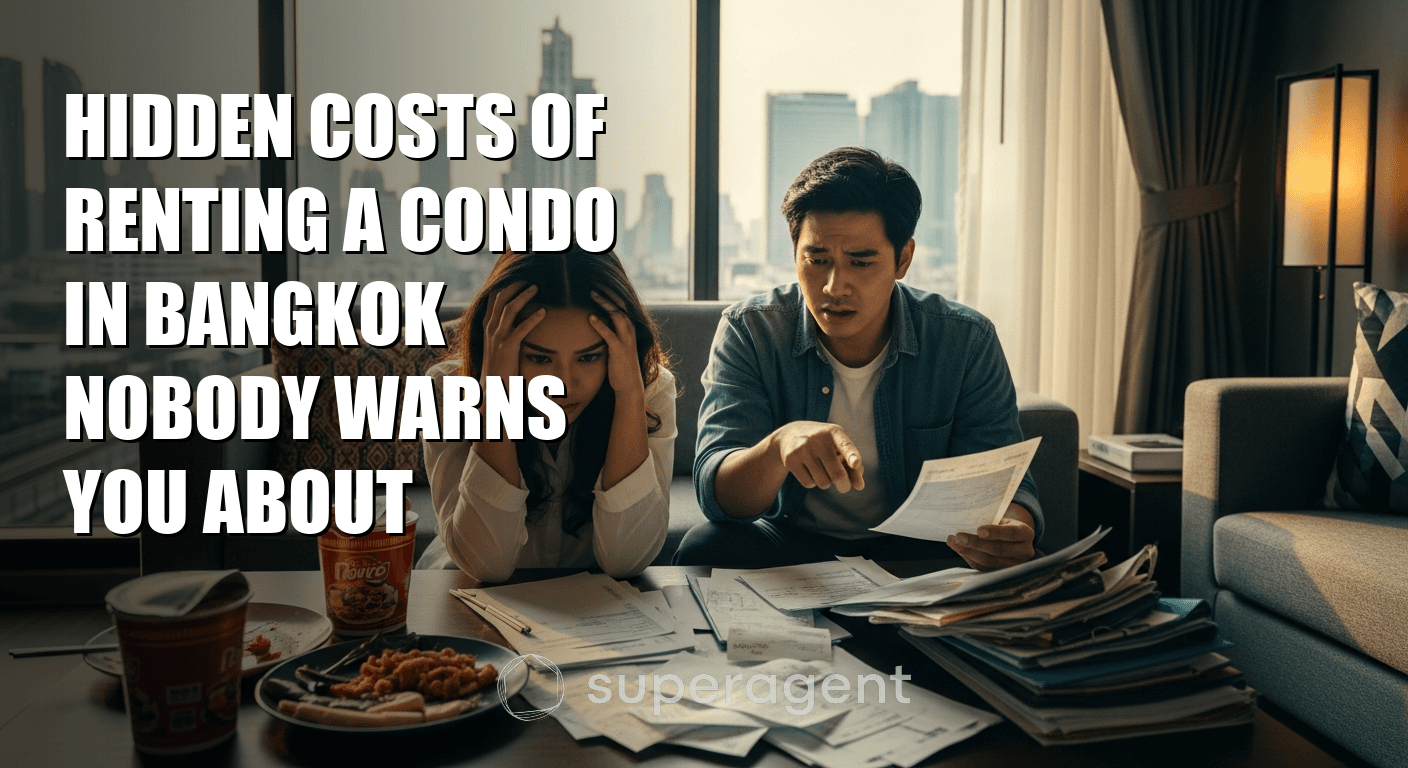 In Guides · Superagent EditorialHidden Costs of Renting a Condo in Bangkok Nobody Warns You AboutBangkok condo rent looks affordable until month one hits. Here are the real costs beyond the headline figure that catch most renters off guard.25 May 20261 min read
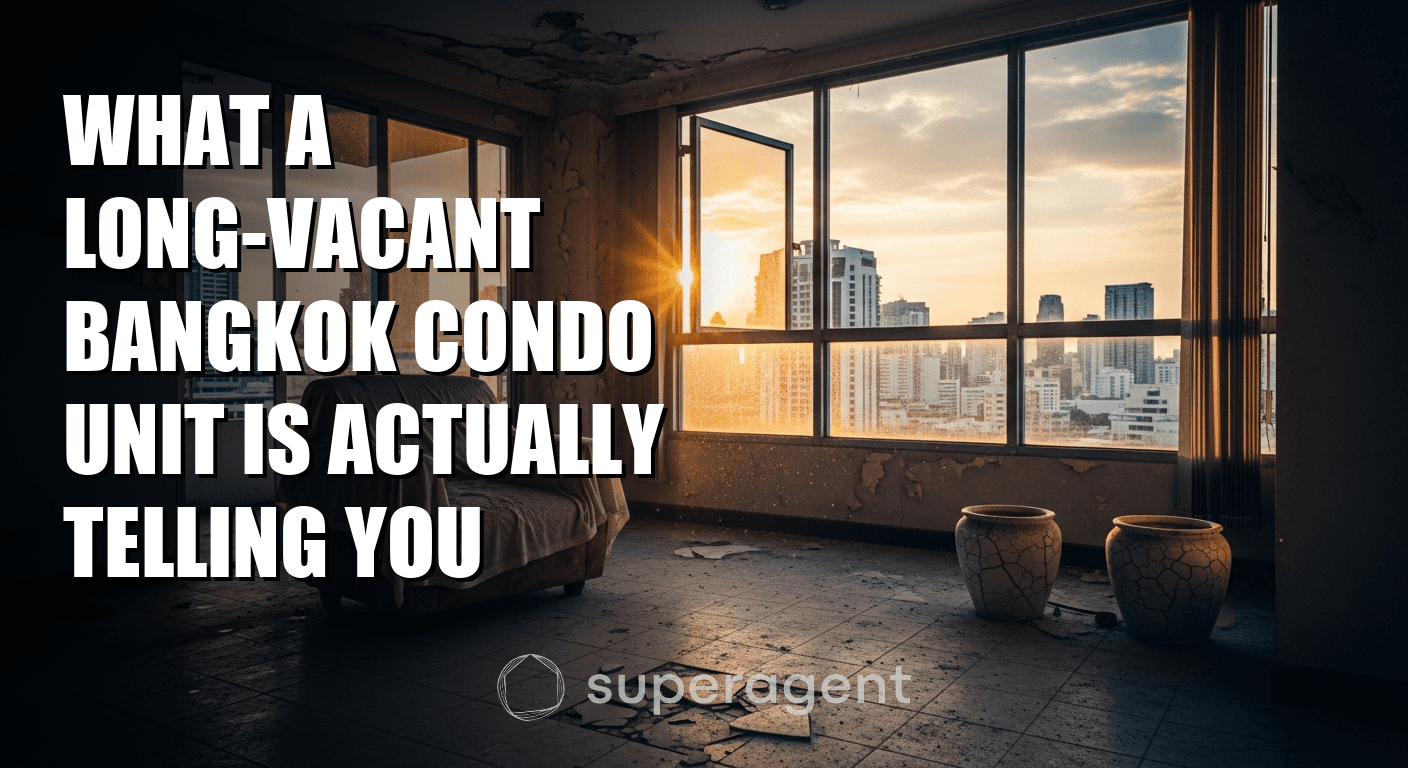 In Guides · Superagent EditorialWhat a Long-Vacant Bangkok Condo Unit Is Actually Telling YouA Bangkok condo vacant for months signals overpricing, landlord issues, or real problems. Here is how to read the signs.25 May 20261 min read
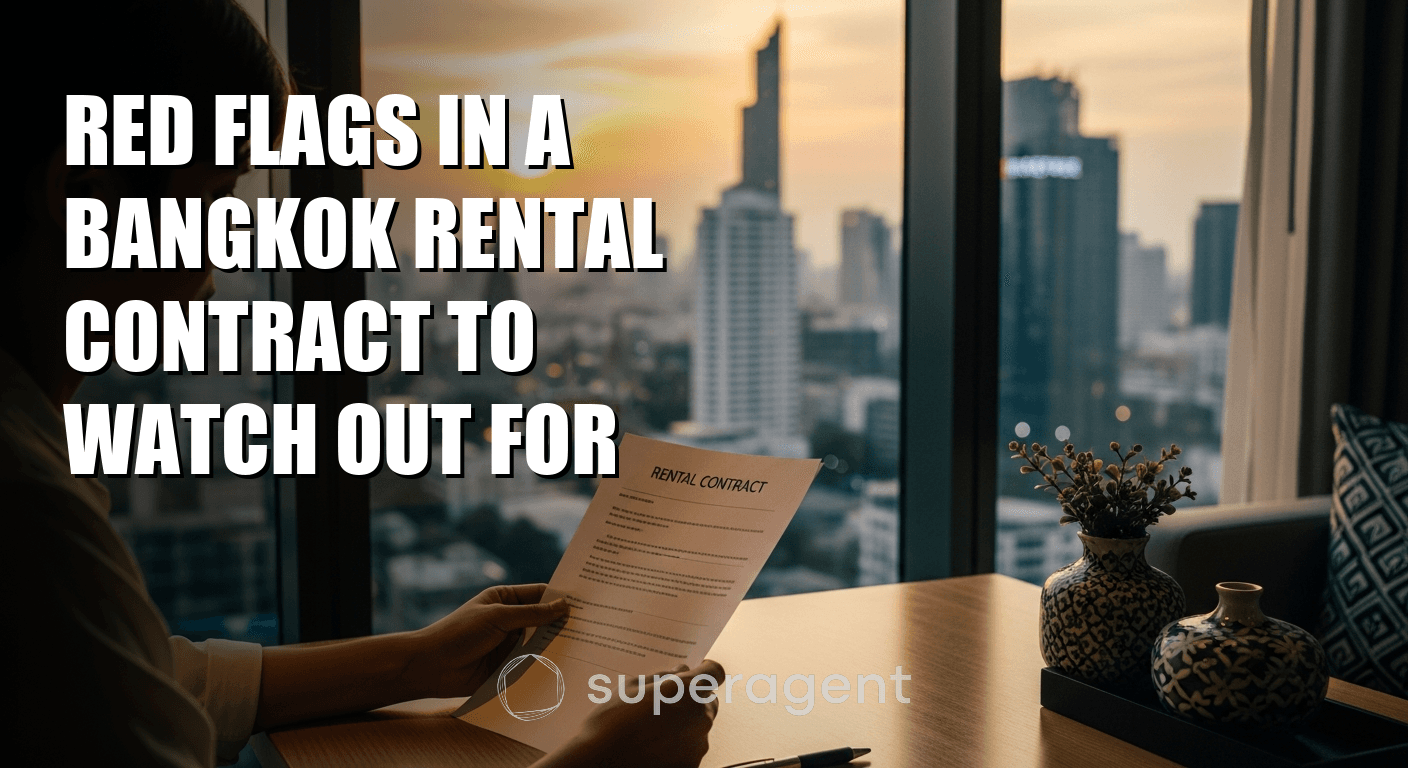 In Guides · Superagent EditorialRed Flags in a Bangkok Rental Contract to Watch Out ForBangkok rental contracts often hide risky clauses. Here are the red flags every tenant must catch before signing any lease.25 May 20261 min read
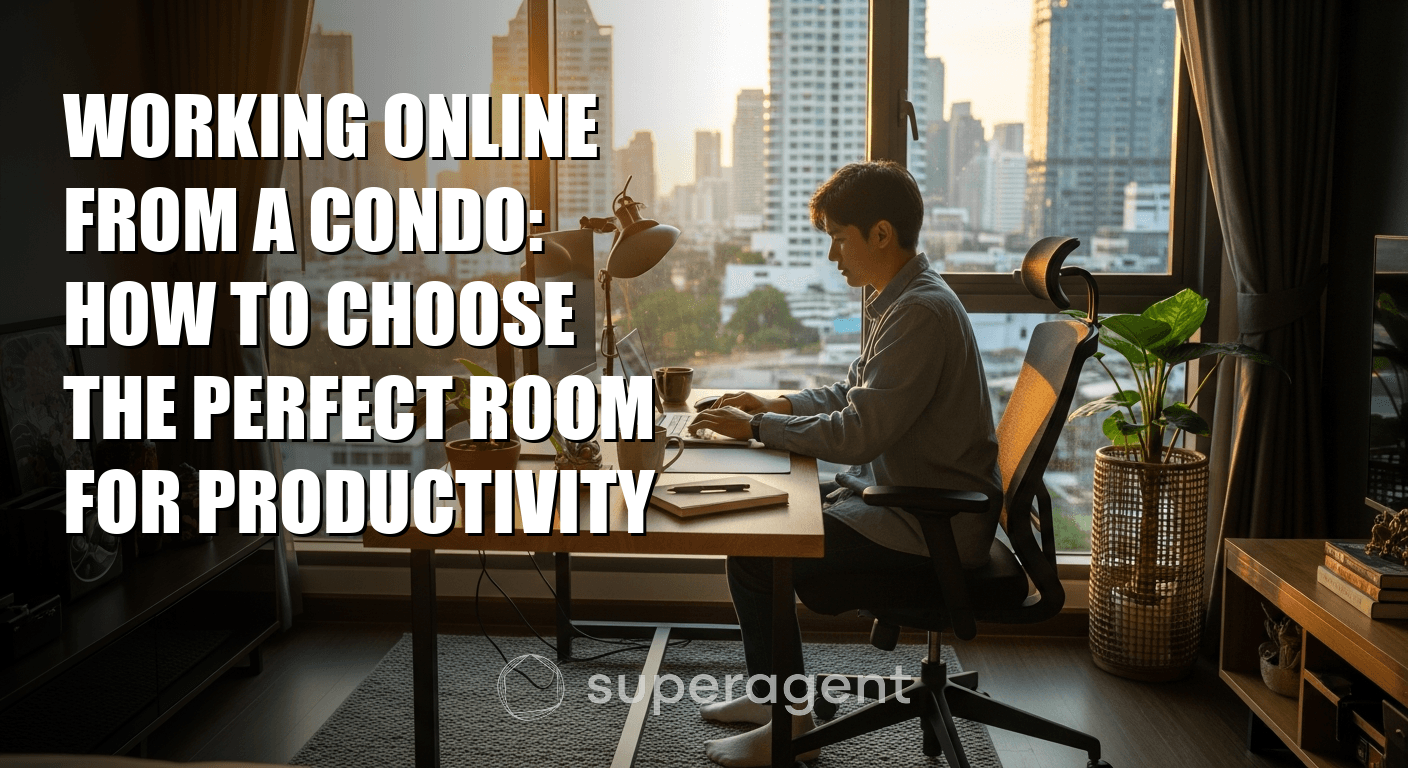 In Guides · Superagent EditorialWorking Online from a Condo: How to Choose the Perfect Room for ProductivityLearn how to choose the best condo room for working online with tips on lighting, noise, and furniture setup to maximize productivity.9 May 20261 min read