Bangkok Rental Move-In Inspection Checklist: What to Check Before You Sign and Accept the Keys
Guides
Bangkok Rental Move-In Inspection Checklist: What to Check Before You Sign and Accept the Keys
Master the rental move-in process with this essential checklist to protect your deposit and rights.
Summary
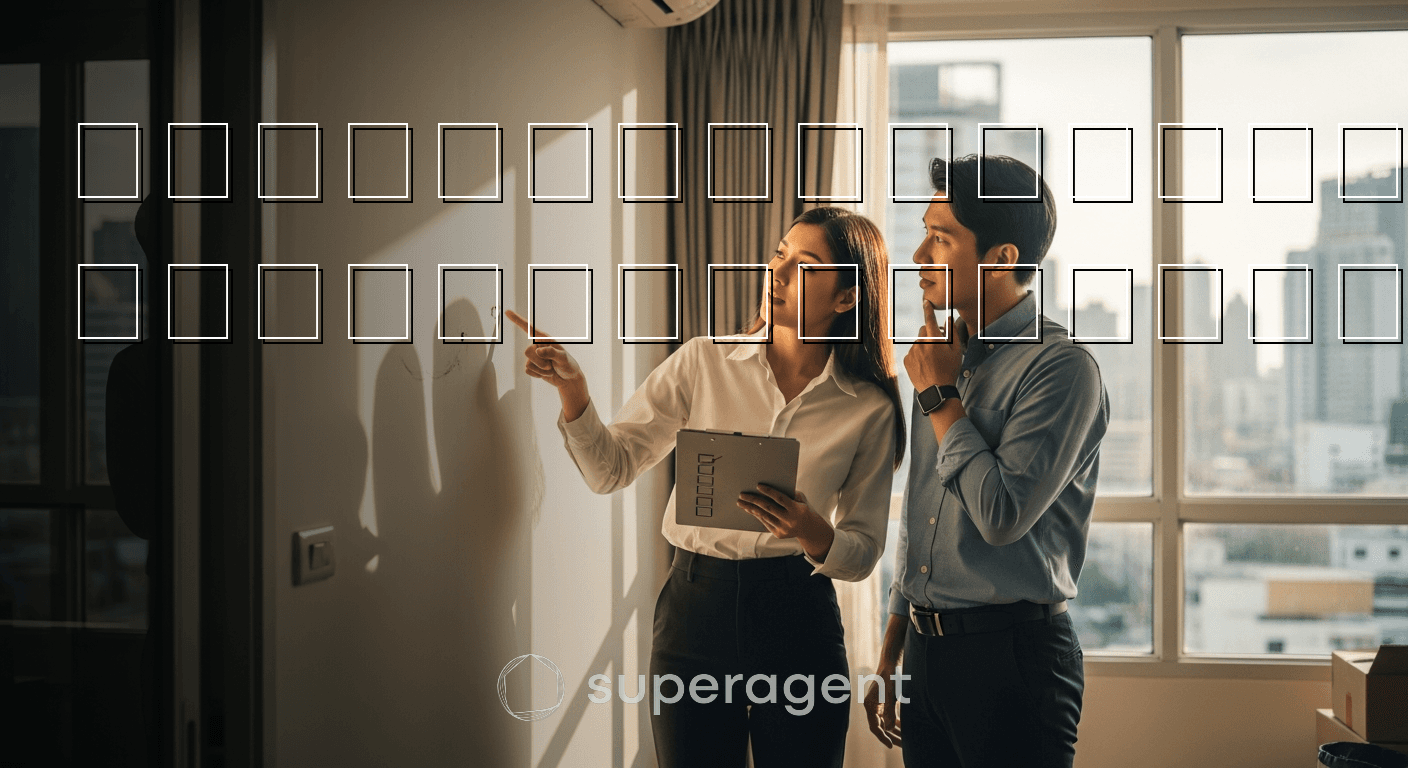
A room by room move-in inspection checklist for Bangkok condo tenants, covering walls, plumbing, electrics, AC and furniture before you sign.
You found a condo you like. The price is right, the location works, and the landlord seems reasonable. You are ready to sign. But hold on. The single most important thing standing between you and months of headaches is the move-in inspection. Skip it or rush through it, and you could end up paying for damage you did not cause. I have seen tenants in Bangkok lose 20,000 to 40,000 THB of their deposit over scratches, stains, and broken fixtures that were already there on day one. That is money you will never get back if you do not have proof. This checklist is the one I wish someone had handed me the first time I rented a condo near BTS Thong Lo.
Why the Move-In Inspection Matters More Than You Think
Here is a number that should get your attention. According to DDproperty, the average security deposit for a one-bedroom condo in central Bangkok ranges from 40,000 to 70,000 THB, typically calculated as two months of rent. That is a significant chunk of money sitting in your landlord's hands. Without a proper inspection record, you have almost zero leverage when it comes time to move out and get that deposit back.
Think of it this way. A friend of mine rented a unit at The Base Sukhumvit 77 near BTS On Nut for 15,000 THB per month. When she moved out, the landlord deducted 8,000 THB for a crack in the bathroom mirror and a stain on the sofa. She never documented those issues at check-in, so she had no proof they existed before she moved in. That is a painful and completely avoidable lesson.
The inspection is your insurance policy. Treat it like one.
Walls, Floors, Ceilings: The Big Surfaces
Start with the obvious. Walk slowly around every room and look at the walls, floors, and ceilings. You are looking for cracks, paint chips, scuff marks, water stains, peeling wallpaper, and tile damage. Use your phone flashlight to check corners and areas behind furniture. Landlords sometimes push a wardrobe against a wall to hide a damp patch.
Pay special attention to the ceiling near windows and in the bathroom. Water damage from upstairs units is extremely common in Bangkok condos, especially in older buildings along the Silom or Sathorn corridors. I once inspected a unit at Silom Suite on Soi Sala Daeng and found a brownish water stain on the bedroom ceiling that the landlord claimed was "just old paint." We documented it, and sure enough, it turned into a leak two months later. Because we had the photo, the repair was entirely on the landlord.
For floors, get down on your knees if you have to. Check laminate flooring for bubbles or warping. Check tiles for cracks or loose grout. Run your hand across the surface to feel for anything uneven.
Plumbing, Water Pressure, and Drainage
This is where most people get lazy, and it is exactly where problems hide. Turn on every faucet. Flush every toilet. Run the shower for at least 30 seconds. You want to check three things: water pressure, hot water functionality, and drainage speed.
In many older condos around areas like Ari or Ratchathewi, water pressure on higher floors can be weak, especially during evening peak hours. If you are inspecting during the afternoon, ask the landlord or juristic office about known pressure issues. Fill the kitchen sink and then release the plug to see how fast it drains. Slow drainage often means a clogged pipe that has been ignored.
Check under every sink for signs of leaking. Look for rust stains, mineral buildup around joints, and any dampness on the cabinet floor. A small drip can turn into mold within weeks in Bangkok's humidity. According to Knight Frank Thailand, maintenance issues related to plumbing are among the top three complaints from condo tenants in the city.
Do not forget the washing machine hookup if there is one. Run a quick cycle to make sure it drains properly and does not leak onto the floor.
Electrical Systems, Outlets, and Appliances
Bring your phone charger to the inspection. Plug it into every single outlet in the unit. I am not kidding. Dead outlets are more common than you would expect, and replacing or fixing them after you move in becomes a gray area of responsibility.
Test every light switch. Open the fridge and make sure it is actually cold. Turn the oven or stovetop on. Run the microwave for ten seconds. Test the air conditioning in every room that has a unit. Set it to 25 degrees Celsius and wait a few minutes to see if it actually cools down. AC units in Bangkok work hard, and poorly maintained ones will struggle, drip water, or smell musty.
A practical example: I helped a colleague check a two-bedroom unit at Life Ladprao near MRT Phahon Yothin, renting for about 28,000 THB per month. Two of the four AC units worked fine, but the bedroom unit made a grinding noise and the living room unit dripped water from the front panel. We flagged both, and the landlord had them serviced before the lease started. If we had not tested them, that would have become our problem.
Also check the circuit breaker panel. Make sure it is labeled and accessible. Know where it is in case something trips.
Furniture, Fixtures, and Built-In Items
Most condos in Bangkok come furnished or semi-furnished. Every single item that is in the unit when you move in should be listed on an inventory sheet attached to your lease agreement. If the landlord does not provide one, make your own. Open every drawer. Sit on every chair. Check the bed frame for stability. Look at the mattress for stains.
Fixtures matter too. Check curtain rods, towel racks, toilet paper holders, showerheads, door handles, and cabinet hinges. These small items are the ones landlords love to charge for at move-out, sometimes at inflated prices. A broken cabinet hinge that costs 50 THB to replace can show up as a 500 THB deduction.
Here is a comparison of common items to inspect and what they typically cost you if damage is not documented:
| Item | Common Issue | Typical Deduction if Not Documented | Time to Inspect |
|---|---|---|---|
| AC Units | Weak cooling, leaking, bad smell | 2,000 to 5,000 THB per unit | 3 to 5 minutes each |
| Walls and Paint | Scuffs, nail holes, cracks | 3,000 to 8,000 THB for repainting | 5 to 10 minutes per room |
| Bathroom Fixtures | Cracked tiles, clogged drain, broken showerhead | 1,000 to 4,000 THB | 5 minutes |
| Kitchen Appliances | Broken microwave, faulty stovetop, fridge issues | 2,000 to 10,000 THB per appliance | 3 to 5 minutes each |
| Furniture | Stained sofa, wobbly chairs, scratched table | 1,500 to 6,000 THB per item | 2 to 3 minutes each |
| Door Locks and Handles | Loose handles, sticky locks, damaged keycard reader | 500 to 3,000 THB | 1 to 2 minutes |
| Flooring | Scratches on laminate, cracked tiles, warped wood | 3,000 to 15,000 THB depending on area | 5 minutes per room |
Document Everything Like a Professional
Your phone is your best friend during a move-in inspection. Take photos and videos of every room, every wall, every appliance, and every piece of furniture. Do not just take wide shots. Get close-ups of any existing damage, no matter how small. A tiny scratch on the kitchen counter might not seem important now, but it will when your landlord tries to charge you 5,000 THB for it later.
Use a timestamp app or simply make sure your phone's date and time metadata is accurate. Some tenants I know create a shared Google Drive folder and send the link to the landlord immediately after inspection, so both parties have access to the same set of evidence. This is simple and effective.
Better yet, do the inspection together with the landlord or their agent and have them sign off on a written condition report. If they refuse to sign, that is a red flag. A legitimate landlord who maintains their property will have no problem acknowledging its current state. The Department of Land provides general guidance on lease agreements, and while Thai rental law leans heavily on contract terms, having documented evidence of the unit's condition is always in your favor.
Record a video walkthrough narrating everything you see. "Living room, left wall, small scratch near the window. Bedroom, right corner, slight water stain on ceiling." It takes ten extra minutes and can save you tens of thousands of baht.
Bonus Checks Most People Forget
A few things that do not make it onto most checklists but absolutely should. First, check the windows. Do they open and close smoothly? Do the locks work? In high-rise condos like those around BTS Chong Nonsi or MRT Lumpini, window seals can deteriorate, letting in rain during monsoon season.
Second, check the balcony drain. Clogged balcony drains lead to flooding during heavy rain, and Bangkok gets serious rain from May through October. Third, test the internet and TV connections if they are included. Ask the juristic office about the building's internet provider and whether you can install your own if needed.
Fourth, check the smoke detector and fire extinguisher if present. These are safety essentials. Finally, take a meter reading for electricity and water on the day you receive the keys. Photograph the meters. This protects you from being billed for the previous tenant's usage, which happens more often than anyone wants to admit.
The move-in inspection is not a formality. It is the single most important hour you will spend in your new condo. Take your time, be thorough, and document obsessively. Your future self, and your wallet, will thank you. If you are still searching for the right condo and want to make the process less stressful from the very start, check out superagent.co to find verified listings with transparent terms and AI-powered matching that actually understands what you need in Bangkok.
You found a condo you like. The price is right, the location works, and the landlord seems reasonable. You are ready to sign. But hold on. The single most important thing standing between you and months of headaches is the move-in inspection. Skip it or rush through it, and you could end up paying for damage you did not cause. I have seen tenants in Bangkok lose 20,000 to 40,000 THB of their deposit over scratches, stains, and broken fixtures that were already there on day one. That is money you will never get back if you do not have proof. This checklist is the one I wish someone had handed me the first time I rented a condo near BTS Thong Lo.
Why the Move-In Inspection Matters More Than You Think
Here is a number that should get your attention. According to DDproperty, the average security deposit for a one-bedroom condo in central Bangkok ranges from 40,000 to 70,000 THB, typically calculated as two months of rent. That is a significant chunk of money sitting in your landlord's hands. Without a proper inspection record, you have almost zero leverage when it comes time to move out and get that deposit back.
Think of it this way. A friend of mine rented a unit at The Base Sukhumvit 77 near BTS On Nut for 15,000 THB per month. When she moved out, the landlord deducted 8,000 THB for a crack in the bathroom mirror and a stain on the sofa. She never documented those issues at check-in, so she had no proof they existed before she moved in. That is a painful and completely avoidable lesson.
The inspection is your insurance policy. Treat it like one.
Walls, Floors, Ceilings: The Big Surfaces
Start with the obvious. Walk slowly around every room and look at the walls, floors, and ceilings. You are looking for cracks, paint chips, scuff marks, water stains, peeling wallpaper, and tile damage. Use your phone flashlight to check corners and areas behind furniture. Landlords sometimes push a wardrobe against a wall to hide a damp patch.
Pay special attention to the ceiling near windows and in the bathroom. Water damage from upstairs units is extremely common in Bangkok condos, especially in older buildings along the Silom or Sathorn corridors. I once inspected a unit at Silom Suite on Soi Sala Daeng and found a brownish water stain on the bedroom ceiling that the landlord claimed was "just old paint." We documented it, and sure enough, it turned into a leak two months later. Because we had the photo, the repair was entirely on the landlord.
For floors, get down on your knees if you have to. Check laminate flooring for bubbles or warping. Check tiles for cracks or loose grout. Run your hand across the surface to feel for anything uneven.
Plumbing, Water Pressure, and Drainage
This is where most people get lazy, and it is exactly where problems hide. Turn on every faucet. Flush every toilet. Run the shower for at least 30 seconds. You want to check three things: water pressure, hot water functionality, and drainage speed.
In many older condos around areas like Ari or Ratchathewi, water pressure on higher floors can be weak, especially during evening peak hours. If you are inspecting during the afternoon, ask the landlord or juristic office about known pressure issues. Fill the kitchen sink and then release the plug to see how fast it drains. Slow drainage often means a clogged pipe that has been ignored.
Check under every sink for signs of leaking. Look for rust stains, mineral buildup around joints, and any dampness on the cabinet floor. A small drip can turn into mold within weeks in Bangkok's humidity. According to Knight Frank Thailand, maintenance issues related to plumbing are among the top three complaints from condo tenants in the city.
Do not forget the washing machine hookup if there is one. Run a quick cycle to make sure it drains properly and does not leak onto the floor.
Electrical Systems, Outlets, and Appliances
Bring your phone charger to the inspection. Plug it into every single outlet in the unit. I am not kidding. Dead outlets are more common than you would expect, and replacing or fixing them after you move in becomes a gray area of responsibility.
Test every light switch. Open the fridge and make sure it is actually cold. Turn the oven or stovetop on. Run the microwave for ten seconds. Test the air conditioning in every room that has a unit. Set it to 25 degrees Celsius and wait a few minutes to see if it actually cools down. AC units in Bangkok work hard, and poorly maintained ones will struggle, drip water, or smell musty.
A practical example: I helped a colleague check a two-bedroom unit at Life Ladprao near MRT Phahon Yothin, renting for about 28,000 THB per month. Two of the four AC units worked fine, but the bedroom unit made a grinding noise and the living room unit dripped water from the front panel. We flagged both, and the landlord had them serviced before the lease started. If we had not tested them, that would have become our problem.
Also check the circuit breaker panel. Make sure it is labeled and accessible. Know where it is in case something trips.
Furniture, Fixtures, and Built-In Items
Most condos in Bangkok come furnished or semi-furnished. Every single item that is in the unit when you move in should be listed on an inventory sheet attached to your lease agreement. If the landlord does not provide one, make your own. Open every drawer. Sit on every chair. Check the bed frame for stability. Look at the mattress for stains.
Fixtures matter too. Check curtain rods, towel racks, toilet paper holders, showerheads, door handles, and cabinet hinges. These small items are the ones landlords love to charge for at move-out, sometimes at inflated prices. A broken cabinet hinge that costs 50 THB to replace can show up as a 500 THB deduction.
Talk to us about renting
Share your details and keep reading — we’ll get back to you.
Here is a comparison of common items to inspect and what they typically cost you if damage is not documented:
| Item | Common Issue | Typical Deduction if Not Documented | Time to Inspect |
|---|---|---|---|
| AC Units | Weak cooling, leaking, bad smell | 2,000 to 5,000 THB per unit | 3 to 5 minutes each |
| Walls and Paint | Scuffs, nail holes, cracks | 3,000 to 8,000 THB for repainting | 5 to 10 minutes per room |
| Bathroom Fixtures | Cracked tiles, clogged drain, broken showerhead | 1,000 to 4,000 THB | 5 minutes |
| Kitchen Appliances | Broken microwave, faulty stovetop, fridge issues | 2,000 to 10,000 THB per appliance | 3 to 5 minutes each |
| Furniture | Stained sofa, wobbly chairs, scratched table | 1,500 to 6,000 THB per item | 2 to 3 minutes each |
| Door Locks and Handles | Loose handles, sticky locks, damaged keycard reader | 500 to 3,000 THB | 1 to 2 minutes |
| Flooring | Scratches on laminate, cracked tiles, warped wood | 3,000 to 15,000 THB depending on area | 5 minutes per room |
Document Everything Like a Professional
Your phone is your best friend during a move-in inspection. Take photos and videos of every room, every wall, every appliance, and every piece of furniture. Do not just take wide shots. Get close-ups of any existing damage, no matter how small. A tiny scratch on the kitchen counter might not seem important now, but it will when your landlord tries to charge you 5,000 THB for it later.
Use a timestamp app or simply make sure your phone's date and time metadata is accurate. Some tenants I know create a shared Google Drive folder and send the link to the landlord immediately after inspection, so both parties have access to the same set of evidence. This is simple and effective.
Better yet, do the inspection together with the landlord or their agent and have them sign off on a written condition report. If they refuse to sign, that is a red flag. A legitimate landlord who maintains their property will have no problem acknowledging its current state. The Department of Land provides general guidance on lease agreements, and while Thai rental law leans heavily on contract terms, having documented evidence of the unit's condition is always in your favor.
Record a video walkthrough narrating everything you see. "Living room, left wall, small scratch near the window. Bedroom, right corner, slight water stain on ceiling." It takes ten extra minutes and can save you tens of thousands of baht.
Bonus Checks Most People Forget
A few things that do not make it onto most checklists but absolutely should. First, check the windows. Do they open and close smoothly? Do the locks work? In high-rise condos like those around BTS Chong Nonsi or MRT Lumpini, window seals can deteriorate, letting in rain during monsoon season.
Second, check the balcony drain. Clogged balcony drains lead to flooding during heavy rain, and Bangkok gets serious rain from May through October. Third, test the internet and TV connections if they are included. Ask the juristic office about the building's internet provider and whether you can install your own if needed.
Fourth, check the smoke detector and fire extinguisher if present. These are safety essentials. Finally, take a meter reading for electricity and water on the day you receive the keys. Photograph the meters. This protects you from being billed for the previous tenant's usage, which happens more often than anyone wants to admit.
The move-in inspection is not a formality. It is the single most important hour you will spend in your new condo. Take your time, be thorough, and document obsessively. Your future self, and your wallet, will thank you. If you are still searching for the right condo and want to make the process less stressful from the very start, check out superagent.co to find verified listings with transparent terms and AI-powered matching that actually understands what you need in Bangkok.
Share this article
Properties you may like
![[For Rent] CONDO I Aguston Sukhumvit 22 I Pet Friendly I 2 Beds I 2 Baths I Rent 55,000THB/mo](/_next/image?url=https%3A%2F%2Fstorage.googleapis.com%2Fsuperagent-web%2Fattachments%2Flistings%2F2266%2Fd3afcd25-6b79-46cb-9f1f-396acdc3dd10-955-3.jpg&w=3840&q=75)
฿55,000
2 Bed295 sqm
[For Rent] CONDO I Aguston Sukhumvit 22 I Pet Friendly I 2 Beds I 2 Baths I Rent 55,000THB/mo
Phrom Phong
Condo![[For Rent] CONDO I SUPALAI PLACE Sukhumvit 39 I 2 Beds I 2 Baths (1 Jacuzzi) I 55,555THB/mo](/_next/image?url=https%3A%2F%2Fstorage.googleapis.com%2Fsuperagent-web%2Fattachments%2Flistings%2F6743%2Fba530743-48b9-4ac6-92d3-c2247e743cf6-01-supalai-place-skv39-2b-link-heaven.jpg&w=3840&q=75)
฿55,555
2 Bed2142 sqm
[For Rent] CONDO I SUPALAI PLACE Sukhumvit 39 I 2 Beds I 2 Baths (1 Jacuzzi) I 55,555THB/mo
Phrom Phong
Condo![[For Rent] CONDO I Maru Ekkamai 2 I Pet friendly I 2 Beds I 2 Baths I 68,000 THB/mo](/_next/image?url=https%3A%2F%2Fstorage.googleapis.com%2Fsuperagent-web%2Fattachments%2Flistings%2F6602%2F9f1d8f71-ee43-435f-9a44-da16c4092c92-968-1.jpg&w=3840&q=75)
฿68,000
2 Bed360 sqm
[For Rent] CONDO I Maru Ekkamai 2 I Pet friendly I 2 Beds I 2 Baths I 68,000 THB/mo
Ekkamai
Condo![[For Rent] CONDO I Noble State 39 I 2 Beds I 2 Baths I 63,000THB/mo](/_next/image?url=https%3A%2F%2Fstorage.googleapis.com%2Fsuperagent-web%2Fattachments%2Flistings%2F2237%2F60eb58f3-eae5-41ed-a80b-406e004f05d8-940-1.jpg&w=3840&q=75)
฿63,000
2 Bed260 sqm
[For Rent] CONDO I Noble State 39 I 2 Beds I 2 Baths I 63,000THB/mo
Phrom Phong
Condo![[For Rent] CONDO I Rhythm Sukhumvit 36-38 I 2 Beds I 2 Baths I 38,999THB/mo](/_next/image?url=https%3A%2F%2Fstorage.googleapis.com%2Fsuperagent-web%2Fattachments%2Flistings%2F1788%2F942a0215-4128-4c2c-a064-f607e84e7aa4-656-2.jpg&w=3840&q=75)
฿38,999
2 Bed256 sqm
[For Rent] CONDO I Rhythm Sukhumvit 36-38 I 2 Beds I 2 Baths I 38,999THB/mo
Thonglor
Condo![[For Rent] CONDO I CLOUD Thonglor-Phetchaburi I 1 Bed I 1 Bath I 22,500THB/mo](/_next/image?url=https%3A%2F%2Fstorage.googleapis.com%2Fsuperagent-web%2Fattachments%2Flistings%2F6742%2F6cef5361-0dac-4dba-98f1-b0d187559c84-1118-1.jpg&w=3840&q=75)
฿22,500
1 Bed132 sqm
[For Rent] CONDO I CLOUD Thonglor-Phetchaburi I 1 Bed I 1 Bath I 22,500THB/mo
Thonglor
Condo![[For Rent] CONDO I City Smart Sukhumvit 18 I 3 Beds I 3 Baths I 65,000mo/THB](/_next/image?url=https%3A%2F%2Fstorage.googleapis.com%2Fsuperagent-web%2Fattachments%2Flistings%2F6741%2Fd371c89d-a913-42c4-a673-e540afae4f46-1116-1.jpg&w=3840&q=75)
฿65,000
3 Bed3125 sqm
[For Rent] CONDO I City Smart Sukhumvit 18 I 3 Beds I 3 Baths I 65,000mo/THB
Condo![[For Rent] CONDO I The Coast Bangkok I 1 Bed I 1 Bath I 20,000mo/THB](/_next/image?url=https%3A%2F%2Fstorage.googleapis.com%2Fsuperagent-web%2Fattachments%2Flistings%2F6740%2F498477ce-4ffa-4e4c-ab08-0e565d9c4bbe-1115-3.jpg&w=3840&q=75)
฿20,000
1 Bed146 sqm
[For Rent] CONDO I The Coast Bangkok I 1 Bed I 1 Bath I 20,000mo/THB
Bang Na
Condo![[For Rent] CONDO I IDEO Sukhumvit-RAMA 4 I 2 Beds I 2 Baths I 55,000mo/THB](/_next/image?url=https%3A%2F%2Fstorage.googleapis.com%2Fsuperagent-web%2Fattachments%2Flistings%2F6739%2F15df221d-5b8e-497c-b7ce-a6b9b6412cab-1113-1.jpg&w=3840&q=75)
฿55,000
2 Bed265 sqm
[For Rent] CONDO I IDEO Sukhumvit-RAMA 4 I 2 Beds I 2 Baths I 55,000mo/THB
Phra Khanong
Condo![[For Rent] CONDO I Downtown 49 I Pet Friendly I 1 Bed I 1 Bath I 23,000mo/THB](/_next/image?url=https%3A%2F%2Fstorage.googleapis.com%2Fsuperagent-web%2Fattachments%2Flistings%2F6738%2F11cf2ffe-1f01-4ccc-991c-2ad608f1ba73-1112-1.jpg&w=3840&q=75)
฿23,000
1 Bed135 sqm
[For Rent] CONDO I Downtown 49 I Pet Friendly I 1 Bed I 1 Bath I 23,000mo/THB
Thonglor
CondoMore like this
 In Guides · Superagent EditorialHidden Costs of Renting a Condo in Bangkok Nobody Warns You AboutBangkok condo rent looks affordable until month one hits. Here are the real costs beyond the headline figure that catch most renters off guard.25 May 20261 min read
 In Guides · Superagent EditorialWhat a Long-Vacant Bangkok Condo Unit Is Actually Telling YouA Bangkok condo vacant for months signals overpricing, landlord issues, or real problems. Here is how to read the signs.25 May 20261 min read
 In Guides · Superagent EditorialRed Flags in a Bangkok Rental Contract to Watch Out ForBangkok rental contracts often hide risky clauses. Here are the red flags every tenant must catch before signing any lease.25 May 20261 min read
 In Guides · Superagent EditorialWorking Online from a Condo: How to Choose the Perfect Room for ProductivityLearn how to choose the best condo room for working online with tips on lighting, noise, and furniture setup to maximize productivity.9 May 20261 min read