Landlord Refuses to Return Your Security Deposit in Bangkok: Your Legal Rights and How to Fight Back
Guides
Landlord Refuses to Return Your Security Deposit in Bangkok: Your Legal Rights and How to Fight Back
Learn proven strategies to recover your rental deposit from uncooperative Bangkok landlords.
Summary
Bangkok landlord keeping your security deposit? Learn your rights under Thai law, the OCPB complaint route, Small Claims Court and prevention tips.
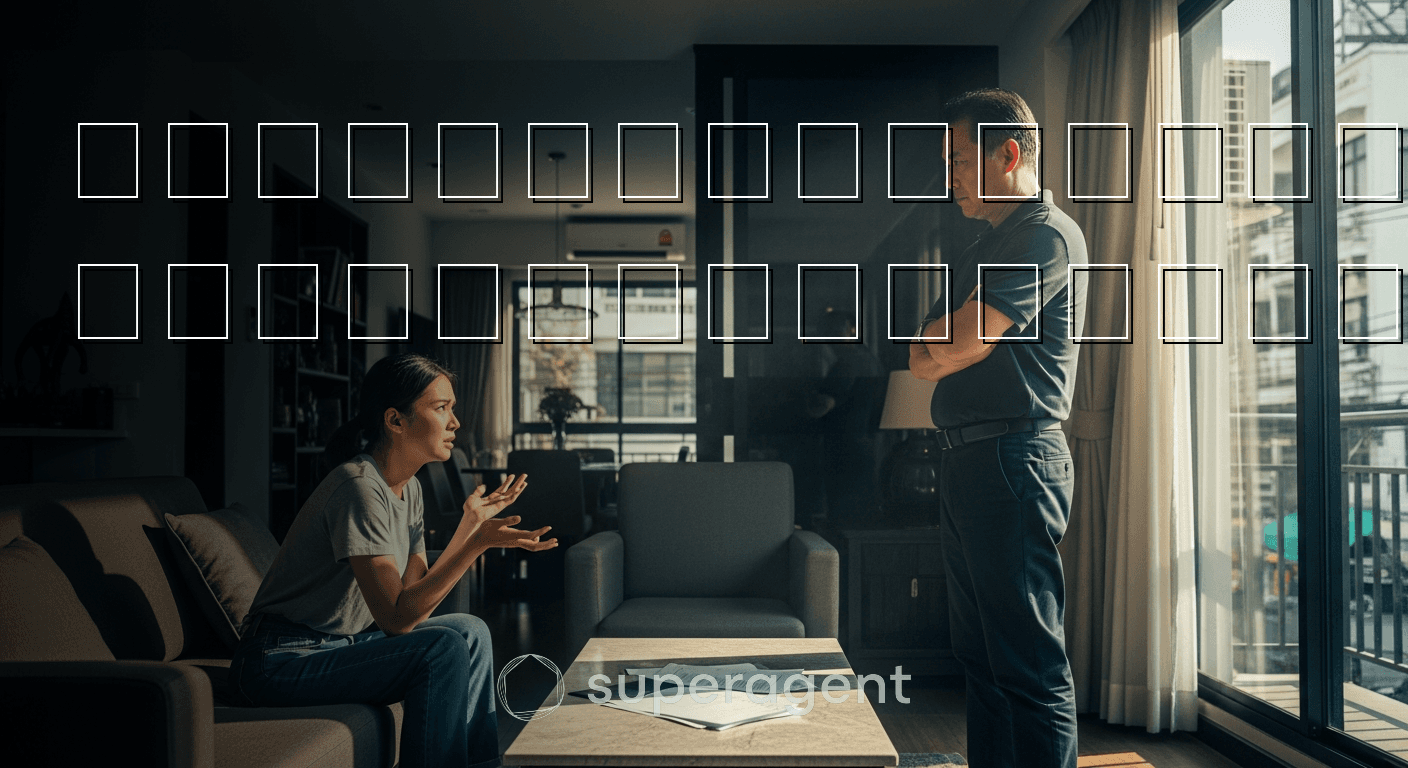
You moved out on time, cleaned the place until it sparkled, and handed back all the keys. Then your landlord goes quiet. No call, no transfer, no explanation. Two weeks pass. Then a month. You start to realize your deposit might not be coming back. If you have ever rented a condo in Bangkok, there is a good chance you know this feeling. Deposit disputes are one of the most common headaches for renters across the city, from studios near BTS On Nut to two-bedroom units in Thonglor. The good news is you are not powerless. Let us walk through exactly what you can do when your landlord refuses to return your security deposit.
Understanding Your Legal Rights as a Tenant in Bangkok
First things first. Thai law is actually on your side more than most people think. Under the Thai Civil and Commercial Code, a security deposit belongs to the tenant and must be returned when the lease ends, minus any legitimate deductions for actual damages or unpaid bills. There is no legal magic trick that lets a landlord pocket your money just because they feel like it.
Since 2018, the Land Department has also enforced rules under the Residential Lease Act (Royal Gazette, Vol. 135) that cap security deposits at one month's rent for residential leases. This means if you are renting a one-bedroom condo near BTS Ari for 18,000 THB per month and your landlord collected two months as deposit, they may have already been overcharging. This is useful information to have in your back pocket during any dispute.
According to survey data from multiple property platforms, roughly 30 to 40 percent of tenants in Bangkok report some form of deposit dispute at the end of their lease. That is not a small number. It tells you this is a systemic issue, not just bad luck.
Common Excuses Landlords Use to Keep Your Deposit
Let us say you rented a unit at a well-known condo on Sukhumvit Soi 24, paying 25,000 THB per month with a one-month deposit. You move out, and your landlord sends you a LINE message saying they need to deduct for "wear and tear" and "deep cleaning." Here is the thing. Normal wear and tear is not a valid deduction under Thai law. Paint fading slightly over two years, minor scuff marks on the floor, a bit of discoloration on the curtains. These are expected results of someone living in the unit.
Some of the most common excuses include claims of damage that already existed when you moved in, inflated cleaning costs that far exceed market rates, deductions for appliance depreciation, or simply ghosting you and hoping you give up and leave the country. One expat I know rented near MRT Phra Ram 9 and was told his 15,000 THB deposit would cover "repainting the entire unit." The quote the landlord provided was from a friend's company and was three times the going rate. Classic move.
The lesson here is simple. Document everything. And if you have not moved out yet, take photos and videos of every corner of the unit on the day you hand back the keys.
Step by Step: What to Do When Your Deposit Is Not Returned
So your landlord is ghosting you or making unreasonable deductions. Here is your action plan, broken down into manageable steps that actually work in Bangkok.
Step one: send a formal written request. Do this via email or registered mail, not just LINE. State clearly that you are requesting the return of your deposit within 7 days. Reference your lease agreement and the condition of the unit at move-out. Keep the tone firm but polite. This creates a paper trail.
Step two: file a complaint with the Office of the Consumer Protection Board (OCPB). You can visit their office or submit a complaint through their website. This is a free government service, and landlords tend to take it seriously because it can escalate to legal proceedings. The OCPB handles thousands of rental disputes every year.
Step three: consider the Small Claims Court. For disputes involving amounts under 300,000 THB, you can file at the local court without needing a lawyer. The filing fee is minimal, usually a few hundred baht. For example, if your deposit was 20,000 THB on a studio near BTS Bearing, this route is absolutely worth the effort. The court process is designed to be accessible, and many cases settle before even reaching a hearing because the landlord realizes you are serious.
Step four: if you are an expat and leaving Thailand soon, you can authorize someone to act on your behalf through a power of attorney. This keeps the pressure on even after you have left.
How to Protect Yourself Before You Even Move In
Prevention is always better than chasing money after the fact. Here is what smart renters in Bangkok do from day one. Take a detailed photo inventory of the unit before you move any furniture in. Open every cabinet, check behind doors, test every appliance. Record everything in a shared Google Drive folder and email it to your landlord so there is a timestamped record both parties can access.
A friend of mine rented a two-bedroom condo at Life Asoke Hype near MRT Phetchaburi for 30,000 THB per month. On move-in day, she noticed a crack in the bathroom mirror and a stain on the sofa. She photographed both, emailed the landlord, and got written confirmation that these were pre-existing issues. When she moved out 18 months later, the landlord tried to deduct for both items. She pulled up the email chain, and the full deposit was returned within a week.
Also, read your lease carefully. Look for clauses about cleaning fees, early termination penalties, and what counts as "damage." If something seems unfair, negotiate before you sign. A good lease protects both parties. The Thai Revenue Department also requires landlords to declare rental income, so a landlord operating fully above board should have no problem providing proper documentation.
Comparing Your Options When a Dispute Arises
Not every situation calls for the same response. Here is a practical comparison of your main options when dealing with a deposit dispute in Bangkok.
| Option | Cost | Time to Resolution | Best For | Effectiveness |
|---|---|---|---|---|
| Direct Negotiation via Email or LINE | Free | 1 to 2 weeks | Reasonable landlords, small deductions | Moderate |
| Complaint to OCPB | Free | 1 to 3 months | Landlords who ignore direct requests | High |
| Small Claims Court | 200 to 1,000 THB filing fee | 2 to 6 months | Deposits under 300,000 THB | Very High |
| Hiring a Lawyer | 10,000 to 50,000+ THB | 3 to 12 months | Large deposits, complex disputes | Very High |
| Mediation through Building Juristic Office | Free | 1 to 4 weeks | Condos with active juristic management | Moderate |
One option many people overlook is going through the condo's juristic office. The juristic person or building management often has a relationship with the owner and can apply social pressure. This works especially well in large, well-managed buildings like those along BTS Thong Lo or BTS Ekkamai where the management has a reputation to protect.
What If Your Landlord Is an Agent or a Company?
Sometimes your landlord is not an individual but a property management company or a subletting agent. This adds a layer of complexity but can also work in your favor. Companies generally have more to lose from legal complaints and negative reviews than individuals do.
For instance, if you rented through a management company handling units at Ashton Asoke near BTS Asoke and MRT Sukhumvit, and your deposit was 35,000 THB, the company likely manages dozens of units in the same building. A formal complaint or even a well-written Google review can motivate them to settle quickly. According to CBRE Thailand, the average rent for a one-bedroom condo in central Bangkok ranges from 25,000 to 45,000 THB per month, which means deposits in the 25,000 to 45,000 THB range are typical. That is real money worth fighting for.
If the company refuses to engage, your legal options remain exactly the same as with an individual landlord. File with the OCPB or go to Small Claims Court. The process does not change based on who is on the other side of the dispute.
The Emotional Side of Deposit Disputes
Let us be real for a moment. Losing a deposit is not just about the money. It is about feeling taken advantage of, especially when you are far from home, renting in a country where you might not speak the language fluently, and dealing with a system you do not fully understand. Many expats simply walk away because the stress does not seem worth it. And landlords who pull these tricks are counting on exactly that reaction.
But here is what I have learned from years of renting in Bangkok. Standing up for yourself works. Most landlords will fold when they see a formal complaint or a court filing. They are not prepared for a tenant who knows their rights and follows through. Even if the amount is just 10,000 or 15,000 THB, the principle matters. And every tenant who fights back makes it slightly harder for the next landlord to try the same thing.
Whether you are renting a cozy studio near BTS Saphan Khwai for 12,000 THB or a luxury two-bedroom near Lumpini Park for 60,000 THB, your deposit is your money. Protect it from the start, and do not be afraid to push back when someone tries to take it from you. If you are currently searching for your next condo in Bangkok and want to avoid these problems from the beginning, check out superagent.co to find verified listings with transparent lease terms, so you can move in with confidence and move out with your full deposit in hand.
You moved out on time, cleaned the place until it sparkled, and handed back all the keys. Then your landlord goes quiet. No call, no transfer, no explanation. Two weeks pass. Then a month. You start to realize your deposit might not be coming back. If you have ever rented a condo in Bangkok, there is a good chance you know this feeling. Deposit disputes are one of the most common headaches for renters across the city, from studios near BTS On Nut to two-bedroom units in Thonglor. The good news is you are not powerless. Let us walk through exactly what you can do when your landlord refuses to return your security deposit.
Understanding Your Legal Rights as a Tenant in Bangkok
First things first. Thai law is actually on your side more than most people think. Under the Thai Civil and Commercial Code, a security deposit belongs to the tenant and must be returned when the lease ends, minus any legitimate deductions for actual damages or unpaid bills. There is no legal magic trick that lets a landlord pocket your money just because they feel like it.
Since 2018, the Land Department has also enforced rules under the Residential Lease Act (Royal Gazette, Vol. 135) that cap security deposits at one month's rent for residential leases. This means if you are renting a one-bedroom condo near BTS Ari for 18,000 THB per month and your landlord collected two months as deposit, they may have already been overcharging. This is useful information to have in your back pocket during any dispute.
According to survey data from multiple property platforms, roughly 30 to 40 percent of tenants in Bangkok report some form of deposit dispute at the end of their lease. That is not a small number. It tells you this is a systemic issue, not just bad luck.
Common Excuses Landlords Use to Keep Your Deposit
Let us say you rented a unit at a well-known condo on Sukhumvit Soi 24, paying 25,000 THB per month with a one-month deposit. You move out, and your landlord sends you a LINE message saying they need to deduct for "wear and tear" and "deep cleaning." Here is the thing. Normal wear and tear is not a valid deduction under Thai law. Paint fading slightly over two years, minor scuff marks on the floor, a bit of discoloration on the curtains. These are expected results of someone living in the unit.
Some of the most common excuses include claims of damage that already existed when you moved in, inflated cleaning costs that far exceed market rates, deductions for appliance depreciation, or simply ghosting you and hoping you give up and leave the country. One expat I know rented near MRT Phra Ram 9 and was told his 15,000 THB deposit would cover "repainting the entire unit." The quote the landlord provided was from a friend's company and was three times the going rate. Classic move.
The lesson here is simple. Document everything. And if you have not moved out yet, take photos and videos of every corner of the unit on the day you hand back the keys.
Step by Step: What to Do When Your Deposit Is Not Returned
So your landlord is ghosting you or making unreasonable deductions. Here is your action plan, broken down into manageable steps that actually work in Bangkok.
Step one: send a formal written request. Do this via email or registered mail, not just LINE. State clearly that you are requesting the return of your deposit within 7 days. Reference your lease agreement and the condition of the unit at move-out. Keep the tone firm but polite. This creates a paper trail.
Step two: file a complaint with the Office of the Consumer Protection Board (OCPB). You can visit their office or submit a complaint through their website. This is a free government service, and landlords tend to take it seriously because it can escalate to legal proceedings. The OCPB handles thousands of rental disputes every year.
Step three: consider the Small Claims Court. For disputes involving amounts under 300,000 THB, you can file at the local court without needing a lawyer. The filing fee is minimal, usually a few hundred baht. For example, if your deposit was 20,000 THB on a studio near BTS Bearing, this route is absolutely worth the effort. The court process is designed to be accessible, and many cases settle before even reaching a hearing because the landlord realizes you are serious.
Step four: if you are an expat and leaving Thailand soon, you can authorize someone to act on your behalf through a power of attorney. This keeps the pressure on even after you have left.
How to Protect Yourself Before You Even Move In
Prevention is always better than chasing money after the fact. Here is what smart renters in Bangkok do from day one. Take a detailed photo inventory of the unit before you move any furniture in. Open every cabinet, check behind doors, test every appliance. Record everything in a shared Google Drive folder and email it to your landlord so there is a timestamped record both parties can access.
A friend of mine rented a two-bedroom condo at Life Asoke Hype near MRT Phetchaburi for 30,000 THB per month. On move-in day, she noticed a crack in the bathroom mirror and a stain on the sofa. She photographed both, emailed the landlord, and got written confirmation that these were pre-existing issues. When she moved out 18 months later, the landlord tried to deduct for both items. She pulled up the email chain, and the full deposit was returned within a week.
Also, read your lease carefully. Look for clauses about cleaning fees, early termination penalties, and what counts as "damage." If something seems unfair, negotiate before you sign. A good lease protects both parties. The Thai Revenue Department also requires landlords to declare rental income, so a landlord operating fully above board should have no problem providing proper documentation.
Talk to us about renting
Share your details and keep reading — we’ll get back to you.
Comparing Your Options When a Dispute Arises
Not every situation calls for the same response. Here is a practical comparison of your main options when dealing with a deposit dispute in Bangkok.
| Option | Cost | Time to Resolution | Best For | Effectiveness |
|---|---|---|---|---|
| Direct Negotiation via Email or LINE | Free | 1 to 2 weeks | Reasonable landlords, small deductions | Moderate |
| Complaint to OCPB | Free | 1 to 3 months | Landlords who ignore direct requests | High |
| Small Claims Court | 200 to 1,000 THB filing fee | 2 to 6 months | Deposits under 300,000 THB | Very High |
| Hiring a Lawyer | 10,000 to 50,000+ THB | 3 to 12 months | Large deposits, complex disputes | Very High |
| Mediation through Building Juristic Office | Free | 1 to 4 weeks | Condos with active juristic management | Moderate |
One option many people overlook is going through the condo's juristic office. The juristic person or building management often has a relationship with the owner and can apply social pressure. This works especially well in large, well-managed buildings like those along BTS Thong Lo or BTS Ekkamai where the management has a reputation to protect.
What If Your Landlord Is an Agent or a Company?
Sometimes your landlord is not an individual but a property management company or a subletting agent. This adds a layer of complexity but can also work in your favor. Companies generally have more to lose from legal complaints and negative reviews than individuals do.
For instance, if you rented through a management company handling units at Ashton Asoke near BTS Asoke and MRT Sukhumvit, and your deposit was 35,000 THB, the company likely manages dozens of units in the same building. A formal complaint or even a well-written Google review can motivate them to settle quickly. According to CBRE Thailand, the average rent for a one-bedroom condo in central Bangkok ranges from 25,000 to 45,000 THB per month, which means deposits in the 25,000 to 45,000 THB range are typical. That is real money worth fighting for.
If the company refuses to engage, your legal options remain exactly the same as with an individual landlord. File with the OCPB or go to Small Claims Court. The process does not change based on who is on the other side of the dispute.
The Emotional Side of Deposit Disputes
Let us be real for a moment. Losing a deposit is not just about the money. It is about feeling taken advantage of, especially when you are far from home, renting in a country where you might not speak the language fluently, and dealing with a system you do not fully understand. Many expats simply walk away because the stress does not seem worth it. And landlords who pull these tricks are counting on exactly that reaction.
But here is what I have learned from years of renting in Bangkok. Standing up for yourself works. Most landlords will fold when they see a formal complaint or a court filing. They are not prepared for a tenant who knows their rights and follows through. Even if the amount is just 10,000 or 15,000 THB, the principle matters. And every tenant who fights back makes it slightly harder for the next landlord to try the same thing.
Whether you are renting a cozy studio near BTS Saphan Khwai for 12,000 THB or a luxury two-bedroom near Lumpini Park for 60,000 THB, your deposit is your money. Protect it from the start, and do not be afraid to push back when someone tries to take it from you. If you are currently searching for your next condo in Bangkok and want to avoid these problems from the beginning, check out superagent.co to find verified listings with transparent lease terms, so you can move in with confidence and move out with your full deposit in hand.
Share this article
Properties you may like
![[For Rent] CONDO I Aguston Sukhumvit 22 I Pet Friendly I 2 Beds I 2 Baths I Rent 55,000THB/mo](/_next/image?url=https%3A%2F%2Fstorage.googleapis.com%2Fsuperagent-web%2Fattachments%2Flistings%2F2266%2Fd3afcd25-6b79-46cb-9f1f-396acdc3dd10-955-3.jpg&w=3840&q=75)
฿55,000
2 Bed295 sqm
[For Rent] CONDO I Aguston Sukhumvit 22 I Pet Friendly I 2 Beds I 2 Baths I Rent 55,000THB/mo
Phrom Phong
Condo![[For Rent] CONDO I SUPALAI PLACE Sukhumvit 39 I 2 Beds I 2 Baths (1 Jacuzzi) I 55,555THB/mo](/_next/image?url=https%3A%2F%2Fstorage.googleapis.com%2Fsuperagent-web%2Fattachments%2Flistings%2F6743%2Fba530743-48b9-4ac6-92d3-c2247e743cf6-01-supalai-place-skv39-2b-link-heaven.jpg&w=3840&q=75)
฿55,555
2 Bed2142 sqm
[For Rent] CONDO I SUPALAI PLACE Sukhumvit 39 I 2 Beds I 2 Baths (1 Jacuzzi) I 55,555THB/mo
Phrom Phong
Condo![[For Rent] CONDO I Maru Ekkamai 2 I Pet friendly I 2 Beds I 2 Baths I 68,000 THB/mo](/_next/image?url=https%3A%2F%2Fstorage.googleapis.com%2Fsuperagent-web%2Fattachments%2Flistings%2F6602%2F9f1d8f71-ee43-435f-9a44-da16c4092c92-968-1.jpg&w=3840&q=75)
฿68,000
2 Bed360 sqm
[For Rent] CONDO I Maru Ekkamai 2 I Pet friendly I 2 Beds I 2 Baths I 68,000 THB/mo
Ekkamai
Condo![[For Rent] CONDO I Noble State 39 I 2 Beds I 2 Baths I 63,000THB/mo](/_next/image?url=https%3A%2F%2Fstorage.googleapis.com%2Fsuperagent-web%2Fattachments%2Flistings%2F2237%2F60eb58f3-eae5-41ed-a80b-406e004f05d8-940-1.jpg&w=3840&q=75)
฿63,000
2 Bed260 sqm
[For Rent] CONDO I Noble State 39 I 2 Beds I 2 Baths I 63,000THB/mo
Phrom Phong
Condo![[For Rent] CONDO I Rhythm Sukhumvit 36-38 I 2 Beds I 2 Baths I 38,999THB/mo](/_next/image?url=https%3A%2F%2Fstorage.googleapis.com%2Fsuperagent-web%2Fattachments%2Flistings%2F1788%2F942a0215-4128-4c2c-a064-f607e84e7aa4-656-2.jpg&w=3840&q=75)
฿38,999
2 Bed256 sqm
[For Rent] CONDO I Rhythm Sukhumvit 36-38 I 2 Beds I 2 Baths I 38,999THB/mo
Thonglor
Condo![[For Rent] CONDO I CLOUD Thonglor-Phetchaburi I 1 Bed I 1 Bath I 22,500THB/mo](/_next/image?url=https%3A%2F%2Fstorage.googleapis.com%2Fsuperagent-web%2Fattachments%2Flistings%2F6742%2F6cef5361-0dac-4dba-98f1-b0d187559c84-1118-1.jpg&w=3840&q=75)
฿22,500
1 Bed132 sqm
[For Rent] CONDO I CLOUD Thonglor-Phetchaburi I 1 Bed I 1 Bath I 22,500THB/mo
Thonglor
Condo![[For Rent] CONDO I City Smart Sukhumvit 18 I 3 Beds I 3 Baths I 65,000mo/THB](/_next/image?url=https%3A%2F%2Fstorage.googleapis.com%2Fsuperagent-web%2Fattachments%2Flistings%2F6741%2Fd371c89d-a913-42c4-a673-e540afae4f46-1116-1.jpg&w=3840&q=75)
฿65,000
3 Bed3125 sqm
[For Rent] CONDO I City Smart Sukhumvit 18 I 3 Beds I 3 Baths I 65,000mo/THB
Condo![[For Rent] CONDO I The Coast Bangkok I 1 Bed I 1 Bath I 20,000mo/THB](/_next/image?url=https%3A%2F%2Fstorage.googleapis.com%2Fsuperagent-web%2Fattachments%2Flistings%2F6740%2F498477ce-4ffa-4e4c-ab08-0e565d9c4bbe-1115-3.jpg&w=3840&q=75)
฿20,000
1 Bed146 sqm
[For Rent] CONDO I The Coast Bangkok I 1 Bed I 1 Bath I 20,000mo/THB
Bang Na
Condo![[For Rent] CONDO I IDEO Sukhumvit-RAMA 4 I 2 Beds I 2 Baths I 55,000mo/THB](/_next/image?url=https%3A%2F%2Fstorage.googleapis.com%2Fsuperagent-web%2Fattachments%2Flistings%2F6739%2F15df221d-5b8e-497c-b7ce-a6b9b6412cab-1113-1.jpg&w=3840&q=75)
฿55,000
2 Bed265 sqm
[For Rent] CONDO I IDEO Sukhumvit-RAMA 4 I 2 Beds I 2 Baths I 55,000mo/THB
Phra Khanong
Condo![[For Rent] CONDO I Downtown 49 I Pet Friendly I 1 Bed I 1 Bath I 23,000mo/THB](/_next/image?url=https%3A%2F%2Fstorage.googleapis.com%2Fsuperagent-web%2Fattachments%2Flistings%2F6738%2F11cf2ffe-1f01-4ccc-991c-2ad608f1ba73-1112-1.jpg&w=3840&q=75)
฿23,000
1 Bed135 sqm
[For Rent] CONDO I Downtown 49 I Pet Friendly I 1 Bed I 1 Bath I 23,000mo/THB
Thonglor
CondoMore like this
 In Guides · Superagent EditorialHidden Costs of Renting a Condo in Bangkok Nobody Warns You AboutBangkok condo rent looks affordable until month one hits. Here are the real costs beyond the headline figure that catch most renters off guard.25 May 20261 min read
 In Guides · Superagent EditorialWhat a Long-Vacant Bangkok Condo Unit Is Actually Telling YouA Bangkok condo vacant for months signals overpricing, landlord issues, or real problems. Here is how to read the signs.25 May 20261 min read
 In Guides · Superagent EditorialRed Flags in a Bangkok Rental Contract to Watch Out ForBangkok rental contracts often hide risky clauses. Here are the red flags every tenant must catch before signing any lease.25 May 20261 min read
 In Guides · Superagent EditorialWorking Online from a Condo: How to Choose the Perfect Room for ProductivityLearn how to choose the best condo room for working online with tips on lighting, noise, and furniture setup to maximize productivity.9 May 20261 min read