Thailand Property Tax in 2026: What Bangkok Landlords and Renters Pay
Market
Thailand Property Tax in 2026: What Bangkok Landlords and Renters Pay
Navigate tax obligations and savings strategies for Bangkok property owners in 2026.
Summary
Understand Thailand property tax 2026 requirements for Bangkok landlords and renters. Complete guide to rates, deductions, and compliance obligations.
If you rent or own a condo in Bangkok, taxes probably aren't the first thing on your mind. You're thinking about that new coffee shop near Ari BTS, or whether your landlord will finally fix the AC. But here's the thing: Thailand's property tax system quietly affects what you pay every single month, whether you realize it or not. And in 2026, a few changes are worth understanding before you sign your next lease or list your unit.
Let me break it all down in plain language, with real numbers that actually matter if you live in this city.
How Thailand's Land and Building Tax Actually Works
Thailand introduced the Land and Building Tax Act back in 2019, replacing an older system that was, frankly, a mess. The new structure taxes property based on appraised value, and the rates depend on how the property is used. Residential, commercial, agricultural, and vacant land each have different rate tiers.
For residential property, the tax starts at 0.02% of appraised value for the first 50 million baht. It then scales up gradually. If your condo at The Line Sukhumvit 101 is appraised at 4 million baht, your annual land and building tax would be around 800 baht. That's less than a decent omakase dinner in Thonglor.
Here's the part many renters miss: if you own a property and it's your primary residence (with your name on the house registration), the first 50 million baht of appraised value is exempt. So most owner-occupiers in Bangkok pay zero. But if you're a landlord renting out a unit at Ideo Q Siam, that exemption does not apply. You pay from baht one.
The government has offered rate reductions in previous years, sometimes cutting the tax by 15% to 90% depending on economic conditions. For 2026, the full standard rates are expected to apply, though the Ministry of Finance typically confirms any relief measures early in the year.
What Bangkok Landlords Will Pay in 2026
Let's get specific. Say you own a one-bedroom condo near Phrom Phong BTS, appraised at 6 million baht, and you rent it out for 25,000 baht per month. Your annual land and building tax at the 0.02% residential rate comes to 1,200 baht per year. That's manageable.
But here's where it gets interesting. If the property is used commercially, like as a short-term Airbnb rental, the tax rate jumps to the commercial tier, starting at 0.3% of appraised value. On that same 6 million baht condo, you'd owe 18,000 baht annually. That's 15 times more than the residential rate.
Many landlords operating units in buildings like Ashton Asoke or Noble Ploenchit as short-term rentals don't realize this distinction until they receive a bill from the local administrative office. In 2026, enforcement is expected to tighten, especially in inner Bangkok districts where short-term rental complaints have increased.
Landlords also need to budget for the Specific Business Tax (SBT) if they sell a property within five years of purchase. The SBT is 3.3% of the sale price or appraised value, whichever is higher. If you bought a unit near Sala Daeng BTS in 2022 and flip it in 2026, that tax will take a real bite.
Do Renters Pay Any Property Tax in Bangkok?
Technically, no. The land and building tax is the owner's responsibility. But let's be honest about how this plays out in practice. If a landlord's costs go up, those costs eventually show up in your rent.
Consider a landlord who owns three units in Life Asoke Hype near Rama 9 MRT. Combined annual taxes, condo fees, and maintenance might total 80,000 to 100,000 baht. That landlord isn't absorbing those costs out of generosity. They're baked into the 18,000 to 22,000 baht monthly rent you see listed.
Renters should also know about withholding tax. When you pay rent, your landlord technically owes income tax on that rental income. Some landlords ask tenants to cover the 5% withholding tax on top of rent. This is negotiable, and you should clarify it before signing any lease. Getting surprised by an extra 1,000 baht per month on a 20,000 baht rental is not fun.
Transfer Fees and Taxes When Buying a Bangkok Condo
If you're considering buying rather than renting, the upfront tax picture matters just as much. A standard condo purchase involves a 2% transfer fee, 0.5% stamp duty, and potentially the 3.3% SBT mentioned earlier. On a 5 million baht condo near On Nut BTS, you could pay 100,000 baht in transfer fees alone.
In many new project launches along the Sukhumvit corridor or near Bang Sue Grand Station, developers split these costs 50/50 with buyers as a promotional incentive. Always ask. In the resale market, it's more common for buyers and sellers to negotiate who pays what. Nothing is fixed by law on the split.
Foreign buyers should also remember that Thailand limits foreign freehold ownership to 49% of total units in any building. This doesn't change your tax obligations, but it affects availability, especially in popular buildings like Magnolias Waterfront Residences at Iconsiam.
Keeping Track of Your Tax Obligations in 2026
Local administrative offices (called Tessaban or Or Bor Tor, depending on your district) send tax bills annually, usually between January and April. Payment is due within 30 days of receiving the notice. Late payment penalties start at 1% per month, so don't ignore that envelope.
If you're a landlord with a condo in areas like Soi Sukhumvit 24 or Soi Ari 1, your local Khet office handles assessment and collection. You can also check appraised values through the Treasury Department's website, which gives you a rough idea of what to expect before the bill arrives.
For renters, the biggest practical takeaway is simple: understand the full cost picture before you commit. A condo listed at 15,000 baht per month might come with additional charges for withholding tax, common area fees passed through to tenants, or a landlord who raises rent annually to cover rising tax costs.
Whether you're a landlord calculating your real returns or a renter trying to understand why your rent just went up by 1,500 baht, property taxes are part of the equation. They're small compared to markets like the US or UK, but they're not zero, and in 2026 they deserve a spot in your budget planning. If you're searching for your next Bangkok rental and want transparent pricing with no hidden surprises, Superagent at superagent.co helps you compare condos across the city with all costs clearly laid out.
If you rent or own a condo in Bangkok, taxes probably aren't the first thing on your mind. You're thinking about that new coffee shop near Ari BTS, or whether your landlord will finally fix the AC. But here's the thing: Thailand's property tax system quietly affects what you pay every single month, whether you realize it or not. And in 2026, a few changes are worth understanding before you sign your next lease or list your unit.
Let me break it all down in plain language, with real numbers that actually matter if you live in this city.
How Thailand's Land and Building Tax Actually Works
Thailand introduced the Land and Building Tax Act back in 2019, replacing an older system that was, frankly, a mess. The new structure taxes property based on appraised value, and the rates depend on how the property is used. Residential, commercial, agricultural, and vacant land each have different rate tiers.
For residential property, the tax starts at 0.02% of appraised value for the first 50 million baht. It then scales up gradually. If your condo at The Line Sukhumvit 101 is appraised at 4 million baht, your annual land and building tax would be around 800 baht. That's less than a decent omakase dinner in Thonglor.
Here's the part many renters miss: if you own a property and it's your primary residence (with your name on the house registration), the first 50 million baht of appraised value is exempt. So most owner-occupiers in Bangkok pay zero. But if you're a landlord renting out a unit at Ideo Q Siam, that exemption does not apply. You pay from baht one.
The government has offered rate reductions in previous years, sometimes cutting the tax by 15% to 90% depending on economic conditions. For 2026, the full standard rates are expected to apply, though the Ministry of Finance typically confirms any relief measures early in the year.
What Bangkok Landlords Will Pay in 2026
Let's get specific. Say you own a one-bedroom condo near Phrom Phong BTS, appraised at 6 million baht, and you rent it out for 25,000 baht per month. Your annual land and building tax at the 0.02% residential rate comes to 1,200 baht per year. That's manageable.
But here's where it gets interesting. If the property is used commercially, like as a short-term Airbnb rental, the tax rate jumps to the commercial tier, starting at 0.3% of appraised value. On that same 6 million baht condo, you'd owe 18,000 baht annually. That's 15 times more than the residential rate.
Many landlords operating units in buildings like Ashton Asoke or Noble Ploenchit as short-term rentals don't realize this distinction until they receive a bill from the local administrative office. In 2026, enforcement is expected to tighten, especially in inner Bangkok districts where short-term rental complaints have increased.
Landlords also need to budget for the Specific Business Tax (SBT) if they sell a property within five years of purchase. The SBT is 3.3% of the sale price or appraised value, whichever is higher. If you bought a unit near Sala Daeng BTS in 2022 and flip it in 2026, that tax will take a real bite.
Do Renters Pay Any Property Tax in Bangkok?
Technically, no. The land and building tax is the owner's responsibility. But let's be honest about how this plays out in practice. If a landlord's costs go up, those costs eventually show up in your rent.
Consider a landlord who owns three units in Life Asoke Hype near Rama 9 MRT. Combined annual taxes, condo fees, and maintenance might total 80,000 to 100,000 baht. That landlord isn't absorbing those costs out of generosity. They're baked into the 18,000 to 22,000 baht monthly rent you see listed.
Renters should also know about withholding tax. When you pay rent, your landlord technically owes income tax on that rental income. Some landlords ask tenants to cover the 5% withholding tax on top of rent. This is negotiable, and you should clarify it before signing any lease. Getting surprised by an extra 1,000 baht per month on a 20,000 baht rental is not fun.
Talk to us about renting
Share your details and keep reading — we’ll get back to you.
Transfer Fees and Taxes When Buying a Bangkok Condo
If you're considering buying rather than renting, the upfront tax picture matters just as much. A standard condo purchase involves a 2% transfer fee, 0.5% stamp duty, and potentially the 3.3% SBT mentioned earlier. On a 5 million baht condo near On Nut BTS, you could pay 100,000 baht in transfer fees alone.
In many new project launches along the Sukhumvit corridor or near Bang Sue Grand Station, developers split these costs 50/50 with buyers as a promotional incentive. Always ask. In the resale market, it's more common for buyers and sellers to negotiate who pays what. Nothing is fixed by law on the split.
Foreign buyers should also remember that Thailand limits foreign freehold ownership to 49% of total units in any building. This doesn't change your tax obligations, but it affects availability, especially in popular buildings like Magnolias Waterfront Residences at Iconsiam.
Keeping Track of Your Tax Obligations in 2026
Local administrative offices (called Tessaban or Or Bor Tor, depending on your district) send tax bills annually, usually between January and April. Payment is due within 30 days of receiving the notice. Late payment penalties start at 1% per month, so don't ignore that envelope.
If you're a landlord with a condo in areas like Soi Sukhumvit 24 or Soi Ari 1, your local Khet office handles assessment and collection. You can also check appraised values through the Treasury Department's website, which gives you a rough idea of what to expect before the bill arrives.
For renters, the biggest practical takeaway is simple: understand the full cost picture before you commit. A condo listed at 15,000 baht per month might come with additional charges for withholding tax, common area fees passed through to tenants, or a landlord who raises rent annually to cover rising tax costs.
Whether you're a landlord calculating your real returns or a renter trying to understand why your rent just went up by 1,500 baht, property taxes are part of the equation. They're small compared to markets like the US or UK, but they're not zero, and in 2026 they deserve a spot in your budget planning. If you're searching for your next Bangkok rental and want transparent pricing with no hidden surprises, Superagent at superagent.co helps you compare condos across the city with all costs clearly laid out.
Share this article
Properties you may like
![[For Rent] CONDO I The Coast Bangkok I 2 Beds I 2 Baths I 30,000THB/mo](/_next/image?url=https%3A%2F%2Fstorage.googleapis.com%2Fsuperagent-web%2Fattachments%2Flistings%2F6705%2F2a061e0c-e74a-4fe7-af13-463751fadec8-1079-13.jpg&w=3840&q=75)
฿30,000
2 Bed290 sqm
[For Rent] CONDO I The Coast Bangkok I 2 Beds I 2 Baths I 30,000THB/mo
Bang Na
Condo![[For Rent] CONDO I Park Origin Thonglor I 2 Beds I 2 Baths I 75,000THB/mo](/_next/image?url=https%3A%2F%2Fstorage.googleapis.com%2Fsuperagent-web%2Fattachments%2Flistings%2F6704%2Fe4c8c324-de82-4439-b5f1-9cc8777184ec-1078-1.jpg&w=3840&q=75)
฿75,000
2 Bed268 sqm
[For Rent] CONDO I Park Origin Thonglor I 2 Beds I 2 Baths I 75,000THB/mo
Thonglor
Condo![[For Rent] CONDO I Modiz Sukhumvit 50 I 1 Bed I 1 Bath I 15,000THB/mo](/_next/image?url=https%3A%2F%2Fstorage.googleapis.com%2Fsuperagent-web%2Fattachments%2Flistings%2F6703%2Ff54c40b1-7ad7-46fa-81a3-710d61548fbd-1077-1.jpg&w=3840&q=75)
฿15,000
1 Bed129 sqm
[For Rent] CONDO I Modiz Sukhumvit 50 I 1 Bed I 1 Bath I 15,000THB/mo
On Nut
Condo![[For Rent] CONDO I Magnolias Ratchadamri Boulevard I 1 Bed I 1 Bath I 55,000THB/mo](/_next/image?url=https%3A%2F%2Fstorage.googleapis.com%2Fsuperagent-web%2Fattachments%2Flistings%2F6702%2F71f6d99e-d7f5-4162-ad98-0270bc945b69-1076-3.jpg&w=3840&q=75)
฿55,000
1 Bed159 sqm
[For Rent] CONDO I Magnolias Ratchadamri Boulevard I 1 Bed I 1 Bath I 55,000THB/mo
Condo![[For Rent] CONDO I Life Sukhumvit 65 I 1 Bed I 1 Bath I 20,000THB/mo](/_next/image?url=https%3A%2F%2Fstorage.googleapis.com%2Fsuperagent-web%2Fattachments%2Flistings%2F6701%2F310e667f-f59c-4839-9751-3eda88e3ec00-1075-1.jpg&w=3840&q=75)
฿20,000
1 Bed142 sqm
[For Rent] CONDO I Life Sukhumvit 65 I 1 Bed I 1 Bath I 20,000THB/mo
Condo![[For Rent] CONDO I Knightsbridge Space Rama 9 I Duplex I 2 Beds I 1 Bath I 30,000THB/mo](/_next/image?url=https%3A%2F%2Fstorage.googleapis.com%2Fsuperagent-web%2Fattachments%2Flistings%2F6700%2F4f3f5129-8641-4ec5-85a1-07e56ad7b239-1074-5.jpg&w=3840&q=75)
฿30,000
2 Bed149 sqm
[For Rent] CONDO I Knightsbridge Space Rama 9 I Duplex I 2 Beds I 1 Bath I 30,000THB/mo
Rama 9
Condo![[For Rent] CONDO I RHYTHM Ratchada I 1 Bed I 1 Bath I 18,000THB/mo](/_next/image?url=https%3A%2F%2Fstorage.googleapis.com%2Fsuperagent-web%2Fattachments%2Flistings%2F6699%2F372cfdc9-bf9f-4a46-a2ee-04bd08190ad4-29210.jpg&w=3840&q=75)
฿18,000
1 Bed147 sqm
[For Rent] CONDO I RHYTHM Ratchada I 1 Bed I 1 Bath I 18,000THB/mo
Condo![[For Rent&Sale] CONDO I 49 Plus Condo I 1 Bed I 1 Bath I Rent 30,000THB/mo - Sale 5.4mb THB](/_next/image?url=https%3A%2F%2Fstorage.googleapis.com%2Fsuperagent-web%2Fattachments%2Flistings%2F6698%2F736c437f-3f72-4178-a756-f5a698c84da2-de0b64f2-fd19-4c93-9d9a-28b6fd78fe16-media.jpg&w=3840&q=75)
฿30,000
1 Bed151 sqm
[For Rent&Sale] CONDO I 49 Plus Condo I 1 Bed I 1 Bath I Rent 30,000THB/mo - Sale 5.4mb THB
Condo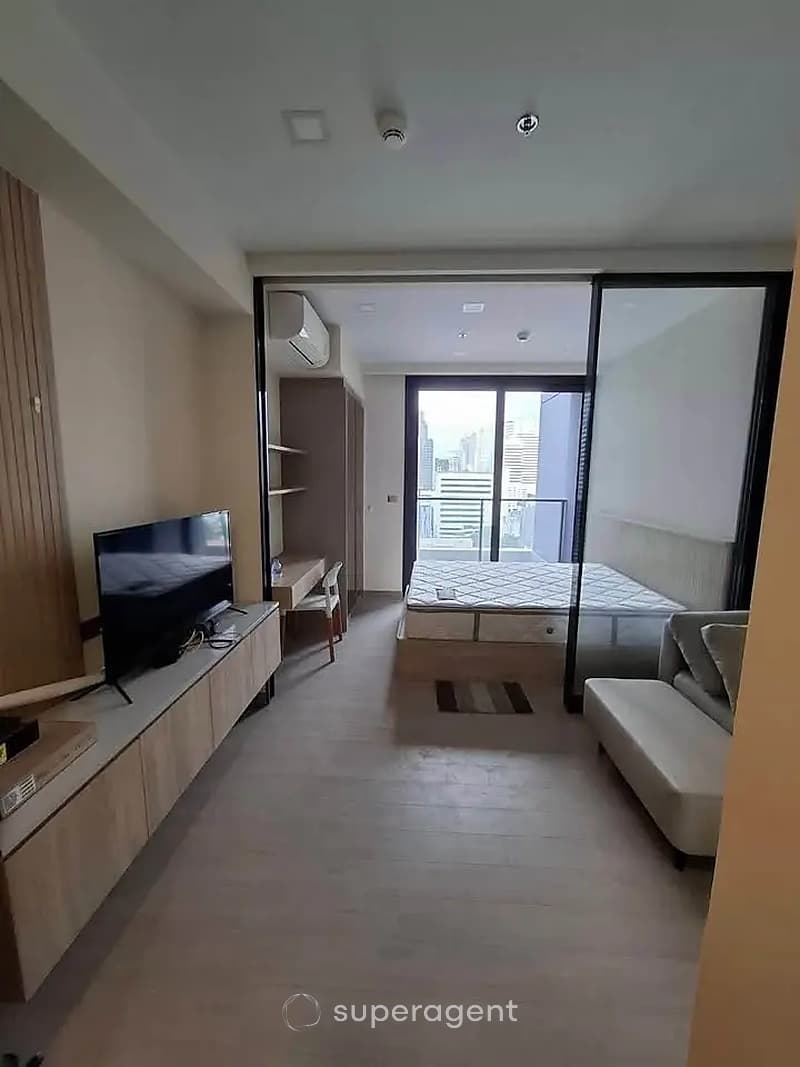
฿20,000
1 Bed127.5 sqm
1-BR Condo at One 9 Five Asoke - Rama 9 near MRT Phra Ram 9
Rama 9
Condo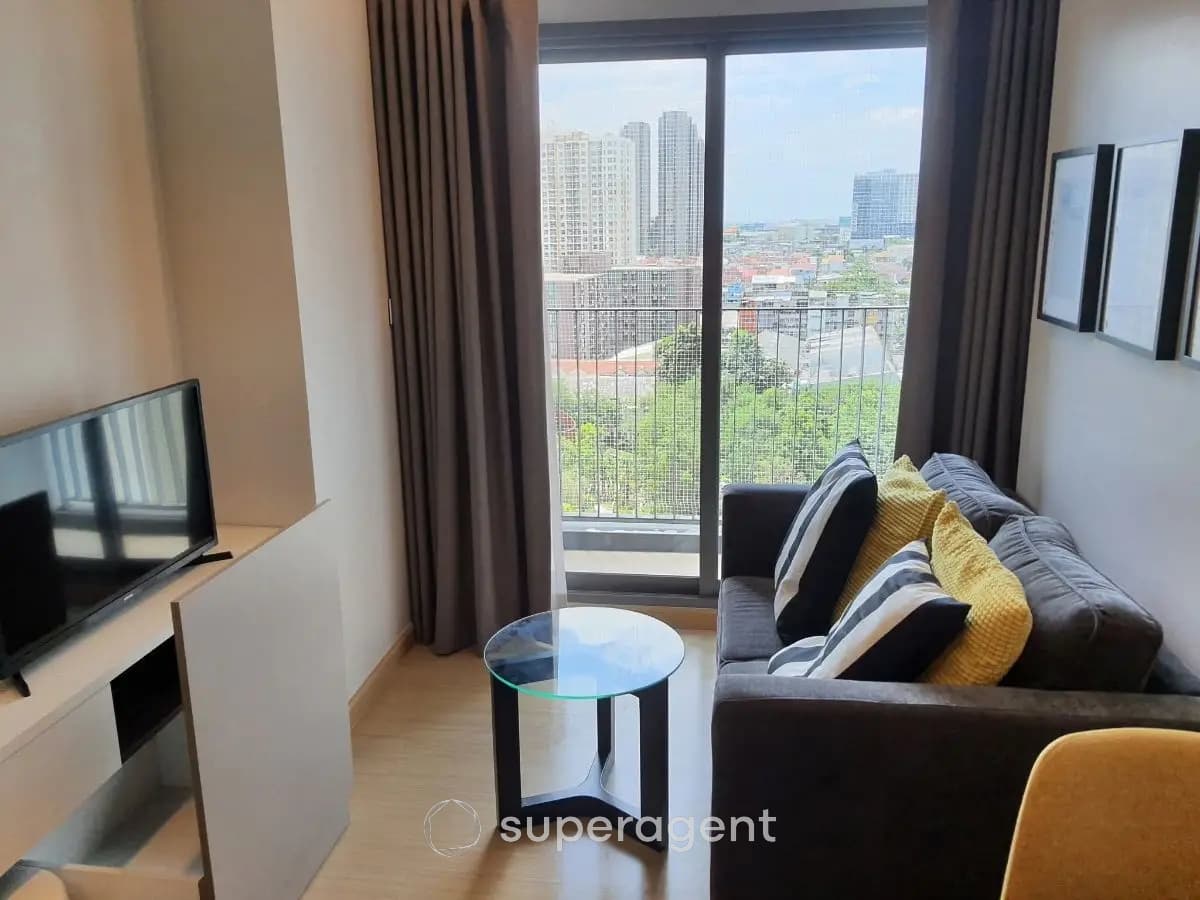
฿18,000
1 Bed126.9 sqm
1-BR Condo at Whizdom Connect Sukhumvit near BTS Punnawithi
Punnawithi
CondoMore like this
 In Market · Superagent EditorialApartment vs Condo in Bangkok: What Is the Real Difference and Which One Should You Rent?Bangkok apartments and condos differ in ownership, rent, utilities, maintenance and lease terms. Here is how to compare them before you sign.26 Jan 20191 min read
 In Market · Superagent EditorialRent or Buy a Condo in Bangkok: An Honest Financial BreakdownCompare the true cost of buying versus renting a Bangkok condo, from mortgage rates and common fees to rental yields and opportunity cost.25 Jan 20191 min read
 In Market · Superagent EditorialWhere Expats Rent Condos in Bangkok: The Top Neighborhoods and What They Really CostFrom Sukhumvit and Sathorn to Ari, On Nut and the riverside, see which Bangkok neighborhoods expats rent in and what monthly rent costs.19 Jan 20191 min read
 In Market · Superagent EditorialBangkok Condo Rents vs the World: How Cheap Is Bangkok Really?Compare Bangkok condo rents with Singapore, Tokyo, London, Paris, New York and Toronto, plus where Bangkok itself turns expensive.17 Jan 20191 min read