The AI Rental Revolution in Bangkok: How Technology Is Changing How Expats Find Homes
Lifestyle
The AI Rental Revolution in Bangkok: How Technology Is Changing How Expats Find Homes
Discover how artificial intelligence is transforming the Bangkok rental market for expats seeking their perfect home.
Summary
Bangkok rental revolution ai is reshaping how expats find homes. Explore smart technology, virtual tours, and AI-powered matching tools transforming the ma
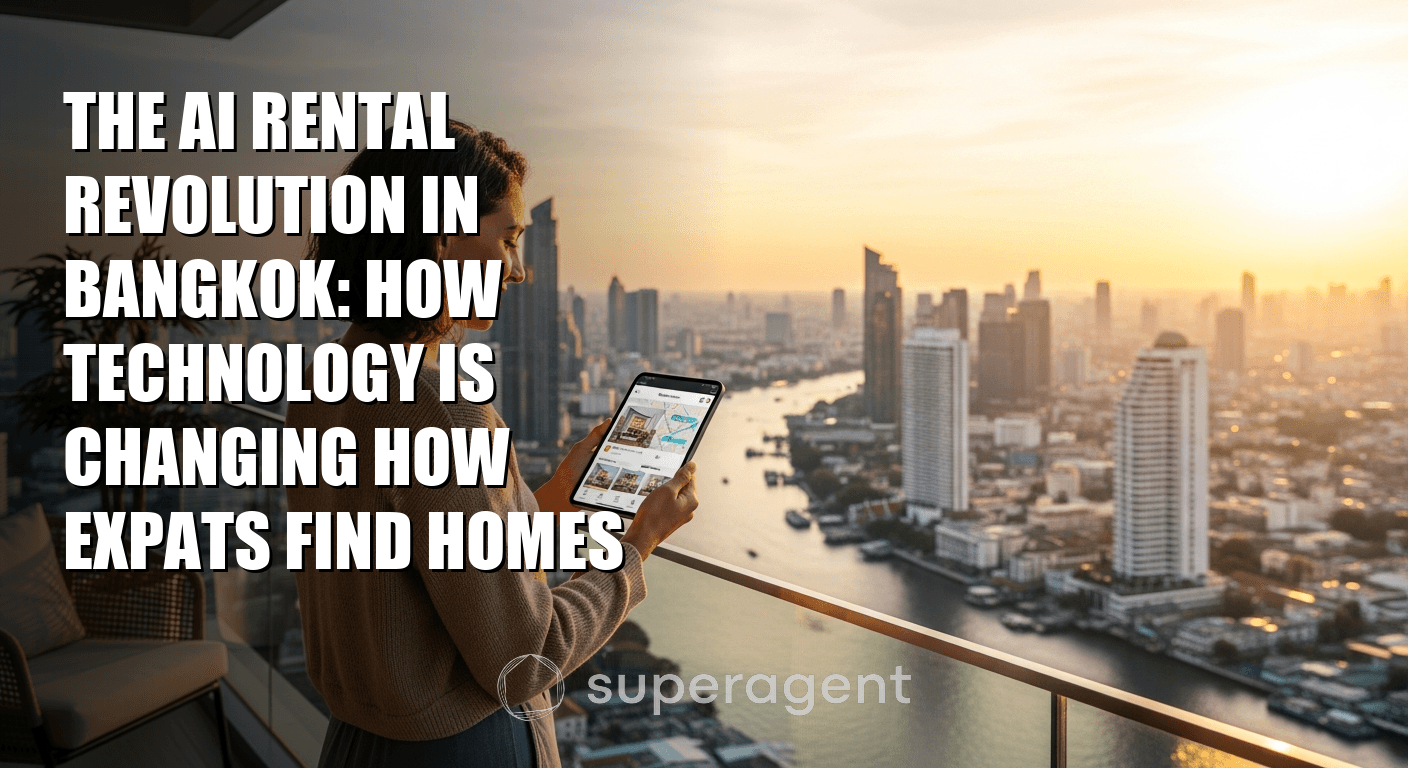
Finding a condo in Bangkok used to feel like a part-time job. You would scroll through listings with photos from 2016, message agents who ghosted you, schedule viewings across town only to discover the unit was already taken. If you have ever spent a sweaty Saturday hopping between Phrom Phong and Ari to see five condos and liking exactly zero of them, you know the pain. But something has shifted in the last couple of years. Artificial intelligence is rewriting the rules of how expats search for, compare, and lock down rental units in this city. And honestly, it is about time.
Why the Old Way of Renting in Bangkok Was Broken
The traditional Bangkok rental process relied on a fragmented chain of agents, LINE groups, and outdated listing sites. You would find a gorgeous two-bedroom in Thonglor listed at 45,000 THB per month, send a message, wait two days, and then hear that it was rented last week. Or you would contact three different agents about the same unit at Life Asoke Hype near MRT Phetchaburi, each quoting a different price.
There was no single source of truth. Listings lived on Facebook groups, agent websites, and classified boards, all with different levels of accuracy. A 2024 report from CBRE Thailand noted that Bangkok's residential rental market saw increased demand from foreign professionals, yet the search experience remained largely manual and inefficient compared to rental markets in cities like Singapore or Hong Kong.
Picture this: Maria, a remote worker from Portugal, landed at Suvarnabhumi with a one-month Airbnb booked near On Nut. She spent three weeks messaging agents, visiting buildings like The Base Sukhumvit 77 and Ideo Sukhumvit 93, and trying to figure out if 18,000 THB was a fair price for a studio or if she was getting the "foreigner markup." That experience is common. And it is exactly what AI tools are now designed to eliminate.
How AI Actually Works in the Bangkok Rental Market
Let's get specific about what AI does here, because the buzzword gets thrown around a lot. In the context of Bangkok rentals, AI platforms analyze thousands of active listings, cross-reference pricing data across neighborhoods, factor in proximity to BTS and MRT stations, and match you with units based on your actual priorities, not just a keyword search.
Instead of telling a search bar "condo Sukhumvit," you can tell an AI system that you need a pet-friendly one-bedroom within walking distance of BTS Thong Lo, under 25,000 THB, with a gym and reliable Wi-Fi. The AI filters, ranks, and surfaces results that genuinely match, rather than dumping 400 loosely related listings in your lap.
Take James, a software engineer from the UK who relocated to Bangkok for a fintech role near Silom. He used an AI-powered search to find units near BTS Chong Nonsi and BTS Surasak. Within minutes, the system surfaced options at The Surawong, Silom Suite, and a lesser-known building on Soi Convent, all priced between 20,000 and 30,000 THB. The AI even flagged that units on higher floors at The Surawong commanded a 3,000 to 5,000 THB premium for city views. That kind of granular pricing intelligence used to require weeks of legwork or a well-connected local agent.
The Neighborhoods Where AI Search Makes the Biggest Difference
AI-powered rental search is especially valuable in Bangkok's most competitive rental zones, where units move fast and pricing varies wildly between buildings just a few hundred meters apart. According to DDproperty, average asking rents for a one-bedroom condo in central Bangkok range from 15,000 to 35,000 THB per month depending on exact location, building age, and amenities. That is a massive spread, and AI helps you understand where you fall within it.
In Ari, for example, a one-bedroom at The Centric Ari Station might list at 22,000 THB, while a similar unit at Noble RE:D just one station away at BTS Sanam Pao goes for 18,000 THB. Without data-driven comparison, you would never know you could save 4,000 THB a month by walking an extra five minutes.
| Neighborhood | Popular Buildings | 1-Bed Rent Range (THB/month) | Nearest BTS/MRT | AI Search Advantage |
|---|---|---|---|---|
| Thonglor | The Crest 34, Noble Solo, HQ Thonglor | 25,000 to 45,000 | BTS Thong Lo | Price comparison across 50+ buildings in a small radius |
| Ari | The Centric Ari, Noble RE:D, Ideo Q Victory | 16,000 to 28,000 | BTS Ari, BTS Sanam Pao | Identifies undervalued units near secondary stations |
| Silom/Sathorn | The Surawong, Nara 9, Supalai Elite Surawong | 20,000 to 40,000 | BTS Chong Nonsi, MRT Lumphini | Filters for corporate-friendly lease terms |
| On Nut/Bangna | The Base Sukhumvit 77, Ideo Mobi 81, Regent Home 97/1 | 10,000 to 20,000 | BTS On Nut, BTS Udom Suk | Best value detection for budget-conscious expats |
| Ratchathewi/Phaya Thai | Ideo Q Siam, The Line Ratchathewi, Pathumwan Resort | 18,000 to 32,000 | BTS Ratchathewi, BTS Phaya Thai | Proximity scoring to ARL for airport-frequent travelers |
Beyond Search: AI That Helps You Negotiate and Decide
Finding the listing is only half the battle. The other half is knowing whether the asking price is fair, whether you should negotiate, and what red flags to watch for. This is where AI platforms are starting to pull ahead of the old agent model.
Modern AI tools can analyze historical rental data for a specific building. If a landlord at Noble Refine on Sukhumvit 26 lists a one-bedroom at 28,000 THB, the AI can tell you that comparable units in the same building have rented for 24,000 to 26,000 THB over the past six months. That is real negotiating power. You are not guessing. You have data.
Consider Yuki, a Japanese expat working near MRT Sukhumvit. She found a unit she liked at Ashton Asoke, listed at 30,000 THB. The AI flagged that similar units on lower floors had recently gone for 26,000 to 28,000 THB and that occupancy rates in the building were around 85%, meaning the landlord had incentive to be flexible. She negotiated down to 27,000 THB. Without that data, she probably would have paid asking price.
Research from Knight Frank Thailand has highlighted that the Bangkok condo rental market is becoming more tenant-friendly in certain segments, particularly in the oversupplied luxury tier. AI tools make this kind of market intelligence accessible to individual renters, not just property investors reading quarterly reports.
What AI Still Cannot Do (and Why Local Knowledge Matters)
AI is powerful, but it does not replace everything. It cannot tell you that the construction site next to your dream condo on Soi Sukhumvit 36 will be noisy for the next 18 months. It cannot tell you that the management at a certain building on Rama 9 is notoriously slow to fix air conditioning issues. And it cannot walk you through the process of setting up an electricity account with MEA or explain why your landlord wants 12 postdated checks.
This is where combining AI with human local expertise creates the best outcome. Think of AI as the engine that gets you 90% of the way there, filtering thousands of options, providing pricing intelligence, and surfacing deals you would never find manually. The last 10% still benefits from someone who knows which floor of The Lumpini 24 gets afternoon sun and which side of Ideo Mobi Rama 9 faces the expressway noise.
An expat named Tom, relocating from Sydney with his family, needed a two-bedroom near an international school in the Ekkamai area. AI narrowed his search from 200 listings to 12 strong matches near BTS Ekkamai, all within his budget of 35,000 to 50,000 THB. But it was a local advisor who told him that the specific soi he was considering, Sukhumvit 63, floods during heavy October rain near the Phra Khanong canal crossing. That combination of tech and local insight saved him from a regrettable lease.
The Numbers Behind the Shift
The adoption of AI in Bangkok's rental market is not just anecdotal. Platform data suggests that renters using AI-powered search tools spend 60 to 70% less time from initial search to signed lease compared to traditional methods. The average search-to-lease timeline has compressed from 3 to 4 weeks down to about 7 to 10 days for users who engage with AI recommendations.
On the pricing side, AI-assisted renters report paying an average of 8 to 12% below initial asking prices, largely because they enter negotiations armed with comparable data. In a market where the average one-bedroom in central Bangkok rents for 22,000 to 30,000 THB per month, that translates to savings of roughly 2,000 to 3,500 THB monthly, or 24,000 to 42,000 THB annually. That is a round-trip flight home or six months of coworking membership at a decent space.
Bangkok's rental market is not going back to blurry photos and ghosting agents. AI is making the process faster, more transparent, and genuinely more fair for tenants, especially expats who do not have years of local pricing knowledge. Whether you are landing at Suvarnabhumi for the first time or just moving from Phra Khanong to Lat Phrao, having data on your side changes everything.
If you want to see how this works in practice, try searching for your next Bangkok condo on superagent.co. It is the fastest way to find a place that actually fits your life here, not just a list of what is available.
Finding a condo in Bangkok used to feel like a part-time job. You would scroll through listings with photos from 2016, message agents who ghosted you, schedule viewings across town only to discover the unit was already taken. If you have ever spent a sweaty Saturday hopping between Phrom Phong and Ari to see five condos and liking exactly zero of them, you know the pain. But something has shifted in the last couple of years. Artificial intelligence is rewriting the rules of how expats search for, compare, and lock down rental units in this city. And honestly, it is about time.
Why the Old Way of Renting in Bangkok Was Broken
The traditional Bangkok rental process relied on a fragmented chain of agents, LINE groups, and outdated listing sites. You would find a gorgeous two-bedroom in Thonglor listed at 45,000 THB per month, send a message, wait two days, and then hear that it was rented last week. Or you would contact three different agents about the same unit at Life Asoke Hype near MRT Phetchaburi, each quoting a different price.
There was no single source of truth. Listings lived on Facebook groups, agent websites, and classified boards, all with different levels of accuracy. A 2024 report from CBRE Thailand noted that Bangkok's residential rental market saw increased demand from foreign professionals, yet the search experience remained largely manual and inefficient compared to rental markets in cities like Singapore or Hong Kong.
Picture this: Maria, a remote worker from Portugal, landed at Suvarnabhumi with a one-month Airbnb booked near On Nut. She spent three weeks messaging agents, visiting buildings like The Base Sukhumvit 77 and Ideo Sukhumvit 93, and trying to figure out if 18,000 THB was a fair price for a studio or if she was getting the "foreigner markup." That experience is common. And it is exactly what AI tools are now designed to eliminate.
Continue reading after that.
Looking for a condo
to rent?
Leave your name and phone. We'll follow up while you keep reading.
100% Secure
Fast Response
Free Consultation
How AI Actually Works in the Bangkok Rental Market
Let's get specific about what AI does here, because the buzzword gets thrown around a lot. In the context of Bangkok rentals, AI platforms analyze thousands of active listings, cross-reference pricing data across neighborhoods, factor in proximity to BTS and MRT stations, and match you with units based on your actual priorities, not just a keyword search.
Instead of telling a search bar "condo Sukhumvit," you can tell an AI system that you need a pet-friendly one-bedroom within walking distance of BTS Thong Lo, under 25,000 THB, with a gym and reliable Wi-Fi. The AI filters, ranks, and surfaces results that genuinely match, rather than dumping 400 loosely related listings in your lap.
Take James, a software engineer from the UK who relocated to Bangkok for a fintech role near Silom. He used an AI-powered search to find units near BTS Chong Nonsi and BTS Surasak. Within minutes, the system surfaced options at The Surawong, Silom Suite, and a lesser-known building on Soi Convent, all priced between 20,000 and 30,000 THB. The AI even flagged that units on higher floors at The Surawong commanded a 3,000 to 5,000 THB premium for city views. That kind of granular pricing intelligence used to require weeks of legwork or a well-connected local agent.
The Neighborhoods Where AI Search Makes the Biggest Difference
AI-powered rental search is especially valuable in Bangkok's most competitive rental zones, where units move fast and pricing varies wildly between buildings just a few hundred meters apart. According to DDproperty, average asking rents for a one-bedroom condo in central Bangkok range from 15,000 to 35,000 THB per month depending on exact location, building age, and amenities. That is a massive spread, and AI helps you understand where you fall within it.
In Ari, for example, a one-bedroom at The Centric Ari Station might list at 22,000 THB, while a similar unit at Noble RE:D just one station away at BTS Sanam Pao goes for 18,000 THB. Without data-driven comparison, you would never know you could save 4,000 THB a month by walking an extra five minutes.
| Neighborhood | Popular Buildings | 1-Bed Rent Range (THB/month) | Nearest BTS/MRT | AI Search Advantage |
|---|---|---|---|---|
| Thonglor | The Crest 34, Noble Solo, HQ Thonglor | 25,000 to 45,000 | BTS Thong Lo | Price comparison across 50+ buildings in a small radius |
| Ari | The Centric Ari, Noble RE:D, Ideo Q Victory | 16,000 to 28,000 | BTS Ari, BTS Sanam Pao | Identifies undervalued units near secondary stations |
| Silom/Sathorn | The Surawong, Nara 9, Supalai Elite Surawong | 20,000 to 40,000 | BTS Chong Nonsi, MRT Lumphini | Filters for corporate-friendly lease terms |
| On Nut/Bangna | The Base Sukhumvit 77, Ideo Mobi 81, Regent Home 97/1 | 10,000 to 20,000 | BTS On Nut, BTS Udom Suk | Best value detection for budget-conscious expats |
| Ratchathewi/Phaya Thai | Ideo Q Siam, The Line Ratchathewi, Pathumwan Resort | 18,000 to 32,000 | BTS Ratchathewi, BTS Phaya Thai | Proximity scoring to ARL for airport-frequent travelers |
Beyond Search: AI That Helps You Negotiate and Decide
Finding the listing is only half the battle. The other half is knowing whether the asking price is fair, whether you should negotiate, and what red flags to watch for. This is where AI platforms are starting to pull ahead of the old agent model.
Modern AI tools can analyze historical rental data for a specific building. If a landlord at Noble Refine on Sukhumvit 26 lists a one-bedroom at 28,000 THB, the AI can tell you that comparable units in the same building have rented for 24,000 to 26,000 THB over the past six months. That is real negotiating power. You are not guessing. You have data.
Consider Yuki, a Japanese expat working near MRT Sukhumvit. She found a unit she liked at Ashton Asoke, listed at 30,000 THB. The AI flagged that similar units on lower floors had recently gone for 26,000 to 28,000 THB and that occupancy rates in the building were around 85%, meaning the landlord had incentive to be flexible. She negotiated down to 27,000 THB. Without that data, she probably would have paid asking price.
Research from Knight Frank Thailand has highlighted that the Bangkok condo rental market is becoming more tenant-friendly in certain segments, particularly in the oversupplied luxury tier. AI tools make this kind of market intelligence accessible to individual renters, not just property investors reading quarterly reports.
What AI Still Cannot Do (and Why Local Knowledge Matters)
AI is powerful, but it does not replace everything. It cannot tell you that the construction site next to your dream condo on Soi Sukhumvit 36 will be noisy for the next 18 months. It cannot tell you that the management at a certain building on Rama 9 is notoriously slow to fix air conditioning issues. And it cannot walk you through the process of setting up an electricity account with MEA or explain why your landlord wants 12 postdated checks.
Continue reading after that.
Looking for a condo
to rent?
Leave your name and phone. We'll follow up while you keep reading.
100% Secure
Fast Response
Free Consultation
This is where combining AI with human local expertise creates the best outcome. Think of AI as the engine that gets you 90% of the way there, filtering thousands of options, providing pricing intelligence, and surfacing deals you would never find manually. The last 10% still benefits from someone who knows which floor of The Lumpini 24 gets afternoon sun and which side of Ideo Mobi Rama 9 faces the expressway noise.
An expat named Tom, relocating from Sydney with his family, needed a two-bedroom near an international school in the Ekkamai area. AI narrowed his search from 200 listings to 12 strong matches near BTS Ekkamai, all within his budget of 35,000 to 50,000 THB. But it was a local advisor who told him that the specific soi he was considering, Sukhumvit 63, floods during heavy October rain near the Phra Khanong canal crossing. That combination of tech and local insight saved him from a regrettable lease.
The Numbers Behind the Shift
The adoption of AI in Bangkok's rental market is not just anecdotal. Platform data suggests that renters using AI-powered search tools spend 60 to 70% less time from initial search to signed lease compared to traditional methods. The average search-to-lease timeline has compressed from 3 to 4 weeks down to about 7 to 10 days for users who engage with AI recommendations.
On the pricing side, AI-assisted renters report paying an average of 8 to 12% below initial asking prices, largely because they enter negotiations armed with comparable data. In a market where the average one-bedroom in central Bangkok rents for 22,000 to 30,000 THB per month, that translates to savings of roughly 2,000 to 3,500 THB monthly, or 24,000 to 42,000 THB annually. That is a round-trip flight home or six months of coworking membership at a decent space.
Bangkok's rental market is not going back to blurry photos and ghosting agents. AI is making the process faster, more transparent, and genuinely more fair for tenants, especially expats who do not have years of local pricing knowledge. Whether you are landing at Suvarnabhumi for the first time or just moving from Phra Khanong to Lat Phrao, having data on your side changes everything.
If you want to see how this works in practice, try searching for your next Bangkok condo on superagent.co. It is the fastest way to find a place that actually fits your life here, not just a list of what is available.
Share this article
Properties you may like
฿59,000
1 Bed155.8 sqm
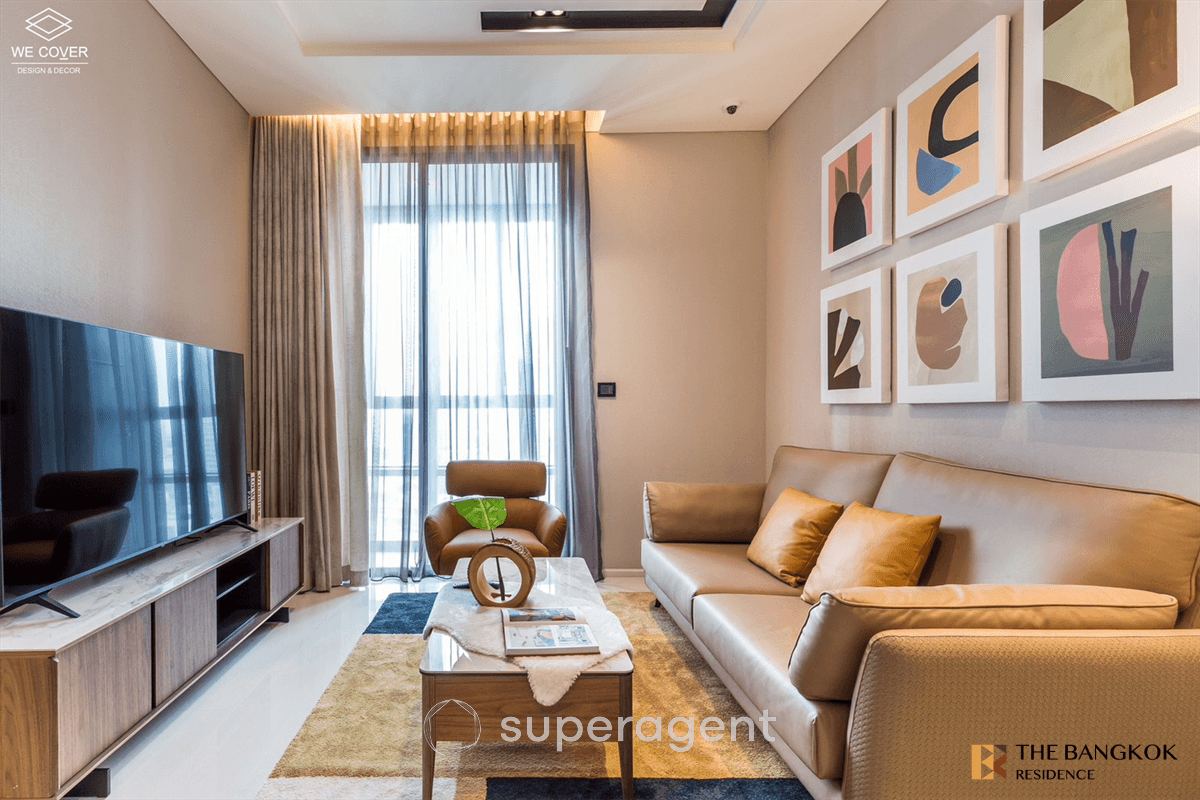
The Bangkok Thonglor, 1BR 55.8 sq.m. 59K, Premium High Floor Unit, Near BTS Thonglo
Thonglor
Condo![[For Rent] CONDO I Culture Chula I Duplex I 1 Bed I 1 Bath I 35,000THB/mo](/_next/image?url=https%3A%2F%2Fstorage.googleapis.com%2Fsuperagent-web%2Fattachments%2Flistings%2F6760%2F8deaff98-ecb1-4c62-b9be-aecac2f65797-1140-1.jpg&w=3840&q=75)
฿35,000
1 Bed138 sqm
[For Rent] CONDO I Culture Chula I Duplex I 1 Bed I 1 Bath I 35,000THB/mo
Siam
Condo![[For Rent] CONDO I Ideo Chula Samyan I 1 Bed I 1 Bath I 30,000THB/mo](/_next/image?url=https%3A%2F%2Fstorage.googleapis.com%2Fsuperagent-web%2Fattachments%2Flistings%2F6872%2Ff9ab570c-e4ca-41d6-90ee-a8e581218438-1271-8.jpg&w=3840&q=75)
฿30,000
1 Bed135 sqm
[For Rent] CONDO I Ideo Chula Samyan I 1 Bed I 1 Bath I 30,000THB/mo
Siam
Condo![[For Rent] TOWNHOME I Quarter 31 I 4 Beds I 5 Baths I 280,000THB/mo](/_next/image?url=https%3A%2F%2Fstorage.googleapis.com%2Fsuperagent-web%2Fattachments%2Flistings%2F1724%2Fb24f7c3a-8acd-49e4-ae85-6a31498207e4-600-2.jpg&w=3840&q=75)
฿280,000
4 Bed5425 sqm
[For Rent] TOWNHOME I Quarter 31 I 4 Beds I 5 Baths I 280,000THB/mo
Phrom Phong
Condo![[For Rent&Sale] CONDO I TC Green Rama 9 I 1 Bed I 1 Bath I Rent 15,000THB/mo - Sale 2.8mb THB](/_next/image?url=https%3A%2F%2Fstorage.googleapis.com%2Fsuperagent-web%2Fattachments%2Flistings%2F6750%2F47e9c291-b440-4d94-8168-c22bdaf34baf-1123-1.jpg&w=3840&q=75)
฿15,000
1 Bed139 sqm
[For Rent&Sale] CONDO I TC Green Rama 9 I 1 Bed I 1 Bath I Rent 15,000THB/mo - Sale 2.8mb THB
Rama 9
Condo![[For Rent] CONDO I Lumpini Place Rama 9 I 1 Beds I 1 Baths I 15,000THB/mo](/_next/image?url=https%3A%2F%2Fstorage.googleapis.com%2Fsuperagent-web%2Fattachments%2Flistings%2F6884%2F779dfd85-ad97-41e0-8a85-9a0bd7f5d48b-1290-3.jpg&w=3840&q=75)
฿15,000
1 Bed137 sqm
[For Rent] CONDO I Lumpini Place Rama 9 I 1 Beds I 1 Baths I 15,000THB/mo
Condo![[For Rent] CONDO I 39 Residence I 2 Beds I 2 Baths I 75,000 THB/mo](/_next/image?url=https%3A%2F%2Fstorage.googleapis.com%2Fsuperagent-web%2Fattachments%2Flistings%2F1658%2Fc3f1dd84-cdb5-49c0-aa3f-735f6e07117b-1778643845157-7849100b.jpg&w=3840&q=75)
฿75,000
2 Bed2130 sqm
[For Rent] CONDO I 39 Residence I 2 Beds I 2 Baths I 75,000 THB/mo
Phrom Phong
Condo![[For Rent] CONDO I The Issara Sathorn I 3 Beds I 3 Baths I 95,000THB/mo](/_next/image?url=https%3A%2F%2Fstorage.googleapis.com%2Fsuperagent-web%2Fattachments%2Flistings%2F6620%2F11062985-3896-4ee5-a563-d846f6b75f75-993-1.jpg&w=3840&q=75)
฿95,000
3 Bed3110 sqm
[For Rent] CONDO I The Issara Sathorn I 3 Beds I 3 Baths I 95,000THB/mo
Sathorn
Condo![[For Rent] CONDO I Culture Chula I Duplex I 2 Beds I 1 Bath I 60,000THB/mo](/_next/image?url=https%3A%2F%2Fstorage.googleapis.com%2Fsuperagent-web%2Fattachments%2Flistings%2F6857%2Fc1f2ba09-56e3-4548-bc62-e1ae4b3fcee9-1246-1.png&w=3840&q=75)
฿60,000
2 Bed157 sqm
[For Rent] CONDO I Culture Chula I Duplex I 2 Beds I 1 Bath I 60,000THB/mo
Siam
Condo![[For Rent&Sale] CONDO I The Emporio Place I 2 Beds I 3 Baths I Rent 85,000THB/mo - Sale 35mb THB](/_next/image?url=https%3A%2F%2Fstorage.googleapis.com%2Fsuperagent-web%2Fattachments%2Flistings%2F6869%2Fbd6cbbeb-3489-4f04-a58e-0b21ac6e3e63-1262-3.jpg&w=3840&q=75)
฿85,000
2 Bed3180 sqm
[For Rent&Sale] CONDO I The Emporio Place I 2 Beds I 3 Baths I Rent 85,000THB/mo - Sale 35mb THB
Phrom Phong
CondoMore like this
 In Lifestyle · Superagent EditorialWhere Bangkok's Expat Communities Are Concentrated: Rental Guide by NationalityDiscover where Bangkok's expat community areas are located. Our rental guide maps out neighborhoods by nationality to help you find your ideal home.12 Apr 20241 min read
 In Lifestyle · Superagent EditorialMonthly Condo Rentals in Bangkok: Why They Beat Daily Rates Once Your Stay Passes Two WeeksCompare Bangkok daily and monthly condo rates near BTS Thong Lo, Asoke, Ari and On Nut, and see why monthly leases save tens of thousands of baht.19 Jul 20191 min read
 In Lifestyle · Superagent EditorialHow to Negotiate Rent With Thai Condo Landlords: Techniques That Actually Work in BangkokProven tactics for negotiating condo rent with Bangkok landlords, from market research and counter offers to lease length, timing and low season.18 Jul 20191 min read
 In Lifestyle · Superagent EditorialRenting a Condo in Bangkok's Cleanest Air Neighborhoods: Where to Look, What to Pay, and What to Trade OffCompare Bangkok neighborhoods with cleaner air, from Bang Krachao and Chatuchak to Lumpini, with real rental prices and commute trade-offs.11 Jun 20191 min read