Tuk Tuks in Bangkok: When to Use Them and What Expats Pay
Guides
Tuk Tuks in Bangkok: When to Use Them and What Expats Pay
Navigate Bangkok's iconic three-wheelers like a savvy expat and avoid tourist traps.
Summary
Learn how expats navigate Bangkok's tuk tuks with insider tips on pricing, routes, and when to use them versus other transport options.
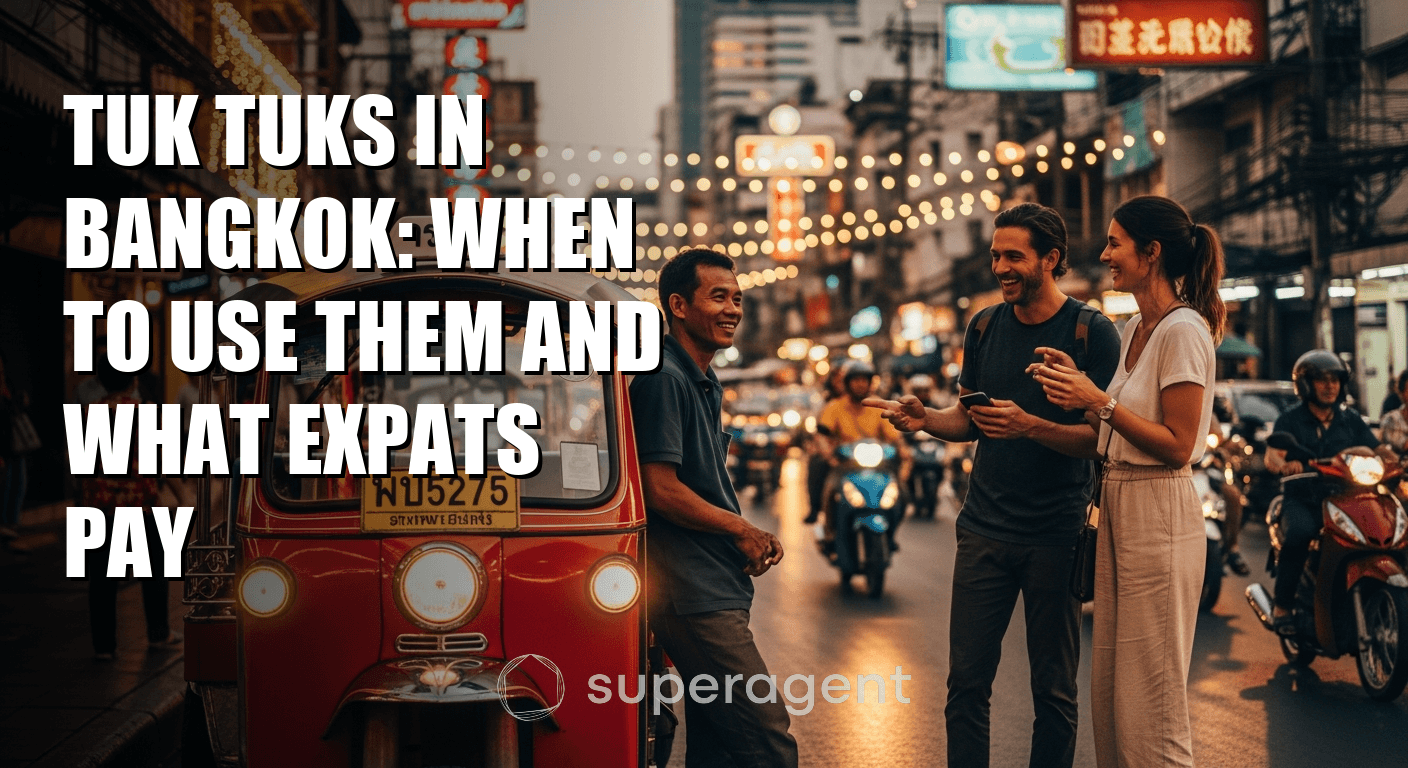
You've been in Bangkok for about a week. You're standing outside MBK Center near National Stadium BTS, and a tuk tuk driver pulls up with a big smile. He quotes you 300 baht to go to Khao San Road. You know it's only about three kilometers away. Is it worth it? Should you haggle? Should you just grab a Grab instead? These are the questions every expat eventually wrestles with, and after years of living here, I have some pretty clear answers.
How Tuk Tuks Actually Work in Bangkok
Let's get the basics out of the way. Tuk tuks in Bangkok don't have meters. Every ride is a negotiation, and the opening price is almost always inflated, especially if you're standing near a tourist hotspot like Wat Pho, the Grand Palace, or Asok intersection. The driver names a price, you counter, and you meet somewhere in the middle. Or you walk away and try the next one.
For expats who live here, the calculus is different from a tourist's. You know the distances. You know what a taxi with a meter would cost. A metered taxi from Phrom Phong BTS to Silom would run you about 70 to 90 baht. A tuk tuk for the same trip might start at 200 and settle around 120 to 150. So you're paying a premium, and you know it.
That said, tuk tuks fill a genuine gap. Late at night around Soi Rambuttri or after last call near RCA, when Grab surge pricing kicks in and metered taxis mysteriously lose interest in using their meters, a tuk tuk at 150 baht can actually be the most reasonable option on the table.
What Expats Actually Pay Versus What Tourists Pay
Here's a rough breakdown based on real rides I've taken and prices friends who live here regularly report. A short hop of one to two kilometers, like from Thonglor Soi 13 to Sukhumvit Soi 55 junction, should cost around 40 to 60 baht. Most tuk tuk drivers will quote 100. If you speak a little Thai and seem like you live here, you can usually get it down to 60 or 70.
Medium distances of three to five kilometers, say from Victory Monument to Siam Paragon, typically land between 80 and 120 baht after negotiating. Tourists regularly pay 200 or more for the same ride. Long hauls across the city, anything over eight kilometers, honestly aren't worth doing in a tuk tuk. The open air that feels charming for 10 minutes becomes exhausting after 30 minutes in Bangkok's humidity and traffic fumes.
One trick that works: if you live near a tuk tuk stand, like the cluster that hangs around Ari BTS or the ones near On Nut market, you can become a regular. I had a guy near my old condo on Soi Inthamara who would take me to Chatuchak for a flat 50 baht every weekend. Being a known face changes the economics entirely.
When a Tuk Tuk Is the Smart Move
There are specific scenarios where tuk tuks genuinely make sense, even for budget conscious expats. The first is the "last mile" problem. You live in a condo on Sukhumvit Soi 36, you get off at Thong Lo BTS, and it's an 800 meter walk in 35 degree heat. A tuk tuk parked at the station will zip you there for 30 to 40 baht. Faster than waiting for a Grab, cooler than walking.
The second is late night runs in the old town. If you've been out around Charoen Krung or Yaowarat and it's past midnight, tuk tuks are often the quickest option. MRT Wat Mangkon closes, taxis are scarce, and Grab drivers cancel repeatedly. A tuk tuk back to your place near Saphan Taksin for 100 to 150 baht starts sounding very reasonable.
The third is when you're carrying stuff. Moving a small bookshelf from a shop on Soi Charoenkrung 28 to your condo at The River near BTS Saphan Taksin? A tuk tuk driver will happily strap it on for 100 baht. Try fitting that in a sedan.
When to Skip the Tuk Tuk Entirely
If you're commuting daily, tuk tuks make zero financial sense. Living at Life Sukhumvit 62 near Bang Chak BTS and working near Phloen Chit? BTS all the way, 44 baht each direction. Or rent a condo closer to your office and skip the commute problem altogether.
Also skip tuk tuks during heavy rain. There's no roof that truly protects you, and Bangkok downpours are serious. During rush hour on Ratchadaphisek or Lat Phrao, you'll sit in the same traffic as a taxi but inhale twice the exhaust. And if a driver offers you a "tour" that includes a gem shop or a suit tailor, walk away immediately. That scam has been running since before smartphones existed and somehow still catches people off guard.
Choosing the Right Neighborhood Changes Everything
Here's something most transport guides won't tell you. Your daily commute headaches, including the tuk tuk temptation, often come down to where you chose to live. Renting a studio near Ari BTS for 12,000 to 18,000 baht per month puts you on the Green Line with easy access everywhere. A one bedroom at Ideo Mobi Asoke for 18,000 to 25,000 baht drops you at the intersection of BTS and MRT. You rarely need a tuk tuk at all when your condo is right on top of transit.
But if you chose a place deep in Soi Ekkamai 12 or tucked behind Phra Khanong because the rent was 3,000 baht cheaper, you'll spend that difference on last mile transport within the first month. Location math matters.
Tuk tuks are part of Bangkok's fabric, and there's no reason to avoid them completely. Just use them strategically. Know the fair price range, pick the right moments, and make sure your home base doesn't force you into paying for short rides every single day. If you're hunting for a condo that puts you close to BTS or MRT so your transport costs stay low, Superagent at superagent.co matches you with places based on your commute, your budget, and how you actually live in this city.
You've been in Bangkok for about a week. You're standing outside MBK Center near National Stadium BTS, and a tuk tuk driver pulls up with a big smile. He quotes you 300 baht to go to Khao San Road. You know it's only about three kilometers away. Is it worth it? Should you haggle? Should you just grab a Grab instead? These are the questions every expat eventually wrestles with, and after years of living here, I have some pretty clear answers.
How Tuk Tuks Actually Work in Bangkok
Let's get the basics out of the way. Tuk tuks in Bangkok don't have meters. Every ride is a negotiation, and the opening price is almost always inflated, especially if you're standing near a tourist hotspot like Wat Pho, the Grand Palace, or Asok intersection. The driver names a price, you counter, and you meet somewhere in the middle. Or you walk away and try the next one.
For expats who live here, the calculus is different from a tourist's. You know the distances. You know what a taxi with a meter would cost. A metered taxi from Phrom Phong BTS to Silom would run you about 70 to 90 baht. A tuk tuk for the same trip might start at 200 and settle around 120 to 150. So you're paying a premium, and you know it.
Continue reading after that.
Looking for a condo
to rent?
Leave your name and phone. We'll follow up while you keep reading.
100% Secure
Fast Response
Free Consultation
That said, tuk tuks fill a genuine gap. Late at night around Soi Rambuttri or after last call near RCA, when Grab surge pricing kicks in and metered taxis mysteriously lose interest in using their meters, a tuk tuk at 150 baht can actually be the most reasonable option on the table.
What Expats Actually Pay Versus What Tourists Pay
Here's a rough breakdown based on real rides I've taken and prices friends who live here regularly report. A short hop of one to two kilometers, like from Thonglor Soi 13 to Sukhumvit Soi 55 junction, should cost around 40 to 60 baht. Most tuk tuk drivers will quote 100. If you speak a little Thai and seem like you live here, you can usually get it down to 60 or 70.
Medium distances of three to five kilometers, say from Victory Monument to Siam Paragon, typically land between 80 and 120 baht after negotiating. Tourists regularly pay 200 or more for the same ride. Long hauls across the city, anything over eight kilometers, honestly aren't worth doing in a tuk tuk. The open air that feels charming for 10 minutes becomes exhausting after 30 minutes in Bangkok's humidity and traffic fumes.
One trick that works: if you live near a tuk tuk stand, like the cluster that hangs around Ari BTS or the ones near On Nut market, you can become a regular. I had a guy near my old condo on Soi Inthamara who would take me to Chatuchak for a flat 50 baht every weekend. Being a known face changes the economics entirely.
When a Tuk Tuk Is the Smart Move
There are specific scenarios where tuk tuks genuinely make sense, even for budget conscious expats. The first is the "last mile" problem. You live in a condo on Sukhumvit Soi 36, you get off at Thong Lo BTS, and it's an 800 meter walk in 35 degree heat. A tuk tuk parked at the station will zip you there for 30 to 40 baht. Faster than waiting for a Grab, cooler than walking.
The second is late night runs in the old town. If you've been out around Charoen Krung or Yaowarat and it's past midnight, tuk tuks are often the quickest option. MRT Wat Mangkon closes, taxis are scarce, and Grab drivers cancel repeatedly. A tuk tuk back to your place near Saphan Taksin for 100 to 150 baht starts sounding very reasonable.
The third is when you're carrying stuff. Moving a small bookshelf from a shop on Soi Charoenkrung 28 to your condo at The River near BTS Saphan Taksin? A tuk tuk driver will happily strap it on for 100 baht. Try fitting that in a sedan.
When to Skip the Tuk Tuk Entirely
If you're commuting daily, tuk tuks make zero financial sense. Living at Life Sukhumvit 62 near Bang Chak BTS and working near Phloen Chit? BTS all the way, 44 baht each direction. Or rent a condo closer to your office and skip the commute problem altogether.
Also skip tuk tuks during heavy rain. There's no roof that truly protects you, and Bangkok downpours are serious. During rush hour on Ratchadaphisek or Lat Phrao, you'll sit in the same traffic as a taxi but inhale twice the exhaust. And if a driver offers you a "tour" that includes a gem shop or a suit tailor, walk away immediately. That scam has been running since before smartphones existed and somehow still catches people off guard.
Continue reading after that.
Looking for a condo
to rent?
Leave your name and phone. We'll follow up while you keep reading.
100% Secure
Fast Response
Free Consultation
Choosing the Right Neighborhood Changes Everything
Here's something most transport guides won't tell you. Your daily commute headaches, including the tuk tuk temptation, often come down to where you chose to live. Renting a studio near Ari BTS for 12,000 to 18,000 baht per month puts you on the Green Line with easy access everywhere. A one bedroom at Ideo Mobi Asoke for 18,000 to 25,000 baht drops you at the intersection of BTS and MRT. You rarely need a tuk tuk at all when your condo is right on top of transit.
But if you chose a place deep in Soi Ekkamai 12 or tucked behind Phra Khanong because the rent was 3,000 baht cheaper, you'll spend that difference on last mile transport within the first month. Location math matters.
Tuk tuks are part of Bangkok's fabric, and there's no reason to avoid them completely. Just use them strategically. Know the fair price range, pick the right moments, and make sure your home base doesn't force you into paying for short rides every single day. If you're hunting for a condo that puts you close to BTS or MRT so your transport costs stay low, Superagent at superagent.co matches you with places based on your commute, your budget, and how you actually live in this city.
Share this article
Properties you may like
More like this
 In Guides · Superagent EditorialHidden Costs of Renting a Condo in Bangkok Nobody Warns You AboutBangkok condo rent looks affordable until month one hits. Here are the real costs beyond the headline figure that catch most renters off guard.25 May 20261 min read
 In Guides · Superagent EditorialWhat a Long-Vacant Bangkok Condo Unit Is Actually Telling YouA Bangkok condo vacant for months signals overpricing, landlord issues, or real problems. Here is how to read the signs.25 May 20261 min read
 In Guides · Superagent EditorialRed Flags in a Bangkok Rental Contract to Watch Out ForBangkok rental contracts often hide risky clauses. Here are the red flags every tenant must catch before signing any lease.25 May 20261 min read
 In Guides · Superagent EditorialWorking Online from a Condo: How to Choose the Perfect Room for ProductivityLearn how to choose the best condo room for working online with tips on lighting, noise, and furniture setup to maximize productivity.9 May 20261 min read