Your Bangkok Landlord Sold the Condo: What Happens to Your Lease?
Guides
Your Bangkok Landlord Sold the Condo: What Happens to Your Lease?
Understanding your rights when your Bangkok landlord sells the property
Summary
Learn what happens to your lease when there's a bangkok condo change landlord situation. Know your tenant rights and protections in Thailand's rental marke
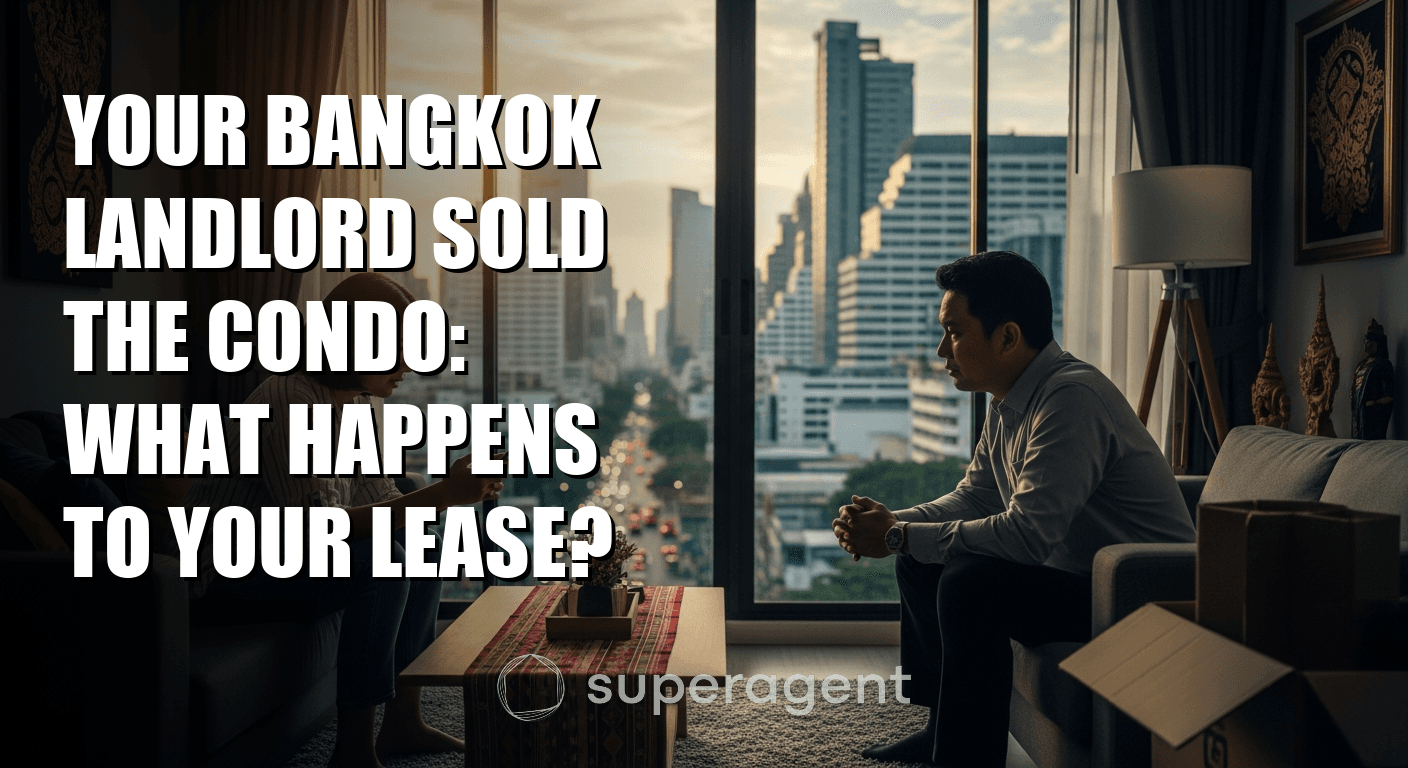
You're three months into a 12 month lease on a nice one bedroom near BTS Thong Lo. Rent is 18,000 THB, the air con works great, and you finally got the WiFi router in the perfect spot. Then your landlord sends a LINE message that stops you cold: "I sold the condo. New owner will contact you." And suddenly you're wondering if you need to start packing boxes.
This happens more often than you'd think in Bangkok. The condo investment market here is massive, and units change hands all the time. Owners in places like The Base Sukhumvit 77, Ideo Mobi Asoke, or Lumpini Park Rama 9 buy and sell like they're trading stocks. But what does that actually mean for you, the person living there and paying rent every month?
Does a Sale Cancel Your Lease in Thailand?
Here's the good news. Under Thai civil and commercial law, a registered lease transfers to the new owner. If your lease was properly registered at the Land Department, the buyer inherits you as a tenant. They can't just kick you out because they signed a purchase agreement.
But here's where it gets tricky for most Bangkok renters. The vast majority of condo leases in Bangkok are not registered. If your lease is under three years, which almost every standard rental is, registration isn't legally required. Most landlords skip it entirely. That means your lease is technically a personal contract between you and the original owner, not something that automatically binds the new one.
Say you're renting a studio at Ideo Q Siam for 15,000 THB a month on a standard one year lease. Your landlord sells to a new investor. Legally, that new owner could argue the lease doesn't apply to them. In practice, most new owners will honor existing leases because they want the rental income. But they don't have to, and that's the part that catches people off guard.
What Usually Happens in Practice
Bangkok's condo rental market runs on relationships and common sense more than courtroom battles. In most cases, when a condo sells mid lease, one of three things happens.
First scenario: the new owner keeps you as a tenant, sometimes with a new lease agreement at the same terms. This is the most common outcome, especially in high demand rental areas near BTS Phrom Phong or MRT Phra Ram 9. Investors buy these units specifically for the rental yield, so having a paying tenant already in place is actually a selling point.
Second scenario: the new owner wants to renegotiate. Maybe they bump the rent from 22,000 to 25,000 THB on a two bedroom at Life Sukhumvit 48. They might ask you to sign a fresh lease with updated terms. You can negotiate, accept, or walk away.
Third scenario: the new owner wants to move in or renovate. This is the worst case. They might ask you to leave, sometimes offering a month or two of notice. If your unregistered lease still has six months left, you're in a gray area legally. You could push back, but enforcing it through Thai courts is slow, expensive, and rarely worth it for a rental dispute.
How to Protect Yourself Before This Ever Happens
The best time to deal with this situation is before you sign your lease. A few smart moves up front can save you a massive headache later.
Get a clause in your lease that specifically addresses ownership transfer. Something that states the lease terms survive any sale of the property and that the landlord will ensure the new owner assumes the lease obligations. Will every landlord on Soi Sukhumvit 39 agree to this? No. But many will, especially if you're a reliable tenant offering to sign for 12 months on a 30,000 THB unit.
Also make sure your deposit terms are crystal clear. If the condo sells, who holds your deposit? The original landlord took your two months of deposit, that's 36,000 THB on an 18,000 unit near BTS Bearing. You need written confirmation of whether that deposit transfers to the new owner or gets returned to you first. Chasing down a former landlord for deposit money after they've cashed out and moved on is not a fun Bangkok afternoon.
Your Deposit is the Biggest Risk
Honestly, losing your deposit is a bigger practical risk than losing your home. Most new owners will let you stay. But the deposit handover between old and new landlord is where things fall apart constantly.
A friend renting a one bedroom at Aspire Sukhumvit 48 for 14,000 THB had exactly this problem. The original landlord sold, pocketed the 28,000 THB deposit, and told her "the new owner will handle it." The new owner said "I never received any deposit." She was stuck in the middle with no documentation of the transfer.
Protect yourself by getting written confirmation, a simple LINE message or email works, from both parties acknowledging the deposit amount and who holds it after the sale. Screenshot everything. Keep every receipt.
What to Do the Moment You Get That Message
When your landlord tells you the condo has been sold, don't panic. But do act quickly. Ask for the new owner's full name and contact details immediately. Request written confirmation that your current lease terms, including rent amount, end date, and deposit, will be honored. If they ask you to sign a new lease, read every line before agreeing.
If the new owner wants you out early, know that you have some leverage even with an unregistered lease. Most buyers don't want to start their ownership with a messy dispute. A calm, documented conversation usually leads to a reasonable outcome, whether that's honoring your lease or offering you fair compensation to leave early.
Renting in Bangkok is generally smooth, but ownership changes are one of those curveballs that catch even experienced expats off guard. The key is having a solid lease, keeping records of everything, and knowing your rights before you need them. If you're searching for your next condo and want lease terms that actually protect you, check out superagent.co to find listings with transparent terms and AI powered support that helps you ask the right questions before you sign.
You're three months into a 12 month lease on a nice one bedroom near BTS Thong Lo. Rent is 18,000 THB, the air con works great, and you finally got the WiFi router in the perfect spot. Then your landlord sends a LINE message that stops you cold: "I sold the condo. New owner will contact you." And suddenly you're wondering if you need to start packing boxes.
This happens more often than you'd think in Bangkok. The condo investment market here is massive, and units change hands all the time. Owners in places like The Base Sukhumvit 77, Ideo Mobi Asoke, or Lumpini Park Rama 9 buy and sell like they're trading stocks. But what does that actually mean for you, the person living there and paying rent every month?
Does a Sale Cancel Your Lease in Thailand?
Here's the good news. Under Thai civil and commercial law, a registered lease transfers to the new owner. If your lease was properly registered at the Land Department, the buyer inherits you as a tenant. They can't just kick you out because they signed a purchase agreement.
But here's where it gets tricky for most Bangkok renters. The vast majority of condo leases in Bangkok are not registered. If your lease is under three years, which almost every standard rental is, registration isn't legally required. Most landlords skip it entirely. That means your lease is technically a personal contract between you and the original owner, not something that automatically binds the new one.
Continue reading after that.
Looking for a condo
to rent?
Leave your name and phone. We'll follow up while you keep reading.
100% Secure
Fast Response
Free Consultation
Say you're renting a studio at Ideo Q Siam for 15,000 THB a month on a standard one year lease. Your landlord sells to a new investor. Legally, that new owner could argue the lease doesn't apply to them. In practice, most new owners will honor existing leases because they want the rental income. But they don't have to, and that's the part that catches people off guard.
What Usually Happens in Practice
Bangkok's condo rental market runs on relationships and common sense more than courtroom battles. In most cases, when a condo sells mid lease, one of three things happens.
First scenario: the new owner keeps you as a tenant, sometimes with a new lease agreement at the same terms. This is the most common outcome, especially in high demand rental areas near BTS Phrom Phong or MRT Phra Ram 9. Investors buy these units specifically for the rental yield, so having a paying tenant already in place is actually a selling point.
Second scenario: the new owner wants to renegotiate. Maybe they bump the rent from 22,000 to 25,000 THB on a two bedroom at Life Sukhumvit 48. They might ask you to sign a fresh lease with updated terms. You can negotiate, accept, or walk away.
Third scenario: the new owner wants to move in or renovate. This is the worst case. They might ask you to leave, sometimes offering a month or two of notice. If your unregistered lease still has six months left, you're in a gray area legally. You could push back, but enforcing it through Thai courts is slow, expensive, and rarely worth it for a rental dispute.
How to Protect Yourself Before This Ever Happens
The best time to deal with this situation is before you sign your lease. A few smart moves up front can save you a massive headache later.
Get a clause in your lease that specifically addresses ownership transfer. Something that states the lease terms survive any sale of the property and that the landlord will ensure the new owner assumes the lease obligations. Will every landlord on Soi Sukhumvit 39 agree to this? No. But many will, especially if you're a reliable tenant offering to sign for 12 months on a 30,000 THB unit.
Also make sure your deposit terms are crystal clear. If the condo sells, who holds your deposit? The original landlord took your two months of deposit, that's 36,000 THB on an 18,000 unit near BTS Bearing. You need written confirmation of whether that deposit transfers to the new owner or gets returned to you first. Chasing down a former landlord for deposit money after they've cashed out and moved on is not a fun Bangkok afternoon.
Your Deposit is the Biggest Risk
Honestly, losing your deposit is a bigger practical risk than losing your home. Most new owners will let you stay. But the deposit handover between old and new landlord is where things fall apart constantly.
A friend renting a one bedroom at Aspire Sukhumvit 48 for 14,000 THB had exactly this problem. The original landlord sold, pocketed the 28,000 THB deposit, and told her "the new owner will handle it." The new owner said "I never received any deposit." She was stuck in the middle with no documentation of the transfer.
Continue reading after that.
Looking for a condo
to rent?
Leave your name and phone. We'll follow up while you keep reading.
100% Secure
Fast Response
Free Consultation
Protect yourself by getting written confirmation, a simple LINE message or email works, from both parties acknowledging the deposit amount and who holds it after the sale. Screenshot everything. Keep every receipt.
What to Do the Moment You Get That Message
When your landlord tells you the condo has been sold, don't panic. But do act quickly. Ask for the new owner's full name and contact details immediately. Request written confirmation that your current lease terms, including rent amount, end date, and deposit, will be honored. If they ask you to sign a new lease, read every line before agreeing.
If the new owner wants you out early, know that you have some leverage even with an unregistered lease. Most buyers don't want to start their ownership with a messy dispute. A calm, documented conversation usually leads to a reasonable outcome, whether that's honoring your lease or offering you fair compensation to leave early.
Renting in Bangkok is generally smooth, but ownership changes are one of those curveballs that catch even experienced expats off guard. The key is having a solid lease, keeping records of everything, and knowing your rights before you need them. If you're searching for your next condo and want lease terms that actually protect you, check out superagent.co to find listings with transparent terms and AI powered support that helps you ask the right questions before you sign.
Share this article
Properties you may like
More like this
 In Guides · Superagent EditorialHidden Costs of Renting a Condo in Bangkok Nobody Warns You AboutBangkok condo rent looks affordable until month one hits. Here are the real costs beyond the headline figure that catch most renters off guard.25 May 20261 min read
 In Guides · Superagent EditorialWhat a Long-Vacant Bangkok Condo Unit Is Actually Telling YouA Bangkok condo vacant for months signals overpricing, landlord issues, or real problems. Here is how to read the signs.25 May 20261 min read
 In Guides · Superagent EditorialRed Flags in a Bangkok Rental Contract to Watch Out ForBangkok rental contracts often hide risky clauses. Here are the red flags every tenant must catch before signing any lease.25 May 20261 min read
 In Guides · Superagent EditorialWorking Online from a Condo: How to Choose the Perfect Room for ProductivityLearn how to choose the best condo room for working online with tips on lighting, noise, and furniture setup to maximize productivity.9 May 20261 min read