Bangkok Condo Common Area Fees: What Landlords Must Pay and What's Optional
Guides
Bangkok Condo Common Area Fees: What Landlords Must Pay and What's Optional
Understand mandatory vs optional Bangkok condo fees to maximize your rental investment returns.
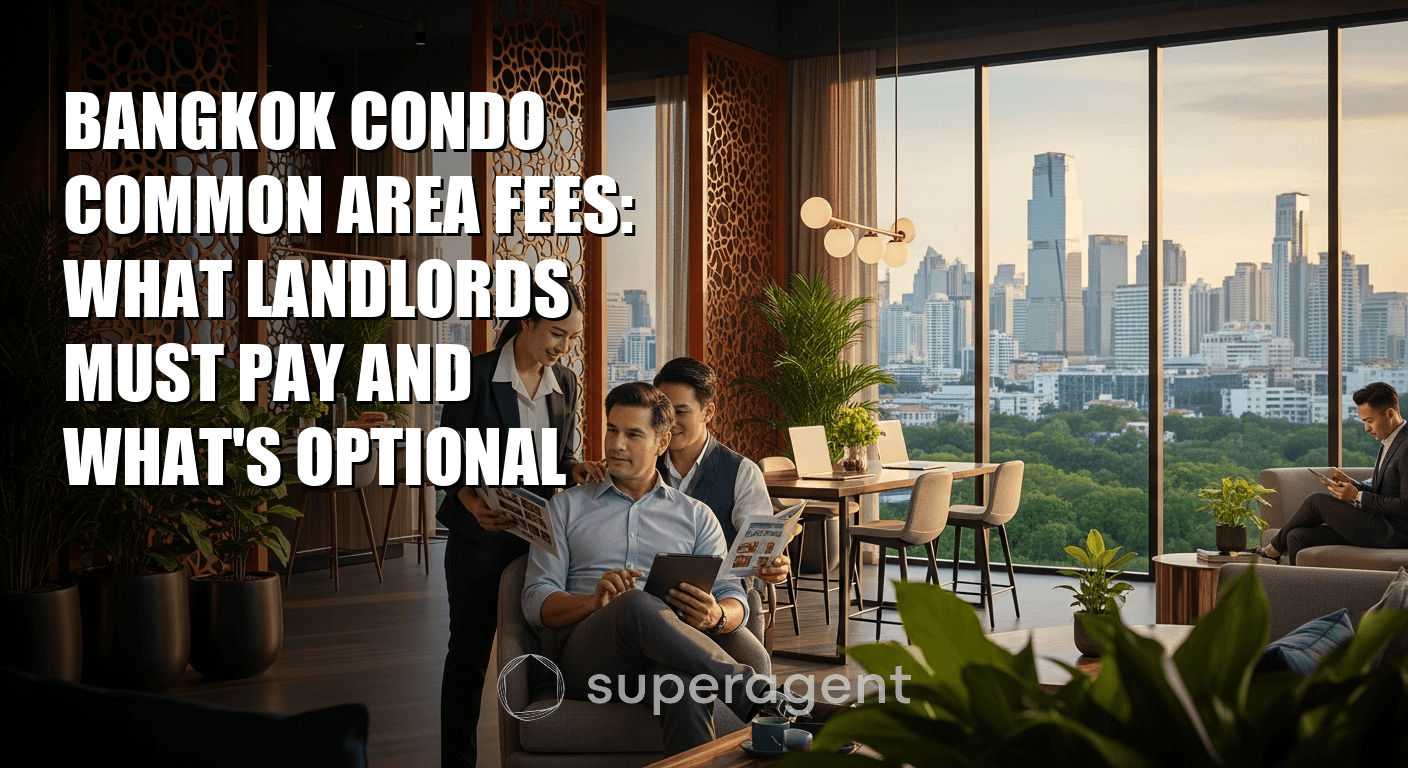
Summary
Learn which condo management fees in Bangkok are mandatory for landlords and which ones you can negotiate or skip to improve cash flow.
You found the perfect condo near BTS Thong Lo. The rent is 25,000 baht per month. Seems straightforward until you notice a line item on the ownership docs: common area fees. If you're a landlord, this recurring cost is yours to deal with. If you're a tenant, understanding it helps you figure out what you're really paying for. Either way, the condo management fee in Bangkok is one of those things that catches people off guard when they don't know how it works.
Let's break down what these fees actually cover, what's mandatory, what's optional, and how they affect both sides of a rental agreement.
What Exactly Is a Condo Management Fee in Bangkok?
Every condominium in Bangkok charges a common area fee, sometimes called a CAM fee or management fee. This is a monthly charge calculated per square meter of your unit. It covers the upkeep of shared spaces like lobbies, swimming pools, gyms, elevators, security, and landscaping.
Rates vary wildly depending on the building. A modest condo near MRT Huai Khwang might charge 35 to 50 baht per square meter. A luxury project like Esse Asoke or 98 Wireless could charge 80 to 120 baht per square meter or more. For a 40 sqm unit at 55 baht per sqm, that's 2,200 baht per month, a cost that adds up to 26,400 baht per year.
Here's the important part: this fee is the legal responsibility of the unit owner, not the tenant. It's tied to ownership, not occupancy. Even if your condo sits empty for six months, you still owe the juristic person office every single baht.
Take a one bedroom at Life Ladprao, for example. The management fee runs around 50 baht per sqm. On a 35 sqm unit rented out at 18,000 baht per month, the owner is paying roughly 1,750 baht monthly just for common area upkeep. That's a real chunk of your rental yield that many first time landlords forget to factor in.
Mandatory Costs Every Landlord Needs to Budget For
Some expenses are non negotiable. The condo management fee in Bangkok is the big one, but it's not alone. Landlords are also responsible for the sinking fund, which is a one time or periodic payment used for major repairs like structural work, elevator replacement, or repainting the building exterior. Sinking fund contributions are usually 500 to 1,000 baht per square meter, paid at the time of transfer or as assessed by the juristic person.
Property tax is another mandatory cost. Since the 2020 reform, landlords renting out condos pay a tax based on the appraised value. For most Bangkok condos in the 3 to 8 million baht range, this amount is modest, often just a few thousand baht per year, but it's still your responsibility as the owner.
Then there's insurance. While not legally required, building insurance is usually bundled into the common area fee. However, contents insurance for the unit itself is on the landlord to arrange separately. If you've furnished a condo near BTS Ari with 200,000 baht worth of furniture and appliances, skipping renter or landlord insurance is a gamble.
A real scenario: a landlord at Ideo Mobi Sukhumvit 81 once skipped paying management fees for eight months. The juristic office cut off access to the pool and gym for the tenant, who then broke the lease early. The landlord lost both the tenant and had to settle the overdue fees with penalties. Don't be that person.
Optional Costs That Landlords Sometimes Pass to Tenants
Here's where things get interesting and sometimes contentious. Certain costs sit in a gray zone where negotiation determines who pays. Electricity and water are almost always the tenant's responsibility, but the method matters. Some buildings charge a flat utility rate that's higher than the Metropolitan Electricity Authority rate. Tenants at older buildings along Sukhumvit Soi 24 have reported paying 8 to 9 baht per unit of electricity instead of the standard 4 to 5 baht.
Parking fees are another optional item. Many buildings include one parking spot with the unit, but extra spaces cost 1,000 to 3,000 baht per month. Whether the landlord or tenant covers this depends on the lease agreement.
Internet installation and monthly service are typically the tenant's domain. But some landlords, especially those renting furnished condos at higher price points like 45,000 baht and up near BTS Phrom Phong, include Wi-Fi as part of the package to stay competitive.
Cleaning of the unit before move in, pest control, and minor appliance repairs also fall into negotiable territory. Smart landlords spell all of this out clearly in the lease to avoid disputes later.
How Management Fees Affect Your Rental Yield
If you own a condo at The Base Park West near BTS On Nut and rent it for 15,000 baht per month, your gross annual income is 180,000 baht. Now subtract the management fee of around 1,500 baht monthly (18,000 per year), property tax, insurance, and occasional maintenance. Your net yield drops from what looked like 5 to 6 percent down to something closer to 3.5 to 4 percent.
This is why experienced landlords in Bangkok always calculate yield after accounting for the condo management fee. Buildings with flashy amenities like rooftop infinity pools, co working spaces, and onsen baths look great for attracting tenants, but they also come with higher management fees that eat into your profit.
The sweet spot for many investors is mid range buildings with reasonable fees and strong tenant demand. Areas around BTS Bearing, MRT Rama 9, and BTS Wutthakat offer exactly this balance.
Tips for Tenants: Know What You're Getting
As a tenant, the management fee isn't your bill, but it directly affects your living experience. A building with a low fee might mean a neglected lobby, a gym with broken equipment, or slow security response. A building with a well funded juristic office usually means clean common areas, working elevators, and responsive management.
Before signing a lease at any Bangkok condo, ask to see the common areas in person. Visit the pool on a weekend. Check if the gym equipment works. Look at the mailroom and parking garage. These details tell you whether the management fee is being put to good use.
At a building like Lumpini Suite Phetchaburi, the low fees keep things affordable, but tenants sometimes report slower maintenance responses. Meanwhile, at Muniq Sukhumvit 23, higher fees fund a noticeably polished living environment. You get what the building pays for.
Whether you're a landlord calculating your true costs or a tenant trying to understand what's behind your rent, the condo management fee in Bangkok is a number that matters more than most people realize. Get clear on who pays what before signing anything. And if you want to compare condos with full transparency on fees, amenities, and real pricing, check out Superagent at superagent.co to search smarter and faster.
You found the perfect condo near BTS Thong Lo. The rent is 25,000 baht per month. Seems straightforward until you notice a line item on the ownership docs: common area fees. If you're a landlord, this recurring cost is yours to deal with. If you're a tenant, understanding it helps you figure out what you're really paying for. Either way, the condo management fee in Bangkok is one of those things that catches people off guard when they don't know how it works.
Let's break down what these fees actually cover, what's mandatory, what's optional, and how they affect both sides of a rental agreement.
What Exactly Is a Condo Management Fee in Bangkok?
Every condominium in Bangkok charges a common area fee, sometimes called a CAM fee or management fee. This is a monthly charge calculated per square meter of your unit. It covers the upkeep of shared spaces like lobbies, swimming pools, gyms, elevators, security, and landscaping.
Rates vary wildly depending on the building. A modest condo near MRT Huai Khwang might charge 35 to 50 baht per square meter. A luxury project like Esse Asoke or 98 Wireless could charge 80 to 120 baht per square meter or more. For a 40 sqm unit at 55 baht per sqm, that's 2,200 baht per month, a cost that adds up to 26,400 baht per year.
Here's the important part: this fee is the legal responsibility of the unit owner, not the tenant. It's tied to ownership, not occupancy. Even if your condo sits empty for six months, you still owe the juristic person office every single baht.
Continue reading after that.
Looking for a condo
to rent?
Leave your name and phone. We'll follow up while you keep reading.
100% Secure
Fast Response
Free Consultation
Take a one bedroom at Life Ladprao, for example. The management fee runs around 50 baht per sqm. On a 35 sqm unit rented out at 18,000 baht per month, the owner is paying roughly 1,750 baht monthly just for common area upkeep. That's a real chunk of your rental yield that many first time landlords forget to factor in.
Mandatory Costs Every Landlord Needs to Budget For
Some expenses are non negotiable. The condo management fee in Bangkok is the big one, but it's not alone. Landlords are also responsible for the sinking fund, which is a one time or periodic payment used for major repairs like structural work, elevator replacement, or repainting the building exterior. Sinking fund contributions are usually 500 to 1,000 baht per square meter, paid at the time of transfer or as assessed by the juristic person.
Property tax is another mandatory cost. Since the 2020 reform, landlords renting out condos pay a tax based on the appraised value. For most Bangkok condos in the 3 to 8 million baht range, this amount is modest, often just a few thousand baht per year, but it's still your responsibility as the owner.
Then there's insurance. While not legally required, building insurance is usually bundled into the common area fee. However, contents insurance for the unit itself is on the landlord to arrange separately. If you've furnished a condo near BTS Ari with 200,000 baht worth of furniture and appliances, skipping renter or landlord insurance is a gamble.
A real scenario: a landlord at Ideo Mobi Sukhumvit 81 once skipped paying management fees for eight months. The juristic office cut off access to the pool and gym for the tenant, who then broke the lease early. The landlord lost both the tenant and had to settle the overdue fees with penalties. Don't be that person.
Optional Costs That Landlords Sometimes Pass to Tenants
Here's where things get interesting and sometimes contentious. Certain costs sit in a gray zone where negotiation determines who pays. Electricity and water are almost always the tenant's responsibility, but the method matters. Some buildings charge a flat utility rate that's higher than the Metropolitan Electricity Authority rate. Tenants at older buildings along Sukhumvit Soi 24 have reported paying 8 to 9 baht per unit of electricity instead of the standard 4 to 5 baht.
Parking fees are another optional item. Many buildings include one parking spot with the unit, but extra spaces cost 1,000 to 3,000 baht per month. Whether the landlord or tenant covers this depends on the lease agreement.
Internet installation and monthly service are typically the tenant's domain. But some landlords, especially those renting furnished condos at higher price points like 45,000 baht and up near BTS Phrom Phong, include Wi-Fi as part of the package to stay competitive.
Cleaning of the unit before move in, pest control, and minor appliance repairs also fall into negotiable territory. Smart landlords spell all of this out clearly in the lease to avoid disputes later.
How Management Fees Affect Your Rental Yield
If you own a condo at The Base Park West near BTS On Nut and rent it for 15,000 baht per month, your gross annual income is 180,000 baht. Now subtract the management fee of around 1,500 baht monthly (18,000 per year), property tax, insurance, and occasional maintenance. Your net yield drops from what looked like 5 to 6 percent down to something closer to 3.5 to 4 percent.
Continue reading after that.
Looking for a condo
to rent?
Leave your name and phone. We'll follow up while you keep reading.
100% Secure
Fast Response
Free Consultation
This is why experienced landlords in Bangkok always calculate yield after accounting for the condo management fee. Buildings with flashy amenities like rooftop infinity pools, co working spaces, and onsen baths look great for attracting tenants, but they also come with higher management fees that eat into your profit.
The sweet spot for many investors is mid range buildings with reasonable fees and strong tenant demand. Areas around BTS Bearing, MRT Rama 9, and BTS Wutthakat offer exactly this balance.
Tips for Tenants: Know What You're Getting
As a tenant, the management fee isn't your bill, but it directly affects your living experience. A building with a low fee might mean a neglected lobby, a gym with broken equipment, or slow security response. A building with a well funded juristic office usually means clean common areas, working elevators, and responsive management.
Before signing a lease at any Bangkok condo, ask to see the common areas in person. Visit the pool on a weekend. Check if the gym equipment works. Look at the mailroom and parking garage. These details tell you whether the management fee is being put to good use.
At a building like Lumpini Suite Phetchaburi, the low fees keep things affordable, but tenants sometimes report slower maintenance responses. Meanwhile, at Muniq Sukhumvit 23, higher fees fund a noticeably polished living environment. You get what the building pays for.
Whether you're a landlord calculating your true costs or a tenant trying to understand what's behind your rent, the condo management fee in Bangkok is a number that matters more than most people realize. Get clear on who pays what before signing anything. And if you want to compare condos with full transparency on fees, amenities, and real pricing, check out Superagent at superagent.co to search smarter and faster.
Share this article
Properties you may like
More like this
 In Guides · Superagent EditorialHidden Costs of Renting a Condo in Bangkok Nobody Warns You AboutBangkok condo rent looks affordable until month one hits. Here are the real costs beyond the headline figure that catch most renters off guard.25 May 20261 min read
 In Guides · Superagent EditorialWhat a Long-Vacant Bangkok Condo Unit Is Actually Telling YouA Bangkok condo vacant for months signals overpricing, landlord issues, or real problems. Here is how to read the signs.25 May 20261 min read
 In Guides · Superagent EditorialRed Flags in a Bangkok Rental Contract to Watch Out ForBangkok rental contracts often hide risky clauses. Here are the red flags every tenant must catch before signing any lease.25 May 20261 min read
 In Guides · Superagent EditorialWorking Online from a Condo: How to Choose the Perfect Room for ProductivityLearn how to choose the best condo room for working online with tips on lighting, noise, and furniture setup to maximize productivity.9 May 20261 min read