Bangkok Condo Water Bills: What to Expect and What's Normal
Guides
Bangkok Condo Water Bills: What to Expect and What's Normal
Understand your monthly water costs and identify unusual charges in Bangkok condos.
Summary
Learn what constitutes a normal water bill bangkok condo expense and how to spot billing errors. Get practical tips for managing water costs effectively.
You just moved into a condo near BTS Bearing, and your first water bill arrives. It says 1,400 baht. You stare at it, wondering if that's normal or if someone is filling a swimming pool with your meter. Water bills in Bangkok condos can be surprisingly confusing, especially when the number on your bill looks nothing like what the Metropolitan Waterworks Authority actually charges per unit. Let's break down what you should really expect to pay, why the numbers vary so much, and how to avoid getting overcharged.
How Water Billing Actually Works in Bangkok Condos
Here's the thing most renters don't realize: the Metropolitan Waterworks Authority (MWA) charges residential users a tiered rate that starts at around 8.50 baht per unit for the first 30 units, going up to roughly 15.81 baht per unit for heavier usage. One unit equals one cubic meter of water. For a single person or couple, monthly usage typically falls between 5 and 15 units. At MWA rates, that works out to maybe 75 to 200 baht per month. Pretty cheap, right?
But that's almost never what you actually pay. Your condo juristic office or your landlord acts as a middleman. They buy water from MWA at bulk rates, then resell it to each unit at a marked up price. This is legal, and it's standard practice across Bangkok. The markup is where things get interesting.
Take a building like Lumpini Ville Sukhumvit 77, near BTS On Nut. The juristic person there might set the water rate at 18 baht per unit. That's a reasonable markup. But walk a few stations down to a smaller building on Soi Udomsuk 29, and the rate could be 35 baht per unit. Same water, same pipes, very different bills.
What's a Normal Water Bill in a Bangkok Condo?
For a single person living in a one bedroom condo, a typical monthly water bill falls between 150 and 500 baht. If you're a couple, expect 300 to 700 baht. A family of four can see bills between 500 and 1,200 baht. These ranges assume your building charges somewhere between 18 and 35 baht per unit, which covers the vast majority of Bangkok condos.
If your bill consistently exceeds these ranges, something might be off. Either your building charges an unusually high per unit rate, you have a leak, or your usage habits are on the heavy side. Long showers, running the washing machine daily, and hand washing dishes with the tap running all add up faster than you'd think.
A friend of mine renting a two bedroom unit at Life Asoke Hype near MRT Phetchaburi was paying 900 baht a month for water. She thought it was excessive until she realized her building charged 22 baht per unit and she was using about 40 units monthly because of daily laundry for her two kids. The math checked out. It wasn't a scam. It was just life with small children.
Why Some Buildings Charge Way More Than Others
The per unit rate your condo charges is set by the juristic person or the building management. There's no single government cap on what they can charge, though the rate should be disclosed in your condo rules or your lease agreement. Some buildings keep it close to MWA rates as a resident perk. Others use water fees as a revenue stream to subsidize common area maintenance.
Older buildings tend to charge more per unit because their plumbing systems are less efficient and water loss through aging pipes gets factored into the cost. A place like Waterford Diamond Tower on Sukhumvit Soi 30/1, built in the early 2000s, might have higher utility rates than a newer project like Ideo Mobi Sukhumvit 66, simply because infrastructure maintenance costs more in older developments.
Some landlords add their own markup on top of the building's rate. This is where you need to read your lease carefully. If the building charges 20 baht per unit but your landlord bills you 40 baht per unit, that's a 100 percent markup going straight into their pocket. Always ask to see the building's official rate schedule before you sign.
How to Check If You're Being Overcharged
First, find out your building's official water rate. This is usually posted in the lobby, available from the juristic office, or listed in the building's house rules document. Compare that number against what appears on your bill from your landlord.
Second, check your meter yourself. Most condo water meters are located in a utility closet on your floor or near the building's main water supply area. Take a photo at the start and end of each month. Multiply the difference by your building's rate. If the math doesn't match your bill, you have grounds to question it.
I once helped a tenant in a condo on Ratchadaphisek Soi 36, near MRT Lat Phrao. His landlord was billing him a flat 1,500 baht monthly for water, regardless of usage. When we checked the meter, his actual consumption was about 8 units per month. At the building's rate of 20 baht per unit, his real cost was 160 baht. The landlord had been pocketing over 1,300 baht every single month. That flat rate arrangement in his lease was technically what he agreed to, but he renegotiated it on his next renewal.
Tips to Keep Your Water Bill Low
The simplest move is checking for toilet leaks. A running toilet can waste hundreds of liters per day without you noticing. Drop some food coloring into the tank. If color appears in the bowl without flushing, you have a leak. Report it to your landlord or building management immediately.
Use your washing machine efficiently. Full loads only. A half empty machine uses nearly the same water as a full one. If your condo has a shared laundry room, like many units around BTS Saphan Khwai in the 8,000 to 12,000 baht per month range do, consider using that instead of running a small in unit machine multiple times per week.
Shorter showers help too, obviously. Switching from a 15 minute shower to an 8 minute one can cut your water usage by nearly half. In a city where you might shower twice a day during the hot season, that adds up to real savings over a month.
Water bills in Bangkok condos shouldn't be a mystery. Know your building's rate, read your meter, and check your lease terms. A few minutes of homework can save you hundreds of baht every month and spare you the frustration of feeling overcharged. If you're searching for a new condo rental and want transparent information about utility costs upfront, Superagent at superagent.co can help you compare listings with real details, so you know exactly what you're getting into before you sign anything.
You just moved into a condo near BTS Bearing, and your first water bill arrives. It says 1,400 baht. You stare at it, wondering if that's normal or if someone is filling a swimming pool with your meter. Water bills in Bangkok condos can be surprisingly confusing, especially when the number on your bill looks nothing like what the Metropolitan Waterworks Authority actually charges per unit. Let's break down what you should really expect to pay, why the numbers vary so much, and how to avoid getting overcharged.
How Water Billing Actually Works in Bangkok Condos
Here's the thing most renters don't realize: the Metropolitan Waterworks Authority (MWA) charges residential users a tiered rate that starts at around 8.50 baht per unit for the first 30 units, going up to roughly 15.81 baht per unit for heavier usage. One unit equals one cubic meter of water. For a single person or couple, monthly usage typically falls between 5 and 15 units. At MWA rates, that works out to maybe 75 to 200 baht per month. Pretty cheap, right?
But that's almost never what you actually pay. Your condo juristic office or your landlord acts as a middleman. They buy water from MWA at bulk rates, then resell it to each unit at a marked up price. This is legal, and it's standard practice across Bangkok. The markup is where things get interesting.
Continue reading after that.
Looking for a condo
to rent?
Leave your name and phone. We'll follow up while you keep reading.
100% Secure
Fast Response
Free Consultation
Take a building like Lumpini Ville Sukhumvit 77, near BTS On Nut. The juristic person there might set the water rate at 18 baht per unit. That's a reasonable markup. But walk a few stations down to a smaller building on Soi Udomsuk 29, and the rate could be 35 baht per unit. Same water, same pipes, very different bills.
What's a Normal Water Bill in a Bangkok Condo?
For a single person living in a one bedroom condo, a typical monthly water bill falls between 150 and 500 baht. If you're a couple, expect 300 to 700 baht. A family of four can see bills between 500 and 1,200 baht. These ranges assume your building charges somewhere between 18 and 35 baht per unit, which covers the vast majority of Bangkok condos.
If your bill consistently exceeds these ranges, something might be off. Either your building charges an unusually high per unit rate, you have a leak, or your usage habits are on the heavy side. Long showers, running the washing machine daily, and hand washing dishes with the tap running all add up faster than you'd think.
A friend of mine renting a two bedroom unit at Life Asoke Hype near MRT Phetchaburi was paying 900 baht a month for water. She thought it was excessive until she realized her building charged 22 baht per unit and she was using about 40 units monthly because of daily laundry for her two kids. The math checked out. It wasn't a scam. It was just life with small children.
Why Some Buildings Charge Way More Than Others
The per unit rate your condo charges is set by the juristic person or the building management. There's no single government cap on what they can charge, though the rate should be disclosed in your condo rules or your lease agreement. Some buildings keep it close to MWA rates as a resident perk. Others use water fees as a revenue stream to subsidize common area maintenance.
Older buildings tend to charge more per unit because their plumbing systems are less efficient and water loss through aging pipes gets factored into the cost. A place like Waterford Diamond Tower on Sukhumvit Soi 30/1, built in the early 2000s, might have higher utility rates than a newer project like Ideo Mobi Sukhumvit 66, simply because infrastructure maintenance costs more in older developments.
Some landlords add their own markup on top of the building's rate. This is where you need to read your lease carefully. If the building charges 20 baht per unit but your landlord bills you 40 baht per unit, that's a 100 percent markup going straight into their pocket. Always ask to see the building's official rate schedule before you sign.
How to Check If You're Being Overcharged
First, find out your building's official water rate. This is usually posted in the lobby, available from the juristic office, or listed in the building's house rules document. Compare that number against what appears on your bill from your landlord.
Second, check your meter yourself. Most condo water meters are located in a utility closet on your floor or near the building's main water supply area. Take a photo at the start and end of each month. Multiply the difference by your building's rate. If the math doesn't match your bill, you have grounds to question it.
I once helped a tenant in a condo on Ratchadaphisek Soi 36, near MRT Lat Phrao. His landlord was billing him a flat 1,500 baht monthly for water, regardless of usage. When we checked the meter, his actual consumption was about 8 units per month. At the building's rate of 20 baht per unit, his real cost was 160 baht. The landlord had been pocketing over 1,300 baht every single month. That flat rate arrangement in his lease was technically what he agreed to, but he renegotiated it on his next renewal.
Continue reading after that.
Looking for a condo
to rent?
Leave your name and phone. We'll follow up while you keep reading.
100% Secure
Fast Response
Free Consultation
Tips to Keep Your Water Bill Low
The simplest move is checking for toilet leaks. A running toilet can waste hundreds of liters per day without you noticing. Drop some food coloring into the tank. If color appears in the bowl without flushing, you have a leak. Report it to your landlord or building management immediately.
Use your washing machine efficiently. Full loads only. A half empty machine uses nearly the same water as a full one. If your condo has a shared laundry room, like many units around BTS Saphan Khwai in the 8,000 to 12,000 baht per month range do, consider using that instead of running a small in unit machine multiple times per week.
Shorter showers help too, obviously. Switching from a 15 minute shower to an 8 minute one can cut your water usage by nearly half. In a city where you might shower twice a day during the hot season, that adds up to real savings over a month.
Water bills in Bangkok condos shouldn't be a mystery. Know your building's rate, read your meter, and check your lease terms. A few minutes of homework can save you hundreds of baht every month and spare you the frustration of feeling overcharged. If you're searching for a new condo rental and want transparent information about utility costs upfront, Superagent at superagent.co can help you compare listings with real details, so you know exactly what you're getting into before you sign anything.
Share this article
Properties you may like
![[For Rent/Sale] CONDO I THE XXXIX by Sansiri I 2 Beds I 2 Baths I 81.58 sqm I PHROMPHONG I 85,000THB/mo - 24MB for Sale](/_next/image?url=https%3A%2F%2Fstorage.googleapis.com%2Fsuperagent-web%2Fattachments%2Flistings%2F1273%2Fb836cd13-fbb3-4368-8517-91f16f28dd78-179-5.jpg&w=3840&q=75)
฿85,000
2 Bed281.6 sqm
[For Rent/Sale] CONDO I THE XXXIX by Sansiri I 2 Beds I 2 Baths I 81.58 sqm I PHROMPHONG I 85,000THB/mo - 24MB for Sale
Phrom Phong
Condo![[For Rent] CONDO I DIAMOND TOWER I 2 Beds I 2 Baths I 36,000THB/mo](/_next/image?url=https%3A%2F%2Fstorage.googleapis.com%2Fsuperagent-web%2Fattachments%2Flistings%2F6730%2F98b3b4b0-4601-4a49-9d63-bea12dc8a00a-1105-8.jpg&w=3840&q=75)
฿36,000
2 Bed274 sqm
[For Rent] CONDO I DIAMOND TOWER I 2 Beds I 2 Baths I 36,000THB/mo
Condo![[For Rent] CONDO I Las Colinas Condominium I 2 Beds I 3 Baths I 85,000THB/mo](/_next/image?url=https%3A%2F%2Fstorage.googleapis.com%2Fsuperagent-web%2Fattachments%2Flistings%2F6828%2F80f345c4-488e-43b2-b017-c9fbb17b520d-99486dd8-4237-4ba2-9207-01ce4f66b21f-media.jpg&w=3840&q=75)
฿85,000
2 Bed3170 sqm
[For Rent] CONDO I Las Colinas Condominium I 2 Beds I 3 Baths I 85,000THB/mo
Asoke
Condo![[For Rent] CONDO I Ashton Asoke - Rama 9I 1 Bed I 1 Bath I 29,000THB/mo](/_next/image?url=https%3A%2F%2Fstorage.googleapis.com%2Fsuperagent-web%2Fattachments%2Flistings%2F6830%2F363f8225-7a0b-41e7-9b70-e267d2082fbb-1198-4.jpg&w=3840&q=75)
฿29,000
1 Bed133 sqm
[For Rent] CONDO I Ashton Asoke - Rama 9I 1 Bed I 1 Bath I 29,000THB/mo
Rama 9
Condo
฿20,000
1 Bed127.5 sqm
1-BR Condo at One 9 Five Asoke - Rama 9 near MRT Phra Ram 9
Rama 9
Condo
฿18,000
1 Bed126.9 sqm
1-BR Condo at Whizdom Connect Sukhumvit near BTS Punnawithi
Punnawithi
Condo
฿23,000
1 Bed150 sqm
1-BR Condo at Lumpini Suite Ratchada-Rama 3 in Chong Nonsi
Condo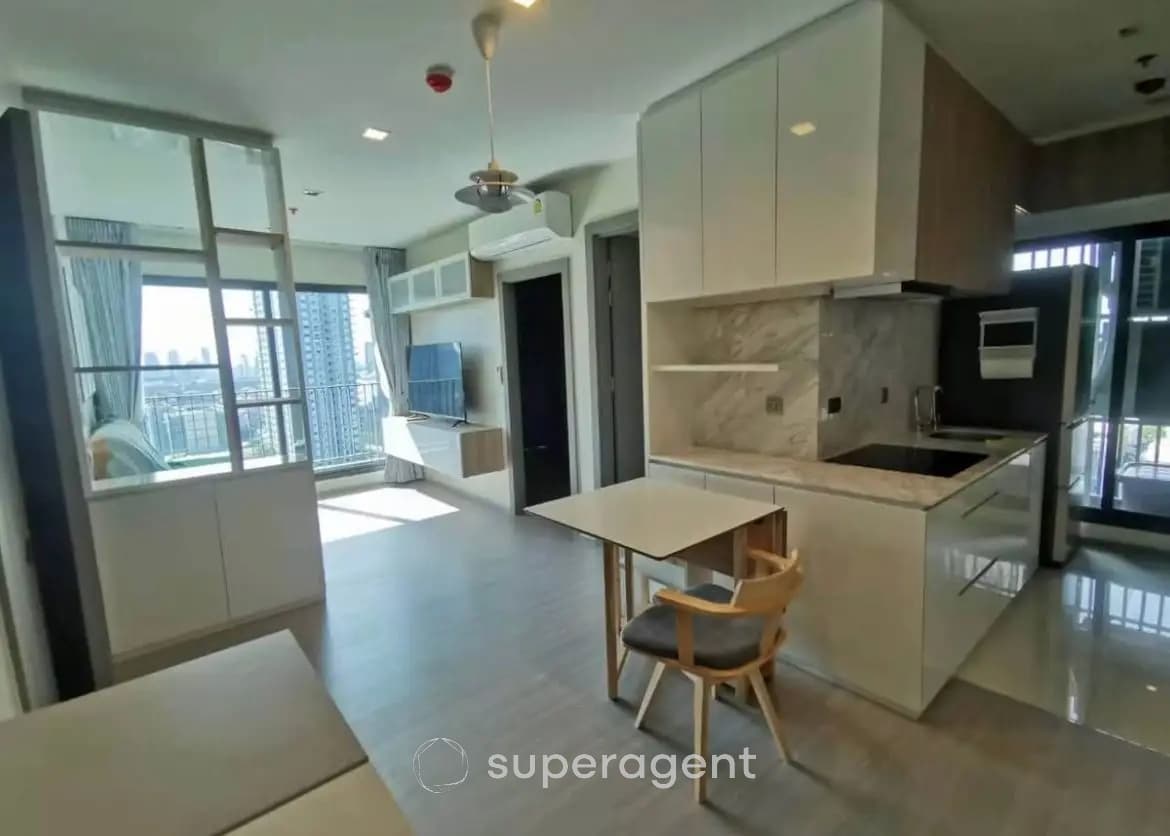
฿45,000
2 Bed258 sqm
2-BR Condo at Life Asoke - Rama 9 near MRT Phra Ram 9
Asoke
Condo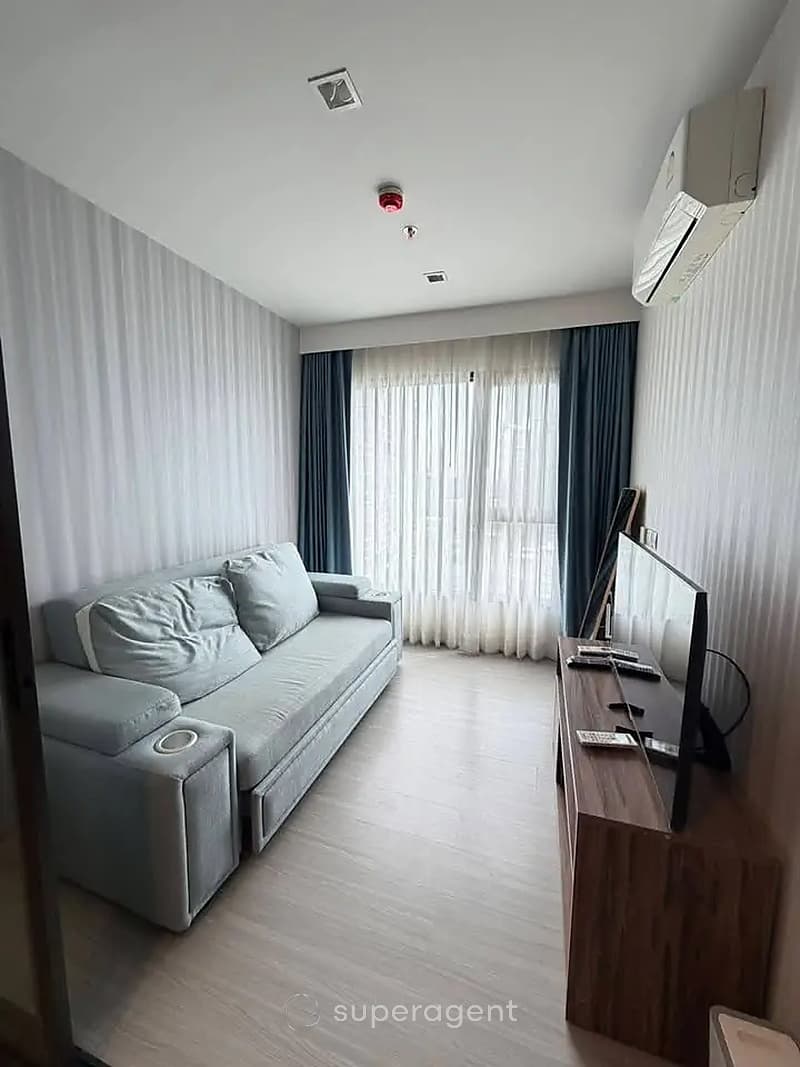
฿23,000
1 Bed140 sqm
1-BR Condo at Life Asoke - Rama 9 near MRT Phra Ram 9
Asoke
Condo
฿20,000
1 Bed141 sqm
1-BR Condo at Villa Asoke near MRT Phetchaburi
CondoMore like this
 In Guides · Superagent EditorialHidden Costs of Renting a Condo in Bangkok Nobody Warns You AboutBangkok condo rent looks affordable until month one hits. Here are the real costs beyond the headline figure that catch most renters off guard.25 May 20261 min read
 In Guides · Superagent EditorialWhat a Long-Vacant Bangkok Condo Unit Is Actually Telling YouA Bangkok condo vacant for months signals overpricing, landlord issues, or real problems. Here is how to read the signs.25 May 20261 min read
 In Guides · Superagent EditorialRed Flags in a Bangkok Rental Contract to Watch Out ForBangkok rental contracts often hide risky clauses. Here are the red flags every tenant must catch before signing any lease.25 May 20261 min read
 In Guides · Superagent EditorialWorking Online from a Condo: How to Choose the Perfect Room for ProductivityLearn how to choose the best condo room for working online with tips on lighting, noise, and furniture setup to maximize productivity.9 May 20261 min read