Damaged Bangkok Condo Rentals: Who's Responsible for Repairs?
Guides
Damaged Bangkok Condo Rentals: Who's Responsible for Repairs?
Learn who pays for repairs in Bangkok condo rentals and protect your rights.
Summary
Confused about condo repair responsibility? Discover who must handle repairs, maintenance costs, and tenant rights when renting in Bangkok.
You're sitting in your 35,000 baht Thonglor condo, and suddenly the air conditioning dies. The bedroom ceiling has a suspicious water stain. The kitchen tap won't stop dripping. Your first thought? "Am I paying for this repair, or is the landlord?" Welcome to one of the most confusing parts of renting a condo in Bangkok. The answer isn't always straightforward, and plenty of tenants end up throwing money at problems they shouldn't be paying for.
The truth is, Thai rental law doesn't spell out repair responsibility the same way Western countries do. It depends on what's broken, why it's broken, how old the building is, and sometimes just how much your landlord likes you. Let's break down who actually pays when something goes wrong in your Bangkok apartment.
What Does Thai Law Actually Say About Repairs?
Thailand's Civil and Commercial Code does give landlords and tenants some guidance, but it's vague enough to cause real headaches. Basically, the law says the landlord must keep the rental property in a condition suitable for the agreed purpose. That sounds clear, right? Not really.
The landlord is technically responsible for major structural issues, building systems, and things that came with the property when you moved in. You're responsible for damage caused by your own carelessness or intentional actions. But in Bangkok's condo rental market, most agreements are informal. You might have a one-page contract or just a WhatsApp message from the owner.
This is where rental agreements actually matter more than the law. A solid contract spells out exactly who fixes what. If your lease says the tenant pays for all repairs under 5,000 baht, then that's what applies, not what the law technically says. Problem is, many people renting furnished condos near BTS Nana or in Ekkamai don't have a detailed written contract at all.
Who Pays for Broken Appliances and Built-In Systems?
Here's where Bangkok renters get stung most often. The air conditioning stops working, the washing machine breaks, or the water heater dies. The landlord says it's your fault. You say it just happened. Who's right?
If the appliance came with the unit and was working when you moved in, the landlord typically covers repair costs or replacement. This includes the air conditioning unit, water heater, fridge, washer, and any built-in kitchen appliances. The key word is "working when you arrived." If you signed a move-in condition report (many landlords do this now, especially for higher-end units in Sathorn or Riverside), that becomes your proof.
Real scenario: You rent a 40,000 baht two-bedroom in Phrom Phong with a split-unit AC that's seven years old. It stops cooling after three months. The landlord says you overused it. Without a move-in condition report, you're stuck negotiating. With documentation showing it worked fine on day one, the landlord generally covers it. Repairs on old units run 2,000 to 8,000 baht, and that's the landlord's problem, not yours.
Things you brought and installed yourself? That's on you. You bought a fancy coffee machine? Your problem if it breaks. You installed extra shelving that damaged the wall? You're paying to fix that before you leave.
Water Damage and Ceiling Leaks: The Nightmare Scenario
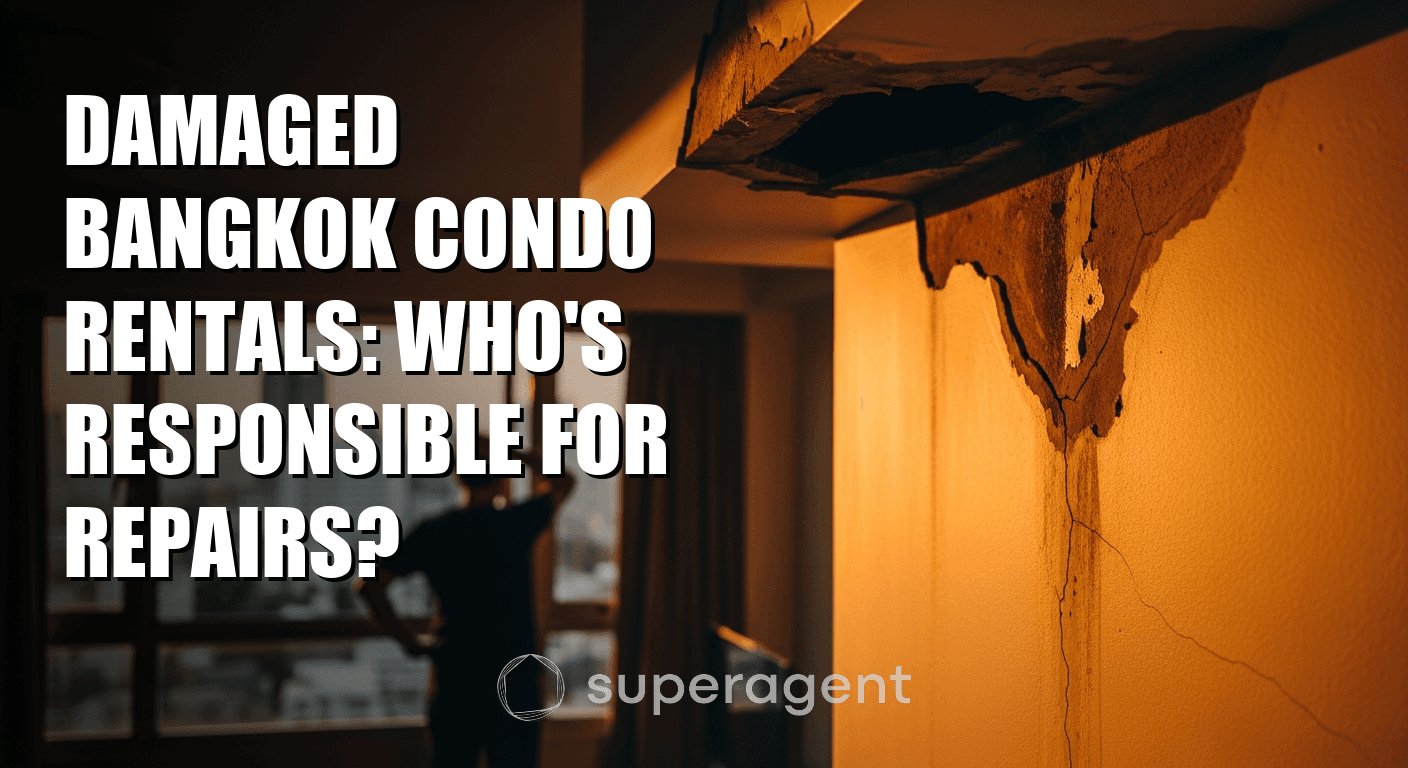
Water damage is where Bangkok renters and landlords fight hardest. Your ceiling leaks. Water drips onto your stuff. Now what? This actually depends on where the leak comes from, which is annoying because you have to investigate.
If the leak comes from upstairs, from building pipes, or from the roof, that's the landlord's responsibility. The building structure and its systems are their job. If you're renting on the fifth floor of a building in Pratunam and water drips through, the landlord or the building management company has to fix it. This can take time though. Buildings in older sois between Sukhumvit 38 and 42 sometimes have aging pipe systems that are a nightmare to repair.
If the leak comes from something you did, you pay. You clogged the toilet and caused overflow? Your problem. You left a window open during monsoon season and water poured in? That's damage you caused. You might also get charged if the landlord proves you didn't report a leak early enough, and it caused additional damage they have to repair.
The smart move is to document everything. Take photos of the leak on your move-in day if it exists. Send a LINE message to your landlord the moment you notice a new leak, with a timestamp and photo. When it's time to leave, these messages protect you from getting blamed for old damage.
Normal Wear and Tear Versus Damage You Caused
This is the gray area that causes the most arguments in Bangkok. After two years in a Samsen condo, paint is peeling. The bathroom tiles are cracked. The door hinges are loose. The landlord says you damaged the property. You say it's just normal aging. Who's right?
Normal wear and tear is the landlord's cost of doing business. Paint chips after a couple of years in a tropical climate. Tiles crack. Doors get sticky in humidity. These are maintenance issues that come with renting out a property in Bangkok. You shouldn't pay for routine maintenance or age-related damage unless you directly caused it.
Damage is something you caused through carelessness or misuse. You punched a hole in the wall. You spilled something and didn't clean it properly, causing stains. You moved furniture recklessly and damaged the flooring. These are clearly your responsibility.
The problem is landlords sometimes try to charge you for maintenance as if you caused it. This is why photos matter. Take photos of the property's condition when you move in, and again when you're leaving. If something looks older in the "move-out" photos versus the "move-in" photos, that's wear and tear, not damage you caused. Send these comparisons to your landlord in a polite LINE message before deposit disputes happen.
Your Rental Contract Is Your Real Protection
A proper rental agreement should spell out repair responsibility clearly. Does the landlord cover all repairs? Do you pay for repairs under 3,000 baht? Is maintenance handled by building management, and you pay them separately? Is there a maintenance fund you contribute to each month?
Before you sign, ask about this stuff. Real landlords in decent buildings will have clear terms. If they're vague or dismissive, that's a red flag. You want to know exactly what you're paying for before a problem happens.
For furnished condos especially, make sure the rental contract lists what comes with the unit and who maintains what. Then photograph everything on day one. It's not fun, but it's the difference between losing 5,000 baht and losing your entire deposit.
Renting a condo in Bangkok doesn't have to end in repair disputes. Clear communication, proper documentation, and a solid contract protect both you and your landlord. When you're searching for your next place on Superagent.co, pay attention to how responsive the owner is to questions about maintenance and repairs. That tells you everything about what your rental experience will actually look like.
You're sitting in your 35,000 baht Thonglor condo, and suddenly the air conditioning dies. The bedroom ceiling has a suspicious water stain. The kitchen tap won't stop dripping. Your first thought? "Am I paying for this repair, or is the landlord?" Welcome to one of the most confusing parts of renting a condo in Bangkok. The answer isn't always straightforward, and plenty of tenants end up throwing money at problems they shouldn't be paying for.
The truth is, Thai rental law doesn't spell out repair responsibility the same way Western countries do. It depends on what's broken, why it's broken, how old the building is, and sometimes just how much your landlord likes you. Let's break down who actually pays when something goes wrong in your Bangkok apartment.
What Does Thai Law Actually Say About Repairs?
Thailand's Civil and Commercial Code does give landlords and tenants some guidance, but it's vague enough to cause real headaches. Basically, the law says the landlord must keep the rental property in a condition suitable for the agreed purpose. That sounds clear, right? Not really.
The landlord is technically responsible for major structural issues, building systems, and things that came with the property when you moved in. You're responsible for damage caused by your own carelessness or intentional actions. But in Bangkok's condo rental market, most agreements are informal. You might have a one-page contract or just a WhatsApp message from the owner.
Continue reading after that.
Looking for a condo
to rent?
Leave your name and phone. We'll follow up while you keep reading.
100% Secure
Fast Response
Free Consultation
This is where rental agreements actually matter more than the law. A solid contract spells out exactly who fixes what. If your lease says the tenant pays for all repairs under 5,000 baht, then that's what applies, not what the law technically says. Problem is, many people renting furnished condos near BTS Nana or in Ekkamai don't have a detailed written contract at all.
Who Pays for Broken Appliances and Built-In Systems?
Here's where Bangkok renters get stung most often. The air conditioning stops working, the washing machine breaks, or the water heater dies. The landlord says it's your fault. You say it just happened. Who's right?
If the appliance came with the unit and was working when you moved in, the landlord typically covers repair costs or replacement. This includes the air conditioning unit, water heater, fridge, washer, and any built-in kitchen appliances. The key word is "working when you arrived." If you signed a move-in condition report (many landlords do this now, especially for higher-end units in Sathorn or Riverside), that becomes your proof.
Real scenario: You rent a 40,000 baht two-bedroom in Phrom Phong with a split-unit AC that's seven years old. It stops cooling after three months. The landlord says you overused it. Without a move-in condition report, you're stuck negotiating. With documentation showing it worked fine on day one, the landlord generally covers it. Repairs on old units run 2,000 to 8,000 baht, and that's the landlord's problem, not yours.
Things you brought and installed yourself? That's on you. You bought a fancy coffee machine? Your problem if it breaks. You installed extra shelving that damaged the wall? You're paying to fix that before you leave.
Water Damage and Ceiling Leaks: The Nightmare Scenario
Water damage is where Bangkok renters and landlords fight hardest. Your ceiling leaks. Water drips onto your stuff. Now what? This actually depends on where the leak comes from, which is annoying because you have to investigate.
If the leak comes from upstairs, from building pipes, or from the roof, that's the landlord's responsibility. The building structure and its systems are their job. If you're renting on the fifth floor of a building in Pratunam and water drips through, the landlord or the building management company has to fix it. This can take time though. Buildings in older sois between Sukhumvit 38 and 42 sometimes have aging pipe systems that are a nightmare to repair.
If the leak comes from something you did, you pay. You clogged the toilet and caused overflow? Your problem. You left a window open during monsoon season and water poured in? That's damage you caused. You might also get charged if the landlord proves you didn't report a leak early enough, and it caused additional damage they have to repair.
The smart move is to document everything. Take photos of the leak on your move-in day if it exists. Send a LINE message to your landlord the moment you notice a new leak, with a timestamp and photo. When it's time to leave, these messages protect you from getting blamed for old damage.
Normal Wear and Tear Versus Damage You Caused
This is the gray area that causes the most arguments in Bangkok. After two years in a Samsen condo, paint is peeling. The bathroom tiles are cracked. The door hinges are loose. The landlord says you damaged the property. You say it's just normal aging. Who's right?
Normal wear and tear is the landlord's cost of doing business. Paint chips after a couple of years in a tropical climate. Tiles crack. Doors get sticky in humidity. These are maintenance issues that come with renting out a property in Bangkok. You shouldn't pay for routine maintenance or age-related damage unless you directly caused it.
Continue reading after that.
Looking for a condo
to rent?
Leave your name and phone. We'll follow up while you keep reading.
100% Secure
Fast Response
Free Consultation
Damage is something you caused through carelessness or misuse. You punched a hole in the wall. You spilled something and didn't clean it properly, causing stains. You moved furniture recklessly and damaged the flooring. These are clearly your responsibility.
The problem is landlords sometimes try to charge you for maintenance as if you caused it. This is why photos matter. Take photos of the property's condition when you move in, and again when you're leaving. If something looks older in the "move-out" photos versus the "move-in" photos, that's wear and tear, not damage you caused. Send these comparisons to your landlord in a polite LINE message before deposit disputes happen.
Your Rental Contract Is Your Real Protection
A proper rental agreement should spell out repair responsibility clearly. Does the landlord cover all repairs? Do you pay for repairs under 3,000 baht? Is maintenance handled by building management, and you pay them separately? Is there a maintenance fund you contribute to each month?
Before you sign, ask about this stuff. Real landlords in decent buildings will have clear terms. If they're vague or dismissive, that's a red flag. You want to know exactly what you're paying for before a problem happens.
For furnished condos especially, make sure the rental contract lists what comes with the unit and who maintains what. Then photograph everything on day one. It's not fun, but it's the difference between losing 5,000 baht and losing your entire deposit.
Renting a condo in Bangkok doesn't have to end in repair disputes. Clear communication, proper documentation, and a solid contract protect both you and your landlord. When you're searching for your next place on Superagent.co, pay attention to how responsive the owner is to questions about maintenance and repairs. That tells you everything about what your rental experience will actually look like.
Share this article
Properties you may like
![[For Rent] CONDO I Las Colinas Condominium I 2 Beds I 3 Baths I 85,000THB/mo](/_next/image?url=https%3A%2F%2Fstorage.googleapis.com%2Fsuperagent-web%2Fattachments%2Flistings%2F6828%2F80f345c4-488e-43b2-b017-c9fbb17b520d-99486dd8-4237-4ba2-9207-01ce4f66b21f-media.jpg&w=3840&q=75)
฿85,000
2 Bed3170 sqm
[For Rent] CONDO I Las Colinas Condominium I 2 Beds I 3 Baths I 85,000THB/mo
Asoke
Condo![[For Rent] CONDO I Ashton Asoke I 1 Bed I 1 Bath I 30,000THB/mo](/_next/image?url=https%3A%2F%2Fstorage.googleapis.com%2Fsuperagent-web%2Fattachments%2Flistings%2F6876%2Fb7ce9bbe-f877-4ff5-bb54-8ad0026db940-1272-4.jpg&w=3840&q=75)
฿30,000
1 Bed135 sqm
[For Rent] CONDO I Ashton Asoke I 1 Bed I 1 Bath I 30,000THB/mo
Asoke
Condo![[For Rent] CONDO I Skyrise Avenue Sukhumvit 64 I 2 Beds I 2 Baths I 27,000THB/mo](/_next/image?url=https%3A%2F%2Fstorage.googleapis.com%2Fsuperagent-web%2Fattachments%2Flistings%2F2001%2F670f91de-c251-4e81-971c-8e30ed2158cd-screenshot-2026-07-05-at-11.38.53-pm.png&w=3840&q=75)
฿27,000
2 Bed252 sqm
[For Rent] CONDO I Skyrise Avenue Sukhumvit 64 I 2 Beds I 2 Baths I 27,000THB/mo
Punnawithi
Condo![[For Rent] CONDO I Park Origin Ratchathewi I Duplex I 2 Beds I 1 Bath I 32,000THB/mo](/_next/image?url=https%3A%2F%2Fstorage.googleapis.com%2Fsuperagent-web%2Fattachments%2Flistings%2F6896%2Fb79a7d21-7533-4b0d-bb19-762ebfafab62-1318-6.jpg&w=3840&q=75)
฿32,000
2 Bed135.9 sqm
[For Rent] CONDO I Park Origin Ratchathewi I Duplex I 2 Beds I 1 Bath I 32,000THB/mo
Ratchathewi
Condo![[For Rent] CONDO I Park Origin Phayathai I Studio I 1 Bath I 28,000THB/mo](/_next/image?url=https%3A%2F%2Fstorage.googleapis.com%2Fsuperagent-web%2Fattachments%2Flistings%2F6757%2Fb226df93-94c6-46fa-aeba-ebfadc7f81b8-1000006042.jpg&w=3840&q=75)
฿28,000
Studio129 sqm
[For Rent] CONDO I Park Origin Phayathai I Studio I 1 Bath I 28,000THB/mo
Phaya Thai
Condo![[For Rent] CONDO I Ideo Mobi Sukhumvit 81 I Duplex I 1 Bed I 1 Bath I 28,000THB/mo](/_next/image?url=https%3A%2F%2Fstorage.googleapis.com%2Fsuperagent-web%2Fattachments%2Flistings%2F1849%2Fc8b2c033-3b5f-4615-b2b0-4972f40141f0-705-13.jpg&w=3840&q=75)
฿28,000
1 Bed143 sqm
[For Rent] CONDO I Ideo Mobi Sukhumvit 81 I Duplex I 1 Bed I 1 Bath I 28,000THB/mo
On Nut
Condo![[For Rent] CONDO I Siamese Sukhumvit 48 I 1 Bed I 1 Bath I 28,000THB/mo](/_next/image?url=https%3A%2F%2Fstorage.googleapis.com%2Fsuperagent-web%2Fattachments%2Flistings%2F6841%2Febc2dce2-2e9b-4e6d-a01c-0cfa619dfa13-1231-6.jpg&w=3840&q=75)
฿28,000
1 Bed144 sqm
[For Rent] CONDO I Siamese Sukhumvit 48 I 1 Bed I 1 Bath I 28,000THB/mo
Condo![[For Rent] CONDO I Ashton Asoke I 1 Bed I 1 Bath I 22,000THB/mo](/_next/image?url=https%3A%2F%2Fstorage.googleapis.com%2Fsuperagent-web%2Fattachments%2Flistings%2F6802%2Fe06b9b73-1207-414a-ab04-1685de0c7eaa-20220808_153124_0.jpg&w=3840&q=75)
฿22,000
1 Bed134 sqm
[For Rent] CONDO I Ashton Asoke I 1 Bed I 1 Bath I 22,000THB/mo
Asoke
Condo![[For Rent] CONDO I HQ Thonglor Soi 4 I 1 Bed I 1 Bath I 35,000 THB/mo](/_next/image?url=https%3A%2F%2Fstorage.googleapis.com%2Fsuperagent-web%2Fattachments%2Flistings%2F1445%2F72352585-1bc2-41a8-bd62-ddcbf8189fe9-376-5.jpg&w=3840&q=75)
฿35,000
1 Bed143.6 sqm
[For Rent] CONDO I HQ Thonglor Soi 4 I 1 Bed I 1 Bath I 35,000 THB/mo
Thonglor
Condo![[For Rent] CONDO I The Master Centrium Asoke - Sukhumvit I Duplex I 2 Beds I 3 Baths I 75,000 THB/mo](/_next/image?url=https%3A%2F%2Fstorage.googleapis.com%2Fsuperagent-web%2Fattachments%2Flistings%2F1545%2F97932b6a-c358-45e4-b5f9-995dbf5a3cf0-441-2.jpg&w=3840&q=75)
฿75,000
2 Bed3150 sqm
[For Rent] CONDO I The Master Centrium Asoke - Sukhumvit I Duplex I 2 Beds I 3 Baths I 75,000 THB/mo
Asoke
CondoMore like this
 In Guides · Superagent EditorialHidden Costs of Renting a Condo in Bangkok Nobody Warns You AboutBangkok condo rent looks affordable until month one hits. Here are the real costs beyond the headline figure that catch most renters off guard.25 May 20261 min read
 In Guides · Superagent EditorialWhat a Long-Vacant Bangkok Condo Unit Is Actually Telling YouA Bangkok condo vacant for months signals overpricing, landlord issues, or real problems. Here is how to read the signs.25 May 20261 min read
 In Guides · Superagent EditorialRed Flags in a Bangkok Rental Contract to Watch Out ForBangkok rental contracts often hide risky clauses. Here are the red flags every tenant must catch before signing any lease.25 May 20261 min read
 In Guides · Superagent EditorialWorking Online from a Condo: How to Choose the Perfect Room for ProductivityLearn how to choose the best condo room for working online with tips on lighting, noise, and furniture setup to maximize productivity.9 May 20261 min read