Retiring in Bangkok: A Practical Guide for Expats on a Pension
Lifestyle
Retiring in Bangkok: A Practical Guide for Expats on a Pension
Everything you need to know about living well in Bangkok on a fixed pension income
Summary
Discover how retirees can live comfortably in Bangkok on a pension, from visa options and cost of living to the best neighborhoods.
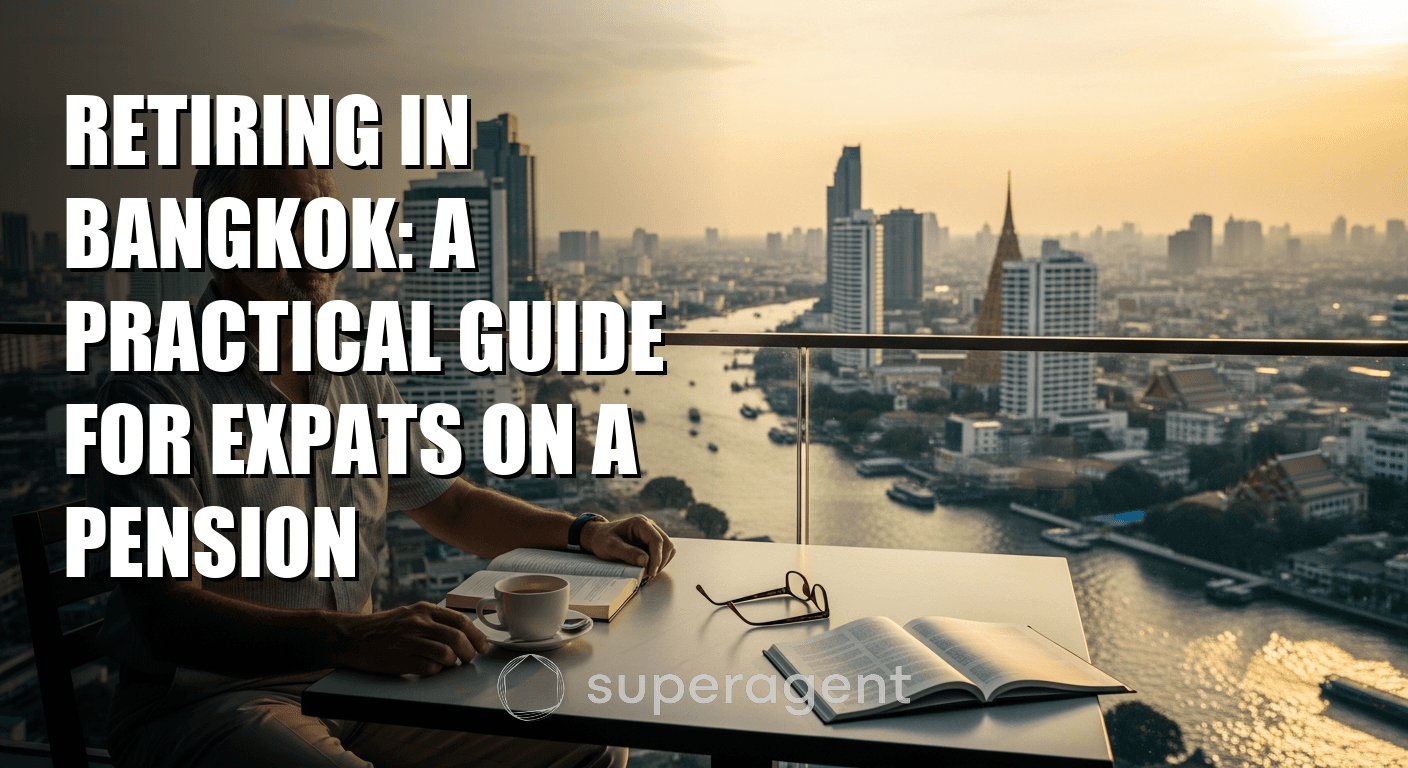
Bangkok has a way of pulling you back. Maybe you visited once on holiday, maybe you lived here for work. But now that retirement is on the horizon, you keep running the numbers and realizing your pension stretches a lot further in Thailand than it ever would back home. You're not alone. Thousands of retirees from the UK, Australia, the US, and across Europe have already made the move. The warm weather, affordable healthcare, incredible food, and genuinely welcoming culture make Bangkok one of the best cities in the world to retire on a fixed income. But making it work takes a bit of planning. Here's how to do it right.
How Far Does a Pension Actually Go in Bangkok?
Let's talk real numbers. If you're receiving a pension of around $1,500 to $2,500 USD per month (roughly 52,000 to 87,000 THB at current exchange rates), you can live comfortably in Bangkok. Not just survive. Actually live well, with a nice condo, regular meals out, and the occasional weekend trip to the coast.
A one bedroom condo near BTS On Nut or BTS Bearing, for example, will run you anywhere from 10,000 to 18,000 THB per month. That leaves plenty for food, transport, healthcare, and entertainment. Compare that to renting even a modest apartment in London or Sydney, and the math speaks for itself.
Take Dave, a retired teacher from Manchester who settled near BTS Udom Suk two years ago. He rents a fully furnished studio at Lumpini Ville Sukhumvit 77 for about 11,000 THB per month. His total monthly expenses, including private hospital visits and golf twice a week, sit around 55,000 THB. His pension covers it with room to spare. If you're curious about what's available in that price range, check out renting a condo in Bangkok on a budget for more examples.
Choosing the Right Neighborhood for Retired Life
Bangkok is massive, and where you choose to live will define your daily experience. The Sukhumvit corridor between BTS Ekkamai and BTS Bearing has become incredibly popular with retirees. It offers easy access to hospitals like Samitivej and Sukhumvit Hospital, major shopping at Mega Bangna, and a mix of Thai and international restaurants.
If you prefer a quieter, more traditional Thai neighborhood, areas around MRT Phra Ram 9 or MRT Huai Khwang offer surprisingly modern condos at lower prices. A one bedroom at The Base Garden Rama 9, for instance, goes for around 12,000 to 15,000 THB. You get a pool, gym, and 24 hour security, and you're minutes from Central Rama 9 for groceries and shopping.
Some retirees love the riverside vibe near BTS Saphan Taksin or the Charoen Nakhon side, where condos like Supalai River Resort offer river views from around 15,000 THB per month. It really depends on whether you want nightlife accessibility or peaceful mornings by the Chao Phraya. For a deeper look at Bangkok's best areas, this guide to the best areas to live in Bangkok breaks things down neighborhood by neighborhood.
Visas and the Retirement Visa Process
Thailand offers a specific Non Immigrant O A visa for retirees aged 50 and over. The main financial requirement is showing 800,000 THB in a Thai bank account (held for at least two months before your application) or proving a monthly income of at least 65,000 THB. You can also use a combination of both.
The process is fairly straightforward, but it does involve paperwork. You'll need a medical certificate, a police clearance from your home country, and proof of funds. Most retirees handle it through an immigration office in Bangkok, with the Chaeng Watthana Government Complex being the main hub. Some people hire visa agents to handle the renewal process each year, which typically costs around 5,000 to 10,000 THB.
One important thing. Your retirement visa does not allow you to work in Thailand. If you plan on doing any freelance consulting or remote work, you'll need to look into other visa categories. But for pure pension based retirement, the O A visa is your best bet.
Healthcare and Hospitals on a Pension Budget
This is the question every retiree asks first, and rightly so. The good news is that Bangkok has some of the best hospitals in Southeast Asia. Bumrungrad International, BNH Hospital, and Bangkok Hospital are world class facilities with English speaking staff and specialists in every field.
A routine doctor visit at a private hospital runs about 1,000 to 2,000 THB. Blood work panels cost around 3,000 to 5,000 THB. Even more serious procedures cost a fraction of what they would in Western countries. A retiree named Margaret from Perth told me she had a full cardiac checkup at Bumrungrad for under 15,000 THB, something that would have cost her over $2,000 AUD back home.
Health insurance is strongly recommended. Plans for retirees in the 60 to 70 age range typically cost between 40,000 and 80,000 THB per year, depending on coverage. Companies like AIA, Cigna, and Pacific Cross offer plans specifically designed for expats living in Thailand.
Renting a Condo as a Retiree: What to Know
The rental process in Bangkok is simpler than in most Western countries. There are no credit checks, no guarantors, and most landlords just ask for two months deposit plus one month rent upfront. Leases are typically 12 months, though some landlords offer flexibility for shorter terms at slightly higher monthly rates.
As a retiree, prioritize buildings with elevators (many older walk ups in Bangkok only have stairs), on site management offices for when things need fixing, and proximity to a BTS or MRT station. Being near a hospital is also a smart consideration. Buildings like Aspire Sukhumvit 48, located between BTS Phra Khanong and BTS On Nut, tick all these boxes and rent from around 13,000 to 20,000 THB for a one bedroom. You can learn more about the nuts and bolts of the process in this guide to renting a condo in Bangkok.
Retiring in Bangkok is not some far fetched dream. It is a very real, very practical option that thousands of people are already living. Your pension goes further, your quality of life improves, and your days are filled with warm weather, great food, and a city that always has something new to offer. The key is doing your research, picking the right neighborhood, and finding a condo that fits your lifestyle and your budget. If you want help with that last part, Superagent at superagent.co makes it easy to search, compare, and book condos across Bangkok, all with verified listings and transparent pricing. Your next chapter might be closer than you think.
Bangkok has a way of pulling you back. Maybe you visited once on holiday, maybe you lived here for work. But now that retirement is on the horizon, you keep running the numbers and realizing your pension stretches a lot further in Thailand than it ever would back home. You're not alone. Thousands of retirees from the UK, Australia, the US, and across Europe have already made the move. The warm weather, affordable healthcare, incredible food, and genuinely welcoming culture make Bangkok one of the best cities in the world to retire on a fixed income. But making it work takes a bit of planning. Here's how to do it right.
How Far Does a Pension Actually Go in Bangkok?
Let's talk real numbers. If you're receiving a pension of around $1,500 to $2,500 USD per month (roughly 52,000 to 87,000 THB at current exchange rates), you can live comfortably in Bangkok. Not just survive. Actually live well, with a nice condo, regular meals out, and the occasional weekend trip to the coast.
A one bedroom condo near BTS On Nut or BTS Bearing, for example, will run you anywhere from 10,000 to 18,000 THB per month. That leaves plenty for food, transport, healthcare, and entertainment. Compare that to renting even a modest apartment in London or Sydney, and the math speaks for itself.
Take Dave, a retired teacher from Manchester who settled near BTS Udom Suk two years ago. He rents a fully furnished studio at Lumpini Ville Sukhumvit 77 for about 11,000 THB per month. His total monthly expenses, including private hospital visits and golf twice a week, sit around 55,000 THB. His pension covers it with room to spare. If you're curious about what's available in that price range, check out renting a condo in Bangkok on a budget for more examples.
Continue reading after that.
Looking for a condo
to rent?
Leave your name and phone. We'll follow up while you keep reading.
100% Secure
Fast Response
Free Consultation
Choosing the Right Neighborhood for Retired Life
Bangkok is massive, and where you choose to live will define your daily experience. The Sukhumvit corridor between BTS Ekkamai and BTS Bearing has become incredibly popular with retirees. It offers easy access to hospitals like Samitivej and Sukhumvit Hospital, major shopping at Mega Bangna, and a mix of Thai and international restaurants.
If you prefer a quieter, more traditional Thai neighborhood, areas around MRT Phra Ram 9 or MRT Huai Khwang offer surprisingly modern condos at lower prices. A one bedroom at The Base Garden Rama 9, for instance, goes for around 12,000 to 15,000 THB. You get a pool, gym, and 24 hour security, and you're minutes from Central Rama 9 for groceries and shopping.
Some retirees love the riverside vibe near BTS Saphan Taksin or the Charoen Nakhon side, where condos like Supalai River Resort offer river views from around 15,000 THB per month. It really depends on whether you want nightlife accessibility or peaceful mornings by the Chao Phraya. For a deeper look at Bangkok's best areas, this guide to the best areas to live in Bangkok breaks things down neighborhood by neighborhood.
Visas and the Retirement Visa Process
Thailand offers a specific Non Immigrant O A visa for retirees aged 50 and over. The main financial requirement is showing 800,000 THB in a Thai bank account (held for at least two months before your application) or proving a monthly income of at least 65,000 THB. You can also use a combination of both.
The process is fairly straightforward, but it does involve paperwork. You'll need a medical certificate, a police clearance from your home country, and proof of funds. Most retirees handle it through an immigration office in Bangkok, with the Chaeng Watthana Government Complex being the main hub. Some people hire visa agents to handle the renewal process each year, which typically costs around 5,000 to 10,000 THB.
One important thing. Your retirement visa does not allow you to work in Thailand. If you plan on doing any freelance consulting or remote work, you'll need to look into other visa categories. But for pure pension based retirement, the O A visa is your best bet.
Healthcare and Hospitals on a Pension Budget
This is the question every retiree asks first, and rightly so. The good news is that Bangkok has some of the best hospitals in Southeast Asia. Bumrungrad International, BNH Hospital, and Bangkok Hospital are world class facilities with English speaking staff and specialists in every field.
A routine doctor visit at a private hospital runs about 1,000 to 2,000 THB. Blood work panels cost around 3,000 to 5,000 THB. Even more serious procedures cost a fraction of what they would in Western countries. A retiree named Margaret from Perth told me she had a full cardiac checkup at Bumrungrad for under 15,000 THB, something that would have cost her over $2,000 AUD back home.
Health insurance is strongly recommended. Plans for retirees in the 60 to 70 age range typically cost between 40,000 and 80,000 THB per year, depending on coverage. Companies like AIA, Cigna, and Pacific Cross offer plans specifically designed for expats living in Thailand.
Continue reading after that.
Looking for a condo
to rent?
Leave your name and phone. We'll follow up while you keep reading.
100% Secure
Fast Response
Free Consultation
Renting a Condo as a Retiree: What to Know
The rental process in Bangkok is simpler than in most Western countries. There are no credit checks, no guarantors, and most landlords just ask for two months deposit plus one month rent upfront. Leases are typically 12 months, though some landlords offer flexibility for shorter terms at slightly higher monthly rates.
As a retiree, prioritize buildings with elevators (many older walk ups in Bangkok only have stairs), on site management offices for when things need fixing, and proximity to a BTS or MRT station. Being near a hospital is also a smart consideration. Buildings like Aspire Sukhumvit 48, located between BTS Phra Khanong and BTS On Nut, tick all these boxes and rent from around 13,000 to 20,000 THB for a one bedroom. You can learn more about the nuts and bolts of the process in this guide to renting a condo in Bangkok.
Retiring in Bangkok is not some far fetched dream. It is a very real, very practical option that thousands of people are already living. Your pension goes further, your quality of life improves, and your days are filled with warm weather, great food, and a city that always has something new to offer. The key is doing your research, picking the right neighborhood, and finding a condo that fits your lifestyle and your budget. If you want help with that last part, Superagent at superagent.co makes it easy to search, compare, and book condos across Bangkok, all with verified listings and transparent pricing. Your next chapter might be closer than you think.
Share this article
Properties you may like
![[For Rent] CONDO I Maestro 14 Siam-Ratchathewi Pet Friendly I 1 Bed I 1 Bath I 22,000THB/mo](/_next/image?url=https%3A%2F%2Fstorage.googleapis.com%2Fsuperagent-web%2Fattachments%2Flistings%2F6686%2F5ae8a77f-b6fb-4578-a765-e56f493cd25f-1058.png&w=3840&q=75)
฿25,000
1 Bed130 sqm
[For Rent] CONDO I Maestro 14 Siam-Ratchathewi Pet Friendly I 1 Bed I 1 Bath I 22,000THB/mo
Siam
Condo![[For Rent] CONDO I Las Colinas Condominium I 2 Beds I 3 Baths I 85,000THB/mo](/_next/image?url=https%3A%2F%2Fstorage.googleapis.com%2Fsuperagent-web%2Fattachments%2Flistings%2F6828%2F80f345c4-488e-43b2-b017-c9fbb17b520d-99486dd8-4237-4ba2-9207-01ce4f66b21f-media.jpg&w=3840&q=75)
฿85,000
2 Bed3170 sqm
[For Rent] CONDO I Las Colinas Condominium I 2 Beds I 3 Baths I 85,000THB/mo
Asoke
Condo![[For Rent] CONDO I The Diplomat 39 I 2 Beds I 2 Baths I 89,000THB/mo](/_next/image?url=https%3A%2F%2Fstorage.googleapis.com%2Fsuperagent-web%2Fattachments%2Flistings%2F6784%2Ff92c62cc-d3be-42df-adca-b8f96fb02cfb-1163-1.jpg&w=3840&q=75)
฿89,000
2 Bed286 sqm
[For Rent] CONDO I The Diplomat 39 I 2 Beds I 2 Baths I 89,000THB/mo
Phrom Phong
Condo![[For Rent] CONDO I KEN Attitude Rattanathibet I Duplex I 2 Beds I 2 Baths I 40,000THB/mo](/_next/image?url=https%3A%2F%2Fstorage.googleapis.com%2Fsuperagent-web%2Fattachments%2Flistings%2F6852%2F17c1715e-4458-4008-bb0b-072a4c081166-img_0557.jpeg&w=3840&q=75)
฿40,000
2 Bed277 sqm
[For Rent] CONDO I KEN Attitude Rattanathibet I Duplex I 2 Beds I 2 Baths I 40,000THB/mo
Condo![[For Rent] CONDO I H Sukhumvit 43 I 1 Bed I 1 Bath I 28,000THB/mo](/_next/image?url=https%3A%2F%2Fstorage.googleapis.com%2Fsuperagent-web%2Fattachments%2Flistings%2F6851%2Ff355c21a-a282-4338-86c6-dc5bb3368321-1244-1.jpg&w=3840&q=75)
฿28,000
1 Bed143 sqm
[For Rent] CONDO I H Sukhumvit 43 I 1 Bed I 1 Bath I 28,000THB/mo
Phrom Phong
Condo![[For Rent] CONDO I The Base Park West T77 I 2 Beds I 2 Baths I 24,000THB/mo](/_next/image?url=https%3A%2F%2Fstorage.googleapis.com%2Fsuperagent-web%2Fattachments%2Flistings%2F6723%2Fabc06b19-f7fa-4950-98f6-8bdd841b26a6-1098-3.jpg&w=3840&q=75)
฿24,000
2 Bed253 sqm
[For Rent] CONDO I The Base Park West T77 I 2 Beds I 2 Baths I 24,000THB/mo
On Nut
Condo![[For Rent] CONDO I The Room Phaya Thai I 1 Bed I 1 Bath I 20,000THB/mo](/_next/image?url=https%3A%2F%2Fstorage.googleapis.com%2Fsuperagent-web%2Fattachments%2Flistings%2F2042%2F47afcf0d-8998-4283-abfe-8451d5c47178-1000029204.jpg&w=3840&q=75)
฿20,000
1 Bed128 sqm
[For Rent] CONDO I The Room Phaya Thai I 1 Bed I 1 Bath I 20,000THB/mo
Condo![[For Rent] CONDO I IDEO Rama 9-Asoke I Duplex I 1 Bed I 1 Bath I 36,000THB/mo](/_next/image?url=https%3A%2F%2Fstorage.googleapis.com%2Fsuperagent-web%2Fattachments%2Flistings%2F6795%2Fa7e5e587-f4be-4b3e-a635-839870c16713-1174-4.jpg&w=3840&q=75)
฿36,000
1 Bed138 sqm
[For Rent] CONDO I IDEO Rama 9-Asoke I Duplex I 1 Bed I 1 Bath I 36,000THB/mo
Condo![[For Rent/Sale] CONDO I Park Origin Thonglor I 3 Beds I 2 Baths I Rent 95,000 THB/mo - Sale 26mb THB](/_next/image?url=https%3A%2F%2Fstorage.googleapis.com%2Fsuperagent-web%2Fattachments%2Flistings%2F1508%2F725e6df5-039f-428c-a0c8-2f5d596e7833-420-1.jpg&w=3840&q=75)
฿95,000
3 Bed272 sqm
[For Rent/Sale] CONDO I Park Origin Thonglor I 3 Beds I 2 Baths I Rent 95,000 THB/mo - Sale 26mb THB
Thonglor
Condo![[For Rent] CONDO I Maru Ekkamai 2 I Pet friendly I 2 Beds I 2 Baths I 68,000 THB/mo](/_next/image?url=https%3A%2F%2Fstorage.googleapis.com%2Fsuperagent-web%2Fattachments%2Flistings%2F6602%2F9f1d8f71-ee43-435f-9a44-da16c4092c92-968-1.jpg&w=3840&q=75)
฿68,000
2 Bed360 sqm
[For Rent] CONDO I Maru Ekkamai 2 I Pet friendly I 2 Beds I 2 Baths I 68,000 THB/mo
Ekkamai
CondoMore like this
 In Lifestyle · Superagent EditorialWhere Bangkok's Expat Communities Are Concentrated: Rental Guide by NationalityDiscover where Bangkok's expat community areas are located. Our rental guide maps out neighborhoods by nationality to help you find your ideal home.12 Apr 20241 min read
 In Lifestyle · Superagent EditorialThe AI Rental Revolution in Bangkok: How Technology Is Changing How Expats Find HomesBangkok rental revolution ai is reshaping how expats find homes. Explore smart technology, virtual tours, and AI-powered matching tools transforming the ma16 Apr 20211 min read
 In Lifestyle · Superagent EditorialMonthly Condo Rentals in Bangkok: Why They Beat Daily Rates Once Your Stay Passes Two WeeksCompare Bangkok daily and monthly condo rates near BTS Thong Lo, Asoke, Ari and On Nut, and see why monthly leases save tens of thousands of baht.19 Jul 20191 min read
 In Lifestyle · Superagent EditorialHow to Negotiate Rent With Thai Condo Landlords: Techniques That Actually Work in BangkokProven tactics for negotiating condo rent with Bangkok landlords, from market research and counter offers to lease length, timing and low season.18 Jul 20191 min read