Sharing a Bangkok Condo: Is It Legal and What Are the Risks?
Guides
Sharing a Bangkok Condo: Is It Legal and What Are the Risks?
Understand the legal gray areas and potential complications before renting out your Bangkok condo room.
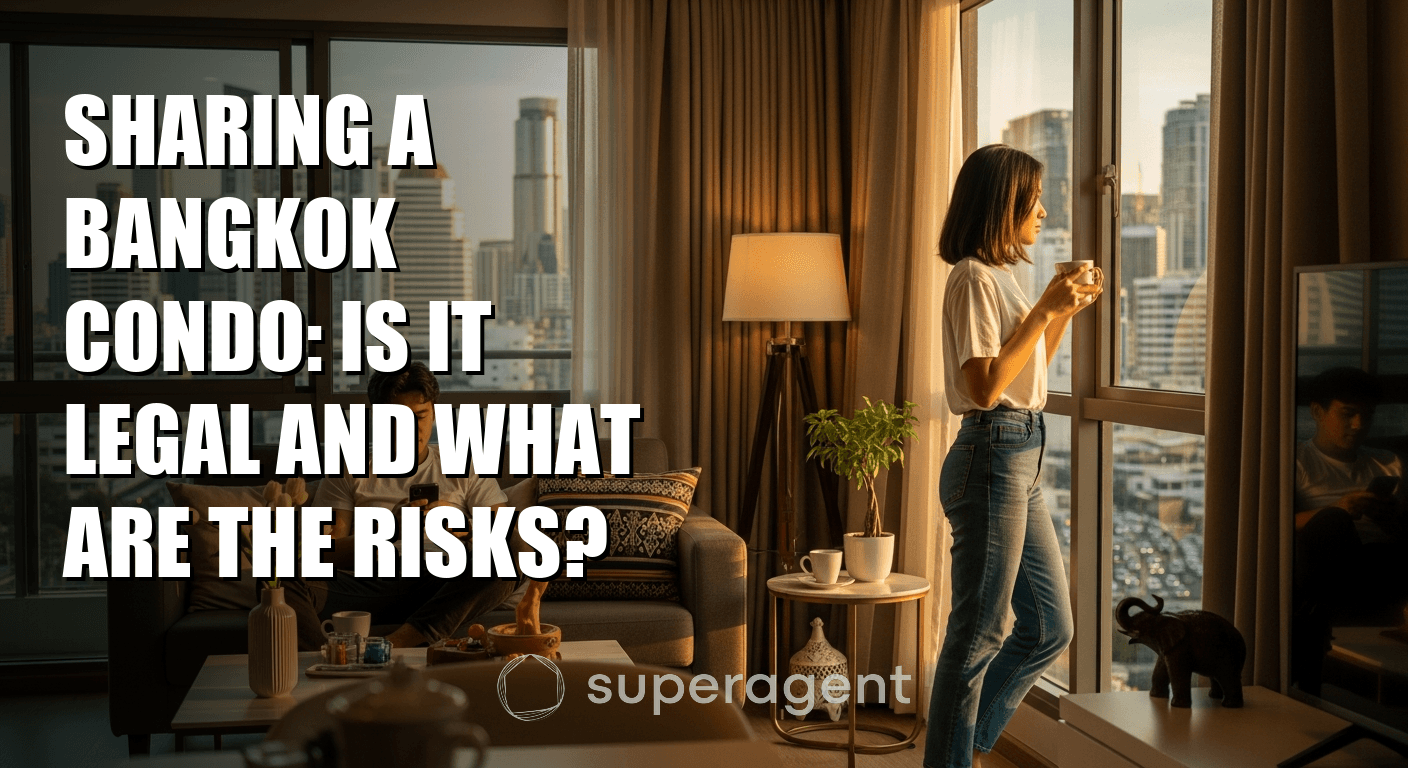
Summary
Sharing a Bangkok condo can be legally risky. Learn about lease violations, tax implications, and insurance issues before subletting your unit.
You found a great condo near BTS Thong Lo. The rent is 25,000 THB per month. The unit has two bedrooms, and you only need one. Splitting the cost with a friend or coworker sounds like a no brainer, right? Before you start dividing up closet space, you need to understand what the rules actually are. Sharing a condo in Bangkok is incredibly common, but the legal and practical risks are real, and most people never think about them until something goes wrong.
What Thai Law Actually Says About Sharing a Condo
Here is the thing most expats get wrong: Thai law does not specifically ban two people from living in the same condo unit. There is no statute that says "you cannot have a roommate." The legal issues come from somewhere else entirely.
If you are a foreigner, your lease agreement and your immigration status are the two areas where sharing gets complicated. Your TM30 registration, the form your landlord files to report where you live, is tied to a specific individual at a specific address. If your roommate is also a foreign national, they need their own TM30 filed for that same unit. Many landlords simply will not do this for a second person they did not vet.
Take a real scenario. Two friends rent a one bedroom at Life Asoke Hype near MRT Phetchaburi for 18,000 THB per month. Only one person signs the lease. The other person is essentially an unreported occupant. If immigration officers ever check, and they do random checks in some buildings, the unregistered person could face a fine or be told to leave. The landlord could also be fined for failing to report.
Your Lease Agreement Is Where the Real Risk Lives
Forget the law for a second. Your lease is a private contract, and most Bangkok condo leases contain a clause that limits occupancy to the named tenant or the named tenant plus one partner or spouse. Some are even stricter.
Landlords in buildings like The Base Sukhumvit 77 near BTS On Nut or Ideo Mobi Rama 9 near MRT Rama 9 often include a clause that says the unit cannot be sublet or shared with anyone not listed on the agreement. If your landlord or the building's juristic office finds out you have an unauthorized occupant, they can terminate your lease. You could lose your security deposit, typically two months of rent, which in a 20,000 THB unit means 40,000 THB gone.
Some buildings enforce this more strictly than others. High end condos like Muniq Sukhumvit 23 near BTS Asok tend to have security that tracks key cards and visitor logs closely. A second person coming and going daily will get noticed fast. Budget buildings in areas like Bang Sue or Bearing tend to be more relaxed, but the contractual risk is still there.
The Juristic Office Factor
Every condo building in Bangkok has a juristic person office. Think of it as the building's management body. They enforce the building's rules, and those rules often go beyond what your lease says.
Many juristic offices require all residents to be registered. They issue key cards, manage parking stickers, and track who lives where. If you quietly move a roommate into your unit at Lumpini Park Rama 9 near MRT Rama 9 without telling the juristic office, you are violating the building's regulations. The juristic office can issue warnings, restrict access, or escalate the matter to your landlord.
I have seen cases where a juristic office at a condo near BTS Ekkamai refused to issue a second key card because the lease only listed one tenant. The roommate had to use the visitor entrance every single day, which eventually triggered a formal complaint from the building.
How to Share a Bangkok Condo the Right Way
If you want to split a condo legally and without drama, there is a clear path. First, be upfront with the landlord before you sign. Tell them you want to share the unit with another person. Many landlords are fine with it, especially for two bedroom units in the 15,000 to 30,000 THB range around areas like BTS Bearing or BTS Wutthakat.
Ask the landlord to list both tenants on the lease. This protects everyone. Both names on the contract means both people are authorized occupants. Both can be registered with the juristic office. Both can have TM30s filed if they are foreigners.
Second, get everything about cost splitting in writing between you and your roommate. Thai courts can enforce written agreements between private parties, so a simple document outlining who pays what, how deposits are split, and what happens if one person leaves early can save you from a nightmare. A two bedroom at Aspire Sukhumvit 48 near BTS Phra Khanong renting for 22,000 THB split two ways is a great deal, but only if both parties know the terms.
What Happens When Things Go Wrong
The worst case scenarios are not hypothetical. A common situation: one roommate moves out early, stops paying their half, and the remaining tenant is stuck covering the full rent or breaking the lease. If only one name is on the contract, that person bears all the liability. The landlord does not care about your informal arrangement.
Another risk is damage disputes. Say your roommate causes water damage in a unit at Centric Ratchada Huai Khwang near MRT Huai Khwang. When it is time to get the deposit back, the landlord deducts repair costs from the total deposit. If you paid the full deposit upfront and your roommate refuses to reimburse you, your only option is small claims court, which is slow and stressful.
Sharing a condo in Bangkok is not illegal, but doing it carelessly can cost you money, your housing, and your peace of mind. The smart move is always transparency. Talk to the landlord, get both names on the lease, register properly, and put your cost sharing arrangement in writing. If you are searching for a condo that fits a shared living setup, Superagent at superagent.co can help you filter for two bedroom units, compare costs by neighborhood, and connect you with landlords who are open to shared tenancies from the start.
You found a great condo near BTS Thong Lo. The rent is 25,000 THB per month. The unit has two bedrooms, and you only need one. Splitting the cost with a friend or coworker sounds like a no brainer, right? Before you start dividing up closet space, you need to understand what the rules actually are. Sharing a condo in Bangkok is incredibly common, but the legal and practical risks are real, and most people never think about them until something goes wrong.
What Thai Law Actually Says About Sharing a Condo
Here is the thing most expats get wrong: Thai law does not specifically ban two people from living in the same condo unit. There is no statute that says "you cannot have a roommate." The legal issues come from somewhere else entirely.
If you are a foreigner, your lease agreement and your immigration status are the two areas where sharing gets complicated. Your TM30 registration, the form your landlord files to report where you live, is tied to a specific individual at a specific address. If your roommate is also a foreign national, they need their own TM30 filed for that same unit. Many landlords simply will not do this for a second person they did not vet.
Take a real scenario. Two friends rent a one bedroom at Life Asoke Hype near MRT Phetchaburi for 18,000 THB per month. Only one person signs the lease. The other person is essentially an unreported occupant. If immigration officers ever check, and they do random checks in some buildings, the unregistered person could face a fine or be told to leave. The landlord could also be fined for failing to report.
Your Lease Agreement Is Where the Real Risk Lives
Forget the law for a second. Your lease is a private contract, and most Bangkok condo leases contain a clause that limits occupancy to the named tenant or the named tenant plus one partner or spouse. Some are even stricter.
Landlords in buildings like The Base Sukhumvit 77 near BTS On Nut or Ideo Mobi Rama 9 near MRT Rama 9 often include a clause that says the unit cannot be sublet or shared with anyone not listed on the agreement. If your landlord or the building's juristic office finds out you have an unauthorized occupant, they can terminate your lease. You could lose your security deposit, typically two months of rent, which in a 20,000 THB unit means 40,000 THB gone.
Some buildings enforce this more strictly than others. High end condos like Muniq Sukhumvit 23 near BTS Asok tend to have security that tracks key cards and visitor logs closely. A second person coming and going daily will get noticed fast. Budget buildings in areas like Bang Sue or Bearing tend to be more relaxed, but the contractual risk is still there.
The Juristic Office Factor
Every condo building in Bangkok has a juristic person office. Think of it as the building's management body. They enforce the building's rules, and those rules often go beyond what your lease says.
Many juristic offices require all residents to be registered. They issue key cards, manage parking stickers, and track who lives where. If you quietly move a roommate into your unit at Lumpini Park Rama 9 near MRT Rama 9 without telling the juristic office, you are violating the building's regulations. The juristic office can issue warnings, restrict access, or escalate the matter to your landlord.
I have seen cases where a juristic office at a condo near BTS Ekkamai refused to issue a second key card because the lease only listed one tenant. The roommate had to use the visitor entrance every single day, which eventually triggered a formal complaint from the building.
How to Share a Bangkok Condo the Right Way
If you want to split a condo legally and without drama, there is a clear path. First, be upfront with the landlord before you sign. Tell them you want to share the unit with another person. Many landlords are fine with it, especially for two bedroom units in the 15,000 to 30,000 THB range around areas like BTS Bearing or BTS Wutthakat.
Talk to us about renting
Share your details and keep reading — we’ll get back to you.
Ask the landlord to list both tenants on the lease. This protects everyone. Both names on the contract means both people are authorized occupants. Both can be registered with the juristic office. Both can have TM30s filed if they are foreigners.
Second, get everything about cost splitting in writing between you and your roommate. Thai courts can enforce written agreements between private parties, so a simple document outlining who pays what, how deposits are split, and what happens if one person leaves early can save you from a nightmare. A two bedroom at Aspire Sukhumvit 48 near BTS Phra Khanong renting for 22,000 THB split two ways is a great deal, but only if both parties know the terms.
What Happens When Things Go Wrong
The worst case scenarios are not hypothetical. A common situation: one roommate moves out early, stops paying their half, and the remaining tenant is stuck covering the full rent or breaking the lease. If only one name is on the contract, that person bears all the liability. The landlord does not care about your informal arrangement.
Another risk is damage disputes. Say your roommate causes water damage in a unit at Centric Ratchada Huai Khwang near MRT Huai Khwang. When it is time to get the deposit back, the landlord deducts repair costs from the total deposit. If you paid the full deposit upfront and your roommate refuses to reimburse you, your only option is small claims court, which is slow and stressful.
Sharing a condo in Bangkok is not illegal, but doing it carelessly can cost you money, your housing, and your peace of mind. The smart move is always transparency. Talk to the landlord, get both names on the lease, register properly, and put your cost sharing arrangement in writing. If you are searching for a condo that fits a shared living setup, Superagent at superagent.co can help you filter for two bedroom units, compare costs by neighborhood, and connect you with landlords who are open to shared tenancies from the start.
Share this article
Properties you may like
![[For Rent] CONDO I Life One Wireless I 2 Beds I 1 Bath I 40,000THB/mo](/_next/image?url=https%3A%2F%2Fstorage.googleapis.com%2Fsuperagent-web%2Fattachments%2Flistings%2F6767%2F03e11a74-9a71-44df-9493-9adc1c934047-1147-6.jpg&w=3840&q=75)
฿40,000
2 Bed145 sqm
[For Rent] CONDO I Life One Wireless I 2 Beds I 1 Bath I 40,000THB/mo
Ploenchit
Condo![[For Rent] CONDO I IDEO Mobi Charan Interchange I 2 Beds I 1 Bath I 22,000THB/mo](/_next/image?url=https%3A%2F%2Fstorage.googleapis.com%2Fsuperagent-web%2Fattachments%2Flistings%2F6766%2F23b6eb3e-caa3-400e-9bcb-c00c2c6f196b-1146-1.jpg&w=3840&q=75)
฿22,000
2 Bed145 sqm
[For Rent] CONDO I IDEO Mobi Charan Interchange I 2 Beds I 1 Bath I 22,000THB/mo
Condo![[For Rent] CONDO I Life Asoke Hype I 1 Bed I 1 Bath I 18,000THB/mo](/_next/image?url=https%3A%2F%2Fstorage.googleapis.com%2Fsuperagent-web%2Fattachments%2Flistings%2F6765%2F80b683ff-1960-428b-bbbc-37b913f8e2c3-1143-3.jpg&w=3840&q=75)
฿18,000
1 Bed126 sqm
[For Rent] CONDO I Life Asoke Hype I 1 Bed I 1 Bath I 18,000THB/mo
Asoke
Condo![[For Rent] CONDO I Witthayu Complex I Pet Friendly I 2 Beds I 1 Bath I 28,000THB/mo](/_next/image?url=https%3A%2F%2Fstorage.googleapis.com%2Fsuperagent-web%2Fattachments%2Flistings%2F6764%2F02d4c7ac-6555-4668-87da-a32133c64277-1145-1.jpg&w=3840&q=75)
฿28,000
2 Bed185 sqm
[For Rent] CONDO I Witthayu Complex I Pet Friendly I 2 Beds I 1 Bath I 28,000THB/mo
Condo![[For Rent] CONDO I Witthayu Complex I Pet Friendly I 2 Beds I 2 Baths I 35,000THB/mo](/_next/image?url=https%3A%2F%2Fstorage.googleapis.com%2Fsuperagent-web%2Fattachments%2Flistings%2F6763%2F2c2d8fb9-5284-4d27-8451-8658173f9bfb-1144-5.jpg&w=3840&q=75)
฿35,000
2 Bed295 sqm
[For Rent] CONDO I Witthayu Complex I Pet Friendly I 2 Beds I 2 Baths I 35,000THB/mo
Condo![[For Rent] CONDO I UP Ekkamai I Pet Friendly I 2 Beds I 2 Baths I 40,000THB/mo](/_next/image?url=https%3A%2F%2Fstorage.googleapis.com%2Fsuperagent-web%2Fattachments%2Flistings%2F6762%2F28ea39dc-4e7d-4dc5-b8bc-fa254e6512c6-1142-1.jpg&w=3840&q=75)
฿40,003
2 Bed260 sqm
[For Rent] CONDO I UP Ekkamai I Pet Friendly I 2 Beds I 2 Baths I 40,000THB/mo
Condo![[For Rent] CONDO I Ideo Q Phayathai I 2 Beds I 2 Baths I 50,000THB/mo](/_next/image?url=https%3A%2F%2Fstorage.googleapis.com%2Fsuperagent-web%2Fattachments%2Flistings%2F6761%2Fd56dc353-7436-451a-b407-76100af6b15f-1141-1.jpg&w=3840&q=75)
฿50,000
2 Bed275 sqm
[For Rent] CONDO I Ideo Q Phayathai I 2 Beds I 2 Baths I 50,000THB/mo
Phaya Thai
Condo![[For Rent] CONDO I Culture Chula I Duplex I 1 Bed I 1 Bath I 35,000THB/mo](/_next/image?url=https%3A%2F%2Fstorage.googleapis.com%2Fsuperagent-web%2Fattachments%2Flistings%2F6760%2F8deaff98-ecb1-4c62-b9be-aecac2f65797-1140-1.jpg&w=3840&q=75)
฿35,000
1 Bed138 sqm
[For Rent] CONDO I Culture Chula I Duplex I 1 Bed I 1 Bath I 35,000THB/mo
Siam
Condo![[For Rent] CONDO I The River Condominium I 2 Beds I 3 Baths I 55,000THB/mo](/_next/image?url=https%3A%2F%2Fstorage.googleapis.com%2Fsuperagent-web%2Fattachments%2Flistings%2F6745%2Fa48d8ae3-8857-408d-81ff-45eb890fbdb9-1000011745.jpg&w=3840&q=75)
฿55,000
2 Bed398 sqm
[For Rent] CONDO I The River Condominium I 2 Beds I 3 Baths I 55,000THB/mo
Wongwian Yai
Condo![[For Rent] CONDO I Park Origin Phayathai I Studio I 1 Bath I 28,000THB/mo](/_next/image?url=https%3A%2F%2Fstorage.googleapis.com%2Fsuperagent-web%2Fattachments%2Flistings%2F6757%2Fb226df93-94c6-46fa-aeba-ebfadc7f81b8-1000006042.jpg&w=3840&q=75)
฿28,000
Studio129 sqm
[For Rent] CONDO I Park Origin Phayathai I Studio I 1 Bath I 28,000THB/mo
Phaya Thai
CondoMore like this
 In Guides · Superagent EditorialHidden Costs of Renting a Condo in Bangkok Nobody Warns You AboutBangkok condo rent looks affordable until month one hits. Here are the real costs beyond the headline figure that catch most renters off guard.25 May 20261 min read
 In Guides · Superagent EditorialWhat a Long-Vacant Bangkok Condo Unit Is Actually Telling YouA Bangkok condo vacant for months signals overpricing, landlord issues, or real problems. Here is how to read the signs.25 May 20261 min read
 In Guides · Superagent EditorialRed Flags in a Bangkok Rental Contract to Watch Out ForBangkok rental contracts often hide risky clauses. Here are the red flags every tenant must catch before signing any lease.25 May 20261 min read
 In Guides · Superagent EditorialWorking Online from a Condo: How to Choose the Perfect Room for ProductivityLearn how to choose the best condo room for working online with tips on lighting, noise, and furniture setup to maximize productivity.9 May 20261 min read