Assisted Living Options for Expat Retirees in Bangkok 2026
Guides
Assisted Living Options for Expat Retirees in Bangkok 2026
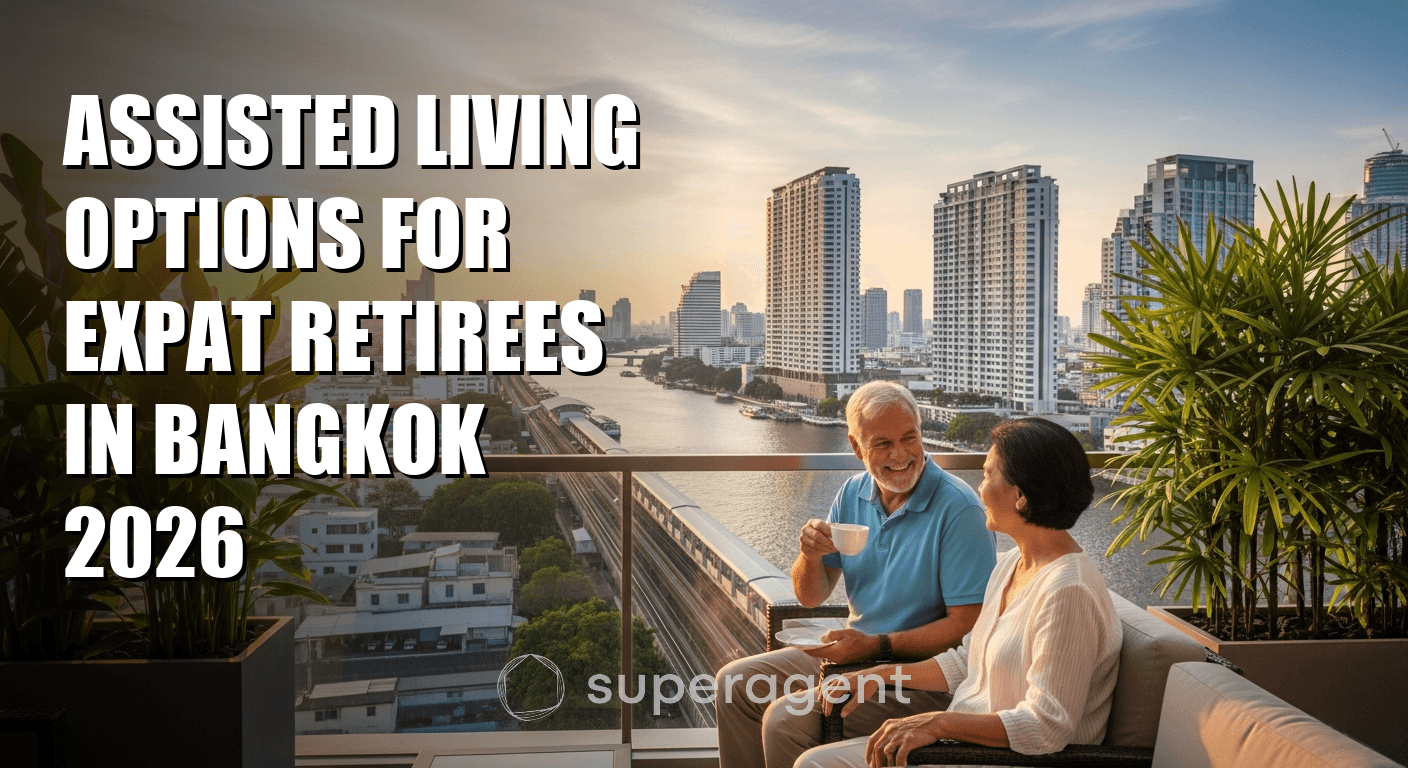
Discover premium assisted living facilities designed for expat retirees in Bangkok
Summary
Explore assisted living Bangkok expat options offering quality care, community, and independence for retirees seeking retirement in Thailand's vibrant capi
Picture this: you spent 30 years grinding through winters in London or Chicago, you finally retired, and now you are living in Bangkok where the sun actually shows up. But you are also 68, your knees are not what they used to be, and you want a living situation that gives you some independence without leaving you completely on your own. You are not alone. Bangkok has quietly become one of the best cities in Southeast Asia for expat retirees who need some level of assisted living, and the options in 2026 are better than ever.
Whether you need light daily assistance, proximity to world-class hospitals, or a full-service retirement community, Bangkok delivers at a fraction of what you would pay in the West. Let me walk you through what is actually available, what it costs, and how to set yourself up right.
What Assisted Living Actually Looks Like in Bangkok
First, let us clear up a misconception. "Assisted living" in Bangkok does not always mean a nursing home with fluorescent lights and sad cafeteria food. The spectrum here is wide. On one end, you have luxury condo buildings with on-site nurses, meal services, and emergency call systems. On the other end, you have dedicated retirement communities with full medical staff, physical therapy, and social programming.
Take a retiree named David, a 72-year-old British expat who lived in a studio near Asok BTS for years. When his mobility started declining, he moved to a serviced apartment in the Nonthaburi area that includes daily wellness checks, meal preparation, and a shuttle to Bumrungrad International Hospital three times a week. His all-in monthly cost? Around 65,000 THB. Back in Surrey, a similar setup would run him north of 3,000 GBP.
Many expats also opt for a hybrid model. They rent a condo in a building with good facilities, then hire a live-in caretaker or part-time nurse privately. This is surprisingly affordable in Bangkok and gives you maximum flexibility.
Top Neighborhoods for Retiree-Friendly Living
Not every part of Bangkok works well for retirees who need assistance. You want flat terrain (Bangkok is mostly flat, so that helps), proximity to hospitals, accessible public transport, and a neighborhood where daily errands do not require a car. Here are the areas that check the most boxes.
Sukhumvit, particularly the stretch between Phrom Phong BTS and Ekkamai BTS, remains popular. The sidewalks around Soi 24 and Soi 39 are relatively well maintained, and you are close to both Bumrungrad and Samitivej Hospital. One-bedroom condos with good building management here run between 25,000 and 45,000 THB per month.
Chaeng Watthana and Nonthaburi, accessible via the MRT Purple Line, have seen a wave of retirement-oriented developments. Rents are significantly lower, often 12,000 to 22,000 THB for a one-bedroom. The trade-off is that you are farther from the central expat hubs, but you gain space and quiet.
Hua Hin is technically outside Bangkok, but many expat retirees split time between a Bangkok condo and a Hua Hin retirement residence. For those who want a full assisted living community, Hua Hin has more purpose-built options right now than Bangkok proper.
Dedicated Retirement Communities and Care Facilities
Bangkok and the surrounding provinces now have several purpose-built retirement communities catering to international residents. These are not just condos with a nurse on speed dial. They are designed from the ground up for aging in place, with grab bars, wheelchair-accessible layouts, emergency response systems, and structured social activities.
Vivobene Senior Living in the Bangna area, for example, offers private rooms with full-time nursing staff, three meals a day, physical therapy, and recreational programming. Monthly packages start around 50,000 THB and can go up to 120,000 THB depending on the level of care required. Compare that to a mid-tier assisted living facility in the United States, where the average monthly cost exceeds $4,500 USD according to recent senior housing market reports.
Consider Margaret, a 75-year-old Australian who moved into a retirement community near Bearing BTS after her husband passed. She pays about 70,000 THB monthly for a private studio with daily nursing visits, three meals, laundry service, and weekly outings. She told me the social aspect was what sold her. After years of living alone in a condo near On Nut, she was lonely. Now she plays cards every afternoon with a group of retirees from six different countries.
According to a 2025 survey by the Thailand Board of Investment, the number of long-stay retirement visa holders in Thailand increased by 34% between 2022 and 2025, with healthcare access cited as the primary draw. That growth is fueling real investment in senior living infrastructure.
The Private Caretaker Model
Here is what a lot of expat retirees actually do, and it is something you rarely hear about in official guides. They rent a standard condo, then hire a private caretaker. This person might be a trained nurse, a certified caregiver, or simply a trusted helper who handles cooking, cleaning, medication reminders, and accompaniment to doctor visits.
A full-time live-in caretaker in Bangkok typically costs between 15,000 and 30,000 THB per month, depending on qualifications and language skills. An English-speaking caretaker with nursing credentials will be on the higher end. Add that to a condo rental of, say, 20,000 to 35,000 THB near Phra Khanong BTS or Bang Chak BTS, and your total monthly living cost with care comes in at 35,000 to 65,000 THB.
A retired American named Jim who lives in a two-bedroom condo on Sukhumvit Soi 77 has exactly this setup. He rents for 28,000 THB per month, pays his live-in caretaker 22,000 THB, and covers food and utilities for another 15,000 THB. His total cost of living with daily assistance is about 65,000 THB. He walks to the BTS every morning, gets his coffee at a shop on Soi On Nut, and sees his cardiologist at Bangkok Hospital every six weeks.
Healthcare Access and Hospital Proximity
This is the real reason Bangkok works for retiree assisted living. The hospital infrastructure here is genuinely world-class, and it is affordable by international standards. Bumrungrad International Hospital near Nana BTS, Samitivej on Sukhumvit Soi 49, and BNH Hospital near Sala Daeng BTS all have dedicated geriatric care departments with English-speaking staff.
Most assisted living facilities and retirement communities in Bangkok include hospital partnerships in their packages. Some offer direct billing to international health insurance providers, which simplifies things enormously. If you are on a Thai retirement visa (Non-Immigrant O-A), you are required to carry health insurance with minimum coverage of 400,000 THB for outpatient and 40,000 THB for inpatient care per the Thai Immigration Bureau regulations.
Having a major hospital within 15 to 20 minutes is not just convenient. For retirees with chronic conditions, it can be the difference between managing a health event well and a genuine emergency. This is why neighborhoods along the Sukhumvit BTS line and near the MRT Blue Line remain the most practical choices.
Comparing Your Assisted Living Options in Bangkok
Here is a side-by-side look at the main models available to expat retirees in 2026.
- Condo + Private Caretaker: 35,000 to 65,000 | Light to moderate | On Nut, Phra Khanong, Ekkamai | Maximum independence, flexible | You manage hiring yourself
- Serviced Apartment with Care: 45,000 to 80,000 | Light to moderate | Asok, Phrom Phong, Bangna | Meals and cleaning included | Less privacy, fewer choices
- Dedicated Retirement Community: 50,000 to 120,000 | Moderate to full | Bangna, Nonthaburi, Hua Hin | Full medical staff, social life | Farther from central Bangkok
- Hospital-Adjacent Condo Rental: 25,000 to 45,000 | Self-managed | Nana, Sala Daeng, Sukhumvit Soi 49 | Walk to world-class hospitals | No built-in care services
Visa and Legal Considerations for Retired Expats
If you are 50 or older, the Non-Immigrant O-A (Long Stay) visa is the standard route. You need to show 800,000 THB in a Thai bank account or a monthly income of at least 65,000 THB. As of 2025, the mandatory health insurance requirement remains in effect, and immigration officers at Chaeng Watthana do check for it at renewal.
Some retirement communities help with visa paperwork as part of their service package. This is genuinely useful because dealing with Thai immigration paperwork on your own can be time-consuming, especially if you need to gather documents from your home country. Ask about this when evaluating facilities.
One more thing to keep in mind: if your health declines significantly, transitioning from a condo lease to a retirement facility mid-contract can be tricky. Many landlords in Bangkok expect a standard 12-month lease. Build some flexibility into your rental agreement upfront, or look for buildings that offer 6-month terms.
Bangkok in 2026 is one of the most practical cities in the world for expat retirees who need some level of daily assistance. The combination of affordable healthcare, low cost of living, warm weather, and increasingly sophisticated senior living options makes it hard to beat. Whether you go the independent condo route with a private caretaker or opt for a full-service retirement community, the key is choosing a location that keeps you close to hospitals, public transport, and the daily rhythms of a city that honestly makes retirement feel like an upgrade.
If you are exploring condo rentals in Bangkok as part of your retirement plan, Superagent at superagent.co can help you find buildings with the right facilities, locations near hospitals, and flexible lease terms that fit a retiree lifestyle. Our AI-powered platform lets you search by neighborhood, budget, and building amenities so you can focus on enjoying this next chapter.
Picture this: you spent 30 years grinding through winters in London or Chicago, you finally retired, and now you are living in Bangkok where the sun actually shows up. But you are also 68, your knees are not what they used to be, and you want a living situation that gives you some independence without leaving you completely on your own. You are not alone. Bangkok has quietly become one of the best cities in Southeast Asia for expat retirees who need some level of assisted living, and the options in 2026 are better than ever.
Whether you need light daily assistance, proximity to world-class hospitals, or a full-service retirement community, Bangkok delivers at a fraction of what you would pay in the West. Let me walk you through what is actually available, what it costs, and how to set yourself up right.
What Assisted Living Actually Looks Like in Bangkok
First, let us clear up a misconception. "Assisted living" in Bangkok does not always mean a nursing home with fluorescent lights and sad cafeteria food. The spectrum here is wide. On one end, you have luxury condo buildings with on-site nurses, meal services, and emergency call systems. On the other end, you have dedicated retirement communities with full medical staff, physical therapy, and social programming.
Take a retiree named David, a 72-year-old British expat who lived in a studio near Asok BTS for years. When his mobility started declining, he moved to a serviced apartment in the Nonthaburi area that includes daily wellness checks, meal preparation, and a shuttle to Bumrungrad International Hospital three times a week. His all-in monthly cost? Around 65,000 THB. Back in Surrey, a similar setup would run him north of 3,000 GBP.
Many expats also opt for a hybrid model. They rent a condo in a building with good facilities, then hire a live-in caretaker or part-time nurse privately. This is surprisingly affordable in Bangkok and gives you maximum flexibility.
Top Neighborhoods for Retiree-Friendly Living
Not every part of Bangkok works well for retirees who need assistance. You want flat terrain (Bangkok is mostly flat, so that helps), proximity to hospitals, accessible public transport, and a neighborhood where daily errands do not require a car. Here are the areas that check the most boxes.
Sukhumvit, particularly the stretch between Phrom Phong BTS and Ekkamai BTS, remains popular. The sidewalks around Soi 24 and Soi 39 are relatively well maintained, and you are close to both Bumrungrad and Samitivej Hospital. One-bedroom condos with good building management here run between 25,000 and 45,000 THB per month.
Chaeng Watthana and Nonthaburi, accessible via the MRT Purple Line, have seen a wave of retirement-oriented developments. Rents are significantly lower, often 12,000 to 22,000 THB for a one-bedroom. The trade-off is that you are farther from the central expat hubs, but you gain space and quiet.
Hua Hin is technically outside Bangkok, but many expat retirees split time between a Bangkok condo and a Hua Hin retirement residence. For those who want a full assisted living community, Hua Hin has more purpose-built options right now than Bangkok proper.
Dedicated Retirement Communities and Care Facilities
Bangkok and the surrounding provinces now have several purpose-built retirement communities catering to international residents. These are not just condos with a nurse on speed dial. They are designed from the ground up for aging in place, with grab bars, wheelchair-accessible layouts, emergency response systems, and structured social activities.
Vivobene Senior Living in the Bangna area, for example, offers private rooms with full-time nursing staff, three meals a day, physical therapy, and recreational programming. Monthly packages start around 50,000 THB and can go up to 120,000 THB depending on the level of care required. Compare that to a mid-tier assisted living facility in the United States, where the average monthly cost exceeds $4,500 USD according to recent senior housing market reports.
Consider Margaret, a 75-year-old Australian who moved into a retirement community near Bearing BTS after her husband passed. She pays about 70,000 THB monthly for a private studio with daily nursing visits, three meals, laundry service, and weekly outings. She told me the social aspect was what sold her. After years of living alone in a condo near On Nut, she was lonely. Now she plays cards every afternoon with a group of retirees from six different countries.
According to a 2025 survey by the Thailand Board of Investment, the number of long-stay retirement visa holders in Thailand increased by 34% between 2022 and 2025, with healthcare access cited as the primary draw. That growth is fueling real investment in senior living infrastructure.
The Private Caretaker Model
Here is what a lot of expat retirees actually do, and it is something you rarely hear about in official guides. They rent a standard condo, then hire a private caretaker. This person might be a trained nurse, a certified caregiver, or simply a trusted helper who handles cooking, cleaning, medication reminders, and accompaniment to doctor visits.
A full-time live-in caretaker in Bangkok typically costs between 15,000 and 30,000 THB per month, depending on qualifications and language skills. An English-speaking caretaker with nursing credentials will be on the higher end. Add that to a condo rental of, say, 20,000 to 35,000 THB near Phra Khanong BTS or Bang Chak BTS, and your total monthly living cost with care comes in at 35,000 to 65,000 THB.
A retired American named Jim who lives in a two-bedroom condo on Sukhumvit Soi 77 has exactly this setup. He rents for 28,000 THB per month, pays his live-in caretaker 22,000 THB, and covers food and utilities for another 15,000 THB. His total cost of living with daily assistance is about 65,000 THB. He walks to the BTS every morning, gets his coffee at a shop on Soi On Nut, and sees his cardiologist at Bangkok Hospital every six weeks.
Talk to us about renting
Share your details and keep reading — we’ll get back to you.
Healthcare Access and Hospital Proximity
This is the real reason Bangkok works for retiree assisted living. The hospital infrastructure here is genuinely world-class, and it is affordable by international standards. Bumrungrad International Hospital near Nana BTS, Samitivej on Sukhumvit Soi 49, and BNH Hospital near Sala Daeng BTS all have dedicated geriatric care departments with English-speaking staff.
Most assisted living facilities and retirement communities in Bangkok include hospital partnerships in their packages. Some offer direct billing to international health insurance providers, which simplifies things enormously. If you are on a Thai retirement visa (Non-Immigrant O-A), you are required to carry health insurance with minimum coverage of 400,000 THB for outpatient and 40,000 THB for inpatient care per the Thai Immigration Bureau regulations.
Having a major hospital within 15 to 20 minutes is not just convenient. For retirees with chronic conditions, it can be the difference between managing a health event well and a genuine emergency. This is why neighborhoods along the Sukhumvit BTS line and near the MRT Blue Line remain the most practical choices.
Comparing Your Assisted Living Options in Bangkok
Here is a side-by-side look at the main models available to expat retirees in 2026.
- Condo + Private Caretaker: 35,000 to 65,000 | Light to moderate | On Nut, Phra Khanong, Ekkamai | Maximum independence, flexible | You manage hiring yourself
- Serviced Apartment with Care: 45,000 to 80,000 | Light to moderate | Asok, Phrom Phong, Bangna | Meals and cleaning included | Less privacy, fewer choices
- Dedicated Retirement Community: 50,000 to 120,000 | Moderate to full | Bangna, Nonthaburi, Hua Hin | Full medical staff, social life | Farther from central Bangkok
- Hospital-Adjacent Condo Rental: 25,000 to 45,000 | Self-managed | Nana, Sala Daeng, Sukhumvit Soi 49 | Walk to world-class hospitals | No built-in care services
Visa and Legal Considerations for Retired Expats
If you are 50 or older, the Non-Immigrant O-A (Long Stay) visa is the standard route. You need to show 800,000 THB in a Thai bank account or a monthly income of at least 65,000 THB. As of 2025, the mandatory health insurance requirement remains in effect, and immigration officers at Chaeng Watthana do check for it at renewal.
Some retirement communities help with visa paperwork as part of their service package. This is genuinely useful because dealing with Thai immigration paperwork on your own can be time-consuming, especially if you need to gather documents from your home country. Ask about this when evaluating facilities.
One more thing to keep in mind: if your health declines significantly, transitioning from a condo lease to a retirement facility mid-contract can be tricky. Many landlords in Bangkok expect a standard 12-month lease. Build some flexibility into your rental agreement upfront, or look for buildings that offer 6-month terms.
Bangkok in 2026 is one of the most practical cities in the world for expat retirees who need some level of daily assistance. The combination of affordable healthcare, low cost of living, warm weather, and increasingly sophisticated senior living options makes it hard to beat. Whether you go the independent condo route with a private caretaker or opt for a full-service retirement community, the key is choosing a location that keeps you close to hospitals, public transport, and the daily rhythms of a city that honestly makes retirement feel like an upgrade.
If you are exploring condo rentals in Bangkok as part of your retirement plan, Superagent at superagent.co can help you find buildings with the right facilities, locations near hospitals, and flexible lease terms that fit a retiree lifestyle. Our AI-powered platform lets you search by neighborhood, budget, and building amenities so you can focus on enjoying this next chapter.
Share this article
Properties you may like
![[For Rent] CONDO I Aguston Sukhumvit 22 I Pet Friendly I 2 Beds I 2 Baths I Rent 55,000THB/mo](/_next/image?url=https%3A%2F%2Fstorage.googleapis.com%2Fsuperagent-web%2Fattachments%2Flistings%2F2266%2Fd3afcd25-6b79-46cb-9f1f-396acdc3dd10-955-3.jpg&w=3840&q=75)
฿55,000
2 Bed295 sqm
[For Rent] CONDO I Aguston Sukhumvit 22 I Pet Friendly I 2 Beds I 2 Baths I Rent 55,000THB/mo
Phrom Phong
Condo![[For Rent] CONDO I SUPALAI PLACE Sukhumvit 39 I 2 Beds I 2 Baths (1 Jacuzzi) I 55,555THB/mo](/_next/image?url=https%3A%2F%2Fstorage.googleapis.com%2Fsuperagent-web%2Fattachments%2Flistings%2F6743%2Fba530743-48b9-4ac6-92d3-c2247e743cf6-01-supalai-place-skv39-2b-link-heaven.jpg&w=3840&q=75)
฿55,555
2 Bed2142 sqm
[For Rent] CONDO I SUPALAI PLACE Sukhumvit 39 I 2 Beds I 2 Baths (1 Jacuzzi) I 55,555THB/mo
Phrom Phong
Condo![[For Rent] CONDO I Maru Ekkamai 2 I Pet friendly I 2 Beds I 2 Baths I 68,000 THB/mo](/_next/image?url=https%3A%2F%2Fstorage.googleapis.com%2Fsuperagent-web%2Fattachments%2Flistings%2F6602%2F9f1d8f71-ee43-435f-9a44-da16c4092c92-968-1.jpg&w=3840&q=75)
฿68,000
2 Bed360 sqm
[For Rent] CONDO I Maru Ekkamai 2 I Pet friendly I 2 Beds I 2 Baths I 68,000 THB/mo
Ekkamai
Condo![[For Rent] CONDO I Noble State 39 I 2 Beds I 2 Baths I 63,000THB/mo](/_next/image?url=https%3A%2F%2Fstorage.googleapis.com%2Fsuperagent-web%2Fattachments%2Flistings%2F2237%2F60eb58f3-eae5-41ed-a80b-406e004f05d8-940-1.jpg&w=3840&q=75)
฿63,000
2 Bed260 sqm
[For Rent] CONDO I Noble State 39 I 2 Beds I 2 Baths I 63,000THB/mo
Phrom Phong
Condo![[For Rent] CONDO I Rhythm Sukhumvit 36-38 I 2 Beds I 2 Baths I 38,999THB/mo](/_next/image?url=https%3A%2F%2Fstorage.googleapis.com%2Fsuperagent-web%2Fattachments%2Flistings%2F1788%2F942a0215-4128-4c2c-a064-f607e84e7aa4-656-2.jpg&w=3840&q=75)
฿38,999
2 Bed256 sqm
[For Rent] CONDO I Rhythm Sukhumvit 36-38 I 2 Beds I 2 Baths I 38,999THB/mo
Thonglor
Condo![[For Rent] CONDO I CLOUD Thonglor-Phetchaburi I 1 Bed I 1 Bath I 22,500THB/mo](/_next/image?url=https%3A%2F%2Fstorage.googleapis.com%2Fsuperagent-web%2Fattachments%2Flistings%2F6742%2F6cef5361-0dac-4dba-98f1-b0d187559c84-1118-1.jpg&w=3840&q=75)
฿22,500
1 Bed132 sqm
[For Rent] CONDO I CLOUD Thonglor-Phetchaburi I 1 Bed I 1 Bath I 22,500THB/mo
Thonglor
Condo![[For Rent] CONDO I City Smart Sukhumvit 18 I 3 Beds I 3 Baths I 65,000mo/THB](/_next/image?url=https%3A%2F%2Fstorage.googleapis.com%2Fsuperagent-web%2Fattachments%2Flistings%2F6741%2Fd371c89d-a913-42c4-a673-e540afae4f46-1116-1.jpg&w=3840&q=75)
฿65,000
3 Bed3125 sqm
[For Rent] CONDO I City Smart Sukhumvit 18 I 3 Beds I 3 Baths I 65,000mo/THB
Condo![[For Rent] CONDO I The Coast Bangkok I 1 Bed I 1 Bath I 20,000mo/THB](/_next/image?url=https%3A%2F%2Fstorage.googleapis.com%2Fsuperagent-web%2Fattachments%2Flistings%2F6740%2F498477ce-4ffa-4e4c-ab08-0e565d9c4bbe-1115-3.jpg&w=3840&q=75)
฿20,000
1 Bed146 sqm
[For Rent] CONDO I The Coast Bangkok I 1 Bed I 1 Bath I 20,000mo/THB
Bang Na
Condo![[For Rent] CONDO I IDEO Sukhumvit-RAMA 4 I 2 Beds I 2 Baths I 55,000mo/THB](/_next/image?url=https%3A%2F%2Fstorage.googleapis.com%2Fsuperagent-web%2Fattachments%2Flistings%2F6739%2F15df221d-5b8e-497c-b7ce-a6b9b6412cab-1113-1.jpg&w=3840&q=75)
฿55,000
2 Bed265 sqm
[For Rent] CONDO I IDEO Sukhumvit-RAMA 4 I 2 Beds I 2 Baths I 55,000mo/THB
Phra Khanong
Condo![[For Rent] CONDO I Downtown 49 I Pet Friendly I 1 Bed I 1 Bath I 23,000mo/THB](/_next/image?url=https%3A%2F%2Fstorage.googleapis.com%2Fsuperagent-web%2Fattachments%2Flistings%2F6738%2F11cf2ffe-1f01-4ccc-991c-2ad608f1ba73-1112-1.jpg&w=3840&q=75)
฿23,000
1 Bed135 sqm
[For Rent] CONDO I Downtown 49 I Pet Friendly I 1 Bed I 1 Bath I 23,000mo/THB
Thonglor
CondoMore like this
 In Guides · Superagent EditorialHidden Costs of Renting a Condo in Bangkok Nobody Warns You AboutBangkok condo rent looks affordable until month one hits. Here are the real costs beyond the headline figure that catch most renters off guard.25 May 20261 min read
 In Guides · Superagent EditorialWhat a Long-Vacant Bangkok Condo Unit Is Actually Telling YouA Bangkok condo vacant for months signals overpricing, landlord issues, or real problems. Here is how to read the signs.25 May 20261 min read
 In Guides · Superagent EditorialRed Flags in a Bangkok Rental Contract to Watch Out ForBangkok rental contracts often hide risky clauses. Here are the red flags every tenant must catch before signing any lease.25 May 20261 min read
 In Guides · Superagent EditorialWorking Online from a Condo: How to Choose the Perfect Room for ProductivityLearn how to choose the best condo room for working online with tips on lighting, noise, and furniture setup to maximize productivity.9 May 20261 min read