Working Online from a Condo: How to Choose the Perfect Room for Productivity
Guides
Working Online from a Condo: How to Choose the Perfect Room for Productivity
Master the art of remote work by selecting the ideal condo space for focus and success.
Summary
Learn how to choose the best condo room for working online with tips on lighting, noise, and furniture setup to maximize productivity.
Working from a Bangkok condo is no longer a luxury, it's a necessity for thousands of remote professionals. But here's the thing most people miss: not every condo is built for productivity. You could end up in a beautiful unit with floor-to-ceiling windows and terrible wifi, or in a quiet soi that's so far from amenities you lose half your day to commute guilt. I've seen it happen to friends who rushed into leases without thinking about what actually makes a work-from-home space functional.
The difference between thriving and struggling in a work-from-home setup often comes down to five key factors: internet stability, noise levels, workspace setup, natural light, and proximity to co-working spaces or cafes. Get these right, and you'll genuinely enjoy your days. Get them wrong, and you'll be eyeing your balcony as an escape route by week three.
Here's what you need to know before signing that lease.
Nail Down Your Internet Setup Before You Sign
This is non-negotiable. I cannot stress this enough. A condo with stunning views means nothing if your video calls freeze every five minutes. Bangkok's internet infrastructure varies wildly depending on location and building infrastructure. Some areas near Thonglor get solid fiber connections at 100 Mbps, while other sois still rely on aging copper lines.
When you're viewing a unit, ask the landlord or agent to run a speed test right then and there. Don't accept vague promises about "good internet." Bring a speedometer app, test it at different times of day, and check what providers service the building. AIS, True, and DTAC all operate in Bangkok, but not all buildings have agreements with all providers.
Consider units in newer developments like Ideo Morph or Knightbridge Thonglor, which typically have fiber-ready infrastructure. Expect to pay 15,000 to 25,000 THB monthly for a 1-bedroom studio in these areas, but your connection will likely be rock solid. Older buildings in Ari or Sanam Luang might cost 10,000 to 15,000 THB for the same space, but you might end up sharing bandwidth with 200 other units.
Get a backup plan too. A 4G pocket wifi from AIS or True (around 500 to 1,000 THB monthly) can save your sanity during provider outages. I know three people working from Promphong who swear by this strategy.
Location Matters More Than You Think
Working from home doesn't mean you're actually staying home. You'll want access to decent cafes for a change of scenery, coworking spaces when you need focus without distractions, and proximity to groceries and restaurants. Bangkok's density makes this easier than most cities, but some sois are genuinely isolated.
Areas near BTS stations are your best bet. Chit Lom, Phrom Phong, and Asoke have excellent cafe culture, multiple coworking options like Hubba and WeWork, and you're never more than a 10-minute walk from decent food. A 1-bedroom unit here runs 20,000 to 35,000 THB monthly depending on how new the building is.
Ari and Sanam Luang have exploded in popularity with remote workers over the past three years. The neighborhood feels less touristy, cafes like Karmakamet and Ginger & Kaffee are genuinely good for working sessions, and rents are friendlier, averaging 12,000 to 20,000 THB for a 1-bedroom. The MRT connection via Sanam Luang Station (MRT line M4) makes it easy to reach other parts of the city when you need to.
Avoid sois that are 500 meters or more from public transport. You might save 2,000 THB monthly, but the psychological weight of being stranded gets old fast.
Design Your Actual Workspace First
You need to be honest about how much space you actually use for work. Lots of people rent a 2-bedroom thinking they'll use one as an office, then live like they have half a room. That's fine if you genuinely use it, but most people don't.
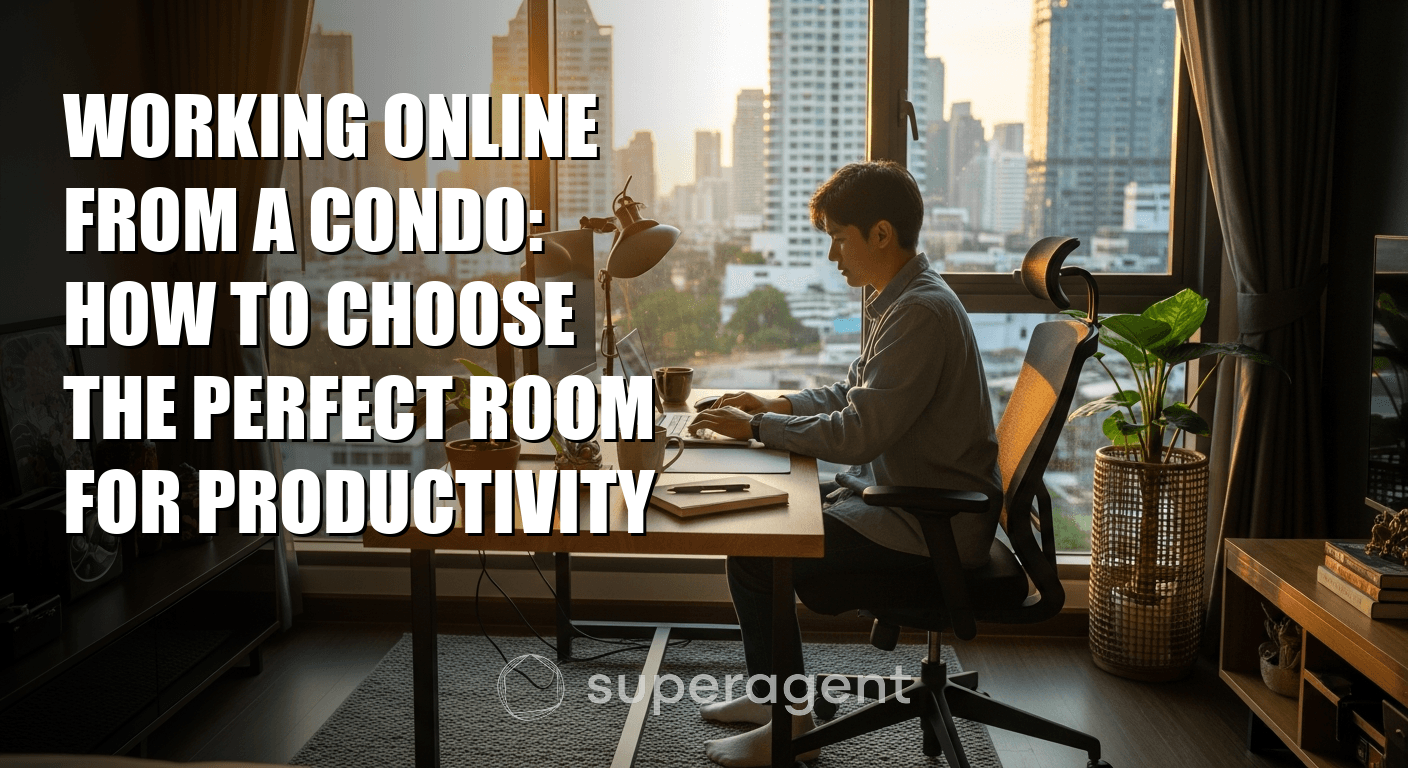
A proper work setup requires a dedicated desk, a chair with actual back support (not your couch), and enough surface area for a monitor or laptop stand. You need at least 3 square meters minimum. A 1-bedroom with a living area can absolutely work if the living room is large enough to section off a desk corner. Units in places like The Base Sukhumvit or Ideo Sukhumvit have good room configurations for this.
Test the layout during your site visit. Bring your laptop, sit where you'd normally work, and spend 10 minutes there. Does your back hurt? Can you see the screen in daylight? Is there a quiet corner or are you stuck in the main living area where you hear everything? These details matter more than the unit's actual size.
Natural light is underrated. Working under fluorescent lights all day kills your mood. Units facing east get morning light (energizing). Units facing west get afternoon light (sometimes too warm). North and south-facing units are more forgiving if you're working during the hot midday hours. In Bangkok, thermal comfort actually impacts productivity. A unit with decent cross-ventilation and some window coverage is genuinely better than one with full AC and zero natural light.
Understand the Noise Realities of Your Soi
Bangkok noise is unpredictable. You could be in a quiet building and still hear construction, tuk-tuks, or street vendors every single morning. I know someone in Petchburi who moved specifically because the neighbor was running a massage business until midnight.
Visit the unit on a weekday afternoon and evening, not just during a morning showing. Weekday mornings are artificially quiet. Afternoons show you what rush hour sounds like. Evenings reveal whether your soi turns into a restaurant strip or stays residential. Bangkok's traffic patterns shift dramatically based on time of day.
Higher floors are genuinely quieter. A 15th-floor unit in any building will have less street noise than a 3rd-floor unit. If you're sensitive to sound, prioritize floor height. The difference is real and worth the 2,000 to 3,000 THB extra monthly.
Sois like Sukhumvit 26 and 28 feel quieter than main roads, but they're still close enough to restaurants and cafes. Compare that to smaller sois near Samphanthawong, which can be genuinely isolated but also genuinely silent.
Compare Building Amenities and Flexibility
Some condos offer dedicated coworking spaces, which is actually useful. Others have fast internet in common areas, gyms, and security that matters if you're getting packages delivered. Don't overlook these. A building with a quiet common working area gives you a work-from-office backup option.
Check the rental terms too. Month-to-month is rare in Bangkok, but 6-month leases exist if you know where to look. Many buildings require 1-year minimum. Some allow sublets, some don't. If you're testing a location, this matters. Buildings like Q Sukhumvit or Ideo Morph tend to be more flexible with shorter terms.
- Thonglor: 20,000-35,000 THB | Excellent | Excellent | Moderate-High
- Ari: 12,000-20,000 THB | Good | Very Good | Low-Moderate
- Asoke: 18,000-28,000 THB | Excellent | Excellent | Moderate-High
- Sanam Luang: 10,000-18,000 THB | Good | Good | Low
- Phrom Phong: 22,000-32,000 THB | Excellent | Excellent | Moderate
Check These Specific Details Before Moving In
Ask about power backup. Bangkok's electricity is stable, but occasional brownouts happen. A building with a generator or strong UPS system protects your work. Ask directly if the building has backup power and how long it lasts.
Verify with the internet provider directly. Don't trust the landlord's word. Call AIS, True, or DTAC and ask if they service the specific address. Request installation quotes. Some buildings have exclusive provider agreements that you're stuck with, whether the service is good or not.
Test the water pressure and AC on the hottest day you can visit. Bangkok's heat isn't just discomfort, it's a productivity killer. An AC that can't keep up with 35-degree heat makes work impossible. Similarly, weak water pressure is annoying but manageable. Learn the actual capabilities during peak conditions.
Check mobile signal strength too. When your fixed internet dies, your phone becomes your backup. Visit the unit with all three providers' networks and check signal strength. Dead zones exist even in central Bangkok.
Statistic to know: according to DDproperty's 2024 rental market data, average condominium rents in Bangkok's central business districts range from 15,000 to 40,000 THB monthly for 1-bedroom units, with significant variation based on internet infrastructure quality and proximity to mass transit.
Make Your Final Decision Methodically
Visit units on multiple days, at different times. Spend at least 30 minutes in each space actually working if you can. Bring your laptop, open your usual applications, and test video calls if that's part of your job. This practical test reveals issues that photos and floor plans never will.
Get references from current tenants if possible. Landlords often provide a recent tenant's contact info. Ask three specific questions: is the internet actually stable, are there noise issues, and how responsive is maintenance. Most people will answer honestly if you ask directly.
Negotiate the lease terms. Bangkok landlords expect this. If you're signing a 1-year lease, ask for the first month free or a rent reduction. If you're willing to sign 2 years, you get even more leverage. If the building is in a slower market, you have even more power.
Remember that your condo is your office now. Cheap rent in a bad location or with unreliable internet costs you far more in lost productivity and mental health than you save monthly. This is the one place where spending the extra 3,000 to 5,000 THB actually matters.
Start your condo search on Superagent.co, where Bangkok's best rental listings come with verified photos and honest descriptions. Filter by location, amenities, and price, then connect with landlords who actually understand what remote workers need. The right space exists in Bangkok, you just need to find it the smart way.
Working from a Bangkok condo is no longer a luxury, it's a necessity for thousands of remote professionals. But here's the thing most people miss: not every condo is built for productivity. You could end up in a beautiful unit with floor-to-ceiling windows and terrible wifi, or in a quiet soi that's so far from amenities you lose half your day to commute guilt. I've seen it happen to friends who rushed into leases without thinking about what actually makes a work-from-home space functional.
The difference between thriving and struggling in a work-from-home setup often comes down to five key factors: internet stability, noise levels, workspace setup, natural light, and proximity to co-working spaces or cafes. Get these right, and you'll genuinely enjoy your days. Get them wrong, and you'll be eyeing your balcony as an escape route by week three.
Here's what you need to know before signing that lease.
Nail Down Your Internet Setup Before You Sign
This is non-negotiable. I cannot stress this enough. A condo with stunning views means nothing if your video calls freeze every five minutes. Bangkok's internet infrastructure varies wildly depending on location and building infrastructure. Some areas near Thonglor get solid fiber connections at 100 Mbps, while other sois still rely on aging copper lines.
When you're viewing a unit, ask the landlord or agent to run a speed test right then and there. Don't accept vague promises about "good internet." Bring a speedometer app, test it at different times of day, and check what providers service the building. AIS, True, and DTAC all operate in Bangkok, but not all buildings have agreements with all providers.
Consider units in newer developments like Ideo Morph or Knightbridge Thonglor, which typically have fiber-ready infrastructure. Expect to pay 15,000 to 25,000 THB monthly for a 1-bedroom studio in these areas, but your connection will likely be rock solid. Older buildings in Ari or Sanam Luang might cost 10,000 to 15,000 THB for the same space, but you might end up sharing bandwidth with 200 other units.
Continue reading after that.
Looking for a condo
to rent?
Leave your name and phone. We'll follow up while you keep reading.
100% Secure
Fast Response
Free Consultation
Get a backup plan too. A 4G pocket wifi from AIS or True (around 500 to 1,000 THB monthly) can save your sanity during provider outages. I know three people working from Promphong who swear by this strategy.
Location Matters More Than You Think
Working from home doesn't mean you're actually staying home. You'll want access to decent cafes for a change of scenery, coworking spaces when you need focus without distractions, and proximity to groceries and restaurants. Bangkok's density makes this easier than most cities, but some sois are genuinely isolated.
Areas near BTS stations are your best bet. Chit Lom, Phrom Phong, and Asoke have excellent cafe culture, multiple coworking options like Hubba and WeWork, and you're never more than a 10-minute walk from decent food. A 1-bedroom unit here runs 20,000 to 35,000 THB monthly depending on how new the building is.
Ari and Sanam Luang have exploded in popularity with remote workers over the past three years. The neighborhood feels less touristy, cafes like Karmakamet and Ginger & Kaffee are genuinely good for working sessions, and rents are friendlier, averaging 12,000 to 20,000 THB for a 1-bedroom. The MRT connection via Sanam Luang Station (MRT line M4) makes it easy to reach other parts of the city when you need to.
Avoid sois that are 500 meters or more from public transport. You might save 2,000 THB monthly, but the psychological weight of being stranded gets old fast.
Design Your Actual Workspace First
You need to be honest about how much space you actually use for work. Lots of people rent a 2-bedroom thinking they'll use one as an office, then live like they have half a room. That's fine if you genuinely use it, but most people don't.
A proper work setup requires a dedicated desk, a chair with actual back support (not your couch), and enough surface area for a monitor or laptop stand. You need at least 3 square meters minimum. A 1-bedroom with a living area can absolutely work if the living room is large enough to section off a desk corner. Units in places like The Base Sukhumvit or Ideo Sukhumvit have good room configurations for this.
Test the layout during your site visit. Bring your laptop, sit where you'd normally work, and spend 10 minutes there. Does your back hurt? Can you see the screen in daylight? Is there a quiet corner or are you stuck in the main living area where you hear everything? These details matter more than the unit's actual size.
Natural light is underrated. Working under fluorescent lights all day kills your mood. Units facing east get morning light (energizing). Units facing west get afternoon light (sometimes too warm). North and south-facing units are more forgiving if you're working during the hot midday hours. In Bangkok, thermal comfort actually impacts productivity. A unit with decent cross-ventilation and some window coverage is genuinely better than one with full AC and zero natural light.
Understand the Noise Realities of Your Soi
Bangkok noise is unpredictable. You could be in a quiet building and still hear construction, tuk-tuks, or street vendors every single morning. I know someone in Petchburi who moved specifically because the neighbor was running a massage business until midnight.
Visit the unit on a weekday afternoon and evening, not just during a morning showing. Weekday mornings are artificially quiet. Afternoons show you what rush hour sounds like. Evenings reveal whether your soi turns into a restaurant strip or stays residential. Bangkok's traffic patterns shift dramatically based on time of day.
Higher floors are genuinely quieter. A 15th-floor unit in any building will have less street noise than a 3rd-floor unit. If you're sensitive to sound, prioritize floor height. The difference is real and worth the 2,000 to 3,000 THB extra monthly.
Sois like Sukhumvit 26 and 28 feel quieter than main roads, but they're still close enough to restaurants and cafes. Compare that to smaller sois near Samphanthawong, which can be genuinely isolated but also genuinely silent.
Compare Building Amenities and Flexibility
Some condos offer dedicated coworking spaces, which is actually useful. Others have fast internet in common areas, gyms, and security that matters if you're getting packages delivered. Don't overlook these. A building with a quiet common working area gives you a work-from-office backup option.
Check the rental terms too. Month-to-month is rare in Bangkok, but 6-month leases exist if you know where to look. Many buildings require 1-year minimum. Some allow sublets, some don't. If you're testing a location, this matters. Buildings like Q Sukhumvit or Ideo Morph tend to be more flexible with shorter terms.
- Thonglor: 20,000-35,000 THB | Excellent | Excellent | Moderate-High
- Ari: 12,000-20,000 THB | Good | Very Good | Low-Moderate
- Asoke: 18,000-28,000 THB | Excellent | Excellent | Moderate-High
- Sanam Luang: 10,000-18,000 THB | Good | Good | Low
- Phrom Phong: 22,000-32,000 THB | Excellent | Excellent | Moderate
Check These Specific Details Before Moving In
Ask about power backup. Bangkok's electricity is stable, but occasional brownouts happen. A building with a generator or strong UPS system protects your work. Ask directly if the building has backup power and how long it lasts.
Continue reading after that.
Looking for a condo
to rent?
Leave your name and phone. We'll follow up while you keep reading.
100% Secure
Fast Response
Free Consultation
Verify with the internet provider directly. Don't trust the landlord's word. Call AIS, True, or DTAC and ask if they service the specific address. Request installation quotes. Some buildings have exclusive provider agreements that you're stuck with, whether the service is good or not.
Test the water pressure and AC on the hottest day you can visit. Bangkok's heat isn't just discomfort, it's a productivity killer. An AC that can't keep up with 35-degree heat makes work impossible. Similarly, weak water pressure is annoying but manageable. Learn the actual capabilities during peak conditions.
Check mobile signal strength too. When your fixed internet dies, your phone becomes your backup. Visit the unit with all three providers' networks and check signal strength. Dead zones exist even in central Bangkok.
Statistic to know: according to DDproperty's 2024 rental market data, average condominium rents in Bangkok's central business districts range from 15,000 to 40,000 THB monthly for 1-bedroom units, with significant variation based on internet infrastructure quality and proximity to mass transit.
Make Your Final Decision Methodically
Visit units on multiple days, at different times. Spend at least 30 minutes in each space actually working if you can. Bring your laptop, open your usual applications, and test video calls if that's part of your job. This practical test reveals issues that photos and floor plans never will.
Get references from current tenants if possible. Landlords often provide a recent tenant's contact info. Ask three specific questions: is the internet actually stable, are there noise issues, and how responsive is maintenance. Most people will answer honestly if you ask directly.
Negotiate the lease terms. Bangkok landlords expect this. If you're signing a 1-year lease, ask for the first month free or a rent reduction. If you're willing to sign 2 years, you get even more leverage. If the building is in a slower market, you have even more power.
Remember that your condo is your office now. Cheap rent in a bad location or with unreliable internet costs you far more in lost productivity and mental health than you save monthly. This is the one place where spending the extra 3,000 to 5,000 THB actually matters.
Start your condo search on Superagent.co, where Bangkok's best rental listings come with verified photos and honest descriptions. Filter by location, amenities, and price, then connect with landlords who actually understand what remote workers need. The right space exists in Bangkok, you just need to find it the smart way.
Share this article
Properties you may like
![[For Rent] CONDO I Maestro 14 Siam-Ratchathewi Pet Friendly I 1 Bed I 1 Bath I 22,000THB/mo](/_next/image?url=https%3A%2F%2Fstorage.googleapis.com%2Fsuperagent-web%2Fattachments%2Flistings%2F6686%2F5ae8a77f-b6fb-4578-a765-e56f493cd25f-1058.png&w=3840&q=75)
฿25,000
1 Bed130 sqm
[For Rent] CONDO I Maestro 14 Siam-Ratchathewi Pet Friendly I 1 Bed I 1 Bath I 22,000THB/mo
Siam
Condo![[For Rent] CONDO I Las Colinas Condominium I 2 Beds I 3 Baths I 85,000THB/mo](/_next/image?url=https%3A%2F%2Fstorage.googleapis.com%2Fsuperagent-web%2Fattachments%2Flistings%2F6828%2F80f345c4-488e-43b2-b017-c9fbb17b520d-99486dd8-4237-4ba2-9207-01ce4f66b21f-media.jpg&w=3840&q=75)
฿85,000
2 Bed3170 sqm
[For Rent] CONDO I Las Colinas Condominium I 2 Beds I 3 Baths I 85,000THB/mo
Asoke
Condo![[For Rent] CONDO I The Diplomat 39 I 2 Beds I 2 Baths I 89,000THB/mo](/_next/image?url=https%3A%2F%2Fstorage.googleapis.com%2Fsuperagent-web%2Fattachments%2Flistings%2F6784%2Ff92c62cc-d3be-42df-adca-b8f96fb02cfb-1163-1.jpg&w=3840&q=75)
฿89,000
2 Bed286 sqm
[For Rent] CONDO I The Diplomat 39 I 2 Beds I 2 Baths I 89,000THB/mo
Phrom Phong
Condo![[For Rent] CONDO I KEN Attitude Rattanathibet I Duplex I 2 Beds I 2 Baths I 40,000THB/mo](/_next/image?url=https%3A%2F%2Fstorage.googleapis.com%2Fsuperagent-web%2Fattachments%2Flistings%2F6852%2F17c1715e-4458-4008-bb0b-072a4c081166-img_0557.jpeg&w=3840&q=75)
฿40,000
2 Bed277 sqm
[For Rent] CONDO I KEN Attitude Rattanathibet I Duplex I 2 Beds I 2 Baths I 40,000THB/mo
Condo![[For Rent] CONDO I H Sukhumvit 43 I 1 Bed I 1 Bath I 28,000THB/mo](/_next/image?url=https%3A%2F%2Fstorage.googleapis.com%2Fsuperagent-web%2Fattachments%2Flistings%2F6851%2Ff355c21a-a282-4338-86c6-dc5bb3368321-1244-1.jpg&w=3840&q=75)
฿28,000
1 Bed143 sqm
[For Rent] CONDO I H Sukhumvit 43 I 1 Bed I 1 Bath I 28,000THB/mo
Phrom Phong
Condo![[For Rent] CONDO I The Base Park West T77 I 2 Beds I 2 Baths I 24,000THB/mo](/_next/image?url=https%3A%2F%2Fstorage.googleapis.com%2Fsuperagent-web%2Fattachments%2Flistings%2F6723%2Fabc06b19-f7fa-4950-98f6-8bdd841b26a6-1098-3.jpg&w=3840&q=75)
฿24,000
2 Bed253 sqm
[For Rent] CONDO I The Base Park West T77 I 2 Beds I 2 Baths I 24,000THB/mo
On Nut
Condo![[For Rent] CONDO I The Room Phaya Thai I 1 Bed I 1 Bath I 20,000THB/mo](/_next/image?url=https%3A%2F%2Fstorage.googleapis.com%2Fsuperagent-web%2Fattachments%2Flistings%2F2042%2F47afcf0d-8998-4283-abfe-8451d5c47178-1000029204.jpg&w=3840&q=75)
฿20,000
1 Bed128 sqm
[For Rent] CONDO I The Room Phaya Thai I 1 Bed I 1 Bath I 20,000THB/mo
Condo![[For Rent] CONDO I IDEO Rama 9-Asoke I Duplex I 1 Bed I 1 Bath I 36,000THB/mo](/_next/image?url=https%3A%2F%2Fstorage.googleapis.com%2Fsuperagent-web%2Fattachments%2Flistings%2F6795%2Fa7e5e587-f4be-4b3e-a635-839870c16713-1174-4.jpg&w=3840&q=75)
฿36,000
1 Bed138 sqm
[For Rent] CONDO I IDEO Rama 9-Asoke I Duplex I 1 Bed I 1 Bath I 36,000THB/mo
Condo![[For Rent/Sale] CONDO I Park Origin Thonglor I 3 Beds I 2 Baths I Rent 95,000 THB/mo - Sale 26mb THB](/_next/image?url=https%3A%2F%2Fstorage.googleapis.com%2Fsuperagent-web%2Fattachments%2Flistings%2F1508%2F725e6df5-039f-428c-a0c8-2f5d596e7833-420-1.jpg&w=3840&q=75)
฿95,000
3 Bed272 sqm
[For Rent/Sale] CONDO I Park Origin Thonglor I 3 Beds I 2 Baths I Rent 95,000 THB/mo - Sale 26mb THB
Thonglor
Condo![[For Rent] CONDO I Maru Ekkamai 2 I Pet friendly I 2 Beds I 2 Baths I 68,000 THB/mo](/_next/image?url=https%3A%2F%2Fstorage.googleapis.com%2Fsuperagent-web%2Fattachments%2Flistings%2F6602%2F9f1d8f71-ee43-435f-9a44-da16c4092c92-968-1.jpg&w=3840&q=75)
฿68,000
2 Bed360 sqm
[For Rent] CONDO I Maru Ekkamai 2 I Pet friendly I 2 Beds I 2 Baths I 68,000 THB/mo
Ekkamai
CondoMore like this
 In Guides · Superagent EditorialHidden Costs of Renting a Condo in Bangkok Nobody Warns You AboutBangkok condo rent looks affordable until month one hits. Here are the real costs beyond the headline figure that catch most renters off guard.25 May 20261 min read
 In Guides · Superagent EditorialWhat a Long-Vacant Bangkok Condo Unit Is Actually Telling YouA Bangkok condo vacant for months signals overpricing, landlord issues, or real problems. Here is how to read the signs.25 May 20261 min read
 In Guides · Superagent EditorialRed Flags in a Bangkok Rental Contract to Watch Out ForBangkok rental contracts often hide risky clauses. Here are the red flags every tenant must catch before signing any lease.25 May 20261 min read
 In Guides · Superagent EditorialThe Real Reason Bangkok Agents Aren't Finding You TenantsBangkok agents often go weeks without placing a tenant. The issue is structural: incentive gaps, limited networks, and no systematic follow-up on leads.15 Jun 20261 min read