Australians in Bangkok: Honest Guide to Renting and Living
Guides
Australians in Bangkok: Honest Guide to Renting and Living
Everything Aussie expats need to know about finding homes and settling into Bangkok life.
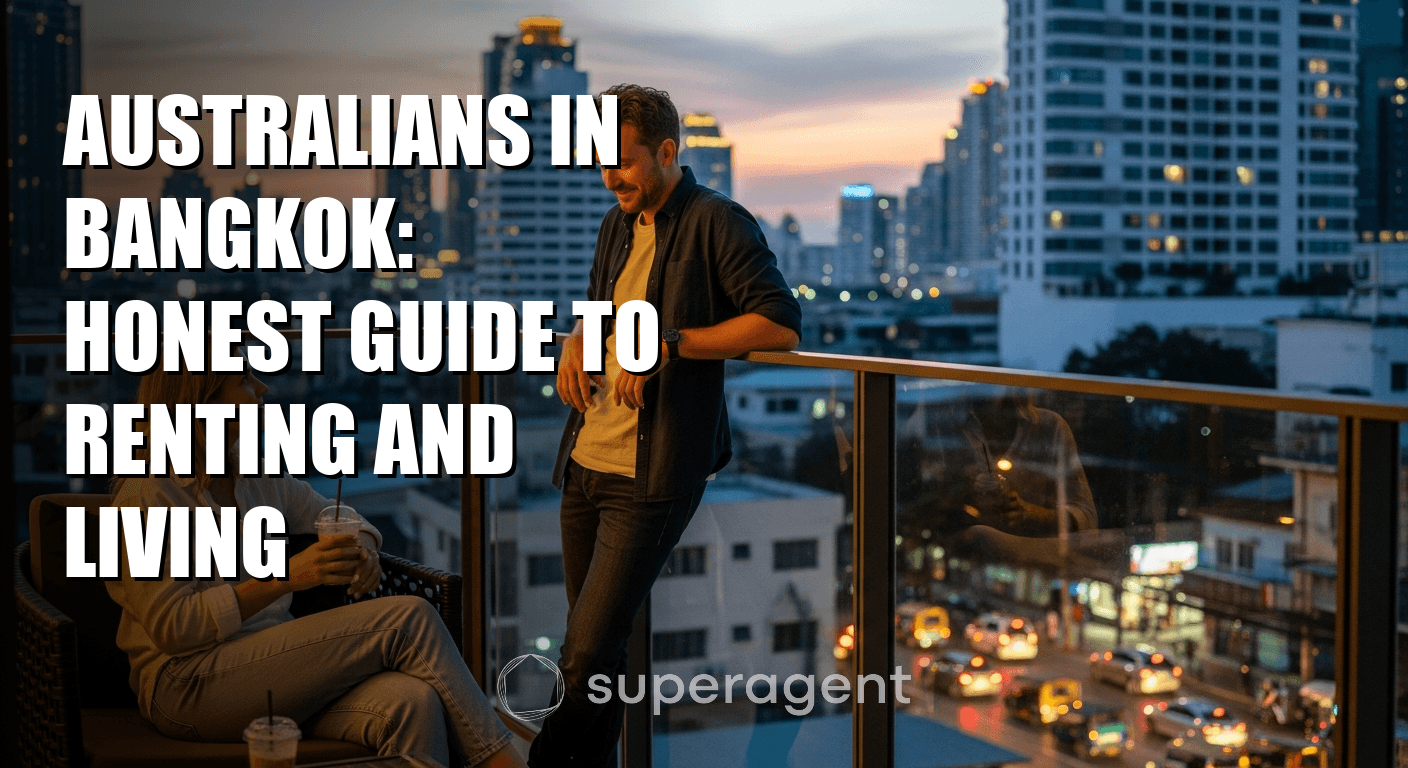
Summary
Australian expat Bangkok living guide covering rental tips, neighborhoods, costs, and practical advice for relocating Australians to Thailand's capital.
There's something about Bangkok that just clicks for Australians. Maybe it's the warm weather that feels like a permanent Queensland summer, the cold beers that cost less than a flat white back home, or the fact that you can rent a genuinely nice apartment here for what you'd pay for a shoebox in Surry Hills. Whatever the reason, the Australian expat community in Bangkok keeps growing. And if you're reading this, you're probably thinking about making the move yourself.
But renting in Bangkok is nothing like renting in Sydney, Melbourne, or Perth. The process is different, the contracts are different, and the things you need to watch out for are completely different. This guide covers the honest, practical stuff that most relocation articles skip over. No sugarcoating, just the real deal from someone who has watched plenty of Aussies settle in and figure it out.
Where Australians Actually Live in Bangkok
Let's get this out of the way first. Most Australians in Bangkok cluster around a few key neighborhoods, and there are good reasons for each one. Sukhumvit is the big one. Specifically, the stretch between BTS Nana and BTS Ekkamai draws a huge chunk of the Australian expat crowd. You'll find familiar food, English-speaking services, and a social scene that makes the transition easy.
If you're working in a corporate role, Silom and Sathorn near BTS Chong Nonsi or BTS Sala Daeng put you close to the financial district. Families with kids at international schools tend to settle around Phrom Phong or Thonglor, where the bigger condos are and where places like Bangkok Patana School are within reach.
Take Matt, an Aussie marketing manager who relocated from Melbourne last year. He started looking at condos near BTS Asok because his office was on Sukhumvit Soi 21. He ended up renting a one-bedroom at The Lumpini 24 for 28,000 THB per month. Walking distance to Terminal 21, the MRT interchange, and enough street food to never cook again. That's a pretty standard Australian expat move.
According to CBRE Thailand's latest market reports, average rents for a one-bedroom condo in the central Sukhumvit corridor range from 20,000 to 40,000 THB per month depending on building age and proximity to BTS stations. That's roughly 900 to 1,800 AUD, which still looks incredible compared to Australian capital cities.
The Rental Process: What's Different from Australia
If you've rented in Australia, you're used to property managers, formal applications, reference checks, and bond authorities. Bangkok works differently. Most condo rentals are handled directly through the building's juristic office or through individual landlords. There's no centralized tenancy database, no formal credit checks, and no government bond scheme.
The standard deal is a 12-month lease with two months' deposit plus one month's rent upfront. So if your rent is 30,000 THB per month, you're looking at 90,000 THB on day one. That's non-negotiable at most buildings. Some landlords will agree to a six-month lease, but expect to pay a premium or lose flexibility on your deposit return.
One thing that surprises a lot of Australians is the lack of tenant protection laws compared to what you get under state legislation back home. There's no equivalent of the NSW Fair Trading tribunal here. If you have a dispute with your landlord, it gets resolved through negotiation or, in extreme cases, civil court. This makes it really important to read your lease carefully before signing. Get everything in writing, especially agreements about early termination, maintenance responsibilities, and what counts as normal wear and tear on your deposit.
Sarah, an Australian teacher at an international school near BTS On Nut, learned this the hard way when her landlord tried to deduct 15,000 THB from her deposit for "wall discoloration" that was clearly just aging paint. She didn't have move-in photos documented properly. Lesson learned: photograph everything on day one.
Visas, Work Permits, and Staying Legal
Australians can enter Thailand on a 30-day visa exemption, but if you're planning to live and rent here, you need a proper visa. The most common options are a Non-Immigrant B visa for employment, an ED visa for studying, or the newer Long-Term Resident (LTR) visa if you qualify as a high-income professional or remote worker.
Your visa status directly affects your rental situation. Most landlords will want to see a valid visa or work permit before signing a lease, though some are more relaxed about this than others. If you're on a tourist visa or visa exemption, you'll likely need to pay the full lease term upfront or find a landlord willing to work with shorter arrangements.
The 90-day reporting requirement catches a lot of Australians off guard. Every 90 days, you need to report your address to immigration. You can do this online through the immigration bureau's website, but the system is notoriously unreliable, so many people just do it in person at Chaeng Watthana or use an agent service. Your landlord is also technically required to report your stay via the TM30 system within 24 hours of you moving in. Make sure they actually do this, because it can cause headaches at immigration if the record isn't there.
Cost of Living: The Real Numbers
One of the biggest draws for Australian expats is the cost of living. Your money goes significantly further in Bangkok. But "cheap" is relative, and plenty of Australians end up spending more than they expected because they maintain a Western lifestyle in a city that makes it very easy to do so.
Here's an honest breakdown comparing typical monthly costs in Bangkok versus a comparable Australian city:
| Expense | Bangkok (THB) | Bangkok (AUD approx.) | Sydney (AUD) |
|---|---|---|---|
| 1-Bed Condo Rent (Central) | 25,000 to 35,000 | 1,100 to 1,500 | 2,800 to 3,500 |
| Utilities (Electric, Water, Internet) | 3,000 to 5,000 | 130 to 220 | 300 to 450 |
| Monthly BTS/MRT Pass | 1,400 to 1,600 | 60 to 70 | 200 to 250 (Opal) |
| Dining Out (Mid-range, per meal) | 200 to 500 | 9 to 22 | 25 to 45 |
| Health Insurance (Annual, basic) | 25,000 to 60,000 | 1,100 to 2,600 | Covered by Medicare |
| Gym Membership | 2,000 to 4,000 | 90 to 175 | 60 to 100 |
The big variable is healthcare. Australia's Medicare doesn't cover you overseas, so you'll need private health insurance. Many Australians use international health plans that include access to hospitals like Bumrungrad International Hospital, which is genuinely world-class and conveniently located near BTS Nana. Budget at least 25,000 to 60,000 THB annually for a decent plan, more if you want comprehensive coverage.
Electricity bills are worth mentioning specifically. Many condos charge a per-unit rate to tenants that's higher than the Metropolitan Electricity Authority's official rate. A common landlord markup is 8 to 9 THB per unit versus the government rate of around 4 to 5 THB. Over a hot season when you're running AC constantly, this adds up fast. Always ask your landlord what rate they charge before signing.
Building the Social Side: Finding Your People
Bangkok has a well-established Australian community, and tapping into it makes the transition much smoother. The Australian-Thai Chamber of Commerce runs regular networking events. There are Aussie Rules football teams, cricket clubs, and more casual meetup groups scattered across the city.
For weekend socializing, you'll find familiar faces at spots like The Kiwi, Cheap Charlie's old corner near Soi 11, or the rooftop bars along Sukhumvit. Watching the AFL Grand Final or the Ashes at a bar full of fellow Aussies at 2 AM becomes a surprisingly bonding experience when you're 7,500 kilometers from home.
James, a software developer from Brisbane, told me the best thing he did in his first month was join a touch rugby league that plays at Lumpini Park on Saturday mornings. Within two weeks, he had a full social circle, recommendations for a good dentist, and three potential flatmates if he ever wanted to upgrade to a two-bedroom place near BTS Phrom Phong.
Common Mistakes Australians Make When Renting
After watching dozens of Australians go through the rental process here, certain patterns emerge. Here are the ones that come up most often.
First, skipping the building inspection. Australians tend to be trusting, and the glossy photos on listing sites look great. But you need to visit the actual unit, check water pressure, test the AC, open every drawer, and flush every toilet. Buildings age fast in Bangkok's climate, and a five-year-old condo can look ten years old if maintenance has been neglected.
Second, not negotiating. In Australia, rent is often set and that's that. In Bangkok, almost everything is negotiable. If a condo has been vacant for a month or more, the landlord is usually open to dropping the price by 2,000 to 5,000 THB per month. Longer lease commitments give you more bargaining power.
Third, ignoring the commute. Bangkok traffic is legendary for a reason. That condo in Bearing might be 40% cheaper than one in Asok, but your daily commute on the BTS Sukhumvit Line adds 30 to 40 minutes each way. Factor in travel time realistically before choosing a location based purely on rent.
Fourth, assuming the deposit is coming back automatically. Document everything. Take timestamped photos. Keep all receipts for any repairs you do. Deposit disputes are the single most common rental complaint among expats in Bangkok, and Australian tenants used to strong consumer protections are often caught off guard.
Bangkok is a city that rewards the people who do their homework but stay open to surprises. For Australians, the lifestyle upgrade is real. Lower costs, better weather, incredible food, and a genuinely welcoming culture that makes it easy to feel at home. The rental market just requires a slightly different approach than what you're used to back in Australia. Take your time, ask questions, inspect everything, and get your lease terms nailed down properly.
If you're ready to start your condo search, Superagent can help you find verified listings across Bangkok with AI-powered matching based on your budget, preferred neighborhood, and lifestyle needs. It takes the guesswork out of a process that can feel overwhelming when you're doing it from the other side of the world.
There's something about Bangkok that just clicks for Australians. Maybe it's the warm weather that feels like a permanent Queensland summer, the cold beers that cost less than a flat white back home, or the fact that you can rent a genuinely nice apartment here for what you'd pay for a shoebox in Surry Hills. Whatever the reason, the Australian expat community in Bangkok keeps growing. And if you're reading this, you're probably thinking about making the move yourself.
But renting in Bangkok is nothing like renting in Sydney, Melbourne, or Perth. The process is different, the contracts are different, and the things you need to watch out for are completely different. This guide covers the honest, practical stuff that most relocation articles skip over. No sugarcoating, just the real deal from someone who has watched plenty of Aussies settle in and figure it out.
Where Australians Actually Live in Bangkok
Let's get this out of the way first. Most Australians in Bangkok cluster around a few key neighborhoods, and there are good reasons for each one. Sukhumvit is the big one. Specifically, the stretch between BTS Nana and BTS Ekkamai draws a huge chunk of the Australian expat crowd. You'll find familiar food, English-speaking services, and a social scene that makes the transition easy.
If you're working in a corporate role, Silom and Sathorn near BTS Chong Nonsi or BTS Sala Daeng put you close to the financial district. Families with kids at international schools tend to settle around Phrom Phong or Thonglor, where the bigger condos are and where places like Bangkok Patana School are within reach.
Take Matt, an Aussie marketing manager who relocated from Melbourne last year. He started looking at condos near BTS Asok because his office was on Sukhumvit Soi 21. He ended up renting a one-bedroom at The Lumpini 24 for 28,000 THB per month. Walking distance to Terminal 21, the MRT interchange, and enough street food to never cook again. That's a pretty standard Australian expat move.
According to CBRE Thailand's latest market reports, average rents for a one-bedroom condo in the central Sukhumvit corridor range from 20,000 to 40,000 THB per month depending on building age and proximity to BTS stations. That's roughly 900 to 1,800 AUD, which still looks incredible compared to Australian capital cities.
The Rental Process: What's Different from Australia
If you've rented in Australia, you're used to property managers, formal applications, reference checks, and bond authorities. Bangkok works differently. Most condo rentals are handled directly through the building's juristic office or through individual landlords. There's no centralized tenancy database, no formal credit checks, and no government bond scheme.
The standard deal is a 12-month lease with two months' deposit plus one month's rent upfront. So if your rent is 30,000 THB per month, you're looking at 90,000 THB on day one. That's non-negotiable at most buildings. Some landlords will agree to a six-month lease, but expect to pay a premium or lose flexibility on your deposit return.
One thing that surprises a lot of Australians is the lack of tenant protection laws compared to what you get under state legislation back home. There's no equivalent of the NSW Fair Trading tribunal here. If you have a dispute with your landlord, it gets resolved through negotiation or, in extreme cases, civil court. This makes it really important to read your lease carefully before signing. Get everything in writing, especially agreements about early termination, maintenance responsibilities, and what counts as normal wear and tear on your deposit.
Sarah, an Australian teacher at an international school near BTS On Nut, learned this the hard way when her landlord tried to deduct 15,000 THB from her deposit for "wall discoloration" that was clearly just aging paint. She didn't have move-in photos documented properly. Lesson learned: photograph everything on day one.
Visas, Work Permits, and Staying Legal
Australians can enter Thailand on a 30-day visa exemption, but if you're planning to live and rent here, you need a proper visa. The most common options are a Non-Immigrant B visa for employment, an ED visa for studying, or the newer Long-Term Resident (LTR) visa if you qualify as a high-income professional or remote worker.
Your visa status directly affects your rental situation. Most landlords will want to see a valid visa or work permit before signing a lease, though some are more relaxed about this than others. If you're on a tourist visa or visa exemption, you'll likely need to pay the full lease term upfront or find a landlord willing to work with shorter arrangements.
The 90-day reporting requirement catches a lot of Australians off guard. Every 90 days, you need to report your address to immigration. You can do this online through the immigration bureau's website, but the system is notoriously unreliable, so many people just do it in person at Chaeng Watthana or use an agent service. Your landlord is also technically required to report your stay via the TM30 system within 24 hours of you moving in. Make sure they actually do this, because it can cause headaches at immigration if the record isn't there.
Cost of Living: The Real Numbers
One of the biggest draws for Australian expats is the cost of living. Your money goes significantly further in Bangkok. But "cheap" is relative, and plenty of Australians end up spending more than they expected because they maintain a Western lifestyle in a city that makes it very easy to do so.
Here's an honest breakdown comparing typical monthly costs in Bangkok versus a comparable Australian city:
| Expense | Bangkok (THB) | Bangkok (AUD approx.) | Sydney (AUD) |
|---|---|---|---|
| 1-Bed Condo Rent (Central) | 25,000 to 35,000 | 1,100 to 1,500 | 2,800 to 3,500 |
| Utilities (Electric, Water, Internet) | 3,000 to 5,000 | 130 to 220 | 300 to 450 |
| Monthly BTS/MRT Pass | 1,400 to 1,600 | 60 to 70 | 200 to 250 (Opal) |
| Dining Out (Mid-range, per meal) | 200 to 500 | 9 to 22 | 25 to 45 |
| Health Insurance (Annual, basic) | 25,000 to 60,000 | 1,100 to 2,600 | Covered by Medicare |
| Gym Membership | 2,000 to 4,000 | 90 to 175 | 60 to 100 |
The big variable is healthcare. Australia's Medicare doesn't cover you overseas, so you'll need private health insurance. Many Australians use international health plans that include access to hospitals like Bumrungrad International Hospital, which is genuinely world-class and conveniently located near BTS Nana. Budget at least 25,000 to 60,000 THB annually for a decent plan, more if you want comprehensive coverage.
Talk to us about renting
Share your details and keep reading — we’ll get back to you.
Electricity bills are worth mentioning specifically. Many condos charge a per-unit rate to tenants that's higher than the Metropolitan Electricity Authority's official rate. A common landlord markup is 8 to 9 THB per unit versus the government rate of around 4 to 5 THB. Over a hot season when you're running AC constantly, this adds up fast. Always ask your landlord what rate they charge before signing.
Building the Social Side: Finding Your People
Bangkok has a well-established Australian community, and tapping into it makes the transition much smoother. The Australian-Thai Chamber of Commerce runs regular networking events. There are Aussie Rules football teams, cricket clubs, and more casual meetup groups scattered across the city.
For weekend socializing, you'll find familiar faces at spots like The Kiwi, Cheap Charlie's old corner near Soi 11, or the rooftop bars along Sukhumvit. Watching the AFL Grand Final or the Ashes at a bar full of fellow Aussies at 2 AM becomes a surprisingly bonding experience when you're 7,500 kilometers from home.
James, a software developer from Brisbane, told me the best thing he did in his first month was join a touch rugby league that plays at Lumpini Park on Saturday mornings. Within two weeks, he had a full social circle, recommendations for a good dentist, and three potential flatmates if he ever wanted to upgrade to a two-bedroom place near BTS Phrom Phong.
Common Mistakes Australians Make When Renting
After watching dozens of Australians go through the rental process here, certain patterns emerge. Here are the ones that come up most often.
First, skipping the building inspection. Australians tend to be trusting, and the glossy photos on listing sites look great. But you need to visit the actual unit, check water pressure, test the AC, open every drawer, and flush every toilet. Buildings age fast in Bangkok's climate, and a five-year-old condo can look ten years old if maintenance has been neglected.
Second, not negotiating. In Australia, rent is often set and that's that. In Bangkok, almost everything is negotiable. If a condo has been vacant for a month or more, the landlord is usually open to dropping the price by 2,000 to 5,000 THB per month. Longer lease commitments give you more bargaining power.
Third, ignoring the commute. Bangkok traffic is legendary for a reason. That condo in Bearing might be 40% cheaper than one in Asok, but your daily commute on the BTS Sukhumvit Line adds 30 to 40 minutes each way. Factor in travel time realistically before choosing a location based purely on rent.
Fourth, assuming the deposit is coming back automatically. Document everything. Take timestamped photos. Keep all receipts for any repairs you do. Deposit disputes are the single most common rental complaint among expats in Bangkok, and Australian tenants used to strong consumer protections are often caught off guard.
Bangkok is a city that rewards the people who do their homework but stay open to surprises. For Australians, the lifestyle upgrade is real. Lower costs, better weather, incredible food, and a genuinely welcoming culture that makes it easy to feel at home. The rental market just requires a slightly different approach than what you're used to back in Australia. Take your time, ask questions, inspect everything, and get your lease terms nailed down properly.
If you're ready to start your condo search, Superagent can help you find verified listings across Bangkok with AI-powered matching based on your budget, preferred neighborhood, and lifestyle needs. It takes the guesswork out of a process that can feel overwhelming when you're doing it from the other side of the world.
Share this article
Properties you may like
![[For Rent] CONDO I Park 24 I Studio I 1 Bath I 25,000THB/mo](/_next/image?url=https%3A%2F%2Fstorage.googleapis.com%2Fsuperagent-web%2Fattachments%2Flistings%2F6747%2F99e94009-1261-4181-ab16-6c2c80017f7d-1130-2.jpg&w=3840&q=75)
฿25,000
Studio129 sqm
[For Rent] CONDO I Park 24 I Studio I 1 Bath I 25,000THB/mo
Phrom Phong
Condo![[For Rent] CONDO I Life @ Ratchada - Huai Khwang I 2 Beds I 1 Bath I 28,000THB/mo](/_next/image?url=https%3A%2F%2Fstorage.googleapis.com%2Fsuperagent-web%2Fattachments%2Flistings%2F6746%2F589c29b2-df4c-42a4-bad4-0faebc9f49f1-1129-1.jpg&w=3840&q=75)
฿28,000
2 Bed155 sqm
[For Rent] CONDO I Life @ Ratchada - Huai Khwang I 2 Beds I 1 Bath I 28,000THB/mo
Condo![[For Rent] CONDO I Quintara Treehaus Sukhumvit 42 I 1 Bed I 1 Bath I 27,000THB/mo](/_next/image?url=https%3A%2F%2Fstorage.googleapis.com%2Fsuperagent-web%2Fattachments%2Flistings%2F6744%2Fae5e2ba7-7c5f-4e6f-a3d7-0f5b7acb36c6-1120-1.jpg&w=3840&q=75)
฿27,000
1 Bed140 sqm
[For Rent] CONDO I Quintara Treehaus Sukhumvit 42 I 1 Bed I 1 Bath I 27,000THB/mo
Phra Khanong
Condo![[For Rent] CONDO I Aguston Sukhumvit 22 I Pet Friendly I 2 Beds I 2 Baths I Rent 55,000THB/mo](/_next/image?url=https%3A%2F%2Fstorage.googleapis.com%2Fsuperagent-web%2Fattachments%2Flistings%2F2266%2Fd3afcd25-6b79-46cb-9f1f-396acdc3dd10-955-3.jpg&w=3840&q=75)
฿55,000
2 Bed295 sqm
[For Rent] CONDO I Aguston Sukhumvit 22 I Pet Friendly I 2 Beds I 2 Baths I Rent 55,000THB/mo
Phrom Phong
Condo![[For Rent] CONDO I SUPALAI PLACE Sukhumvit 39 I 2 Beds I 2 Baths (1 Jacuzzi) I 55,555THB/mo](/_next/image?url=https%3A%2F%2Fstorage.googleapis.com%2Fsuperagent-web%2Fattachments%2Flistings%2F6743%2Fba530743-48b9-4ac6-92d3-c2247e743cf6-01-supalai-place-skv39-2b-link-heaven.jpg&w=3840&q=75)
฿55,555
2 Bed2142 sqm
[For Rent] CONDO I SUPALAI PLACE Sukhumvit 39 I 2 Beds I 2 Baths (1 Jacuzzi) I 55,555THB/mo
Phrom Phong
Condo![[For Rent] CONDO I Maru Ekkamai 2 I Pet friendly I 2 Beds I 2 Baths I 68,000 THB/mo](/_next/image?url=https%3A%2F%2Fstorage.googleapis.com%2Fsuperagent-web%2Fattachments%2Flistings%2F6602%2F9f1d8f71-ee43-435f-9a44-da16c4092c92-968-1.jpg&w=3840&q=75)
฿68,000
2 Bed360 sqm
[For Rent] CONDO I Maru Ekkamai 2 I Pet friendly I 2 Beds I 2 Baths I 68,000 THB/mo
Ekkamai
Condo![[For Rent] CONDO I Noble State 39 I 2 Beds I 2 Baths I 63,000THB/mo](/_next/image?url=https%3A%2F%2Fstorage.googleapis.com%2Fsuperagent-web%2Fattachments%2Flistings%2F2237%2F60eb58f3-eae5-41ed-a80b-406e004f05d8-940-1.jpg&w=3840&q=75)
฿63,000
2 Bed260 sqm
[For Rent] CONDO I Noble State 39 I 2 Beds I 2 Baths I 63,000THB/mo
Phrom Phong
Condo![[For Rent] CONDO I Rhythm Sukhumvit 36-38 I 2 Beds I 2 Baths I 38,999THB/mo](/_next/image?url=https%3A%2F%2Fstorage.googleapis.com%2Fsuperagent-web%2Fattachments%2Flistings%2F1788%2F942a0215-4128-4c2c-a064-f607e84e7aa4-656-2.jpg&w=3840&q=75)
฿38,999
2 Bed256 sqm
[For Rent] CONDO I Rhythm Sukhumvit 36-38 I 2 Beds I 2 Baths I 38,999THB/mo
Thonglor
Condo![[For Rent] CONDO I City Smart Sukhumvit 18 I 3 Beds I 3 Baths I 65,000mo/THB](/_next/image?url=https%3A%2F%2Fstorage.googleapis.com%2Fsuperagent-web%2Fattachments%2Flistings%2F6741%2Fd371c89d-a913-42c4-a673-e540afae4f46-1116-1.jpg&w=3840&q=75)
฿65,000
3 Bed3125 sqm
[For Rent] CONDO I City Smart Sukhumvit 18 I 3 Beds I 3 Baths I 65,000mo/THB
Condo![[For Rent] CONDO I The Coast Bangkok I 1 Bed I 1 Bath I 20,000mo/THB](/_next/image?url=https%3A%2F%2Fstorage.googleapis.com%2Fsuperagent-web%2Fattachments%2Flistings%2F6740%2F498477ce-4ffa-4e4c-ab08-0e565d9c4bbe-1115-3.jpg&w=3840&q=75)
฿20,000
1 Bed146 sqm
[For Rent] CONDO I The Coast Bangkok I 1 Bed I 1 Bath I 20,000mo/THB
Bang Na
CondoMore like this
 In Guides · Superagent EditorialHidden Costs of Renting a Condo in Bangkok Nobody Warns You AboutBangkok condo rent looks affordable until month one hits. Here are the real costs beyond the headline figure that catch most renters off guard.25 May 20261 min read
 In Guides · Superagent EditorialWhat a Long-Vacant Bangkok Condo Unit Is Actually Telling YouA Bangkok condo vacant for months signals overpricing, landlord issues, or real problems. Here is how to read the signs.25 May 20261 min read
 In Guides · Superagent EditorialRed Flags in a Bangkok Rental Contract to Watch Out ForBangkok rental contracts often hide risky clauses. Here are the red flags every tenant must catch before signing any lease.25 May 20261 min read
 In Guides · Superagent EditorialWorking Online from a Condo: How to Choose the Perfect Room for ProductivityLearn how to choose the best condo room for working online with tips on lighting, noise, and furniture setup to maximize productivity.9 May 20261 min read