Bangkok for Remote Workers: The Complete 2026 Living Guide
Guides
Bangkok for Remote Workers: The Complete 2026 Living Guide
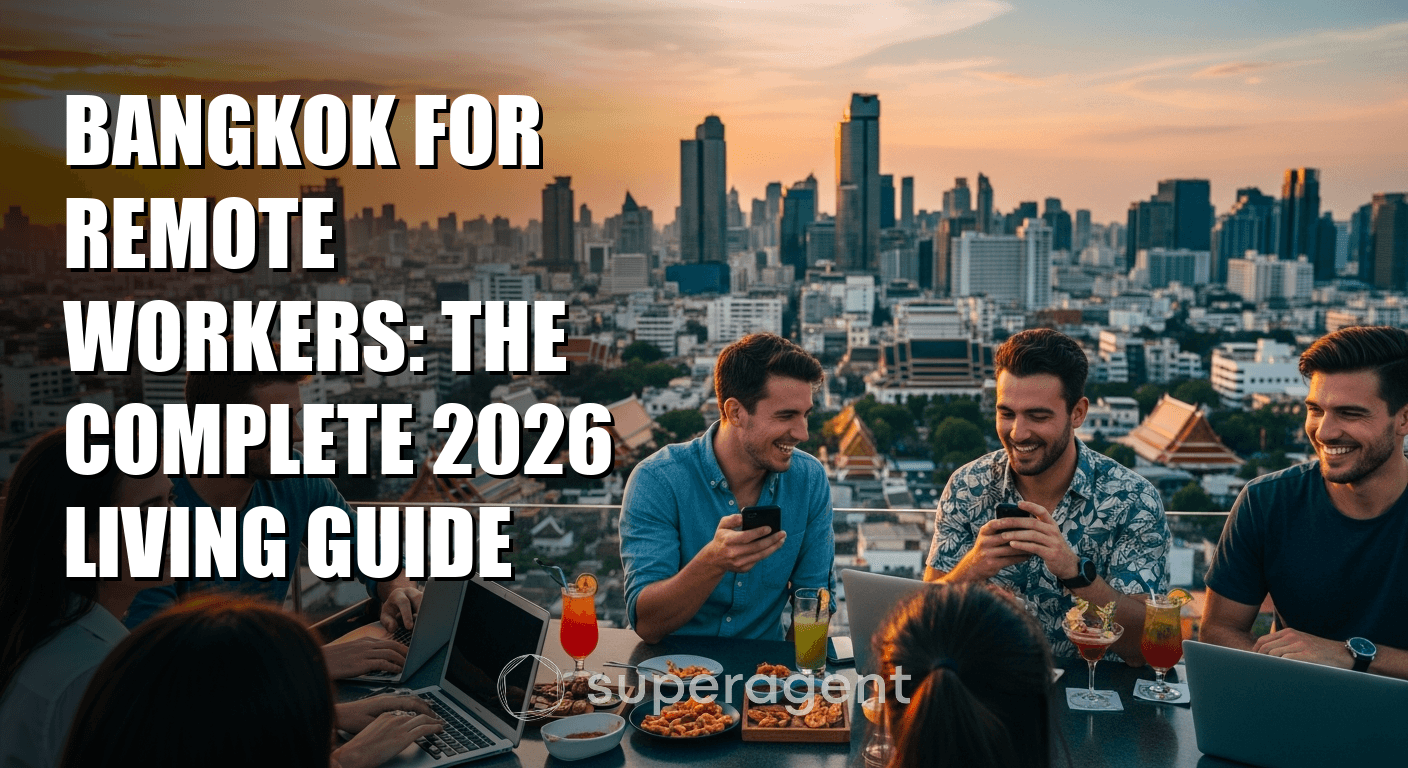
Discover why Bangkok is becoming the top destination for digital nomads and remote professionals.
Summary
Complete bangkok for remote workers guide covering visas, coworking spaces, neighborhoods, internet speeds, and cost of living for 2026.
You wake up at 8 AM in your condo on Sukhumvit Soi 24, pour coffee from the machine you bought at HomePro, and open your laptop to join a standup meeting with your team in Berlin. By noon, you are at a coworking space near Phrom Phong BTS, grabbing pad kra pao from a street cart for 60 baht. By 6 PM, you are swimming laps in your building's rooftop pool. This is not a fantasy. This is just a regular Tuesday for thousands of remote workers who have made Bangkok their base. If you are considering joining them in 2026, this guide covers everything you need to know, from neighborhoods and rent to visas and internet speeds.
Why Bangkok Still Wins for Remote Workers in 2026
Bangkok has been on the digital nomad radar for over a decade, but it keeps getting better. The cost of living remains dramatically lower than most Western cities, while the infrastructure keeps improving. According to CBRE Thailand's latest market reports, average rents for a one-bedroom condo in central Bangkok range from 15,000 to 35,000 THB per month depending on the neighborhood. Compare that to London, New York, or even Lisbon, and the math speaks for itself.
Internet speeds have gotten seriously fast. Most condos in central Bangkok now come with fiber optic connections offering 300 Mbps to 1 Gbps. AIS Fibre, True Online, and 3BB all compete aggressively, which keeps prices low and speeds high. You can get a 500 Mbps plan for around 600 to 800 THB per month. Zoom calls, file uploads, VPN connections. None of it is a problem here.
Then there is the food. You can eat three meals a day from street stalls and local restaurants for under 300 THB. Or you can splurge on a nice brunch at Roast Coffee in Thonglor for 400 THB. The range is what makes Bangkok special. You can live lean or live large, and both versions feel pretty great.
Best Neighborhoods for Remote Workers
Choosing where to live matters a lot. Bangkok is massive, and picking the wrong area can mean hours in traffic or a long walk to decent coffee. Here is a breakdown of the neighborhoods that remote workers tend to love.
Take someone like Mark, a UX designer from Melbourne who moved to Bangkok in late 2025. He started in Silom because he liked the idea of being near the business district. After two months, he moved to Ari because he wanted a quieter street vibe with good cafes and easier grocery shopping. His rent dropped from 28,000 THB for a studio near Chong Nonsi BTS to 18,000 THB for a bigger one-bedroom near Ari BTS. That kind of flexibility is everywhere in Bangkok.
| Neighborhood | BTS/MRT Station | 1-Bed Rent Range (THB/mo) | Best For | Coworking Options |
|---|---|---|---|---|
| Ari | Ari BTS | 14,000 - 22,000 | Quiet streets, local food, cafes | HUBBA, Wake Up |
| Thonglor / Ekkamai | Thong Lo BTS / Ekkamai BTS | 20,000 - 40,000 | Nightlife, dining, social scene | The Hive, Launchpad |
| On Nut | On Nut BTS | 10,000 - 18,000 | Budget-friendly, Tesco/Lotus nearby | Draper Startup House |
| Silom / Sathorn | Chong Nonsi BTS / Sala Daeng BTS | 18,000 - 35,000 | Business district, upscale dining | JustCo, WeWork |
| Phra Khanong | Phra Khanong BTS | 12,000 - 20,000 | Emerging area, great value | AIS D.C., local cafes |
| Ratchathewi / Phaya Thai | Ratchathewi BTS / Phaya Thai BTS | 12,000 - 22,000 | Central location, airport rail link | True Digital Park (nearby), TCDC |
On Nut and Phra Khanong have become especially popular with remote workers on tighter budgets. You get modern condos, reliable BTS access, and plenty of restaurants without the Thonglor price tag. Buildings like The Base Sukhumvit 77 and Ideo Mobi Sukhumvit 66 offer furnished one-bedrooms starting around 12,000 THB.
Visas and Legal Stuff You Actually Need to Know
This is where a lot of guides get vague, so let's be specific. If you are working remotely for a company outside Thailand, the most common options in 2026 are the Long-Term Resident (LTR) visa, the Digital Nomad visa (DTV, or Destination Thailand Visa), and the classic tourist visa with border runs.
The DTV, introduced in mid-2024, allows stays of up to 180 days and is extendable. It is aimed specifically at remote workers and freelancers. You need to show proof of employment or freelance income, and the application process goes through Thai embassies or consulates abroad. Check the Thai Immigration Bureau website for the latest requirements, as the rules have been updated several times since launch.
Consider the case of Priya, an Indian product manager working remotely for a Singapore startup. She applied for the DTV at the Thai embassy in Singapore, showed her employment contract and three months of bank statements, and had her visa approved within two weeks. She now lives in a one-bedroom at Life Sukhumvit 48 near Phra Khanong BTS, paying 16,000 THB per month. No border runs, no stress.
The LTR visa is a different beast. It targets high-income professionals earning at least $80,000 USD per year and offers a five-year stay with tax benefits. It is great if you qualify, but most remote workers will find the DTV more accessible.
Coworking, Cafes, and Where to Actually Get Work Done
Working from your condo is fine for a few days, but most remote workers eventually crave a change of scenery, better coffee, or just some human interaction. Bangkok delivers on all fronts.
The Hive Thonglor, on Sukhumvit Soi 49, is probably the most well-known coworking space among expats. Hot desk rates run around 4,500 to 6,000 THB per month. JustCo at AIA Sathorn Tower offers a more corporate feel with day passes around 600 THB. For something more casual, True Digital Park near Punnawithi BTS has a massive open workspace, a food court, and regular tech community events.
Then there are the cafes. Bangkok's cafe culture is insane. Places like Roots Coffee in Ari, Factory Coffee near Phrom Phong, and Ceresia Coffee Roasters in Ekkamai all have strong Wi-Fi, power outlets at every seat, and the kind of atmosphere that makes you actually want to work. Most remote workers rotate between two or three spots throughout the week to keep things fresh.
Sarah, a content strategist from Canada, told me she works from Roots Coffee three mornings a week, then heads to The Hive for afternoon calls. She says the routine keeps her productive without feeling isolated. That kind of hybrid setup is totally normal here.
Healthcare, Safety, and Quality of Life
One of the underrated perks of Bangkok for remote workers is access to world-class healthcare at reasonable prices. Bumrungrad International Hospital near Phrom Phong is consistently ranked among the best hospitals in Southeast Asia. A general consultation costs around 1,500 to 2,500 THB without insurance. Dental work, dermatology, eye care. It is all available at a fraction of what you would pay in the US or Europe.
Health insurance is something you should sort out before you arrive. International plans from companies like Cigna, AXA, or Pacific Cross are popular among expats in Bangkok. Monthly premiums for a healthy person in their 30s typically range from 3,000 to 8,000 THB depending on coverage level.
As for safety, Bangkok is generally a very safe city for foreigners. Petty theft and scams targeting tourists exist, but if you live here, you quickly learn the basics and avoid those situations entirely. The bigger daily concern is honestly just crossing the street. Motorbike traffic is no joke, especially around Sukhumvit side sois.
Air quality is worth mentioning too. January through March tends to bring haze and elevated PM2.5 levels. Many remote workers either plan trips out of the city during those months or make sure their condo has a decent air purifier. Buildings like Ashton Asoke and Park 24 have centralized air filtration systems, which is a nice bonus.
Monthly Budget Breakdown for a Remote Worker in Bangkok
Let's get real about numbers. Here is what a comfortable but not extravagant month looks like for a remote worker living solo in a central Bangkok condo in 2026.
Rent for a furnished one-bedroom in the On Nut to Ekkamai stretch runs 14,000 to 25,000 THB. Electricity adds 1,500 to 3,000 THB depending on how much you use the AC. Internet is 600 to 800 THB. A BTS Rabbit card with moderate use costs about 1,000 to 1,500 THB per month. Food, mixing street food with restaurants and some home cooking, comes to roughly 8,000 to 15,000 THB. Coworking is another 2,000 to 6,000 THB if you use one regularly. Health insurance runs 3,000 to 8,000 THB.
All in, a comfortable remote work life in Bangkok costs between 35,000 and 65,000 THB per month, which translates to roughly $1,000 to $1,800 USD. That is the stat worth highlighting. According to multiple expat surveys and DDproperty market data, the average total monthly cost of living for a single remote worker in central Bangkok in 2025/2026 sits around 45,000 to 55,000 THB, including rent, food, transport, and lifestyle expenses.
Compare that to comparable quality of life in Barcelona, Lisbon, or Austin, and Bangkok wins by a wide margin.
Bangkok is not perfect. The heat takes adjustment, the bureaucracy can be slow, and the traffic is legendary for all the wrong reasons. But for remote workers who want a high quality of life, fast internet, incredible food, and low costs, it is genuinely hard to beat. The city keeps evolving, new BTS extensions keep opening, coworking spaces keep multiplying, and the remote work community keeps growing. If you are serious about making the move, the best time to start looking is now.
Superagent at superagent.co can help you find the right condo for your remote work lifestyle, with AI-powered search that filters by location, budget, and the amenities that actually matter to you. Skip the agent fees and the guesswork, and find your Bangkok base in minutes.
You wake up at 8 AM in your condo on Sukhumvit Soi 24, pour coffee from the machine you bought at HomePro, and open your laptop to join a standup meeting with your team in Berlin. By noon, you are at a coworking space near Phrom Phong BTS, grabbing pad kra pao from a street cart for 60 baht. By 6 PM, you are swimming laps in your building's rooftop pool. This is not a fantasy. This is just a regular Tuesday for thousands of remote workers who have made Bangkok their base. If you are considering joining them in 2026, this guide covers everything you need to know, from neighborhoods and rent to visas and internet speeds.
Why Bangkok Still Wins for Remote Workers in 2026
Bangkok has been on the digital nomad radar for over a decade, but it keeps getting better. The cost of living remains dramatically lower than most Western cities, while the infrastructure keeps improving. According to CBRE Thailand's latest market reports, average rents for a one-bedroom condo in central Bangkok range from 15,000 to 35,000 THB per month depending on the neighborhood. Compare that to London, New York, or even Lisbon, and the math speaks for itself.
Internet speeds have gotten seriously fast. Most condos in central Bangkok now come with fiber optic connections offering 300 Mbps to 1 Gbps. AIS Fibre, True Online, and 3BB all compete aggressively, which keeps prices low and speeds high. You can get a 500 Mbps plan for around 600 to 800 THB per month. Zoom calls, file uploads, VPN connections. None of it is a problem here.
Then there is the food. You can eat three meals a day from street stalls and local restaurants for under 300 THB. Or you can splurge on a nice brunch at Roast Coffee in Thonglor for 400 THB. The range is what makes Bangkok special. You can live lean or live large, and both versions feel pretty great.
Best Neighborhoods for Remote Workers
Choosing where to live matters a lot. Bangkok is massive, and picking the wrong area can mean hours in traffic or a long walk to decent coffee. Here is a breakdown of the neighborhoods that remote workers tend to love.
Take someone like Mark, a UX designer from Melbourne who moved to Bangkok in late 2025. He started in Silom because he liked the idea of being near the business district. After two months, he moved to Ari because he wanted a quieter street vibe with good cafes and easier grocery shopping. His rent dropped from 28,000 THB for a studio near Chong Nonsi BTS to 18,000 THB for a bigger one-bedroom near Ari BTS. That kind of flexibility is everywhere in Bangkok.
| Neighborhood | BTS/MRT Station | 1-Bed Rent Range (THB/mo) | Best For | Coworking Options |
|---|---|---|---|---|
| Ari | Ari BTS | 14,000 - 22,000 | Quiet streets, local food, cafes | HUBBA, Wake Up |
| Thonglor / Ekkamai | Thong Lo BTS / Ekkamai BTS | 20,000 - 40,000 | Nightlife, dining, social scene | The Hive, Launchpad |
| On Nut | On Nut BTS | 10,000 - 18,000 | Budget-friendly, Tesco/Lotus nearby | Draper Startup House |
| Silom / Sathorn | Chong Nonsi BTS / Sala Daeng BTS | 18,000 - 35,000 | Business district, upscale dining | JustCo, WeWork |
| Phra Khanong | Phra Khanong BTS | 12,000 - 20,000 | Emerging area, great value | AIS D.C., local cafes |
| Ratchathewi / Phaya Thai | Ratchathewi BTS / Phaya Thai BTS | 12,000 - 22,000 | Central location, airport rail link | True Digital Park (nearby), TCDC |
On Nut and Phra Khanong have become especially popular with remote workers on tighter budgets. You get modern condos, reliable BTS access, and plenty of restaurants without the Thonglor price tag. Buildings like The Base Sukhumvit 77 and Ideo Mobi Sukhumvit 66 offer furnished one-bedrooms starting around 12,000 THB.
Visas and Legal Stuff You Actually Need to Know
This is where a lot of guides get vague, so let's be specific. If you are working remotely for a company outside Thailand, the most common options in 2026 are the Long-Term Resident (LTR) visa, the Digital Nomad visa (DTV, or Destination Thailand Visa), and the classic tourist visa with border runs.
The DTV, introduced in mid-2024, allows stays of up to 180 days and is extendable. It is aimed specifically at remote workers and freelancers. You need to show proof of employment or freelance income, and the application process goes through Thai embassies or consulates abroad. Check the Thai Immigration Bureau website for the latest requirements, as the rules have been updated several times since launch.
Consider the case of Priya, an Indian product manager working remotely for a Singapore startup. She applied for the DTV at the Thai embassy in Singapore, showed her employment contract and three months of bank statements, and had her visa approved within two weeks. She now lives in a one-bedroom at Life Sukhumvit 48 near Phra Khanong BTS, paying 16,000 THB per month. No border runs, no stress.
The LTR visa is a different beast. It targets high-income professionals earning at least $80,000 USD per year and offers a five-year stay with tax benefits. It is great if you qualify, but most remote workers will find the DTV more accessible.
Coworking, Cafes, and Where to Actually Get Work Done
Working from your condo is fine for a few days, but most remote workers eventually crave a change of scenery, better coffee, or just some human interaction. Bangkok delivers on all fronts.
The Hive Thonglor, on Sukhumvit Soi 49, is probably the most well-known coworking space among expats. Hot desk rates run around 4,500 to 6,000 THB per month. JustCo at AIA Sathorn Tower offers a more corporate feel with day passes around 600 THB. For something more casual, True Digital Park near Punnawithi BTS has a massive open workspace, a food court, and regular tech community events.
Then there are the cafes. Bangkok's cafe culture is insane. Places like Roots Coffee in Ari, Factory Coffee near Phrom Phong, and Ceresia Coffee Roasters in Ekkamai all have strong Wi-Fi, power outlets at every seat, and the kind of atmosphere that makes you actually want to work. Most remote workers rotate between two or three spots throughout the week to keep things fresh.
Talk to us about renting
Share your details and keep reading — we’ll get back to you.
Sarah, a content strategist from Canada, told me she works from Roots Coffee three mornings a week, then heads to The Hive for afternoon calls. She says the routine keeps her productive without feeling isolated. That kind of hybrid setup is totally normal here.
Healthcare, Safety, and Quality of Life
One of the underrated perks of Bangkok for remote workers is access to world-class healthcare at reasonable prices. Bumrungrad International Hospital near Phrom Phong is consistently ranked among the best hospitals in Southeast Asia. A general consultation costs around 1,500 to 2,500 THB without insurance. Dental work, dermatology, eye care. It is all available at a fraction of what you would pay in the US or Europe.
Health insurance is something you should sort out before you arrive. International plans from companies like Cigna, AXA, or Pacific Cross are popular among expats in Bangkok. Monthly premiums for a healthy person in their 30s typically range from 3,000 to 8,000 THB depending on coverage level.
As for safety, Bangkok is generally a very safe city for foreigners. Petty theft and scams targeting tourists exist, but if you live here, you quickly learn the basics and avoid those situations entirely. The bigger daily concern is honestly just crossing the street. Motorbike traffic is no joke, especially around Sukhumvit side sois.
Air quality is worth mentioning too. January through March tends to bring haze and elevated PM2.5 levels. Many remote workers either plan trips out of the city during those months or make sure their condo has a decent air purifier. Buildings like Ashton Asoke and Park 24 have centralized air filtration systems, which is a nice bonus.
Monthly Budget Breakdown for a Remote Worker in Bangkok
Let's get real about numbers. Here is what a comfortable but not extravagant month looks like for a remote worker living solo in a central Bangkok condo in 2026.
Rent for a furnished one-bedroom in the On Nut to Ekkamai stretch runs 14,000 to 25,000 THB. Electricity adds 1,500 to 3,000 THB depending on how much you use the AC. Internet is 600 to 800 THB. A BTS Rabbit card with moderate use costs about 1,000 to 1,500 THB per month. Food, mixing street food with restaurants and some home cooking, comes to roughly 8,000 to 15,000 THB. Coworking is another 2,000 to 6,000 THB if you use one regularly. Health insurance runs 3,000 to 8,000 THB.
All in, a comfortable remote work life in Bangkok costs between 35,000 and 65,000 THB per month, which translates to roughly $1,000 to $1,800 USD. That is the stat worth highlighting. According to multiple expat surveys and DDproperty market data, the average total monthly cost of living for a single remote worker in central Bangkok in 2025/2026 sits around 45,000 to 55,000 THB, including rent, food, transport, and lifestyle expenses.
Compare that to comparable quality of life in Barcelona, Lisbon, or Austin, and Bangkok wins by a wide margin.
Bangkok is not perfect. The heat takes adjustment, the bureaucracy can be slow, and the traffic is legendary for all the wrong reasons. But for remote workers who want a high quality of life, fast internet, incredible food, and low costs, it is genuinely hard to beat. The city keeps evolving, new BTS extensions keep opening, coworking spaces keep multiplying, and the remote work community keeps growing. If you are serious about making the move, the best time to start looking is now.
Superagent at superagent.co can help you find the right condo for your remote work lifestyle, with AI-powered search that filters by location, budget, and the amenities that actually matter to you. Skip the agent fees and the guesswork, and find your Bangkok base in minutes.
Share this article
Properties you may like
![[For Rent] CONDO I Aguston Sukhumvit 22 I Pet Friendly I 2 Beds I 2 Baths I Rent 55,000THB/mo](/_next/image?url=https%3A%2F%2Fstorage.googleapis.com%2Fsuperagent-web%2Fattachments%2Flistings%2F2266%2Fd3afcd25-6b79-46cb-9f1f-396acdc3dd10-955-3.jpg&w=3840&q=75)
฿55,000
2 Bed295 sqm
[For Rent] CONDO I Aguston Sukhumvit 22 I Pet Friendly I 2 Beds I 2 Baths I Rent 55,000THB/mo
Phrom Phong
Condo![[For Rent] CONDO I SUPALAI PLACE Sukhumvit 39 I 2 Beds I 2 Baths (1 Jacuzzi) I 55,555THB/mo](/_next/image?url=https%3A%2F%2Fstorage.googleapis.com%2Fsuperagent-web%2Fattachments%2Flistings%2F6743%2Fba530743-48b9-4ac6-92d3-c2247e743cf6-01-supalai-place-skv39-2b-link-heaven.jpg&w=3840&q=75)
฿55,555
2 Bed2142 sqm
[For Rent] CONDO I SUPALAI PLACE Sukhumvit 39 I 2 Beds I 2 Baths (1 Jacuzzi) I 55,555THB/mo
Phrom Phong
Condo![[For Rent] CONDO I Maru Ekkamai 2 I Pet friendly I 2 Beds I 2 Baths I 68,000 THB/mo](/_next/image?url=https%3A%2F%2Fstorage.googleapis.com%2Fsuperagent-web%2Fattachments%2Flistings%2F6602%2F9f1d8f71-ee43-435f-9a44-da16c4092c92-968-1.jpg&w=3840&q=75)
฿68,000
2 Bed360 sqm
[For Rent] CONDO I Maru Ekkamai 2 I Pet friendly I 2 Beds I 2 Baths I 68,000 THB/mo
Ekkamai
Condo![[For Rent] CONDO I Noble State 39 I 2 Beds I 2 Baths I 63,000THB/mo](/_next/image?url=https%3A%2F%2Fstorage.googleapis.com%2Fsuperagent-web%2Fattachments%2Flistings%2F2237%2F60eb58f3-eae5-41ed-a80b-406e004f05d8-940-1.jpg&w=3840&q=75)
฿63,000
2 Bed260 sqm
[For Rent] CONDO I Noble State 39 I 2 Beds I 2 Baths I 63,000THB/mo
Phrom Phong
Condo![[For Rent] CONDO I Rhythm Sukhumvit 36-38 I 2 Beds I 2 Baths I 38,999THB/mo](/_next/image?url=https%3A%2F%2Fstorage.googleapis.com%2Fsuperagent-web%2Fattachments%2Flistings%2F1788%2F942a0215-4128-4c2c-a064-f607e84e7aa4-656-2.jpg&w=3840&q=75)
฿38,999
2 Bed256 sqm
[For Rent] CONDO I Rhythm Sukhumvit 36-38 I 2 Beds I 2 Baths I 38,999THB/mo
Thonglor
Condo![[For Rent] CONDO I CLOUD Thonglor-Phetchaburi I 1 Bed I 1 Bath I 22,500THB/mo](/_next/image?url=https%3A%2F%2Fstorage.googleapis.com%2Fsuperagent-web%2Fattachments%2Flistings%2F6742%2F6cef5361-0dac-4dba-98f1-b0d187559c84-1118-1.jpg&w=3840&q=75)
฿22,500
1 Bed132 sqm
[For Rent] CONDO I CLOUD Thonglor-Phetchaburi I 1 Bed I 1 Bath I 22,500THB/mo
Thonglor
Condo![[For Rent] CONDO I City Smart Sukhumvit 18 I 3 Beds I 3 Baths I 65,000mo/THB](/_next/image?url=https%3A%2F%2Fstorage.googleapis.com%2Fsuperagent-web%2Fattachments%2Flistings%2F6741%2Fd371c89d-a913-42c4-a673-e540afae4f46-1116-1.jpg&w=3840&q=75)
฿65,000
3 Bed3125 sqm
[For Rent] CONDO I City Smart Sukhumvit 18 I 3 Beds I 3 Baths I 65,000mo/THB
Condo![[For Rent] CONDO I The Coast Bangkok I 1 Bed I 1 Bath I 20,000mo/THB](/_next/image?url=https%3A%2F%2Fstorage.googleapis.com%2Fsuperagent-web%2Fattachments%2Flistings%2F6740%2F498477ce-4ffa-4e4c-ab08-0e565d9c4bbe-1115-3.jpg&w=3840&q=75)
฿20,000
1 Bed146 sqm
[For Rent] CONDO I The Coast Bangkok I 1 Bed I 1 Bath I 20,000mo/THB
Bang Na
Condo![[For Rent] CONDO I IDEO Sukhumvit-RAMA 4 I 2 Beds I 2 Baths I 55,000mo/THB](/_next/image?url=https%3A%2F%2Fstorage.googleapis.com%2Fsuperagent-web%2Fattachments%2Flistings%2F6739%2F15df221d-5b8e-497c-b7ce-a6b9b6412cab-1113-1.jpg&w=3840&q=75)
฿55,000
2 Bed265 sqm
[For Rent] CONDO I IDEO Sukhumvit-RAMA 4 I 2 Beds I 2 Baths I 55,000mo/THB
Phra Khanong
Condo![[For Rent] CONDO I Downtown 49 I Pet Friendly I 1 Bed I 1 Bath I 23,000mo/THB](/_next/image?url=https%3A%2F%2Fstorage.googleapis.com%2Fsuperagent-web%2Fattachments%2Flistings%2F6738%2F11cf2ffe-1f01-4ccc-991c-2ad608f1ba73-1112-1.jpg&w=3840&q=75)
฿23,000
1 Bed135 sqm
[For Rent] CONDO I Downtown 49 I Pet Friendly I 1 Bed I 1 Bath I 23,000mo/THB
Thonglor
CondoMore like this
 In Guides · Superagent EditorialHidden Costs of Renting a Condo in Bangkok Nobody Warns You AboutBangkok condo rent looks affordable until month one hits. Here are the real costs beyond the headline figure that catch most renters off guard.25 May 20261 min read
 In Guides · Superagent EditorialWhat a Long-Vacant Bangkok Condo Unit Is Actually Telling YouA Bangkok condo vacant for months signals overpricing, landlord issues, or real problems. Here is how to read the signs.25 May 20261 min read
 In Guides · Superagent EditorialRed Flags in a Bangkok Rental Contract to Watch Out ForBangkok rental contracts often hide risky clauses. Here are the red flags every tenant must catch before signing any lease.25 May 20261 min read
 In Guides · Superagent EditorialWorking Online from a Condo: How to Choose the Perfect Room for ProductivityLearn how to choose the best condo room for working online with tips on lighting, noise, and furniture setup to maximize productivity.9 May 20261 min read