Bangkok vs Bali: Which Is the Better Long-Term Rental Base?
Guides
Bangkok vs Bali: Which Is the Better Long-Term Rental Base?
Compare living costs, lifestyle, and rental markets to choose your ideal Asian home.
Summary
Bangkok vs Bali rent analysis reveals key differences in affordability, neighborhoods, and lease terms for digital nomads and expats seeking long-term hous
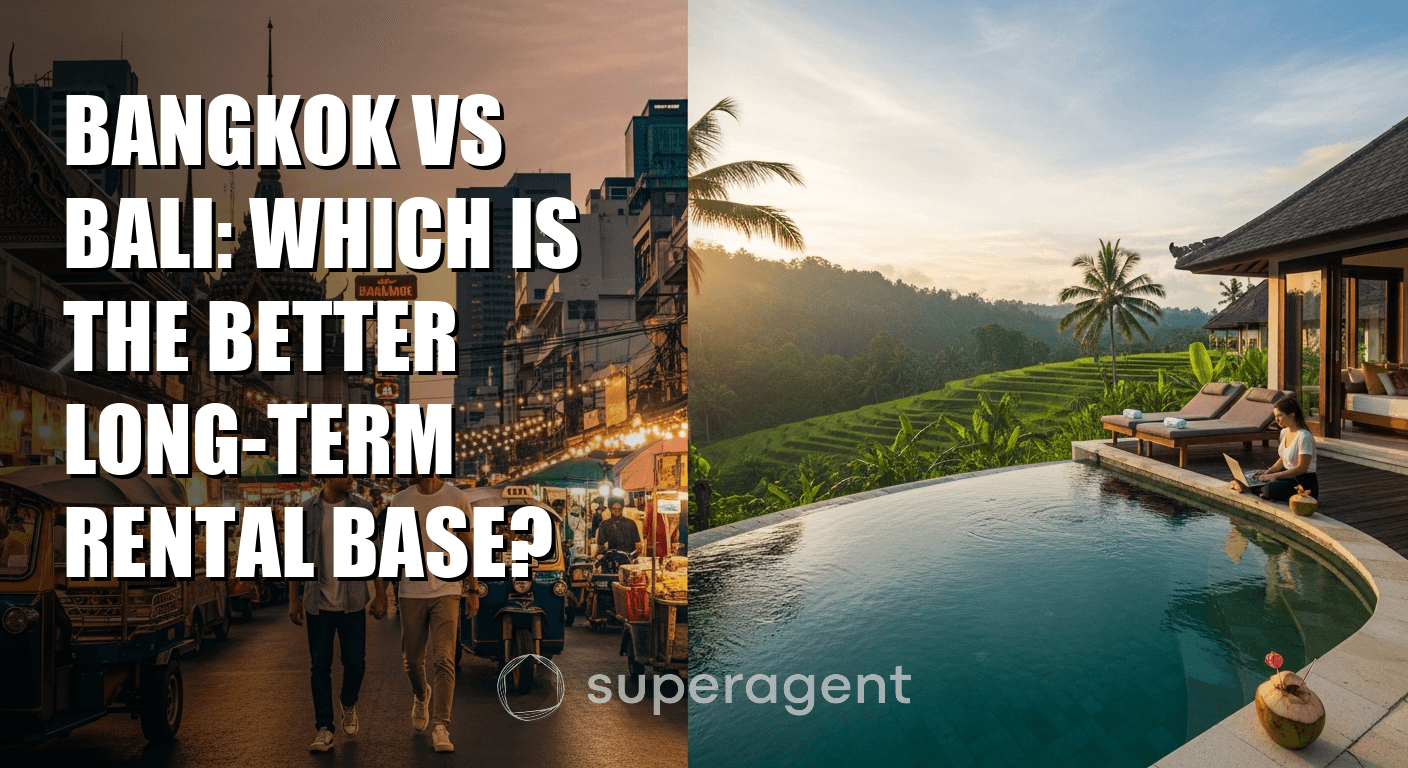
Every few months, someone in a Bangkok expat group drops the question: "Should I just move to Bali?" It usually comes after a weekend trip to Canggu or Ubud, fueled by cheap smoothie bowls and rice paddy views. And honestly, it is a fair question. Both cities attract remote workers, retirees, and long-term travelers looking for an affordable base in Southeast Asia. But when you dig into the actual numbers, the visa logistics, the infrastructure, and the day-to-day rental experience, the comparison gets a lot more interesting. If you are weighing bangkok vs bali rent costs and trying to figure out which city makes more sense as a long-term home, let's break it all down.
Rental Costs: The Real Numbers Side by Side
Let's start with what most people care about first: how much you will actually pay each month for a decent place to live. In Bangkok, a modern one-bedroom condo near a BTS station like Thong Lo or Phrom Phong typically runs between 18,000 and 35,000 THB per month. Move slightly further out to areas like Bang Na or Bearing, and you can find well-maintained units for 10,000 to 15,000 THB.
In Bali, a one-bedroom villa in Canggu or Seminyak averages around 8 to 15 million IDR per month, which translates to roughly 18,000 to 40,000 THB depending on the exchange rate. But here is the catch: many Bali rentals are quoted as yearly contracts with upfront payment. You might be asked to pay six or twelve months in advance, which means laying down a serious lump sum before you even unpack.
Bangkok condos, by contrast, almost always operate on monthly leases with a two-month deposit. Buildings like The Lumpini Suite Sukhumvit 41 or Life Asoke Hype offer flexible terms that let you commit month to month after the initial contract. According to DDproperty, the average asking rent for a one-bedroom condo in central Bangkok sits between 15,000 and 30,000 THB per month as of early 2024, making it one of the most competitive rental markets in the region.
Take a real example. A friend of mine rents a 35-square-meter studio at Ideo Mobi Sukhumvit, steps from On Nut BTS, for 12,500 THB a month. Pool, gym, co-working lounge. In Canggu, a comparable setup, if you can even find a studio with a pool, would cost about the same in raw numbers but require a year's commitment upfront.
Visa Logistics: Who Actually Lets You Stay?
This is where the comparison tilts hard. Thailand offers multiple long-term visa options. The new Long-Term Resident (LTR) visa gives qualified remote workers and professionals up to 10 years of stay. There are also retirement visas, education visas, the Thailand Elite visa, and standard tourist visa extensions that let you stay legally for months or even years.
Bali, on the other hand, has historically been trickier. Indonesia offers a B211A visa (social or business visit) that lasts 60 days and can be extended, but it is not designed for long-term living. The newer Second Home Visa and Digital Nomad Visa (B211) are steps forward, but they come with minimum income or savings requirements that not everyone meets. And enforcement around working remotely on a tourist visa is getting stricter.
Here is a scenario that plays out all the time. A freelance designer lands in Bali on a 30-day visa-free entry, loves it, then spends weeks scrambling to figure out extensions or doing visa runs to Singapore. In Bangkok, that same person could set up an education visa in a week, or simply apply for a 60-day tourist visa with extensions, all through well-established processes with clear documentation.
Infrastructure and Daily Convenience
Bangkok is a proper metropolis with world-class infrastructure. The BTS Skytrain and MRT subway system cover most of the city, and you can live car-free without any real sacrifice. Hospitals like Bumrungrad are internationally accredited. Every major mall has a bank, a pharmacy, and a food court. High-speed fiber internet is standard in virtually every condo building, with plans from AIS and True running 500 to 900 THB per month for speeds that remote workers actually need.
Bali is beautiful, but it is not a city. Traffic in Canggu and Seminyak can be genuinely awful, especially during peak season. There is no public transit system. You will need a motorbike or a driver. Internet quality varies wildly from villa to villa. Healthcare options exist, but for anything serious, most expats fly to Singapore or Bangkok.
Picture this. You have a Zoom call at 9 AM. In Bangkok, you are sitting in your air-conditioned condo at Ideo Q Siam, connected to 200 Mbps fiber, with a 7-Eleven on the ground floor for coffee. In Bali, you might be dealing with a power cut, spotty WiFi, and a rooster outside your window. Both are charming in their own way, but only one is reliable for actual work.
Lifestyle and Social Scene
Bali wins on nature, no question. Rice terraces, surf breaks, volcano hikes, and open-air yoga studios are genuinely part of daily life there. If your priority is slowing down and disconnecting, Bali delivers that energy effortlessly.
But Bangkok offers a depth and variety of lifestyle that Bali simply cannot match. You can eat Michelin-starred street food in Chinatown for 50 THB, then catch a jazz show in Thong Lo, then browse a night market at Ratchada. The social infrastructure for expats is enormous. There are co-working spaces like The Hive Thong Lo, sports leagues, language exchange meetups, and professional networking groups across every industry.
A couple I know moved from Ubud to Bangkok's Ari neighborhood specifically because they missed having options. In Ubud, every night was essentially the same handful of restaurants and the same crowd. In Ari, within a 10-minute walk from BTS Ari station, they found Korean barbecue, craft breweries, vintage shops, a boxing gym, and a weekend farmers' market. They pay 22,000 THB for a two-bedroom condo and have never looked back.
The Comparison at a Glance
- 1-Bed Rent (Monthly): 12,000 to 35,000 THB vs 18,000 to 40,000 THB equivalent
- Lease Terms: Monthly with 2-month deposit vs Often 6 to 12 months upfront
- Visa Options: Multiple long-term options available vs Limited, stricter enforcement
- Public Transit: BTS, MRT, buses, boats vs None, motorbike or car required
- Internet Reliability: Fiber standard in condos, 100+ Mbps vs Variable, depends on location
- Healthcare: World-class hospitals vs Basic clinics, serious cases require travel
- Cost of Living (Overall): Moderate, very scalable vs Similar or higher for comparable quality
- Nature Access: Limited, requires day trips vs Excellent, part of daily life
- Co-working and Remote Work: Hundreds of spaces citywide vs Growing but concentrated in Canggu
Money, Taxes, and Financial Practicality
One thing people rarely talk about in the bangkok vs bali rent conversation is banking and financial access. Bangkok has a mature financial system. You can open a local bank account with the right visa, use mobile banking apps that actually work, and access ATMs without insane fees. Currency exchange is straightforward and competitive. The Bank of Thailand keeps the financial system well-regulated.
In Bali, most long-term renters still operate in cash or use international cards with conversion fees. Opening an Indonesian bank account as a foreigner is possible but involves more paperwork and restrictions. Paying rent often means handing over physical cash or doing international wire transfers.
A digital nomad I know burned through nearly 15,000 THB equivalent in ATM fees and currency conversion charges over six months in Bali. In Bangkok, his total banking costs for the same period were essentially zero after setting up a Kasikorn Bank account.
Property Quality and What Your Money Actually Gets You
This is where Bangkok really pulls ahead for anyone used to urban living. Condo buildings here come with amenities that would be luxury-tier in most global cities. We are talking rooftop infinity pools, fully equipped gyms, saunas, libraries, sky lounges, and 24-hour security. All included in your rent. Buildings like Ashton Asoke or The Address Siam near Ratchathewi BTS deliver five-star hotel vibes at a fraction of what you would pay in Singapore or Hong Kong.
In Bali, your money often goes toward outdoor space, which is genuinely appealing. A villa with a private pool and garden is a real possibility for 25,000 to 40,000 THB equivalent. But air conditioning might be limited to the bedroom, kitchens tend to be basic, and maintenance standards vary drastically from one landlord to the next. Mold, insects, and water pressure issues are common complaints among long-term Bali renters.
One expat couple renting a two-bedroom at Life Ladprao near MRT Phahon Yothin pays 25,000 THB per month. They get a modern kitchen, in-unit laundry, a pool with a view, and a direct walkway to a major shopping mall. They previously paid the same amount for a Bali villa that flooded during rainy season.
Both Bangkok and Bali have their magic. Bali offers a pace of life and a connection to nature that Bangkok cannot replicate. But if you are looking for a long-term rental base where you can work productively, access reliable healthcare, stay legally without constant visa stress, and get exceptional value for your rent, Bangkok is the stronger choice for most people. The rental market here is deep, competitive, and built for exactly the kind of flexibility that long-term renters need.
If Bangkok is calling, start your search on superagent.co. Our AI-powered platform matches you with verified condo listings across the city, so you can find the right place without the usual agent runaround.
Every few months, someone in a Bangkok expat group drops the question: "Should I just move to Bali?" It usually comes after a weekend trip to Canggu or Ubud, fueled by cheap smoothie bowls and rice paddy views. And honestly, it is a fair question. Both cities attract remote workers, retirees, and long-term travelers looking for an affordable base in Southeast Asia. But when you dig into the actual numbers, the visa logistics, the infrastructure, and the day-to-day rental experience, the comparison gets a lot more interesting. If you are weighing bangkok vs bali rent costs and trying to figure out which city makes more sense as a long-term home, let's break it all down.
Rental Costs: The Real Numbers Side by Side
Let's start with what most people care about first: how much you will actually pay each month for a decent place to live. In Bangkok, a modern one-bedroom condo near a BTS station like Thong Lo or Phrom Phong typically runs between 18,000 and 35,000 THB per month. Move slightly further out to areas like Bang Na or Bearing, and you can find well-maintained units for 10,000 to 15,000 THB.
In Bali, a one-bedroom villa in Canggu or Seminyak averages around 8 to 15 million IDR per month, which translates to roughly 18,000 to 40,000 THB depending on the exchange rate. But here is the catch: many Bali rentals are quoted as yearly contracts with upfront payment. You might be asked to pay six or twelve months in advance, which means laying down a serious lump sum before you even unpack.
Bangkok condos, by contrast, almost always operate on monthly leases with a two-month deposit. Buildings like The Lumpini Suite Sukhumvit 41 or Life Asoke Hype offer flexible terms that let you commit month to month after the initial contract. According to DDproperty, the average asking rent for a one-bedroom condo in central Bangkok sits between 15,000 and 30,000 THB per month as of early 2024, making it one of the most competitive rental markets in the region.
Continue reading after that.
Looking for a condo
to rent?
Leave your name and phone. We'll follow up while you keep reading.
100% Secure
Fast Response
Free Consultation
Take a real example. A friend of mine rents a 35-square-meter studio at Ideo Mobi Sukhumvit, steps from On Nut BTS, for 12,500 THB a month. Pool, gym, co-working lounge. In Canggu, a comparable setup, if you can even find a studio with a pool, would cost about the same in raw numbers but require a year's commitment upfront.
Visa Logistics: Who Actually Lets You Stay?
This is where the comparison tilts hard. Thailand offers multiple long-term visa options. The new Long-Term Resident (LTR) visa gives qualified remote workers and professionals up to 10 years of stay. There are also retirement visas, education visas, the Thailand Elite visa, and standard tourist visa extensions that let you stay legally for months or even years.
Bali, on the other hand, has historically been trickier. Indonesia offers a B211A visa (social or business visit) that lasts 60 days and can be extended, but it is not designed for long-term living. The newer Second Home Visa and Digital Nomad Visa (B211) are steps forward, but they come with minimum income or savings requirements that not everyone meets. And enforcement around working remotely on a tourist visa is getting stricter.
Here is a scenario that plays out all the time. A freelance designer lands in Bali on a 30-day visa-free entry, loves it, then spends weeks scrambling to figure out extensions or doing visa runs to Singapore. In Bangkok, that same person could set up an education visa in a week, or simply apply for a 60-day tourist visa with extensions, all through well-established processes with clear documentation.
Infrastructure and Daily Convenience
Bangkok is a proper metropolis with world-class infrastructure. The BTS Skytrain and MRT subway system cover most of the city, and you can live car-free without any real sacrifice. Hospitals like Bumrungrad are internationally accredited. Every major mall has a bank, a pharmacy, and a food court. High-speed fiber internet is standard in virtually every condo building, with plans from AIS and True running 500 to 900 THB per month for speeds that remote workers actually need.
Bali is beautiful, but it is not a city. Traffic in Canggu and Seminyak can be genuinely awful, especially during peak season. There is no public transit system. You will need a motorbike or a driver. Internet quality varies wildly from villa to villa. Healthcare options exist, but for anything serious, most expats fly to Singapore or Bangkok.
Picture this. You have a Zoom call at 9 AM. In Bangkok, you are sitting in your air-conditioned condo at Ideo Q Siam, connected to 200 Mbps fiber, with a 7-Eleven on the ground floor for coffee. In Bali, you might be dealing with a power cut, spotty WiFi, and a rooster outside your window. Both are charming in their own way, but only one is reliable for actual work.
Lifestyle and Social Scene
Bali wins on nature, no question. Rice terraces, surf breaks, volcano hikes, and open-air yoga studios are genuinely part of daily life there. If your priority is slowing down and disconnecting, Bali delivers that energy effortlessly.
But Bangkok offers a depth and variety of lifestyle that Bali simply cannot match. You can eat Michelin-starred street food in Chinatown for 50 THB, then catch a jazz show in Thong Lo, then browse a night market at Ratchada. The social infrastructure for expats is enormous. There are co-working spaces like The Hive Thong Lo, sports leagues, language exchange meetups, and professional networking groups across every industry.
A couple I know moved from Ubud to Bangkok's Ari neighborhood specifically because they missed having options. In Ubud, every night was essentially the same handful of restaurants and the same crowd. In Ari, within a 10-minute walk from BTS Ari station, they found Korean barbecue, craft breweries, vintage shops, a boxing gym, and a weekend farmers' market. They pay 22,000 THB for a two-bedroom condo and have never looked back.
The Comparison at a Glance
- 1-Bed Rent (Monthly): 12,000 to 35,000 THB vs 18,000 to 40,000 THB equivalent
- Lease Terms: Monthly with 2-month deposit vs Often 6 to 12 months upfront
- Visa Options: Multiple long-term options available vs Limited, stricter enforcement
- Public Transit: BTS, MRT, buses, boats vs None, motorbike or car required
- Internet Reliability: Fiber standard in condos, 100+ Mbps vs Variable, depends on location
- Healthcare: World-class hospitals vs Basic clinics, serious cases require travel
- Cost of Living (Overall): Moderate, very scalable vs Similar or higher for comparable quality
- Nature Access: Limited, requires day trips vs Excellent, part of daily life
- Co-working and Remote Work: Hundreds of spaces citywide vs Growing but concentrated in Canggu
Money, Taxes, and Financial Practicality
One thing people rarely talk about in the bangkok vs bali rent conversation is banking and financial access. Bangkok has a mature financial system. You can open a local bank account with the right visa, use mobile banking apps that actually work, and access ATMs without insane fees. Currency exchange is straightforward and competitive. The Bank of Thailand keeps the financial system well-regulated.
Continue reading after that.
Looking for a condo
to rent?
Leave your name and phone. We'll follow up while you keep reading.
100% Secure
Fast Response
Free Consultation
In Bali, most long-term renters still operate in cash or use international cards with conversion fees. Opening an Indonesian bank account as a foreigner is possible but involves more paperwork and restrictions. Paying rent often means handing over physical cash or doing international wire transfers.
A digital nomad I know burned through nearly 15,000 THB equivalent in ATM fees and currency conversion charges over six months in Bali. In Bangkok, his total banking costs for the same period were essentially zero after setting up a Kasikorn Bank account.
Property Quality and What Your Money Actually Gets You
This is where Bangkok really pulls ahead for anyone used to urban living. Condo buildings here come with amenities that would be luxury-tier in most global cities. We are talking rooftop infinity pools, fully equipped gyms, saunas, libraries, sky lounges, and 24-hour security. All included in your rent. Buildings like Ashton Asoke or The Address Siam near Ratchathewi BTS deliver five-star hotel vibes at a fraction of what you would pay in Singapore or Hong Kong.
In Bali, your money often goes toward outdoor space, which is genuinely appealing. A villa with a private pool and garden is a real possibility for 25,000 to 40,000 THB equivalent. But air conditioning might be limited to the bedroom, kitchens tend to be basic, and maintenance standards vary drastically from one landlord to the next. Mold, insects, and water pressure issues are common complaints among long-term Bali renters.
One expat couple renting a two-bedroom at Life Ladprao near MRT Phahon Yothin pays 25,000 THB per month. They get a modern kitchen, in-unit laundry, a pool with a view, and a direct walkway to a major shopping mall. They previously paid the same amount for a Bali villa that flooded during rainy season.
Both Bangkok and Bali have their magic. Bali offers a pace of life and a connection to nature that Bangkok cannot replicate. But if you are looking for a long-term rental base where you can work productively, access reliable healthcare, stay legally without constant visa stress, and get exceptional value for your rent, Bangkok is the stronger choice for most people. The rental market here is deep, competitive, and built for exactly the kind of flexibility that long-term renters need.
If Bangkok is calling, start your search on superagent.co. Our AI-powered platform matches you with verified condo listings across the city, so you can find the right place without the usual agent runaround.
Share this article
Properties you may like
![[For Rent] CONDO I Las Colinas Condominium I 2 Beds I 3 Baths I 85,000THB/mo](/_next/image?url=https%3A%2F%2Fstorage.googleapis.com%2Fsuperagent-web%2Fattachments%2Flistings%2F6828%2F80f345c4-488e-43b2-b017-c9fbb17b520d-99486dd8-4237-4ba2-9207-01ce4f66b21f-media.jpg&w=3840&q=75)
฿85,000
2 Bed3170 sqm
[For Rent] CONDO I Las Colinas Condominium I 2 Beds I 3 Baths I 85,000THB/mo
Asoke
Condo![[For Rent] CONDO I Ashton Asoke I 1 Bed I 1 Bath I 30,000THB/mo](/_next/image?url=https%3A%2F%2Fstorage.googleapis.com%2Fsuperagent-web%2Fattachments%2Flistings%2F6876%2Fb7ce9bbe-f877-4ff5-bb54-8ad0026db940-1272-4.jpg&w=3840&q=75)
฿30,000
1 Bed135 sqm
[For Rent] CONDO I Ashton Asoke I 1 Bed I 1 Bath I 30,000THB/mo
Asoke
Condo![[For Rent] CONDO I Skyrise Avenue Sukhumvit 64 I 2 Beds I 2 Baths I 27,000THB/mo](/_next/image?url=https%3A%2F%2Fstorage.googleapis.com%2Fsuperagent-web%2Fattachments%2Flistings%2F2001%2F670f91de-c251-4e81-971c-8e30ed2158cd-screenshot-2026-07-05-at-11.38.53-pm.png&w=3840&q=75)
฿27,000
2 Bed252 sqm
[For Rent] CONDO I Skyrise Avenue Sukhumvit 64 I 2 Beds I 2 Baths I 27,000THB/mo
Punnawithi
Condo![[For Rent] CONDO I Park Origin Ratchathewi I Duplex I 2 Beds I 1 Bath I 32,000THB/mo](/_next/image?url=https%3A%2F%2Fstorage.googleapis.com%2Fsuperagent-web%2Fattachments%2Flistings%2F6896%2Fb79a7d21-7533-4b0d-bb19-762ebfafab62-1318-6.jpg&w=3840&q=75)
฿32,000
2 Bed135.9 sqm
[For Rent] CONDO I Park Origin Ratchathewi I Duplex I 2 Beds I 1 Bath I 32,000THB/mo
Ratchathewi
Condo![[For Rent] CONDO I Park Origin Phayathai I Studio I 1 Bath I 28,000THB/mo](/_next/image?url=https%3A%2F%2Fstorage.googleapis.com%2Fsuperagent-web%2Fattachments%2Flistings%2F6757%2Fb226df93-94c6-46fa-aeba-ebfadc7f81b8-1000006042.jpg&w=3840&q=75)
฿28,000
Studio129 sqm
[For Rent] CONDO I Park Origin Phayathai I Studio I 1 Bath I 28,000THB/mo
Phaya Thai
Condo![[For Rent] CONDO I Ideo Mobi Sukhumvit 81 I Duplex I 1 Bed I 1 Bath I 28,000THB/mo](/_next/image?url=https%3A%2F%2Fstorage.googleapis.com%2Fsuperagent-web%2Fattachments%2Flistings%2F1849%2Fc8b2c033-3b5f-4615-b2b0-4972f40141f0-705-13.jpg&w=3840&q=75)
฿28,000
1 Bed143 sqm
[For Rent] CONDO I Ideo Mobi Sukhumvit 81 I Duplex I 1 Bed I 1 Bath I 28,000THB/mo
On Nut
Condo![[For Rent] CONDO I Siamese Sukhumvit 48 I 1 Bed I 1 Bath I 28,000THB/mo](/_next/image?url=https%3A%2F%2Fstorage.googleapis.com%2Fsuperagent-web%2Fattachments%2Flistings%2F6841%2Febc2dce2-2e9b-4e6d-a01c-0cfa619dfa13-1231-6.jpg&w=3840&q=75)
฿28,000
1 Bed144 sqm
[For Rent] CONDO I Siamese Sukhumvit 48 I 1 Bed I 1 Bath I 28,000THB/mo
Condo![[For Rent] CONDO I Ashton Asoke I 1 Bed I 1 Bath I 22,000THB/mo](/_next/image?url=https%3A%2F%2Fstorage.googleapis.com%2Fsuperagent-web%2Fattachments%2Flistings%2F6802%2Fe06b9b73-1207-414a-ab04-1685de0c7eaa-20220808_153124_0.jpg&w=3840&q=75)
฿22,000
1 Bed134 sqm
[For Rent] CONDO I Ashton Asoke I 1 Bed I 1 Bath I 22,000THB/mo
Asoke
Condo![[For Rent] CONDO I HQ Thonglor Soi 4 I 1 Bed I 1 Bath I 35,000 THB/mo](/_next/image?url=https%3A%2F%2Fstorage.googleapis.com%2Fsuperagent-web%2Fattachments%2Flistings%2F1445%2F72352585-1bc2-41a8-bd62-ddcbf8189fe9-376-5.jpg&w=3840&q=75)
฿35,000
1 Bed143.6 sqm
[For Rent] CONDO I HQ Thonglor Soi 4 I 1 Bed I 1 Bath I 35,000 THB/mo
Thonglor
Condo![[For Rent] CONDO I The Master Centrium Asoke - Sukhumvit I Duplex I 2 Beds I 3 Baths I 75,000 THB/mo](/_next/image?url=https%3A%2F%2Fstorage.googleapis.com%2Fsuperagent-web%2Fattachments%2Flistings%2F1545%2F97932b6a-c358-45e4-b5f9-995dbf5a3cf0-441-2.jpg&w=3840&q=75)
฿75,000
2 Bed3150 sqm
[For Rent] CONDO I The Master Centrium Asoke - Sukhumvit I Duplex I 2 Beds I 3 Baths I 75,000 THB/mo
Asoke
CondoMore like this
 In Guides · Superagent EditorialHidden Costs of Renting a Condo in Bangkok Nobody Warns You AboutBangkok condo rent looks affordable until month one hits. Here are the real costs beyond the headline figure that catch most renters off guard.25 May 20261 min read
 In Guides · Superagent EditorialWhat a Long-Vacant Bangkok Condo Unit Is Actually Telling YouA Bangkok condo vacant for months signals overpricing, landlord issues, or real problems. Here is how to read the signs.25 May 20261 min read
 In Guides · Superagent EditorialRed Flags in a Bangkok Rental Contract to Watch Out ForBangkok rental contracts often hide risky clauses. Here are the red flags every tenant must catch before signing any lease.25 May 20261 min read
 In Guides · Superagent EditorialWorking Online from a Condo: How to Choose the Perfect Room for ProductivityLearn how to choose the best condo room for working online with tips on lighting, noise, and furniture setup to maximize productivity.9 May 20261 min read