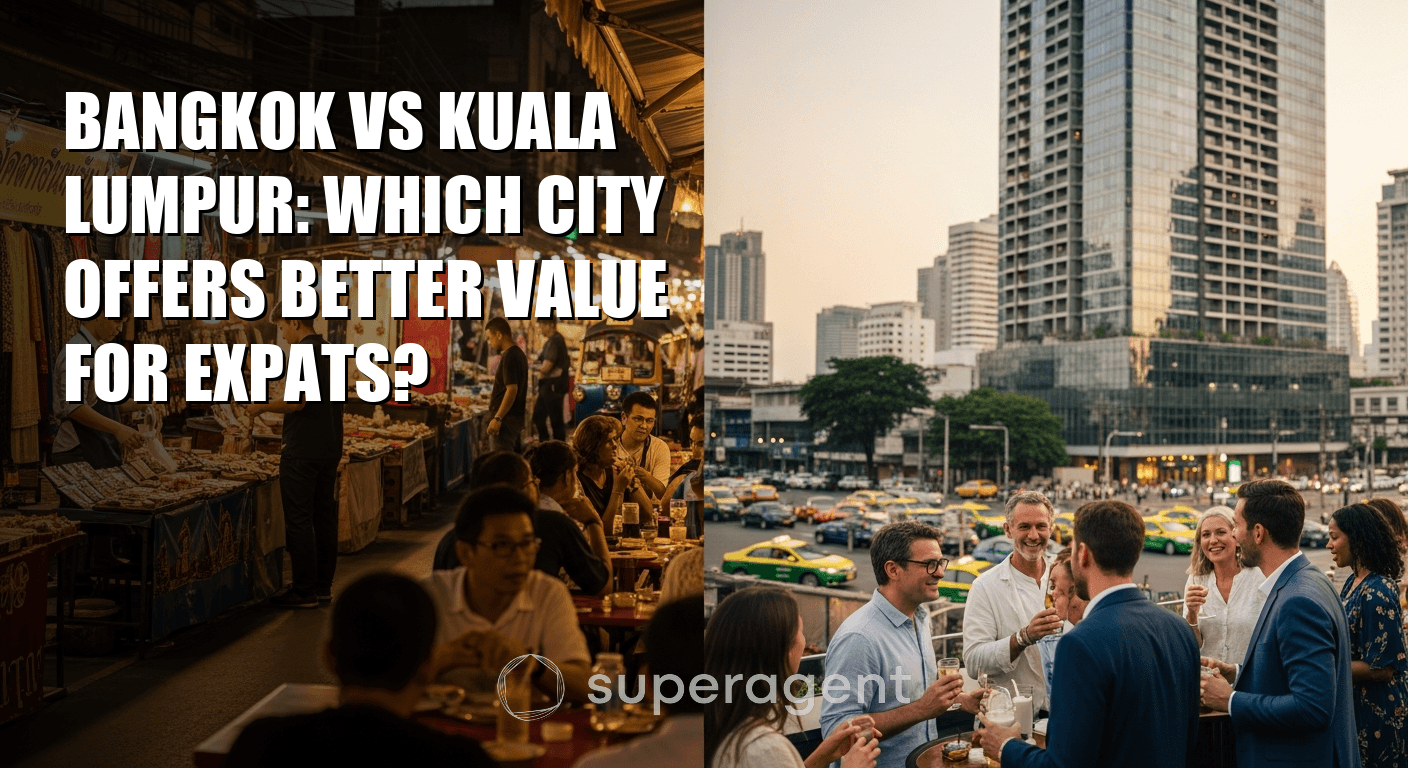
Bangkok vs Kuala Lumpur: Which City Offers Better Value for Expats?
Guides
Bangkok vs Kuala Lumpur: Which City Offers Better Value for Expats?
Compare rental costs and living expenses between Bangkok and Kuala Lumpur for expats.
Summary
Explore bangkok vs kuala lumpur rent differences. Discover which city offers better value for expats with detailed cost comparisons and insights.
If you've spent any time in expat forums or digital nomad Slack channels, you've seen this debate play out a hundred times. Bangkok or Kuala Lumpur? Both cities promise affordable living, great food, and a soft landing for newcomers to Southeast Asia. But when you actually sit down and compare rent, lifestyle costs, and what you get for your money, the picture gets more interesting than the Reddit threads suggest. Having lived in Bangkok for years and helped countless renters find their ideal condo, I can tell you the answer depends on what you actually value in daily life.
Rent Comparison: What Does Your Money Actually Get You?
Let's start with the number everyone cares about most. In Bangkok, a modern one-bedroom condo near a BTS station like Thong Lo or Ekkamai will run you 18,000 to 30,000 THB per month. Move slightly further out to areas like On Nut or Bearing, and you can find well-maintained units at places like The Base Sukhumvit 77 for 10,000 to 15,000 THB.
In Kuala Lumpur, a comparable one-bedroom in the KLCC or Bukit Bintang area averages 2,500 to 4,000 MYR, which works out to roughly 20,000 to 32,000 THB at current exchange rates. The big difference? KL's condos tend to come with more built-in facilities like pools, gyms, and sometimes even tennis courts as standard. Bangkok condos offer these too, but the newer buildings along the Sukhumvit line have really closed that gap.
According to CBRE Thailand's market reports, the average asking rent for a one-bedroom condo in central Bangkok sits at approximately 25,000 to 35,000 THB per month, depending on the district and building age. That is a data point worth remembering when budgeting your move.
Here is a real example. A friend recently moved from KL's Mont Kiara neighborhood to Bangkok's Phra Khanong area. In KL, she paid 3,200 MYR for a two-bedroom in a 15-year-old building. In Bangkok, she found a newer two-bedroom at Ideo Mobi Sukhumvit 81, steps from the On Nut BTS, for 22,000 THB. Same monthly spend, but the Bangkok unit was built in 2019.
Transportation: Getting Around Without Losing Your Mind
Bangkok's public transport network is one of its biggest advantages over KL. The BTS Skytrain and MRT subway connect most of the neighborhoods where expats want to live. Living near Asok, Phrom Phong, or Ari means you can get almost anywhere without touching a car.
KL has its LRT, MRT, and monorail lines, but coverage is patchier. Many expat-friendly neighborhoods require Grab rides to reach a station. In Bangkok, if you choose your condo wisely, you can live car-free without any real sacrifice.
Grab rides are cheap in both cities, but Bangkok's motorcycle taxis add another layer of convenience KL simply does not have. Stuck in traffic on Sukhumvit? Jump on a motorbike taxi at Soi 23 and you will be at Terminal 21 in five minutes. That kind of micro-mobility does not exist in KL.
A digital marketer I know chose Bangkok specifically because his commute from Saphan Khwai to his coworking space near Chit Lom takes 15 minutes on the BTS. In KL, a similar distance could mean 45 minutes in traffic during peak hours.
Food and Daily Living Costs
Both cities are famous for cheap, incredible street food. But Bangkok has a noticeable edge in variety and accessibility. A plate of pad kra pao from a street stall in Soi Rangnam costs 50 to 60 THB. A bowl of boat noodles near Victory Monument is 15 to 30 THB. These prices have crept up over the years, but they remain remarkably low by global standards.
KL's hawker food is similarly affordable, with nasi lemak and roti canai coming in around 5 to 10 MYR. Grocery shopping, however, tends to be slightly cheaper in KL thanks to lower import duties on many Western products. A block of cheese or a bottle of wine will cost you less at Village Grocer in KL than at Tops or Villa Market in Bangkok.
Where Bangkok pulls ahead is dining out at the mid-range level. A solid dinner for two at a restaurant like Peppina in Sukhumvit Soi 33 might run 1,500 to 2,000 THB. In KL, comparable restaurants in Bangsar or TTDI charge similar prices in MYR, which means the actual baht cost is higher.
One expat couple I know tracked their spending for three months in both cities. Their total monthly food budget in Bangkok averaged 25,000 THB, including groceries and dining out. In KL, the same lifestyle cost them the equivalent of 28,000 THB.
Healthcare and Infrastructure
This is where Bangkok has a clear, undeniable advantage. Bangkok is a global medical tourism hub for a reason. Hospitals like Bumrungrad International offer world-class care with English-speaking staff, transparent pricing, and wait times that would make anyone from the NHS weep with envy.
A general consultation at Bumrungrad costs around 800 to 1,500 THB without insurance. Dental cleanings at clinics along Sukhumvit run 1,000 to 2,000 THB. KL has excellent hospitals too, like Gleneagles and Prince Court, but Bangkok's medical infrastructure is deeper, with more specialists and more facilities competing for your business.
For expats with families, this matters enormously. When your kid gets sick at 2 AM, you want a hospital that is 15 minutes away and has a pediatric ER that runs like clockwork. Living near Phrom Phong BTS, you have Samitivej Sukhumvit, Bumrungrad, and BNH all within a short ride.
The Visa and Bureaucracy Factor
Malaysia has a real edge here with its MM2H (Malaysia My Second Home) program, though recent changes have made it less accessible than it used to be. The financial requirements jumped significantly in 2021, and the program is still evolving.
Thailand offers several visa options for expats. The LTR (Long-Term Resident) visa targets high-income professionals and retirees with a 10-year option. The more common route for many is the education visa, retirement visa for those over 50, or cycling tourist visas and border runs. Check the Thai Immigration Bureau website for current requirements.
A freelance designer I know spent a year trying to sort out long-term residency in KL before giving up and moving to Bangkok on an Elite visa. The upfront cost was higher, but the simplicity of walking through immigration with a single card made it worth every baht.
Side-by-Side: Bangkok vs Kuala Lumpur for Expat Renters
- 1-Bed Condo (Central): 18,000 to 35,000 THB/month vs 20,000 to 32,000 THB equivalent
- 2-Bed Condo (Mid-Range Area): 20,000 to 40,000 THB/month vs 24,000 to 40,000 THB equivalent
- Public Transport Coverage: Excellent (BTS, MRT, ARL) vs Moderate (LRT, MRT, Monorail)
- Street Food Meal: 40 to 80 THB vs 40 to 80 THB equivalent
- Mid-Range Dinner for Two: 1,500 to 2,500 THB vs 1,800 to 3,000 THB equivalent
- Healthcare Quality: World-class, extensive options vs Very good, fewer facilities
- Long-Term Visa Options: Multiple but complex vs MM2H (stricter since 2021)
- English Friendliness: Good in expat areas vs Excellent citywide
- Grocery Shopping (Western Items): Moderate to expensive vs More affordable
- Nightlife and Social Scene: Extensive and varied vs More limited
So Which City Actually Wins?
KL is a fantastic city. English is widely spoken, the food is phenomenal, and certain costs like groceries and alcohol are genuinely lower. If you need easy access to English-language government services or you are looking for a quieter, more suburban expat life with a car, KL has real appeal.
But for renters who want walkable neighborhoods, world-class hospitals minutes away, a public transport system that actually works, and a social scene that never sleeps, Bangkok is hard to beat. The condo market here is deep, competitive, and constantly evolving, which means tenants have real negotiating power. A savvy renter who knows where to look can find a well-located, fully furnished condo at a price that would be impossible in most global cities.
The trick is knowing which buildings, which floors, and which landlords to target. That is where having the right tools matters. If you are starting your Bangkok condo search, Superagent at superagent.co uses AI to match you with verified listings, real pricing data, and honest reviews from actual tenants. Skip the guesswork and find a place that fits your budget and your life.
If you've spent any time in expat forums or digital nomad Slack channels, you've seen this debate play out a hundred times. Bangkok or Kuala Lumpur? Both cities promise affordable living, great food, and a soft landing for newcomers to Southeast Asia. But when you actually sit down and compare rent, lifestyle costs, and what you get for your money, the picture gets more interesting than the Reddit threads suggest. Having lived in Bangkok for years and helped countless renters find their ideal condo, I can tell you the answer depends on what you actually value in daily life.
Rent Comparison: What Does Your Money Actually Get You?
Let's start with the number everyone cares about most. In Bangkok, a modern one-bedroom condo near a BTS station like Thong Lo or Ekkamai will run you 18,000 to 30,000 THB per month. Move slightly further out to areas like On Nut or Bearing, and you can find well-maintained units at places like The Base Sukhumvit 77 for 10,000 to 15,000 THB.
In Kuala Lumpur, a comparable one-bedroom in the KLCC or Bukit Bintang area averages 2,500 to 4,000 MYR, which works out to roughly 20,000 to 32,000 THB at current exchange rates. The big difference? KL's condos tend to come with more built-in facilities like pools, gyms, and sometimes even tennis courts as standard. Bangkok condos offer these too, but the newer buildings along the Sukhumvit line have really closed that gap.
According to CBRE Thailand's market reports, the average asking rent for a one-bedroom condo in central Bangkok sits at approximately 25,000 to 35,000 THB per month, depending on the district and building age. That is a data point worth remembering when budgeting your move.
Continue reading after that.
Looking for a condo
to rent?
Leave your name and phone. We'll follow up while you keep reading.
100% Secure
Fast Response
Free Consultation
Here is a real example. A friend recently moved from KL's Mont Kiara neighborhood to Bangkok's Phra Khanong area. In KL, she paid 3,200 MYR for a two-bedroom in a 15-year-old building. In Bangkok, she found a newer two-bedroom at Ideo Mobi Sukhumvit 81, steps from the On Nut BTS, for 22,000 THB. Same monthly spend, but the Bangkok unit was built in 2019.
Transportation: Getting Around Without Losing Your Mind
Bangkok's public transport network is one of its biggest advantages over KL. The BTS Skytrain and MRT subway connect most of the neighborhoods where expats want to live. Living near Asok, Phrom Phong, or Ari means you can get almost anywhere without touching a car.
KL has its LRT, MRT, and monorail lines, but coverage is patchier. Many expat-friendly neighborhoods require Grab rides to reach a station. In Bangkok, if you choose your condo wisely, you can live car-free without any real sacrifice.
Grab rides are cheap in both cities, but Bangkok's motorcycle taxis add another layer of convenience KL simply does not have. Stuck in traffic on Sukhumvit? Jump on a motorbike taxi at Soi 23 and you will be at Terminal 21 in five minutes. That kind of micro-mobility does not exist in KL.
A digital marketer I know chose Bangkok specifically because his commute from Saphan Khwai to his coworking space near Chit Lom takes 15 minutes on the BTS. In KL, a similar distance could mean 45 minutes in traffic during peak hours.
Food and Daily Living Costs
Both cities are famous for cheap, incredible street food. But Bangkok has a noticeable edge in variety and accessibility. A plate of pad kra pao from a street stall in Soi Rangnam costs 50 to 60 THB. A bowl of boat noodles near Victory Monument is 15 to 30 THB. These prices have crept up over the years, but they remain remarkably low by global standards.
KL's hawker food is similarly affordable, with nasi lemak and roti canai coming in around 5 to 10 MYR. Grocery shopping, however, tends to be slightly cheaper in KL thanks to lower import duties on many Western products. A block of cheese or a bottle of wine will cost you less at Village Grocer in KL than at Tops or Villa Market in Bangkok.
Where Bangkok pulls ahead is dining out at the mid-range level. A solid dinner for two at a restaurant like Peppina in Sukhumvit Soi 33 might run 1,500 to 2,000 THB. In KL, comparable restaurants in Bangsar or TTDI charge similar prices in MYR, which means the actual baht cost is higher.
One expat couple I know tracked their spending for three months in both cities. Their total monthly food budget in Bangkok averaged 25,000 THB, including groceries and dining out. In KL, the same lifestyle cost them the equivalent of 28,000 THB.
Healthcare and Infrastructure
This is where Bangkok has a clear, undeniable advantage. Bangkok is a global medical tourism hub for a reason. Hospitals like Bumrungrad International offer world-class care with English-speaking staff, transparent pricing, and wait times that would make anyone from the NHS weep with envy.
A general consultation at Bumrungrad costs around 800 to 1,500 THB without insurance. Dental cleanings at clinics along Sukhumvit run 1,000 to 2,000 THB. KL has excellent hospitals too, like Gleneagles and Prince Court, but Bangkok's medical infrastructure is deeper, with more specialists and more facilities competing for your business.
For expats with families, this matters enormously. When your kid gets sick at 2 AM, you want a hospital that is 15 minutes away and has a pediatric ER that runs like clockwork. Living near Phrom Phong BTS, you have Samitivej Sukhumvit, Bumrungrad, and BNH all within a short ride.
The Visa and Bureaucracy Factor
Malaysia has a real edge here with its MM2H (Malaysia My Second Home) program, though recent changes have made it less accessible than it used to be. The financial requirements jumped significantly in 2021, and the program is still evolving.
Thailand offers several visa options for expats. The LTR (Long-Term Resident) visa targets high-income professionals and retirees with a 10-year option. The more common route for many is the education visa, retirement visa for those over 50, or cycling tourist visas and border runs. Check the Thai Immigration Bureau website for current requirements.
Continue reading after that.
Looking for a condo
to rent?
Leave your name and phone. We'll follow up while you keep reading.
100% Secure
Fast Response
Free Consultation
A freelance designer I know spent a year trying to sort out long-term residency in KL before giving up and moving to Bangkok on an Elite visa. The upfront cost was higher, but the simplicity of walking through immigration with a single card made it worth every baht.
Side-by-Side: Bangkok vs Kuala Lumpur for Expat Renters
- 1-Bed Condo (Central): 18,000 to 35,000 THB/month vs 20,000 to 32,000 THB equivalent
- 2-Bed Condo (Mid-Range Area): 20,000 to 40,000 THB/month vs 24,000 to 40,000 THB equivalent
- Public Transport Coverage: Excellent (BTS, MRT, ARL) vs Moderate (LRT, MRT, Monorail)
- Street Food Meal: 40 to 80 THB vs 40 to 80 THB equivalent
- Mid-Range Dinner for Two: 1,500 to 2,500 THB vs 1,800 to 3,000 THB equivalent
- Healthcare Quality: World-class, extensive options vs Very good, fewer facilities
- Long-Term Visa Options: Multiple but complex vs MM2H (stricter since 2021)
- English Friendliness: Good in expat areas vs Excellent citywide
- Grocery Shopping (Western Items): Moderate to expensive vs More affordable
- Nightlife and Social Scene: Extensive and varied vs More limited
So Which City Actually Wins?
KL is a fantastic city. English is widely spoken, the food is phenomenal, and certain costs like groceries and alcohol are genuinely lower. If you need easy access to English-language government services or you are looking for a quieter, more suburban expat life with a car, KL has real appeal.
But for renters who want walkable neighborhoods, world-class hospitals minutes away, a public transport system that actually works, and a social scene that never sleeps, Bangkok is hard to beat. The condo market here is deep, competitive, and constantly evolving, which means tenants have real negotiating power. A savvy renter who knows where to look can find a well-located, fully furnished condo at a price that would be impossible in most global cities.
The trick is knowing which buildings, which floors, and which landlords to target. That is where having the right tools matters. If you are starting your Bangkok condo search, Superagent at superagent.co uses AI to match you with verified listings, real pricing data, and honest reviews from actual tenants. Skip the guesswork and find a place that fits your budget and your life.
Share this article
Properties you may like
![[For Rent] CONDO I Las Colinas Condominium I 2 Beds I 3 Baths I 85,000THB/mo](/_next/image?url=https%3A%2F%2Fstorage.googleapis.com%2Fsuperagent-web%2Fattachments%2Flistings%2F6828%2F80f345c4-488e-43b2-b017-c9fbb17b520d-99486dd8-4237-4ba2-9207-01ce4f66b21f-media.jpg&w=3840&q=75)
฿85,000
2 Bed3170 sqm
[For Rent] CONDO I Las Colinas Condominium I 2 Beds I 3 Baths I 85,000THB/mo
Asoke
Condo![[For Rent] CONDO I Ashton Asoke I 1 Bed I 1 Bath I 30,000THB/mo](/_next/image?url=https%3A%2F%2Fstorage.googleapis.com%2Fsuperagent-web%2Fattachments%2Flistings%2F6876%2Fb7ce9bbe-f877-4ff5-bb54-8ad0026db940-1272-4.jpg&w=3840&q=75)
฿30,000
1 Bed135 sqm
[For Rent] CONDO I Ashton Asoke I 1 Bed I 1 Bath I 30,000THB/mo
Asoke
Condo![[For Rent] CONDO I Skyrise Avenue Sukhumvit 64 I 2 Beds I 2 Baths I 27,000THB/mo](/_next/image?url=https%3A%2F%2Fstorage.googleapis.com%2Fsuperagent-web%2Fattachments%2Flistings%2F2001%2F670f91de-c251-4e81-971c-8e30ed2158cd-screenshot-2026-07-05-at-11.38.53-pm.png&w=3840&q=75)
฿27,000
2 Bed252 sqm
[For Rent] CONDO I Skyrise Avenue Sukhumvit 64 I 2 Beds I 2 Baths I 27,000THB/mo
Punnawithi
Condo![[For Rent] CONDO I Park Origin Ratchathewi I Duplex I 2 Beds I 1 Bath I 32,000THB/mo](/_next/image?url=https%3A%2F%2Fstorage.googleapis.com%2Fsuperagent-web%2Fattachments%2Flistings%2F6896%2Fb79a7d21-7533-4b0d-bb19-762ebfafab62-1318-6.jpg&w=3840&q=75)
฿32,000
2 Bed135.9 sqm
[For Rent] CONDO I Park Origin Ratchathewi I Duplex I 2 Beds I 1 Bath I 32,000THB/mo
Ratchathewi
Condo![[For Rent] CONDO I Park Origin Phayathai I Studio I 1 Bath I 28,000THB/mo](/_next/image?url=https%3A%2F%2Fstorage.googleapis.com%2Fsuperagent-web%2Fattachments%2Flistings%2F6757%2Fb226df93-94c6-46fa-aeba-ebfadc7f81b8-1000006042.jpg&w=3840&q=75)
฿28,000
Studio129 sqm
[For Rent] CONDO I Park Origin Phayathai I Studio I 1 Bath I 28,000THB/mo
Phaya Thai
Condo![[For Rent] CONDO I Ideo Mobi Sukhumvit 81 I Duplex I 1 Bed I 1 Bath I 28,000THB/mo](/_next/image?url=https%3A%2F%2Fstorage.googleapis.com%2Fsuperagent-web%2Fattachments%2Flistings%2F1849%2Fc8b2c033-3b5f-4615-b2b0-4972f40141f0-705-13.jpg&w=3840&q=75)
฿28,000
1 Bed143 sqm
[For Rent] CONDO I Ideo Mobi Sukhumvit 81 I Duplex I 1 Bed I 1 Bath I 28,000THB/mo
On Nut
Condo![[For Rent] CONDO I Siamese Sukhumvit 48 I 1 Bed I 1 Bath I 28,000THB/mo](/_next/image?url=https%3A%2F%2Fstorage.googleapis.com%2Fsuperagent-web%2Fattachments%2Flistings%2F6841%2Febc2dce2-2e9b-4e6d-a01c-0cfa619dfa13-1231-6.jpg&w=3840&q=75)
฿28,000
1 Bed144 sqm
[For Rent] CONDO I Siamese Sukhumvit 48 I 1 Bed I 1 Bath I 28,000THB/mo
Condo![[For Rent] CONDO I Ashton Asoke I 1 Bed I 1 Bath I 22,000THB/mo](/_next/image?url=https%3A%2F%2Fstorage.googleapis.com%2Fsuperagent-web%2Fattachments%2Flistings%2F6802%2Fe06b9b73-1207-414a-ab04-1685de0c7eaa-20220808_153124_0.jpg&w=3840&q=75)
฿22,000
1 Bed134 sqm
[For Rent] CONDO I Ashton Asoke I 1 Bed I 1 Bath I 22,000THB/mo
Asoke
Condo![[For Rent] CONDO I HQ Thonglor Soi 4 I 1 Bed I 1 Bath I 35,000 THB/mo](/_next/image?url=https%3A%2F%2Fstorage.googleapis.com%2Fsuperagent-web%2Fattachments%2Flistings%2F1445%2F72352585-1bc2-41a8-bd62-ddcbf8189fe9-376-5.jpg&w=3840&q=75)
฿35,000
1 Bed143.6 sqm
[For Rent] CONDO I HQ Thonglor Soi 4 I 1 Bed I 1 Bath I 35,000 THB/mo
Thonglor
Condo![[For Rent] CONDO I The Master Centrium Asoke - Sukhumvit I Duplex I 2 Beds I 3 Baths I 75,000 THB/mo](/_next/image?url=https%3A%2F%2Fstorage.googleapis.com%2Fsuperagent-web%2Fattachments%2Flistings%2F1545%2F97932b6a-c358-45e4-b5f9-995dbf5a3cf0-441-2.jpg&w=3840&q=75)
฿75,000
2 Bed3150 sqm
[For Rent] CONDO I The Master Centrium Asoke - Sukhumvit I Duplex I 2 Beds I 3 Baths I 75,000 THB/mo
Asoke
CondoMore like this
 In Guides · Superagent EditorialHidden Costs of Renting a Condo in Bangkok Nobody Warns You AboutBangkok condo rent looks affordable until month one hits. Here are the real costs beyond the headline figure that catch most renters off guard.25 May 20261 min read
 In Guides · Superagent EditorialWhat a Long-Vacant Bangkok Condo Unit Is Actually Telling YouA Bangkok condo vacant for months signals overpricing, landlord issues, or real problems. Here is how to read the signs.25 May 20261 min read
 In Guides · Superagent EditorialRed Flags in a Bangkok Rental Contract to Watch Out ForBangkok rental contracts often hide risky clauses. Here are the red flags every tenant must catch before signing any lease.25 May 20261 min read
 In Guides · Superagent EditorialWorking Online from a Condo: How to Choose the Perfect Room for ProductivityLearn how to choose the best condo room for working online with tips on lighting, noise, and furniture setup to maximize productivity.9 May 20261 min read