Bangkok vs Manila: Rental and Quality of Life Comparison 2026
Guides
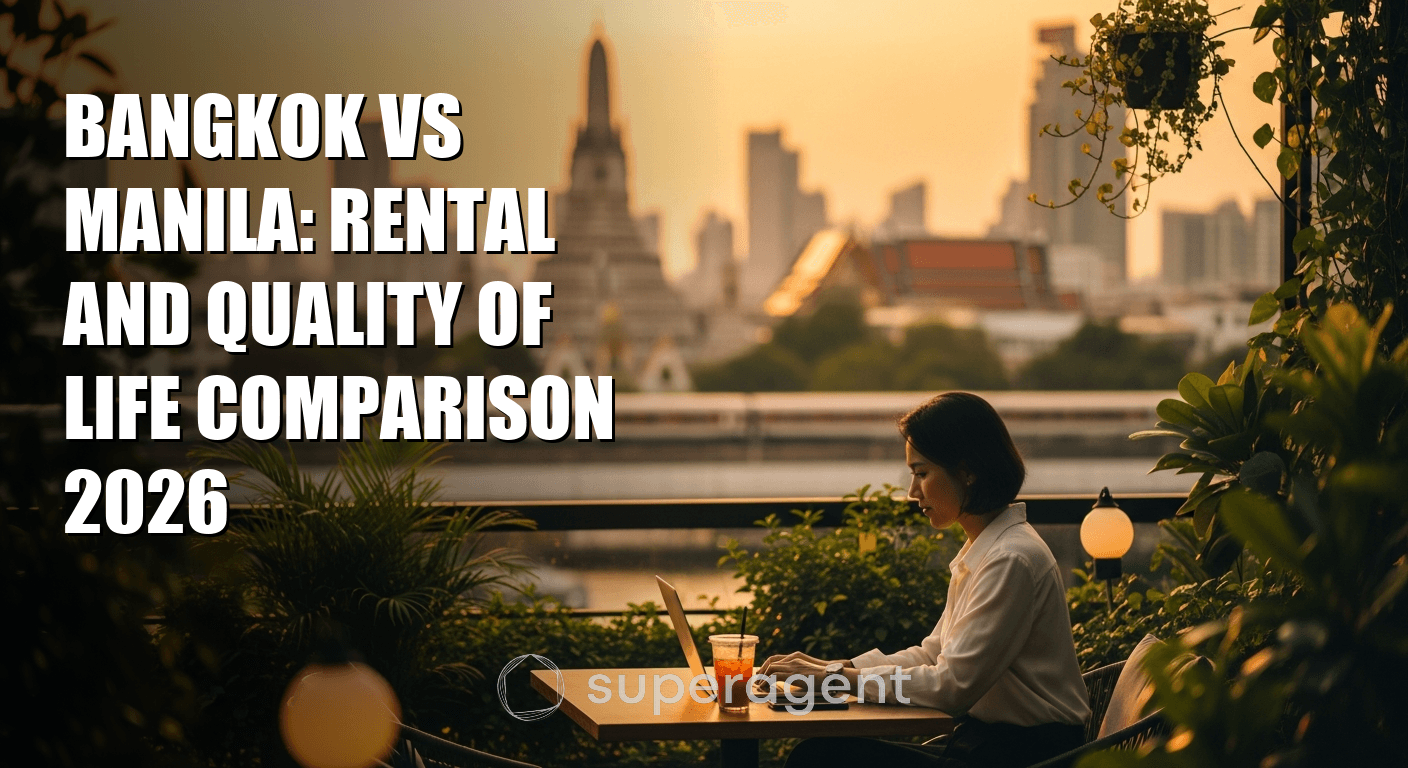
Bangkok vs Manila: Rental and Quality of Life Comparison 2026
Discover which Southeast Asian city offers better value for expats and remote workers.
Summary
Compare Bangkok vs Manila rent prices, living costs, and quality of life. Find the best city for your budget and lifestyle in 2026.
If you're weighing up Bangkok against Manila for your next move, you're not alone. Both cities attract remote workers, regional professionals, and expats looking for affordable living in Southeast Asia. But when it comes to renting an apartment and actually enjoying your daily life, these two capitals feel like different worlds. I've lived in Bangkok for years and visited Manila enough times to have a strong opinion. Let me break down how they really compare in 2026, with real numbers and honest takes.
Rental Prices: Where Your Money Goes Further
Let's get straight to the big question. In Bangkok, a modern one-bedroom condo near a BTS station like Thong Lo or Phrom Phong will run you between 18,000 and 35,000 THB per month. Move a bit further out to areas like Bang Na or Bearing, and that drops to 10,000 to 16,000 THB for a well-maintained unit in a building with a pool and gym.
In Manila, specifically Makati or BGC (Bonifacio Global City), a comparable one-bedroom studio or unit ranges from roughly 20,000 to 35,000 PHP, which translates to about 12,000 to 21,000 THB at current exchange rates. On paper, Manila looks cheaper. But there's a catch.
According to DDproperty, the average rent for a one-bedroom condo within 500 meters of a BTS or MRT station in Bangkok sits around 20,000 to 30,000 THB per month as of early 2026. Manila's pricing advantage shrinks fast when you factor in what's actually included. Bangkok condos almost always come fully furnished with air conditioning, a fitted kitchen, and building amenities like a rooftop pool, co-working space, and 24-hour security. In Manila, many units are semi-furnished, and you'll often need to buy your own appliances.
Here's a real example. At Life Asoke Hype near MRT Phetchaburi, you can find a fully furnished one-bed unit with a gym, pool, and sky lounge for around 18,000 to 22,000 THB. Try finding that package in Makati at the same price point. You won't.
Transportation and Getting Around
Bangkok's rail network is a genuine game-changer. The BTS Skytrain and MRT system cover a massive swath of the city, with extensions to the Yellow Line, Pink Line, and expanded Blue Line making previously remote areas suddenly accessible. Living near On Nut or Udom Suk used to feel far from central Bangkok. Now, you're 15 minutes from Asok by train.
Manila has the LRT and MRT systems too, but coverage is far more limited and the trains are notoriously overcrowded. Most commuters in Manila rely on jeepneys, ride-hailing apps, and buses, and traffic is brutal. We're talking two to three hours for a commute that covers 15 kilometers during rush hour. Bangkok has bad traffic too, sure, but the Skytrain lets you skip it entirely if you choose your condo location wisely.
If you rent near BTS Ekkamai and work near BTS Chit Lom, your daily commute is about 20 minutes door to platform to door. That kind of predictability barely exists in Metro Manila outside of BGC's limited bus network.
Quality of Life: Food, Safety, and Daily Comfort
This is where Bangkok pulls ahead by a wide margin. Street food in Bangkok is legendary, and a plate of chicken rice near Soi Polo or a bowl of boat noodles at Victory Monument costs 50 to 80 THB. Manila has great food too, especially grilled seafood in Dampa and Filipino home-style cooking, but eating out tends to cost a bit more relative to local incomes, and variety is narrower for international cuisine.
Safety is another factor. Bangkok consistently ranks higher than Manila in global safety indexes. Walking home at midnight from a bar on Sukhumvit Soi 11 or grabbing a late-night snack on Silom feels completely normal. Manila requires more caution, particularly in areas outside the well-patrolled zones of Makati and BGC.
Healthcare is also a major win for Bangkok. Hospitals like Bumrungrad International Hospital near BTS Nana offer world-class care that attracts medical tourists from around the globe. Manila has good hospitals too, especially in the Makati Medical Center area, but Bangkok's medical infrastructure is simply on another level in terms of accessibility and affordability for expats.
Consider this scenario. You're a freelancer living near BTS Ari. Your morning routine involves a 40 THB iced coffee from a local cart, a co-working session at a condo common area, lunch at a nearby food court for 60 THB, and an evening swim in your building's rooftop pool. That lifestyle costs a fraction of what you'd pay for a similar experience in most global cities, and it's hard to replicate even in Manila.
Internet, Utilities, and Remote Work Infrastructure
Bangkok's internet speeds have improved dramatically. Fiber connections offering 500 Mbps to 1 Gbps are standard in most newer condos, and monthly packages from providers like AIS run about 600 to 900 THB. Add electricity at roughly 2,000 to 4,000 THB per month for a one-bedroom with regular AC use, and water at 100 to 200 THB, and your total utility bill stays manageable.
Manila's internet has improved too, with PLDT and Globe pushing fiber in metro areas, but reliability can be inconsistent, especially during typhoon season. Power costs in the Philippines are among the highest in Southeast Asia, with Meralco rates pushing electricity bills for a one-bedroom unit with AC to 4,000 to 8,000 PHP (roughly 2,500 to 5,000 THB). That adds up fast.
For remote workers, Bangkok also has a much deeper ecosystem of co-working spaces. From True Digital Park near BTS Punnawithi to smaller independent spaces scattered around Ari and Sathorn, you're never far from fast Wi-Fi and good coffee.
Side-by-Side Comparison: Bangkok vs Manila in 2026
- 1-Bed Condo Rent (Central): 18,000 to 35,000 THB/month vs 12,000 to 21,000 THB equivalent
- Typical Furnishing: Fully furnished vs Semi-furnished or bare
- Monthly Electricity (1-Bed with AC): 2,000 to 4,000 THB vs 2,500 to 5,000 THB equivalent
- Internet (Fiber, 500 Mbps+): 600 to 900 THB/month vs 800 to 1,200 THB equivalent
- Street Food Meal: 50 to 80 THB vs 60 to 120 THB equivalent
- Rail Transit Coverage: Extensive (BTS, MRT, ARL, Yellow, Pink Lines) vs Limited (LRT, MRT only)
- Average Commute (15 km, Rush Hour): 30 to 60 minutes (rail option) vs 90 to 180 minutes (road dependent)
- Healthcare Quality: World-class, affordable vs Good, but fewer international-standard options
- Safety Perception: Generally high vs Moderate, area-dependent
- Co-Working Space Density: Very high vs Growing, concentrated in BGC/Makati
Visa and Long-Term Stay Considerations
Thailand has made strides with its Long-Term Resident (LTR) visa and the Destination Thailand Visa (DTV) for remote workers and digital nomads. These options make it more feasible to stay legally for extended periods without the old hassle of border runs. The Philippines offers the Special Resident Retiree's Visa (SRRV) and a newer digital nomad visa framework, but the bureaucratic process in Manila can be slower and less predictable.
For someone planning a one to two year stay, Bangkok's visa options are clearer, and the infrastructure around expat services, from visa agents in Asok to immigration offices accessible via MRT, makes the administrative side far less stressful.
A friend of mine recently moved from BGC to a condo near BTS Phra Khanong on Sukhumvit Soi 71. She pays 16,000 THB for a one-bedroom unit on the 25th floor with a river-view pool. Her electricity runs about 2,500 THB, internet is 700 THB, and she eats most meals at nearby markets for 60 to 100 THB each. Her total monthly spend dropped by nearly 30% compared to her Manila setup, and she says the quality of her daily life went up significantly.
Both Bangkok and Manila are vibrant, exciting cities with a lot to offer. But if your priority is getting the best rental value, the smoothest daily logistics, and the most comfortable lifestyle for your budget, Bangkok wins convincingly in 2026. The combination of modern condos, excellent transit, affordable food, fast internet, and world-class healthcare is tough to beat anywhere in the region.
Ready to find your ideal condo in Bangkok? Head over to superagent.co to search listings with AI-powered matching that actually understands what you need, from your budget and preferred BTS line to the amenities that matter most to you.
If you're weighing up Bangkok against Manila for your next move, you're not alone. Both cities attract remote workers, regional professionals, and expats looking for affordable living in Southeast Asia. But when it comes to renting an apartment and actually enjoying your daily life, these two capitals feel like different worlds. I've lived in Bangkok for years and visited Manila enough times to have a strong opinion. Let me break down how they really compare in 2026, with real numbers and honest takes.
Rental Prices: Where Your Money Goes Further
Let's get straight to the big question. In Bangkok, a modern one-bedroom condo near a BTS station like Thong Lo or Phrom Phong will run you between 18,000 and 35,000 THB per month. Move a bit further out to areas like Bang Na or Bearing, and that drops to 10,000 to 16,000 THB for a well-maintained unit in a building with a pool and gym.
In Manila, specifically Makati or BGC (Bonifacio Global City), a comparable one-bedroom studio or unit ranges from roughly 20,000 to 35,000 PHP, which translates to about 12,000 to 21,000 THB at current exchange rates. On paper, Manila looks cheaper. But there's a catch.
According to DDproperty, the average rent for a one-bedroom condo within 500 meters of a BTS or MRT station in Bangkok sits around 20,000 to 30,000 THB per month as of early 2026. Manila's pricing advantage shrinks fast when you factor in what's actually included. Bangkok condos almost always come fully furnished with air conditioning, a fitted kitchen, and building amenities like a rooftop pool, co-working space, and 24-hour security. In Manila, many units are semi-furnished, and you'll often need to buy your own appliances.
Here's a real example. At Life Asoke Hype near MRT Phetchaburi, you can find a fully furnished one-bed unit with a gym, pool, and sky lounge for around 18,000 to 22,000 THB. Try finding that package in Makati at the same price point. You won't.
Transportation and Getting Around
Bangkok's rail network is a genuine game-changer. The BTS Skytrain and MRT system cover a massive swath of the city, with extensions to the Yellow Line, Pink Line, and expanded Blue Line making previously remote areas suddenly accessible. Living near On Nut or Udom Suk used to feel far from central Bangkok. Now, you're 15 minutes from Asok by train.
Manila has the LRT and MRT systems too, but coverage is far more limited and the trains are notoriously overcrowded. Most commuters in Manila rely on jeepneys, ride-hailing apps, and buses, and traffic is brutal. We're talking two to three hours for a commute that covers 15 kilometers during rush hour. Bangkok has bad traffic too, sure, but the Skytrain lets you skip it entirely if you choose your condo location wisely.
If you rent near BTS Ekkamai and work near BTS Chit Lom, your daily commute is about 20 minutes door to platform to door. That kind of predictability barely exists in Metro Manila outside of BGC's limited bus network.
Quality of Life: Food, Safety, and Daily Comfort
This is where Bangkok pulls ahead by a wide margin. Street food in Bangkok is legendary, and a plate of chicken rice near Soi Polo or a bowl of boat noodles at Victory Monument costs 50 to 80 THB. Manila has great food too, especially grilled seafood in Dampa and Filipino home-style cooking, but eating out tends to cost a bit more relative to local incomes, and variety is narrower for international cuisine.
Safety is another factor. Bangkok consistently ranks higher than Manila in global safety indexes. Walking home at midnight from a bar on Sukhumvit Soi 11 or grabbing a late-night snack on Silom feels completely normal. Manila requires more caution, particularly in areas outside the well-patrolled zones of Makati and BGC.
Healthcare is also a major win for Bangkok. Hospitals like Bumrungrad International Hospital near BTS Nana offer world-class care that attracts medical tourists from around the globe. Manila has good hospitals too, especially in the Makati Medical Center area, but Bangkok's medical infrastructure is simply on another level in terms of accessibility and affordability for expats.
Consider this scenario. You're a freelancer living near BTS Ari. Your morning routine involves a 40 THB iced coffee from a local cart, a co-working session at a condo common area, lunch at a nearby food court for 60 THB, and an evening swim in your building's rooftop pool. That lifestyle costs a fraction of what you'd pay for a similar experience in most global cities, and it's hard to replicate even in Manila.
Internet, Utilities, and Remote Work Infrastructure
Bangkok's internet speeds have improved dramatically. Fiber connections offering 500 Mbps to 1 Gbps are standard in most newer condos, and monthly packages from providers like AIS run about 600 to 900 THB. Add electricity at roughly 2,000 to 4,000 THB per month for a one-bedroom with regular AC use, and water at 100 to 200 THB, and your total utility bill stays manageable.
Talk to us about renting
Share your details and keep reading — we’ll get back to you.
Manila's internet has improved too, with PLDT and Globe pushing fiber in metro areas, but reliability can be inconsistent, especially during typhoon season. Power costs in the Philippines are among the highest in Southeast Asia, with Meralco rates pushing electricity bills for a one-bedroom unit with AC to 4,000 to 8,000 PHP (roughly 2,500 to 5,000 THB). That adds up fast.
For remote workers, Bangkok also has a much deeper ecosystem of co-working spaces. From True Digital Park near BTS Punnawithi to smaller independent spaces scattered around Ari and Sathorn, you're never far from fast Wi-Fi and good coffee.
Side-by-Side Comparison: Bangkok vs Manila in 2026
- 1-Bed Condo Rent (Central): 18,000 to 35,000 THB/month vs 12,000 to 21,000 THB equivalent
- Typical Furnishing: Fully furnished vs Semi-furnished or bare
- Monthly Electricity (1-Bed with AC): 2,000 to 4,000 THB vs 2,500 to 5,000 THB equivalent
- Internet (Fiber, 500 Mbps+): 600 to 900 THB/month vs 800 to 1,200 THB equivalent
- Street Food Meal: 50 to 80 THB vs 60 to 120 THB equivalent
- Rail Transit Coverage: Extensive (BTS, MRT, ARL, Yellow, Pink Lines) vs Limited (LRT, MRT only)
- Average Commute (15 km, Rush Hour): 30 to 60 minutes (rail option) vs 90 to 180 minutes (road dependent)
- Healthcare Quality: World-class, affordable vs Good, but fewer international-standard options
- Safety Perception: Generally high vs Moderate, area-dependent
- Co-Working Space Density: Very high vs Growing, concentrated in BGC/Makati
Visa and Long-Term Stay Considerations
Thailand has made strides with its Long-Term Resident (LTR) visa and the Destination Thailand Visa (DTV) for remote workers and digital nomads. These options make it more feasible to stay legally for extended periods without the old hassle of border runs. The Philippines offers the Special Resident Retiree's Visa (SRRV) and a newer digital nomad visa framework, but the bureaucratic process in Manila can be slower and less predictable.
For someone planning a one to two year stay, Bangkok's visa options are clearer, and the infrastructure around expat services, from visa agents in Asok to immigration offices accessible via MRT, makes the administrative side far less stressful.
A friend of mine recently moved from BGC to a condo near BTS Phra Khanong on Sukhumvit Soi 71. She pays 16,000 THB for a one-bedroom unit on the 25th floor with a river-view pool. Her electricity runs about 2,500 THB, internet is 700 THB, and she eats most meals at nearby markets for 60 to 100 THB each. Her total monthly spend dropped by nearly 30% compared to her Manila setup, and she says the quality of her daily life went up significantly.
Both Bangkok and Manila are vibrant, exciting cities with a lot to offer. But if your priority is getting the best rental value, the smoothest daily logistics, and the most comfortable lifestyle for your budget, Bangkok wins convincingly in 2026. The combination of modern condos, excellent transit, affordable food, fast internet, and world-class healthcare is tough to beat anywhere in the region.
Ready to find your ideal condo in Bangkok? Head over to superagent.co to search listings with AI-powered matching that actually understands what you need, from your budget and preferred BTS line to the amenities that matter most to you.
Share this article
Properties you may like
![[For Rent] CONDO I Aguston Sukhumvit 22 I Pet Friendly I 2 Beds I 2 Baths I Rent 55,000THB/mo](/_next/image?url=https%3A%2F%2Fstorage.googleapis.com%2Fsuperagent-web%2Fattachments%2Flistings%2F2266%2Fd3afcd25-6b79-46cb-9f1f-396acdc3dd10-955-3.jpg&w=3840&q=75)
฿55,000
2 Bed295 sqm
[For Rent] CONDO I Aguston Sukhumvit 22 I Pet Friendly I 2 Beds I 2 Baths I Rent 55,000THB/mo
Phrom Phong
Condo![[For Rent] CONDO I SUPALAI PLACE Sukhumvit 39 I 2 Beds I 2 Baths (1 Jacuzzi) I 55,555THB/mo](/_next/image?url=https%3A%2F%2Fstorage.googleapis.com%2Fsuperagent-web%2Fattachments%2Flistings%2F6743%2Fba530743-48b9-4ac6-92d3-c2247e743cf6-01-supalai-place-skv39-2b-link-heaven.jpg&w=3840&q=75)
฿55,555
2 Bed2142 sqm
[For Rent] CONDO I SUPALAI PLACE Sukhumvit 39 I 2 Beds I 2 Baths (1 Jacuzzi) I 55,555THB/mo
Phrom Phong
Condo![[For Rent] CONDO I Maru Ekkamai 2 I Pet friendly I 2 Beds I 2 Baths I 68,000 THB/mo](/_next/image?url=https%3A%2F%2Fstorage.googleapis.com%2Fsuperagent-web%2Fattachments%2Flistings%2F6602%2F9f1d8f71-ee43-435f-9a44-da16c4092c92-968-1.jpg&w=3840&q=75)
฿68,000
2 Bed360 sqm
[For Rent] CONDO I Maru Ekkamai 2 I Pet friendly I 2 Beds I 2 Baths I 68,000 THB/mo
Ekkamai
Condo![[For Rent] CONDO I Noble State 39 I 2 Beds I 2 Baths I 63,000THB/mo](/_next/image?url=https%3A%2F%2Fstorage.googleapis.com%2Fsuperagent-web%2Fattachments%2Flistings%2F2237%2F60eb58f3-eae5-41ed-a80b-406e004f05d8-940-1.jpg&w=3840&q=75)
฿63,000
2 Bed260 sqm
[For Rent] CONDO I Noble State 39 I 2 Beds I 2 Baths I 63,000THB/mo
Phrom Phong
Condo![[For Rent] CONDO I Rhythm Sukhumvit 36-38 I 2 Beds I 2 Baths I 38,999THB/mo](/_next/image?url=https%3A%2F%2Fstorage.googleapis.com%2Fsuperagent-web%2Fattachments%2Flistings%2F1788%2F942a0215-4128-4c2c-a064-f607e84e7aa4-656-2.jpg&w=3840&q=75)
฿38,999
2 Bed256 sqm
[For Rent] CONDO I Rhythm Sukhumvit 36-38 I 2 Beds I 2 Baths I 38,999THB/mo
Thonglor
Condo![[For Rent] CONDO I CLOUD Thonglor-Phetchaburi I 1 Bed I 1 Bath I 22,500THB/mo](/_next/image?url=https%3A%2F%2Fstorage.googleapis.com%2Fsuperagent-web%2Fattachments%2Flistings%2F6742%2F6cef5361-0dac-4dba-98f1-b0d187559c84-1118-1.jpg&w=3840&q=75)
฿22,500
1 Bed132 sqm
[For Rent] CONDO I CLOUD Thonglor-Phetchaburi I 1 Bed I 1 Bath I 22,500THB/mo
Thonglor
Condo![[For Rent] CONDO I City Smart Sukhumvit 18 I 3 Beds I 3 Baths I 65,000mo/THB](/_next/image?url=https%3A%2F%2Fstorage.googleapis.com%2Fsuperagent-web%2Fattachments%2Flistings%2F6741%2Fd371c89d-a913-42c4-a673-e540afae4f46-1116-1.jpg&w=3840&q=75)
฿65,000
3 Bed3125 sqm
[For Rent] CONDO I City Smart Sukhumvit 18 I 3 Beds I 3 Baths I 65,000mo/THB
Condo![[For Rent] CONDO I The Coast Bangkok I 1 Bed I 1 Bath I 20,000mo/THB](/_next/image?url=https%3A%2F%2Fstorage.googleapis.com%2Fsuperagent-web%2Fattachments%2Flistings%2F6740%2F498477ce-4ffa-4e4c-ab08-0e565d9c4bbe-1115-3.jpg&w=3840&q=75)
฿20,000
1 Bed146 sqm
[For Rent] CONDO I The Coast Bangkok I 1 Bed I 1 Bath I 20,000mo/THB
Bang Na
Condo![[For Rent] CONDO I IDEO Sukhumvit-RAMA 4 I 2 Beds I 2 Baths I 55,000mo/THB](/_next/image?url=https%3A%2F%2Fstorage.googleapis.com%2Fsuperagent-web%2Fattachments%2Flistings%2F6739%2F15df221d-5b8e-497c-b7ce-a6b9b6412cab-1113-1.jpg&w=3840&q=75)
฿55,000
2 Bed265 sqm
[For Rent] CONDO I IDEO Sukhumvit-RAMA 4 I 2 Beds I 2 Baths I 55,000mo/THB
Phra Khanong
Condo![[For Rent] CONDO I Downtown 49 I Pet Friendly I 1 Bed I 1 Bath I 23,000mo/THB](/_next/image?url=https%3A%2F%2Fstorage.googleapis.com%2Fsuperagent-web%2Fattachments%2Flistings%2F6738%2F11cf2ffe-1f01-4ccc-991c-2ad608f1ba73-1112-1.jpg&w=3840&q=75)
฿23,000
1 Bed135 sqm
[For Rent] CONDO I Downtown 49 I Pet Friendly I 1 Bed I 1 Bath I 23,000mo/THB
Thonglor
CondoMore like this
 In Guides · Superagent EditorialHidden Costs of Renting a Condo in Bangkok Nobody Warns You AboutBangkok condo rent looks affordable until month one hits. Here are the real costs beyond the headline figure that catch most renters off guard.25 May 20261 min read
 In Guides · Superagent EditorialWhat a Long-Vacant Bangkok Condo Unit Is Actually Telling YouA Bangkok condo vacant for months signals overpricing, landlord issues, or real problems. Here is how to read the signs.25 May 20261 min read
 In Guides · Superagent EditorialRed Flags in a Bangkok Rental Contract to Watch Out ForBangkok rental contracts often hide risky clauses. Here are the red flags every tenant must catch before signing any lease.25 May 20261 min read
 In Guides · Superagent EditorialWorking Online from a Condo: How to Choose the Perfect Room for ProductivityLearn how to choose the best condo room for working online with tips on lighting, noise, and furniture setup to maximize productivity.9 May 20261 min read