CCTV Cameras in Bangkok Condos: Locations and Tenant Privacy Rights
Guides
CCTV Cameras in Bangkok Condos: Locations and Tenant Privacy Rights
Understand where security cameras are placed in Thai condos and what privacy protections you have as a renter.
Summary
Learn about CCTV camera placement in Bangkok condos, tenant privacy rights, and how to protect your personal space while renting.
You've just moved into a new condo in Thonglor or Asoke, and you're settling in when you notice a small camera in the lobby. Then another one by the pool. Then one more near the entrance to your floor. Sound familiar? If you're renting in Bangkok, security cameras are a fact of life in most condos, and honestly, they're not going away. But here's what most tenants don't know: where exactly are these cameras allowed, what can they legally record, and where does your privacy actually begin and end as a renter?
This is the question that comes up at least once a month in expat Facebook groups and tenant chats around Bangkok. You want to feel safe in your building. You also want to know you're not being watched in your own home. The good news is that Thai law and most condo management rules are pretty clear about this, even if nobody bothers to explain them when you sign your lease. Let's break down what you actually need to know.
Where Security Cameras Are Standard in Bangkok Condos
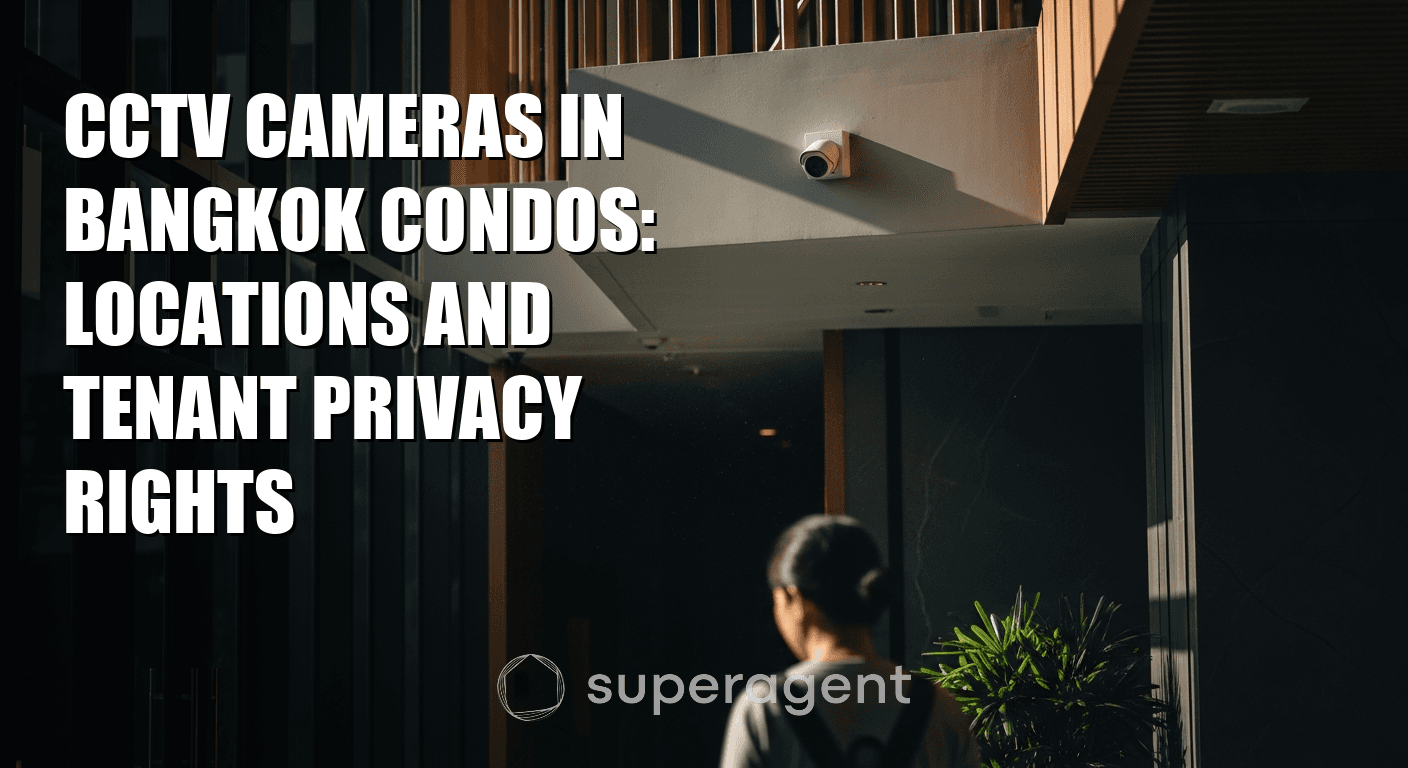
Walk into almost any mid to high-rise condo in Bangkok, and you'll see cameras in the same places. Lobbies, elevators, hallways, parking areas, the gym, the pool deck, and stairwells. This is standard practice across the city, whether you're renting in Sukhumvit near BTS Phrom Phong or in a quieter soi near MRT Rama 9.
The reason is simple: building management uses these cameras for security. They want to track who enters and leaves, monitor common areas for theft or damage, and respond to emergencies. In a city with 10 million people and thousands of condos, this is just how things work. Most tenants accept it without question.
A typical high-rise condo in Bangkok might have 20 to 40 cameras depending on size. A smaller 15-story building in a soi off Sukhumvit might have 8 to 15. These costs are usually built into the building's maintenance fee, which you'll see listed as part of your monthly condo fee, typically running 30 to 60 THB per square meter per month.
What you probably won't see in the lease is a specific list of camera locations. This is one of the biggest gaps in rental transparency in Bangkok. Ask the building management for a map of camera locations before you sign, and most will give you one. Some will seem annoyed that you asked. That's actually a red flag.
Inside Your Unit: The Hard Privacy Line
Here's the part that matters most: cameras in common areas are legal and normal. Cameras inside your rented unit are not. Full stop. This is protected under Thai privacy law, specifically the Personal Data Protection Act, which was updated in 2019 and applies to residential spaces you occupy.
Your bedroom, bathroom, kitchen, and living room are your private space. No landlord, no building management, and no security company has the legal right to install a camera inside your unit without your written consent. If you find a hidden camera or a suspicious device, this is not a gray area. It's illegal, and you should document it and contact the police immediately.
One scenario that actually happens in Bangkok: a landlord who owns a condo unit and rents it out short-term might install a camera in the living room "for security." Tenants often don't realize this is illegal until they've already moved in. If this happens to you, take photos, save your lease, and contact the Cyber Crime Investigation Bureau or your embassy if you're an expat. Don't just accept it as part of the rental.
The exception is if you explicitly agreed in writing that a camera would be present, though even then, it cannot be in bathrooms or bedrooms under any circumstances. Even your landlord cannot legally install one there.
The Gray Zone: Your Unit's Entrance and Balcony
This is where it gets tricky for renters. Many condo buildings have cameras pointing at unit doors or hallways right outside your door. Is that legal? Technically yes, because it's a common area, not inside your private space. But it creates a privacy gray zone that bothers a lot of people.
If you're in a mid-range condo in Phetchaburi or near Chatuchak, you might find a camera mounted on the hallway wall pointing directly at your unit's entrance. Is this monitoring you? Not technically. But it does record everyone who enters your space, which some people find uncomfortable. This is legal, but worth asking about during a building tour or lease signing.
Your balcony is also a gray area. If a camera captures part of your balcony because it's filming the hallway or exterior of the building, that's generally considered acceptable. But a camera specifically pointed into your balcony to monitor your private space would not be legal. The difference is intent.
Before you rent, ask: is there a camera pointing at my unit door? Most buildings will answer honestly. If they won't, that's worth investigating further or considering a different building.
What Building Management Can Actually Do With Camera Footage
Here's another thing renters need to know: just because a camera exists doesn't mean management can use the footage however they want. Thai privacy law restricts how security camera footage can be used. Management can review it for security incidents, theft, building damage, or emergencies. They cannot use it to monitor how you live, who visits you, or to share footage publicly or on social media.
Some condo buildings in Bangkok have been caught sharing footage on internal Facebook groups or LINE chats of residents breaking rules, looking embarrassing, or creating drama. This is technically illegal under the Personal Data Protection Act. If this happens to you, you have legal recourse, and you can file a complaint with the Office of the Personal Data Protection Committee.
According to the PDPA guidelines, security footage should be retained for a reasonable period (usually 30 to 90 days) and then deleted unless it's relevant to an ongoing investigation. Management should have clear policies about this. Most professional condo buildings in Bangkok do have these policies, but not all of them share them with tenants.
Ask your building management: how long is footage kept? Who has access to it? What happens if I request my own footage? These are fair questions, and buildings with nothing to hide will answer them clearly.
- Lobby and Entrance: Fully Legal | Low to Medium (common area) | Building access control, theft prevention
- Elevators: Fully Legal | Medium (records your movements) | Safety, incident investigation, assault prevention
- Hallways and Corridors: Fully Legal | Medium (outside your door) | Package theft, vandalism, common area safety
- Parking Garage: Fully Legal | Low to Medium (common area) | Vehicle theft, hit-and-run incidents
- Pool and Gym: Fully Legal | Medium to High (you're in swimwear) | Drowning prevention, equipment theft
- Unit Interior (Bedroom, Bathroom, Kitchen): Illegal | Extremely High (extreme privacy violation) | Not allowed under Thai law
- Unit Entrance Door: Legal | Medium (common area outside unit) | Access monitoring, package delivery tracking
- Your Balcony (direct view): Illegal if Intentional | High (your private outdoor space) | Should not be allowed
What You Should Do Before Signing a Lease
Here's practical advice that most rental guides skip: before you commit to a condo in Bangkok, actually ask about cameras. Walk through the building. Look up. Notice where you see them. Ask management for a list or a marked map. A professional building will have this information ready.
On average, renters in central Bangkok condos (Thonglor, Phrom Phong, Emporium area) pay 25,000 to 45,000 THB per month for a one-bedroom unit, and higher-end buildings tend to have more extensive security systems. If you're paying premium rent, it makes sense to verify what you're actually getting in terms of both security and privacy protections.
Ask the building management or landlord these specific questions: Are there cameras in common areas? How long is footage kept? What's your policy on privacy? Can I request footage if something happens to me? These questions take five minutes, and they could save you from a privacy problem later.
If a building seems evasive or won't answer these questions, move on. Bangkok has thousands of condos available, and transparency about security is not unreasonable to expect.
Your Rights as a Tenant in Bangkok
Under Thai law, specifically the Condominium Act and the Personal Data Protection Act, you have rights as a tenant. You have the right to privacy in your leased unit. You have the right to know about security measures that might affect you. You have the right to request access to footage if you're involved in an incident that was recorded.
If your landlord or building management violates your privacy, you can lodge a complaint with local authorities or seek legal advice. Many expats in Bangkok work with legal clinics or their embassies if they need help with tenant issues. This is also something organizations like the Immigration Bureau can sometimes advise on for foreign residents.
The reality is that most condo buildings in Bangkok operate fairly within the law. The ones that don't are usually smaller or older buildings, or ones where the owner lives on-site and gets overly involved. Larger, professionally managed buildings (the ones you'd find listed on DDproperty or CBRE Thailand) tend to have clearer policies.
Know your rights. Ask questions. If something feels wrong, trust that instinct. You're paying for the unit, and you deserve to know what's being recorded and why.
Finding a condo in Bangkok that feels both safe and private is completely possible. Most buildings strike that balance well. But like any rental decision in this city, a little bit of upfront research and asking the right questions makes all the difference. When you're ready to look at specific units and want to compare buildings based on their security practices, amenities, location, and price, Superagent.co makes it easier to filter by what actually matters to you. Browse listings, read real reviews from current tenants, and get straight answers about the buildings you're considering.
You've just moved into a new condo in Thonglor or Asoke, and you're settling in when you notice a small camera in the lobby. Then another one by the pool. Then one more near the entrance to your floor. Sound familiar? If you're renting in Bangkok, security cameras are a fact of life in most condos, and honestly, they're not going away. But here's what most tenants don't know: where exactly are these cameras allowed, what can they legally record, and where does your privacy actually begin and end as a renter?
This is the question that comes up at least once a month in expat Facebook groups and tenant chats around Bangkok. You want to feel safe in your building. You also want to know you're not being watched in your own home. The good news is that Thai law and most condo management rules are pretty clear about this, even if nobody bothers to explain them when you sign your lease. Let's break down what you actually need to know.
Where Security Cameras Are Standard in Bangkok Condos
Walk into almost any mid to high-rise condo in Bangkok, and you'll see cameras in the same places. Lobbies, elevators, hallways, parking areas, the gym, the pool deck, and stairwells. This is standard practice across the city, whether you're renting in Sukhumvit near BTS Phrom Phong or in a quieter soi near MRT Rama 9.
The reason is simple: building management uses these cameras for security. They want to track who enters and leaves, monitor common areas for theft or damage, and respond to emergencies. In a city with 10 million people and thousands of condos, this is just how things work. Most tenants accept it without question.
A typical high-rise condo in Bangkok might have 20 to 40 cameras depending on size. A smaller 15-story building in a soi off Sukhumvit might have 8 to 15. These costs are usually built into the building's maintenance fee, which you'll see listed as part of your monthly condo fee, typically running 30 to 60 THB per square meter per month.
What you probably won't see in the lease is a specific list of camera locations. This is one of the biggest gaps in rental transparency in Bangkok. Ask the building management for a map of camera locations before you sign, and most will give you one. Some will seem annoyed that you asked. That's actually a red flag.
Continue reading after that.
Looking for a condo
to rent?
Leave your name and phone. We'll follow up while you keep reading.
100% Secure
Fast Response
Free Consultation
Inside Your Unit: The Hard Privacy Line
Here's the part that matters most: cameras in common areas are legal and normal. Cameras inside your rented unit are not. Full stop. This is protected under Thai privacy law, specifically the Personal Data Protection Act, which was updated in 2019 and applies to residential spaces you occupy.
Your bedroom, bathroom, kitchen, and living room are your private space. No landlord, no building management, and no security company has the legal right to install a camera inside your unit without your written consent. If you find a hidden camera or a suspicious device, this is not a gray area. It's illegal, and you should document it and contact the police immediately.
One scenario that actually happens in Bangkok: a landlord who owns a condo unit and rents it out short-term might install a camera in the living room "for security." Tenants often don't realize this is illegal until they've already moved in. If this happens to you, take photos, save your lease, and contact the Cyber Crime Investigation Bureau or your embassy if you're an expat. Don't just accept it as part of the rental.
The exception is if you explicitly agreed in writing that a camera would be present, though even then, it cannot be in bathrooms or bedrooms under any circumstances. Even your landlord cannot legally install one there.
The Gray Zone: Your Unit's Entrance and Balcony
This is where it gets tricky for renters. Many condo buildings have cameras pointing at unit doors or hallways right outside your door. Is that legal? Technically yes, because it's a common area, not inside your private space. But it creates a privacy gray zone that bothers a lot of people.
If you're in a mid-range condo in Phetchaburi or near Chatuchak, you might find a camera mounted on the hallway wall pointing directly at your unit's entrance. Is this monitoring you? Not technically. But it does record everyone who enters your space, which some people find uncomfortable. This is legal, but worth asking about during a building tour or lease signing.
Your balcony is also a gray area. If a camera captures part of your balcony because it's filming the hallway or exterior of the building, that's generally considered acceptable. But a camera specifically pointed into your balcony to monitor your private space would not be legal. The difference is intent.
Before you rent, ask: is there a camera pointing at my unit door? Most buildings will answer honestly. If they won't, that's worth investigating further or considering a different building.
What Building Management Can Actually Do With Camera Footage
Here's another thing renters need to know: just because a camera exists doesn't mean management can use the footage however they want. Thai privacy law restricts how security camera footage can be used. Management can review it for security incidents, theft, building damage, or emergencies. They cannot use it to monitor how you live, who visits you, or to share footage publicly or on social media.
Some condo buildings in Bangkok have been caught sharing footage on internal Facebook groups or LINE chats of residents breaking rules, looking embarrassing, or creating drama. This is technically illegal under the Personal Data Protection Act. If this happens to you, you have legal recourse, and you can file a complaint with the Office of the Personal Data Protection Committee.
According to the PDPA guidelines, security footage should be retained for a reasonable period (usually 30 to 90 days) and then deleted unless it's relevant to an ongoing investigation. Management should have clear policies about this. Most professional condo buildings in Bangkok do have these policies, but not all of them share them with tenants.
Ask your building management: how long is footage kept? Who has access to it? What happens if I request my own footage? These are fair questions, and buildings with nothing to hide will answer them clearly.
- Lobby and Entrance: Fully Legal | Low to Medium (common area) | Building access control, theft prevention
- Elevators: Fully Legal | Medium (records your movements) | Safety, incident investigation, assault prevention
- Hallways and Corridors: Fully Legal | Medium (outside your door) | Package theft, vandalism, common area safety
- Parking Garage: Fully Legal | Low to Medium (common area) | Vehicle theft, hit-and-run incidents
- Pool and Gym: Fully Legal | Medium to High (you're in swimwear) | Drowning prevention, equipment theft
- Unit Interior (Bedroom, Bathroom, Kitchen): Illegal | Extremely High (extreme privacy violation) | Not allowed under Thai law
- Unit Entrance Door: Legal | Medium (common area outside unit) | Access monitoring, package delivery tracking
- Your Balcony (direct view): Illegal if Intentional | High (your private outdoor space) | Should not be allowed
What You Should Do Before Signing a Lease
Here's practical advice that most rental guides skip: before you commit to a condo in Bangkok, actually ask about cameras. Walk through the building. Look up. Notice where you see them. Ask management for a list or a marked map. A professional building will have this information ready.
Continue reading after that.
Looking for a condo
to rent?
Leave your name and phone. We'll follow up while you keep reading.
100% Secure
Fast Response
Free Consultation
On average, renters in central Bangkok condos (Thonglor, Phrom Phong, Emporium area) pay 25,000 to 45,000 THB per month for a one-bedroom unit, and higher-end buildings tend to have more extensive security systems. If you're paying premium rent, it makes sense to verify what you're actually getting in terms of both security and privacy protections.
Ask the building management or landlord these specific questions: Are there cameras in common areas? How long is footage kept? What's your policy on privacy? Can I request footage if something happens to me? These questions take five minutes, and they could save you from a privacy problem later.
If a building seems evasive or won't answer these questions, move on. Bangkok has thousands of condos available, and transparency about security is not unreasonable to expect.
Your Rights as a Tenant in Bangkok
Under Thai law, specifically the Condominium Act and the Personal Data Protection Act, you have rights as a tenant. You have the right to privacy in your leased unit. You have the right to know about security measures that might affect you. You have the right to request access to footage if you're involved in an incident that was recorded.
If your landlord or building management violates your privacy, you can lodge a complaint with local authorities or seek legal advice. Many expats in Bangkok work with legal clinics or their embassies if they need help with tenant issues. This is also something organizations like the Immigration Bureau can sometimes advise on for foreign residents.
The reality is that most condo buildings in Bangkok operate fairly within the law. The ones that don't are usually smaller or older buildings, or ones where the owner lives on-site and gets overly involved. Larger, professionally managed buildings (the ones you'd find listed on DDproperty or CBRE Thailand) tend to have clearer policies.
Know your rights. Ask questions. If something feels wrong, trust that instinct. You're paying for the unit, and you deserve to know what's being recorded and why.
Finding a condo in Bangkok that feels both safe and private is completely possible. Most buildings strike that balance well. But like any rental decision in this city, a little bit of upfront research and asking the right questions makes all the difference. When you're ready to look at specific units and want to compare buildings based on their security practices, amenities, location, and price, Superagent.co makes it easier to filter by what actually matters to you. Browse listings, read real reviews from current tenants, and get straight answers about the buildings you're considering.
Share this article
Properties you may like
![[For Rent] CONDO I Las Colinas Condominium I 2 Beds I 3 Baths I 85,000THB/mo](/_next/image?url=https%3A%2F%2Fstorage.googleapis.com%2Fsuperagent-web%2Fattachments%2Flistings%2F6828%2F80f345c4-488e-43b2-b017-c9fbb17b520d-99486dd8-4237-4ba2-9207-01ce4f66b21f-media.jpg&w=3840&q=75)
฿85,000
2 Bed3170 sqm
[For Rent] CONDO I Las Colinas Condominium I 2 Beds I 3 Baths I 85,000THB/mo
Asoke
Condo![[For Rent] CONDO I Ashton Asoke I 1 Bed I 1 Bath I 30,000THB/mo](/_next/image?url=https%3A%2F%2Fstorage.googleapis.com%2Fsuperagent-web%2Fattachments%2Flistings%2F6876%2Fb7ce9bbe-f877-4ff5-bb54-8ad0026db940-1272-4.jpg&w=3840&q=75)
฿30,000
1 Bed135 sqm
[For Rent] CONDO I Ashton Asoke I 1 Bed I 1 Bath I 30,000THB/mo
Asoke
Condo![[For Rent] CONDO I Skyrise Avenue Sukhumvit 64 I 2 Beds I 2 Baths I 27,000THB/mo](/_next/image?url=https%3A%2F%2Fstorage.googleapis.com%2Fsuperagent-web%2Fattachments%2Flistings%2F2001%2F670f91de-c251-4e81-971c-8e30ed2158cd-screenshot-2026-07-05-at-11.38.53-pm.png&w=3840&q=75)
฿27,000
2 Bed252 sqm
[For Rent] CONDO I Skyrise Avenue Sukhumvit 64 I 2 Beds I 2 Baths I 27,000THB/mo
Punnawithi
Condo![[For Rent] CONDO I Park Origin Ratchathewi I Duplex I 2 Beds I 1 Bath I 32,000THB/mo](/_next/image?url=https%3A%2F%2Fstorage.googleapis.com%2Fsuperagent-web%2Fattachments%2Flistings%2F6896%2Fb79a7d21-7533-4b0d-bb19-762ebfafab62-1318-6.jpg&w=3840&q=75)
฿32,000
2 Bed135.9 sqm
[For Rent] CONDO I Park Origin Ratchathewi I Duplex I 2 Beds I 1 Bath I 32,000THB/mo
Ratchathewi
Condo![[For Rent] CONDO I Park Origin Phayathai I Studio I 1 Bath I 28,000THB/mo](/_next/image?url=https%3A%2F%2Fstorage.googleapis.com%2Fsuperagent-web%2Fattachments%2Flistings%2F6757%2Fb226df93-94c6-46fa-aeba-ebfadc7f81b8-1000006042.jpg&w=3840&q=75)
฿28,000
Studio129 sqm
[For Rent] CONDO I Park Origin Phayathai I Studio I 1 Bath I 28,000THB/mo
Phaya Thai
Condo![[For Rent] CONDO I Ideo Mobi Sukhumvit 81 I Duplex I 1 Bed I 1 Bath I 28,000THB/mo](/_next/image?url=https%3A%2F%2Fstorage.googleapis.com%2Fsuperagent-web%2Fattachments%2Flistings%2F1849%2Fc8b2c033-3b5f-4615-b2b0-4972f40141f0-705-13.jpg&w=3840&q=75)
฿28,000
1 Bed143 sqm
[For Rent] CONDO I Ideo Mobi Sukhumvit 81 I Duplex I 1 Bed I 1 Bath I 28,000THB/mo
On Nut
Condo![[For Rent] CONDO I Siamese Sukhumvit 48 I 1 Bed I 1 Bath I 28,000THB/mo](/_next/image?url=https%3A%2F%2Fstorage.googleapis.com%2Fsuperagent-web%2Fattachments%2Flistings%2F6841%2Febc2dce2-2e9b-4e6d-a01c-0cfa619dfa13-1231-6.jpg&w=3840&q=75)
฿28,000
1 Bed144 sqm
[For Rent] CONDO I Siamese Sukhumvit 48 I 1 Bed I 1 Bath I 28,000THB/mo
Condo![[For Rent] CONDO I Ashton Asoke I 1 Bed I 1 Bath I 22,000THB/mo](/_next/image?url=https%3A%2F%2Fstorage.googleapis.com%2Fsuperagent-web%2Fattachments%2Flistings%2F6802%2Fe06b9b73-1207-414a-ab04-1685de0c7eaa-20220808_153124_0.jpg&w=3840&q=75)
฿22,000
1 Bed134 sqm
[For Rent] CONDO I Ashton Asoke I 1 Bed I 1 Bath I 22,000THB/mo
Asoke
Condo![[For Rent] CONDO I HQ Thonglor Soi 4 I 1 Bed I 1 Bath I 35,000 THB/mo](/_next/image?url=https%3A%2F%2Fstorage.googleapis.com%2Fsuperagent-web%2Fattachments%2Flistings%2F1445%2F72352585-1bc2-41a8-bd62-ddcbf8189fe9-376-5.jpg&w=3840&q=75)
฿35,000
1 Bed143.6 sqm
[For Rent] CONDO I HQ Thonglor Soi 4 I 1 Bed I 1 Bath I 35,000 THB/mo
Thonglor
Condo![[For Rent] CONDO I The Master Centrium Asoke - Sukhumvit I Duplex I 2 Beds I 3 Baths I 75,000 THB/mo](/_next/image?url=https%3A%2F%2Fstorage.googleapis.com%2Fsuperagent-web%2Fattachments%2Flistings%2F1545%2F97932b6a-c358-45e4-b5f9-995dbf5a3cf0-441-2.jpg&w=3840&q=75)
฿75,000
2 Bed3150 sqm
[For Rent] CONDO I The Master Centrium Asoke - Sukhumvit I Duplex I 2 Beds I 3 Baths I 75,000 THB/mo
Asoke
CondoMore like this
 In Guides · Superagent EditorialHidden Costs of Renting a Condo in Bangkok Nobody Warns You AboutBangkok condo rent looks affordable until month one hits. Here are the real costs beyond the headline figure that catch most renters off guard.25 May 20261 min read
 In Guides · Superagent EditorialWhat a Long-Vacant Bangkok Condo Unit Is Actually Telling YouA Bangkok condo vacant for months signals overpricing, landlord issues, or real problems. Here is how to read the signs.25 May 20261 min read
 In Guides · Superagent EditorialRed Flags in a Bangkok Rental Contract to Watch Out ForBangkok rental contracts often hide risky clauses. Here are the red flags every tenant must catch before signing any lease.25 May 20261 min read
 In Guides · Superagent EditorialWorking Online from a Condo: How to Choose the Perfect Room for ProductivityLearn how to choose the best condo room for working online with tips on lighting, noise, and furniture setup to maximize productivity.9 May 20261 min read