Condos Near Orange Line MRT: Bang Khun Non to Minburi Updated 2026
Guides
Condos Near Orange Line MRT: Bang Khun Non to Minburi Updated 2026
Discover the best condo options along Bangkok's Orange Line MRT from Bang Khun Non to Minburi
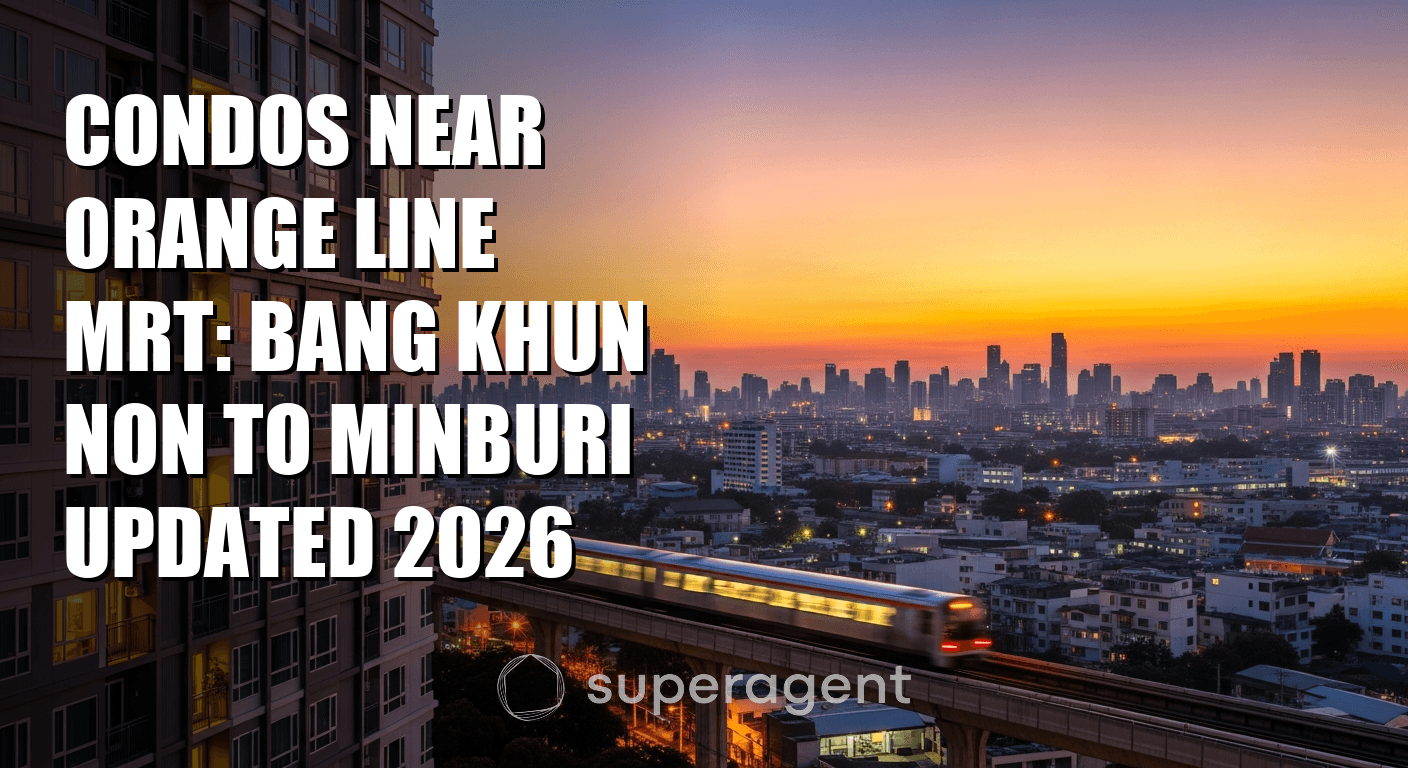
Summary
Find your ideal condo near the Orange Line MRT from Bang Khun Non to Minburi with our 2026 update. Explore คอนโดใกล้รถไฟฟ้าสายสีส้ม options with complete d
If you're hunting for a condo near Bangkok's Orange Line, you're looking at one of the city's smartest rental moves. The MRT Orange Line stretches from Bang Khun Non in the southwest all the way to Min Buri in the northeast, and the neighborhoods along this route have become magnets for expats, young professionals, and families who want decent transport without paying BTS Sukhumvit Line prices. Whether you're commuting to the office, catching flights from Suvarnabhumi, or just want reliable access across the city, living near the Orange Line gets you there without the gridlock stress. Let's walk through what's actually available right now and where your money goes furthest.
Why the Orange Line Matters for Condo Hunters
The Orange Line opened in 2021, and it genuinely changed the rental game for swaths of Bangkok that were previously a hassle to navigate. Before the line launched, neighborhoods like Min Buri, Sena Ruam, and Bang Khun Non were sleepy and car-dependent. Now they're livable without your own vehicle.
The line connects directly to major interchanges. You can change to the BTS at Talad Noi, hop to the Airport Rail Link at Hua Lamphong, or shift to the Blue Line at Talad Noi or Hua Lamphong. That kind of connectivity matters when you're picking where to spend the next year of your life. Average rent for a 1-bedroom condo near Orange Line stations runs between 18,000 and 28,000 THB per month, depending on which neighborhood and how close you actually are to the station.
Bang Khun Non to Senanikom: The Southwest Corridor
Bang Khun Non station sits at the line's southwest terminus, and it's still relatively underdeveloped compared to the northeast stretch. That's not necessarily bad. Rent is cheaper here. You'll find 1-bedroom units starting at 15,000 to 18,000 THB per month in newer mid-rise buildings.
The trade-off is that this area is more residential and further from central Bangkok hotspots. If you're working south of the Chao Phraya or near the airport route, though, Bang Khun Non cuts your commute in half. The neighborhood itself has grown. There's a shopping center, local markets, and honest food stalls. It's where you go if you want breathing room and lower rent, not nightlife and convenience stores on every corner.
Senanikom station, just two stops north, sits in a busier pocket. More office workers live here, which means more competition for units. Expect to pay 20,000 to 25,000 THB for a decent 1-bed in newer condos like those around Rama 2 Road. The area has better restaurants and more young professional vibes than Bang Khun Non.
Rama 9 and Phahon Yothin: The Central Stretch
Rama 9 station is a proper hub. It sits at an interchange with the Blue Line, so you get instant connections to Lumphini, Silom, and the CBD. Because of that convenience, rent climbs here. You're looking at 22,000 to 32,000 THB per month for a decent 1-bedroom, sometimes more for units less than two years old or with premium finishes.
Condos near Rama 9 attract corporate tenants on company housing budgets, which pushes prices up. But the commute payoff is real. From Rama 9 to Silom takes maybe 15 minutes on the train. That's something. Buildings like those on Rama 9 Road near the station tend to be well-maintained and have modern gyms, 24/7 security, and actual parking (not always a given in Bangkok).
Phahon Yothin station, one stop north, is slightly less expensive. You're in a mixed commercial and residential zone with older shophouses rubbing shoulders with newer mid-rise developments. Rent runs 19,000 to 26,000 THB for a 1-bed. The neighborhood feels more authentically Bangkok, less polished, but your money stretches further.
Sena Ruam to Min Buri: The Northeast Stretch
The northeast portion of the Orange Line, from Sena Ruam toward Min Buri, is where you find the best rent-to-space ratios in Bangkok. These neighborhoods are further out, which keeps prices down, but the MRT connection means you're not actually isolated. Sena Ruam station sits in a growing residential belt. You can find 1-bedroom condos for 16,000 to 21,000 THB per month here, and 2-bedroom units for 24,000 to 32,000 THB.
Sena Ruam itself has expanded rapidly in the last three years. New mid-rise condos are going up regularly. The vibe is young families and working professionals who've figured out that living northeast of the city and taking the Orange Line to work saves money and sanity compared to fighting Sukhumvit traffic. There's a proper shopping mall and food courts now, so it's not a sacrifice.
Min Buri, the line's northeast terminus, is the cheapest option on the entire route. You'll find 1-bedroom units for 14,000 to 18,000 THB and 2-bedroom units for 22,000 to 28,000 THB. The catch is you're trading 40 to 50 minutes to central Bangkok for lower rent. It makes sense if you're working northeast of the city or if you value quiet and space over being near the action.
What You're Actually Getting for Your Money
Bangkok condos vary wildly in quality within the same price bracket. Near the Orange Line, your 20,000 THB might get you a modern, small unit in a newer building with a gym and co-working space. Or it might get you a larger, slightly older unit in a solid building without the fancy amenities.
Most Orange Line condos built in the last five years have air conditioning, hot water, decent security, and parking included in rent. Older units sometimes don't include parking, which is annoying because parking separately costs another 1,500 to 3,000 THB per month. Check that detail before you commit. Utilities (electricity, water, internet) typically run 3,000 to 5,000 THB extra per month, though some newer buildings have fixed utility packages.
If you're bringing a family or need a home office, get a 2-bedroom. The jump from 1-bed to 2-bed near most Orange Line stations is only about 5,000 to 8,000 THB per month, and the quality of life difference is significant. You get actual room to breathe.
How to Actually Find Your Place
The standard move is to pick your station based on your commute, then check what's available within walking distance. Most Bangkok commuters consider a 15-minute walk to the station acceptable, which gives you a decent search radius. Google Maps and Bangkok MRT's official site show exact station locations, which is helpful for narrowing down neighborhoods.
Thai property sites like DDproperty and Fazwaz list most available units, though listings can be outdated or duplicate across platforms. For serious hunting, call 5 to 10 buildings directly once you've identified neighborhoods. The building management teams usually have immediate availability and can negotiate on month-to-month rates or longer leases.
Comparison of Key Orange Line Neighborhoods
| Station | 1-Bedroom Rent (THB) | 2-Bedroom Rent (THB) | Commute to CBD (mins) | Neighborhood Vibe |
|---|---|---|---|---|
| Bang Khun Non | 15,000-18,000 | 22,000-28,000 | 45-55 | Quiet, residential, affordable |
| Senanikom | 20,000-25,000 | 28,000-36,000 | 40-50 | Mixed residential, growing |
| Rama 9 | 22,000-32,000 | 32,000-45,000 | 15-20 | Business hub, professional |
| Phahon Yothin | 19,000-26,000 | 26,000-35,000 | 25-35 | Mixed, authentic Bangkok |
| Sena Ruam | 16,000-21,000 | 24,000-32,000 | 30-40 | Young families, expanding |
| Min Buri | 14,000-18,000 | 22,000-28,000 | 45-55 | Affordable, spacious, quiet |
The data above reflects current market rates as of early 2026, based on available listings and rental agreements across each zone. Prices can shift 10 to 15 percent seasonally, with lower rents during Bangkok's hot season (March to May) and higher rates during peak expat arrival months (October to November).
Practical Takeaways for Your Search
Pick your station based on where you'll actually spend your time, not just the cheapest neighborhood. A 30-minute commute you take twice a day adds up to 5 hours a week. That's worth paying a bit more to live closer to work or to the parts of Bangkok you actually like. If you work in Silom or Lumphini, Rama 9 is worth the extra cost. If you're northeast of the city or value affordability over convenience, Min Buri or Sena Ruam deliver real value.
Visit buildings in person before committing. You want to see the actual unit you're renting, check water pressure, test the air conditioning, and confirm the walk to the station matches what you expect. Don't rent based on floor plans and photos. Check reviews on Google Maps for individual buildings if they're listed, and ask current tenants directly about the building and neighborhood if you can connect with them.
Negotiate lease terms. Most Thai building owners are open to discounts for longer commitments. If you're willing to sign a 12-month lease, you might get 5 to 10 percent off the quoted monthly rate. If you want flexibility, expect to pay a slight premium for month-to-month or 3-month terms.
Living near Bangkok's Orange Line is genuinely the move for professionals and families who want reliable transport without paying BTS Line premiums. Whether you land in Bang Khun Non, Rama 9, or Min Buri depends on your commute and budget, but across the entire route you're getting access to a modern transit system that works. Once you've narrowed down your neighborhood, browse available units on Superagent and filter by station to see what's actually available near your priority MRT stops. The platform makes it easy to compare options across multiple buildings without the usual back-and-forth calls.
If you're hunting for a condo near Bangkok's Orange Line, you're looking at one of the city's smartest rental moves. The MRT Orange Line stretches from Bang Khun Non in the southwest all the way to Min Buri in the northeast, and the neighborhoods along this route have become magnets for expats, young professionals, and families who want decent transport without paying BTS Sukhumvit Line prices. Whether you're commuting to the office, catching flights from Suvarnabhumi, or just want reliable access across the city, living near the Orange Line gets you there without the gridlock stress. Let's walk through what's actually available right now and where your money goes furthest.
Why the Orange Line Matters for Condo Hunters
The Orange Line opened in 2021, and it genuinely changed the rental game for swaths of Bangkok that were previously a hassle to navigate. Before the line launched, neighborhoods like Min Buri, Sena Ruam, and Bang Khun Non were sleepy and car-dependent. Now they're livable without your own vehicle.
The line connects directly to major interchanges. You can change to the BTS at Talad Noi, hop to the Airport Rail Link at Hua Lamphong, or shift to the Blue Line at Talad Noi or Hua Lamphong. That kind of connectivity matters when you're picking where to spend the next year of your life. Average rent for a 1-bedroom condo near Orange Line stations runs between 18,000 and 28,000 THB per month, depending on which neighborhood and how close you actually are to the station.
Bang Khun Non to Senanikom: The Southwest Corridor
Bang Khun Non station sits at the line's southwest terminus, and it's still relatively underdeveloped compared to the northeast stretch. That's not necessarily bad. Rent is cheaper here. You'll find 1-bedroom units starting at 15,000 to 18,000 THB per month in newer mid-rise buildings.
The trade-off is that this area is more residential and further from central Bangkok hotspots. If you're working south of the Chao Phraya or near the airport route, though, Bang Khun Non cuts your commute in half. The neighborhood itself has grown. There's a shopping center, local markets, and honest food stalls. It's where you go if you want breathing room and lower rent, not nightlife and convenience stores on every corner.
Senanikom station, just two stops north, sits in a busier pocket. More office workers live here, which means more competition for units. Expect to pay 20,000 to 25,000 THB for a decent 1-bed in newer condos like those around Rama 2 Road. The area has better restaurants and more young professional vibes than Bang Khun Non.
Rama 9 and Phahon Yothin: The Central Stretch
Rama 9 station is a proper hub. It sits at an interchange with the Blue Line, so you get instant connections to Lumphini, Silom, and the CBD. Because of that convenience, rent climbs here. You're looking at 22,000 to 32,000 THB per month for a decent 1-bedroom, sometimes more for units less than two years old or with premium finishes.
Condos near Rama 9 attract corporate tenants on company housing budgets, which pushes prices up. But the commute payoff is real. From Rama 9 to Silom takes maybe 15 minutes on the train. That's something. Buildings like those on Rama 9 Road near the station tend to be well-maintained and have modern gyms, 24/7 security, and actual parking (not always a given in Bangkok).
Phahon Yothin station, one stop north, is slightly less expensive. You're in a mixed commercial and residential zone with older shophouses rubbing shoulders with newer mid-rise developments. Rent runs 19,000 to 26,000 THB for a 1-bed. The neighborhood feels more authentically Bangkok, less polished, but your money stretches further.
Sena Ruam to Min Buri: The Northeast Stretch
The northeast portion of the Orange Line, from Sena Ruam toward Min Buri, is where you find the best rent-to-space ratios in Bangkok. These neighborhoods are further out, which keeps prices down, but the MRT connection means you're not actually isolated. Sena Ruam station sits in a growing residential belt. You can find 1-bedroom condos for 16,000 to 21,000 THB per month here, and 2-bedroom units for 24,000 to 32,000 THB.
Sena Ruam itself has expanded rapidly in the last three years. New mid-rise condos are going up regularly. The vibe is young families and working professionals who've figured out that living northeast of the city and taking the Orange Line to work saves money and sanity compared to fighting Sukhumvit traffic. There's a proper shopping mall and food courts now, so it's not a sacrifice.
Min Buri, the line's northeast terminus, is the cheapest option on the entire route. You'll find 1-bedroom units for 14,000 to 18,000 THB and 2-bedroom units for 22,000 to 28,000 THB. The catch is you're trading 40 to 50 minutes to central Bangkok for lower rent. It makes sense if you're working northeast of the city or if you value quiet and space over being near the action.
What You're Actually Getting for Your Money
Bangkok condos vary wildly in quality within the same price bracket. Near the Orange Line, your 20,000 THB might get you a modern, small unit in a newer building with a gym and co-working space. Or it might get you a larger, slightly older unit in a solid building without the fancy amenities.
Most Orange Line condos built in the last five years have air conditioning, hot water, decent security, and parking included in rent. Older units sometimes don't include parking, which is annoying because parking separately costs another 1,500 to 3,000 THB per month. Check that detail before you commit. Utilities (electricity, water, internet) typically run 3,000 to 5,000 THB extra per month, though some newer buildings have fixed utility packages.
Talk to us about renting
Share your details and keep reading — we’ll get back to you.
If you're bringing a family or need a home office, get a 2-bedroom. The jump from 1-bed to 2-bed near most Orange Line stations is only about 5,000 to 8,000 THB per month, and the quality of life difference is significant. You get actual room to breathe.
How to Actually Find Your Place
The standard move is to pick your station based on your commute, then check what's available within walking distance. Most Bangkok commuters consider a 15-minute walk to the station acceptable, which gives you a decent search radius. Google Maps and Bangkok MRT's official site show exact station locations, which is helpful for narrowing down neighborhoods.
Thai property sites like DDproperty and Fazwaz list most available units, though listings can be outdated or duplicate across platforms. For serious hunting, call 5 to 10 buildings directly once you've identified neighborhoods. The building management teams usually have immediate availability and can negotiate on month-to-month rates or longer leases.
Comparison of Key Orange Line Neighborhoods
| Station | 1-Bedroom Rent (THB) | 2-Bedroom Rent (THB) | Commute to CBD (mins) | Neighborhood Vibe |
|---|---|---|---|---|
| Bang Khun Non | 15,000-18,000 | 22,000-28,000 | 45-55 | Quiet, residential, affordable |
| Senanikom | 20,000-25,000 | 28,000-36,000 | 40-50 | Mixed residential, growing |
| Rama 9 | 22,000-32,000 | 32,000-45,000 | 15-20 | Business hub, professional |
| Phahon Yothin | 19,000-26,000 | 26,000-35,000 | 25-35 | Mixed, authentic Bangkok |
| Sena Ruam | 16,000-21,000 | 24,000-32,000 | 30-40 | Young families, expanding |
| Min Buri | 14,000-18,000 | 22,000-28,000 | 45-55 | Affordable, spacious, quiet |
The data above reflects current market rates as of early 2026, based on available listings and rental agreements across each zone. Prices can shift 10 to 15 percent seasonally, with lower rents during Bangkok's hot season (March to May) and higher rates during peak expat arrival months (October to November).
Practical Takeaways for Your Search
Pick your station based on where you'll actually spend your time, not just the cheapest neighborhood. A 30-minute commute you take twice a day adds up to 5 hours a week. That's worth paying a bit more to live closer to work or to the parts of Bangkok you actually like. If you work in Silom or Lumphini, Rama 9 is worth the extra cost. If you're northeast of the city or value affordability over convenience, Min Buri or Sena Ruam deliver real value.
Visit buildings in person before committing. You want to see the actual unit you're renting, check water pressure, test the air conditioning, and confirm the walk to the station matches what you expect. Don't rent based on floor plans and photos. Check reviews on Google Maps for individual buildings if they're listed, and ask current tenants directly about the building and neighborhood if you can connect with them.
Negotiate lease terms. Most Thai building owners are open to discounts for longer commitments. If you're willing to sign a 12-month lease, you might get 5 to 10 percent off the quoted monthly rate. If you want flexibility, expect to pay a slight premium for month-to-month or 3-month terms.
Living near Bangkok's Orange Line is genuinely the move for professionals and families who want reliable transport without paying BTS Line premiums. Whether you land in Bang Khun Non, Rama 9, or Min Buri depends on your commute and budget, but across the entire route you're getting access to a modern transit system that works. Once you've narrowed down your neighborhood, browse available units on Superagent and filter by station to see what's actually available near your priority MRT stops. The platform makes it easy to compare options across multiple buildings without the usual back-and-forth calls.
Share this article
Properties you may like
![[For Rent] CONDO I Aguston Sukhumvit 22 I Pet Friendly I 2 Beds I 2 Baths I Rent 55,000THB/mo](/_next/image?url=https%3A%2F%2Fstorage.googleapis.com%2Fsuperagent-web%2Fattachments%2Flistings%2F2266%2Fd3afcd25-6b79-46cb-9f1f-396acdc3dd10-955-3.jpg&w=3840&q=75)
฿55,000
2 Bed295 sqm
[For Rent] CONDO I Aguston Sukhumvit 22 I Pet Friendly I 2 Beds I 2 Baths I Rent 55,000THB/mo
Phrom Phong
Condo![[For Rent] CONDO I SUPALAI PLACE Sukhumvit 39 I 2 Beds I 2 Baths (1 Jacuzzi) I 55,555THB/mo](/_next/image?url=https%3A%2F%2Fstorage.googleapis.com%2Fsuperagent-web%2Fattachments%2Flistings%2F6743%2Fba530743-48b9-4ac6-92d3-c2247e743cf6-01-supalai-place-skv39-2b-link-heaven.jpg&w=3840&q=75)
฿55,555
2 Bed2142 sqm
[For Rent] CONDO I SUPALAI PLACE Sukhumvit 39 I 2 Beds I 2 Baths (1 Jacuzzi) I 55,555THB/mo
Phrom Phong
Condo![[For Rent] CONDO I Maru Ekkamai 2 I Pet friendly I 2 Beds I 2 Baths I 68,000 THB/mo](/_next/image?url=https%3A%2F%2Fstorage.googleapis.com%2Fsuperagent-web%2Fattachments%2Flistings%2F6602%2F9f1d8f71-ee43-435f-9a44-da16c4092c92-968-1.jpg&w=3840&q=75)
฿68,000
2 Bed360 sqm
[For Rent] CONDO I Maru Ekkamai 2 I Pet friendly I 2 Beds I 2 Baths I 68,000 THB/mo
Ekkamai
Condo![[For Rent] CONDO I Noble State 39 I 2 Beds I 2 Baths I 63,000THB/mo](/_next/image?url=https%3A%2F%2Fstorage.googleapis.com%2Fsuperagent-web%2Fattachments%2Flistings%2F2237%2F60eb58f3-eae5-41ed-a80b-406e004f05d8-940-1.jpg&w=3840&q=75)
฿63,000
2 Bed260 sqm
[For Rent] CONDO I Noble State 39 I 2 Beds I 2 Baths I 63,000THB/mo
Phrom Phong
Condo![[For Rent] CONDO I Rhythm Sukhumvit 36-38 I 2 Beds I 2 Baths I 38,999THB/mo](/_next/image?url=https%3A%2F%2Fstorage.googleapis.com%2Fsuperagent-web%2Fattachments%2Flistings%2F1788%2F942a0215-4128-4c2c-a064-f607e84e7aa4-656-2.jpg&w=3840&q=75)
฿38,999
2 Bed256 sqm
[For Rent] CONDO I Rhythm Sukhumvit 36-38 I 2 Beds I 2 Baths I 38,999THB/mo
Thonglor
Condo![[For Rent] CONDO I CLOUD Thonglor-Phetchaburi I 1 Bed I 1 Bath I 22,500THB/mo](/_next/image?url=https%3A%2F%2Fstorage.googleapis.com%2Fsuperagent-web%2Fattachments%2Flistings%2F6742%2F6cef5361-0dac-4dba-98f1-b0d187559c84-1118-1.jpg&w=3840&q=75)
฿22,500
1 Bed132 sqm
[For Rent] CONDO I CLOUD Thonglor-Phetchaburi I 1 Bed I 1 Bath I 22,500THB/mo
Thonglor
Condo![[For Rent] CONDO I City Smart Sukhumvit 18 I 3 Beds I 3 Baths I 65,000mo/THB](/_next/image?url=https%3A%2F%2Fstorage.googleapis.com%2Fsuperagent-web%2Fattachments%2Flistings%2F6741%2Fd371c89d-a913-42c4-a673-e540afae4f46-1116-1.jpg&w=3840&q=75)
฿65,000
3 Bed3125 sqm
[For Rent] CONDO I City Smart Sukhumvit 18 I 3 Beds I 3 Baths I 65,000mo/THB
Condo![[For Rent] CONDO I The Coast Bangkok I 1 Bed I 1 Bath I 20,000mo/THB](/_next/image?url=https%3A%2F%2Fstorage.googleapis.com%2Fsuperagent-web%2Fattachments%2Flistings%2F6740%2F498477ce-4ffa-4e4c-ab08-0e565d9c4bbe-1115-3.jpg&w=3840&q=75)
฿20,000
1 Bed146 sqm
[For Rent] CONDO I The Coast Bangkok I 1 Bed I 1 Bath I 20,000mo/THB
Bang Na
Condo![[For Rent] CONDO I IDEO Sukhumvit-RAMA 4 I 2 Beds I 2 Baths I 55,000mo/THB](/_next/image?url=https%3A%2F%2Fstorage.googleapis.com%2Fsuperagent-web%2Fattachments%2Flistings%2F6739%2F15df221d-5b8e-497c-b7ce-a6b9b6412cab-1113-1.jpg&w=3840&q=75)
฿55,000
2 Bed265 sqm
[For Rent] CONDO I IDEO Sukhumvit-RAMA 4 I 2 Beds I 2 Baths I 55,000mo/THB
Phra Khanong
Condo![[For Rent] CONDO I Downtown 49 I Pet Friendly I 1 Bed I 1 Bath I 23,000mo/THB](/_next/image?url=https%3A%2F%2Fstorage.googleapis.com%2Fsuperagent-web%2Fattachments%2Flistings%2F6738%2F11cf2ffe-1f01-4ccc-991c-2ad608f1ba73-1112-1.jpg&w=3840&q=75)
฿23,000
1 Bed135 sqm
[For Rent] CONDO I Downtown 49 I Pet Friendly I 1 Bed I 1 Bath I 23,000mo/THB
Thonglor
CondoMore like this
 In Guides · Superagent EditorialHidden Costs of Renting a Condo in Bangkok Nobody Warns You AboutBangkok condo rent looks affordable until month one hits. Here are the real costs beyond the headline figure that catch most renters off guard.25 May 20261 min read
 In Guides · Superagent EditorialWhat a Long-Vacant Bangkok Condo Unit Is Actually Telling YouA Bangkok condo vacant for months signals overpricing, landlord issues, or real problems. Here is how to read the signs.25 May 20261 min read
 In Guides · Superagent EditorialRed Flags in a Bangkok Rental Contract to Watch Out ForBangkok rental contracts often hide risky clauses. Here are the red flags every tenant must catch before signing any lease.25 May 20261 min read
 In Guides · Superagent EditorialWorking Online from a Condo: How to Choose the Perfect Room for ProductivityLearn how to choose the best condo room for working online with tips on lighting, noise, and furniture setup to maximize productivity.9 May 20261 min read