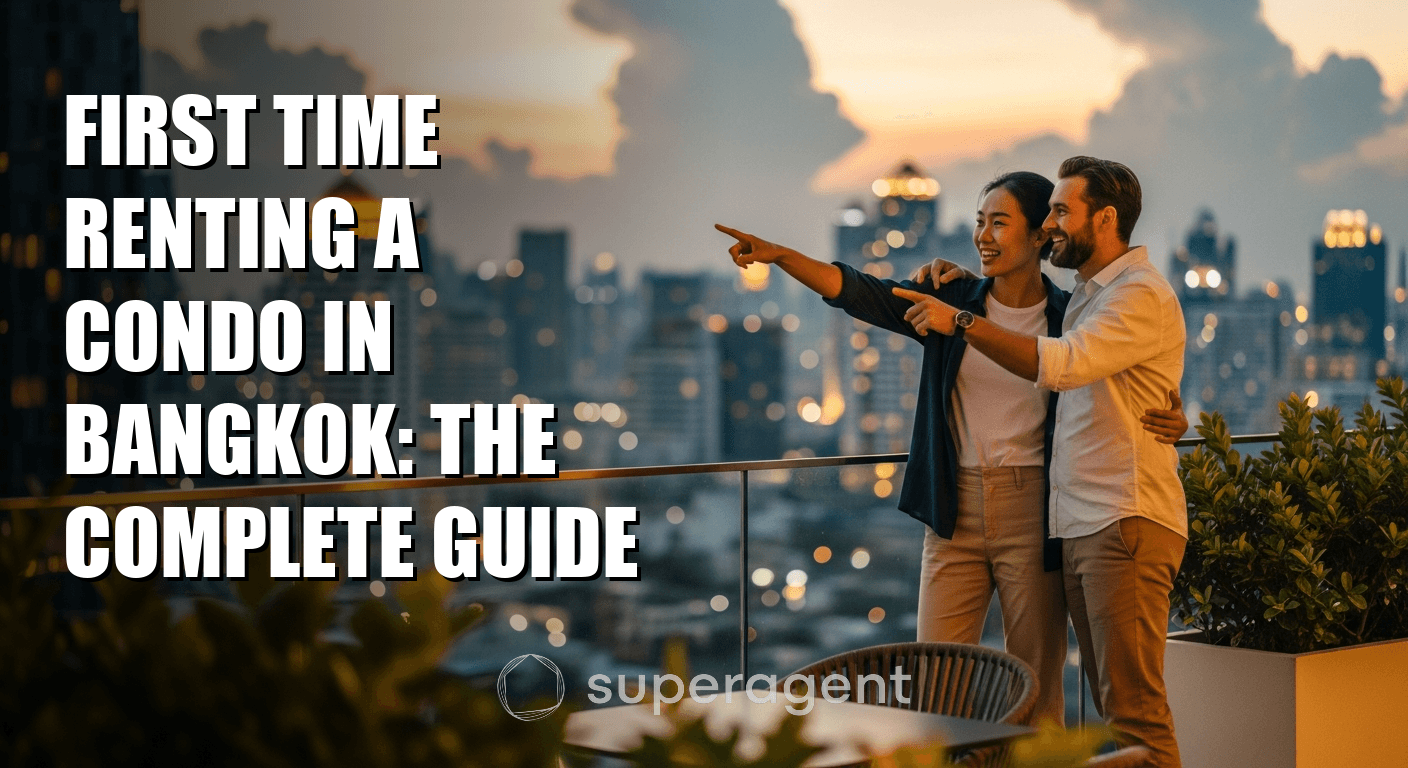
First Time Renting a Condo in Bangkok: The Complete Guide
Guides
First Time Renting a Condo in Bangkok: The Complete Guide
Everything you need to know before signing your first lease
Summary
วิธีเช่าคอนโดครั้งแรก doesn't have to be complicated. This guide covers contracts, costs, inspections and insider tips for Bangkok renters.
You've decided to move to Bangkok and rent your first condo. Maybe you're starting a new job, or you've fallen in love with the city and want to stay. Either way, the Bangkok rental market can feel overwhelming if you don't know what to expect. Prices swing wildly depending on location, amenities differ wildly from building to building, and contracts can hide surprises if you're not careful. The good news? Once you understand the basic rules of the game, renting your first condo in Bangkok is straightforward, and you'll feel confident making a decision that actually works for your life.
Understand Your Budget and What It Gets You
The first mistake people make is guessing how much they should spend. In Bangkok, rental prices vary so much that knowing your budget is actually the foundation of everything else. A 1-bedroom condo in Silom costs nothing like a 1-bedroom in Thonglor, even if they're similar sizes and equally new.
According to DDproperty, average rent for a 1-bedroom condo in central Bangkok ranges from 25,000 to 35,000 Thai baht per month in neighborhoods like Phrom Phong and Asok, while the same unit in trendy areas like Thonglor or Ekkamai can jump to 40,000 to 60,000 baht. In outer areas like Bang Na or Rama 9, you might find decent 1-bedrooms for 15,000 to 22,000 baht. A 2-bedroom in a decent mid-range building near a BTS station will typically run 35,000 to 55,000 baht, depending on the neighborhood.
The key is deciding upfront what percentage of your income you're comfortable spending on rent, then working backward to see what that actually buys in your preferred area. If you work near Ploenchit BTS and want to stay close, set a realistic range. If you're flexible on location and willing to commute 20 minutes, you'll have more options and better value.
Location Matters More Than You Think, Especially BTS and MRT Access
This is where most first-time renters get tripped up. You'll see an amazing condo at an amazing price, fall in love with it, sign the lease, and then realize your morning commute takes 45 minutes through traffic. Location in Bangkok isn't just about the neighborhood name. It's about your daily movement through the city.
Being within walking distance of a BTS Skytrain or MRT Bangkok station changes everything about your life here. If you work in the CBD near Silom or Ploenchit, living near Chong Nonsi or Phloen Chit stations eliminates a 30-minute slog through traffic. If your office is in Bang Na, being near a purple line MRT stop saves you hours every week. Check the BTS route map and MRT route map seriously. An extra 5,000 baht per month for a condo two minutes from a BTS station is honestly a smart investment, not extravagance.
A real example: last year, a new expat rented a spacious 2-bedroom in a nice building on Soi 26, Sukhumvit, for 40,000 baht. The area looked good on a map, but the nearest BTS was a 15-minute walk, and her office was in Ekkamai. She paid for a motorbike taxi twice daily, which cost an extra 250 baht per day, plus stress. By month four, she'd spent more on transport than the rent difference would have cost for a unit nearer the BTS.
Know the Basic Lease Requirements and What Landlords Actually Ask For
When you find a condo you like, the landlord will almost always ask for two things: deposit and advance rent. Standard practice in Bangkok is one month's rent as deposit and one month's rent paid upfront for your first month. Some buildings ask for two months deposit, especially if you're a first-time tenant or on a short lease term. These are non-negotiable for most properties, so budget accordingly.
You'll also need to bring your passport, proof of income (a recent contract letter or bank statement works), and sometimes a reference from your previous landlord. Foreign nationals typically don't need a work permit copy just to sign a residential lease, but Immigration rules can shift, so it's worth asking the landlord upfront what they need.
The lease itself is usually a one-year contract, written in Thai and English. Read the English version carefully, especially clauses about who pays for repairs, whether you can sublet, and what happens when you leave. Many leases state that minor repairs under 5,000 baht are your responsibility. Some require you to paint walls back to original color when you move out. These details matter. If you don't speak Thai fluently, ask the landlord or a local friend to walk through the contract with you before signing.
Check the Utilities, Common Fees, and Hidden Monthly Costs
The rent price you see advertised is almost never the total you'll pay each month. Most Bangkok condos charge common area maintenance fees (called "common charges" or "sinking fund") that cover security, lobby cleaning, elevator maintenance, and water pipes. These usually range from 2,000 to 5,000 baht per month and are separate from rent.
You'll also pay electricity and water directly to the meter. Electricity in a 1-bedroom averages 1,500 to 3,000 baht monthly, depending on air conditioning use. Tap water is typically 100 to 300 baht per month. Internet ranges from 600 to 1,200 baht, depending on the building's agreements with providers like AIS or True. Some condos have a building-wide internet contract where you split the cost; others let you choose your own provider. Ask about this before you sign.
So if you're renting a 30,000 baht condo with 3,500 baht common charges, 2,000 baht electricity, and 800 baht internet, your actual monthly commitment is closer to 36,300 baht, not 30,000. First-time renters often forget these numbers, then get shocked by their first full month's expenses.
Visit the Building at Different Times and Check Real Conditions
Most people view a condo once, see the unit is clean and the lobby looks nice, and decide immediately. That's a mistake. You need to visit at least twice. Go once in the morning around 7 am to see how crowded the elevator gets and how much noise exists from the building. Go again in the evening, maybe around 6 or 7 pm, to check if the neighborhood feels safe and if the building security actually functions.
Walk around the building. Check if the parking area is secure. Test the water pressure in the unit's bathroom. Ask to see a previous month's common charge bill so you know the real numbers, not estimates. Talk to neighbors if you can. Look at the condition of hallways and stairwells. A beautiful unit in a poorly-maintained building will disappoint you fast.
Bring a checklist. Photograph everything in the unit before you move in. Document any scratches, stains, or broken items with time-stamped photos. Send these to the landlord via email with the message "for our records upon move-in." This protects you when you leave, because landlords sometimes try to charge you for pre-existing damage.
Understand the Actual Process and Timeline
Once you've agreed on a unit, expect the process to take 3 to 7 days from agreement to keys in hand. The landlord will prepare the contract, you'll sign it in person (some landlords ask you to sign at their office or the building's management office), and you'll pay the deposit and first month's rent. Only after payment cleared do you get the keys and can move in.
During this time, the building's management office will register your tenancy and get you set up for utilities. You'll need to open an electricity account with the power company, a water account, and arrange internet. Don't assume these are automatic. You might need to bring your passport and lease copy to each utility office to register. Some buildings help with this; others don't. Ask beforehand.
The actual lease period is usually 12 months. Near the end of month 11, you and the landlord should discuss whether you're renewing or leaving. If you're leaving, give at least 30 days notice as stated in your contract. Arrange a final walkthrough inspection with the landlord to confirm there's no damage beyond normal wear and tear. Once cleared, your deposit should be returned to your bank account within 7 to 14 days.
- Silom / Sathon: 25,000 - 35,000 THB | Chong Nonsi, Sala Daeng BTS | CBD workers, nightlife
- Thonglor / Ekkamai: 40,000 - 60,000 THB | Thong Lor BTS, multiple lines | Trendy lifestyle, dining
- Sukhumvit 20-40: 28,000 - 45,000 THB | Asok, Phrom Phong, Nana BTS | Expats, work + nightlife mix
- Bang Na: 15,000 - 25,000 THB | Bang Na BTS, purple MRT | Value hunters, east side workers
- Rama 9 / Rama 9 Expressway: 18,000 - 28,000 THB | Rama 9 MRT station | Budget-conscious, quiet
Renting your first condo in Bangkok doesn't require luck. It requires doing your homework upfront. Know your budget, prioritize location and transport links, read your lease carefully, and understand the hidden costs. Visit the building twice, check references or reviews online, and document everything before you move in. The landlord-tenant relationship in Bangkok works smoothly when both sides know the rules and expectations are clear from day one.
When you're ready to start your search and want to find verified listings with photos, reviews, and transparent pricing all in one place, check out Superagent. We've built our platform specifically for people like you, first-time renters in Bangkok who want accurate information, real neighborhoods details, and no surprises. Your perfect condo is out there. You just need to search smart.
You've decided to move to Bangkok and rent your first condo. Maybe you're starting a new job, or you've fallen in love with the city and want to stay. Either way, the Bangkok rental market can feel overwhelming if you don't know what to expect. Prices swing wildly depending on location, amenities differ wildly from building to building, and contracts can hide surprises if you're not careful. The good news? Once you understand the basic rules of the game, renting your first condo in Bangkok is straightforward, and you'll feel confident making a decision that actually works for your life.
Understand Your Budget and What It Gets You
The first mistake people make is guessing how much they should spend. In Bangkok, rental prices vary so much that knowing your budget is actually the foundation of everything else. A 1-bedroom condo in Silom costs nothing like a 1-bedroom in Thonglor, even if they're similar sizes and equally new.
According to DDproperty, average rent for a 1-bedroom condo in central Bangkok ranges from 25,000 to 35,000 Thai baht per month in neighborhoods like Phrom Phong and Asok, while the same unit in trendy areas like Thonglor or Ekkamai can jump to 40,000 to 60,000 baht. In outer areas like Bang Na or Rama 9, you might find decent 1-bedrooms for 15,000 to 22,000 baht. A 2-bedroom in a decent mid-range building near a BTS station will typically run 35,000 to 55,000 baht, depending on the neighborhood.
The key is deciding upfront what percentage of your income you're comfortable spending on rent, then working backward to see what that actually buys in your preferred area. If you work near Ploenchit BTS and want to stay close, set a realistic range. If you're flexible on location and willing to commute 20 minutes, you'll have more options and better value.
Location Matters More Than You Think, Especially BTS and MRT Access
This is where most first-time renters get tripped up. You'll see an amazing condo at an amazing price, fall in love with it, sign the lease, and then realize your morning commute takes 45 minutes through traffic. Location in Bangkok isn't just about the neighborhood name. It's about your daily movement through the city.
Continue reading after that.
Looking for a condo
to rent?
Leave your name and phone. We'll follow up while you keep reading.
100% Secure
Fast Response
Free Consultation
Being within walking distance of a BTS Skytrain or MRT Bangkok station changes everything about your life here. If you work in the CBD near Silom or Ploenchit, living near Chong Nonsi or Phloen Chit stations eliminates a 30-minute slog through traffic. If your office is in Bang Na, being near a purple line MRT stop saves you hours every week. Check the BTS route map and MRT route map seriously. An extra 5,000 baht per month for a condo two minutes from a BTS station is honestly a smart investment, not extravagance.
A real example: last year, a new expat rented a spacious 2-bedroom in a nice building on Soi 26, Sukhumvit, for 40,000 baht. The area looked good on a map, but the nearest BTS was a 15-minute walk, and her office was in Ekkamai. She paid for a motorbike taxi twice daily, which cost an extra 250 baht per day, plus stress. By month four, she'd spent more on transport than the rent difference would have cost for a unit nearer the BTS.
Know the Basic Lease Requirements and What Landlords Actually Ask For
When you find a condo you like, the landlord will almost always ask for two things: deposit and advance rent. Standard practice in Bangkok is one month's rent as deposit and one month's rent paid upfront for your first month. Some buildings ask for two months deposit, especially if you're a first-time tenant or on a short lease term. These are non-negotiable for most properties, so budget accordingly.
You'll also need to bring your passport, proof of income (a recent contract letter or bank statement works), and sometimes a reference from your previous landlord. Foreign nationals typically don't need a work permit copy just to sign a residential lease, but Immigration rules can shift, so it's worth asking the landlord upfront what they need.
The lease itself is usually a one-year contract, written in Thai and English. Read the English version carefully, especially clauses about who pays for repairs, whether you can sublet, and what happens when you leave. Many leases state that minor repairs under 5,000 baht are your responsibility. Some require you to paint walls back to original color when you move out. These details matter. If you don't speak Thai fluently, ask the landlord or a local friend to walk through the contract with you before signing.
Check the Utilities, Common Fees, and Hidden Monthly Costs
The rent price you see advertised is almost never the total you'll pay each month. Most Bangkok condos charge common area maintenance fees (called "common charges" or "sinking fund") that cover security, lobby cleaning, elevator maintenance, and water pipes. These usually range from 2,000 to 5,000 baht per month and are separate from rent.
You'll also pay electricity and water directly to the meter. Electricity in a 1-bedroom averages 1,500 to 3,000 baht monthly, depending on air conditioning use. Tap water is typically 100 to 300 baht per month. Internet ranges from 600 to 1,200 baht, depending on the building's agreements with providers like AIS or True. Some condos have a building-wide internet contract where you split the cost; others let you choose your own provider. Ask about this before you sign.
So if you're renting a 30,000 baht condo with 3,500 baht common charges, 2,000 baht electricity, and 800 baht internet, your actual monthly commitment is closer to 36,300 baht, not 30,000. First-time renters often forget these numbers, then get shocked by their first full month's expenses.
Visit the Building at Different Times and Check Real Conditions
Most people view a condo once, see the unit is clean and the lobby looks nice, and decide immediately. That's a mistake. You need to visit at least twice. Go once in the morning around 7 am to see how crowded the elevator gets and how much noise exists from the building. Go again in the evening, maybe around 6 or 7 pm, to check if the neighborhood feels safe and if the building security actually functions.
Walk around the building. Check if the parking area is secure. Test the water pressure in the unit's bathroom. Ask to see a previous month's common charge bill so you know the real numbers, not estimates. Talk to neighbors if you can. Look at the condition of hallways and stairwells. A beautiful unit in a poorly-maintained building will disappoint you fast.
Bring a checklist. Photograph everything in the unit before you move in. Document any scratches, stains, or broken items with time-stamped photos. Send these to the landlord via email with the message "for our records upon move-in." This protects you when you leave, because landlords sometimes try to charge you for pre-existing damage.
Continue reading after that.
Looking for a condo
to rent?
Leave your name and phone. We'll follow up while you keep reading.
100% Secure
Fast Response
Free Consultation
Understand the Actual Process and Timeline
Once you've agreed on a unit, expect the process to take 3 to 7 days from agreement to keys in hand. The landlord will prepare the contract, you'll sign it in person (some landlords ask you to sign at their office or the building's management office), and you'll pay the deposit and first month's rent. Only after payment cleared do you get the keys and can move in.
During this time, the building's management office will register your tenancy and get you set up for utilities. You'll need to open an electricity account with the power company, a water account, and arrange internet. Don't assume these are automatic. You might need to bring your passport and lease copy to each utility office to register. Some buildings help with this; others don't. Ask beforehand.
The actual lease period is usually 12 months. Near the end of month 11, you and the landlord should discuss whether you're renewing or leaving. If you're leaving, give at least 30 days notice as stated in your contract. Arrange a final walkthrough inspection with the landlord to confirm there's no damage beyond normal wear and tear. Once cleared, your deposit should be returned to your bank account within 7 to 14 days.
- Silom / Sathon: 25,000 - 35,000 THB | Chong Nonsi, Sala Daeng BTS | CBD workers, nightlife
- Thonglor / Ekkamai: 40,000 - 60,000 THB | Thong Lor BTS, multiple lines | Trendy lifestyle, dining
- Sukhumvit 20-40: 28,000 - 45,000 THB | Asok, Phrom Phong, Nana BTS | Expats, work + nightlife mix
- Bang Na: 15,000 - 25,000 THB | Bang Na BTS, purple MRT | Value hunters, east side workers
- Rama 9 / Rama 9 Expressway: 18,000 - 28,000 THB | Rama 9 MRT station | Budget-conscious, quiet
Renting your first condo in Bangkok doesn't require luck. It requires doing your homework upfront. Know your budget, prioritize location and transport links, read your lease carefully, and understand the hidden costs. Visit the building twice, check references or reviews online, and document everything before you move in. The landlord-tenant relationship in Bangkok works smoothly when both sides know the rules and expectations are clear from day one.
When you're ready to start your search and want to find verified listings with photos, reviews, and transparent pricing all in one place, check out Superagent. We've built our platform specifically for people like you, first-time renters in Bangkok who want accurate information, real neighborhoods details, and no surprises. Your perfect condo is out there. You just need to search smart.
Share this article
Properties you may like
![[For Rent] CONDO I Skyrise Avenue Sukhumvit 64 I 2 Beds I 2 Baths I 27,000THB/mo](/_next/image?url=https%3A%2F%2Fstorage.googleapis.com%2Fsuperagent-web%2Fattachments%2Flistings%2F2001%2F670f91de-c251-4e81-971c-8e30ed2158cd-screenshot-2026-07-05-at-11.38.53-pm.png&w=3840&q=75)
฿27,000
2 Bed252 sqm
[For Rent] CONDO I Skyrise Avenue Sukhumvit 64 I 2 Beds I 2 Baths I 27,000THB/mo
Punnawithi
Condo![[For Rent] CONDO I Park Origin Ratchathewi I Duplex I 2 Beds I 1 Bath I 32,000THB/mo](/_next/image?url=https%3A%2F%2Fstorage.googleapis.com%2Fsuperagent-web%2Fattachments%2Flistings%2F6896%2Fb79a7d21-7533-4b0d-bb19-762ebfafab62-1318-6.jpg&w=3840&q=75)
฿32,000
2 Bed135.9 sqm
[For Rent] CONDO I Park Origin Ratchathewi I Duplex I 2 Beds I 1 Bath I 32,000THB/mo
Ratchathewi
Condo![[For Rent] CONDO I Park Origin Phayathai I Studio I 1 Bath I 28,000THB/mo](/_next/image?url=https%3A%2F%2Fstorage.googleapis.com%2Fsuperagent-web%2Fattachments%2Flistings%2F6757%2Fb226df93-94c6-46fa-aeba-ebfadc7f81b8-1000006042.jpg&w=3840&q=75)
฿28,000
Studio129 sqm
[For Rent] CONDO I Park Origin Phayathai I Studio I 1 Bath I 28,000THB/mo
Phaya Thai
Condo![[For Rent] CONDO I Ideo Mobi Sukhumvit 81 I Duplex I 1 Bed I 1 Bath I 28,000THB/mo](/_next/image?url=https%3A%2F%2Fstorage.googleapis.com%2Fsuperagent-web%2Fattachments%2Flistings%2F1849%2Fc8b2c033-3b5f-4615-b2b0-4972f40141f0-705-13.jpg&w=3840&q=75)
฿28,000
1 Bed143 sqm
[For Rent] CONDO I Ideo Mobi Sukhumvit 81 I Duplex I 1 Bed I 1 Bath I 28,000THB/mo
On Nut
Condo![[For Rent] CONDO I Siamese Sukhumvit 48 I 1 Bed I 1 Bath I 28,000THB/mo](/_next/image?url=https%3A%2F%2Fstorage.googleapis.com%2Fsuperagent-web%2Fattachments%2Flistings%2F6841%2Febc2dce2-2e9b-4e6d-a01c-0cfa619dfa13-1231-6.jpg&w=3840&q=75)
฿28,000
1 Bed144 sqm
[For Rent] CONDO I Siamese Sukhumvit 48 I 1 Bed I 1 Bath I 28,000THB/mo
Condo![[For Rent] CONDO I Ashton Asoke I 1 Bed I 1 Bath I 22,000THB/mo](/_next/image?url=https%3A%2F%2Fstorage.googleapis.com%2Fsuperagent-web%2Fattachments%2Flistings%2F6802%2Fe06b9b73-1207-414a-ab04-1685de0c7eaa-20220808_153124_0.jpg&w=3840&q=75)
฿22,000
1 Bed134 sqm
[For Rent] CONDO I Ashton Asoke I 1 Bed I 1 Bath I 22,000THB/mo
Asoke
Condo![[For Rent] CONDO I HQ Thonglor Soi 4 I 1 Bed I 1 Bath I 35,000 THB/mo](/_next/image?url=https%3A%2F%2Fstorage.googleapis.com%2Fsuperagent-web%2Fattachments%2Flistings%2F1445%2F72352585-1bc2-41a8-bd62-ddcbf8189fe9-376-5.jpg&w=3840&q=75)
฿35,000
1 Bed143.6 sqm
[For Rent] CONDO I HQ Thonglor Soi 4 I 1 Bed I 1 Bath I 35,000 THB/mo
Thonglor
Condo![[For Rent] CONDO I The Master Centrium Asoke - Sukhumvit I Duplex I 2 Beds I 3 Baths I 75,000 THB/mo](/_next/image?url=https%3A%2F%2Fstorage.googleapis.com%2Fsuperagent-web%2Fattachments%2Flistings%2F1545%2F97932b6a-c358-45e4-b5f9-995dbf5a3cf0-441-2.jpg&w=3840&q=75)
฿75,000
2 Bed3150 sqm
[For Rent] CONDO I The Master Centrium Asoke - Sukhumvit I Duplex I 2 Beds I 3 Baths I 75,000 THB/mo
Asoke
Condo![[For Rent] CONDO I Ideo Sukhumvit 93 I 1 Bed I 1 Bath I 18,000THB/mo](/_next/image?url=https%3A%2F%2Fstorage.googleapis.com%2Fsuperagent-web%2Fattachments%2Flistings%2F6907%2Fb41f8377-3447-4526-87ab-a26a1c299e5d-1325-1.jpg&w=3840&q=75)
฿18,000
1 Bed130 sqm
[For Rent] CONDO I Ideo Sukhumvit 93 I 1 Bed I 1 Bath I 18,000THB/mo
Condo![[For Rent] CONDO I Ideo Sukhumvit 93 I 1 Bed I 1 Bath I 20,000THB/mo](/_next/image?url=https%3A%2F%2Fstorage.googleapis.com%2Fsuperagent-web%2Fattachments%2Flistings%2F6848%2F604285ae-9826-4938-a370-50ec872df06f-1238-1.jpg&w=3840&q=75)
฿20,000
1 Bed134 sqm
[For Rent] CONDO I Ideo Sukhumvit 93 I 1 Bed I 1 Bath I 20,000THB/mo
CondoMore like this
 In Guides · Superagent EditorialHidden Costs of Renting a Condo in Bangkok Nobody Warns You AboutBangkok condo rent looks affordable until month one hits. Here are the real costs beyond the headline figure that catch most renters off guard.25 May 20261 min read
 In Guides · Superagent EditorialWhat a Long-Vacant Bangkok Condo Unit Is Actually Telling YouA Bangkok condo vacant for months signals overpricing, landlord issues, or real problems. Here is how to read the signs.25 May 20261 min read
 In Guides · Superagent EditorialRed Flags in a Bangkok Rental Contract to Watch Out ForBangkok rental contracts often hide risky clauses. Here are the red flags every tenant must catch before signing any lease.25 May 20261 min read
 In Guides · Superagent EditorialWorking Online from a Condo: How to Choose the Perfect Room for ProductivityLearn how to choose the best condo room for working online with tips on lighting, noise, and furniture setup to maximize productivity.9 May 20261 min read