Gas in Condos: LPG Tanks or Natural Gas - What Are the Costs?
Guides
Gas in Condos: LPG Tanks or Natural Gas - What Are the Costs?
Compare LPG and natural gas options for Bangkok condos with complete pricing breakdown.
Summary
Learn about แก๊สในคอนโด costs, comparing LPG tank refills versus natural gas connections for Bangkok residents.
If you've just signed a condo lease in Bangkok or you're thinking about moving to one, someone's going to ask you a question that sounds simple but has no simple answer: "Which gas setup does your place have, and how much are you actually paying for it?"
Here's the thing. Gas in Bangkok condos isn't one-size-fits-all. Some buildings run on bottled gas tanks. Others use piped natural gas. Some newer developments are switching to induction cooktops entirely. The costs vary wildly depending on which system you're locked into, how many people are in your unit, and honestly, how much you cook at home.
I've rented in four different condos across Bangkok's main neighborhoods, and every single one had a different gas setup and billing structure. I've also watched expats and local professionals waste hundreds of baht per month because they didn't understand how their building charged them for gas. So let's break down what you actually need to know before you sign a lease or before your first bill arrives.
The Two Main Gas Systems in Bangkok Condos
Your condo almost certainly uses one of two systems. The first is bottled gas, usually called a gas tank or LPG cylinder. The second is piped natural gas delivered directly to your unit from the building's main supply.
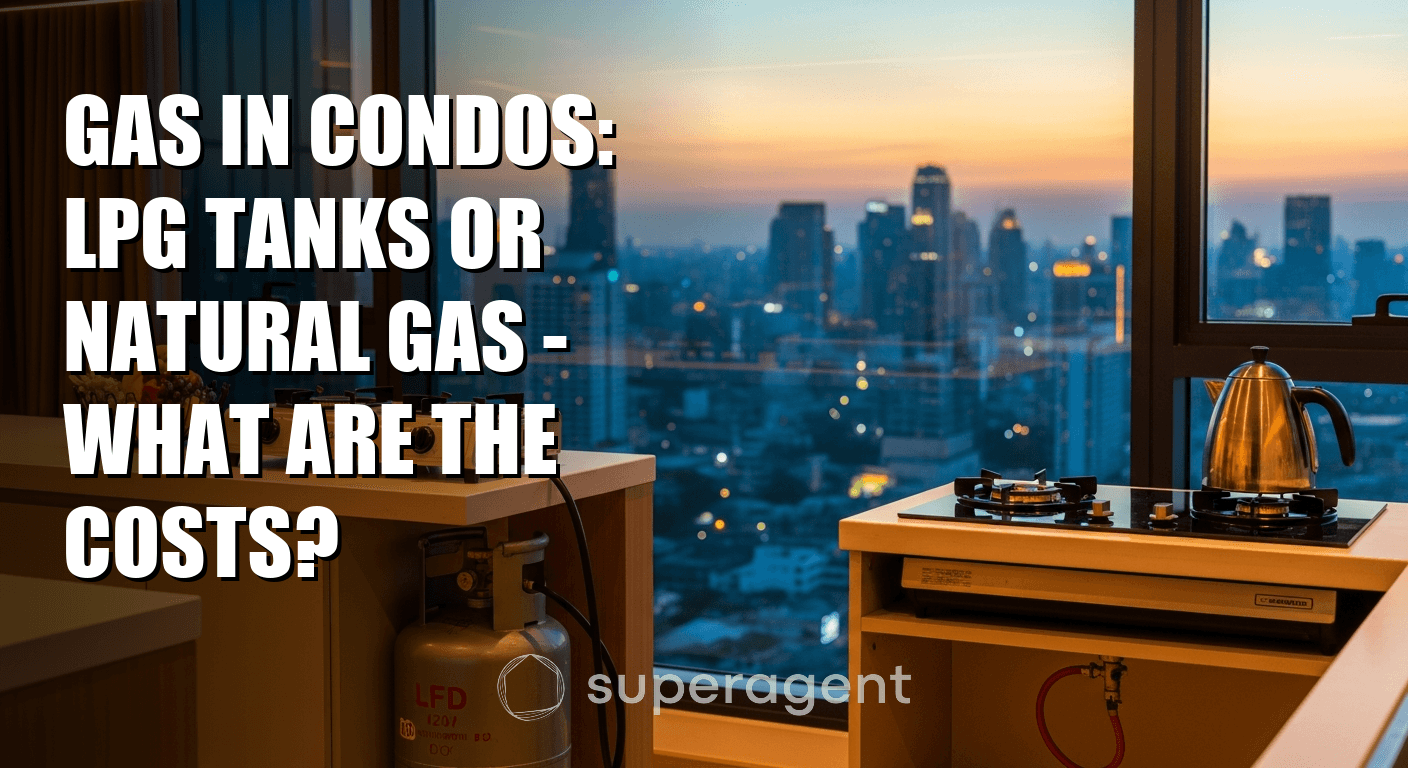
Bottled gas is the older, more common setup, especially in mid-range and older condos. You'll see large metal cylinders, typically 15 or 20 kilograms, either stored in a cupboard in your kitchen or on your balcony. When the tank runs out, someone from the building management or a local gas supplier swaps it for a full one. This system is straightforward but has quirks, especially around billing and swap frequency.
Natural gas piping is more common in newer luxury developments and buildings built or renovated in the last ten to fifteen years. If your building has this, you won't see tanks at all. Gas flows directly into your cooktop and water heater through fixed pipes, just like in a Western apartment. Your bill arrives monthly, attached to your electricity statement or building maintenance fees.
Bottled Gas: The Tank System and Real Costs
Let me walk you through a real example. I rented a one-bedroom in a medium condo near BTS Ari for two years. The building used bottled gas, and I quickly learned how the math actually worked.
A single 15-kilogram tank costs roughly 250 to 350 THB to refill, depending on the supplier and the current wholesale price of LPG. A 20-kilogram tank runs 350 to 450 THB. But here's where it gets tricky. Building management sometimes charges you directly for the tank swap, and sometimes they bundle it into your monthly building fees. Some buildings keep spare tanks on hand and charge a deposit upfront, which you get back if you leave.
If you're living alone and cooking moderately, one tank might last you one and a half to three months. A couple or small family using the stove daily will burn through a tank in four to six weeks. That means your monthly gas cost is somewhere between 100 and 300 THB on the low end, up to 600 THB on the high end if you're cooking for four people every single day.
What surprised me, though, was that some buildings charge you a handling or swap fee on top of the gas price itself. I've seen buildings near Thonglor and Ekkamai add 50 to 100 THB per swap just for the convenience of having staff handle the change-out. It's not written clearly on your lease, and you don't find out until your first bill comes.
Natural Gas: Metered and Predictable
Natural gas is different. You pay for exactly what you use, measured in cubic meters. The building's meter tracks consumption, it appears on your monthly bill, and the rate is set by the Metropolitan Waterworks Authority or similar municipal body, depending on your area.
According to CBRE Thailand, most Bangkok condos with natural gas report monthly costs between 150 and 400 THB for a single occupant, and 400 to 800 THB for families or heavy cooking users. The actual rate per cubic meter is regulated, so there's no hidden swap fees or supplier markups to worry about.
A one-bedroom in a modern building with natural gas near BTS Phrom Phong might run you 25,000 to 35,000 THB rent per month, and your natural gas bill might add another 200 THB to your utilities. Compare that to an older condo with bottled gas in a less central area, and the bottled system might actually cost you less up front, even if the gas fees are less predictable.
Water Heating and Hidden Gas Usage
Here's something nobody tells you about. Gas costs spike in ways you won't expect, and it's almost always because of water heating.
If your condo has an instant water heater (a tankless unit in your bathroom or kitchen), it's using gas every single time someone showers. If it's an electric heater, that burden falls on your electricity bill instead. If it's a tank-based water heater (rare in Bangkok, more common in older condos), the system runs more efficiently but still uses gas to keep water warm.
In my Ari condo, I didn't realize the instant water heater in the bathroom was eating through gas until I lived there through one month where three guests visited and took hot showers. That single month, I swapped my tank three weeks early. It cost an extra 100 to 150 THB in labor fees I didn't expect.
Most modern condos let you control water temperature, so you can dial it down to reduce gas consumption. Some buildings have circulating hot water pipes that run all the time (convenience for residents, disaster for your gas bill). Always ask during a condo viewing whether hot water heating is gas or electric, and how it's billed.
How Building Management Usually Charges You
In most condos with bottled gas, you pay one of three ways. First option: you pay the gas supplier directly. Building management gives you a contact number, you arrange swaps yourself, and you're done. Second option: management handles swaps and adds the cost to your monthly building fee. Third option: they charge you per swap, usually 50 to 200 THB on top of the gas price itself.
With natural gas, billing is integrated into your regular utilities. You'll see it itemized on your electricity and water statement, or on a combined building services bill.
The problem I've seen repeated happens when management doesn't explain which system you're on before you sign. An expat I know in a Sukhumvit condo assumed bottled gas was included in his maintenance fee. It wasn't. After three months, management presented him with a backdated invoice for 800 THB in unpaid gas charges. He would have known immediately if someone had walked him through it on day one.
Comparing Your Options at a Glance
- Bottled Gas (15kg Tank): 100-250 THB | 300-600 THB | Low (variable usage) | Ari, Bang Khun Thian, Sathon, Older mid-range condos
- Natural Gas Piped: 150-300 THB | 400-800 THB | High (metered and regulated) | Phrom Phong, Ploenchit, Thonglor, Newer luxury developments
- Induction Cooktop (No Gas): 0 THB gas | 0 THB gas | N/A (electric only) | Ultra-modern developments, high-end buildings
What to Ask Before You Sign a Lease
Don't skip this step. I cannot stress it enough. Before you agree to rent a condo, ask your real estate agent or building management these specific questions.
First: What type of gas system does the unit have? Second: Who arranges and pays for gas swaps or refills? Third: If it's a building fee, is that included in my quoted maintenance costs, or is it separate? Fourth: If it's metered natural gas, what was the average monthly bill for the previous tenant? Fifth: Is hot water gas-powered or electric?
Write the answers down. If the answer is "I don't know," that's a red flag. Ask to speak to building management directly before signing anything.
The Practical Reality for Your Budget
Here's what actually matters. Gas in a Bangkok condo is not your biggest expense. Even at the high end, 800 THB per month is manageable. But 800 THB per month adds up to 9,600 THB per year, which is real money whether you're an expat on a fixed salary or a local professional stretching your budget.
The people who get burnt are the ones who don't ask, who assume it's included, or who move into a building without understanding how metering or billing works. They find out a month or two in, usually when a bill arrives that's more than they expected.
If you're flat-hunting in Bangkok right now, use this as your checklist. When you find a condo you like, verify the gas system before you decide. If it's bottled gas in a building you like, that's fine, just factor in the variable monthly cost. If it's natural gas, great, you'll get a predictable bill. And if the agent or manager can't clearly explain the system to you, keep looking. There are too many other condos in Bangkok to settle for confusion on something this basic.
When you're ready to view units and actually compare options, Superagent's listings include detailed building information, utilities breakdowns, and direct access to property managers who can answer these exact questions. Filter by neighborhood, price, and amenities, then reach out directly to clarify any gas billing details before you commit to a viewing or a lease.
If you've just signed a condo lease in Bangkok or you're thinking about moving to one, someone's going to ask you a question that sounds simple but has no simple answer: "Which gas setup does your place have, and how much are you actually paying for it?"
Here's the thing. Gas in Bangkok condos isn't one-size-fits-all. Some buildings run on bottled gas tanks. Others use piped natural gas. Some newer developments are switching to induction cooktops entirely. The costs vary wildly depending on which system you're locked into, how many people are in your unit, and honestly, how much you cook at home.
I've rented in four different condos across Bangkok's main neighborhoods, and every single one had a different gas setup and billing structure. I've also watched expats and local professionals waste hundreds of baht per month because they didn't understand how their building charged them for gas. So let's break down what you actually need to know before you sign a lease or before your first bill arrives.
The Two Main Gas Systems in Bangkok Condos
Your condo almost certainly uses one of two systems. The first is bottled gas, usually called a gas tank or LPG cylinder. The second is piped natural gas delivered directly to your unit from the building's main supply.
Bottled gas is the older, more common setup, especially in mid-range and older condos. You'll see large metal cylinders, typically 15 or 20 kilograms, either stored in a cupboard in your kitchen or on your balcony. When the tank runs out, someone from the building management or a local gas supplier swaps it for a full one. This system is straightforward but has quirks, especially around billing and swap frequency.
Natural gas piping is more common in newer luxury developments and buildings built or renovated in the last ten to fifteen years. If your building has this, you won't see tanks at all. Gas flows directly into your cooktop and water heater through fixed pipes, just like in a Western apartment. Your bill arrives monthly, attached to your electricity statement or building maintenance fees.
Bottled Gas: The Tank System and Real Costs
Let me walk you through a real example. I rented a one-bedroom in a medium condo near BTS Ari for two years. The building used bottled gas, and I quickly learned how the math actually worked.
A single 15-kilogram tank costs roughly 250 to 350 THB to refill, depending on the supplier and the current wholesale price of LPG. A 20-kilogram tank runs 350 to 450 THB. But here's where it gets tricky. Building management sometimes charges you directly for the tank swap, and sometimes they bundle it into your monthly building fees. Some buildings keep spare tanks on hand and charge a deposit upfront, which you get back if you leave.
If you're living alone and cooking moderately, one tank might last you one and a half to three months. A couple or small family using the stove daily will burn through a tank in four to six weeks. That means your monthly gas cost is somewhere between 100 and 300 THB on the low end, up to 600 THB on the high end if you're cooking for four people every single day.
What surprised me, though, was that some buildings charge you a handling or swap fee on top of the gas price itself. I've seen buildings near Thonglor and Ekkamai add 50 to 100 THB per swap just for the convenience of having staff handle the change-out. It's not written clearly on your lease, and you don't find out until your first bill comes.
Natural Gas: Metered and Predictable
Natural gas is different. You pay for exactly what you use, measured in cubic meters. The building's meter tracks consumption, it appears on your monthly bill, and the rate is set by the Metropolitan Waterworks Authority or similar municipal body, depending on your area.
According to CBRE Thailand, most Bangkok condos with natural gas report monthly costs between 150 and 400 THB for a single occupant, and 400 to 800 THB for families or heavy cooking users. The actual rate per cubic meter is regulated, so there's no hidden swap fees or supplier markups to worry about.
A one-bedroom in a modern building with natural gas near BTS Phrom Phong might run you 25,000 to 35,000 THB rent per month, and your natural gas bill might add another 200 THB to your utilities. Compare that to an older condo with bottled gas in a less central area, and the bottled system might actually cost you less up front, even if the gas fees are less predictable.
Water Heating and Hidden Gas Usage
Here's something nobody tells you about. Gas costs spike in ways you won't expect, and it's almost always because of water heating.
If your condo has an instant water heater (a tankless unit in your bathroom or kitchen), it's using gas every single time someone showers. If it's an electric heater, that burden falls on your electricity bill instead. If it's a tank-based water heater (rare in Bangkok, more common in older condos), the system runs more efficiently but still uses gas to keep water warm.
In my Ari condo, I didn't realize the instant water heater in the bathroom was eating through gas until I lived there through one month where three guests visited and took hot showers. That single month, I swapped my tank three weeks early. It cost an extra 100 to 150 THB in labor fees I didn't expect.
Most modern condos let you control water temperature, so you can dial it down to reduce gas consumption. Some buildings have circulating hot water pipes that run all the time (convenience for residents, disaster for your gas bill). Always ask during a condo viewing whether hot water heating is gas or electric, and how it's billed.
Talk to us about renting
Share your details and keep reading — we’ll get back to you.
How Building Management Usually Charges You
In most condos with bottled gas, you pay one of three ways. First option: you pay the gas supplier directly. Building management gives you a contact number, you arrange swaps yourself, and you're done. Second option: management handles swaps and adds the cost to your monthly building fee. Third option: they charge you per swap, usually 50 to 200 THB on top of the gas price itself.
With natural gas, billing is integrated into your regular utilities. You'll see it itemized on your electricity and water statement, or on a combined building services bill.
The problem I've seen repeated happens when management doesn't explain which system you're on before you sign. An expat I know in a Sukhumvit condo assumed bottled gas was included in his maintenance fee. It wasn't. After three months, management presented him with a backdated invoice for 800 THB in unpaid gas charges. He would have known immediately if someone had walked him through it on day one.
Comparing Your Options at a Glance
- Bottled Gas (15kg Tank): 100-250 THB | 300-600 THB | Low (variable usage) | Ari, Bang Khun Thian, Sathon, Older mid-range condos
- Natural Gas Piped: 150-300 THB | 400-800 THB | High (metered and regulated) | Phrom Phong, Ploenchit, Thonglor, Newer luxury developments
- Induction Cooktop (No Gas): 0 THB gas | 0 THB gas | N/A (electric only) | Ultra-modern developments, high-end buildings
What to Ask Before You Sign a Lease
Don't skip this step. I cannot stress it enough. Before you agree to rent a condo, ask your real estate agent or building management these specific questions.
First: What type of gas system does the unit have? Second: Who arranges and pays for gas swaps or refills? Third: If it's a building fee, is that included in my quoted maintenance costs, or is it separate? Fourth: If it's metered natural gas, what was the average monthly bill for the previous tenant? Fifth: Is hot water gas-powered or electric?
Write the answers down. If the answer is "I don't know," that's a red flag. Ask to speak to building management directly before signing anything.
The Practical Reality for Your Budget
Here's what actually matters. Gas in a Bangkok condo is not your biggest expense. Even at the high end, 800 THB per month is manageable. But 800 THB per month adds up to 9,600 THB per year, which is real money whether you're an expat on a fixed salary or a local professional stretching your budget.
The people who get burnt are the ones who don't ask, who assume it's included, or who move into a building without understanding how metering or billing works. They find out a month or two in, usually when a bill arrives that's more than they expected.
If you're flat-hunting in Bangkok right now, use this as your checklist. When you find a condo you like, verify the gas system before you decide. If it's bottled gas in a building you like, that's fine, just factor in the variable monthly cost. If it's natural gas, great, you'll get a predictable bill. And if the agent or manager can't clearly explain the system to you, keep looking. There are too many other condos in Bangkok to settle for confusion on something this basic.
When you're ready to view units and actually compare options, Superagent's listings include detailed building information, utilities breakdowns, and direct access to property managers who can answer these exact questions. Filter by neighborhood, price, and amenities, then reach out directly to clarify any gas billing details before you commit to a viewing or a lease.
Share this article
Properties you may like
![[For Rent] CONDO I Aguston Sukhumvit 22 I Pet Friendly I 2 Beds I 2 Baths I Rent 55,000THB/mo](/_next/image?url=https%3A%2F%2Fstorage.googleapis.com%2Fsuperagent-web%2Fattachments%2Flistings%2F2266%2Fd3afcd25-6b79-46cb-9f1f-396acdc3dd10-955-3.jpg&w=3840&q=75)
฿55,000
2 Bed295 sqm
[For Rent] CONDO I Aguston Sukhumvit 22 I Pet Friendly I 2 Beds I 2 Baths I Rent 55,000THB/mo
Phrom Phong
Condo![[For Rent] CONDO I SUPALAI PLACE Sukhumvit 39 I 2 Beds I 2 Baths (1 Jacuzzi) I 55,555THB/mo](/_next/image?url=https%3A%2F%2Fstorage.googleapis.com%2Fsuperagent-web%2Fattachments%2Flistings%2F6743%2Fba530743-48b9-4ac6-92d3-c2247e743cf6-01-supalai-place-skv39-2b-link-heaven.jpg&w=3840&q=75)
฿55,555
2 Bed2142 sqm
[For Rent] CONDO I SUPALAI PLACE Sukhumvit 39 I 2 Beds I 2 Baths (1 Jacuzzi) I 55,555THB/mo
Phrom Phong
Condo![[For Rent] CONDO I Maru Ekkamai 2 I Pet friendly I 2 Beds I 2 Baths I 68,000 THB/mo](/_next/image?url=https%3A%2F%2Fstorage.googleapis.com%2Fsuperagent-web%2Fattachments%2Flistings%2F6602%2F9f1d8f71-ee43-435f-9a44-da16c4092c92-968-1.jpg&w=3840&q=75)
฿68,000
2 Bed360 sqm
[For Rent] CONDO I Maru Ekkamai 2 I Pet friendly I 2 Beds I 2 Baths I 68,000 THB/mo
Ekkamai
Condo![[For Rent] CONDO I Noble State 39 I 2 Beds I 2 Baths I 63,000THB/mo](/_next/image?url=https%3A%2F%2Fstorage.googleapis.com%2Fsuperagent-web%2Fattachments%2Flistings%2F2237%2F60eb58f3-eae5-41ed-a80b-406e004f05d8-940-1.jpg&w=3840&q=75)
฿63,000
2 Bed260 sqm
[For Rent] CONDO I Noble State 39 I 2 Beds I 2 Baths I 63,000THB/mo
Phrom Phong
Condo![[For Rent] CONDO I Rhythm Sukhumvit 36-38 I 2 Beds I 2 Baths I 38,999THB/mo](/_next/image?url=https%3A%2F%2Fstorage.googleapis.com%2Fsuperagent-web%2Fattachments%2Flistings%2F1788%2F942a0215-4128-4c2c-a064-f607e84e7aa4-656-2.jpg&w=3840&q=75)
฿38,999
2 Bed256 sqm
[For Rent] CONDO I Rhythm Sukhumvit 36-38 I 2 Beds I 2 Baths I 38,999THB/mo
Thonglor
Condo![[For Rent] CONDO I CLOUD Thonglor-Phetchaburi I 1 Bed I 1 Bath I 22,500THB/mo](/_next/image?url=https%3A%2F%2Fstorage.googleapis.com%2Fsuperagent-web%2Fattachments%2Flistings%2F6742%2F6cef5361-0dac-4dba-98f1-b0d187559c84-1118-1.jpg&w=3840&q=75)
฿22,500
1 Bed132 sqm
[For Rent] CONDO I CLOUD Thonglor-Phetchaburi I 1 Bed I 1 Bath I 22,500THB/mo
Thonglor
Condo![[For Rent] CONDO I City Smart Sukhumvit 18 I 3 Beds I 3 Baths I 65,000mo/THB](/_next/image?url=https%3A%2F%2Fstorage.googleapis.com%2Fsuperagent-web%2Fattachments%2Flistings%2F6741%2Fd371c89d-a913-42c4-a673-e540afae4f46-1116-1.jpg&w=3840&q=75)
฿65,000
3 Bed3125 sqm
[For Rent] CONDO I City Smart Sukhumvit 18 I 3 Beds I 3 Baths I 65,000mo/THB
Condo![[For Rent] CONDO I The Coast Bangkok I 1 Bed I 1 Bath I 20,000mo/THB](/_next/image?url=https%3A%2F%2Fstorage.googleapis.com%2Fsuperagent-web%2Fattachments%2Flistings%2F6740%2F498477ce-4ffa-4e4c-ab08-0e565d9c4bbe-1115-3.jpg&w=3840&q=75)
฿20,000
1 Bed146 sqm
[For Rent] CONDO I The Coast Bangkok I 1 Bed I 1 Bath I 20,000mo/THB
Bang Na
Condo![[For Rent] CONDO I IDEO Sukhumvit-RAMA 4 I 2 Beds I 2 Baths I 55,000mo/THB](/_next/image?url=https%3A%2F%2Fstorage.googleapis.com%2Fsuperagent-web%2Fattachments%2Flistings%2F6739%2F15df221d-5b8e-497c-b7ce-a6b9b6412cab-1113-1.jpg&w=3840&q=75)
฿55,000
2 Bed265 sqm
[For Rent] CONDO I IDEO Sukhumvit-RAMA 4 I 2 Beds I 2 Baths I 55,000mo/THB
Phra Khanong
Condo![[For Rent] CONDO I Downtown 49 I Pet Friendly I 1 Bed I 1 Bath I 23,000mo/THB](/_next/image?url=https%3A%2F%2Fstorage.googleapis.com%2Fsuperagent-web%2Fattachments%2Flistings%2F6738%2F11cf2ffe-1f01-4ccc-991c-2ad608f1ba73-1112-1.jpg&w=3840&q=75)
฿23,000
1 Bed135 sqm
[For Rent] CONDO I Downtown 49 I Pet Friendly I 1 Bed I 1 Bath I 23,000mo/THB
Thonglor
CondoMore like this
 In Guides · Superagent EditorialHidden Costs of Renting a Condo in Bangkok Nobody Warns You AboutBangkok condo rent looks affordable until month one hits. Here are the real costs beyond the headline figure that catch most renters off guard.25 May 20261 min read
 In Guides · Superagent EditorialWhat a Long-Vacant Bangkok Condo Unit Is Actually Telling YouA Bangkok condo vacant for months signals overpricing, landlord issues, or real problems. Here is how to read the signs.25 May 20261 min read
 In Guides · Superagent EditorialRed Flags in a Bangkok Rental Contract to Watch Out ForBangkok rental contracts often hide risky clauses. Here are the red flags every tenant must catch before signing any lease.25 May 20261 min read
 In Guides · Superagent EditorialWorking Online from a Condo: How to Choose the Perfect Room for ProductivityLearn how to choose the best condo room for working online with tips on lighting, noise, and furniture setup to maximize productivity.9 May 20261 min read