How to Rent Out a Condo in Bangkok: A Beginner's Owner Guide
Guides
How to Rent Out a Condo in Bangkok: A Beginner's Owner Guide
Master the essentials of becoming a successful condo landlord in Bangkok
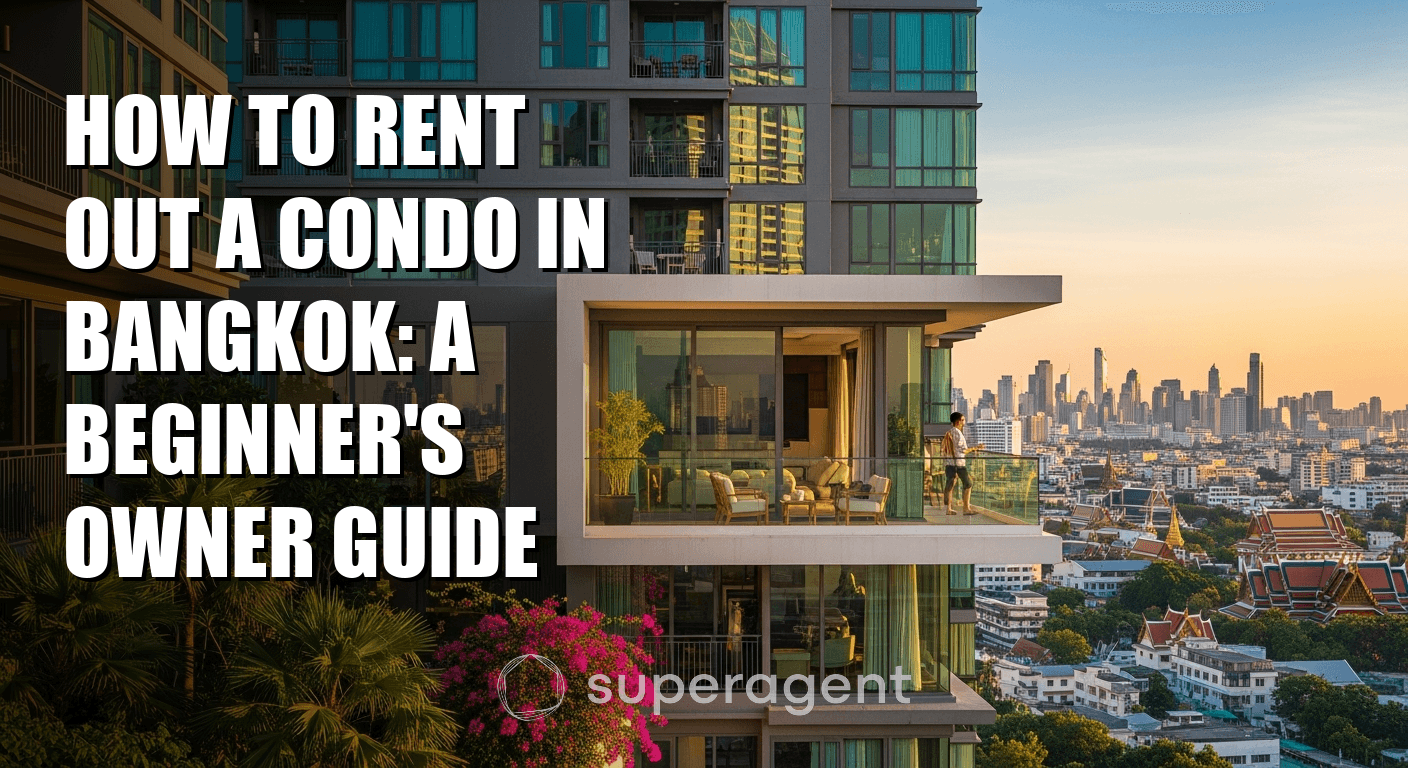
Summary
Your complete guide to renting out a condo in Bangkok for the first time. Prepare your unit, gather documents, and find quality tenants.
Thinking about renting out your Bangkok condo for the first time? You're not alone. Thousands of condo owners across the city, from first-time landlords in Thonglor to experienced investors in Sathorn, make this decision every year. The rental market here moves fast, and if you get the fundamentals right, you can build a steady income stream while your asset appreciates. But without a solid plan, you'll waste months on low-quality tenants, missed rent payments, and costly maintenance surprises.
This guide walks you through everything a first-time condo landlord needs to know, using real Bangkok examples and practical steps you can start today.
Get Your Unit and Documents Ready
Before you list a single photo, your condo has to be genuinely rent-ready. This means clean, functional, and fully furnished if that's how you plan to rent it. Take a hard look at what tenants in your building expect. If you own a unit in Ekkamai, near the BTS Ekkamai station, furnished 1-bedroom units typically rent for 20,000 to 28,000 Thai Baht per month. Unfurnished units in the same area go for 15,000 to 20,000 Baht.
Gather all your legal documents now. You will need your condo title deed (the green or pink book), the condominium certificate, proof of ownership, and a copy of your ID card. Check your condo building's rules carefully. Some condos in Bangkok restrict short-term rentals or require owner approval. Talk to your building management before you commit to renting out your unit.
Make sure basic systems work: air conditioning, water pressure, electricity, and appliances. One Bangkok landlord in a Phrom Phong mid-rise discovered mid-lease that the water pump hadn't been serviced in three years. It failed two weeks after his tenant moved in, cost 8,000 Baht to repair, and damaged the relationship immediately. Don't be that landlord.
Set a Competitive and Realistic Price
Pricing is where most beginners stumble. You might think your unit is worth 40,000 Baht because you paid a lot for it, but the market doesn't care about your purchase price. It cares about comparable units in your building and neighborhood right now.
Check what other landlords are actually asking. Walk through your building and note which units are listed and at what price. Look at online listings on platforms like DDproperty and Fazwaz to see the real going rate for units like yours. If three similar 1-bedroom condos on your same soi are renting for 25,000 to 27,000 Baht, that's your ceiling.
Location matters hugely. Units near BTS or MRT stations command premiums. A studio near BTS Ploenchit in the Ploenchit Road area rents for 18,000 to 24,000 Baht, while the same unit three sois away drops to 14,000 to 18,000 Baht. This is real market data, not opinion.
Slightly underpricing to attract quality tenants faster often beats holding out for your dream number. You want a reliable tenant who pays on time more than you want maximum rent.
Create a Clear Lease and Screen Tenants Properly
A written lease protects you both. Have a lawyer draft or review a standard residential lease. It should cover rent amount, payment date, deposit amount (typically one month), lease duration, utility responsibilities, pet policy, and what happens if rent is late. Most Bangkok lawyers charge 2,000 to 5,000 Baht to draft a simple residential lease.
Never skip tenant screening. Ask for references from previous landlords, proof of employment or income, and a copy of their passport or Thai ID. Contact their employer directly if you can. One Sukhumvit landlord learned the hard way that a tenant's "employment letter" was fake. It took four months and 30,000 Baht in legal fees to evict him.
Collect a security deposit equal to at least one month's rent. This gives you a buffer for damage or cleaning costs. Make sure the lease clearly states what the deposit covers and when it will be returned.
Market Your Unit Effectively
Your listing needs clear photos. Use natural light, show the full room layout, and include the view, furniture, appliances, and any amenities like a gym or pool. Take wide-angle shots of the bedroom, living area, and bathroom. Blurry or dark photos kill interest immediately.
Write a description that speaks to actual tenants. Instead of "nice condo," write "Bright 1-bedroom, fully furnished, 5 minutes walk from BTS Phrom Phong, includes gym and pool access, available now." Be specific about what's included: air conditioning, refrigerator, washing machine, hot water, internet, or parking space.
Post on multiple platforms. Superagent.co lets you reach verified renters in Bangkok efficiently. Also list on major platforms like DDproperty and local Facebook groups for expats in your area. Each platform brings different tenants, so cast a wide net.
Be responsive. When someone messages asking about your unit at 3 PM, reply by 3:30 PM or you'll lose them to the landlord next door. Schedule viewings quickly and keep a simple Google Calendar for appointment slots.
Understand Your Tax and Legal Obligations
Rental income in Thailand is taxable. You should register with the Thai Revenue Department and file annual income tax returns. The personal income tax rate ranges from five percent to thirty-five percent depending on your total income bracket. The Thai Revenue Department website has detailed guidance, though consulting a local accountant for 3,000 to 5,000 Baht makes sense to get this right.
Keep records of rent payments, maintenance costs, utilities, and repairs. You can deduct legitimate expenses from your taxable income, which lowers what you owe. A receipt from a plumber fixing a leak or a building maintenance bill all count.
Check whether your condo building requires you to register the rental with the building management or the local district office. Policies vary, but most Bangkok condos want to know who is living there and for how long.
Stay Organized and Responsive
You're running a small business now, even if it's just one unit. Keep a simple spreadsheet with rent payment dates, amounts received, utilities paid, repair costs, and maintenance dates. This helps you spot problems early and shows everything clearly come tax time.
Respond quickly to tenant requests. A leaking tap that takes three weeks to fix creates frustration and tenant turnover. A working landlord stays in touch, fixes problems fast, and treats tenant feedback seriously.
- Unit cleaning and repairs: Before listing vs 2,000-5,000 Baht
- Lease written by lawyer: Before signing with tenant vs 2,000-5,000 Baht
- Tenant screening and ID checks: Before deposit collection vs 0-500 Baht
- Annual tax return filing: March-April each year vs 0-5,000 Baht with accountant
- Regular maintenance and repairs: Ongoing vs 500-2,000 Baht monthly average
Renting out your Bangkok condo is straightforward if you handle the basics well. Price fairly based on the real market, not your expectations. Screen tenants thoroughly and get a proper lease in writing. Keep your unit in good condition, respond quickly to maintenance issues, and stay on top of taxes and documentation. Most first-time landlords who follow these steps build successful rental businesses that generate consistent income and positive tenant relationships.
Start by evaluating your unit honestly, checking comparable prices in your neighborhood, and getting your documents organized. You can list your property on Superagent.co, which connects you directly with serious renters looking for units in Bangkok, saving time and helping you find quality tenants faster.
Thinking about renting out your Bangkok condo for the first time? You're not alone. Thousands of condo owners across the city, from first-time landlords in Thonglor to experienced investors in Sathorn, make this decision every year. The rental market here moves fast, and if you get the fundamentals right, you can build a steady income stream while your asset appreciates. But without a solid plan, you'll waste months on low-quality tenants, missed rent payments, and costly maintenance surprises.
This guide walks you through everything a first-time condo landlord needs to know, using real Bangkok examples and practical steps you can start today.
Get Your Unit and Documents Ready
Before you list a single photo, your condo has to be genuinely rent-ready. This means clean, functional, and fully furnished if that's how you plan to rent it. Take a hard look at what tenants in your building expect. If you own a unit in Ekkamai, near the BTS Ekkamai station, furnished 1-bedroom units typically rent for 20,000 to 28,000 Thai Baht per month. Unfurnished units in the same area go for 15,000 to 20,000 Baht.
Gather all your legal documents now. You will need your condo title deed (the green or pink book), the condominium certificate, proof of ownership, and a copy of your ID card. Check your condo building's rules carefully. Some condos in Bangkok restrict short-term rentals or require owner approval. Talk to your building management before you commit to renting out your unit.
Make sure basic systems work: air conditioning, water pressure, electricity, and appliances. One Bangkok landlord in a Phrom Phong mid-rise discovered mid-lease that the water pump hadn't been serviced in three years. It failed two weeks after his tenant moved in, cost 8,000 Baht to repair, and damaged the relationship immediately. Don't be that landlord.
Set a Competitive and Realistic Price
Pricing is where most beginners stumble. You might think your unit is worth 40,000 Baht because you paid a lot for it, but the market doesn't care about your purchase price. It cares about comparable units in your building and neighborhood right now.
Check what other landlords are actually asking. Walk through your building and note which units are listed and at what price. Look at online listings on platforms like DDproperty and Fazwaz to see the real going rate for units like yours. If three similar 1-bedroom condos on your same soi are renting for 25,000 to 27,000 Baht, that's your ceiling.
Location matters hugely. Units near BTS or MRT stations command premiums. A studio near BTS Ploenchit in the Ploenchit Road area rents for 18,000 to 24,000 Baht, while the same unit three sois away drops to 14,000 to 18,000 Baht. This is real market data, not opinion.
Slightly underpricing to attract quality tenants faster often beats holding out for your dream number. You want a reliable tenant who pays on time more than you want maximum rent.
Create a Clear Lease and Screen Tenants Properly
A written lease protects you both. Have a lawyer draft or review a standard residential lease. It should cover rent amount, payment date, deposit amount (typically one month), lease duration, utility responsibilities, pet policy, and what happens if rent is late. Most Bangkok lawyers charge 2,000 to 5,000 Baht to draft a simple residential lease.
Never skip tenant screening. Ask for references from previous landlords, proof of employment or income, and a copy of their passport or Thai ID. Contact their employer directly if you can. One Sukhumvit landlord learned the hard way that a tenant's "employment letter" was fake. It took four months and 30,000 Baht in legal fees to evict him.
Collect a security deposit equal to at least one month's rent. This gives you a buffer for damage or cleaning costs. Make sure the lease clearly states what the deposit covers and when it will be returned.
Market Your Unit Effectively
Your listing needs clear photos. Use natural light, show the full room layout, and include the view, furniture, appliances, and any amenities like a gym or pool. Take wide-angle shots of the bedroom, living area, and bathroom. Blurry or dark photos kill interest immediately.
Write a description that speaks to actual tenants. Instead of "nice condo," write "Bright 1-bedroom, fully furnished, 5 minutes walk from BTS Phrom Phong, includes gym and pool access, available now." Be specific about what's included: air conditioning, refrigerator, washing machine, hot water, internet, or parking space.
Post on multiple platforms. Superagent.co lets you reach verified renters in Bangkok efficiently. Also list on major platforms like DDproperty and local Facebook groups for expats in your area. Each platform brings different tenants, so cast a wide net.
Talk to us about renting
Share your details and keep reading — we’ll get back to you.
Be responsive. When someone messages asking about your unit at 3 PM, reply by 3:30 PM or you'll lose them to the landlord next door. Schedule viewings quickly and keep a simple Google Calendar for appointment slots.
Understand Your Tax and Legal Obligations
Rental income in Thailand is taxable. You should register with the Thai Revenue Department and file annual income tax returns. The personal income tax rate ranges from five percent to thirty-five percent depending on your total income bracket. The Thai Revenue Department website has detailed guidance, though consulting a local accountant for 3,000 to 5,000 Baht makes sense to get this right.
Keep records of rent payments, maintenance costs, utilities, and repairs. You can deduct legitimate expenses from your taxable income, which lowers what you owe. A receipt from a plumber fixing a leak or a building maintenance bill all count.
Check whether your condo building requires you to register the rental with the building management or the local district office. Policies vary, but most Bangkok condos want to know who is living there and for how long.
Stay Organized and Responsive
You're running a small business now, even if it's just one unit. Keep a simple spreadsheet with rent payment dates, amounts received, utilities paid, repair costs, and maintenance dates. This helps you spot problems early and shows everything clearly come tax time.
Respond quickly to tenant requests. A leaking tap that takes three weeks to fix creates frustration and tenant turnover. A working landlord stays in touch, fixes problems fast, and treats tenant feedback seriously.
- Unit cleaning and repairs: Before listing vs 2,000-5,000 Baht
- Lease written by lawyer: Before signing with tenant vs 2,000-5,000 Baht
- Tenant screening and ID checks: Before deposit collection vs 0-500 Baht
- Annual tax return filing: March-April each year vs 0-5,000 Baht with accountant
- Regular maintenance and repairs: Ongoing vs 500-2,000 Baht monthly average
Renting out your Bangkok condo is straightforward if you handle the basics well. Price fairly based on the real market, not your expectations. Screen tenants thoroughly and get a proper lease in writing. Keep your unit in good condition, respond quickly to maintenance issues, and stay on top of taxes and documentation. Most first-time landlords who follow these steps build successful rental businesses that generate consistent income and positive tenant relationships.
Start by evaluating your unit honestly, checking comparable prices in your neighborhood, and getting your documents organized. You can list your property on Superagent.co, which connects you directly with serious renters looking for units in Bangkok, saving time and helping you find quality tenants faster.
Share this article
Properties you may like
![[For Rent] CONDO I Aguston Sukhumvit 22 I Pet Friendly I 2 Beds I 2 Baths I Rent 55,000THB/mo](/_next/image?url=https%3A%2F%2Fstorage.googleapis.com%2Fsuperagent-web%2Fattachments%2Flistings%2F2266%2Fd3afcd25-6b79-46cb-9f1f-396acdc3dd10-955-3.jpg&w=3840&q=75)
฿55,000
2 Bed295 sqm
[For Rent] CONDO I Aguston Sukhumvit 22 I Pet Friendly I 2 Beds I 2 Baths I Rent 55,000THB/mo
Phrom Phong
Condo![[For Rent] CONDO I SUPALAI PLACE Sukhumvit 39 I 2 Beds I 2 Baths (1 Jacuzzi) I 55,555THB/mo](/_next/image?url=https%3A%2F%2Fstorage.googleapis.com%2Fsuperagent-web%2Fattachments%2Flistings%2F6743%2Fba530743-48b9-4ac6-92d3-c2247e743cf6-01-supalai-place-skv39-2b-link-heaven.jpg&w=3840&q=75)
฿55,555
2 Bed2142 sqm
[For Rent] CONDO I SUPALAI PLACE Sukhumvit 39 I 2 Beds I 2 Baths (1 Jacuzzi) I 55,555THB/mo
Phrom Phong
Condo![[For Rent] CONDO I Maru Ekkamai 2 I Pet friendly I 2 Beds I 2 Baths I 68,000 THB/mo](/_next/image?url=https%3A%2F%2Fstorage.googleapis.com%2Fsuperagent-web%2Fattachments%2Flistings%2F6602%2F9f1d8f71-ee43-435f-9a44-da16c4092c92-968-1.jpg&w=3840&q=75)
฿68,000
2 Bed360 sqm
[For Rent] CONDO I Maru Ekkamai 2 I Pet friendly I 2 Beds I 2 Baths I 68,000 THB/mo
Ekkamai
Condo![[For Rent] CONDO I Noble State 39 I 2 Beds I 2 Baths I 63,000THB/mo](/_next/image?url=https%3A%2F%2Fstorage.googleapis.com%2Fsuperagent-web%2Fattachments%2Flistings%2F2237%2F60eb58f3-eae5-41ed-a80b-406e004f05d8-940-1.jpg&w=3840&q=75)
฿63,000
2 Bed260 sqm
[For Rent] CONDO I Noble State 39 I 2 Beds I 2 Baths I 63,000THB/mo
Phrom Phong
Condo![[For Rent] CONDO I Rhythm Sukhumvit 36-38 I 2 Beds I 2 Baths I 38,999THB/mo](/_next/image?url=https%3A%2F%2Fstorage.googleapis.com%2Fsuperagent-web%2Fattachments%2Flistings%2F1788%2F942a0215-4128-4c2c-a064-f607e84e7aa4-656-2.jpg&w=3840&q=75)
฿38,999
2 Bed256 sqm
[For Rent] CONDO I Rhythm Sukhumvit 36-38 I 2 Beds I 2 Baths I 38,999THB/mo
Thonglor
Condo![[For Rent] CONDO I CLOUD Thonglor-Phetchaburi I 1 Bed I 1 Bath I 22,500THB/mo](/_next/image?url=https%3A%2F%2Fstorage.googleapis.com%2Fsuperagent-web%2Fattachments%2Flistings%2F6742%2F6cef5361-0dac-4dba-98f1-b0d187559c84-1118-1.jpg&w=3840&q=75)
฿22,500
1 Bed132 sqm
[For Rent] CONDO I CLOUD Thonglor-Phetchaburi I 1 Bed I 1 Bath I 22,500THB/mo
Thonglor
Condo![[For Rent] CONDO I City Smart Sukhumvit 18 I 3 Beds I 3 Baths I 65,000mo/THB](/_next/image?url=https%3A%2F%2Fstorage.googleapis.com%2Fsuperagent-web%2Fattachments%2Flistings%2F6741%2Fd371c89d-a913-42c4-a673-e540afae4f46-1116-1.jpg&w=3840&q=75)
฿65,000
3 Bed3125 sqm
[For Rent] CONDO I City Smart Sukhumvit 18 I 3 Beds I 3 Baths I 65,000mo/THB
Condo![[For Rent] CONDO I The Coast Bangkok I 1 Bed I 1 Bath I 20,000mo/THB](/_next/image?url=https%3A%2F%2Fstorage.googleapis.com%2Fsuperagent-web%2Fattachments%2Flistings%2F6740%2F498477ce-4ffa-4e4c-ab08-0e565d9c4bbe-1115-3.jpg&w=3840&q=75)
฿20,000
1 Bed146 sqm
[For Rent] CONDO I The Coast Bangkok I 1 Bed I 1 Bath I 20,000mo/THB
Bang Na
Condo![[For Rent] CONDO I IDEO Sukhumvit-RAMA 4 I 2 Beds I 2 Baths I 55,000mo/THB](/_next/image?url=https%3A%2F%2Fstorage.googleapis.com%2Fsuperagent-web%2Fattachments%2Flistings%2F6739%2F15df221d-5b8e-497c-b7ce-a6b9b6412cab-1113-1.jpg&w=3840&q=75)
฿55,000
2 Bed265 sqm
[For Rent] CONDO I IDEO Sukhumvit-RAMA 4 I 2 Beds I 2 Baths I 55,000mo/THB
Phra Khanong
Condo![[For Rent] CONDO I Downtown 49 I Pet Friendly I 1 Bed I 1 Bath I 23,000mo/THB](/_next/image?url=https%3A%2F%2Fstorage.googleapis.com%2Fsuperagent-web%2Fattachments%2Flistings%2F6738%2F11cf2ffe-1f01-4ccc-991c-2ad608f1ba73-1112-1.jpg&w=3840&q=75)
฿23,000
1 Bed135 sqm
[For Rent] CONDO I Downtown 49 I Pet Friendly I 1 Bed I 1 Bath I 23,000mo/THB
Thonglor
CondoMore like this
 In Guides · Superagent EditorialHidden Costs of Renting a Condo in Bangkok Nobody Warns You AboutBangkok condo rent looks affordable until month one hits. Here are the real costs beyond the headline figure that catch most renters off guard.25 May 20261 min read
 In Guides · Superagent EditorialWhat a Long-Vacant Bangkok Condo Unit Is Actually Telling YouA Bangkok condo vacant for months signals overpricing, landlord issues, or real problems. Here is how to read the signs.25 May 20261 min read
 In Guides · Superagent EditorialRed Flags in a Bangkok Rental Contract to Watch Out ForBangkok rental contracts often hide risky clauses. Here are the red flags every tenant must catch before signing any lease.25 May 20261 min read
 In Guides · Superagent EditorialWorking Online from a Condo: How to Choose the Perfect Room for ProductivityLearn how to choose the best condo room for working online with tips on lighting, noise, and furniture setup to maximize productivity.9 May 20261 min read