Is Buying a Condo to Rent Out Worth It in Bangkok in 2026?
Guides
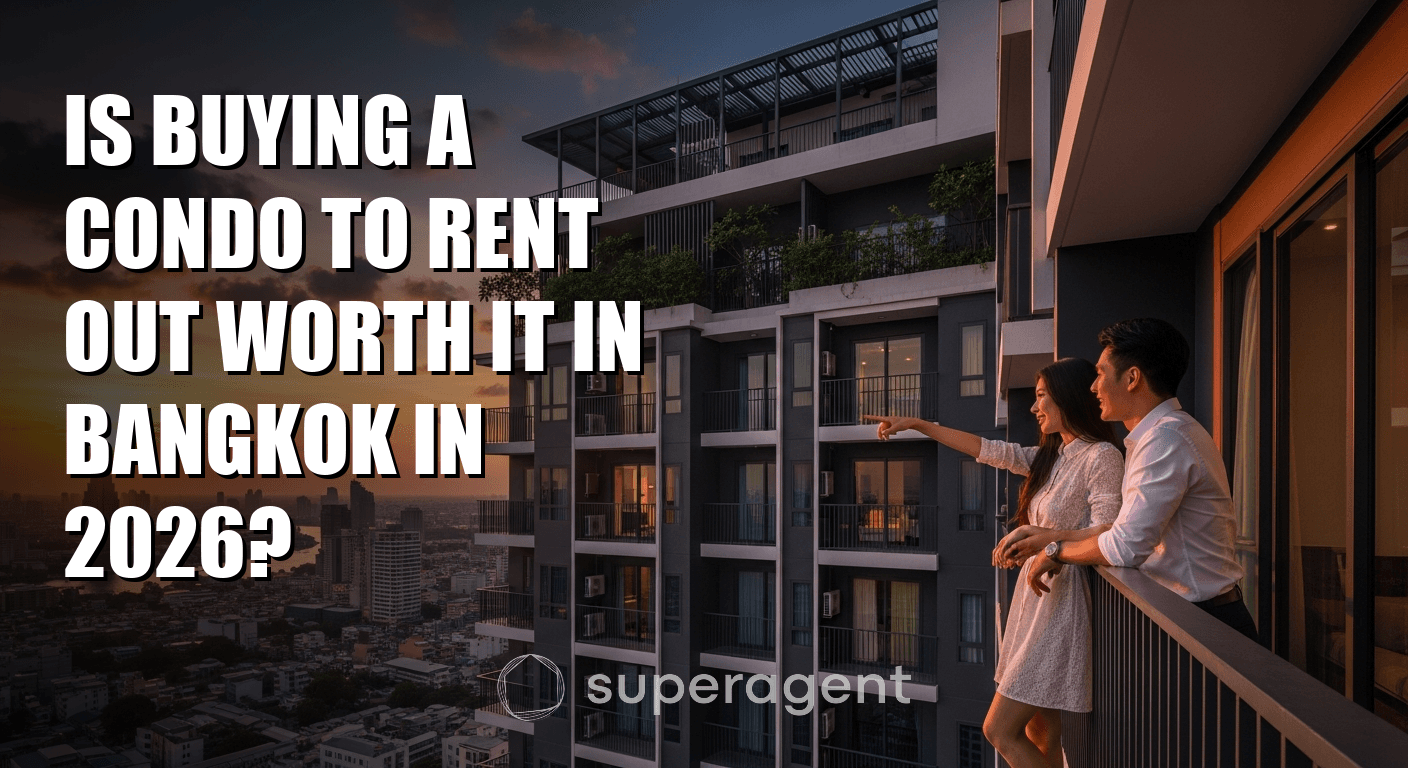
Is Buying a Condo to Rent Out Worth It in Bangkok in 2026?
Analyze rental yields, market trends, and ROI to decide if condo investment is right for you.
Summary
Discover if buying a Bangkok condo for rental income makes financial sense in 2026. Explore market conditions, yields, and key factors for condo investment
You're scrolling through real estate listings at midnight, wondering if buying a condo to rent out could actually work in Bangkok in 2026. The rent yields sound decent, the market keeps growing, but you're also hearing horror stories about problem tenants and surprise maintenance bills. Let's cut through the hype and look at what actually makes sense right now, based on real numbers from the Bangkok market.
The Math: What Do Rental Yields Actually Look Like?
Most property investors talk about yield, but what does it actually mean for your wallet? Take a one-bedroom condo in Thonglor or Phrom Phong, where asking prices hover around 4.5 to 5.5 million THB. You can typically rent that unit for 30,000 to 40,000 THB per month. That puts you at a gross yield of around 7 to 10 percent annually, before taxes and expenses.
But here's where it gets real. After mortgage interest (usually 2.5 to 3.5 percent for condos), property tax, maintenance fees which typically run 3,000 to 4,000 THB monthly, insurance, and accounting costs, your net yield drops to somewhere between 3 and 5 percent. That's not terrible, but it's not a home run either, especially if you could get 3 to 4 percent returns in Thai government bonds with zero tenant drama.
According to DDproperty's latest market reports, average rent for a 1-bedroom in mid-range Bangkok areas sits between 25,000 to 35,000 THB monthly, while premium zones command 40,000 to 60,000 THB. The spread matters enormously when you're calculating whether this investment pays off.
Location, Location, and the BTS: Where Renters Actually Live
Not all Bangkok neighborhoods are created equal for rental income. The smart move is buying near transit that young professionals actually use. A unit near BTS Asoke or MRT Sukhumvit might seem pricier upfront, but you'll fill it faster and charge premium rates.
Consider this real scenario. A two-bed in Ari near BTS Ari rents for around 28,000 to 35,000 THB monthly and stays booked because local expats and young Thai professionals work nearby at tech companies and offices scattered across that zone. A similar unit in Bang Kapi, though cheaper to buy, might sit vacant for weeks because people there don't work in that neighborhood. Location directly impacts your vacancy rate, which destroys your yield faster than anything else.
Neighborhoods with strong renter demand in 2026 include areas around Chit Lom, Nana, and Promenada in Sukhumvit. These pull consistent international and local tenants, especially families and professionals on company transfers. Less sexy sois further from stations mean longer vacancy periods and lower rents.
The Hidden Costs Nobody Warns You About
You found a condo for 4 million THB with decent rental demand. Congratulations. Now add the costs that catch most first-time investors off guard.
Condo fees themselves are straightforward, but they keep rising. Most Bangkok condos charge 3,000 to 5,000 THB monthly for a one-bed, and that's increasing about 5 to 10 percent annually. Then there's annual property tax through the Land Department, which averages 0.02 percent of assessed value. You'll need to pay an accountant to manage rental income taxes, which can run 3,000 to 5,000 THB per year depending on complexity.
Now the fun part: tenant damage. A broken air conditioner compressor costs 15,000 to 25,000 THB to replace. A flooded bathroom ceiling from upstairs negligence means replastering and repainting your bedroom. Thai court cases for non-paying tenants typically cost 10,000 to 30,000 THB in legal fees and can drag on for months. One bad tenant can wipe out a year of net profits in a single incident.
Capital gains tax is also worth understanding. If you sell the condo within five years, you'll owe 5 percent capital gains tax to the Thai Revenue Department. After five years it drops to 0.1 percent. This matters massively for your exit strategy.
Tenant Quality and the Vacancy Risk
Here's the part that separates successful Bangkok landlords from frustrated ones: your tenants make or break this investment. Bad tenants don't just delay rent. They damage walls, invite extra people into the unit, and generally make your life harder than any spreadsheet showed.
In 2026, Bangkok's rental market still has a solid international presence, but the pool has shifted. Tech workers and company transfers remain reliable. Long-term tourists and students can be hit or miss. Getting professional references and running basic background checks through immigration records helps, but it's never foolproof.
A realistic vacancy rate in average Bangkok neighborhoods sits around 8 to 12 percent annually, meaning your unit sits empty roughly a month every year. Prime zones near BTS stations might see only 5 to 8 percent vacancy, while outer areas can hit 15 to 20 percent. When you're calculating whether this investment makes sense, don't assume 100 percent occupancy. Most experienced landlords budget for 85 to 92 percent occupancy in their yield calculations.
Financing and Leverage: Does Debt Make This Work?
Most Bangkok condo investors don't buy with cash. They borrow 60 to 70 percent and pay the rest as a down payment. This leverage can amplify returns, but it also amplifies losses if rents drop or vacancy increases.
The math looks good when you're borrowing at 2.8 percent and renting for 7 percent gross yield. But it looks terrible when there's a vacancy, sudden maintenance, or your tenant stops paying. Banks typically require proof of income and will lend up to 70 percent of purchase price, with mortgage terms between 15 and 25 years.
If you're stretching to afford the down payment and relying entirely on rental income to cover your mortgage, you're taking significant risk. Most successful landlords already have stable income from their job or other sources, and treat rental income as a bonus. That mentality prevents panic selling during soft market periods.
Tax Implications and Reporting
Thailand taxes rental income as regular personal income at progressive rates up to 35 percent, plus local surtax. You're required to report rental income through Thailand's Revenue Department, and most accountants will recommend structuring your ownership and deductions properly from day one.
Some landlords mistakenly think operating cash in hand stays under the radar. That approach gets expensive quickly if audited. Professional tax guidance costs 3,000 to 8,000 THB annually but saves far more through legitimate deductions on maintenance, condo fees, and insurance.
- Thonglor (Premium): 5.0 to 6.0 million THB | 40,000 to 50,000 THB | 8 to 10% | Low (5-8%)
- Phrom Phong (Premium): 4.8 to 5.8 million THB | 38,000 to 48,000 THB | 8 to 9% | Low (5-8%)
- Ari (Mid-Range): 3.2 to 4.2 million THB | 28,000 to 36,000 THB | 8 to 11% | Medium (8-12%)
- Ekkamai (Mid-Range): 3.0 to 4.0 million THB | 26,000 to 34,000 THB | 8 to 11% | Medium (10-14%)
- Outer Sukhumvit (Budget): 2.2 to 3.2 million THB | 18,000 to 25,000 THB | 7 to 9% | High (15-20%)
Is It Worth It in 2026? Your Realistic Assessment
The answer depends on what you're comparing it against. If your alternative is keeping 4 million THB in a Thai savings account earning 1 to 2 percent, then rental real estate at 4 to 5 percent net yield looks reasonable. You're also building equity and potentially benefiting from property appreciation over time.
But if you could get 5 to 6 percent in government bonds or international markets without tenant drama, the case gets weaker. And if you're stretching financially to make the down payment work, you're in the danger zone.
The best Bangkok landlords aren't trying to get rich quick. They're buying in strong neighborhoods near transit, keeping realistic vacancy expectations, setting aside reserves for maintenance, and treating it as a long-term hold. They screen tenants properly, use proper lease agreements, and stay disciplined during soft rental periods instead of panic-dropping prices.
If you want to buy a condo specifically to rent it out, commit to the process professionally. Get a property accountant involved early, use a professional lease agreement template, and inspect the building before buying. Properties in established buildings with professional management and consistent tenant demand have a far higher success rate than bargain-hunting in sketchy sois hoping to catch a lucky break.
When you're ready to look seriously at Bangkok rental properties, Superagent's platform lets you filter by neighborhood, price, proximity to BTS and MRT stations, and actual rental data from verified landlords. That kind of transparency beats making decisions based on a realtor's optimistic projections. Take the time to look at real numbers from real properties in your target zone before you commit capital.
You're scrolling through real estate listings at midnight, wondering if buying a condo to rent out could actually work in Bangkok in 2026. The rent yields sound decent, the market keeps growing, but you're also hearing horror stories about problem tenants and surprise maintenance bills. Let's cut through the hype and look at what actually makes sense right now, based on real numbers from the Bangkok market.
The Math: What Do Rental Yields Actually Look Like?
Most property investors talk about yield, but what does it actually mean for your wallet? Take a one-bedroom condo in Thonglor or Phrom Phong, where asking prices hover around 4.5 to 5.5 million THB. You can typically rent that unit for 30,000 to 40,000 THB per month. That puts you at a gross yield of around 7 to 10 percent annually, before taxes and expenses.
But here's where it gets real. After mortgage interest (usually 2.5 to 3.5 percent for condos), property tax, maintenance fees which typically run 3,000 to 4,000 THB monthly, insurance, and accounting costs, your net yield drops to somewhere between 3 and 5 percent. That's not terrible, but it's not a home run either, especially if you could get 3 to 4 percent returns in Thai government bonds with zero tenant drama.
According to DDproperty's latest market reports, average rent for a 1-bedroom in mid-range Bangkok areas sits between 25,000 to 35,000 THB monthly, while premium zones command 40,000 to 60,000 THB. The spread matters enormously when you're calculating whether this investment pays off.
Location, Location, and the BTS: Where Renters Actually Live
Not all Bangkok neighborhoods are created equal for rental income. The smart move is buying near transit that young professionals actually use. A unit near BTS Asoke or MRT Sukhumvit might seem pricier upfront, but you'll fill it faster and charge premium rates.
Consider this real scenario. A two-bed in Ari near BTS Ari rents for around 28,000 to 35,000 THB monthly and stays booked because local expats and young Thai professionals work nearby at tech companies and offices scattered across that zone. A similar unit in Bang Kapi, though cheaper to buy, might sit vacant for weeks because people there don't work in that neighborhood. Location directly impacts your vacancy rate, which destroys your yield faster than anything else.
Neighborhoods with strong renter demand in 2026 include areas around Chit Lom, Nana, and Promenada in Sukhumvit. These pull consistent international and local tenants, especially families and professionals on company transfers. Less sexy sois further from stations mean longer vacancy periods and lower rents.
The Hidden Costs Nobody Warns You About
You found a condo for 4 million THB with decent rental demand. Congratulations. Now add the costs that catch most first-time investors off guard.
Condo fees themselves are straightforward, but they keep rising. Most Bangkok condos charge 3,000 to 5,000 THB monthly for a one-bed, and that's increasing about 5 to 10 percent annually. Then there's annual property tax through the Land Department, which averages 0.02 percent of assessed value. You'll need to pay an accountant to manage rental income taxes, which can run 3,000 to 5,000 THB per year depending on complexity.
Now the fun part: tenant damage. A broken air conditioner compressor costs 15,000 to 25,000 THB to replace. A flooded bathroom ceiling from upstairs negligence means replastering and repainting your bedroom. Thai court cases for non-paying tenants typically cost 10,000 to 30,000 THB in legal fees and can drag on for months. One bad tenant can wipe out a year of net profits in a single incident.
Capital gains tax is also worth understanding. If you sell the condo within five years, you'll owe 5 percent capital gains tax to the Thai Revenue Department. After five years it drops to 0.1 percent. This matters massively for your exit strategy.
Tenant Quality and the Vacancy Risk
Here's the part that separates successful Bangkok landlords from frustrated ones: your tenants make or break this investment. Bad tenants don't just delay rent. They damage walls, invite extra people into the unit, and generally make your life harder than any spreadsheet showed.
In 2026, Bangkok's rental market still has a solid international presence, but the pool has shifted. Tech workers and company transfers remain reliable. Long-term tourists and students can be hit or miss. Getting professional references and running basic background checks through immigration records helps, but it's never foolproof.
A realistic vacancy rate in average Bangkok neighborhoods sits around 8 to 12 percent annually, meaning your unit sits empty roughly a month every year. Prime zones near BTS stations might see only 5 to 8 percent vacancy, while outer areas can hit 15 to 20 percent. When you're calculating whether this investment makes sense, don't assume 100 percent occupancy. Most experienced landlords budget for 85 to 92 percent occupancy in their yield calculations.
Financing and Leverage: Does Debt Make This Work?
Most Bangkok condo investors don't buy with cash. They borrow 60 to 70 percent and pay the rest as a down payment. This leverage can amplify returns, but it also amplifies losses if rents drop or vacancy increases.
Talk to us about renting
Share your details and keep reading — we’ll get back to you.
The math looks good when you're borrowing at 2.8 percent and renting for 7 percent gross yield. But it looks terrible when there's a vacancy, sudden maintenance, or your tenant stops paying. Banks typically require proof of income and will lend up to 70 percent of purchase price, with mortgage terms between 15 and 25 years.
If you're stretching to afford the down payment and relying entirely on rental income to cover your mortgage, you're taking significant risk. Most successful landlords already have stable income from their job or other sources, and treat rental income as a bonus. That mentality prevents panic selling during soft market periods.
Tax Implications and Reporting
Thailand taxes rental income as regular personal income at progressive rates up to 35 percent, plus local surtax. You're required to report rental income through Thailand's Revenue Department, and most accountants will recommend structuring your ownership and deductions properly from day one.
Some landlords mistakenly think operating cash in hand stays under the radar. That approach gets expensive quickly if audited. Professional tax guidance costs 3,000 to 8,000 THB annually but saves far more through legitimate deductions on maintenance, condo fees, and insurance.
- Thonglor (Premium): 5.0 to 6.0 million THB | 40,000 to 50,000 THB | 8 to 10% | Low (5-8%)
- Phrom Phong (Premium): 4.8 to 5.8 million THB | 38,000 to 48,000 THB | 8 to 9% | Low (5-8%)
- Ari (Mid-Range): 3.2 to 4.2 million THB | 28,000 to 36,000 THB | 8 to 11% | Medium (8-12%)
- Ekkamai (Mid-Range): 3.0 to 4.0 million THB | 26,000 to 34,000 THB | 8 to 11% | Medium (10-14%)
- Outer Sukhumvit (Budget): 2.2 to 3.2 million THB | 18,000 to 25,000 THB | 7 to 9% | High (15-20%)
Is It Worth It in 2026? Your Realistic Assessment
The answer depends on what you're comparing it against. If your alternative is keeping 4 million THB in a Thai savings account earning 1 to 2 percent, then rental real estate at 4 to 5 percent net yield looks reasonable. You're also building equity and potentially benefiting from property appreciation over time.
But if you could get 5 to 6 percent in government bonds or international markets without tenant drama, the case gets weaker. And if you're stretching financially to make the down payment work, you're in the danger zone.
The best Bangkok landlords aren't trying to get rich quick. They're buying in strong neighborhoods near transit, keeping realistic vacancy expectations, setting aside reserves for maintenance, and treating it as a long-term hold. They screen tenants properly, use proper lease agreements, and stay disciplined during soft rental periods instead of panic-dropping prices.
If you want to buy a condo specifically to rent it out, commit to the process professionally. Get a property accountant involved early, use a professional lease agreement template, and inspect the building before buying. Properties in established buildings with professional management and consistent tenant demand have a far higher success rate than bargain-hunting in sketchy sois hoping to catch a lucky break.
When you're ready to look seriously at Bangkok rental properties, Superagent's platform lets you filter by neighborhood, price, proximity to BTS and MRT stations, and actual rental data from verified landlords. That kind of transparency beats making decisions based on a realtor's optimistic projections. Take the time to look at real numbers from real properties in your target zone before you commit capital.
Share this article
Properties you may like
![[For Rent] CONDO I Aguston Sukhumvit 22 I Pet Friendly I 2 Beds I 2 Baths I Rent 55,000THB/mo](/_next/image?url=https%3A%2F%2Fstorage.googleapis.com%2Fsuperagent-web%2Fattachments%2Flistings%2F2266%2Fd3afcd25-6b79-46cb-9f1f-396acdc3dd10-955-3.jpg&w=3840&q=75)
฿55,000
2 Bed295 sqm
[For Rent] CONDO I Aguston Sukhumvit 22 I Pet Friendly I 2 Beds I 2 Baths I Rent 55,000THB/mo
Phrom Phong
Condo![[For Rent] CONDO I SUPALAI PLACE Sukhumvit 39 I 2 Beds I 2 Baths (1 Jacuzzi) I 55,555THB/mo](/_next/image?url=https%3A%2F%2Fstorage.googleapis.com%2Fsuperagent-web%2Fattachments%2Flistings%2F6743%2Fba530743-48b9-4ac6-92d3-c2247e743cf6-01-supalai-place-skv39-2b-link-heaven.jpg&w=3840&q=75)
฿55,555
2 Bed2142 sqm
[For Rent] CONDO I SUPALAI PLACE Sukhumvit 39 I 2 Beds I 2 Baths (1 Jacuzzi) I 55,555THB/mo
Phrom Phong
Condo![[For Rent] CONDO I Maru Ekkamai 2 I Pet friendly I 2 Beds I 2 Baths I 68,000 THB/mo](/_next/image?url=https%3A%2F%2Fstorage.googleapis.com%2Fsuperagent-web%2Fattachments%2Flistings%2F6602%2F9f1d8f71-ee43-435f-9a44-da16c4092c92-968-1.jpg&w=3840&q=75)
฿68,000
2 Bed360 sqm
[For Rent] CONDO I Maru Ekkamai 2 I Pet friendly I 2 Beds I 2 Baths I 68,000 THB/mo
Ekkamai
Condo![[For Rent] CONDO I Noble State 39 I 2 Beds I 2 Baths I 63,000THB/mo](/_next/image?url=https%3A%2F%2Fstorage.googleapis.com%2Fsuperagent-web%2Fattachments%2Flistings%2F2237%2F60eb58f3-eae5-41ed-a80b-406e004f05d8-940-1.jpg&w=3840&q=75)
฿63,000
2 Bed260 sqm
[For Rent] CONDO I Noble State 39 I 2 Beds I 2 Baths I 63,000THB/mo
Phrom Phong
Condo![[For Rent] CONDO I Rhythm Sukhumvit 36-38 I 2 Beds I 2 Baths I 38,999THB/mo](/_next/image?url=https%3A%2F%2Fstorage.googleapis.com%2Fsuperagent-web%2Fattachments%2Flistings%2F1788%2F942a0215-4128-4c2c-a064-f607e84e7aa4-656-2.jpg&w=3840&q=75)
฿38,999
2 Bed256 sqm
[For Rent] CONDO I Rhythm Sukhumvit 36-38 I 2 Beds I 2 Baths I 38,999THB/mo
Thonglor
Condo![[For Rent] CONDO I CLOUD Thonglor-Phetchaburi I 1 Bed I 1 Bath I 22,500THB/mo](/_next/image?url=https%3A%2F%2Fstorage.googleapis.com%2Fsuperagent-web%2Fattachments%2Flistings%2F6742%2F6cef5361-0dac-4dba-98f1-b0d187559c84-1118-1.jpg&w=3840&q=75)
฿22,500
1 Bed132 sqm
[For Rent] CONDO I CLOUD Thonglor-Phetchaburi I 1 Bed I 1 Bath I 22,500THB/mo
Thonglor
Condo![[For Rent] CONDO I City Smart Sukhumvit 18 I 3 Beds I 3 Baths I 65,000mo/THB](/_next/image?url=https%3A%2F%2Fstorage.googleapis.com%2Fsuperagent-web%2Fattachments%2Flistings%2F6741%2Fd371c89d-a913-42c4-a673-e540afae4f46-1116-1.jpg&w=3840&q=75)
฿65,000
3 Bed3125 sqm
[For Rent] CONDO I City Smart Sukhumvit 18 I 3 Beds I 3 Baths I 65,000mo/THB
Condo![[For Rent] CONDO I The Coast Bangkok I 1 Bed I 1 Bath I 20,000mo/THB](/_next/image?url=https%3A%2F%2Fstorage.googleapis.com%2Fsuperagent-web%2Fattachments%2Flistings%2F6740%2F498477ce-4ffa-4e4c-ab08-0e565d9c4bbe-1115-3.jpg&w=3840&q=75)
฿20,000
1 Bed146 sqm
[For Rent] CONDO I The Coast Bangkok I 1 Bed I 1 Bath I 20,000mo/THB
Bang Na
Condo![[For Rent] CONDO I IDEO Sukhumvit-RAMA 4 I 2 Beds I 2 Baths I 55,000mo/THB](/_next/image?url=https%3A%2F%2Fstorage.googleapis.com%2Fsuperagent-web%2Fattachments%2Flistings%2F6739%2F15df221d-5b8e-497c-b7ce-a6b9b6412cab-1113-1.jpg&w=3840&q=75)
฿55,000
2 Bed265 sqm
[For Rent] CONDO I IDEO Sukhumvit-RAMA 4 I 2 Beds I 2 Baths I 55,000mo/THB
Phra Khanong
Condo![[For Rent] CONDO I Downtown 49 I Pet Friendly I 1 Bed I 1 Bath I 23,000mo/THB](/_next/image?url=https%3A%2F%2Fstorage.googleapis.com%2Fsuperagent-web%2Fattachments%2Flistings%2F6738%2F11cf2ffe-1f01-4ccc-991c-2ad608f1ba73-1112-1.jpg&w=3840&q=75)
฿23,000
1 Bed135 sqm
[For Rent] CONDO I Downtown 49 I Pet Friendly I 1 Bed I 1 Bath I 23,000mo/THB
Thonglor
CondoMore like this
 In Guides · Superagent EditorialHidden Costs of Renting a Condo in Bangkok Nobody Warns You AboutBangkok condo rent looks affordable until month one hits. Here are the real costs beyond the headline figure that catch most renters off guard.25 May 20261 min read
 In Guides · Superagent EditorialWhat a Long-Vacant Bangkok Condo Unit Is Actually Telling YouA Bangkok condo vacant for months signals overpricing, landlord issues, or real problems. Here is how to read the signs.25 May 20261 min read
 In Guides · Superagent EditorialRed Flags in a Bangkok Rental Contract to Watch Out ForBangkok rental contracts often hide risky clauses. Here are the red flags every tenant must catch before signing any lease.25 May 20261 min read
 In Guides · Superagent EditorialWorking Online from a Condo: How to Choose the Perfect Room for ProductivityLearn how to choose the best condo room for working online with tips on lighting, noise, and furniture setup to maximize productivity.9 May 20261 min read