Is Your Security Deposit Refundable in Thailand? What the Law Says
Guides
Is Your Security Deposit Refundable in Thailand? What the Law Says
Know your rights and protect your money when renting in Thailand
Summary
Learn whether is deposit refundable thailand under Thai law. Understand tenant protections, landlord obligations, and how to recover your security deposit.
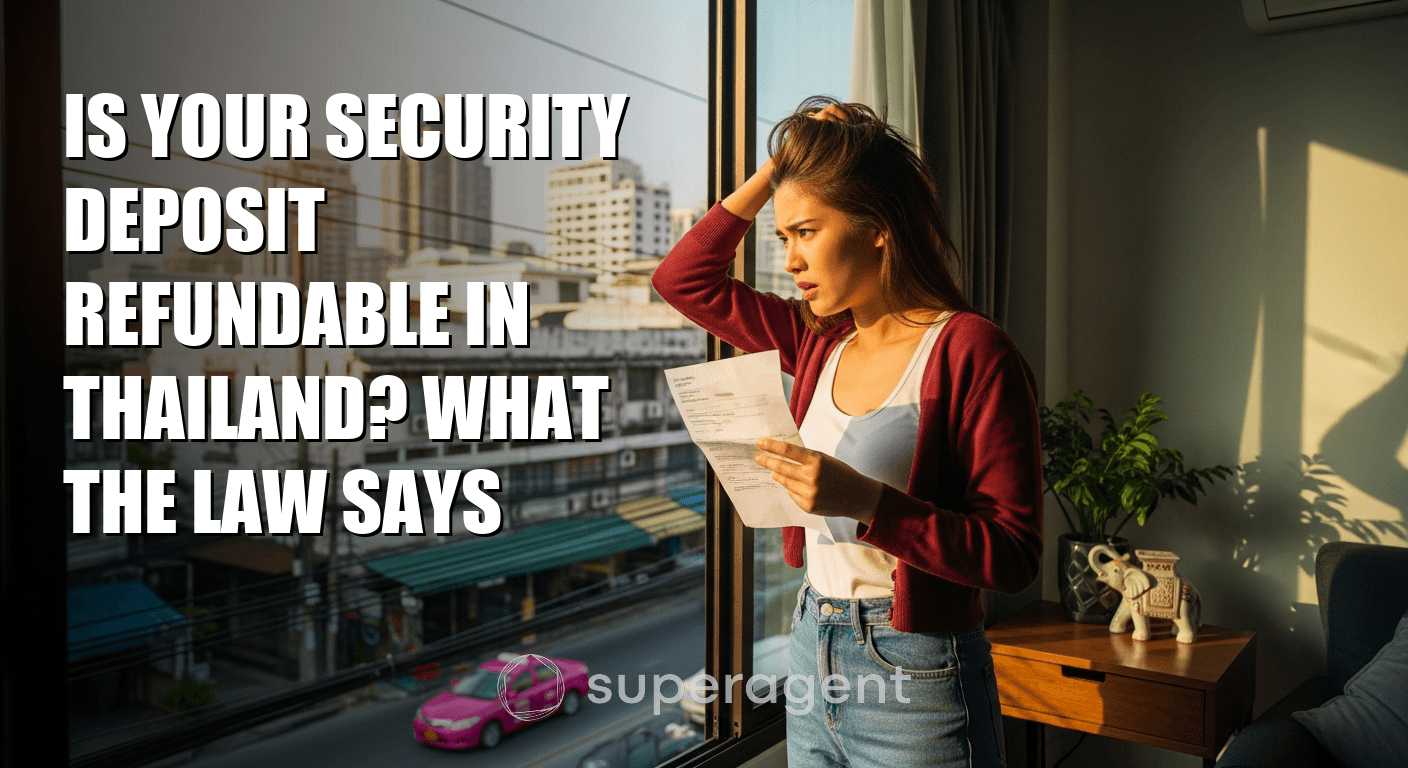
You moved into a nice one bedroom condo near BTS Phrom Phong, paid two months of rent as a security deposit, kept the place clean for a full year, and now your landlord is ghosting you when you ask for it back. Sound familiar? You are definitely not alone. The question of whether your security deposit is refundable in Thailand comes up constantly among renters here, and the answer is more straightforward than most landlords want you to believe.
What Thai Law Actually Says About Security Deposits
Here is the good news. Under Thai civil and commercial law, your security deposit is your money. It is held by the landlord as a guarantee against damage or unpaid rent, but it must be returned when the lease ends, assuming you have met your obligations. There is no law in Thailand that allows a landlord to simply keep your deposit because they feel like it.
In 2018, Thailand's Consumer Protection Board also issued a regulation specifically addressing residential leases. This rule caps security deposits at one month's rent for properties that fall under its scope, mainly larger operators and juristic persons managing multiple rental units. It also requires that the deposit be returned within 30 days of the lease ending.
Now, here is where it gets tricky. Many individual condo owners renting out a single unit may argue they fall outside these consumer protection rules. In practice, most landlords in Bangkok still collect two months as a deposit. If you are renting a 25,000 THB per month studio near MRT Phra Ram 9, that means 50,000 THB sitting in someone else's bank account. That is real money, and you deserve to know your rights.
Common Reasons Landlords Try to Keep Your Deposit
Let's say you rented a unit at The Base Park West near BTS On Nut for 15,000 THB per month. You lived there for a year, gave proper notice, and moved out on time. Then the landlord sends you a list of deductions that somehow eats up your entire 30,000 THB deposit. This happens all the time.
The most common deductions landlords attempt include repainting walls, deep cleaning, replacing appliances, and fixing "wear and tear" items. But here is the thing. Normal wear and tear is not something a landlord can legally charge you for. A slightly faded wall after 12 months of living? That is normal. A hole you punched through the drywall during a Muay Thai celebration? That is damage, and yes, they can deduct for that.
Some landlords also try to deduct for professional cleaning even when you left the place spotless. Others will claim the air conditioning units need servicing, or that the curtains need replacing. Always push back with photos. If you documented the condition of the unit when you moved in and when you moved out, you have a strong position.
How to Protect Your Deposit Before You Even Move In
Prevention starts on day one. Before signing a lease for that 35,000 THB per month two bedroom at Life Asoke Hype near MRT Phetchaburi, take photos and videos of every single room. Open every cabinet. Check under the sink. Test the air conditioning. Document any existing scratches, stains, or broken fixtures.
Get this documentation in writing as part of your lease agreement. Many good landlords will do a joint walkthrough and sign a condition report. If your landlord refuses to do this, consider it a red flag.
Your lease should also clearly state the conditions under which deductions can be made, the timeline for returning the deposit, and the process for resolving disputes. If the lease is only in Thai, get it translated or have a Thai speaking friend review it carefully. Do not sign anything you do not fully understand.
What to Do When a Landlord Refuses to Return Your Deposit
Picture this. You have moved out of your condo on Sukhumvit Soi 24, the place is spotless, and three weeks later you still have not heard a word about your 40,000 THB deposit. First step is always a polite but firm written request. Send a message via LINE or email clearly stating the move out date, the deposit amount, and your expectation for a full refund. Keep records of everything.
If the landlord still does not respond or refuses without valid reasons, you can file a complaint with the Office of the Consumer Protection Board (OCPB). You can also pursue the matter through the Thai Small Claims Court, which handles disputes up to 300,000 THB without requiring a lawyer. The process is relatively affordable, and many tenants have successfully recovered their deposits this way.
Some renters also find that simply mentioning the OCPB or small claims court in their communication suddenly motivates a landlord to cooperate. Funny how that works.
Why Renting Through a Reputable Platform Matters
A lot of deposit disputes happen because the rental was arranged informally. Maybe you found the listing on a Facebook group, dealt directly with an owner who had no standard lease template, and skipped the condition report. These situations create the perfect environment for deposit conflicts.
When you rent through a platform that provides standardized lease agreements, proper documentation, and transparent processes, you significantly reduce the risk of losing your deposit. Platforms also create accountability. A landlord who wants to keep attracting tenants through a reputable channel is far less likely to pull shady deposit tricks than one operating anonymously on social media.
Your security deposit is refundable in Thailand. The law is on your side, but only if you prepare properly, document everything, and know how to push back when a landlord tries to take what is yours. Whether you are renting a 12,000 THB studio near BTS Bearing or a 60,000 THB family unit in Thonglor, the same rules apply. Protect yourself from day one, and do not be afraid to assert your rights. If you are starting a new condo search and want to avoid deposit headaches altogether, check out superagent.co for listings with transparent terms and landlords who play by the rules.
You moved into a nice one bedroom condo near BTS Phrom Phong, paid two months of rent as a security deposit, kept the place clean for a full year, and now your landlord is ghosting you when you ask for it back. Sound familiar? You are definitely not alone. The question of whether your security deposit is refundable in Thailand comes up constantly among renters here, and the answer is more straightforward than most landlords want you to believe.
What Thai Law Actually Says About Security Deposits
Here is the good news. Under Thai civil and commercial law, your security deposit is your money. It is held by the landlord as a guarantee against damage or unpaid rent, but it must be returned when the lease ends, assuming you have met your obligations. There is no law in Thailand that allows a landlord to simply keep your deposit because they feel like it.
In 2018, Thailand's Consumer Protection Board also issued a regulation specifically addressing residential leases. This rule caps security deposits at one month's rent for properties that fall under its scope, mainly larger operators and juristic persons managing multiple rental units. It also requires that the deposit be returned within 30 days of the lease ending.
Now, here is where it gets tricky. Many individual condo owners renting out a single unit may argue they fall outside these consumer protection rules. In practice, most landlords in Bangkok still collect two months as a deposit. If you are renting a 25,000 THB per month studio near MRT Phra Ram 9, that means 50,000 THB sitting in someone else's bank account. That is real money, and you deserve to know your rights.
Continue reading after that.
Looking for a condo
to rent?
Leave your name and phone. We'll follow up while you keep reading.
100% Secure
Fast Response
Free Consultation
Common Reasons Landlords Try to Keep Your Deposit
Let's say you rented a unit at The Base Park West near BTS On Nut for 15,000 THB per month. You lived there for a year, gave proper notice, and moved out on time. Then the landlord sends you a list of deductions that somehow eats up your entire 30,000 THB deposit. This happens all the time.
The most common deductions landlords attempt include repainting walls, deep cleaning, replacing appliances, and fixing "wear and tear" items. But here is the thing. Normal wear and tear is not something a landlord can legally charge you for. A slightly faded wall after 12 months of living? That is normal. A hole you punched through the drywall during a Muay Thai celebration? That is damage, and yes, they can deduct for that.
Some landlords also try to deduct for professional cleaning even when you left the place spotless. Others will claim the air conditioning units need servicing, or that the curtains need replacing. Always push back with photos. If you documented the condition of the unit when you moved in and when you moved out, you have a strong position.
How to Protect Your Deposit Before You Even Move In
Prevention starts on day one. Before signing a lease for that 35,000 THB per month two bedroom at Life Asoke Hype near MRT Phetchaburi, take photos and videos of every single room. Open every cabinet. Check under the sink. Test the air conditioning. Document any existing scratches, stains, or broken fixtures.
Get this documentation in writing as part of your lease agreement. Many good landlords will do a joint walkthrough and sign a condition report. If your landlord refuses to do this, consider it a red flag.
Your lease should also clearly state the conditions under which deductions can be made, the timeline for returning the deposit, and the process for resolving disputes. If the lease is only in Thai, get it translated or have a Thai speaking friend review it carefully. Do not sign anything you do not fully understand.
What to Do When a Landlord Refuses to Return Your Deposit
Picture this. You have moved out of your condo on Sukhumvit Soi 24, the place is spotless, and three weeks later you still have not heard a word about your 40,000 THB deposit. First step is always a polite but firm written request. Send a message via LINE or email clearly stating the move out date, the deposit amount, and your expectation for a full refund. Keep records of everything.
If the landlord still does not respond or refuses without valid reasons, you can file a complaint with the Office of the Consumer Protection Board (OCPB). You can also pursue the matter through the Thai Small Claims Court, which handles disputes up to 300,000 THB without requiring a lawyer. The process is relatively affordable, and many tenants have successfully recovered their deposits this way.
Continue reading after that.
Looking for a condo
to rent?
Leave your name and phone. We'll follow up while you keep reading.
100% Secure
Fast Response
Free Consultation
Some renters also find that simply mentioning the OCPB or small claims court in their communication suddenly motivates a landlord to cooperate. Funny how that works.
Why Renting Through a Reputable Platform Matters
A lot of deposit disputes happen because the rental was arranged informally. Maybe you found the listing on a Facebook group, dealt directly with an owner who had no standard lease template, and skipped the condition report. These situations create the perfect environment for deposit conflicts.
When you rent through a platform that provides standardized lease agreements, proper documentation, and transparent processes, you significantly reduce the risk of losing your deposit. Platforms also create accountability. A landlord who wants to keep attracting tenants through a reputable channel is far less likely to pull shady deposit tricks than one operating anonymously on social media.
Your security deposit is refundable in Thailand. The law is on your side, but only if you prepare properly, document everything, and know how to push back when a landlord tries to take what is yours. Whether you are renting a 12,000 THB studio near BTS Bearing or a 60,000 THB family unit in Thonglor, the same rules apply. Protect yourself from day one, and do not be afraid to assert your rights. If you are starting a new condo search and want to avoid deposit headaches altogether, check out superagent.co for listings with transparent terms and landlords who play by the rules.
Share this article
Properties you may like
![[For Rent] CONDO I Las Colinas Condominium I 2 Beds I 3 Baths I 85,000THB/mo](/_next/image?url=https%3A%2F%2Fstorage.googleapis.com%2Fsuperagent-web%2Fattachments%2Flistings%2F6828%2F80f345c4-488e-43b2-b017-c9fbb17b520d-99486dd8-4237-4ba2-9207-01ce4f66b21f-media.jpg&w=3840&q=75)
฿85,000
2 Bed3170 sqm
[For Rent] CONDO I Las Colinas Condominium I 2 Beds I 3 Baths I 85,000THB/mo
Asoke
Condo![[For Rent] CONDO I Aspire Sukhumvit 48 I 2 Beds I 2 Baths I 24,000THB/mo](/_next/image?url=https%3A%2F%2Fstorage.googleapis.com%2Fsuperagent-web%2Fattachments%2Flistings%2F1199%2F130cd37f-3e03-4538-ad28-bdb3d47916ce-93-9.jpg&w=3840&q=75)
฿24,000
2 Bed254 sqm
[For Rent] CONDO I Aspire Sukhumvit 48 I 2 Beds I 2 Baths I 24,000THB/mo
On Nut
Condo![[For Rent] CONDO I BEATNIQ Sukhumvit32 I 2 Beds I 1 Baths I 110,000THB/mo](/_next/image?url=https%3A%2F%2Fstorage.googleapis.com%2Fsuperagent-web%2Fattachments%2Flistings%2F6806%2F8024fbb5-880d-428a-b7f7-d8caf46fe4d1-1190-1.jpg&w=3840&q=75)
฿110,000
2 Bed1107 sqm
[For Rent] CONDO I BEATNIQ Sukhumvit32 I 2 Beds I 1 Baths I 110,000THB/mo
Phrom Phong
Condo![[For Rent] CONDO I The Diplomat 39 I 2 Beds I 2 Baths I 89,000THB/mo](/_next/image?url=https%3A%2F%2Fstorage.googleapis.com%2Fsuperagent-web%2Fattachments%2Flistings%2F6784%2Ff92c62cc-d3be-42df-adca-b8f96fb02cfb-1163-1.jpg&w=3840&q=75)
฿89,000
2 Bed286 sqm
[For Rent] CONDO I The Diplomat 39 I 2 Beds I 2 Baths I 89,000THB/mo
Phrom Phong
Condo![[For Rent] CONDO I Noble State 39 I 3 Beds I 2 Baths I 85,000 THB/mo](/_next/image?url=https%3A%2F%2Fstorage.googleapis.com%2Fsuperagent-web%2Fattachments%2Flistings%2F1454%2Fdc7f3742-b148-4d56-9e26-1961f002d674-384-19.jpg&w=3840&q=75)
฿85,000
3 Bed285 sqm
[For Rent] CONDO I Noble State 39 I 3 Beds I 2 Baths I 85,000 THB/mo
Phrom Phong
Condo![[For Rent] CONDO I Piyathip Place I 2 Beds I 2 Baths I 77,000THB/mo](/_next/image?url=https%3A%2F%2Fstorage.googleapis.com%2Fsuperagent-web%2Fattachments%2Flistings%2F6817%2F2943cf16-53ee-4779-8edb-2e1be7291556-1191-1.jpg&w=3840&q=75)
฿77,000
2 Bed2173 sqm
[For Rent] CONDO I Piyathip Place I 2 Beds I 2 Baths I 77,000THB/mo
Condo
฿28,000
1 Bed167 sqm
1-BR Condo at Wittayu Complex near BTS Phloen Chit
Condo
฿23,000
2 Bed150 sqm
2-BR Condo at Life Sukhumvit 48 near BTS Phra Khanong
On Nut
Condo![[For Rent] CONDO I Maestro 14 Siam-Ratchathewi Pet Friendly I 1 Bed I 1 Bath I 22,000THB/mo](/_next/image?url=https%3A%2F%2Fstorage.googleapis.com%2Fsuperagent-web%2Fattachments%2Flistings%2F6686%2F5ae8a77f-b6fb-4578-a765-e56f493cd25f-1058.png&w=3840&q=75)
฿25,000
1 Bed130 sqm
[For Rent] CONDO I Maestro 14 Siam-Ratchathewi Pet Friendly I 1 Bed I 1 Bath I 22,000THB/mo
Siam
Condo![[For Rent] CONDO I KEN Attitude Rattanathibet I Duplex I 2 Beds I 2 Baths I 40,000THB/mo](/_next/image?url=https%3A%2F%2Fstorage.googleapis.com%2Fsuperagent-web%2Fattachments%2Flistings%2F6852%2F17c1715e-4458-4008-bb0b-072a4c081166-img_0557.jpeg&w=3840&q=75)
฿40,000
2 Bed277 sqm
[For Rent] CONDO I KEN Attitude Rattanathibet I Duplex I 2 Beds I 2 Baths I 40,000THB/mo
CondoMore like this
 In Guides · Superagent EditorialHidden Costs of Renting a Condo in Bangkok Nobody Warns You AboutBangkok condo rent looks affordable until month one hits. Here are the real costs beyond the headline figure that catch most renters off guard.25 May 20261 min read
 In Guides · Superagent EditorialWhat a Long-Vacant Bangkok Condo Unit Is Actually Telling YouA Bangkok condo vacant for months signals overpricing, landlord issues, or real problems. Here is how to read the signs.25 May 20261 min read
 In Guides · Superagent EditorialRed Flags in a Bangkok Rental Contract to Watch Out ForBangkok rental contracts often hide risky clauses. Here are the red flags every tenant must catch before signing any lease.25 May 20261 min read
 In Guides · Superagent EditorialWorking Online from a Condo: How to Choose the Perfect Room for ProductivityLearn how to choose the best condo room for working online with tips on lighting, noise, and furniture setup to maximize productivity.9 May 20261 min read