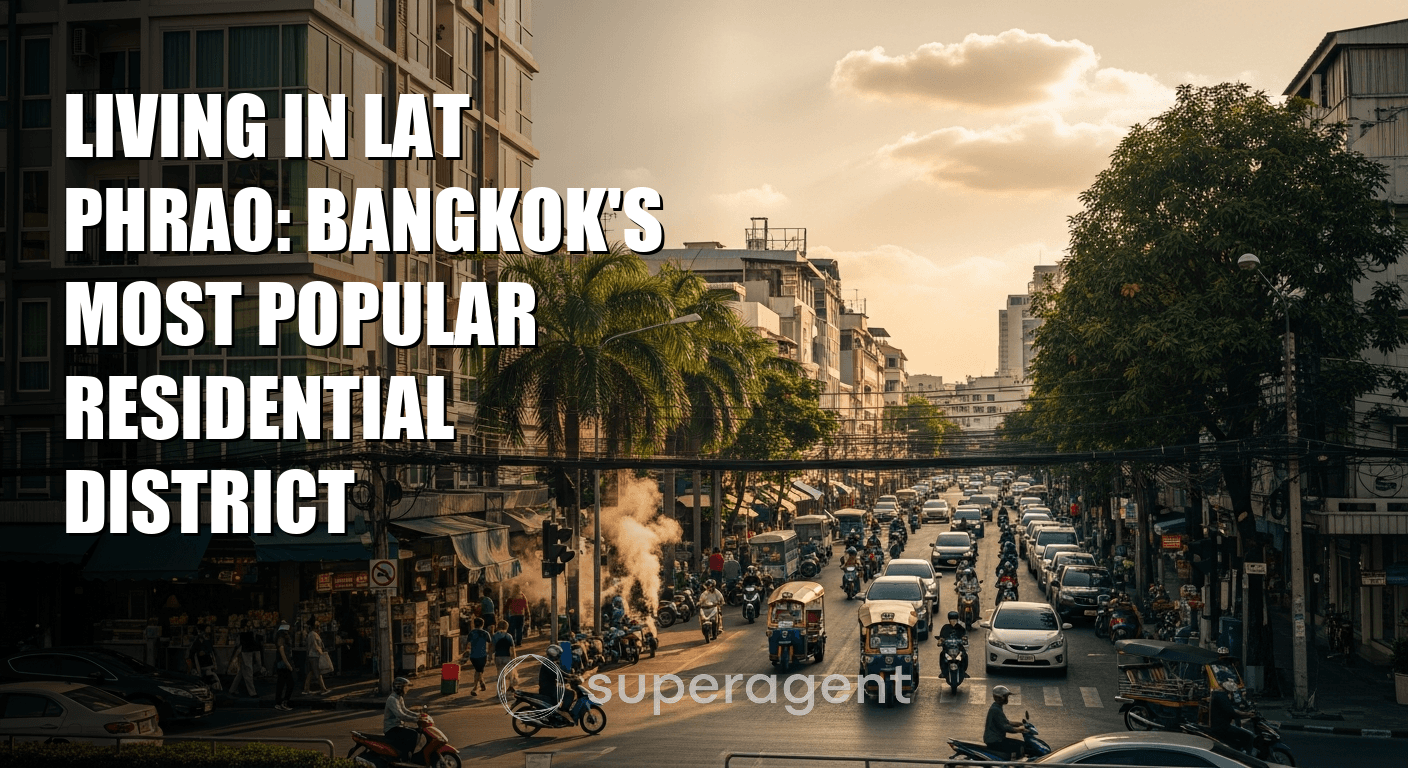
Living in Lat Phrao: Bangkok's Most Popular Residential District
Guides
Living in Lat Phrao: Bangkok's Most Popular Residential District
Discover why Lat Phrao is the go-to neighborhood for Bangkok residents seeking convenience and community.
Summary
อาศัยย่านลาดพร้าว offers urban convenience, excellent transport links, and vibrant local culture. Explore this popular Bangkok residential area for modern
If you're hunting for a condo rental in Bangkok right now, chances are someone's mentioned Ladprao to you. And for good reason. This neighborhood sits right in the middle of a sweet spot: it's got real Bangkok character, decent transport links, and prices that won't drain your bank account the way Thonglor or Ari might. Whether you're a first-time expat, a remote worker, or a Bangkok veteran looking for a quieter base, Ladprao delivers a lifestyle that actually works for people who live here year-round, not just tourists passing through.
Why Ladprao Works: The Neighborhood at a Glance
Ladprao isn't glamorous. That's kind of the point. It's a working neighborhood where Thai families have lived for decades, where street food vendors set up the same spots every morning, and where you'll find actual Bangkok life happening on the sois rather than just in malls and rooftop bars.
The area runs roughly from the Ladprao MRT station (MRT Purple Line) all the way through to the BTS lines at Chatuchak and Morph. You get transport options without the suffocating crowds of Silom or Sukhumvit. Rent for a decent one-bedroom condo here runs between 18,000 and 28,000 THB per month, depending on building age, amenities, and exact location. For a two-bedroom, expect 28,000 to 40,000 THB. That's significantly less than comparable units in On Nut or Ekkamai.
Real example: A friend of mine rented a modern 50-square-meter one-bed in a recently renovated building on Ladprao Soi 50 for 22,000 THB last year. Same unit in Thonglor would have been double that price.
Getting Around: Transport That Actually Works
This is where Ladprao shines if you don't want to depend entirely on taxis or Grab. The Ladprao MRT Purple Line station is central to the whole neighborhood and connects directly to Rat Burana (toward the river), or north through Bang Bua, Yaowarat, and into Rangsit. If you work near Bang Kapi or the northern business zones, this line cuts commute time in half.
The BTS isn't quite as close, but Chatuchak Park BTS (Skytrain Green Line) is a short bike ride or songthaew ride away. And if you need to head south toward Rama IX or east toward the airport, the local buses from Ladprao Road are reliable and cheap, though they're not the fastest option.
According to MRT Bangkok, the Ladprao line runs every 3 to 5 minutes during peak hours, which beats most of Bangkok. You're looking at about 15 minutes to Chatuchak Junction or 20 minutes down to Rat Burana from here.
The reality: if you work on Sukhumvit and take the MRT daily, you'll spend about 25 minutes door-to-door from most Ladprao buildings. Not bad for Bangkok.
What You Actually Get: Shopping, Food, and Daily Life
Ladprao isn't trying to be Emporium or EmQuartier. You won't find luxury boutiques or Michelin-listed restaurants. What you will find is a fully functional neighborhood where you can buy groceries, eat well, and handle life without overthinking it.
Big C Ladprao (the hypermarket on Ladprao Road near Soi 101) is your anchor for supermarket shopping, with imported goods, fresh produce, and Western products. It's busier on weekends but manageable. For everyday stuff, you've got 7-Elevens on nearly every corner and smaller Thai grocery shops on the sois.
Food? This is where Ladprao gets real. Ladprao Road itself is lined with old shophouses serving boat noodles, khao man gai, and som tam that locals have been eating for 20 years. Soi Ladprao 50 and Soi 100 have some solid Thai-style restaurants and casual places where a meal for two runs 200 to 300 THB. If you need coffee culture, there are independent cafes scattered around, though nothing matching the density of Ekkamai or Thonglor.
You're also close to Chatuchak Market (a short BTS ride) if you're into weekend hunting for used furniture, clothes, or vintage finds. Chatuchak is one of the world's largest weekend markets, and living in Ladprao puts you near enough to visit regularly without the neighborhood being overrun by tourists.
Condo Buildings Worth Your Time
Ladprao has dozens of condo projects, from older five-story walk-ups to newer mid-rise buildings. Here's what stands out if you're actually looking to move here.
The newer buildings (built in the last 8-10 years) tend to cluster around Ladprao Soi 50, 74, and 101. These offer gyms, pools, co-working spaces, and parking that actually fits your car. Expect to pay 25,000 to 35,000 THB for a one-bedroom in these. Older but well-maintained buildings on the sois (especially Soi 60 and Soi 80) run 15,000 to 22,000 THB and often come with less flashy amenities but more character and neighborhood integration.
The sweet spot for most people: buildings built between 2012 and 2018 that have been recently renovated. You get solid construction, decent amenities, and prices that sit in the middle rather than extremes. Buildings near the MRT Purple Line tend to be pricier but offer that commute advantage.
One specific note: buildings directly on Ladprao Road itself can be noisier from traffic. If you're sensitive to road noise, request a unit on higher floors or on the quieter sois one or two blocks back.
Who Lives Here (And Whether You'll Fit In)
Ladprao attracts a specific crowd. You've got established Thai families, working-age Thais with young kids, and a growing number of expats who chose it intentionally rather than defaulting to Sukhumvit because everyone else lives there.
The expat community here is smaller and older than in Thonglor or Ari, meaning less nightlife culture and fewer backpacker bars, but also fewer people trying to party at 2 AM on your doorstep. If you work remotely, this is actually appealing. If you're 25 and looking to party every weekend, you'll probably feel bored within a month.
There's a solid contingent of remote workers, digital nomads who stayed, and people who transferred to Bangkok on expat packages and chose this area specifically because it's less expensive while still being fully functional. The Facebook groups for Ladprao and the surrounding area tend to be practical and helpful rather than chaotic.
Cost Comparison: Ladprao vs. Common Alternatives
- Ladprao: 18,000-28,000 | 28,000-40,000 | Ladprao MRT, near Chatuchak BTS | Mixed, neighborhood feel
- Thonglor: 28,000-45,000 | 42,000-65,000 | Thonglor BTS, On Nut MRT | High, bars and restaurants
- Ari: 22,000-35,000 | 32,000-50,000 | Ari BTS | High, cafes and boutiques
- Ekkamai: 20,000-32,000 | 30,000-45,000 | Ekkamai BTS and bus terminal | Medium, trendy spots
- Rama IX: 16,000-24,000 | 24,000-36,000 | Rama IX MRT | Lower, more residential
Data pulled from DDproperty rental listings and Fazwaz Thailand market surveys.
School and Family Considerations
If you're moving with kids, Ladprao sits reasonably close to several solid international schools. Assumption Cathedral School, St. Louis College, and a few smaller English-curriculum options are within 15 to 20 minutes by car depending on which Ladprao soi you land on. Thai government schools in the area are decent by neighborhood standards, though expat families typically lean toward international options.
Healthcare is solid here too. There are multiple private clinics on Ladprao Road, and Bumrungrad International Hospital is easily reachable via MRT plus a short ride, making this neighborhood reasonable if medical access matters to you.
Families with young kids often like Ladprao because it's quieter than Thonglor, has real Thai community feel (which some families prefer for cultural exposure), and doesn't carry the noise or party reputation of trendier neighborhoods. Playgrounds and small parks exist on several sois, though they're not elaborate.
Practical Moving Advice
If you decide to look here, start your search on the sois rather than just scrolling Ladprao Road. The road itself is convenient but louder. Soi Ladprao 50, 60, 74, 80, and 101 tend to offer better quiet-to-convenience balance. Walk the area at different times: mornings when shops open, evenings when traffic peaks, weekends when the neighborhood's rhythm is visible.
Check MRT access carefully if commuting matters. Not every building is actually close to the station, and what looks close on Google Maps might be a longer walk or in the wrong direction. Ask building staff about parking if you drive, about water pressure on upper floors, and about weekend maintenance schedules.
Visit on a weekday evening and grab food from one of the street stalls. You'll get a real sense of whether this neighborhood feels like home or just a cheap option. That gut reaction matters more than any article.
If Ladprao is pulling you in, start exploring buildings on Superagent.co, where you can filter by price, amenities, and exact soi location. You'll find recent listings with actual photos, floor plans, and agent contacts who know the neighborhood cold. The platform makes it easy to compare units side-by-side and reach out to buildings directly without the hassle of going through traditional Thai real estate offices that move slowly.
If you're hunting for a condo rental in Bangkok right now, chances are someone's mentioned Ladprao to you. And for good reason. This neighborhood sits right in the middle of a sweet spot: it's got real Bangkok character, decent transport links, and prices that won't drain your bank account the way Thonglor or Ari might. Whether you're a first-time expat, a remote worker, or a Bangkok veteran looking for a quieter base, Ladprao delivers a lifestyle that actually works for people who live here year-round, not just tourists passing through.
Why Ladprao Works: The Neighborhood at a Glance
Ladprao isn't glamorous. That's kind of the point. It's a working neighborhood where Thai families have lived for decades, where street food vendors set up the same spots every morning, and where you'll find actual Bangkok life happening on the sois rather than just in malls and rooftop bars.
The area runs roughly from the Ladprao MRT station (MRT Purple Line) all the way through to the BTS lines at Chatuchak and Morph. You get transport options without the suffocating crowds of Silom or Sukhumvit. Rent for a decent one-bedroom condo here runs between 18,000 and 28,000 THB per month, depending on building age, amenities, and exact location. For a two-bedroom, expect 28,000 to 40,000 THB. That's significantly less than comparable units in On Nut or Ekkamai.
Real example: A friend of mine rented a modern 50-square-meter one-bed in a recently renovated building on Ladprao Soi 50 for 22,000 THB last year. Same unit in Thonglor would have been double that price.
Getting Around: Transport That Actually Works
This is where Ladprao shines if you don't want to depend entirely on taxis or Grab. The Ladprao MRT Purple Line station is central to the whole neighborhood and connects directly to Rat Burana (toward the river), or north through Bang Bua, Yaowarat, and into Rangsit. If you work near Bang Kapi or the northern business zones, this line cuts commute time in half.
The BTS isn't quite as close, but Chatuchak Park BTS (Skytrain Green Line) is a short bike ride or songthaew ride away. And if you need to head south toward Rama IX or east toward the airport, the local buses from Ladprao Road are reliable and cheap, though they're not the fastest option.
According to MRT Bangkok, the Ladprao line runs every 3 to 5 minutes during peak hours, which beats most of Bangkok. You're looking at about 15 minutes to Chatuchak Junction or 20 minutes down to Rat Burana from here.
The reality: if you work on Sukhumvit and take the MRT daily, you'll spend about 25 minutes door-to-door from most Ladprao buildings. Not bad for Bangkok.
What You Actually Get: Shopping, Food, and Daily Life
Ladprao isn't trying to be Emporium or EmQuartier. You won't find luxury boutiques or Michelin-listed restaurants. What you will find is a fully functional neighborhood where you can buy groceries, eat well, and handle life without overthinking it.
Big C Ladprao (the hypermarket on Ladprao Road near Soi 101) is your anchor for supermarket shopping, with imported goods, fresh produce, and Western products. It's busier on weekends but manageable. For everyday stuff, you've got 7-Elevens on nearly every corner and smaller Thai grocery shops on the sois.
Food? This is where Ladprao gets real. Ladprao Road itself is lined with old shophouses serving boat noodles, khao man gai, and som tam that locals have been eating for 20 years. Soi Ladprao 50 and Soi 100 have some solid Thai-style restaurants and casual places where a meal for two runs 200 to 300 THB. If you need coffee culture, there are independent cafes scattered around, though nothing matching the density of Ekkamai or Thonglor.
You're also close to Chatuchak Market (a short BTS ride) if you're into weekend hunting for used furniture, clothes, or vintage finds. Chatuchak is one of the world's largest weekend markets, and living in Ladprao puts you near enough to visit regularly without the neighborhood being overrun by tourists.
Condo Buildings Worth Your Time
Ladprao has dozens of condo projects, from older five-story walk-ups to newer mid-rise buildings. Here's what stands out if you're actually looking to move here.
The newer buildings (built in the last 8-10 years) tend to cluster around Ladprao Soi 50, 74, and 101. These offer gyms, pools, co-working spaces, and parking that actually fits your car. Expect to pay 25,000 to 35,000 THB for a one-bedroom in these. Older but well-maintained buildings on the sois (especially Soi 60 and Soi 80) run 15,000 to 22,000 THB and often come with less flashy amenities but more character and neighborhood integration.
The sweet spot for most people: buildings built between 2012 and 2018 that have been recently renovated. You get solid construction, decent amenities, and prices that sit in the middle rather than extremes. Buildings near the MRT Purple Line tend to be pricier but offer that commute advantage.
One specific note: buildings directly on Ladprao Road itself can be noisier from traffic. If you're sensitive to road noise, request a unit on higher floors or on the quieter sois one or two blocks back.
Who Lives Here (And Whether You'll Fit In)
Ladprao attracts a specific crowd. You've got established Thai families, working-age Thais with young kids, and a growing number of expats who chose it intentionally rather than defaulting to Sukhumvit because everyone else lives there.
Talk to us about renting
Share your details and keep reading — we’ll get back to you.
The expat community here is smaller and older than in Thonglor or Ari, meaning less nightlife culture and fewer backpacker bars, but also fewer people trying to party at 2 AM on your doorstep. If you work remotely, this is actually appealing. If you're 25 and looking to party every weekend, you'll probably feel bored within a month.
There's a solid contingent of remote workers, digital nomads who stayed, and people who transferred to Bangkok on expat packages and chose this area specifically because it's less expensive while still being fully functional. The Facebook groups for Ladprao and the surrounding area tend to be practical and helpful rather than chaotic.
Cost Comparison: Ladprao vs. Common Alternatives
- Ladprao: 18,000-28,000 | 28,000-40,000 | Ladprao MRT, near Chatuchak BTS | Mixed, neighborhood feel
- Thonglor: 28,000-45,000 | 42,000-65,000 | Thonglor BTS, On Nut MRT | High, bars and restaurants
- Ari: 22,000-35,000 | 32,000-50,000 | Ari BTS | High, cafes and boutiques
- Ekkamai: 20,000-32,000 | 30,000-45,000 | Ekkamai BTS and bus terminal | Medium, trendy spots
- Rama IX: 16,000-24,000 | 24,000-36,000 | Rama IX MRT | Lower, more residential
Data pulled from DDproperty rental listings and Fazwaz Thailand market surveys.
School and Family Considerations
If you're moving with kids, Ladprao sits reasonably close to several solid international schools. Assumption Cathedral School, St. Louis College, and a few smaller English-curriculum options are within 15 to 20 minutes by car depending on which Ladprao soi you land on. Thai government schools in the area are decent by neighborhood standards, though expat families typically lean toward international options.
Healthcare is solid here too. There are multiple private clinics on Ladprao Road, and Bumrungrad International Hospital is easily reachable via MRT plus a short ride, making this neighborhood reasonable if medical access matters to you.
Families with young kids often like Ladprao because it's quieter than Thonglor, has real Thai community feel (which some families prefer for cultural exposure), and doesn't carry the noise or party reputation of trendier neighborhoods. Playgrounds and small parks exist on several sois, though they're not elaborate.
Practical Moving Advice
If you decide to look here, start your search on the sois rather than just scrolling Ladprao Road. The road itself is convenient but louder. Soi Ladprao 50, 60, 74, 80, and 101 tend to offer better quiet-to-convenience balance. Walk the area at different times: mornings when shops open, evenings when traffic peaks, weekends when the neighborhood's rhythm is visible.
Check MRT access carefully if commuting matters. Not every building is actually close to the station, and what looks close on Google Maps might be a longer walk or in the wrong direction. Ask building staff about parking if you drive, about water pressure on upper floors, and about weekend maintenance schedules.
Visit on a weekday evening and grab food from one of the street stalls. You'll get a real sense of whether this neighborhood feels like home or just a cheap option. That gut reaction matters more than any article.
If Ladprao is pulling you in, start exploring buildings on Superagent.co, where you can filter by price, amenities, and exact soi location. You'll find recent listings with actual photos, floor plans, and agent contacts who know the neighborhood cold. The platform makes it easy to compare units side-by-side and reach out to buildings directly without the hassle of going through traditional Thai real estate offices that move slowly.
Share this article
Properties you may like
![[For Rent] CONDO I Aguston Sukhumvit 22 I Pet Friendly I 2 Beds I 2 Baths I Rent 55,000THB/mo](/_next/image?url=https%3A%2F%2Fstorage.googleapis.com%2Fsuperagent-web%2Fattachments%2Flistings%2F2266%2Fd3afcd25-6b79-46cb-9f1f-396acdc3dd10-955-3.jpg&w=3840&q=75)
฿55,000
2 Bed295 sqm
[For Rent] CONDO I Aguston Sukhumvit 22 I Pet Friendly I 2 Beds I 2 Baths I Rent 55,000THB/mo
Phrom Phong
Condo![[For Rent] CONDO I SUPALAI PLACE Sukhumvit 39 I 2 Beds I 2 Baths (1 Jacuzzi) I 55,555THB/mo](/_next/image?url=https%3A%2F%2Fstorage.googleapis.com%2Fsuperagent-web%2Fattachments%2Flistings%2F6743%2Fba530743-48b9-4ac6-92d3-c2247e743cf6-01-supalai-place-skv39-2b-link-heaven.jpg&w=3840&q=75)
฿55,555
2 Bed2142 sqm
[For Rent] CONDO I SUPALAI PLACE Sukhumvit 39 I 2 Beds I 2 Baths (1 Jacuzzi) I 55,555THB/mo
Phrom Phong
Condo![[For Rent] CONDO I Maru Ekkamai 2 I Pet friendly I 2 Beds I 2 Baths I 68,000 THB/mo](/_next/image?url=https%3A%2F%2Fstorage.googleapis.com%2Fsuperagent-web%2Fattachments%2Flistings%2F6602%2F9f1d8f71-ee43-435f-9a44-da16c4092c92-968-1.jpg&w=3840&q=75)
฿68,000
2 Bed360 sqm
[For Rent] CONDO I Maru Ekkamai 2 I Pet friendly I 2 Beds I 2 Baths I 68,000 THB/mo
Ekkamai
Condo![[For Rent] CONDO I Noble State 39 I 2 Beds I 2 Baths I 63,000THB/mo](/_next/image?url=https%3A%2F%2Fstorage.googleapis.com%2Fsuperagent-web%2Fattachments%2Flistings%2F2237%2F60eb58f3-eae5-41ed-a80b-406e004f05d8-940-1.jpg&w=3840&q=75)
฿63,000
2 Bed260 sqm
[For Rent] CONDO I Noble State 39 I 2 Beds I 2 Baths I 63,000THB/mo
Phrom Phong
Condo![[For Rent] CONDO I Rhythm Sukhumvit 36-38 I 2 Beds I 2 Baths I 38,999THB/mo](/_next/image?url=https%3A%2F%2Fstorage.googleapis.com%2Fsuperagent-web%2Fattachments%2Flistings%2F1788%2F942a0215-4128-4c2c-a064-f607e84e7aa4-656-2.jpg&w=3840&q=75)
฿38,999
2 Bed256 sqm
[For Rent] CONDO I Rhythm Sukhumvit 36-38 I 2 Beds I 2 Baths I 38,999THB/mo
Thonglor
Condo![[For Rent] CONDO I CLOUD Thonglor-Phetchaburi I 1 Bed I 1 Bath I 22,500THB/mo](/_next/image?url=https%3A%2F%2Fstorage.googleapis.com%2Fsuperagent-web%2Fattachments%2Flistings%2F6742%2F6cef5361-0dac-4dba-98f1-b0d187559c84-1118-1.jpg&w=3840&q=75)
฿22,500
1 Bed132 sqm
[For Rent] CONDO I CLOUD Thonglor-Phetchaburi I 1 Bed I 1 Bath I 22,500THB/mo
Thonglor
Condo![[For Rent] CONDO I City Smart Sukhumvit 18 I 3 Beds I 3 Baths I 65,000mo/THB](/_next/image?url=https%3A%2F%2Fstorage.googleapis.com%2Fsuperagent-web%2Fattachments%2Flistings%2F6741%2Fd371c89d-a913-42c4-a673-e540afae4f46-1116-1.jpg&w=3840&q=75)
฿65,000
3 Bed3125 sqm
[For Rent] CONDO I City Smart Sukhumvit 18 I 3 Beds I 3 Baths I 65,000mo/THB
Condo![[For Rent] CONDO I The Coast Bangkok I 1 Bed I 1 Bath I 20,000mo/THB](/_next/image?url=https%3A%2F%2Fstorage.googleapis.com%2Fsuperagent-web%2Fattachments%2Flistings%2F6740%2F498477ce-4ffa-4e4c-ab08-0e565d9c4bbe-1115-3.jpg&w=3840&q=75)
฿20,000
1 Bed146 sqm
[For Rent] CONDO I The Coast Bangkok I 1 Bed I 1 Bath I 20,000mo/THB
Bang Na
Condo![[For Rent] CONDO I IDEO Sukhumvit-RAMA 4 I 2 Beds I 2 Baths I 55,000mo/THB](/_next/image?url=https%3A%2F%2Fstorage.googleapis.com%2Fsuperagent-web%2Fattachments%2Flistings%2F6739%2F15df221d-5b8e-497c-b7ce-a6b9b6412cab-1113-1.jpg&w=3840&q=75)
฿55,000
2 Bed265 sqm
[For Rent] CONDO I IDEO Sukhumvit-RAMA 4 I 2 Beds I 2 Baths I 55,000mo/THB
Phra Khanong
Condo![[For Rent] CONDO I Downtown 49 I Pet Friendly I 1 Bed I 1 Bath I 23,000mo/THB](/_next/image?url=https%3A%2F%2Fstorage.googleapis.com%2Fsuperagent-web%2Fattachments%2Flistings%2F6738%2F11cf2ffe-1f01-4ccc-991c-2ad608f1ba73-1112-1.jpg&w=3840&q=75)
฿23,000
1 Bed135 sqm
[For Rent] CONDO I Downtown 49 I Pet Friendly I 1 Bed I 1 Bath I 23,000mo/THB
Thonglor
CondoMore like this
 In Guides · Superagent EditorialHidden Costs of Renting a Condo in Bangkok Nobody Warns You AboutBangkok condo rent looks affordable until month one hits. Here are the real costs beyond the headline figure that catch most renters off guard.25 May 20261 min read
 In Guides · Superagent EditorialWhat a Long-Vacant Bangkok Condo Unit Is Actually Telling YouA Bangkok condo vacant for months signals overpricing, landlord issues, or real problems. Here is how to read the signs.25 May 20261 min read
 In Guides · Superagent EditorialRed Flags in a Bangkok Rental Contract to Watch Out ForBangkok rental contracts often hide risky clauses. Here are the red flags every tenant must catch before signing any lease.25 May 20261 min read
 In Guides · Superagent EditorialWorking Online from a Condo: How to Choose the Perfect Room for ProductivityLearn how to choose the best condo room for working online with tips on lighting, noise, and furniture setup to maximize productivity.9 May 20261 min read