Magnetic Card Door Systems in Condos: How Safe Are They and How to Use Them
Guides
Magnetic Card Door Systems in Condos: How Safe Are They and How to Use Them
Learn how magnetic card access systems work and whether they're truly secure for condo living.
Summary
ประตูบัตรแมกเนติกคอนโด offers convenient access control, but how secure are these systems really? Discover safety features and best practices for condo res
If you've rented a condo in Bangkok in the last five years, you've almost certainly dealt with a magnetic card door system. It's probably the first thing you test when the landlord hands over your keys: swipe the card, wait for the click, push. Sometimes it works. Sometimes you're standing in the lobby at 11 PM while your card refuses to cooperate. But here's what most renters don't know: these systems are actually more sophisticated, more secure, and frankly more finicky than most people realize. Understanding how they work, what their real security limits are, and how to use them properly can save you a lot of frustration, and potentially some money too.
How Magnetic Card Door Systems Actually Work in Bangkok Condos
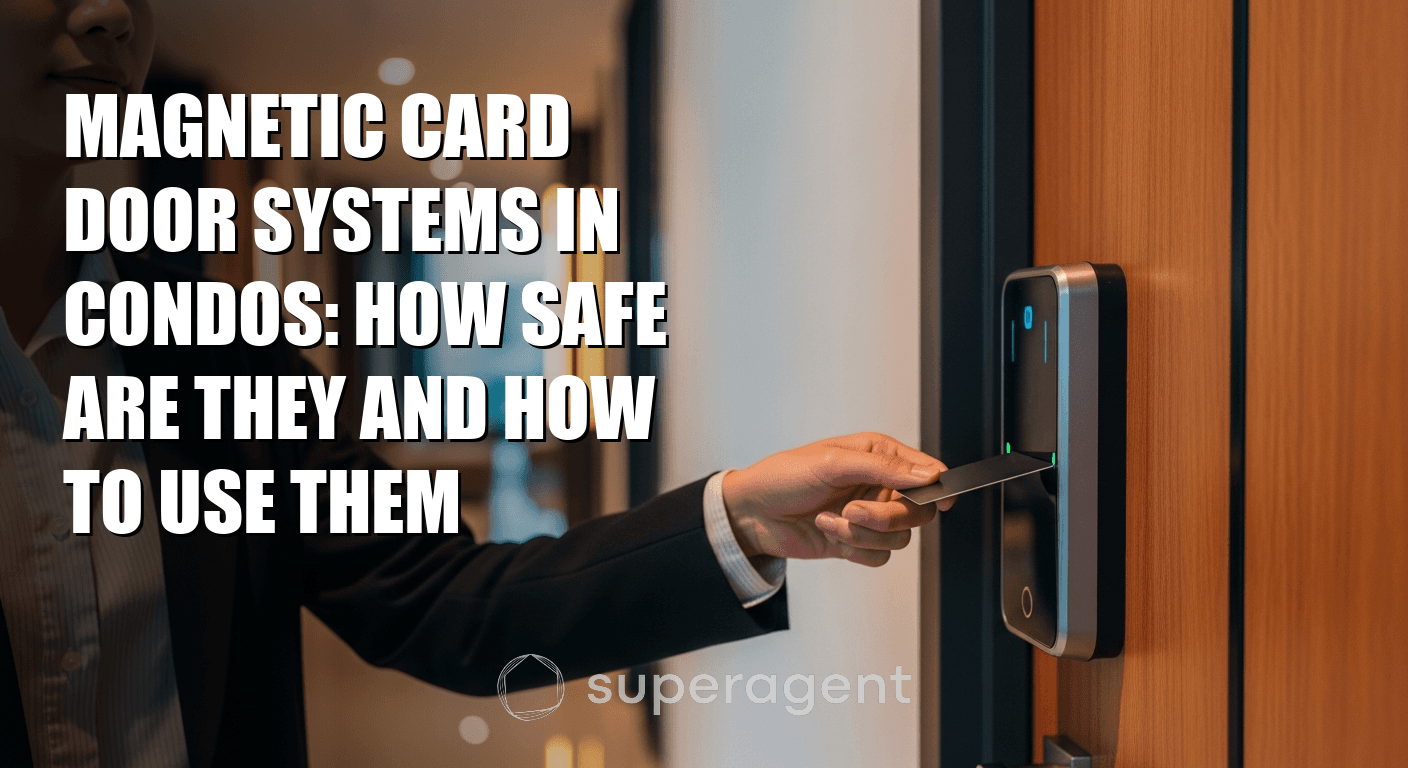
The magnetic card system you swipe at your condo's main entrance and unit door is based on pretty straightforward technology. Your card contains a magnetic stripe, just like an old credit card or hotel key. When you swipe it, the reader at the door decodes the data on that stripe and checks it against the building's database in real time or semi-real time depending on the system's setup.
The system then triggers an electronic strike or magnetic lock mechanism that releases the door for a few seconds. That's why you'll sometimes see a little light turn green or hear a distinct buzzing sound. The entire process takes about half a second, but a lot is happening in those fractions of a moment.
Most Bangkok condos use one of three main systems: Salto, Kasai, or a generic Chinese-manufactured system that costs a third of the price but works reasonably well. The high-end developments near Sukhumvit BTS and Phetchaburi MRT tend toward Salto or Kasai. Middle-range buildings in Lat Phrao or around Chatuchak use whatever was cheapest when the building was constructed, which is often fine.
Here's a practical example: when you first move into a condo on Soi 33 Sukhumvit, the landlord or building management will swipe your new card at the ground floor system to encode it. That encoding uses an algorithm tied to your unit number and access level. From that moment on, the reader knows that your card is authorized for your specific unit and the common areas your lease includes.
The Real Security Question: Are You Actually Safe?
This is where it gets honest. Magnetic card systems are convenient, but they're not Fort Knox. The security question isn't whether they're impossible to breach. It's whether they're adequate for what they're protecting, which is usually your personal condo unit and some shared spaces.
According to data from CBRE Thailand, buildings with magnetic card access report security incidents at roughly one-tenth the rate of buildings relying on security guards and manual key handoff. So statistically, the system works. Where it fails is in execution and maintenance, not in concept.
A magnetic card can theoretically be cloned if someone has the equipment and a few seconds with your card. But here's the thing: most people who want to steal from a condo aren't running a technical operation. They're opportunists. And a magnetic card system stops opportunists cold. If you left your unit door unlocked and a stairwell access card on the table, yeah, that's a problem. But the system itself is more secure than a physical key left under a mat or handed to five different building staff members.
The real weak point is often the building itself. In newer condos like those near Ari BTS or Rama 9 MRT, the entire system is networked, encrypted, and logged. In older buildings built in 2005 or earlier, sometimes the system is a simple 1980s-style setup with minimal encryption. If you're renting a unit in a building constructed before 2008, ask building management specifically what system they use and when it was last updated.
Common Problems You'll Actually Face
Forget theoretical hacking. Here are the problems renters actually encounter. First: demagnetization. If your card gets bent or sat on, or if it's in a pocket next to your phone, the magnetic stripe can become corrupted. This happens to maybe one in twenty cards every few months across a typical building. The fix is a replacement card, which costs between 200 and 500 THB depending on the building.
Second: the reader itself gets dirty or damaged. In Bangkok's humidity, the contact points on the magnetic reader corrode surprisingly fast. A reader that works perfectly in December might stick or become erratic by August. Most buildings have a maintenance schedule, but cheap buildings skip it. If your card works inconsistently, tell the security desk immediately rather than assuming your card is bad.
Third: guest access becomes a nightmare. You'll want to invite a friend to your unit. The building will insist on a temporary card, which requires a deposit of 500 to 1,000 THB and takes 24 to 48 hours to issue. This is standard across most Bangkok condos, though a few modern buildings near Thonglor and Ekkamai now use smartphone apps instead, which is infinitely more convenient.
Fourth: if you lose your card, management will deactivate it immediately but may also lecture you about security protocols. The replacement might take several days, so don't lose your card during a holiday weekend. Keep a backup if the building allows it, or let a trusted friend have a temporary card on file.
What to Check Before Signing Your Lease
When you're viewing a condo, here are three specific things to ask about the card system. First, ask when the system was last serviced and whether it's networked or standalone. Second, ask how long guest card issuance takes and what the deposit is. Third, ask what happens if you lose your card and whether there's a replacement fee beyond the deposit.
You can also request a test swipe at the unit door during your viewing. If the card takes more than one or two swipes to open, that's a red flag that maintenance is being skipped. A well-maintained reader opens instantly every time.
Buildings in central Bangkok with monthly rents between 25,000 and 35,000 THB for a one-bedroom unit typically have reasonable magnetic card systems that get standard maintenance. Buildings below 20,000 THB per month might cut corners on system upkeep. Buildings above 40,000 THB per month in prime areas like Asoke or Phrom Phong almost always have either excellent magnetic systems or app-based smart locks.
Why Some Buildings Are Switching to Smartphone Access
This is the direction the market is moving. Buildings like those near Nana BTS and Chidlom BTS now offer smartphone app access where your phone literally becomes your key. The system is more secure, more convenient for guests, and eliminates the demagnetization problem entirely.
However, smartphone systems require a strong building infrastructure and a management team comfortable with technology. Older buildings in Silom, Bangchak, or even parts of Sukhumvit haven't made the switch because it requires rewiring, new servers, and IT support. So the traditional magnetic card system isn't going anywhere in Bangkok for at least another five to ten years.
Comparison: Magnetic Cards vs Other Access Systems
- Magnetic Card: Moderate | Good | Medium | Very Common (80% of condos)
- Smartphone App: High | Excellent | High | Growing (15% of newer condos)
- Biometric (Fingerprint): High | Excellent | Very High | Rare (5% of luxury buildings only)
- Traditional Key: Low | Basic | Low | Uncommon (mostly old walk-ups)
Practical Tips to Keep Your Magnetic Card Working
Don't carry your card in a back pocket where you sit on it. Keep it in a wallet or a small cardholder. Don't store it next to your phone, watch, or anything with a magnet. If you're traveling, ask if you can leave your card with the building rather than carry it across a long plane journey where pressure or luggage damage could demagnetize it.
When you swipe, use a smooth, steady motion. Don't jam it in aggressively or swipe too slowly. The reader needs the data to be read clearly in one fluid motion. If a card fails after one or two swipes, it's either demagnetized or the reader is dirty, not your technique.
Request a written receipt when you pay any card replacement fee. Buildings sometimes claim you never paid and charge you again six months later. A receipt protects you, and most buildings will provide one if asked directly.
If you're renting a condo in Bangkok, you're almost certainly using a magnetic card system, and that's honestly fine. These systems have been tested across thousands of buildings in this city and work reliably when maintained properly. They're not foolproof, but they're pragmatic, cost-effective, and sufficient for protecting a residential unit in a shared building. The key is understanding their limits so you're not surprised when something doesn't work as expected, and choosing your building carefully so the system is actually maintained rather than ignored.
When you're searching for your next condo, Superagent can help you filter by building age, maintenance standards, and amenity quality so you end up in a place where the details, including your magnetic card system, actually work. Check it out.
If you've rented a condo in Bangkok in the last five years, you've almost certainly dealt with a magnetic card door system. It's probably the first thing you test when the landlord hands over your keys: swipe the card, wait for the click, push. Sometimes it works. Sometimes you're standing in the lobby at 11 PM while your card refuses to cooperate. But here's what most renters don't know: these systems are actually more sophisticated, more secure, and frankly more finicky than most people realize. Understanding how they work, what their real security limits are, and how to use them properly can save you a lot of frustration, and potentially some money too.
How Magnetic Card Door Systems Actually Work in Bangkok Condos
The magnetic card system you swipe at your condo's main entrance and unit door is based on pretty straightforward technology. Your card contains a magnetic stripe, just like an old credit card or hotel key. When you swipe it, the reader at the door decodes the data on that stripe and checks it against the building's database in real time or semi-real time depending on the system's setup.
The system then triggers an electronic strike or magnetic lock mechanism that releases the door for a few seconds. That's why you'll sometimes see a little light turn green or hear a distinct buzzing sound. The entire process takes about half a second, but a lot is happening in those fractions of a moment.
Most Bangkok condos use one of three main systems: Salto, Kasai, or a generic Chinese-manufactured system that costs a third of the price but works reasonably well. The high-end developments near Sukhumvit BTS and Phetchaburi MRT tend toward Salto or Kasai. Middle-range buildings in Lat Phrao or around Chatuchak use whatever was cheapest when the building was constructed, which is often fine.
Here's a practical example: when you first move into a condo on Soi 33 Sukhumvit, the landlord or building management will swipe your new card at the ground floor system to encode it. That encoding uses an algorithm tied to your unit number and access level. From that moment on, the reader knows that your card is authorized for your specific unit and the common areas your lease includes.
The Real Security Question: Are You Actually Safe?
This is where it gets honest. Magnetic card systems are convenient, but they're not Fort Knox. The security question isn't whether they're impossible to breach. It's whether they're adequate for what they're protecting, which is usually your personal condo unit and some shared spaces.
According to data from CBRE Thailand, buildings with magnetic card access report security incidents at roughly one-tenth the rate of buildings relying on security guards and manual key handoff. So statistically, the system works. Where it fails is in execution and maintenance, not in concept.
A magnetic card can theoretically be cloned if someone has the equipment and a few seconds with your card. But here's the thing: most people who want to steal from a condo aren't running a technical operation. They're opportunists. And a magnetic card system stops opportunists cold. If you left your unit door unlocked and a stairwell access card on the table, yeah, that's a problem. But the system itself is more secure than a physical key left under a mat or handed to five different building staff members.
The real weak point is often the building itself. In newer condos like those near Ari BTS or Rama 9 MRT, the entire system is networked, encrypted, and logged. In older buildings built in 2005 or earlier, sometimes the system is a simple 1980s-style setup with minimal encryption. If you're renting a unit in a building constructed before 2008, ask building management specifically what system they use and when it was last updated.
Common Problems You'll Actually Face
Forget theoretical hacking. Here are the problems renters actually encounter. First: demagnetization. If your card gets bent or sat on, or if it's in a pocket next to your phone, the magnetic stripe can become corrupted. This happens to maybe one in twenty cards every few months across a typical building. The fix is a replacement card, which costs between 200 and 500 THB depending on the building.
Second: the reader itself gets dirty or damaged. In Bangkok's humidity, the contact points on the magnetic reader corrode surprisingly fast. A reader that works perfectly in December might stick or become erratic by August. Most buildings have a maintenance schedule, but cheap buildings skip it. If your card works inconsistently, tell the security desk immediately rather than assuming your card is bad.
Third: guest access becomes a nightmare. You'll want to invite a friend to your unit. The building will insist on a temporary card, which requires a deposit of 500 to 1,000 THB and takes 24 to 48 hours to issue. This is standard across most Bangkok condos, though a few modern buildings near Thonglor and Ekkamai now use smartphone apps instead, which is infinitely more convenient.
Fourth: if you lose your card, management will deactivate it immediately but may also lecture you about security protocols. The replacement might take several days, so don't lose your card during a holiday weekend. Keep a backup if the building allows it, or let a trusted friend have a temporary card on file.
What to Check Before Signing Your Lease
When you're viewing a condo, here are three specific things to ask about the card system. First, ask when the system was last serviced and whether it's networked or standalone. Second, ask how long guest card issuance takes and what the deposit is. Third, ask what happens if you lose your card and whether there's a replacement fee beyond the deposit.
Talk to us about renting
Share your details and keep reading — we’ll get back to you.
You can also request a test swipe at the unit door during your viewing. If the card takes more than one or two swipes to open, that's a red flag that maintenance is being skipped. A well-maintained reader opens instantly every time.
Buildings in central Bangkok with monthly rents between 25,000 and 35,000 THB for a one-bedroom unit typically have reasonable magnetic card systems that get standard maintenance. Buildings below 20,000 THB per month might cut corners on system upkeep. Buildings above 40,000 THB per month in prime areas like Asoke or Phrom Phong almost always have either excellent magnetic systems or app-based smart locks.
Why Some Buildings Are Switching to Smartphone Access
This is the direction the market is moving. Buildings like those near Nana BTS and Chidlom BTS now offer smartphone app access where your phone literally becomes your key. The system is more secure, more convenient for guests, and eliminates the demagnetization problem entirely.
However, smartphone systems require a strong building infrastructure and a management team comfortable with technology. Older buildings in Silom, Bangchak, or even parts of Sukhumvit haven't made the switch because it requires rewiring, new servers, and IT support. So the traditional magnetic card system isn't going anywhere in Bangkok for at least another five to ten years.
Comparison: Magnetic Cards vs Other Access Systems
- Magnetic Card: Moderate | Good | Medium | Very Common (80% of condos)
- Smartphone App: High | Excellent | High | Growing (15% of newer condos)
- Biometric (Fingerprint): High | Excellent | Very High | Rare (5% of luxury buildings only)
- Traditional Key: Low | Basic | Low | Uncommon (mostly old walk-ups)
Practical Tips to Keep Your Magnetic Card Working
Don't carry your card in a back pocket where you sit on it. Keep it in a wallet or a small cardholder. Don't store it next to your phone, watch, or anything with a magnet. If you're traveling, ask if you can leave your card with the building rather than carry it across a long plane journey where pressure or luggage damage could demagnetize it.
When you swipe, use a smooth, steady motion. Don't jam it in aggressively or swipe too slowly. The reader needs the data to be read clearly in one fluid motion. If a card fails after one or two swipes, it's either demagnetized or the reader is dirty, not your technique.
Request a written receipt when you pay any card replacement fee. Buildings sometimes claim you never paid and charge you again six months later. A receipt protects you, and most buildings will provide one if asked directly.
If you're renting a condo in Bangkok, you're almost certainly using a magnetic card system, and that's honestly fine. These systems have been tested across thousands of buildings in this city and work reliably when maintained properly. They're not foolproof, but they're pragmatic, cost-effective, and sufficient for protecting a residential unit in a shared building. The key is understanding their limits so you're not surprised when something doesn't work as expected, and choosing your building carefully so the system is actually maintained rather than ignored.
When you're searching for your next condo, Superagent can help you filter by building age, maintenance standards, and amenity quality so you end up in a place where the details, including your magnetic card system, actually work. Check it out.
Share this article
Properties you may like
![[For Rent] CONDO I Aguston Sukhumvit 22 I Pet Friendly I 2 Beds I 2 Baths I Rent 55,000THB/mo](/_next/image?url=https%3A%2F%2Fstorage.googleapis.com%2Fsuperagent-web%2Fattachments%2Flistings%2F2266%2Fd3afcd25-6b79-46cb-9f1f-396acdc3dd10-955-3.jpg&w=3840&q=75)
฿55,000
2 Bed295 sqm
[For Rent] CONDO I Aguston Sukhumvit 22 I Pet Friendly I 2 Beds I 2 Baths I Rent 55,000THB/mo
Phrom Phong
Condo![[For Rent] CONDO I SUPALAI PLACE Sukhumvit 39 I 2 Beds I 2 Baths (1 Jacuzzi) I 55,555THB/mo](/_next/image?url=https%3A%2F%2Fstorage.googleapis.com%2Fsuperagent-web%2Fattachments%2Flistings%2F6743%2Fba530743-48b9-4ac6-92d3-c2247e743cf6-01-supalai-place-skv39-2b-link-heaven.jpg&w=3840&q=75)
฿55,555
2 Bed2142 sqm
[For Rent] CONDO I SUPALAI PLACE Sukhumvit 39 I 2 Beds I 2 Baths (1 Jacuzzi) I 55,555THB/mo
Phrom Phong
Condo![[For Rent] CONDO I Maru Ekkamai 2 I Pet friendly I 2 Beds I 2 Baths I 68,000 THB/mo](/_next/image?url=https%3A%2F%2Fstorage.googleapis.com%2Fsuperagent-web%2Fattachments%2Flistings%2F6602%2F9f1d8f71-ee43-435f-9a44-da16c4092c92-968-1.jpg&w=3840&q=75)
฿68,000
2 Bed360 sqm
[For Rent] CONDO I Maru Ekkamai 2 I Pet friendly I 2 Beds I 2 Baths I 68,000 THB/mo
Ekkamai
Condo![[For Rent] CONDO I Noble State 39 I 2 Beds I 2 Baths I 63,000THB/mo](/_next/image?url=https%3A%2F%2Fstorage.googleapis.com%2Fsuperagent-web%2Fattachments%2Flistings%2F2237%2F60eb58f3-eae5-41ed-a80b-406e004f05d8-940-1.jpg&w=3840&q=75)
฿63,000
2 Bed260 sqm
[For Rent] CONDO I Noble State 39 I 2 Beds I 2 Baths I 63,000THB/mo
Phrom Phong
Condo![[For Rent] CONDO I Rhythm Sukhumvit 36-38 I 2 Beds I 2 Baths I 38,999THB/mo](/_next/image?url=https%3A%2F%2Fstorage.googleapis.com%2Fsuperagent-web%2Fattachments%2Flistings%2F1788%2F942a0215-4128-4c2c-a064-f607e84e7aa4-656-2.jpg&w=3840&q=75)
฿38,999
2 Bed256 sqm
[For Rent] CONDO I Rhythm Sukhumvit 36-38 I 2 Beds I 2 Baths I 38,999THB/mo
Thonglor
Condo![[For Rent] CONDO I CLOUD Thonglor-Phetchaburi I 1 Bed I 1 Bath I 22,500THB/mo](/_next/image?url=https%3A%2F%2Fstorage.googleapis.com%2Fsuperagent-web%2Fattachments%2Flistings%2F6742%2F6cef5361-0dac-4dba-98f1-b0d187559c84-1118-1.jpg&w=3840&q=75)
฿22,500
1 Bed132 sqm
[For Rent] CONDO I CLOUD Thonglor-Phetchaburi I 1 Bed I 1 Bath I 22,500THB/mo
Thonglor
Condo![[For Rent] CONDO I City Smart Sukhumvit 18 I 3 Beds I 3 Baths I 65,000mo/THB](/_next/image?url=https%3A%2F%2Fstorage.googleapis.com%2Fsuperagent-web%2Fattachments%2Flistings%2F6741%2Fd371c89d-a913-42c4-a673-e540afae4f46-1116-1.jpg&w=3840&q=75)
฿65,000
3 Bed3125 sqm
[For Rent] CONDO I City Smart Sukhumvit 18 I 3 Beds I 3 Baths I 65,000mo/THB
Condo![[For Rent] CONDO I The Coast Bangkok I 1 Bed I 1 Bath I 20,000mo/THB](/_next/image?url=https%3A%2F%2Fstorage.googleapis.com%2Fsuperagent-web%2Fattachments%2Flistings%2F6740%2F498477ce-4ffa-4e4c-ab08-0e565d9c4bbe-1115-3.jpg&w=3840&q=75)
฿20,000
1 Bed146 sqm
[For Rent] CONDO I The Coast Bangkok I 1 Bed I 1 Bath I 20,000mo/THB
Bang Na
Condo![[For Rent] CONDO I IDEO Sukhumvit-RAMA 4 I 2 Beds I 2 Baths I 55,000mo/THB](/_next/image?url=https%3A%2F%2Fstorage.googleapis.com%2Fsuperagent-web%2Fattachments%2Flistings%2F6739%2F15df221d-5b8e-497c-b7ce-a6b9b6412cab-1113-1.jpg&w=3840&q=75)
฿55,000
2 Bed265 sqm
[For Rent] CONDO I IDEO Sukhumvit-RAMA 4 I 2 Beds I 2 Baths I 55,000mo/THB
Phra Khanong
Condo![[For Rent] CONDO I Downtown 49 I Pet Friendly I 1 Bed I 1 Bath I 23,000mo/THB](/_next/image?url=https%3A%2F%2Fstorage.googleapis.com%2Fsuperagent-web%2Fattachments%2Flistings%2F6738%2F11cf2ffe-1f01-4ccc-991c-2ad608f1ba73-1112-1.jpg&w=3840&q=75)
฿23,000
1 Bed135 sqm
[For Rent] CONDO I Downtown 49 I Pet Friendly I 1 Bed I 1 Bath I 23,000mo/THB
Thonglor
CondoMore like this
 In Guides · Superagent EditorialHidden Costs of Renting a Condo in Bangkok Nobody Warns You AboutBangkok condo rent looks affordable until month one hits. Here are the real costs beyond the headline figure that catch most renters off guard.25 May 20261 min read
 In Guides · Superagent EditorialWhat a Long-Vacant Bangkok Condo Unit Is Actually Telling YouA Bangkok condo vacant for months signals overpricing, landlord issues, or real problems. Here is how to read the signs.25 May 20261 min read
 In Guides · Superagent EditorialRed Flags in a Bangkok Rental Contract to Watch Out ForBangkok rental contracts often hide risky clauses. Here are the red flags every tenant must catch before signing any lease.25 May 20261 min read
 In Guides · Superagent EditorialWorking Online from a Condo: How to Choose the Perfect Room for ProductivityLearn how to choose the best condo room for working online with tips on lighting, noise, and furniture setup to maximize productivity.9 May 20261 min read