Mold Problems in Bangkok Condos: Your Rights and How to Handle It
Guides
Mold Problems in Bangkok Condos: Your Rights and How to Handle It
Learn how to identify mold, understand your tenant rights, and take action against landlords in Bangkok.
Summary
Discover what causes bangkok condo mold problem, your legal rights as a tenant, and step-by-step solutions to resolve moisture issues safely.
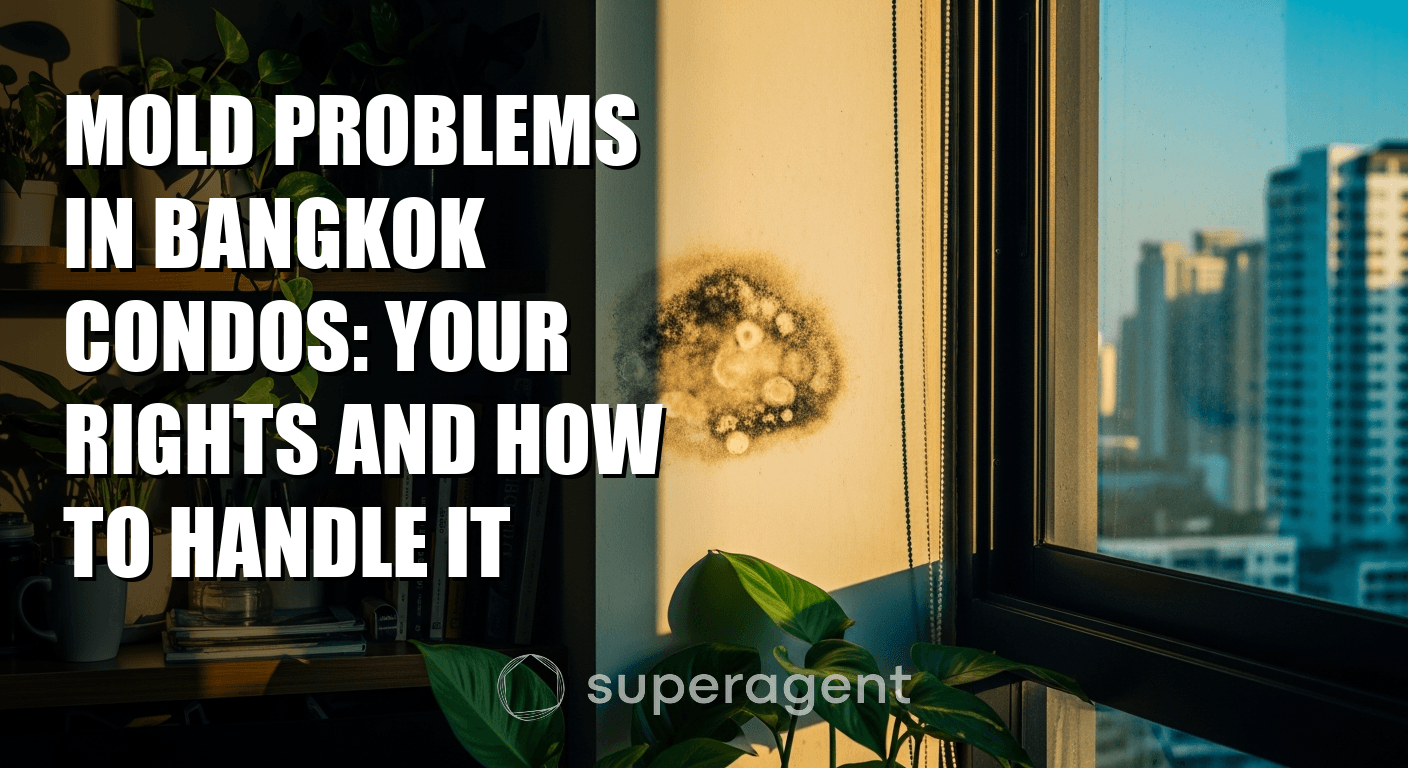
You walk into your condo after a long weekend away, and there it is. A dark patch creeping along the wall behind your bed. That unmistakable musty smell. Mold. If you rent a condo in Bangkok, this is not some rare nightmare scenario. It is one of the most common complaints renters deal with, especially during the rainy season from May through October. The humidity here regularly sits above 80%, and older buildings with poor ventilation are basically petri dishes. So what are your actual rights as a tenant, and what should you do when mold shows up?
Why Mold Is So Common in Bangkok Condos
Bangkok's tropical climate is the main culprit. The city averages around 75% to 85% humidity year round, and during the rainy months it can spike even higher. Combine that with air conditioning systems that cycle between cold and warm air, and you get condensation on walls, ceilings, and windows. That moisture is exactly what mold needs to thrive.
Some buildings are worse than others. Older condos along Sukhumvit Soi 23 through Soi 39, for example, might look great on the inside but have aging ventilation systems and poor waterproofing. A friend of mine rented a studio near Phrom Phong BTS for 18,000 THB per month. Beautiful unit, renovated kitchen, but the bathroom had zero exhaust ventilation. Within two months, black mold had spread across the ceiling tiles. The landlord shrugged it off and said it was "normal for Bangkok."
It is common, yes. But "normal" does not mean you have to accept it. Buildings like Lumpini Suite Sukhumvit 41 or some of the older towers near On Nut BTS tend to have more reports of mold issues simply because of their age and building envelope. Newer developments with better HVAC systems and sealed windows fare much better, but they are not immune either.
Your Legal Rights as a Tenant
Here is where things get a bit tricky. Thailand's Civil and Commercial Code covers lease agreements, and under Sections 546 to 551, landlords are generally responsible for maintaining the property in a livable condition. Mold that results from structural issues, leaking pipes, or faulty building systems falls squarely on the landlord's shoulders.
However, if the mold is caused by tenant behavior, like never turning on the AC, drying clothes indoors with all windows shut, or blocking vents with furniture, the landlord can argue it is your responsibility. This gray area is where most disputes happen.
The key is your lease agreement. Many Bangkok condo leases, especially ones drafted by property management companies, include clauses about maintenance responsibilities. Read yours carefully. If it says the landlord is responsible for "structural maintenance" or "building system repairs," mold caused by a leaking wall or broken exhaust fan should be covered. If your lease is vague, you still have the CCC on your side, but enforcing it can require patience.
One practical note: the Office of the Consumer Protection Board (OCPB) can help mediate disputes, but most tenants in Bangkok find that direct negotiation or involving the building's juristic office gets faster results.
How to Handle Mold When You Find It
Step one is documentation. Take clear photos with timestamps. Photograph the mold itself, any water stains or leaks nearby, and the overall condition of the room. Send these to your landlord or property manager immediately via LINE or email so there is a written record.
A tenant I know in a condo near Ari BTS, paying around 22,000 THB per month, discovered mold behind her wardrobe. She messaged her landlord with photos and a polite but firm request for inspection within 48 hours. The landlord sent a handyman who found a leaking pipe inside the wall. Because she documented everything and communicated in writing, the repair and mold remediation were handled at the landlord's expense. Her deposit was fully returned when she moved out.
If your landlord ignores you, escalate to the building's juristic office. They often have maintenance teams and can pressure unit owners to fix problems, especially if mold could spread to neighboring units. For serious cases, professional mold remediation in Bangkok costs between 3,000 and 15,000 THB depending on the area affected.
Preventing Mold Before It Starts
Prevention is honestly easier than dealing with a full mold situation. Run your air conditioning regularly, even when you are not home. A dehumidifier is a worthwhile investment, especially for condos near the river or canals where humidity is even higher. Units around Saphan Taksin BTS or Wongwian Yai, for instance, tend to be more moisture prone.
Keep furniture a few inches away from exterior walls. Use your bathroom exhaust fan every single time you shower. Check behind curtains and under sinks monthly. These small habits make a real difference.
When viewing a condo before signing a lease, check for musty smells, water stains on ceilings, and discoloration around window frames. Ask the landlord directly about previous mold issues. If they get defensive, that tells you something.
What to Do Before You Sign a Lease
The best defense against mold problems is choosing the right condo from the start. Look for buildings with well maintained common areas, functioning ventilation in bathrooms, and responsive juristic offices. Check the condition of window seals and AC units during your viewing. Ask if the building has had any waterproofing work done recently.
A one bedroom in a well maintained building near Thong Lo BTS might cost 25,000 to 35,000 THB per month, but you are far less likely to deal with mold than in a cheaper, poorly maintained unit. Sometimes paying a bit more saves you from headaches, health issues, and deposit disputes down the line.
Mold in a Bangkok condo does not have to ruin your rental experience. Know your rights, document everything, communicate clearly with your landlord, and take prevention seriously. If you are searching for a condo and want to avoid these issues from the start, Superagent at superagent.co uses AI to match you with quality listings and gives you the building details that actually matter, so you can make a smart choice before you sign anything.
You walk into your condo after a long weekend away, and there it is. A dark patch creeping along the wall behind your bed. That unmistakable musty smell. Mold. If you rent a condo in Bangkok, this is not some rare nightmare scenario. It is one of the most common complaints renters deal with, especially during the rainy season from May through October. The humidity here regularly sits above 80%, and older buildings with poor ventilation are basically petri dishes. So what are your actual rights as a tenant, and what should you do when mold shows up?
Why Mold Is So Common in Bangkok Condos
Bangkok's tropical climate is the main culprit. The city averages around 75% to 85% humidity year round, and during the rainy months it can spike even higher. Combine that with air conditioning systems that cycle between cold and warm air, and you get condensation on walls, ceilings, and windows. That moisture is exactly what mold needs to thrive.
Some buildings are worse than others. Older condos along Sukhumvit Soi 23 through Soi 39, for example, might look great on the inside but have aging ventilation systems and poor waterproofing. A friend of mine rented a studio near Phrom Phong BTS for 18,000 THB per month. Beautiful unit, renovated kitchen, but the bathroom had zero exhaust ventilation. Within two months, black mold had spread across the ceiling tiles. The landlord shrugged it off and said it was "normal for Bangkok."
It is common, yes. But "normal" does not mean you have to accept it. Buildings like Lumpini Suite Sukhumvit 41 or some of the older towers near On Nut BTS tend to have more reports of mold issues simply because of their age and building envelope. Newer developments with better HVAC systems and sealed windows fare much better, but they are not immune either.
Your Legal Rights as a Tenant
Here is where things get a bit tricky. Thailand's Civil and Commercial Code covers lease agreements, and under Sections 546 to 551, landlords are generally responsible for maintaining the property in a livable condition. Mold that results from structural issues, leaking pipes, or faulty building systems falls squarely on the landlord's shoulders.
However, if the mold is caused by tenant behavior, like never turning on the AC, drying clothes indoors with all windows shut, or blocking vents with furniture, the landlord can argue it is your responsibility. This gray area is where most disputes happen.
The key is your lease agreement. Many Bangkok condo leases, especially ones drafted by property management companies, include clauses about maintenance responsibilities. Read yours carefully. If it says the landlord is responsible for "structural maintenance" or "building system repairs," mold caused by a leaking wall or broken exhaust fan should be covered. If your lease is vague, you still have the CCC on your side, but enforcing it can require patience.
One practical note: the Office of the Consumer Protection Board (OCPB) can help mediate disputes, but most tenants in Bangkok find that direct negotiation or involving the building's juristic office gets faster results.
How to Handle Mold When You Find It
Step one is documentation. Take clear photos with timestamps. Photograph the mold itself, any water stains or leaks nearby, and the overall condition of the room. Send these to your landlord or property manager immediately via LINE or email so there is a written record.
A tenant I know in a condo near Ari BTS, paying around 22,000 THB per month, discovered mold behind her wardrobe. She messaged her landlord with photos and a polite but firm request for inspection within 48 hours. The landlord sent a handyman who found a leaking pipe inside the wall. Because she documented everything and communicated in writing, the repair and mold remediation were handled at the landlord's expense. Her deposit was fully returned when she moved out.
Talk to us about renting
Share your details and keep reading — we’ll get back to you.
If your landlord ignores you, escalate to the building's juristic office. They often have maintenance teams and can pressure unit owners to fix problems, especially if mold could spread to neighboring units. For serious cases, professional mold remediation in Bangkok costs between 3,000 and 15,000 THB depending on the area affected.
Preventing Mold Before It Starts
Prevention is honestly easier than dealing with a full mold situation. Run your air conditioning regularly, even when you are not home. A dehumidifier is a worthwhile investment, especially for condos near the river or canals where humidity is even higher. Units around Saphan Taksin BTS or Wongwian Yai, for instance, tend to be more moisture prone.
Keep furniture a few inches away from exterior walls. Use your bathroom exhaust fan every single time you shower. Check behind curtains and under sinks monthly. These small habits make a real difference.
When viewing a condo before signing a lease, check for musty smells, water stains on ceilings, and discoloration around window frames. Ask the landlord directly about previous mold issues. If they get defensive, that tells you something.
What to Do Before You Sign a Lease
The best defense against mold problems is choosing the right condo from the start. Look for buildings with well maintained common areas, functioning ventilation in bathrooms, and responsive juristic offices. Check the condition of window seals and AC units during your viewing. Ask if the building has had any waterproofing work done recently.
A one bedroom in a well maintained building near Thong Lo BTS might cost 25,000 to 35,000 THB per month, but you are far less likely to deal with mold than in a cheaper, poorly maintained unit. Sometimes paying a bit more saves you from headaches, health issues, and deposit disputes down the line.
Mold in a Bangkok condo does not have to ruin your rental experience. Know your rights, document everything, communicate clearly with your landlord, and take prevention seriously. If you are searching for a condo and want to avoid these issues from the start, Superagent at superagent.co uses AI to match you with quality listings and gives you the building details that actually matter, so you can make a smart choice before you sign anything.
Share this article
Properties you may like
![[For Rent] CONDO I Aguston Sukhumvit 22 I Pet Friendly I 2 Beds I 2 Baths I Rent 55,000THB/mo](/_next/image?url=https%3A%2F%2Fstorage.googleapis.com%2Fsuperagent-web%2Fattachments%2Flistings%2F2266%2Fd3afcd25-6b79-46cb-9f1f-396acdc3dd10-955-3.jpg&w=3840&q=75)
฿55,000
2 Bed295 sqm
[For Rent] CONDO I Aguston Sukhumvit 22 I Pet Friendly I 2 Beds I 2 Baths I Rent 55,000THB/mo
Phrom Phong
Condo![[For Rent] CONDO I SUPALAI PLACE Sukhumvit 39 I 2 Beds I 2 Baths (1 Jacuzzi) I 55,555THB/mo](/_next/image?url=https%3A%2F%2Fstorage.googleapis.com%2Fsuperagent-web%2Fattachments%2Flistings%2F6743%2Fba530743-48b9-4ac6-92d3-c2247e743cf6-01-supalai-place-skv39-2b-link-heaven.jpg&w=3840&q=75)
฿55,555
2 Bed2142 sqm
[For Rent] CONDO I SUPALAI PLACE Sukhumvit 39 I 2 Beds I 2 Baths (1 Jacuzzi) I 55,555THB/mo
Phrom Phong
Condo![[For Rent] CONDO I Maru Ekkamai 2 I Pet friendly I 2 Beds I 2 Baths I 68,000 THB/mo](/_next/image?url=https%3A%2F%2Fstorage.googleapis.com%2Fsuperagent-web%2Fattachments%2Flistings%2F6602%2F9f1d8f71-ee43-435f-9a44-da16c4092c92-968-1.jpg&w=3840&q=75)
฿68,000
2 Bed360 sqm
[For Rent] CONDO I Maru Ekkamai 2 I Pet friendly I 2 Beds I 2 Baths I 68,000 THB/mo
Ekkamai
Condo![[For Rent] CONDO I Noble State 39 I 2 Beds I 2 Baths I 63,000THB/mo](/_next/image?url=https%3A%2F%2Fstorage.googleapis.com%2Fsuperagent-web%2Fattachments%2Flistings%2F2237%2F60eb58f3-eae5-41ed-a80b-406e004f05d8-940-1.jpg&w=3840&q=75)
฿63,000
2 Bed260 sqm
[For Rent] CONDO I Noble State 39 I 2 Beds I 2 Baths I 63,000THB/mo
Phrom Phong
Condo![[For Rent] CONDO I Rhythm Sukhumvit 36-38 I 2 Beds I 2 Baths I 38,999THB/mo](/_next/image?url=https%3A%2F%2Fstorage.googleapis.com%2Fsuperagent-web%2Fattachments%2Flistings%2F1788%2F942a0215-4128-4c2c-a064-f607e84e7aa4-656-2.jpg&w=3840&q=75)
฿38,999
2 Bed256 sqm
[For Rent] CONDO I Rhythm Sukhumvit 36-38 I 2 Beds I 2 Baths I 38,999THB/mo
Thonglor
Condo![[For Rent] CONDO I CLOUD Thonglor-Phetchaburi I 1 Bed I 1 Bath I 22,500THB/mo](/_next/image?url=https%3A%2F%2Fstorage.googleapis.com%2Fsuperagent-web%2Fattachments%2Flistings%2F6742%2F6cef5361-0dac-4dba-98f1-b0d187559c84-1118-1.jpg&w=3840&q=75)
฿22,500
1 Bed132 sqm
[For Rent] CONDO I CLOUD Thonglor-Phetchaburi I 1 Bed I 1 Bath I 22,500THB/mo
Thonglor
Condo![[For Rent] CONDO I City Smart Sukhumvit 18 I 3 Beds I 3 Baths I 65,000mo/THB](/_next/image?url=https%3A%2F%2Fstorage.googleapis.com%2Fsuperagent-web%2Fattachments%2Flistings%2F6741%2Fd371c89d-a913-42c4-a673-e540afae4f46-1116-1.jpg&w=3840&q=75)
฿65,000
3 Bed3125 sqm
[For Rent] CONDO I City Smart Sukhumvit 18 I 3 Beds I 3 Baths I 65,000mo/THB
Condo![[For Rent] CONDO I The Coast Bangkok I 1 Bed I 1 Bath I 20,000mo/THB](/_next/image?url=https%3A%2F%2Fstorage.googleapis.com%2Fsuperagent-web%2Fattachments%2Flistings%2F6740%2F498477ce-4ffa-4e4c-ab08-0e565d9c4bbe-1115-3.jpg&w=3840&q=75)
฿20,000
1 Bed146 sqm
[For Rent] CONDO I The Coast Bangkok I 1 Bed I 1 Bath I 20,000mo/THB
Bang Na
Condo![[For Rent] CONDO I IDEO Sukhumvit-RAMA 4 I 2 Beds I 2 Baths I 55,000mo/THB](/_next/image?url=https%3A%2F%2Fstorage.googleapis.com%2Fsuperagent-web%2Fattachments%2Flistings%2F6739%2F15df221d-5b8e-497c-b7ce-a6b9b6412cab-1113-1.jpg&w=3840&q=75)
฿55,000
2 Bed265 sqm
[For Rent] CONDO I IDEO Sukhumvit-RAMA 4 I 2 Beds I 2 Baths I 55,000mo/THB
Phra Khanong
Condo![[For Rent] CONDO I Downtown 49 I Pet Friendly I 1 Bed I 1 Bath I 23,000mo/THB](/_next/image?url=https%3A%2F%2Fstorage.googleapis.com%2Fsuperagent-web%2Fattachments%2Flistings%2F6738%2F11cf2ffe-1f01-4ccc-991c-2ad608f1ba73-1112-1.jpg&w=3840&q=75)
฿23,000
1 Bed135 sqm
[For Rent] CONDO I Downtown 49 I Pet Friendly I 1 Bed I 1 Bath I 23,000mo/THB
Thonglor
CondoMore like this
 In Guides · Superagent EditorialHidden Costs of Renting a Condo in Bangkok Nobody Warns You AboutBangkok condo rent looks affordable until month one hits. Here are the real costs beyond the headline figure that catch most renters off guard.25 May 20261 min read
 In Guides · Superagent EditorialWhat a Long-Vacant Bangkok Condo Unit Is Actually Telling YouA Bangkok condo vacant for months signals overpricing, landlord issues, or real problems. Here is how to read the signs.25 May 20261 min read
 In Guides · Superagent EditorialRed Flags in a Bangkok Rental Contract to Watch Out ForBangkok rental contracts often hide risky clauses. Here are the red flags every tenant must catch before signing any lease.25 May 20261 min read
 In Guides · Superagent EditorialWorking Online from a Condo: How to Choose the Perfect Room for ProductivityLearn how to choose the best condo room for working online with tips on lighting, noise, and furniture setup to maximize productivity.9 May 20261 min read