Renting in Bangkok as a Chinese Expat: Areas, Tips and Condos
Guides
Renting in Bangkok as a Chinese Expat: Areas, Tips and Condos
Your complete guide to finding the perfect condo in Bangkok as a Chinese expat
Summary
Discover the best areas and top condos for Chinese expats renting in Bangkok. Expert tips on neighborhoods, amenities and rental processes for expat living
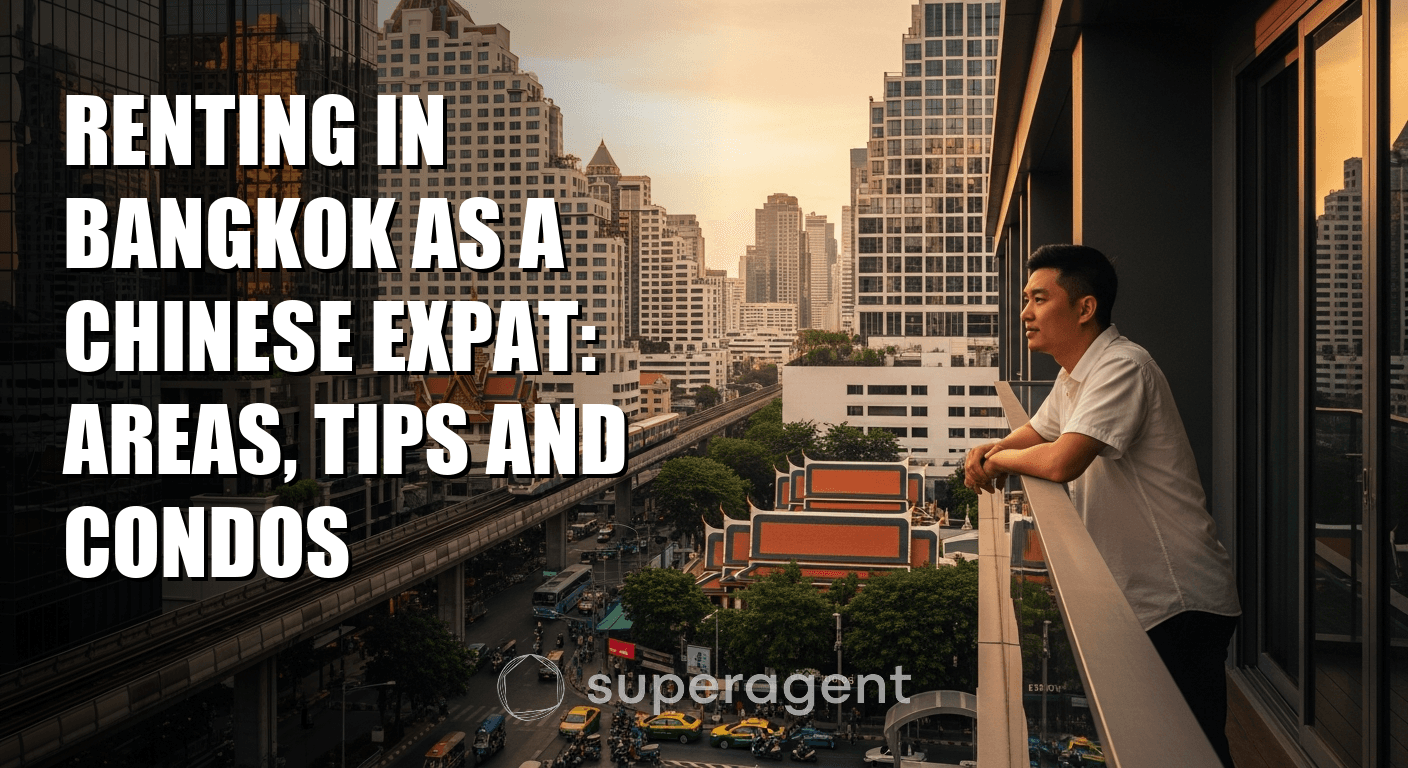
If you are Chinese and thinking about moving to Bangkok, you are definitely not alone. The Chinese expat community here has grown rapidly over the past few years, with tens of thousands of Chinese nationals now calling Bangkok home for work, business, or simply a better quality of life. But finding the right condo as a chinese expat in Bangkok can feel overwhelming, especially when you are new to the city and still figuring out which neighborhoods actually make sense for your lifestyle. Good news: Bangkok is incredibly welcoming to Chinese residents, and certain areas have built up strong communities with Chinese restaurants, WeChat-friendly services, and even Mandarin-speaking condo staff. Let me walk you through everything you need to know.
Why Bangkok Has Become a Top Destination for Chinese Expats
Bangkok has quietly become one of the most popular cities in Southeast Asia for Chinese nationals relocating abroad. According to CBRE Thailand, Chinese buyers and renters have consistently ranked among the top foreign groups in Bangkok's property market since 2019. The reasons are straightforward: low cost of living compared to Shanghai or Beijing, warm weather year-round, easy visa options, and a massive existing Chinese community that makes the transition smoother.
Take someone like Wei, a 32-year-old tech worker from Shenzhen who relocated to Bangkok in 2023. He chose a one-bedroom condo near MRT Huai Khwang because the area already had dozens of Chinese restaurants, a Chinese supermarket, and neighbors who spoke Mandarin. His rent? About 15,000 THB per month for a well-furnished unit. That same money would barely get him a shared room in his home city.
The affordability factor is real, but it is the community infrastructure that keeps Chinese expats coming back to specific Bangkok neighborhoods again and again.
The Best Bangkok Neighborhoods for Chinese Expats
Not every area in Bangkok will feel like the right fit. Some neighborhoods have developed strong Chinese expat communities with the shops, restaurants, and services that make daily life comfortable. Here are the areas that consistently attract the most Chinese renters.
Huai Khwang and Ratchadaphisek: This is arguably the epicenter of Chinese expat life in Bangkok. The stretch along Ratchadaphisek Road near MRT Huai Khwang and MRT Thailand Cultural Centre is packed with Chinese hotpot restaurants, bubble tea chains, and businesses with Mandarin signage. Condos like The Address Asoke, Rhythm Asoke, and Life Asoke Hype are popular choices. One-bedroom units here typically rent for 12,000 to 22,000 THB per month.
Rama 9 and Phra Ram 9: Just south of Ratchadaphisek, the Rama 9 area around MRT Phra Ram 9 has become a second hub. The Jodd Fairs night market area draws a huge Chinese crowd, and new condos keep popping up. Life Asoke Rama 9 and Aspire Rama 9 are solid options. Expect rents of 10,000 to 18,000 THB for a studio or one-bedroom.
Sukhumvit (Asoke to Ekkamai): If you work for a multinational or prefer a more international environment, the Sukhumvit corridor between BTS Asoke and BTS Ekkamai offers a polished expat lifestyle. Rents are higher here, typically 20,000 to 45,000 THB for a one-bedroom, but you get access to top malls like Terminal 21 and EmQuartier, plus international hospitals like Bumrungrad International Hospital.
Silom and Sathorn: The traditional business district still attracts Chinese professionals working in finance and trading companies. BTS Chong Nonsi and BTS Sala Daeng put you right in the center. The Address Sathorn and Nara 9 are popular buildings with rents starting around 18,000 THB for a one-bedroom.
For a quick example, consider a couple from Chengdu who run an e-commerce business remotely. They chose a two-bedroom at Supalai Wellington near MRT Thailand Cultural Centre for 20,000 THB per month. They walk to Chinese grocery stores, eat Sichuan food three times a week, and rarely need to speak anything but Mandarin in their daily errands.
How Chinese Expat Rental Needs Differ from Other Expat Groups
Chinese renters in Bangkok often have slightly different priorities compared to Western expats or Japanese tenants. Understanding these differences can help you find the right condo faster.
First, many Chinese expats prefer newer buildings. A condo built after 2018 with modern finishes, a decent gym, and a co-working space tends to win out over older, larger units. Brand matters too. Developers like AP Thai, Sansiri, and Ananda are well-known among Chinese renters because they market directly in China.
Second, internet speed is non-negotiable. If you rely on VPN connections back to China for work or staying connected on WeChat and Douyin, you need fiber internet with at least 200 Mbps. Most newer condos offer AIS Fibre or True Fibre connections, but always confirm before signing a lease.
Third, cooking matters. A lot of Chinese expats cook at home regularly, so having a proper kitchen with an electric stove and ventilation is important. Many Bangkok condos come with tiny kitchenettes, so if cooking is a priority, specifically look for units that have been upgraded with real kitchen setups.
Here is a real scenario: a Chinese family of three moved to Bangkok for the father's job at a trading company in the Yaowarat area. They needed a two-bedroom with a full kitchen, strong internet, and proximity to a Chinese-curriculum school. They ended up at Lumpini Suite Sukhumvit 41, paying around 28,000 THB per month. It checked every box.
Area Comparison for Chinese Expat Condo Rentals in Bangkok
This table breaks down the most popular neighborhoods by rent, transit access, and how strong the Chinese community presence is in each area.
| Neighborhood | Nearest BTS/MRT | 1-Bed Rent (THB/month) | Chinese Community Presence | Best For |
|---|---|---|---|---|
| Huai Khwang / Ratchadaphisek | MRT Huai Khwang | 12,000 - 22,000 | Very Strong | Budget-conscious renters, remote workers |
| Rama 9 / Phra Ram 9 | MRT Phra Ram 9 | 10,000 - 18,000 | Strong | Young professionals, startups |
| Sukhumvit (Asoke to Ekkamai) | BTS Asoke / BTS Phrom Phong | 20,000 - 45,000 | Moderate | Corporate expats, families |
| Silom / Sathorn | BTS Chong Nonsi / MRT Lumphini | 18,000 - 35,000 | Moderate | Finance professionals, couples |
| Yaowarat / Chinatown | MRT Wat Mangkon | 8,000 - 15,000 | Very Strong (historic) | Cultural connection, food lovers |
A notable data point: according to DDproperty, the average rent for a one-bedroom condo in the Ratchadaphisek-Huai Khwang corridor sits at approximately 14,000 to 18,000 THB per month as of early 2025, making it one of the most affordable transit-connected areas in central Bangkok.
Practical Tips for Signing a Lease in Bangkok
The rental process in Bangkok is fairly straightforward, but there are a few things Chinese expats should specifically watch out for.
Deposits are typically two months of rent paid upfront, plus one month of rent in advance. So for a 15,000 THB condo, expect to pay 45,000 THB before you move in. This is standard across Bangkok and is usually non-negotiable.
Your passport is the main document you need. Most landlords will ask for a copy of your passport, your Thai visa page, and sometimes proof of employment or a bank statement. If you are on a tourist visa, some landlords may hesitate, so having a Non-B visa, an Elite visa, or even a long-term tourist visa extension helps.
Get everything in writing. Make sure your lease specifies who pays for what. Common area maintenance fees, called CAM fees, are sometimes included in the rent and sometimes not. Electricity in condos is often charged at a markup, around 6 to 8 THB per unit instead of the government rate of about 4 THB. Water is usually cheap, around 18 to 20 THB per unit.
One more tip: if you find a condo through a Chinese-language Facebook group or WeChat group, still verify the listing independently. Some listings are outdated or priced higher than market rate because agents assume Chinese renters will not negotiate. Always compare prices before committing.
Schools, Healthcare, and Daily Life Logistics
If you are moving to Bangkok with family, two things matter most: schools and hospitals.
For Chinese-curriculum or bilingual education, several international schools in Bangkok offer Mandarin programs. The Chinese International School of Bangkok in the Bangna area is a well-known option. There are also tutoring centers along Ratchadaphisek that offer after-school Mandarin classes for kids.
For healthcare, Bumrungrad Hospital on Sukhumvit Soi 3 has Mandarin-speaking staff and a dedicated Chinese patient service center. This alone is a reason some Chinese families choose to live nearby on lower Sukhumvit. Samitivej Hospital on Sukhumvit Soi 49 also offers Mandarin interpreter services.
Daily life logistics are surprisingly easy. You can pay for almost everything using your phone. While Alipay and WeChat Pay are accepted at some tourist-oriented shops and 7-Elevens, you will want to set up a Thai bank account and use PromptPay or the local banking apps for most transactions. Opening a bank account as a foreigner typically requires your passport, a work permit or long-term visa, and a Thai phone number.
Consider the case of a Chinese mother who moved to Bangkok with her two children. She chose a three-bedroom condo at Belle Grand Rama 9, right next to MRT Phra Ram 9, paying 35,000 THB per month. The kids attend a nearby international school, she shops at the Chinese supermarket on Ratchadaphisek, and weekend dim sum at Yaowarat is a 15-minute MRT ride away. Her life runs smoothly because she picked an area that supports her routine.
Finding the right condo as a Chinese expat in Bangkok really comes down to matching your budget, your work location, and your lifestyle preferences with the right neighborhood. The city already has the infrastructure to support a comfortable Chinese expat life, and rental prices remain far more reasonable than most major Chinese cities. Whether you are a solo professional eyeing a studio near Huai Khwang or a family looking for a spacious unit near an international school, there is a condo waiting for you.
If you want to skip the endless scrolling and get matched with verified listings that fit your actual needs, try searching on superagent.co. The AI-powered platform filters condos by your budget, preferred area, and move-in date, so you spend less time searching and more time settling into your new life in Bangkok.
If you are Chinese and thinking about moving to Bangkok, you are definitely not alone. The Chinese expat community here has grown rapidly over the past few years, with tens of thousands of Chinese nationals now calling Bangkok home for work, business, or simply a better quality of life. But finding the right condo as a chinese expat in Bangkok can feel overwhelming, especially when you are new to the city and still figuring out which neighborhoods actually make sense for your lifestyle. Good news: Bangkok is incredibly welcoming to Chinese residents, and certain areas have built up strong communities with Chinese restaurants, WeChat-friendly services, and even Mandarin-speaking condo staff. Let me walk you through everything you need to know.
Why Bangkok Has Become a Top Destination for Chinese Expats
Bangkok has quietly become one of the most popular cities in Southeast Asia for Chinese nationals relocating abroad. According to CBRE Thailand, Chinese buyers and renters have consistently ranked among the top foreign groups in Bangkok's property market since 2019. The reasons are straightforward: low cost of living compared to Shanghai or Beijing, warm weather year-round, easy visa options, and a massive existing Chinese community that makes the transition smoother.
Take someone like Wei, a 32-year-old tech worker from Shenzhen who relocated to Bangkok in 2023. He chose a one-bedroom condo near MRT Huai Khwang because the area already had dozens of Chinese restaurants, a Chinese supermarket, and neighbors who spoke Mandarin. His rent? About 15,000 THB per month for a well-furnished unit. That same money would barely get him a shared room in his home city.
The affordability factor is real, but it is the community infrastructure that keeps Chinese expats coming back to specific Bangkok neighborhoods again and again.
The Best Bangkok Neighborhoods for Chinese Expats
Not every area in Bangkok will feel like the right fit. Some neighborhoods have developed strong Chinese expat communities with the shops, restaurants, and services that make daily life comfortable. Here are the areas that consistently attract the most Chinese renters.
Huai Khwang and Ratchadaphisek: This is arguably the epicenter of Chinese expat life in Bangkok. The stretch along Ratchadaphisek Road near MRT Huai Khwang and MRT Thailand Cultural Centre is packed with Chinese hotpot restaurants, bubble tea chains, and businesses with Mandarin signage. Condos like The Address Asoke, Rhythm Asoke, and Life Asoke Hype are popular choices. One-bedroom units here typically rent for 12,000 to 22,000 THB per month.
Rama 9 and Phra Ram 9: Just south of Ratchadaphisek, the Rama 9 area around MRT Phra Ram 9 has become a second hub. The Jodd Fairs night market area draws a huge Chinese crowd, and new condos keep popping up. Life Asoke Rama 9 and Aspire Rama 9 are solid options. Expect rents of 10,000 to 18,000 THB for a studio or one-bedroom.
Sukhumvit (Asoke to Ekkamai): If you work for a multinational or prefer a more international environment, the Sukhumvit corridor between BTS Asoke and BTS Ekkamai offers a polished expat lifestyle. Rents are higher here, typically 20,000 to 45,000 THB for a one-bedroom, but you get access to top malls like Terminal 21 and EmQuartier, plus international hospitals like Bumrungrad International Hospital.
Silom and Sathorn: The traditional business district still attracts Chinese professionals working in finance and trading companies. BTS Chong Nonsi and BTS Sala Daeng put you right in the center. The Address Sathorn and Nara 9 are popular buildings with rents starting around 18,000 THB for a one-bedroom.
For a quick example, consider a couple from Chengdu who run an e-commerce business remotely. They chose a two-bedroom at Supalai Wellington near MRT Thailand Cultural Centre for 20,000 THB per month. They walk to Chinese grocery stores, eat Sichuan food three times a week, and rarely need to speak anything but Mandarin in their daily errands.
How Chinese Expat Rental Needs Differ from Other Expat Groups
Chinese renters in Bangkok often have slightly different priorities compared to Western expats or Japanese tenants. Understanding these differences can help you find the right condo faster.
First, many Chinese expats prefer newer buildings. A condo built after 2018 with modern finishes, a decent gym, and a co-working space tends to win out over older, larger units. Brand matters too. Developers like AP Thai, Sansiri, and Ananda are well-known among Chinese renters because they market directly in China.
Second, internet speed is non-negotiable. If you rely on VPN connections back to China for work or staying connected on WeChat and Douyin, you need fiber internet with at least 200 Mbps. Most newer condos offer AIS Fibre or True Fibre connections, but always confirm before signing a lease.
Third, cooking matters. A lot of Chinese expats cook at home regularly, so having a proper kitchen with an electric stove and ventilation is important. Many Bangkok condos come with tiny kitchenettes, so if cooking is a priority, specifically look for units that have been upgraded with real kitchen setups.
Here is a real scenario: a Chinese family of three moved to Bangkok for the father's job at a trading company in the Yaowarat area. They needed a two-bedroom with a full kitchen, strong internet, and proximity to a Chinese-curriculum school. They ended up at Lumpini Suite Sukhumvit 41, paying around 28,000 THB per month. It checked every box.
Area Comparison for Chinese Expat Condo Rentals in Bangkok
This table breaks down the most popular neighborhoods by rent, transit access, and how strong the Chinese community presence is in each area.
| Neighborhood | Nearest BTS/MRT | 1-Bed Rent (THB/month) | Chinese Community Presence | Best For |
|---|---|---|---|---|
| Huai Khwang / Ratchadaphisek | MRT Huai Khwang | 12,000 - 22,000 | Very Strong | Budget-conscious renters, remote workers |
| Rama 9 / Phra Ram 9 | MRT Phra Ram 9 | 10,000 - 18,000 | Strong | Young professionals, startups |
| Sukhumvit (Asoke to Ekkamai) | BTS Asoke / BTS Phrom Phong | 20,000 - 45,000 | Moderate | Corporate expats, families |
| Silom / Sathorn | BTS Chong Nonsi / MRT Lumphini | 18,000 - 35,000 | Moderate | Finance professionals, couples |
| Yaowarat / Chinatown | MRT Wat Mangkon | 8,000 - 15,000 | Very Strong (historic) | Cultural connection, food lovers |
A notable data point: according to DDproperty, the average rent for a one-bedroom condo in the Ratchadaphisek-Huai Khwang corridor sits at approximately 14,000 to 18,000 THB per month as of early 2025, making it one of the most affordable transit-connected areas in central Bangkok.
Talk to us about renting
Share your details and keep reading — we’ll get back to you.
Practical Tips for Signing a Lease in Bangkok
The rental process in Bangkok is fairly straightforward, but there are a few things Chinese expats should specifically watch out for.
Deposits are typically two months of rent paid upfront, plus one month of rent in advance. So for a 15,000 THB condo, expect to pay 45,000 THB before you move in. This is standard across Bangkok and is usually non-negotiable.
Your passport is the main document you need. Most landlords will ask for a copy of your passport, your Thai visa page, and sometimes proof of employment or a bank statement. If you are on a tourist visa, some landlords may hesitate, so having a Non-B visa, an Elite visa, or even a long-term tourist visa extension helps.
Get everything in writing. Make sure your lease specifies who pays for what. Common area maintenance fees, called CAM fees, are sometimes included in the rent and sometimes not. Electricity in condos is often charged at a markup, around 6 to 8 THB per unit instead of the government rate of about 4 THB. Water is usually cheap, around 18 to 20 THB per unit.
One more tip: if you find a condo through a Chinese-language Facebook group or WeChat group, still verify the listing independently. Some listings are outdated or priced higher than market rate because agents assume Chinese renters will not negotiate. Always compare prices before committing.
Schools, Healthcare, and Daily Life Logistics
If you are moving to Bangkok with family, two things matter most: schools and hospitals.
For Chinese-curriculum or bilingual education, several international schools in Bangkok offer Mandarin programs. The Chinese International School of Bangkok in the Bangna area is a well-known option. There are also tutoring centers along Ratchadaphisek that offer after-school Mandarin classes for kids.
For healthcare, Bumrungrad Hospital on Sukhumvit Soi 3 has Mandarin-speaking staff and a dedicated Chinese patient service center. This alone is a reason some Chinese families choose to live nearby on lower Sukhumvit. Samitivej Hospital on Sukhumvit Soi 49 also offers Mandarin interpreter services.
Daily life logistics are surprisingly easy. You can pay for almost everything using your phone. While Alipay and WeChat Pay are accepted at some tourist-oriented shops and 7-Elevens, you will want to set up a Thai bank account and use PromptPay or the local banking apps for most transactions. Opening a bank account as a foreigner typically requires your passport, a work permit or long-term visa, and a Thai phone number.
Consider the case of a Chinese mother who moved to Bangkok with her two children. She chose a three-bedroom condo at Belle Grand Rama 9, right next to MRT Phra Ram 9, paying 35,000 THB per month. The kids attend a nearby international school, she shops at the Chinese supermarket on Ratchadaphisek, and weekend dim sum at Yaowarat is a 15-minute MRT ride away. Her life runs smoothly because she picked an area that supports her routine.
Finding the right condo as a Chinese expat in Bangkok really comes down to matching your budget, your work location, and your lifestyle preferences with the right neighborhood. The city already has the infrastructure to support a comfortable Chinese expat life, and rental prices remain far more reasonable than most major Chinese cities. Whether you are a solo professional eyeing a studio near Huai Khwang or a family looking for a spacious unit near an international school, there is a condo waiting for you.
If you want to skip the endless scrolling and get matched with verified listings that fit your actual needs, try searching on superagent.co. The AI-powered platform filters condos by your budget, preferred area, and move-in date, so you spend less time searching and more time settling into your new life in Bangkok.
Share this article
Properties you may like
![[For Rent] CONDO I Aguston Sukhumvit 22 I Pet Friendly I 2 Beds I 2 Baths I Rent 55,000THB/mo](/_next/image?url=https%3A%2F%2Fstorage.googleapis.com%2Fsuperagent-web%2Fattachments%2Flistings%2F2266%2Fd3afcd25-6b79-46cb-9f1f-396acdc3dd10-955-3.jpg&w=3840&q=75)
฿55,000
2 Bed295 sqm
[For Rent] CONDO I Aguston Sukhumvit 22 I Pet Friendly I 2 Beds I 2 Baths I Rent 55,000THB/mo
Phrom Phong
Condo![[For Rent] CONDO I SUPALAI PLACE Sukhumvit 39 I 2 Beds I 2 Baths (1 Jacuzzi) I 55,555THB/mo](/_next/image?url=https%3A%2F%2Fstorage.googleapis.com%2Fsuperagent-web%2Fattachments%2Flistings%2F6743%2Fba530743-48b9-4ac6-92d3-c2247e743cf6-01-supalai-place-skv39-2b-link-heaven.jpg&w=3840&q=75)
฿55,555
2 Bed2142 sqm
[For Rent] CONDO I SUPALAI PLACE Sukhumvit 39 I 2 Beds I 2 Baths (1 Jacuzzi) I 55,555THB/mo
Phrom Phong
Condo![[For Rent] CONDO I Maru Ekkamai 2 I Pet friendly I 2 Beds I 2 Baths I 68,000 THB/mo](/_next/image?url=https%3A%2F%2Fstorage.googleapis.com%2Fsuperagent-web%2Fattachments%2Flistings%2F6602%2F9f1d8f71-ee43-435f-9a44-da16c4092c92-968-1.jpg&w=3840&q=75)
฿68,000
2 Bed360 sqm
[For Rent] CONDO I Maru Ekkamai 2 I Pet friendly I 2 Beds I 2 Baths I 68,000 THB/mo
Ekkamai
Condo![[For Rent] CONDO I Noble State 39 I 2 Beds I 2 Baths I 63,000THB/mo](/_next/image?url=https%3A%2F%2Fstorage.googleapis.com%2Fsuperagent-web%2Fattachments%2Flistings%2F2237%2F60eb58f3-eae5-41ed-a80b-406e004f05d8-940-1.jpg&w=3840&q=75)
฿63,000
2 Bed260 sqm
[For Rent] CONDO I Noble State 39 I 2 Beds I 2 Baths I 63,000THB/mo
Phrom Phong
Condo![[For Rent] CONDO I Rhythm Sukhumvit 36-38 I 2 Beds I 2 Baths I 38,999THB/mo](/_next/image?url=https%3A%2F%2Fstorage.googleapis.com%2Fsuperagent-web%2Fattachments%2Flistings%2F1788%2F942a0215-4128-4c2c-a064-f607e84e7aa4-656-2.jpg&w=3840&q=75)
฿38,999
2 Bed256 sqm
[For Rent] CONDO I Rhythm Sukhumvit 36-38 I 2 Beds I 2 Baths I 38,999THB/mo
Thonglor
Condo![[For Rent] CONDO I CLOUD Thonglor-Phetchaburi I 1 Bed I 1 Bath I 22,500THB/mo](/_next/image?url=https%3A%2F%2Fstorage.googleapis.com%2Fsuperagent-web%2Fattachments%2Flistings%2F6742%2F6cef5361-0dac-4dba-98f1-b0d187559c84-1118-1.jpg&w=3840&q=75)
฿22,500
1 Bed132 sqm
[For Rent] CONDO I CLOUD Thonglor-Phetchaburi I 1 Bed I 1 Bath I 22,500THB/mo
Thonglor
Condo![[For Rent] CONDO I City Smart Sukhumvit 18 I 3 Beds I 3 Baths I 65,000mo/THB](/_next/image?url=https%3A%2F%2Fstorage.googleapis.com%2Fsuperagent-web%2Fattachments%2Flistings%2F6741%2Fd371c89d-a913-42c4-a673-e540afae4f46-1116-1.jpg&w=3840&q=75)
฿65,000
3 Bed3125 sqm
[For Rent] CONDO I City Smart Sukhumvit 18 I 3 Beds I 3 Baths I 65,000mo/THB
Condo![[For Rent] CONDO I The Coast Bangkok I 1 Bed I 1 Bath I 20,000mo/THB](/_next/image?url=https%3A%2F%2Fstorage.googleapis.com%2Fsuperagent-web%2Fattachments%2Flistings%2F6740%2F498477ce-4ffa-4e4c-ab08-0e565d9c4bbe-1115-3.jpg&w=3840&q=75)
฿20,000
1 Bed146 sqm
[For Rent] CONDO I The Coast Bangkok I 1 Bed I 1 Bath I 20,000mo/THB
Bang Na
Condo![[For Rent] CONDO I IDEO Sukhumvit-RAMA 4 I 2 Beds I 2 Baths I 55,000mo/THB](/_next/image?url=https%3A%2F%2Fstorage.googleapis.com%2Fsuperagent-web%2Fattachments%2Flistings%2F6739%2F15df221d-5b8e-497c-b7ce-a6b9b6412cab-1113-1.jpg&w=3840&q=75)
฿55,000
2 Bed265 sqm
[For Rent] CONDO I IDEO Sukhumvit-RAMA 4 I 2 Beds I 2 Baths I 55,000mo/THB
Phra Khanong
Condo![[For Rent] CONDO I Downtown 49 I Pet Friendly I 1 Bed I 1 Bath I 23,000mo/THB](/_next/image?url=https%3A%2F%2Fstorage.googleapis.com%2Fsuperagent-web%2Fattachments%2Flistings%2F6738%2F11cf2ffe-1f01-4ccc-991c-2ad608f1ba73-1112-1.jpg&w=3840&q=75)
฿23,000
1 Bed135 sqm
[For Rent] CONDO I Downtown 49 I Pet Friendly I 1 Bed I 1 Bath I 23,000mo/THB
Thonglor
CondoMore like this
 In Guides · Superagent EditorialHidden Costs of Renting a Condo in Bangkok Nobody Warns You AboutBangkok condo rent looks affordable until month one hits. Here are the real costs beyond the headline figure that catch most renters off guard.25 May 20261 min read
 In Guides · Superagent EditorialWhat a Long-Vacant Bangkok Condo Unit Is Actually Telling YouA Bangkok condo vacant for months signals overpricing, landlord issues, or real problems. Here is how to read the signs.25 May 20261 min read
 In Guides · Superagent EditorialRed Flags in a Bangkok Rental Contract to Watch Out ForBangkok rental contracts often hide risky clauses. Here are the red flags every tenant must catch before signing any lease.25 May 20261 min read
 In Guides · Superagent EditorialWorking Online from a Condo: How to Choose the Perfect Room for ProductivityLearn how to choose the best condo room for working online with tips on lighting, noise, and furniture setup to maximize productivity.9 May 20261 min read