What Are Condo Common Area Fees and Who Should Pay Them
Guides
What Are Condo Common Area Fees and Who Should Pay Them
Understanding condo maintenance charges and your financial responsibilities
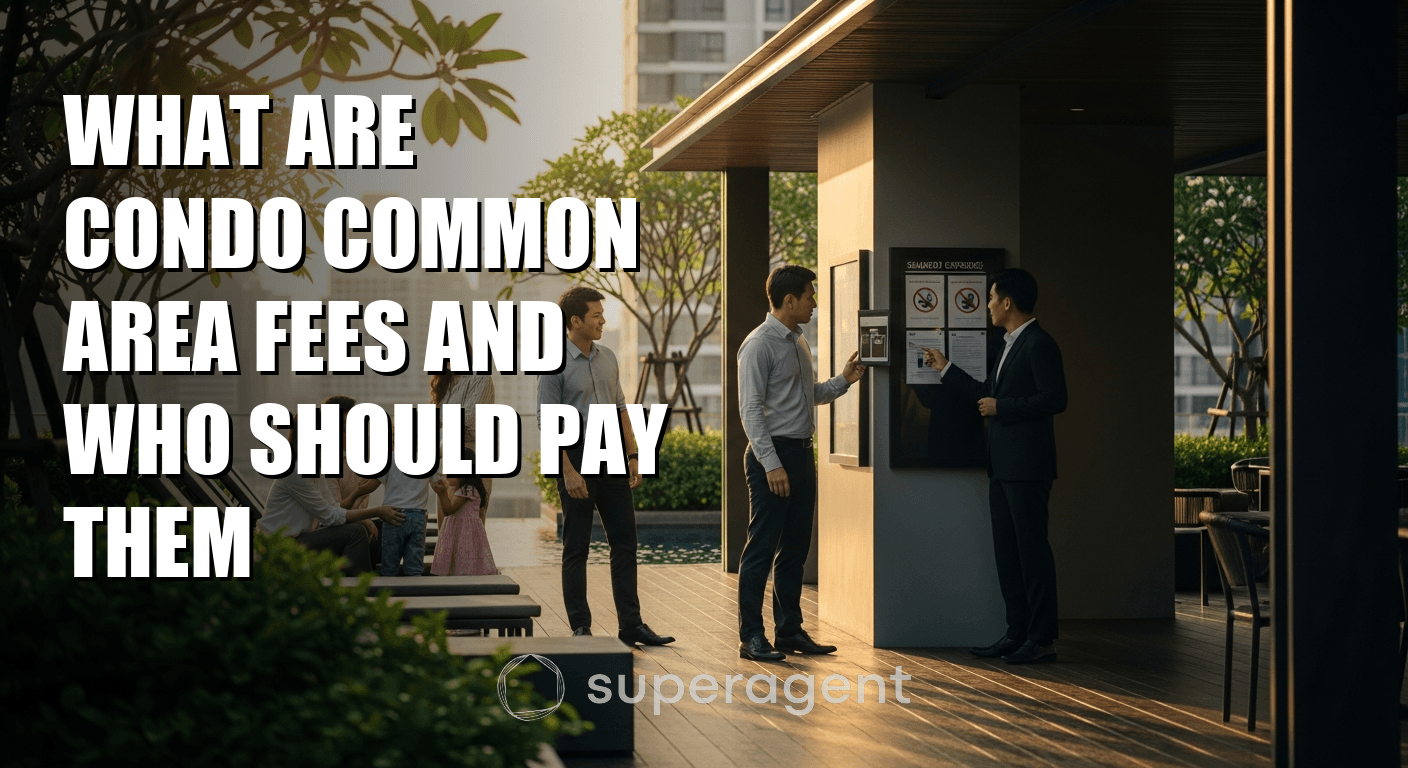
Summary
ค่าส่วนกลางคอนโดคืออะไร Learn what common area fees cover, who pays them, and how they affect your rental budget in Bangkok condos.
If you have rented a condo in Bangkok, you have probably seen "common area fees" or "maintenance charges" on your lease or invoice. It is one of those costs that catches people off guard because it sits outside the base rent. You think you are paying 20,000 baht a month, and then suddenly there is another 3,000 baht sitting in a separate line item. So what exactly is this charge, who pays it, and is there any way to predict or negotiate it? Let's break it down like someone who has been through the Bangkok rental market enough times to know the difference between a legitimate fee and a building trying to quietly pad its budget.
What Is Common Area Maintenance, Really?
Common area fees, called "ค่าส่วนกลาง" in Thai, cover the costs of maintaining shared spaces in your condo building. These are the lobbies, hallways, elevator shafts, roof, exterior walls, security desk, landscaping, and parking areas that belong to everyone but nobody specifically.
Think of it this way. When you rent a house in Lad Krabang or Ramintra, the landlord pays for all the exterior upkeep. When you rent a condo unit, that responsibility gets split among all residents proportionally. The building needs to paint that lobby every few years, replace elevator cables, keep the air conditioning running in common areas, and pay the security guards.
A typical mid-range condo near Thong Lor BTS Station, renting units at 22,000 to 32,000 baht per month for a one-bedroom, will charge 4,000 to 6,500 baht per month in common area fees. A premium building like those near Phrom Phong might add 8,000 to 12,000 baht on top of rent. Older buildings in Petchburi or Witthayu tend to charge less because their amenities are more basic.
Who Actually Pays the Common Area Fee?
Here is where it gets murky, and this is where most disputes happen. Legally and contractually, the answer depends on what your lease says.
In most Bangkok rental agreements, the tenant (that is you) pays the common area fee. It is bundled into your total housing cost. Some leases will state it explicitly as a separate line: "Base rent 25,000 THB plus common area maintenance 5,000 THB." Others will quote you an "all-in" number and then surprise you later with the breakdown.
A few landlords, especially in older buildings or private houses converted to short-term rentals, will absorb the common area fee themselves and include it in the rent quote they give you. This is rare in managed condos but more common in smaller residential buildings in quieter sois like Soi 39 in Petchburi or Soi 26 in Sukhumvit.
For long-term rentals (12 months or more), you have slightly more negotiating power. Some landlords will agree to split the fee fifty-fifty or cap the increase if the building raises fees mid-lease. Short-term renters have almost no leverage here.
What Does Common Area Maintenance Actually Cover?
This is where you need to read your lease carefully because not all buildings charge the same way, and not all buildings maintain the same standards.
Basic coverage typically includes lobby air conditioning, hallway lighting, elevator maintenance, security guard salaries, building insurance, and exterior painting cycles. Most buildings near BTS Asok or Nana will cover this in a standard fee of around 4,000 to 5,500 baht.
Premium coverage adds 24-hour security, CCTV systems in all common areas, regular pest control, landscaping maintenance, gym equipment upkeep, and a concierge desk. Buildings like those in Phrom Phong or near CentralWorld charge 10,000 to 15,000 baht for this level of service.
Some fees even include utilities like common area water and electricity, though this varies widely. Always ask during your initial property viewing whether utilities are included in the common area fee or billed separately through your meter.
- Basic Budget Condo: Rama 9, Petchburi Soi, Ramintra | 2,500 to 4,000 | Lobby, hallways, basic security, elevator
- Mid-Range Condo: Thong Lor, Phetchburi, Sukhumvit 24-39 | 4,000 to 7,000 | Above plus gym, pool, CCTV, landscaping
- Premium Condo: Phrom Phong, Asok, Silom, Sathorn | 8,000 to 15,000 | All above plus concierge, 24-hour security, higher-end finishes
- Luxury High-Rise: CentralWorld area, Mahanakhon, riverside | 15,000 to 25,000+ | All services plus valet, premium gym, private pool deck
Can These Fees Go Up, and How Much?
Yes, common area fees almost always increase over time. Buildings need to replace equipment, upgrade services, and adjust for inflation. The question is how much and how often.
According to lease agreements registered with the Thai Revenue Department, most buildings reserve the right to raise common area fees by 5 to 10 percent annually. Some have no specified limit, which is legally risky but still happens. A 5,000 baht fee can become 5,500 within a year or 6,000 within three years.
Long-term renters in managed condos near BTS Nana or Ratchathewi have reported increases of 500 to 1,500 baht over a three-year lease. It happens gradually, usually announced with 30 to 60 days notice. Check whether your lease caps annual increases or ties them to inflation, and always ask the landlord or building management what the fee has been over the past three years.
Common Area Fees vs. Water, Electricity, and Internet
This is where confusion happens constantly. Common area maintenance is not the same as your water bill, electricity bill, or internet charges.
Your individual unit has its own meter for water (with a separate water authority bill) and electricity. You get billed monthly based on what you actually use. Internet is usually a separate contract with AIS, True, or another provider. These three items are your responsibility as the tenant, separate from common area fees.
The common area fee pays for the shared infrastructure. Water supply pipes leading to the building, main electrical transformers, the internet backbone to the building. But your usage inside your unit? That is all you.
Some buildings do bundle water or electricity utilities into a flat common area charge, especially older buildings or those with communal water systems. Always confirm this at the lease-signing stage. If you find a condo listing that quotes "20,000 baht all-in including utilities," make sure you get the breakdown in writing before you commit.
How to Negotiate and Compare Common Area Fees
You have less room to negotiate common area fees than you might think, but it is not zero.
If you are signing a 12-month lease, ask whether the landlord will cap the annual increase at 5 percent or absorb the first increase. Some landlords agree to this, especially if you are a stable, well-screened tenant. Short-term renters have almost no leverage because the building's fee structure is fixed and applied equally to all units.
Compare fees across similar buildings in the same soi or near the same BTS station. Use property sites like DDProperty or Fazwaz to gather data on what other buildings charge. If Building A charges 5,000 baht and Building B next door charges 7,500, ask Building B's management why. Sometimes it is justified (better gym, 24-hour concierge), sometimes it is not.
Request a three-year history of fee increases from the building. If a building has raised its fee by 15 percent per year, you are looking at significant cost creep over your lease. If it has been flat or under 5 percent annually, that is more manageable.
Red Flags and What to Ask Before You Rent
There are some warning signs that a common area fee is poorly managed or about to explode.
If the building management cannot give you a clear breakdown of what the fee covers, walk away. A professional building near Thong Lor BTS can tell you exactly what the 5,500 baht includes. A building that says "it covers everything" is hiding something.
If the fee has jumped more than 10 percent year-over-year in the past two years, ask why. Major renovations? New equipment? Rising labor costs? If it is just profit padding, you might want to reconsider.
Check whether the building has a sinking fund (a reserve for major repairs). Ask the management office directly. Buildings without proper reserves often face surprise fee hikes when something major breaks, like the entire elevator system needing replacement.
Always get the common area fee in writing before you sign a lease. Do not rely on verbal quotes. It needs to be in the contract, and it needs to specify whether it can increase and under what conditions.
Understanding common area fees will save you money and stress in your Bangkok rental journey. Now that you know what to look for, you can compare properties on equal footing and avoid nasty surprises. When you are ready to find a place that fits your budget, including all costs laid out clearly upfront, check out Superagent. We list thousands of Bangkok condos with transparent pricing, verified landlords, and full details on what is included so you can rent with confidence.
If you have rented a condo in Bangkok, you have probably seen "common area fees" or "maintenance charges" on your lease or invoice. It is one of those costs that catches people off guard because it sits outside the base rent. You think you are paying 20,000 baht a month, and then suddenly there is another 3,000 baht sitting in a separate line item. So what exactly is this charge, who pays it, and is there any way to predict or negotiate it? Let's break it down like someone who has been through the Bangkok rental market enough times to know the difference between a legitimate fee and a building trying to quietly pad its budget.
What Is Common Area Maintenance, Really?
Common area fees, called "ค่าส่วนกลาง" in Thai, cover the costs of maintaining shared spaces in your condo building. These are the lobbies, hallways, elevator shafts, roof, exterior walls, security desk, landscaping, and parking areas that belong to everyone but nobody specifically.
Think of it this way. When you rent a house in Lad Krabang or Ramintra, the landlord pays for all the exterior upkeep. When you rent a condo unit, that responsibility gets split among all residents proportionally. The building needs to paint that lobby every few years, replace elevator cables, keep the air conditioning running in common areas, and pay the security guards.
A typical mid-range condo near Thong Lor BTS Station, renting units at 22,000 to 32,000 baht per month for a one-bedroom, will charge 4,000 to 6,500 baht per month in common area fees. A premium building like those near Phrom Phong might add 8,000 to 12,000 baht on top of rent. Older buildings in Petchburi or Witthayu tend to charge less because their amenities are more basic.
Who Actually Pays the Common Area Fee?
Here is where it gets murky, and this is where most disputes happen. Legally and contractually, the answer depends on what your lease says.
Continue reading after that.
Looking for a condo
to rent?
Leave your name and phone. We'll follow up while you keep reading.
100% Secure
Fast Response
Free Consultation
In most Bangkok rental agreements, the tenant (that is you) pays the common area fee. It is bundled into your total housing cost. Some leases will state it explicitly as a separate line: "Base rent 25,000 THB plus common area maintenance 5,000 THB." Others will quote you an "all-in" number and then surprise you later with the breakdown.
A few landlords, especially in older buildings or private houses converted to short-term rentals, will absorb the common area fee themselves and include it in the rent quote they give you. This is rare in managed condos but more common in smaller residential buildings in quieter sois like Soi 39 in Petchburi or Soi 26 in Sukhumvit.
For long-term rentals (12 months or more), you have slightly more negotiating power. Some landlords will agree to split the fee fifty-fifty or cap the increase if the building raises fees mid-lease. Short-term renters have almost no leverage here.
What Does Common Area Maintenance Actually Cover?
This is where you need to read your lease carefully because not all buildings charge the same way, and not all buildings maintain the same standards.
Basic coverage typically includes lobby air conditioning, hallway lighting, elevator maintenance, security guard salaries, building insurance, and exterior painting cycles. Most buildings near BTS Asok or Nana will cover this in a standard fee of around 4,000 to 5,500 baht.
Premium coverage adds 24-hour security, CCTV systems in all common areas, regular pest control, landscaping maintenance, gym equipment upkeep, and a concierge desk. Buildings like those in Phrom Phong or near CentralWorld charge 10,000 to 15,000 baht for this level of service.
Some fees even include utilities like common area water and electricity, though this varies widely. Always ask during your initial property viewing whether utilities are included in the common area fee or billed separately through your meter.
- Basic Budget Condo: Rama 9, Petchburi Soi, Ramintra | 2,500 to 4,000 | Lobby, hallways, basic security, elevator
- Mid-Range Condo: Thong Lor, Phetchburi, Sukhumvit 24-39 | 4,000 to 7,000 | Above plus gym, pool, CCTV, landscaping
- Premium Condo: Phrom Phong, Asok, Silom, Sathorn | 8,000 to 15,000 | All above plus concierge, 24-hour security, higher-end finishes
- Luxury High-Rise: CentralWorld area, Mahanakhon, riverside | 15,000 to 25,000+ | All services plus valet, premium gym, private pool deck
Can These Fees Go Up, and How Much?
Yes, common area fees almost always increase over time. Buildings need to replace equipment, upgrade services, and adjust for inflation. The question is how much and how often.
According to lease agreements registered with the Thai Revenue Department, most buildings reserve the right to raise common area fees by 5 to 10 percent annually. Some have no specified limit, which is legally risky but still happens. A 5,000 baht fee can become 5,500 within a year or 6,000 within three years.
Long-term renters in managed condos near BTS Nana or Ratchathewi have reported increases of 500 to 1,500 baht over a three-year lease. It happens gradually, usually announced with 30 to 60 days notice. Check whether your lease caps annual increases or ties them to inflation, and always ask the landlord or building management what the fee has been over the past three years.
Common Area Fees vs. Water, Electricity, and Internet
This is where confusion happens constantly. Common area maintenance is not the same as your water bill, electricity bill, or internet charges.
Your individual unit has its own meter for water (with a separate water authority bill) and electricity. You get billed monthly based on what you actually use. Internet is usually a separate contract with AIS, True, or another provider. These three items are your responsibility as the tenant, separate from common area fees.
The common area fee pays for the shared infrastructure. Water supply pipes leading to the building, main electrical transformers, the internet backbone to the building. But your usage inside your unit? That is all you.
Some buildings do bundle water or electricity utilities into a flat common area charge, especially older buildings or those with communal water systems. Always confirm this at the lease-signing stage. If you find a condo listing that quotes "20,000 baht all-in including utilities," make sure you get the breakdown in writing before you commit.
Continue reading after that.
Looking for a condo
to rent?
Leave your name and phone. We'll follow up while you keep reading.
100% Secure
Fast Response
Free Consultation
How to Negotiate and Compare Common Area Fees
You have less room to negotiate common area fees than you might think, but it is not zero.
If you are signing a 12-month lease, ask whether the landlord will cap the annual increase at 5 percent or absorb the first increase. Some landlords agree to this, especially if you are a stable, well-screened tenant. Short-term renters have almost no leverage because the building's fee structure is fixed and applied equally to all units.
Compare fees across similar buildings in the same soi or near the same BTS station. Use property sites like DDProperty or Fazwaz to gather data on what other buildings charge. If Building A charges 5,000 baht and Building B next door charges 7,500, ask Building B's management why. Sometimes it is justified (better gym, 24-hour concierge), sometimes it is not.
Request a three-year history of fee increases from the building. If a building has raised its fee by 15 percent per year, you are looking at significant cost creep over your lease. If it has been flat or under 5 percent annually, that is more manageable.
Red Flags and What to Ask Before You Rent
There are some warning signs that a common area fee is poorly managed or about to explode.
If the building management cannot give you a clear breakdown of what the fee covers, walk away. A professional building near Thong Lor BTS can tell you exactly what the 5,500 baht includes. A building that says "it covers everything" is hiding something.
If the fee has jumped more than 10 percent year-over-year in the past two years, ask why. Major renovations? New equipment? Rising labor costs? If it is just profit padding, you might want to reconsider.
Check whether the building has a sinking fund (a reserve for major repairs). Ask the management office directly. Buildings without proper reserves often face surprise fee hikes when something major breaks, like the entire elevator system needing replacement.
Always get the common area fee in writing before you sign a lease. Do not rely on verbal quotes. It needs to be in the contract, and it needs to specify whether it can increase and under what conditions.
Understanding common area fees will save you money and stress in your Bangkok rental journey. Now that you know what to look for, you can compare properties on equal footing and avoid nasty surprises. When you are ready to find a place that fits your budget, including all costs laid out clearly upfront, check out Superagent. We list thousands of Bangkok condos with transparent pricing, verified landlords, and full details on what is included so you can rent with confidence.
Share this article
Properties you may like
![[For Rent] CONDO I Las Colinas Condominium I 2 Beds I 3 Baths I 85,000THB/mo](/_next/image?url=https%3A%2F%2Fstorage.googleapis.com%2Fsuperagent-web%2Fattachments%2Flistings%2F6828%2F80f345c4-488e-43b2-b017-c9fbb17b520d-99486dd8-4237-4ba2-9207-01ce4f66b21f-media.jpg&w=3840&q=75)
฿85,000
2 Bed3170 sqm
[For Rent] CONDO I Las Colinas Condominium I 2 Beds I 3 Baths I 85,000THB/mo
Asoke
Condo![[For Rent] CONDO I Ashton Asoke I 1 Bed I 1 Bath I 30,000THB/mo](/_next/image?url=https%3A%2F%2Fstorage.googleapis.com%2Fsuperagent-web%2Fattachments%2Flistings%2F6876%2Fb7ce9bbe-f877-4ff5-bb54-8ad0026db940-1272-4.jpg&w=3840&q=75)
฿30,000
1 Bed135 sqm
[For Rent] CONDO I Ashton Asoke I 1 Bed I 1 Bath I 30,000THB/mo
Asoke
Condo![[For Rent] CONDO I Skyrise Avenue Sukhumvit 64 I 2 Beds I 2 Baths I 27,000THB/mo](/_next/image?url=https%3A%2F%2Fstorage.googleapis.com%2Fsuperagent-web%2Fattachments%2Flistings%2F2001%2F670f91de-c251-4e81-971c-8e30ed2158cd-screenshot-2026-07-05-at-11.38.53-pm.png&w=3840&q=75)
฿27,000
2 Bed252 sqm
[For Rent] CONDO I Skyrise Avenue Sukhumvit 64 I 2 Beds I 2 Baths I 27,000THB/mo
Punnawithi
Condo![[For Rent] CONDO I Park Origin Ratchathewi I Duplex I 2 Beds I 1 Bath I 32,000THB/mo](/_next/image?url=https%3A%2F%2Fstorage.googleapis.com%2Fsuperagent-web%2Fattachments%2Flistings%2F6896%2Fb79a7d21-7533-4b0d-bb19-762ebfafab62-1318-6.jpg&w=3840&q=75)
฿32,000
2 Bed135.9 sqm
[For Rent] CONDO I Park Origin Ratchathewi I Duplex I 2 Beds I 1 Bath I 32,000THB/mo
Ratchathewi
Condo![[For Rent] CONDO I Park Origin Phayathai I Studio I 1 Bath I 28,000THB/mo](/_next/image?url=https%3A%2F%2Fstorage.googleapis.com%2Fsuperagent-web%2Fattachments%2Flistings%2F6757%2Fb226df93-94c6-46fa-aeba-ebfadc7f81b8-1000006042.jpg&w=3840&q=75)
฿28,000
Studio129 sqm
[For Rent] CONDO I Park Origin Phayathai I Studio I 1 Bath I 28,000THB/mo
Phaya Thai
Condo![[For Rent] CONDO I Ideo Mobi Sukhumvit 81 I Duplex I 1 Bed I 1 Bath I 28,000THB/mo](/_next/image?url=https%3A%2F%2Fstorage.googleapis.com%2Fsuperagent-web%2Fattachments%2Flistings%2F1849%2Fc8b2c033-3b5f-4615-b2b0-4972f40141f0-705-13.jpg&w=3840&q=75)
฿28,000
1 Bed143 sqm
[For Rent] CONDO I Ideo Mobi Sukhumvit 81 I Duplex I 1 Bed I 1 Bath I 28,000THB/mo
On Nut
Condo![[For Rent] CONDO I Siamese Sukhumvit 48 I 1 Bed I 1 Bath I 28,000THB/mo](/_next/image?url=https%3A%2F%2Fstorage.googleapis.com%2Fsuperagent-web%2Fattachments%2Flistings%2F6841%2Febc2dce2-2e9b-4e6d-a01c-0cfa619dfa13-1231-6.jpg&w=3840&q=75)
฿28,000
1 Bed144 sqm
[For Rent] CONDO I Siamese Sukhumvit 48 I 1 Bed I 1 Bath I 28,000THB/mo
Condo![[For Rent] CONDO I Ashton Asoke I 1 Bed I 1 Bath I 22,000THB/mo](/_next/image?url=https%3A%2F%2Fstorage.googleapis.com%2Fsuperagent-web%2Fattachments%2Flistings%2F6802%2Fe06b9b73-1207-414a-ab04-1685de0c7eaa-20220808_153124_0.jpg&w=3840&q=75)
฿22,000
1 Bed134 sqm
[For Rent] CONDO I Ashton Asoke I 1 Bed I 1 Bath I 22,000THB/mo
Asoke
Condo![[For Rent] CONDO I HQ Thonglor Soi 4 I 1 Bed I 1 Bath I 35,000 THB/mo](/_next/image?url=https%3A%2F%2Fstorage.googleapis.com%2Fsuperagent-web%2Fattachments%2Flistings%2F1445%2F72352585-1bc2-41a8-bd62-ddcbf8189fe9-376-5.jpg&w=3840&q=75)
฿35,000
1 Bed143.6 sqm
[For Rent] CONDO I HQ Thonglor Soi 4 I 1 Bed I 1 Bath I 35,000 THB/mo
Thonglor
Condo![[For Rent] CONDO I The Master Centrium Asoke - Sukhumvit I Duplex I 2 Beds I 3 Baths I 75,000 THB/mo](/_next/image?url=https%3A%2F%2Fstorage.googleapis.com%2Fsuperagent-web%2Fattachments%2Flistings%2F1545%2F97932b6a-c358-45e4-b5f9-995dbf5a3cf0-441-2.jpg&w=3840&q=75)
฿75,000
2 Bed3150 sqm
[For Rent] CONDO I The Master Centrium Asoke - Sukhumvit I Duplex I 2 Beds I 3 Baths I 75,000 THB/mo
Asoke
CondoMore like this
 In Guides · Superagent EditorialHidden Costs of Renting a Condo in Bangkok Nobody Warns You AboutBangkok condo rent looks affordable until month one hits. Here are the real costs beyond the headline figure that catch most renters off guard.25 May 20261 min read
 In Guides · Superagent EditorialWhat a Long-Vacant Bangkok Condo Unit Is Actually Telling YouA Bangkok condo vacant for months signals overpricing, landlord issues, or real problems. Here is how to read the signs.25 May 20261 min read
 In Guides · Superagent EditorialRed Flags in a Bangkok Rental Contract to Watch Out ForBangkok rental contracts often hide risky clauses. Here are the red flags every tenant must catch before signing any lease.25 May 20261 min read
 In Guides · Superagent EditorialWorking Online from a Condo: How to Choose the Perfect Room for ProductivityLearn how to choose the best condo room for working online with tips on lighting, noise, and furniture setup to maximize productivity.9 May 20261 min read